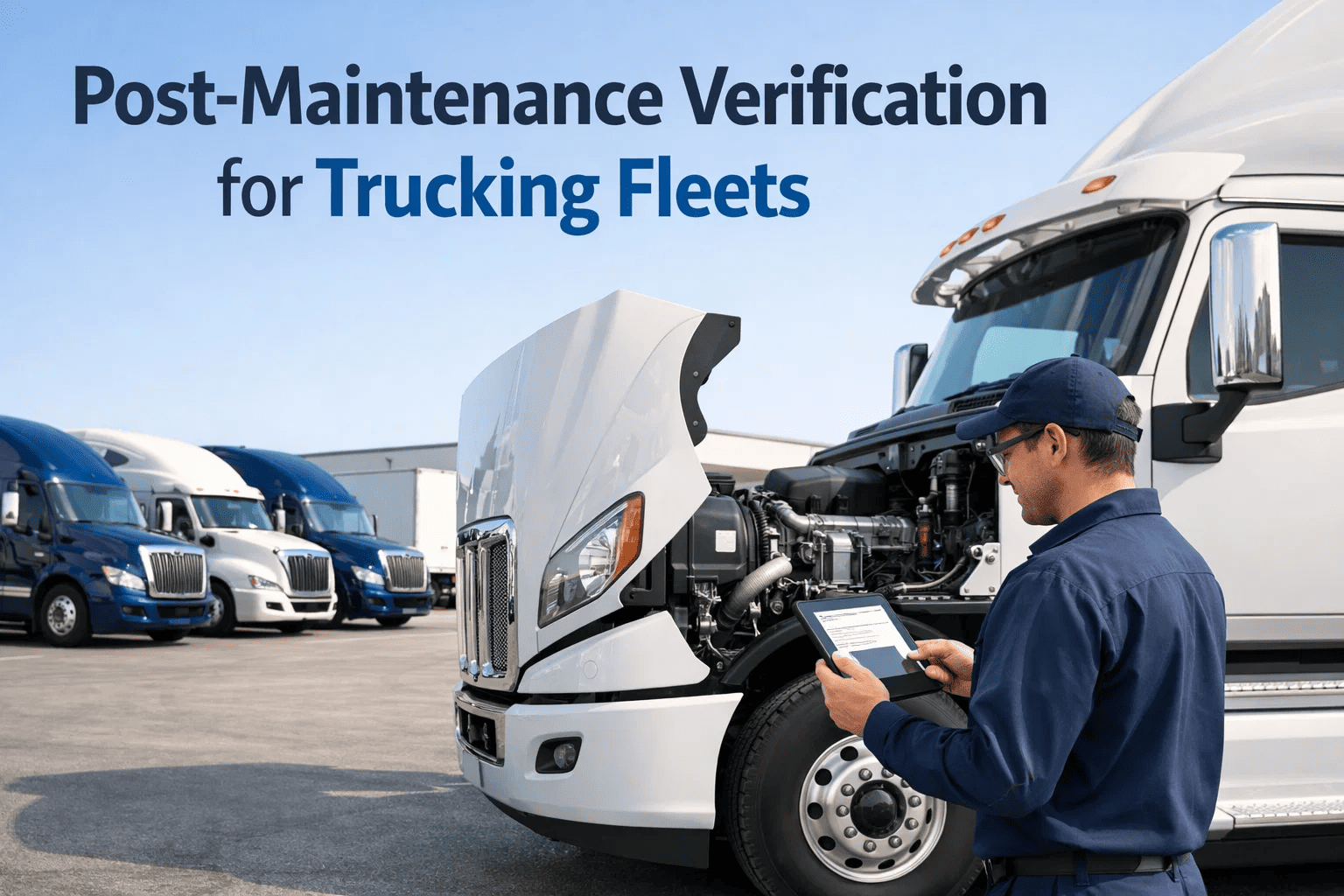
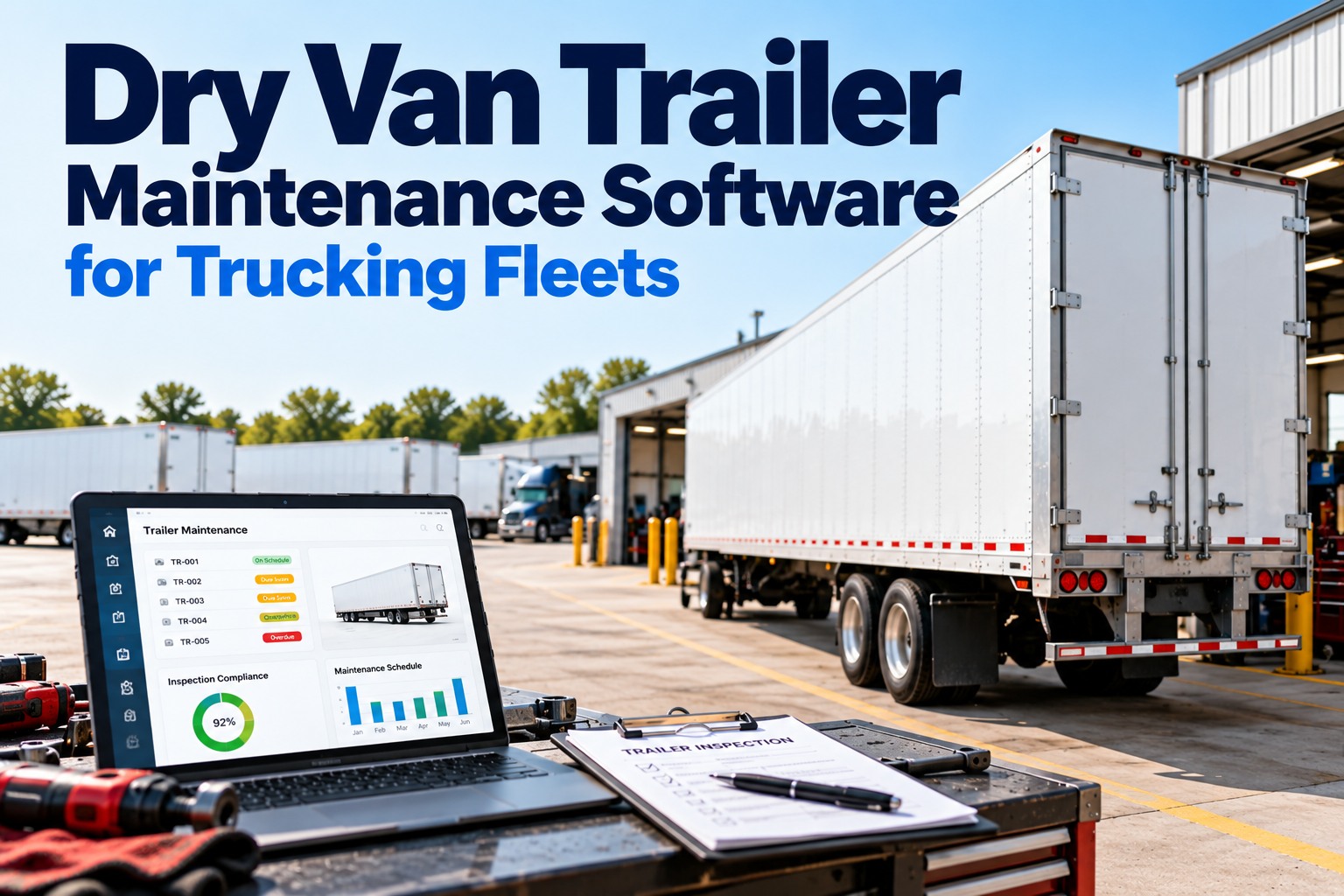
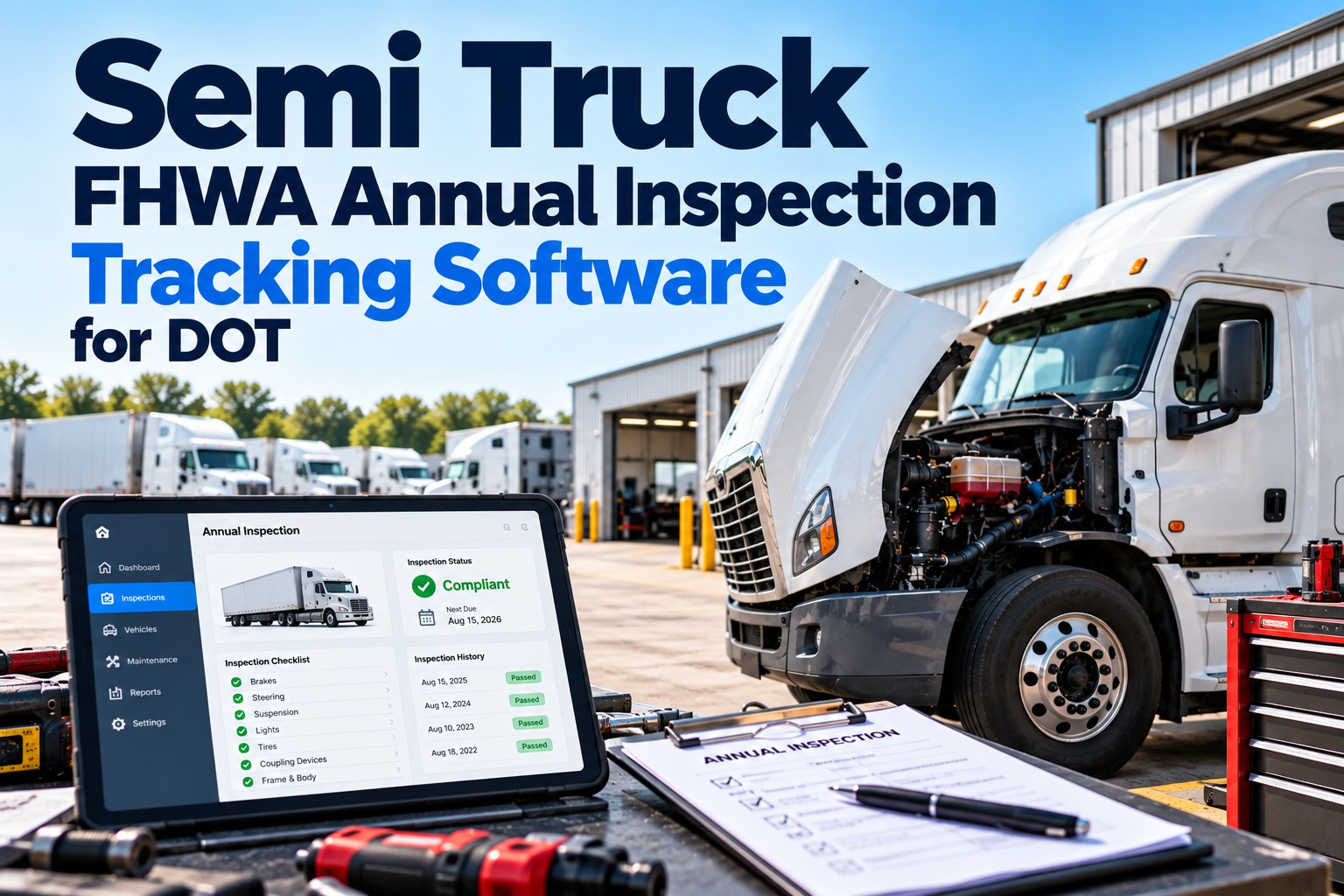
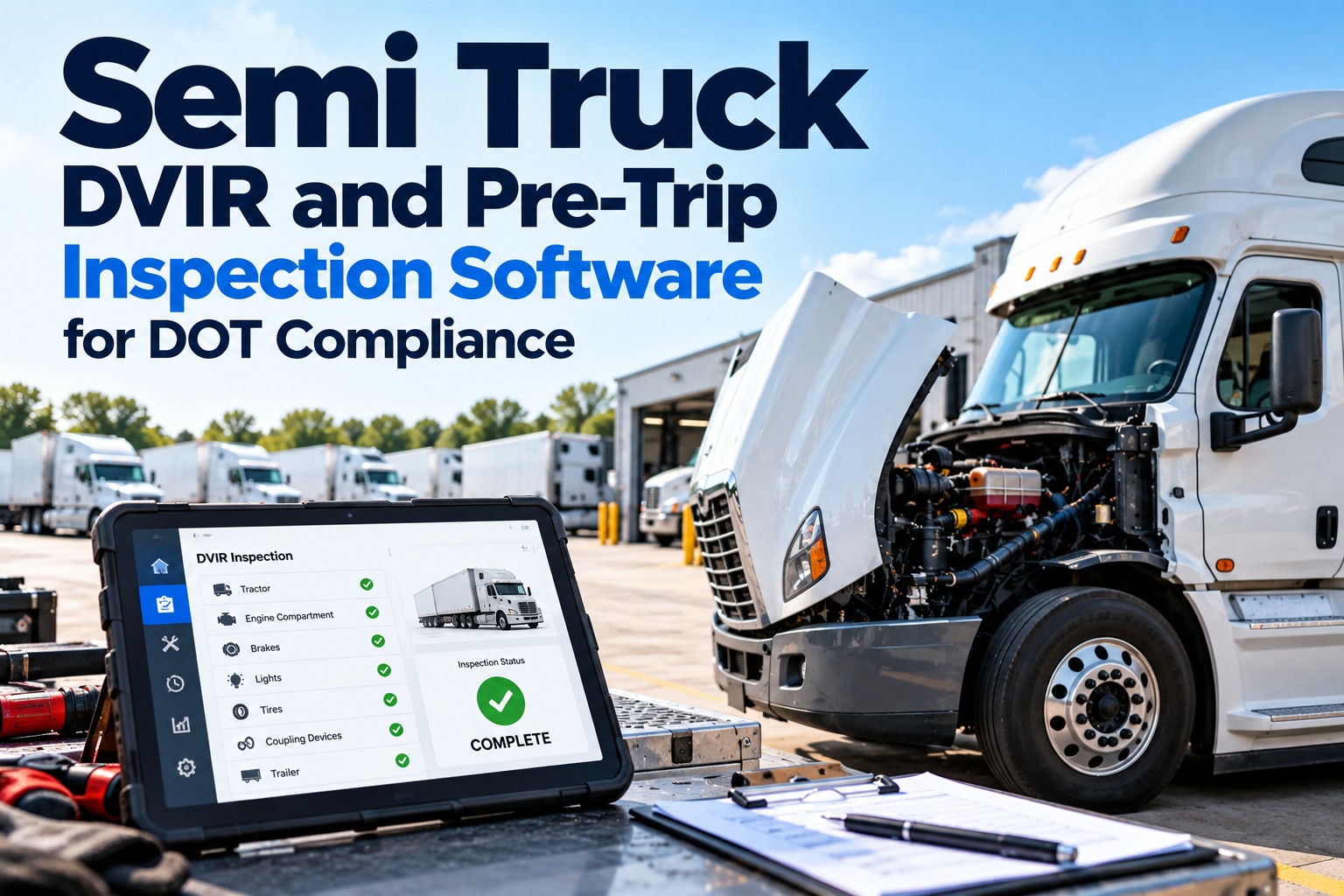
Every repair event is a risk event. Once a technician signs off on a commercial truck and that vehicle re-enters service, the window for preventing a roadside failure, a out-of-service violation, or a cargo loss incident closes immediately. Post-maintenance verification is the structured, system-by-system process that confirms every repair was completed correctly, every fluid was topped to specification, every fastener was torqued, and every safety-critical component was tested before the driver pulls out of the yard. This checklist gives fleet maintenance managers, shop supervisors, and compliance officers the complete verification framework, organized by vehicle system to protect their operation from the consequences of incomplete maintenance sign-off. FleetRabbit digitizes this entire workflow, connecting technician verification to work order closure, driver pre-trip records, and DOT-defensible documentation in a single platform.
73%
Of commercial vehicle roadside failures occur within 48 hours of a maintenance event, according to fleet safety research data
$8,400
Average total cost of a commercial vehicle breakdown including towing, driver downtime, cargo delays, and emergency repair premiums
2.3x
More likely to pass DOT roadside inspection — fleets operating digital post-maintenance verification versus paper-based sign-off processes
94%
Of maintenance-related roadside violations are preventable with systematic post-work verification before the vehicle returns to active service
How FleetRabbit Transforms Post-Maintenance Verification
Traditional post-maintenance verification relies on paper sign-off sheets that get lost, partially completed, or filed away where they cannot be accessed during a roadside inspection. FleetRabbit replaces that process with a digital verification workflow that connects every step — from technician task completion to work order closure, photo documentation, and driver pre-trip acknowledgment — in a single auditable record. When a driver receives a truck after maintenance, the FleetRabbit driver mobile app surfaces the completed verification record before the pre-trip inspection begins. When a DOT officer requests maintenance documentation during a roadside interaction, the fleet manager can pull the complete verification record remotely in seconds. Every item on this checklist corresponds to a verification step within the FleetRabbit platform that can be assigned to a specific technician, time-stamped upon completion, and escalated to a supervisor if a failed check requires resolution before the vehicle is cleared for service.
Post-Maintenance Defect Severity Reference
Severity Level
Definition
Required Action Before Return to Service
FleetRabbit Workflow
Critical
Defect creates immediate risk of vehicle failure, accident, or out-of-service order
Defect degrades safety or compliance performance but does not create immediate failure risk
Defect must be repaired and re-verified before vehicle clears for service. Maintenance coordinator notification required.
Work order re-opened, re-verification task assigned, coordinator notified
Minor
Defect affects comfort, appearance, or non-safety equipment function
Defect documented and scheduled for resolution at next maintenance interval. Vehicle may return to service with documentation.
Follow-up PM trigger created, defect logged in vehicle history
See how FleetRabbit's digital post-maintenance verification workflow connects work order creation, technician task completion, supervisor sign-off, driver notification, and DOT-defensible documentation in a single platform. We demonstrate against your fleet's vehicle types and maintenance program — not in a generic demo environment.
Engine and powertrain systems are the highest-consequence verification area after any maintenance event touching the engine, transmission, differential, or related systems. Verify each item through direct physical inspection and operational test — not through visual scan alone. Any post-maintenance verification that relies exclusively on dashboard indicator status without direct fluid, connection, and operational checks is incomplete and should not be accepted as a documented sign-off.
Engine Performance and Integrity
Fluid Levels and Leak Inspection
Part 2: Braking and Air System Verification
Braking system defects are the leading cause of commercial vehicle out-of-service orders at roadside inspections. Post-maintenance braking verification is not optional after any brake service — it is a required step before the vehicle is cleared for revenue service. Verify every item below through physical measurement and operational test. Dashboard brake warning light status alone does not constitute adequate brake system verification after a service event.
Foundation Brake and Adjustment Verification
Air System and Leak Testing
FleetRabbit Brake Verification Documentation
FleetRabbit records per-axle brake measurement data directly in the digital work order, creating a permanent, searchable brake service history for every vehicle. When a DOT inspector requests brake maintenance documentation, the fleet manager provides a complete record showing measurement data, technician identity, and verification date — not a generic notation that brakes were serviced. FleetRabbit's brake inspection templates align with FMCSA measurement requirements, ensuring documentation meets the evidentiary standard required to contest a roadside violation through the DataQ challenge process.
Electrical system failures are among the most common post-maintenance comebacks — particularly after work that disturbs wiring, ground connections, or module programming. Lighting violations are the most frequently cited category in hazardous materials carrier audits and are easily preventable through systematic post-maintenance verification. Every lighting circuit must be physically verified — not assumed operational because it was functioning before the maintenance event.
Lighting and Electrical Continuity
Driver Safety Equipment
FleetRabbit Electrical Verification Integration
FleetRabbit integrates with telematics and OBD systems to surface active fault codes directly in the maintenance diagnostic view — allowing technicians to identify post-maintenance fault codes without requiring a separate scan tool session. The platform's work order system flags any vehicle with active fault codes at work order closure, preventing clearance without fault code resolution documentation. This integration eliminates the common scenario where a vehicle leaves the shop with an active diagnostic code that triggers a post-delivery complaint or roadside violation.
Wheel-off events are among the most catastrophic failures in commercial trucking — and they almost always follow maintenance events where wheels were removed and reinstalled. Tire and wheel verification after any service touching these components is not a procedural formality. It is the final barrier between a correct maintenance event and a highway fatality. Document every measurement. Record every torque value. There is no acceptable shortcut in this verification category.
Tire and Wheel Torque Verification
Steering and Suspension Inspection
FleetRabbit Tire and Wheel Tracking
FleetRabbit's tire management module tracks tread depth measurements, inflation pressure records, and rotation history by individual tire position and tire serial number. When a post-maintenance verification records a tire condition concern, FleetRabbit automatically generates a follow-up maintenance trigger and notifies the maintenance coordinator — preventing the common scenario where a technician notes a concern in a paper record that is never acted upon. FleetRabbit's re-torque reminder workflow triggers a driver notification at the appropriate mileage interval after any wheel removal event, closing the most common gap in post-maintenance wheel safety verification.
Cab system verification matters for driver retention, regulatory compliance, and cargo security as much as for mechanical safety. A vehicle with an inoperable defroster, a malfunctioning air conditioning system, or a damaged cab door seal creates driver fatigue risks, cargo temperature integrity violations, and quality-of-life conditions that drive driver turnover. Verify all cab systems as part of every comprehensive post-maintenance inspection — not only after cab-specific maintenance events.
HVAC, Defrost, and Visibility Systems
Cab Security and Sleeper Systems
Part 6: Documentation, Work Order Closure, and FleetRabbit Sign-Off
A technically perfect maintenance event with incomplete documentation is operationally equivalent to a maintenance event with no record at all. When a DOT auditor requests three years of maintenance records during a compliance review, or when a plaintiff's attorney requests vehicle maintenance history after an accident, the documentation standard is everything. Every verification item in every category above must produce a documented record — not a verbal confirmation, not a general notation, and not a paper form that may or may not survive an audit cycle. FleetRabbit's digital work order closure workflow enforces documentation completeness before the vehicle clearance record is generated.
Work Order Completion Documentation
FleetRabbit Work Order Closure Enforcement
FleetRabbit's work order system enforces documentation completeness through mandatory field validation at closure. No work order can be closed and a vehicle clearance record generated unless all required verification steps have been completed, all critical fault codes have been addressed, and supervisor sign-off has been captured for work orders flagged as requiring supervisory review. This enforcement mechanism eliminates the documentation gaps that create compliance vulnerabilities during FMCSA audits and litigation discovery — without requiring manual process oversight from the maintenance manager on every work order.
Frequently Asked Questions
What is post-maintenance verification and is it an FMCSA requirement?
Post-maintenance verification is the systematic process of confirming, after a repair or service event, that all work was completed correctly and all vehicle systems function to specification before the vehicle re-enters service. FMCSA regulation 49 CFR 396.3 requires that every motor carrier systematically inspect, repair, and maintain all motor vehicles under its control in safe and proper operating condition. While FMCSA does not prescribe a specific post-maintenance checklist format, the regulation requires that the carrier maintain records demonstrating that its vehicles meet the inspection, repair, and maintenance standard. A documented, systematic post-maintenance verification process creates the evidence base that satisfies this requirement — and protects the carrier against liability if a mechanical failure occurs after a maintenance event.
How does FleetRabbit automate post-maintenance verification workflows?
FleetRabbit connects every step of the post-maintenance verification process through its digital work order system. When a work order is created for any maintenance event, the system automatically appends the appropriate post-maintenance verification checklist based on the work category — brake service, engine service, tire service, electrical service, or comprehensive PM. Technicians complete verification steps through the FleetRabbit mobile app with photo documentation capability and time-stamped completion records. The system enforces sequential completion — the vehicle clearance record cannot be generated until all verification steps are confirmed complete by an authorized user. Supervisors receive real-time notification of failed verification items that require escalation. The complete verification record is permanently attached to the work order in the vehicle maintenance history and is accessible to fleet managers, and available for export during DOT audits.
What documentation is required after a maintenance event under FMCSA regulations?
FMCSA 49 CFR 396.3(b) requires maintenance records that include: the vehicle identification number, the date when the inspection, repair, or maintenance action was due, the date the action was performed, and the identity of the person performing the action. For brake work specifically, the maintenance record should document the adjustment measurements that confirm compliance with FMCSA brake adjustment limits. For any work ordered in response to a driver DVIR defect report, FMCSA 396.11(c) requires that the certifying mechanic's signature or statement confirming repair or a determination of no defect be recorded. FleetRabbit's digital work order system captures all of these elements as mandatory fields, ensuring that every maintenance record meets FMCSA documentation requirements without relying on technician discretion about what to record.
How long must post-maintenance verification records be retained?
FMCSA requires that maintenance records for every vehicle be retained for the period during which the carrier operates the vehicle, plus six months after the vehicle leaves the fleet. For carriers in regulated commodities or with history of CSA violations, best practice is to retain maintenance records for three years or the statute of limitations period applicable to the carrier's operating jurisdiction, whichever is longer. FleetRabbit retains complete maintenance and verification records throughout the contract period in cloud storage with export capability — ensuring that records remain accessible even if the inspection or maintenance was performed years before the record is needed for an audit or litigation response.
Can technicians complete post-maintenance verification checklists without network connectivity?
Yes. The FleetRabbit technician mobile application is a native iOS and Android application with full offline capability. Technicians can complete post-maintenance verification checklists, capture photo documentation, record measurements, and submit supervisor sign-off requests in airplane mode — in shop environments, remote maintenance locations, or any setting without reliable cellular coverage. All completion data, timestamps, and photo attachments are buffered locally and synchronized to the fleet management platform automatically when connectivity is restored. The offline-capable record is indistinguishable from an online submission in the audit record — there is no degradation of documentation quality when connectivity is unavailable.
How does digital post-maintenance verification reduce roadside inspection failure rates?
Roadside inspection failures after maintenance events typically trace to one of three root causes: a verification step that was skipped, a measurement that was estimated rather than confirmed, or a defect that was identified but not escalated for resolution before the vehicle departed. Digital post-maintenance verification addresses all three failure modes. Sequential checklist completion prevents step-skipping by requiring each item to be confirmed before the next item is presented. Measurement fields require numerical entry rather than pass/fail checkboxes, preventing estimation. Failed verification items automatically generate supervisor escalation alerts that cannot be bypassed — a failed item must be either corrected and re-verified, or explicitly accepted by an authorized supervisor with a documented rationale. These three mechanisms eliminate the most common pathways from an incomplete maintenance event to a roadside out-of-service order.
Build Your Post-Maintenance Verification Program with FleetRabbit
FleetRabbit's maintenance management platform includes pre-built post-maintenance verification workflows for every vehicle system category in this checklist — configurable to your fleet's specific vehicle types, maintenance programs, and documentation requirements. Implement digital post-maintenance verification across your entire fleet without building custom forms, managing paper routing, or relying on technician discretion about documentation completeness.
Fleet managers using FleetRabbit's verification workflow report reduced post-maintenance comebacks, improved roadside inspection pass rates, and significantly faster documentation retrieval during compliance audits. The platform is deployed fleet-wide with role-specific training for technicians, shop supervisors, and maintenance coordinators — not as a generic software implementation, but as a configured solution built around your operation's specific maintenance programs.
Schedule Your FleetRabbit Maintenance Platform Demonstration
See how FleetRabbit's digital post-maintenance verification workflow connects work order creation, technician task completion, supervisor sign-off, driver notification, and DOT-defensible documentation in a single platform. We demonstrate against your fleet's vehicle types and maintenance program — not in a generic demo environment.