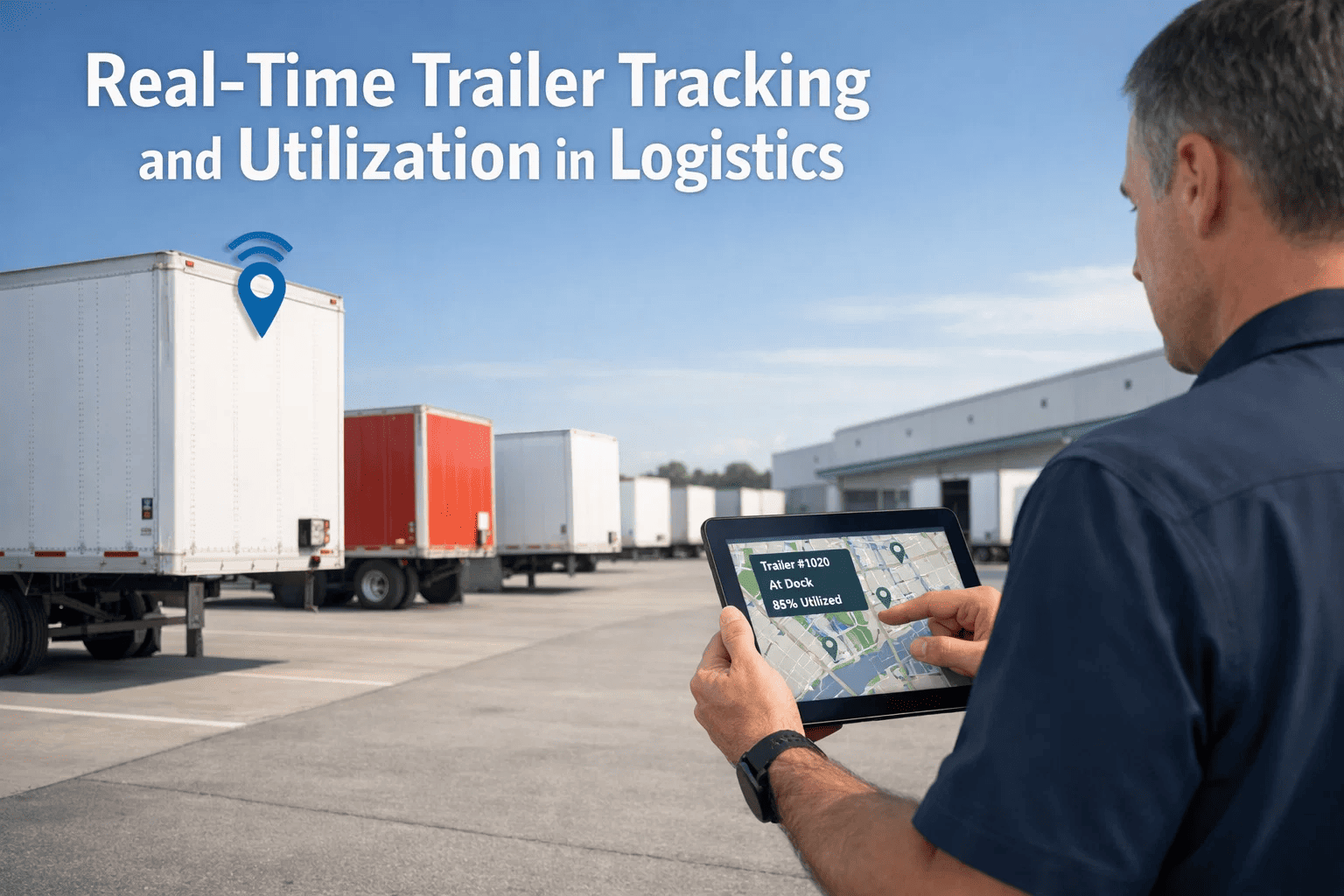
In modern logistics, the difference between a profitable fleet operation and a loss-generating one often comes down to one overlooked factor: trailer visibility. While tractors are tracked, dispatched, and monitored as core operating assets, trailers — which represent the majority of cargo-carrying capacity in a long-haul or regional trucking operation — frequently sit unmonitored in drop yards, shipper facilities, and distribution centers for days at a time. Fleet managers at regional and national carriers report that the average trailer spends between 30 and 40 percent of its operational time sitting idle without load assignment, without inspection records, and without any real-time location update feeding back to a central operations dashboard. That invisible time is where fleet utilization deteriorates, where detention charges accumulate without documentation, and where asset recovery becomes a reactive rather than a proactive function. FleetRabbit was built specifically to address the operational conditions that transportation and logistics companies face every day — and real-time trailer tracking sits at the center of that solution. Book a demo to see how FleetRabbit brings trailer visibility, utilization analytics, and asset condition data into a single operations dashboard.
This guide examines the operational and financial consequences of poor trailer visibility in transportation and logistics fleets, outlines the core components of an effective real-time trailer tracking program, and demonstrates how FleetRabbit integrates GPS telematics, inspection records, maintenance scheduling, and utilization analytics into a unified platform that fleet managers and operations executives can use to drive measurable improvements in asset deployment efficiency.
The Hidden Cost of Trailer Invisibility in Logistics Operations
Transportation and logistics executives responsible for fleet performance frequently focus optimization efforts on driver productivity, fuel economy, and tractor utilization — all of which are easier to measure because tractor telematics data is widely available and feeds directly into dispatch and HOS management systems. Trailers, by contrast, often operate in a data void. Unless a carrier has invested specifically in trailer tracking hardware or integrated asset management software, the location and condition of each trailer in the fleet is typically known only when a driver reports a pickup or delivery through the dispatch system. Between those events, trailers accumulate detention time, experience uninspected damage, and sit in locations that a dispatcher cannot retrieve real-time data on without making a direct phone call to a yard manager or customer facility.
The financial consequences of this visibility gap are distributed across several cost categories that rarely appear as a single line item on a fleet P and L but collectively represent a significant margin erosion factor. When a trailer sits undetected at a customer facility for three days beyond the agreed free time, the detention charges that should be billed to the shipper are often not captured because the operations team has no timestamped record confirming when the trailer arrived and when it departed. When a trailer sustains damage at a drop yard and that damage is not recorded until the next driver inspection, the origin and responsible party for that damage cannot be established, and the carrier absorbs the repair cost without recourse. When a high-demand trailer is not visible to dispatchers, a load that could have matched to that asset gets assigned to an outside carrier or a tractor runs empty miles to retrieve a trailer from another yard — either outcome adds cost without adding revenue.
FleetRabbit addresses this operational gap by combining GPS telematics integration, digital inspection records, preventive maintenance scheduling, and utilization analytics in a single platform that gives fleet managers and executives continuous visibility into every trailer in the fleet — its location, its inspection status, its maintenance schedule, and its utilization rate — without requiring parallel systems or manual reporting consolidation.
What Real-Time Trailer Tracking Actually Requires
Many fleet managers assume that trailer tracking means purchasing GPS hardware and affixing it to assets. GPS location data is a necessary foundation, but on its own it answers only one question: where is the trailer right now. Effective trailer tracking for logistics operations requires answers to a broader set of operational questions that a location ping alone cannot address. Where has the trailer been, and for how long? Has it been inspected at the required intervals? Is it currently under a maintenance hold? What is its utilization rate over the past 30 days, and how does that compare to the fleet average? Is it available for dispatch, or is it sitting at a drop yard awaiting a shipper release? These questions require data that comes from inspection systems, maintenance records, dispatch logs, and analytics platforms — all integrated into a single view that a fleet manager can access from a desktop or mobile device.
FleetRabbit is designed to bring exactly these data streams together. The platform integrates with GPS and telematics providers to pull real-time location data for every tracked asset, then layers that data against the inspection and maintenance records that field teams capture through the mobile app. When a driver performs a pre-trip or post-trip inspection on a trailer using the FleetRabbit DVIR module, that inspection record is timestamped, linked to the specific asset in the registry, and immediately visible to the fleet manager. If the inspection reveals a defect, the system generates a maintenance work order and flags the trailer as out-of-service for dispatch purposes until the repair is confirmed and the work order is closed. This prevents a damaged trailer from being assigned to a load without the dispatcher being aware of its condition — a failure mode that is common in operations where inspection data and dispatch data live in separate systems.
Core Problems Facing Logistics Fleet Managers Without Integrated Tracking
How FleetRabbit Delivers Real-Time Trailer Visibility and Utilization Intelligence
FleetRabbit approaches trailer tracking as an integrated fleet management problem, not a standalone hardware deployment. The platform connects with existing GPS telematics providers through its integration layer, pulling location data for every tagged trailer into the central asset registry. This data is then combined with inspection records, maintenance work orders, dispatch status, and utilization calculations to produce a continuously updated view of every trailer's operational status.
Fleet managers accessing the FleetRabbit dashboard can see at a glance which trailers are loaded and in transit, which are empty and available at a specific yard location, which are flagged for maintenance, and which are sitting at customer facilities with elapsed free time that may support a detention billing claim. The same data that informs the dispatcher's next load assignment decision also feeds the operations executive's weekly KPI review and the maintenance manager's PM scheduling queue — all from a single data source, without manual export or reformatting.
Trailer Utilization Metrics Every Logistics Fleet Manager Should Track
Effective trailer utilization management requires a structured set of metrics that translate raw location and movement data into actionable operational intelligence. Fleet managers who rely on driver reports and dispatcher observations to assess trailer utilization are working with incomplete and systematically delayed information. The following core metrics, all of which FleetRabbit calculates and reports natively, provide the analytical foundation for evidence-based trailer fleet management decisions.
| Utilization Metric | Definition | Target Threshold | FleetRabbit Action Trigger |
|---|---|---|---|
| Trailer Utilization Rate | Percentage of time a trailer is loaded and assigned to a revenue movement versus sitting empty or unassigned | Above 70 percent | Flags trailers below threshold for review and potential redeployment or lease return |
| Average Dwell Time by Location | Average time a trailer spends stationary at a specific location type — shipper, receiver, yard, or cross-dock | Below 24 hours at customer locations | Generates detention documentation alert and notifies operations manager when free time threshold is reached |
| Empty Miles Percentage | Percentage of total miles driven by tractors assigned to a specific trailer that were run without a loaded trailer attached | Below 15 percent | Identifies dispatch routing patterns generating excessive empty repositioning and highlights matching opportunities |
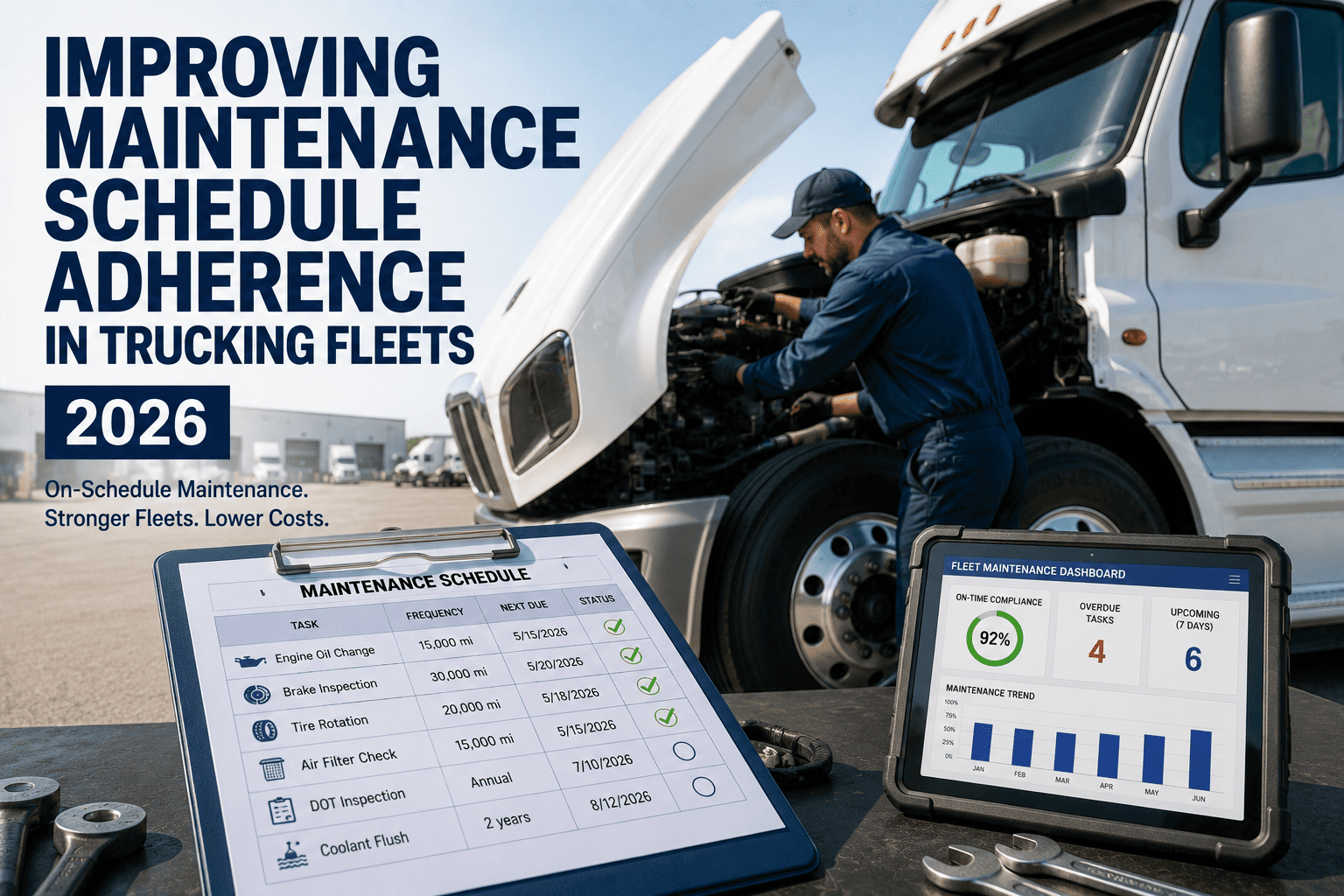
| PM Compliance Rate by Asset | Percentage of scheduled preventive maintenance tasks completed on time across the trailer fleet | Above 90 percent | Escalates overdue PM items and restricts dispatch availability for trailers past critical maintenance intervals |
| Days Since Last Inspection | Number of days elapsed since the last completed DVIR inspection record was submitted for a specific trailer | Zero trailers exceeding regulatory inspection intervals | Dashboard alert and dispatcher notification when a trailer has not been inspected within the required interval |
| Fleet Average Load-to-Trailer Ratio | Number of revenue loads completed per trailer per month across the fleet | Above 8 loads per trailer per month for regional operations | Portfolio-level trending report identifies whether overall asset count is appropriately sized to load volume |
Integrating Trailer Tracking with DVIR and DOT Compliance
Trailer tracking in transportation operations does not exist in isolation from compliance requirements. The Federal Motor Carrier Safety Administration requires that drivers conduct and document pre-trip and post-trip inspections of commercial motor vehicles, including trailers, and that carriers maintain those inspection records for a minimum of three months. For companies subject to routine DOT roadside inspections and Compliance, Safety, Accountability program evaluations, the quality and completeness of inspection documentation directly affects the carrier's safety rating and the operational consequences of out-of-service orders issued at the roadside.
FleetRabbit integrates trailer tracking with DVIR compliance documentation in a manner that eliminates the paper-based inspection record keeping that most carriers still rely on. When a driver conducts a pre-trip inspection using the FleetRabbit mobile app, the inspection form is structured to cover all FMCSA-required inspection points for the specific trailer type — refrigerated, flatbed, tanker, or dry van — with any defect finding requiring a written description and, where supported by the device, photographic documentation. The completed inspection record is immediately uploaded to the platform, linked to the trailer's asset record, and accessible to the fleet manager, maintenance team, and compliance officer from the central dashboard.
For DOT compliance purposes, all inspection records stored in FleetRabbit are retrievable by vehicle identification, date range, or driver assignment in a format that can be exported for submission to FMCSA auditors or used in response to DOT data requests. This eliminates the paper-record retrieval process that compliance teams at large carriers report as one of the most time-consuming elements of audit preparation — a process that FleetRabbit customers have consistently reported being completed in a fraction of the time previously required when records were stored in paper files or disconnected digital folders.
How FleetRabbit Supports Drop Yard Operations Specifically
Drop-and-hook operations — where drivers deliver a loaded trailer, pick up an empty or pre-loaded trailer from the yard, and immediately depart without waiting for live unloading — are a standard efficiency model in high-volume trucking. The operational requirement of the drop-and-hook model is that available trailers are known to be at the yard, in good condition, and matched to the right load without the driver or dispatcher needing to physically locate and inspect each option. When trailer visibility fails in a drop yard environment, drivers arrive to find the yard does not have the trailer the dispatcher assigned, or that the available trailers are out of service, or that multiple trailers are stacked in positions that require repositioning to access the assigned unit — all of which produce driver wait time, tractor idling, and per-load delivery delays that erode service performance metrics.
FleetRabbit addresses the specific operational requirements of drop yard management through its asset registry and location integration capabilities. Yard managers can update trailer status — available, loaded, out of service, reserved for a specific load — directly from the mobile app, with changes reflected immediately on the dispatch dashboard. Drivers arriving at the yard can confirm the assigned trailer's location and status before leaving the tractor, eliminating the wasted time of walking the yard to find and verify an improperly documented asset. When a trailer's inspection records show it is past a maintenance interval, the system automatically restricts its availability flag so dispatchers cannot assign the asset to a revenue load without a maintenance review and clearance.
Building the Business Case for Trailer Tracking Investment
Fleet managers and operations executives evaluating an investment in trailer tracking and utilization management software often face internal financial justification requirements before proceeding with deployment. The business case for a platform like FleetRabbit in a logistics context is supported by quantifiable cost reduction and revenue recovery opportunities across multiple operational categories, each of which becomes measurable immediately after deployment begins generating complete tracking and inspection data.
The first and most direct financial impact is in detention revenue recovery. Carriers entitled to detention charges when trailers sit beyond free time at shipper and receiver facilities frequently leave a significant portion of that entitlement uncollected because they lack the timestamped documentation to support a billing claim. FleetRabbit's GPS integration automatically records arrival and departure times at every location, creating the evidentiary foundation for detention billing that previously required manual driver logs or shipper signature collection. For a carrier operating 100 trailers and collecting even one additional detention event per trailer per month at an average rate of $75 per event, the annual revenue recovery exceeds $90,000 — a figure that typically exceeds the annual cost of the platform in a portfolio of that size.
The second financial impact category is PM compliance and unplanned repair cost reduction. Trailers that miss scheduled preventive maintenance intervals are statistically more likely to produce roadside out-of-service violations, which result in tow charges, driver wait time, load delay penalties, and customer service failures. Carriers with PM compliance rates below 70 percent typically see unplanned repair costs running 40 to 60 percent above what fleets with structured PM programs experience. Bringing PM compliance above 90 percent through FleetRabbit's automated scheduling and alert system reduces emergency repair spending and out-of-service event frequency — both of which carry direct cost consequences that are straightforward to quantify against the platform investment.
The third category is fleet right-sizing through utilization data. Carriers maintaining a trailer fleet larger than operational demand requires — which is the common outcome of not having utilization data to support asset reduction decisions — pay ongoing insurance premiums, registration fees, and maintenance costs on underutilized assets. A 10-trailer reduction in a 150-unit fleet operating at an average cost of $3,000 per trailer per year in fixed annual carrying costs represents $30,000 in annual savings that does not require any improvement in operational performance, only the data needed to identify which trailers can be released without affecting service capacity.
Start Tracking Your Trailer Fleet with FleetRabbit
FleetRabbit combines GPS telematics integration, DVIR inspection records, preventive maintenance scheduling, and utilization analytics in one platform built for transportation and logistics operations. Book a demo to review how the platform addresses your specific trailer visibility and utilization challenges.
Implementation Approach: Getting Trailer Tracking Operational Without Disrupting Fleet Operations
One of the most common concerns raised by fleet managers evaluating trailer tracking software is implementation complexity. Large trucking operations have active fleets that cannot be taken offline for system configuration and training, and any tracking deployment that requires significant operational disruption creates risk of service failures during the transition period. FleetRabbit is designed for rapid deployment in active transportation environments, with an implementation approach that allows carriers to begin generating tracking and inspection data within days of account setup rather than months.
The fleet asset registry is built by importing existing trailer records from whatever source the operator maintains — spreadsheet exports, existing CMMS data, or manual entry for smaller fleets. QR code labels generated by FleetRabbit can be applied to trailers in the field as drivers make their next pick-up or delivery, eliminating the requirement for a yard shutdown to physically tag assets. Once a trailer has a QR code associated with its asset registry record, drivers can pull up the inspection form for that specific trailer by scanning the code before departure, and the completed inspection record is immediately linked to the correct asset without any dispatcher or administrator involvement.
GPS integration is configured during the initial account setup by connecting FleetRabbit to the carrier's existing telematics provider through the GPS integration module. For carriers who do not yet have trailer tracking hardware, FleetRabbit works with the carrier's telematics provider representatives to identify the appropriate hardware solution for the fleet's operational configuration. Beginning with the connection of existing hardware means that fleets with tractor telematics data already available can have that data flowing into the FleetRabbit asset dashboard within the initial setup period, with trailer-specific GPS tags added as the hardware rollout progresses.
What Operations Executives Gain from Consolidated Trailer Analytics
For VP-level operations executives and fleet directors at transportation companies operating multiple terminals or regional hubs, the value of FleetRabbit extends beyond the day-to-day operational improvements available to dispatchers and fleet managers. Consolidated trailer analytics at the portfolio level provide the executive decision-making inputs required to evaluate terminal performance, assess regional fleet sizing, benchmark maintenance compliance across locations, and identify operational patterns that indicate systemic efficiency problems or improvement opportunities.
Prior to deploying an integrated platform, most multi-terminal carriers receive trailer utilization and maintenance performance data through a manual report assembly process — terminal managers compile local data into a standardized format, email it to regional operations managers, who in turn aggregate it for the VP of Operations. This process typically produces reports 10 to 14 days after the reporting period ends, contains inconsistencies introduced by different data sources and reporting conventions at each terminal, and cannot be drilled into at the asset level without follow-up calls to the terminal. By the time the executive sees the utilization data, the operational decisions that data should have informed have already been made on the basis of less complete information.
FleetRabbit eliminates this reporting lag by making consolidated portfolio analytics available in real time from the central dashboard. An executive reviewing fleet performance on any given day can see current utilization rates by terminal, PM compliance trends across the past 90 days, the number of trailers currently in maintenance hold status at each location, and the total fleet-level detention documentation events that support billing claims in the current period — all from a single screen, without waiting for terminal reports or making calls to yard managers. The ability to intervene in operational situations in real time rather than after the fact is what converts fleet analytics from a reporting function into a performance management tool.
Compliance Documentation for Trailer Tracking in a DOT Context
Beyond operational efficiency, trailer tracking data maintained in FleetRabbit serves a direct compliance documentation function for transportation companies subject to FMCSA oversight. DOT safety audits and CSA investigative reviews require carriers to produce inspection records, maintenance documentation, and driver vehicle inspection reports on demand. The completeness and accessibility of these records is a significant factor in the outcome of safety audits — carriers with fragmented inspection records stored in paper files or disconnected digital systems consistently spend more time and compliance staff resources on audit preparation than carriers with centralized digital documentation.
FleetRabbit stores all DVIR inspection records, maintenance work orders, parts records, and asset condition documentation in a searchable, filterable database that compliance officers can retrieve by trailer number, date range, driver name, or defect category within seconds of receiving an audit request. The system also supports custom report generation for FMCSA submission formats, reducing the reformatting work that compliance teams otherwise perform manually for each audit response. For carriers who have experienced DOT compliance findings related to incomplete inspection records — a common audit outcome for operations relying on paper-based systems — migrating inspection documentation to FleetRabbit typically produces an immediate and measurable improvement in compliance record completeness from the first inspection conducted through the platform.
Frequently Asked Questions
Eliminate Trailer Invisibility from Your Logistics Operation
FleetRabbit gives transportation companies real-time trailer location data, digital inspection records, automated PM scheduling, and utilization analytics from a single platform built for the operational requirements of modern logistics fleets. From drop yard management to DOT compliance documentation, the platform delivers the visibility that fleet managers and operations executives need to make evidence-based decisions about their trailer assets every day.