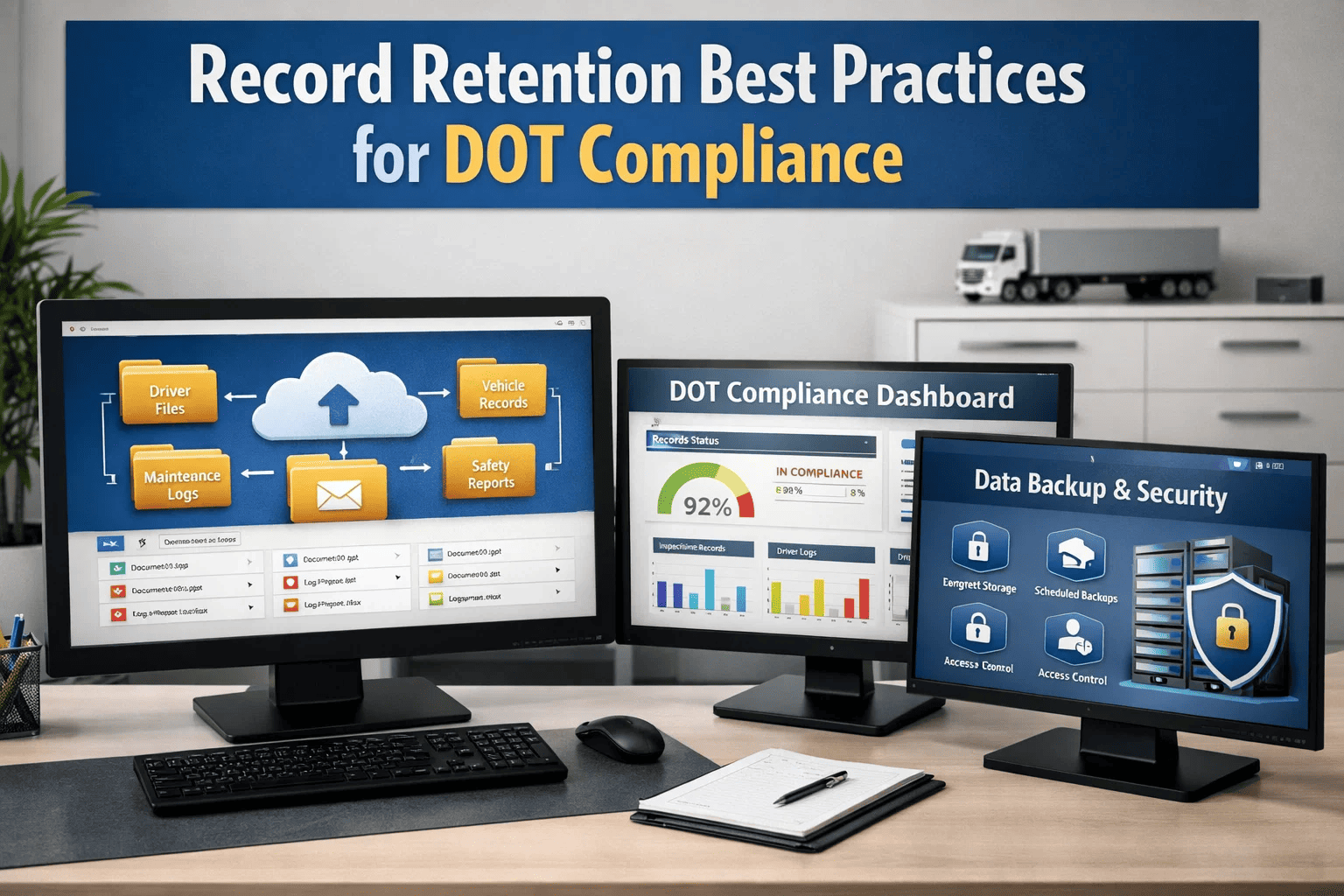
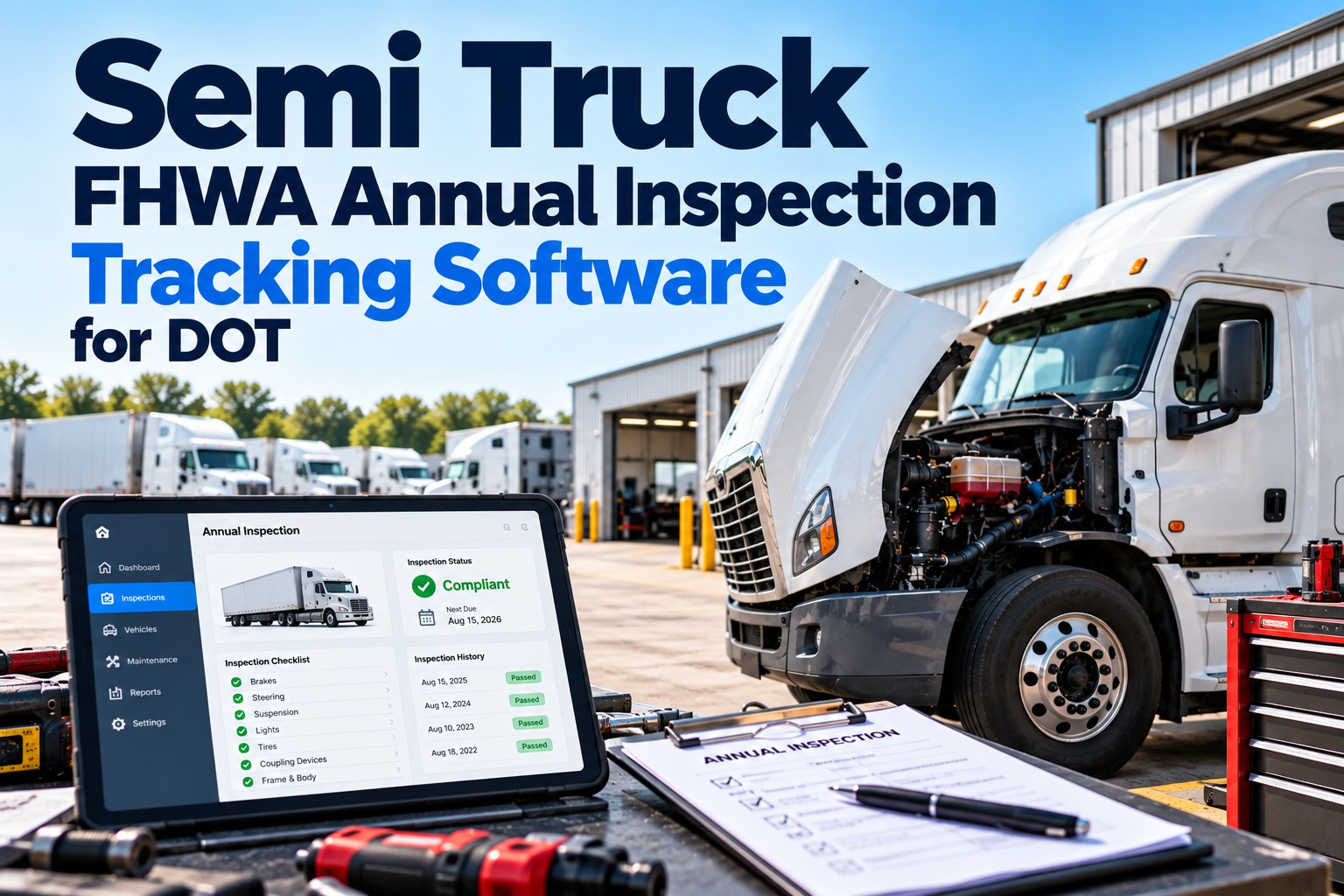
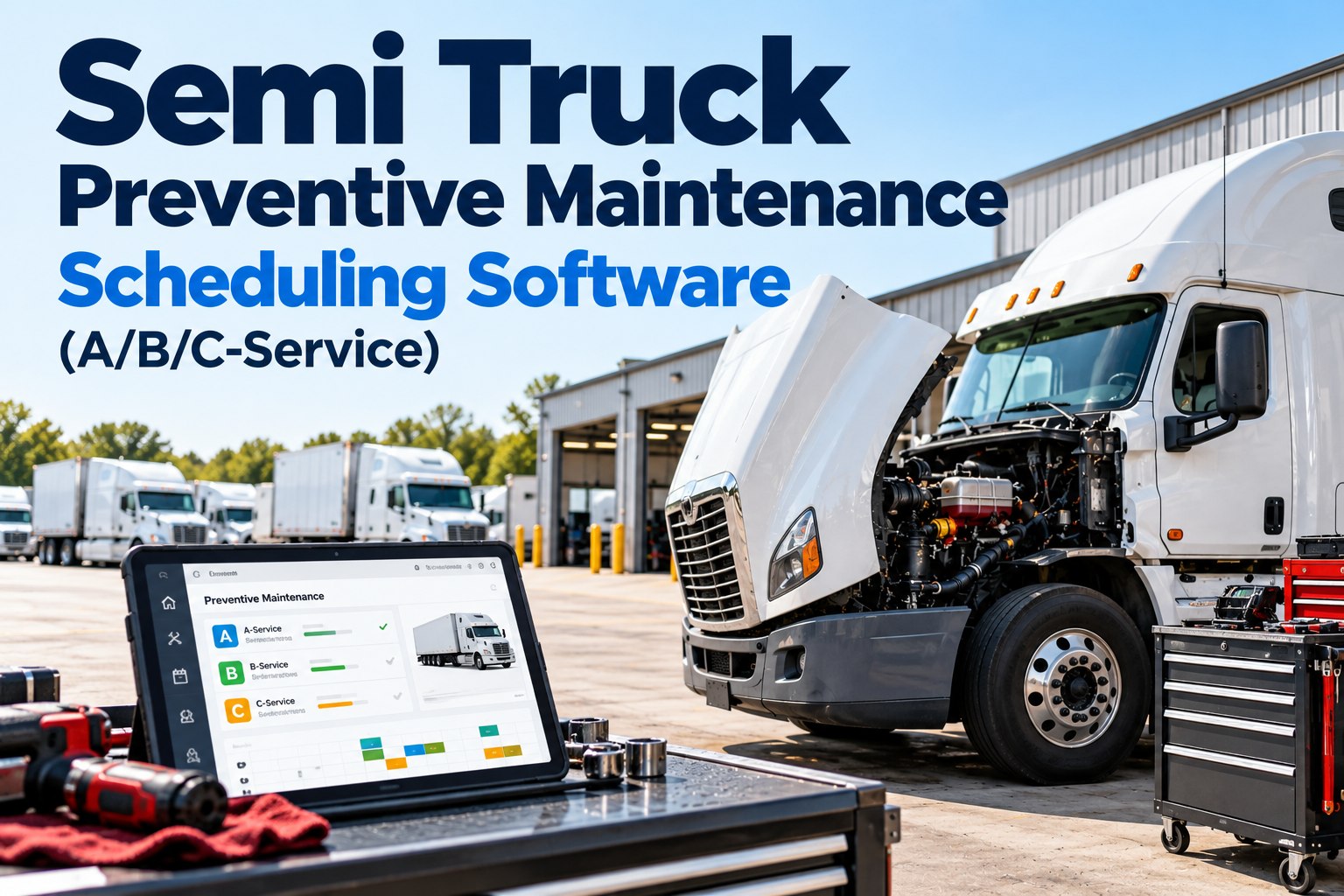
A DOT compliance audit does not announce itself weeks in advance with time for document assembly — it arrives with 24-hour notice and a production request that covers up to three years of driver qualification files, drug and alcohol testing records, hours of service logs, vehicle inspection reports, and accident registers. Fleets that maintain records in paper filing cabinets, disconnected HR software, and email folders discover within hours whether their record management infrastructure is audit-ready or audit-vulnerable. A single missing driver qualification file triggers an automatic Unsatisfactory or Conditional safety rating. Failure to produce drug and alcohol testing records covering the required five-year retention period creates FMCSA violation exposure that compounds across every driver in the testing program. FleetRabbit's cloud-based document management platform centralizes all DOT and FMCSA-required records in a single, searchable, retention-enforced repository — ensuring every record exists, every retention period is met, and every audit request is answered within hours rather than days. Book a demo to see DOT record management applied to your compliance program.
Quick Answer
FleetRabbit automates DOT record retention compliance by maintaining all required documents — driver qualification files, drug and alcohol testing records, HOS logs, vehicle inspection reports, and accident registers — in a secure cloud repository with retention periods enforced automatically. Retention expiry alerts prevent premature deletion. Audit production packages are generated in under one hour. Fleets using FleetRabbit's document management system report zero records-production failures during FMCSA compliance reviews and a 92% reduction in audit preparation time.
DOT & FMCSA Record Retention Requirements — The Complete Compliance Schedule
FMCSA regulations specify minimum retention periods for each document category — and these are minimums, not recommendations. Producing a record that should have been retained but was discarded constitutes a violation equivalent to never having created the record in the first place. Fleet executives and compliance directors must know exactly what to keep, for how long, and in what format before the first audit request arrives.
| Document / Record Category |
Regulatory Reference |
Retention Period |
FleetRabbit Automation |
| Driver Qualification File Records |
| Driver application & employment history |
49 CFR 391.51(b) |
3 years |
Auto-retained from onboarding |
| Motor Vehicle Record (MVR) |
49 CFR 391.51(c) |
3 years |
Integrated MVR pull & storage |
| Medical Examiner Certificate |
49 CFR 391.51(b)(7) |
3 years |
Expiry alerts + auto-retained |
| Road test certificate |
49 CFR 391.51(e) |
3 years after employment ends |
Linked to driver record |
| Annual driver review records |
49 CFR 391.51(b)(8) |
3 years |
Annual review workflow + storage |
| Drug & Alcohol Testing Records |
| Positive drug / alcohol test results |
49 CFR 382.401(b)(1) |
5 years |
Auto-flagged, 5-yr retention lock |
| Negative pre-employment test results |
49 CFR 382.401(b)(3) |
1 year |
Auto-retention by category |
| Alcohol tests <0.02 BAC results |
49 CFR 382.401(b)(3) |
1 year |
Auto-retention by result type |
| MIS annual testing summary reports |
49 CFR 382.403 |
5 years |
Auto-generated + retained |
| Hours of Service & ELD Records |
| ELD / RODS (Records of Duty Status) |
49 CFR 395.8(k) |
6 months |
ELD provider sync + 6-month hold |
| Supporting documents (fuel receipts, bills) |
49 CFR 395.8(k)(2) |
6 months |
Document upload + retention |
| Vehicle Inspection & Maintenance Records |
| Driver Vehicle Inspection Reports (DVIR) |
49 CFR 396.11(c) |
3 months |
Electronic DVIR + auto-retention |
| Periodic inspection records (annual) |
49 CFR 396.21(a) |
14 months |
Inspection workflow + storage |
| Vehicle maintenance & repair records |
49 CFR 396.3(c) |
1 year active + 6 months after |
Work order integration + retention |
| Accident Records |
| DOT Accident Register |
49 CFR 390.15(b) |
3 years |
Auto-populated from incident reports |
| Accident investigation reports |
Company policy / litigation hold |
3+ years (litigation-dependent) |
Litigation hold flag available |
How FleetRabbit Eliminates DOT Record Management Risk
Manual record retention fails at scale for a predictable reason: the volume of documents across a working fleet — DVIRs, drug test results, MVRs, inspection reports, fuel receipts — grows faster than any administrative team can organize, verify, and maintain without systematic automation. FleetRabbit replaces manual processes with automated document capture, retention enforcement, and production-ready organization.
01
Automated Document Capture
Every regulatory document created in FleetRabbit — DVIR submission, drug test result, MVR pull, incident report, annual driver review — is automatically categorized and stored with the correct retention classification. Documents uploaded manually via mobile or desktop are automatically filed to the correct driver, vehicle, or company record based on document type selection.
02
Retention Period Enforcement
Each document category is tagged with its regulatory retention requirement — and FleetRabbit's retention engine prevents deletion before the mandatory period expires. Documents approaching their deletion-eligible date generate manager notifications, enabling review of any litigation holds or extended retention needs before automated disposition processing.
03
Secure Cloud Storage & Access Control
All records are stored in encrypted cloud infrastructure with role-based access controls — safety directors access compliance records, maintenance managers access vehicle files, executives access summary dashboards. No document is accessible to unauthorized users. Audit trail logging records every document access, download, and modification with timestamp and user identity.
04
Compliance Gap Identification
FleetRabbit continuously audits its own document repository — identifying missing required records for each driver and vehicle. Missing medical certificates, overdue annual reviews, absent periodic inspection records, and incomplete DQF elements are surfaced in the compliance dashboard as actionable gaps before they become audit findings.
05
Real-Time Compliance Dashboard
Fleet executives and compliance directors see a live compliance score for every driver, vehicle, and record category — with color-coded indicators for current, at-risk, and non-compliant status. Executive summary views show fleet-wide compliance percentage by category, enabling prioritization of compliance remediation resources before audit risk materializes.
06
Audit Production Package Generation
When a DOT compliance review, FMCSA audit, or insurance investigation requires document production, FleetRabbit generates a complete, formatted document package — organized by driver, vehicle, or record category — in under one hour. Packages include document index, retention verification, and completeness certification for each record category requested.
DOT Record Management Platform
From Record Chaos to Audit-Ready Compliance — Without Adding Staff
FleetRabbit manages every DOT and FMCSA record retention requirement automatically — ensuring no document expires, no retention period lapses, and every audit request is answered within hours rather than days of manual assembly.
92%
Reduction in Audit Preparation Time
0
Records-Production Failures in Managed Fleets
<1 hr
Complete Audit Package Generation Time
Six Record Categories Every Fleet Must Manage with Precision
DOT compliance recordkeeping is not optional, and it is not forgiving. Each category below carries specific retention periods, production deadlines, and content requirements that cannot be met with informal filing systems. FleetRabbit systematizes all six categories with automated workflows designed around regulatory requirements.
Driver Qualification Files
The most frequently audited record category — containing employment application, CDL copy, medical examiner certificate, MVR, road test, PSP inquiry, and annual reviews. A single missing document creates an automatic Unsatisfactory finding. FleetRabbit maintains a completeness checklist for every active and recently terminated driver DQF, flagging any gap before the audit identifies it.
Risk without FleetRabbit: Missing DQF documents discovered in audit → Satisfactory rating downgrade → public record for 3 years
D&A
Retain: 1–5 years by type
Drug & Alcohol Testing Program Records
Positive test results require 5-year retention. Negative pre-employment tests require 1 year. Random pool records, required testing rate documentation, and annual MIS reports must be accessible on demand. FleetRabbit's substance abuse program management automatically categorizes each test result by retention period — eliminating the premature deletion risk that creates regulatory exposure.
Risk without FleetRabbit: Test records discarded at 1 year (positive results required 5 years) → citation per affected record
Hours of Service & ELD Records
Electronic Log Device data must be retained for 6 months per 49 CFR 395.8(k). FleetRabbit syncs with major ELD providers — Samsara, Omnitracs, Motive, KeepTruckin — to import and retain HOS records automatically. Supporting documents required to support duty status — fuel receipts, bills of lading, dispatch records — are stored alongside corresponding ELD records for complete audit trail integrity.
Risk without FleetRabbit: ELD data overwritten by provider after 30–90 days if not externally retained → production failure during audit
VMR
Retain: 3–14 months by type
Vehicle Maintenance & Inspection Records
Annual periodic inspection reports must be retained for 14 months. DVIRs must be retained for 3 months. Maintenance and repair records must be retained for 1 year plus 6 months after the vehicle leaves the fleet. FleetRabbit's maintenance management module automatically creates and retains all required vehicle records, linking repair orders to the specific compliance obligation they satisfy.
Risk without FleetRabbit: Annual inspection records missing → vehicle out-of-service order during roadside inspection
DOT Accident Register
Every DOT-reportable accident must be documented in the accident register with date, location, driver, vehicle, number of fatalities, number of injuries, and whether the vehicle was towed — retained for 3 years and produced within 24 hours of any FMCSA request. FleetRabbit automatically populates the accident register from the incident management module, eliminating the manual entry gap that creates register incompleteness.
Risk without FleetRabbit: Incomplete accident register produced in 24 hours → automatic compliance review escalation
HAZ
Retain: 3 years minimum
HAZMAT Training & Shipping Records
HAZMAT training records for drivers transporting hazardous materials must be retained for the duration of employment plus 90 days. HAZMAT shipping papers must be retained for 1–3 years depending on commodity. FleetRabbit's HAZMAT training tracking links endorsement documentation to shipping record management — providing a complete HAZMAT compliance package for DOT, PHMSA, and TSA requirements.
Risk without FleetRabbit: HAZMAT training records unavailable → civil penalty per affected driver per incident under PHMSA 49 CFR 172.704
What FleetRabbit's Audit-Ready Infrastructure Means for Fleet Executives
Fleet executives and safety directors need more than document storage — they need documented evidence of a functioning compliance program. FleetRabbit's record management provides the program-level documentation that demonstrates governance to regulators, insurers, and shareholders.
Insurance Underwriting Advantage
Carriers with documented, systematized record management programs demonstrate lower liability risk. FleetRabbit's compliance documentation provides the evidence packet that supports premium negotiation and favorable claims treatment. Fleet executives share compliance dashboards directly with insurance underwriters during renewal review.
Litigation Defense Documentation
In negligent hiring, negligent entrustment, and motor vehicle accident litigation, plaintiff attorneys request the same records a DOT auditor would — DVQFs, MVRs, training records, maintenance histories. FleetRabbit's complete, timestamped, access-logged document repository provides the strongest available defense documentation chain against punitive damages claims.
CSA Score Protection
Failing to produce required records during a compliance review results in CSA BASIC score impacts that are publicly visible on FMCSA's Safety Measurement System. FleetRabbit's pre-audit compliance assessment identifies any document gaps before they become enforcement findings — protecting the public-facing safety scores that affect shipper relationships and freight rate negotiations.
DOT Audit Outcomes — Before and After FleetRabbit
92%
Reduction in Audit Preparation Time
0
Record Production Failures During Audits in Managed Fleets
100%
DQF Completeness Rate for Active Drivers
<1 hr
Time to Generate Complete Audit Document Package
6 yrs
Maximum Searchable Retention History Available on Demand
$0
Records-Related FMCSA Citations in Managed Fleets
From the Field
"
We had our first FMCSA compliance review with 18 hours notice. Before FleetRabbit, that would have meant an all-hands-on-deck document search — pulling paper files, hunting for old drug test results, hoping the annual reviews were correctly dated. With FleetRabbit, our safety director pulled a complete document package for all 94 drivers in 45 minutes — DQFs, drug test records, MVRs, everything categorized and current. Zero findings on record production. The auditor stated it was one of the cleanest record systems he'd reviewed. We've since had two follow-up reviews with the same outcome. The platform also found three DQF gaps we didn't know existed — missing road test certificates from drivers hired under a previous compliance director. We corrected those before any audit found them. That alone was worth the investment.
Director of Compliance & Risk
94-Driver Dedicated Contract Carrier — Midwest & Southeast Lanes
Frequently Asked Questions
QHow does FleetRabbit handle record retention for drivers who leave the company?
When a driver is terminated or resigns in FleetRabbit, their record status changes to "Inactive" but all documents are retained for the required period beyond employment termination — typically 3 years for DQF records, per 49 CFR 391.51. Retention timers for each document type are set based on the employment end date, not the document creation date, ensuring post-employment retention obligations are met. Former driver records remain searchable and producible if required by audit or litigation, with access restricted to authorized compliance staff.
QCan FleetRabbit import our existing historical records from paper files or previous software systems?
Yes. FleetRabbit's onboarding team provides a guided historical record migration program — scanning templates for standardized paper file processing, bulk document upload tools for digitized files, and data import capability from major fleet management platforms. Historical records are imported with their original document dates, preserving the retention timeline accurately. For fleets with large volumes of historical paper records, FleetRabbit's implementation team can provide a prioritized migration plan that addresses the highest-compliance-risk documents first.
QHow does FleetRabbit differentiate between federal retention minimums and company-specific policy retention requirements?
FleetRabbit supports two retention layers — regulatory minimums (pre-configured per FMCSA, OSHA, and DOT categories) and company policy overrides (configurable by the fleet's compliance team). When company policy requires longer retention than the regulatory minimum — for example, maintaining accident investigation reports for 7 years for commercial insurance purposes — the policy override extends the retention period while preserving the regulatory minimum as the floor. Litigation holds can be applied to specific documents or entire driver files — preventing automatic disposition regardless of retention period expiry.
QWhat happens if an FMCSA auditor requests records that are older than the standard retention period?
FMCSA auditors typically request records within the regulatory retention window — and a properly documented records disposition process demonstrates that records were maintained for the required period and then appropriately disposed. FleetRabbit's audit trail shows when each document was created, retained, and if applicable, when it reached its retention expiry — providing documentation that the fleet maintained records appropriately, even for documents that have since been legitimately disposed. Records that were disposed before regulatory requirements were met create the compliance exposure — not records properly disposed after mandatory periods.
QDoes FleetRabbit's record storage meet FMCSA's original document and accessibility requirements?
Yes. FMCSA regulations permit electronic record storage when records are accurately reproduced from original documents over the required retention period and are accessible to authorized personnel within the production timeframe required. FleetRabbit's cloud storage preserves document integrity, stores original document images at sufficient resolution for regulatory review, and provides searchable, immediately-accessible records that can be produced within the 24-hour FMCSA production window. FleetRabbit's document storage architecture has been reviewed by fleet compliance counsel and found compliant with FMCSA electronic records requirements.
Discuss your specific record requirements in a demo.
Audit-Ready Record Management
Every Record Retained. Every Retention Period Met. Every Audit Answered in Under One Hour.
FleetRabbit's DOT record management platform eliminates the compliance risk of fragmented, manually-managed document systems — replacing paper files and disconnected software with automated retention enforcement, continuous compliance monitoring, and instant audit package generation.
DOT / FMCSA Compliant
Automated Retention Enforcement
92% Audit Time Reduction
6-Year Searchable History
Zero Production Failures
April 13, 2026
By Nathan Smith
All Posts