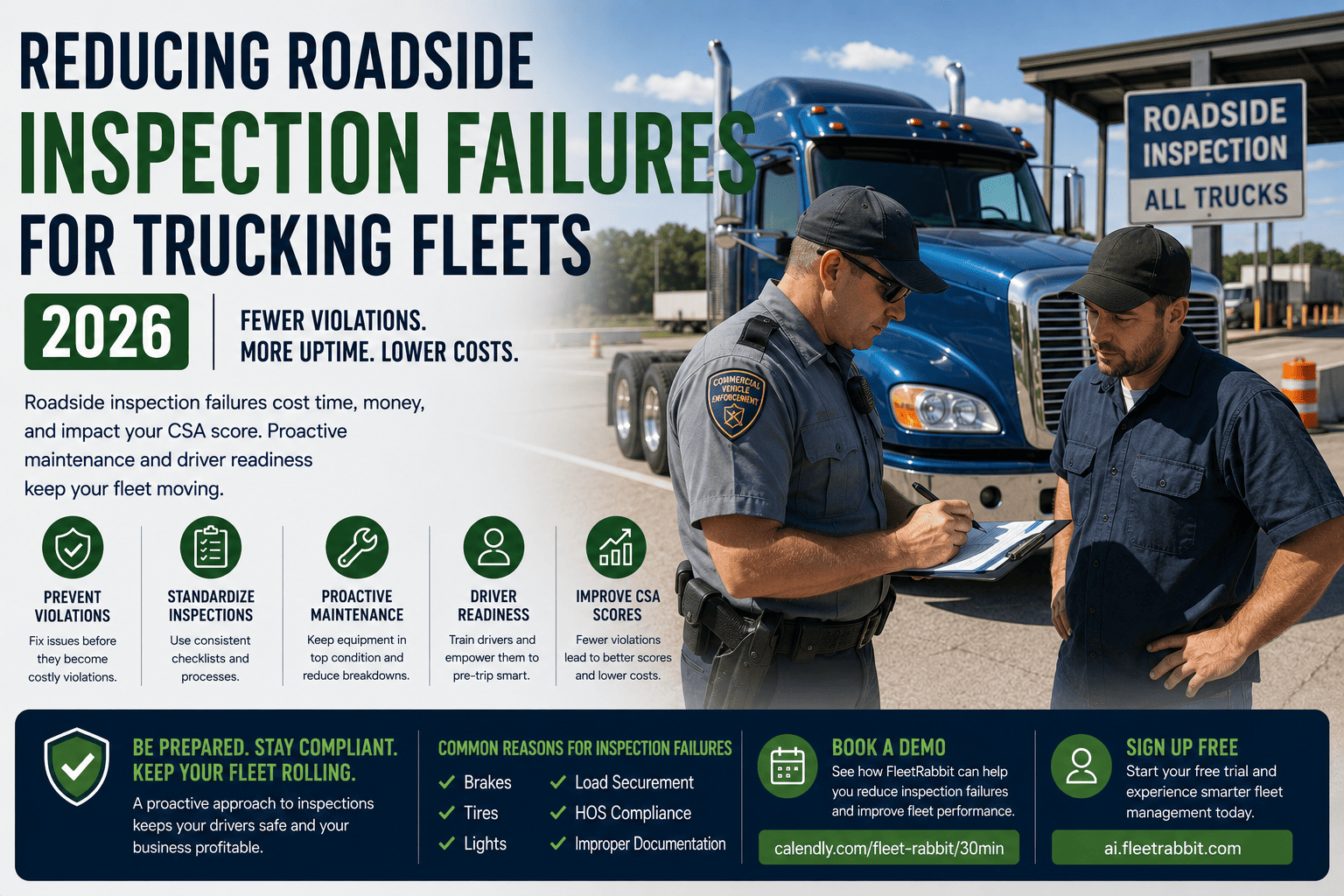
Nearly one in five roadside inspections in the United States now ends with a vehicle placed out of service, and the trend is moving in the wrong direction, not the right one. For a fleet, that single moment at the weigh station is never just a citation. It is a stranded driver, a stalled shipment, and a mark on your CSA score that stays on record for 24 months. The frustrating part is that most of these failures trace back to conditions a proper pre-trip inspection would have caught before the truck ever left the yard.
The national vehicle out-of-service rate sits close to 20 percent, meaning roughly one in five inspected trucks has a condition serious enough to halt the trip. Brake system defects alone account for close to a quarter of all vehicle out-of-service findings, with cargo securement, tires, and lighting close behind. Fleets running digital pre-trip inspections catch these issues before departure instead of at the roadside, where the cost is far higher.
Where Fleets Actually Fail Inspections
Not every violation carries equal weight, and not every category deserves equal attention. Enforcement data consistently points to a small handful of mechanical categories that drive the overwhelming majority of out-of-service orders. Understanding where the risk concentrates is the fastest way to focus your inspection program where it actually matters.
The Real Cost Behind Every Failed Inspection
An out-of-service order stops the truck exactly where it stands, at the inspection site, on the shoulder, or at the weigh station. The freight does not move and the driver does not earn until the issue is resolved or the vehicle is towed. That downtime compounds with the paperwork: the violation stays on your safety record regardless of how quickly it gets fixed, feeding directly into your CSA BASIC scores for the next two years. Carriers already near an intervention threshold in the Vehicle Maintenance BASIC can trigger a formal warning letter from a single bad inspection week.
Insurance underwriters watch this data closely. A cluster of out-of-service violations can raise premiums within weeks, and repeat findings sometimes lead to contract reviews from shippers who track carrier safety scores as part of vendor selection. None of this requires a crash or an injury. It only requires a truck that left the yard with a defect nobody caught.
Paper Checklists Versus Digital Pre-Trip Inspections
Most fleets already require pre-trip inspections. The gap is rarely the requirement itself, it is whether the inspection actually surfaces a defect before the truck reaches an inspector. A clipboard checklist depends entirely on a driver's judgment and a supervisor eventually reviewing a stack of paper. A digital inspection closes that gap the moment a defect is logged.
| Inspection Factor | Paper-Based Checklist | Digital Pre-Trip Inspection |
|---|---|---|
| Defect Visibility | Reviewed by a supervisor after the fact, if at all | Flagged instantly with photo evidence attached |
| Work Order Creation | Manual entry, often delayed by hours or days | Automatic escalation the moment a defect is logged |
| Record Retention | Paper forms, easily lost or incomplete | Time-stamped digital record for every inspection |
| CSA Documentation | Difficult to produce during a compliance review | Instantly searchable history for audits and DataQs challenges |
| Driver Accountability | Hard to confirm a full inspection actually occurred | GPS and timestamp confirm inspection location and duration |
FleetRabbit turns every pre-trip inspection into a photo-documented digital record, with defects auto-escalated to work orders the moment they are found. You can sign up for a free trial and see your first inspection dashboard within a day.
Four Checkpoints That Prevent Most Roadside Failures
Given how concentrated the violation categories are, a fleet does not need to overhaul its entire maintenance program to see a real drop in out-of-service orders. Focusing inspection discipline on these four areas addresses the majority of documented failure points.
Brake System Checks
Pad thickness, air pressure, and slack adjuster travel checked before every trip, not just at scheduled service intervals.
Cargo Securement
Tiedown working load limit confirmed against FMCSA Part 393 requirements before the truck leaves the yard.
Tire And Wheel Condition
Tread depth, inflation, and wheel seal condition logged with photo evidence at every pre-trip inspection.
Lighting And Reflectors
Every marker light, brake light, and reflector confirmed functional, a common and easily preventable defect.
Why This Order Matters
Brakes, cargo securement, tires, and lighting together account for the majority of documented vehicle out-of-service findings. Building your daily inspection routine around these four areas first delivers the fastest reduction in failed inspections, before expanding coverage to every remaining item on the checklist.
Benchmarks Worth Tracking In Your Fleet
A fleet that never measures its own inspection performance has no way of knowing whether it is trending toward the national out-of-service average or well below it. Track the percentage of pre-trip inspections completed on time, the number of defects caught before departure versus caught at the roadside, and the average time between a defect being logged and a work order being closed. Fleets that close this loop digitally typically see documented defects resolved in hours instead of days, and that speed is what keeps a truck out of an out-of-service order in the first place.
A Simple Self-Check
If your fleet cannot produce a complete digital inspection history for a specific truck on a specific date within minutes, your program is likely still paper-dependent in practice even if a digital tool exists somewhere in your stack. Fleets that book a demo to review this gap often find the fix is faster than expected, since the underlying inspection process rarely needs to change, only how it is captured and escalated.
FleetRabbit turns your pre-trip inspections into a documented, photo-verified digital record with defects escalated to work orders instantly. Catch the brake, tire, cargo, and lighting issues that cause most out-of-service orders before your truck ever leaves the yard.