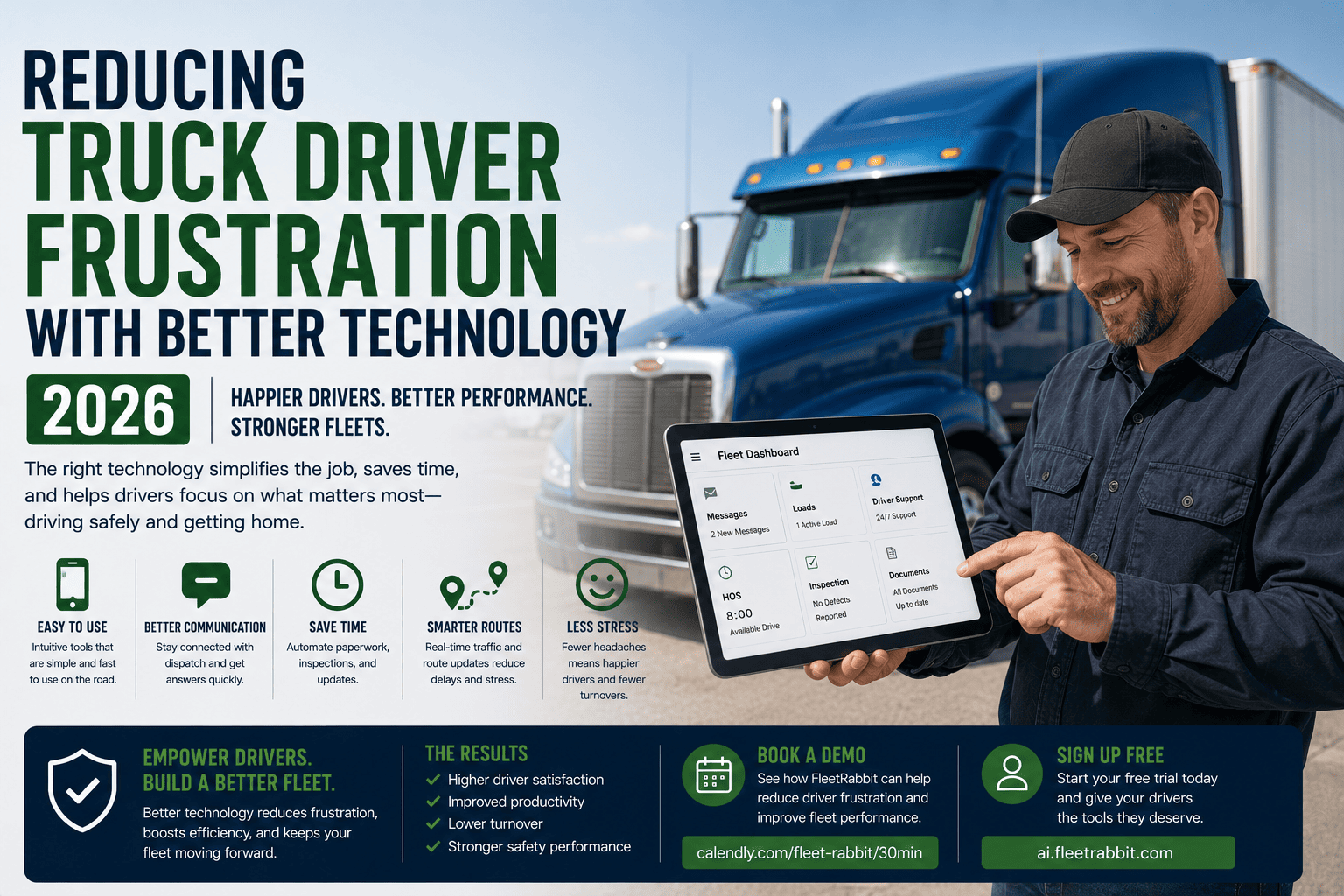
Trucking has a turnover problem that no amount of recruiting can outrun. The industry average sits close to 94 percent annually, meaning most fleets are effectively rebuilding their driver roster every single year. Pay gets most of the attention in these conversations, but a growing body of driver survey data points to something just as powerful and far cheaper to fix: the technology drivers are handed every single shift, and whether it helps them or just adds one more thing to fight with.
More than half of truck drivers, 52 percent, say technology directly influences whether they stay with a fleet or leave. Drivers are nearly split on today's tools, with 53 percent saying technology makes the job harder and only 47 percent saying it makes the job easier. Fleets that fix this gap with intuitive, mobile-first tools have cut turnover from the industry average of 94 percent down to as low as 55 percent.
Drivers Are Split On Whether Technology Helps Or Hurts
This is not a small dissatisfied minority. It is close to a coin flip, and that split explains why fleets rolling out the same generic telematics stack get wildly different retention results. The difference is not whether a fleet has technology, it is whether that technology was actually built for the person using it from inside a moving cab.
The Everyday Friction Points Driving Drivers Out
Ask drivers directly and the same handful of complaints surface again and again. None of these are exotic problems requiring new hardware. They are workflow problems that better software design solves directly.
Paperwork Overload
Redundant forms and repeated data entry eat into personal time drivers never get back.
Delayed Communication
Waiting hours for a dispatch reply leaves drivers guessing about routes, loads, and home time.
Unclear Pay Breakdowns
Settlement statements without a clear miles, stops, and deductions breakdown erode trust fast.
Clunky App Interfaces
Outdated screens and confusing menus turn a simple task into a five-minute frustration.
What Fixing This Actually Looks Like In Retention Numbers
These are not abstract satisfaction scores. They translate directly into whether a driver renews for another year or starts browsing job boards. One documented example cut turnover from the 94 percent industry average down to 55 percent after rolling out an intuitive in-cab app that consolidated routing, inspections, and logs into one simple experience.
FleetRabbit combines routing, digital inspections, HOS logs, and dispatch messaging into a single mobile experience built for a cab, not a desktop. You can sign up for a free trial and let your drivers feel the difference in their first shift.
Legacy Fleet Tools Versus Driver-First Design
Most of the technology frustrating drivers today was not built with them in mind. It was built for back-office reporting first, with the driver-facing screen added afterward. That order of priorities is exactly backward, and it shows in daily use.
| Experience Factor | Legacy Fleet Software | Driver-First Mobile Design |
|---|---|---|
| Onboarding Time | Multi-day training on separate systems | Guided in-app walkthrough, productive same day |
| Daily Workflow | Separate apps for logs, inspections, and messaging | One unified app covering the entire shift |
| Connectivity | Fails or freezes in low-signal areas | Offline-first design that syncs once reconnected |
| Pay Visibility | Opaque settlement statements, questions routed to accounting | Self-service breakdown of miles, stops, and deductions |
| Communication Speed | Hours-long delay waiting on dispatch replies | Real-time messaging with status visibility both ways |
Why Offline-First Design Matters More Than It Sounds
A driver losing signal for twenty minutes on a rural stretch should never mean losing an inspection in progress or a message that never sends. Offline-first tools quietly remove one of the most common sources of daily frustration, simply by working the way the road actually works.
Where To Start If You Only Fix One Thing
Fleets do not need to replace every system at once to see a difference. Dispatch communication and pay visibility touch every driver, every single shift, which makes them the fastest place to remove friction. Digital inspections and simplified logbooks are a natural next step once that foundation is in place.
A Quick Way To Diagnose Your Own Gap
Ask five drivers what part of their day feels most like fighting the technology instead of using it. If the same answer comes back three or more times, that is your starting point. Fleets that book a demo often use this exact exercise before deciding which workflow to digitize first.
FleetRabbit replaces the scattered, clunky tools frustrating your drivers with one mobile app built for the cab, covering routing, inspections, logs, and communication in a single simple experience.