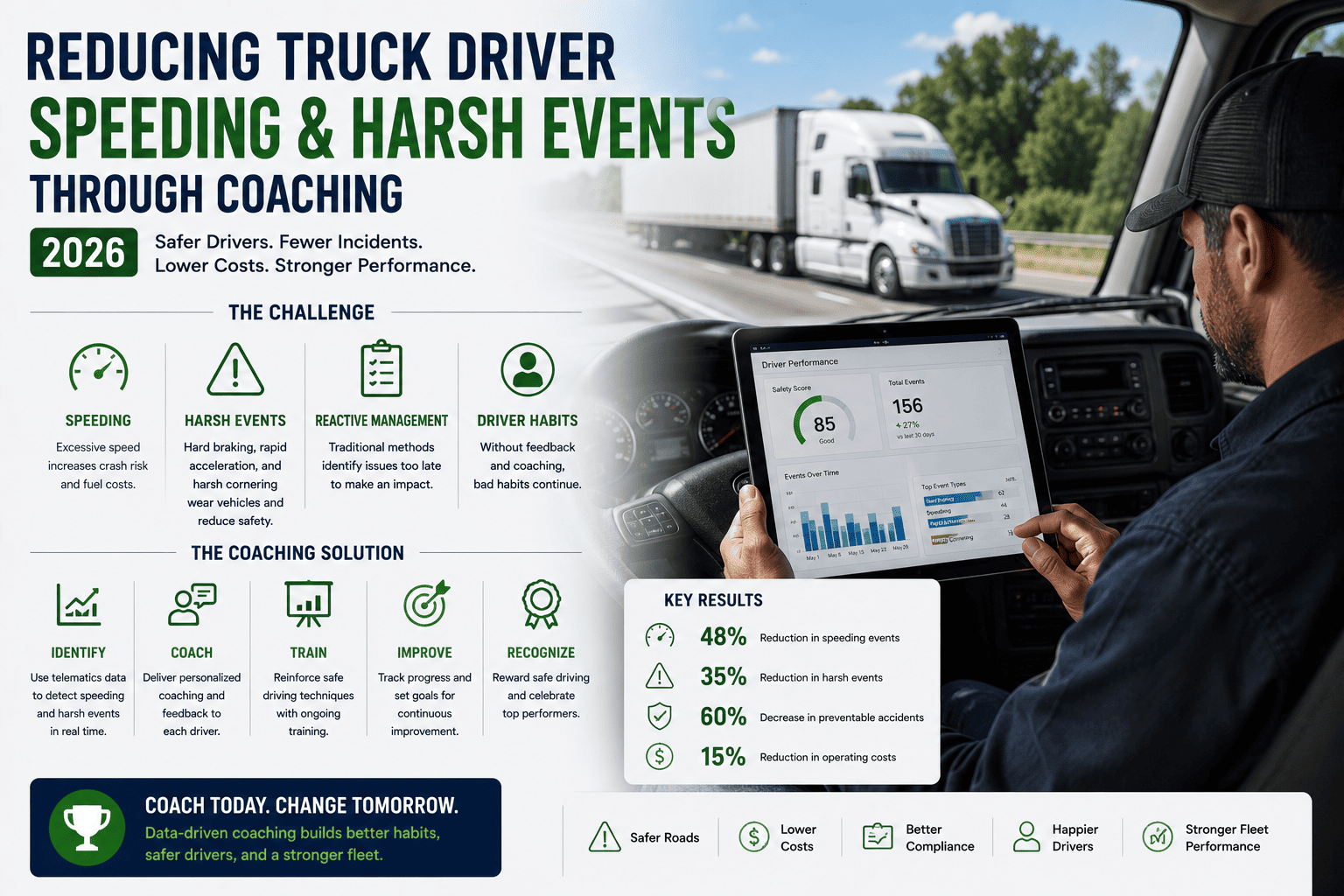
Every fleet has a driver who hard-brakes 12 times in a single shift and never has an accident, and another who drives smoothly for months until one bad moment turns into a six-figure claim. The difference between those two outcomes usually isn't luck. It's whether anyone was watching the pattern closely enough to coach it before it became a statistic.
Fleets that pair telematics-based behavior monitoring with targeted coaching reduce speeding and harsh event rates by 20 to 35 percent within the first 90 days. Fleets using this approach have recorded up to a 30 percent decrease in speeding-related accidents and typically qualify for 8 to 15 percent lower insurance premiums once documented score improvement reaches underwriters.
Why Speeding And Harsh Events Keep Repeating
Speeding and harsh braking rarely come from a driver deciding to be careless. They come from small, repeatable habits that never get flagged because nobody is looking closely enough at the pattern. A driver who follows slightly too close might never think of it as tailgating, just as normal spacing in traffic. Without data showing the pattern, that habit repeats every shift, invisible until it results in an incident that finally forces a conversation nobody wanted to have.
Punishment After The Fact Doesn't Change Behavior
Traditional fleet safety management waits for something to go wrong. A citation arrives, an accident happens, or a customer complains, and only then does a manager sit down with the driver. By that point, the behavior has already repeated dozens or hundreds of times, and a single after-the-fact conversation rarely changes a habit that deep.
Not Every Harsh Event Means Bad Driving
Context matters. A driver who suddenly shows three harsh braking events in one morning after months of smooth driving is more likely reacting to unexpected traffic than developing a bad habit. The goal of coaching isn't to flag every event equally, it's to separate a genuine one-time reaction from a pattern that's building into real risk.
FleetRabbit scores every trip for speeding and harsh events, flags the drivers who need attention, and builds coaching workflows around real behavior data instead of waiting for a citation to start the conversation.
Matching The Coaching Approach To The Behavior
Speeding and harsh events don't respond to the same coaching approach. Each behavior has its own root cause and its own most effective correction, and treating them all the same way wastes the data a fleet is already collecting.
| Behavior | Common Root Cause | Effective Coaching Approach |
|---|---|---|
| Repeated Speeding | Schedule pressure or underestimating stopping distance | Review specific corridors and times where speeding concentrates, adjust route timing |
| Harsh Braking | Short following distance or delayed traffic anticipation | Use trip footage to show the moment, coach on earlier speed management |
| Aggressive Cornering | Underestimating vehicle load or turn radius | Pair with vehicle-specific handling guidance for the truck being driven |
| Rapid Acceleration | Habit carried from lighter or different vehicle experience | Set smoother acceleration targets tied to fuel efficiency feedback |
| One-Time Harsh Event | Genuine reaction to sudden traffic or hazard | Acknowledge as normal, monitor for recurrence rather than penalize |
Building A Coaching Program That Actually Changes Behavior
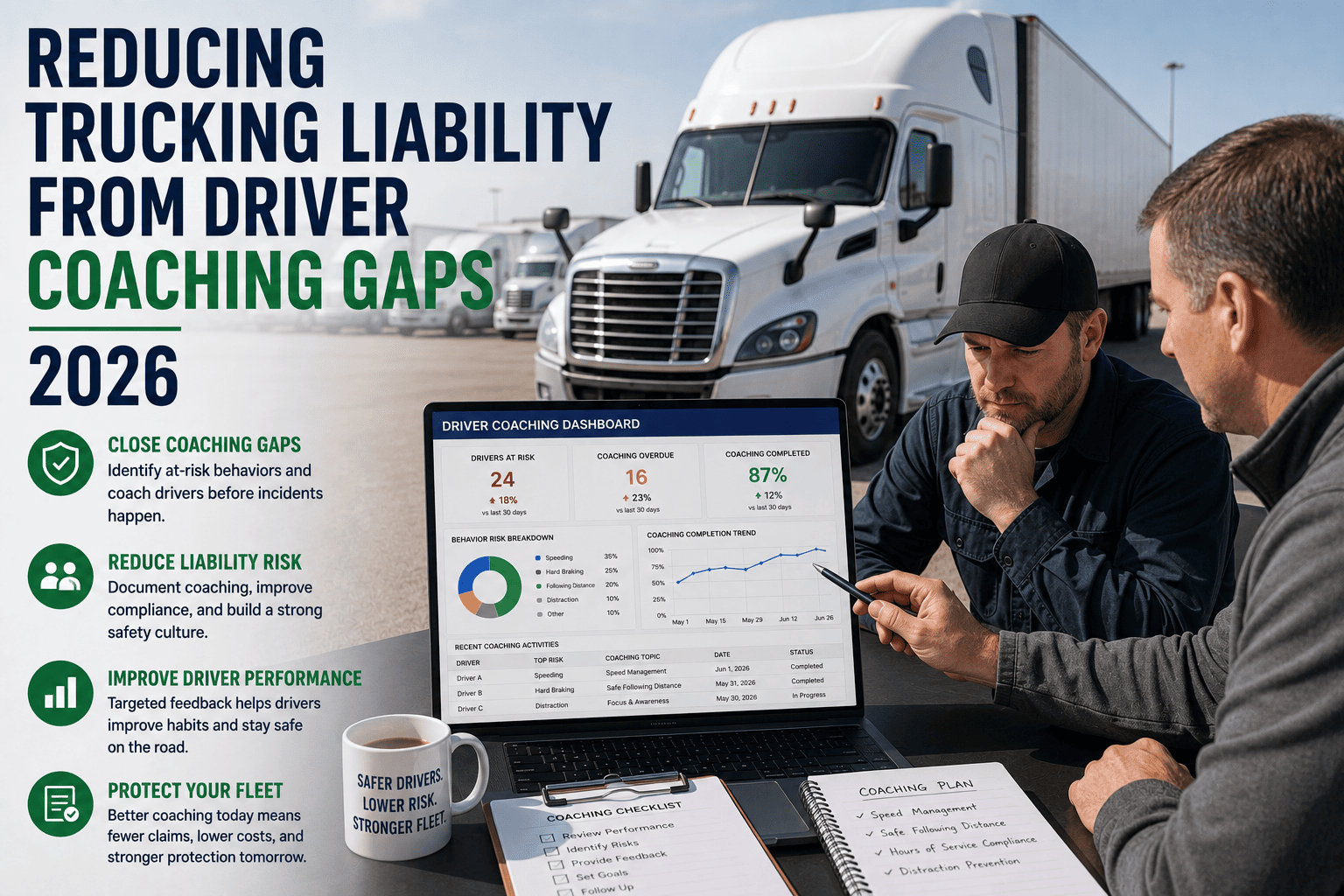
A coaching program works when it's specific, timely, and tied to real data the driver can see for themselves. Vague reminders to "drive safely" rarely move a score. A coaching session built around an actual trip, an actual event, and an actual number does.
Score Every Driver On The Same Scale
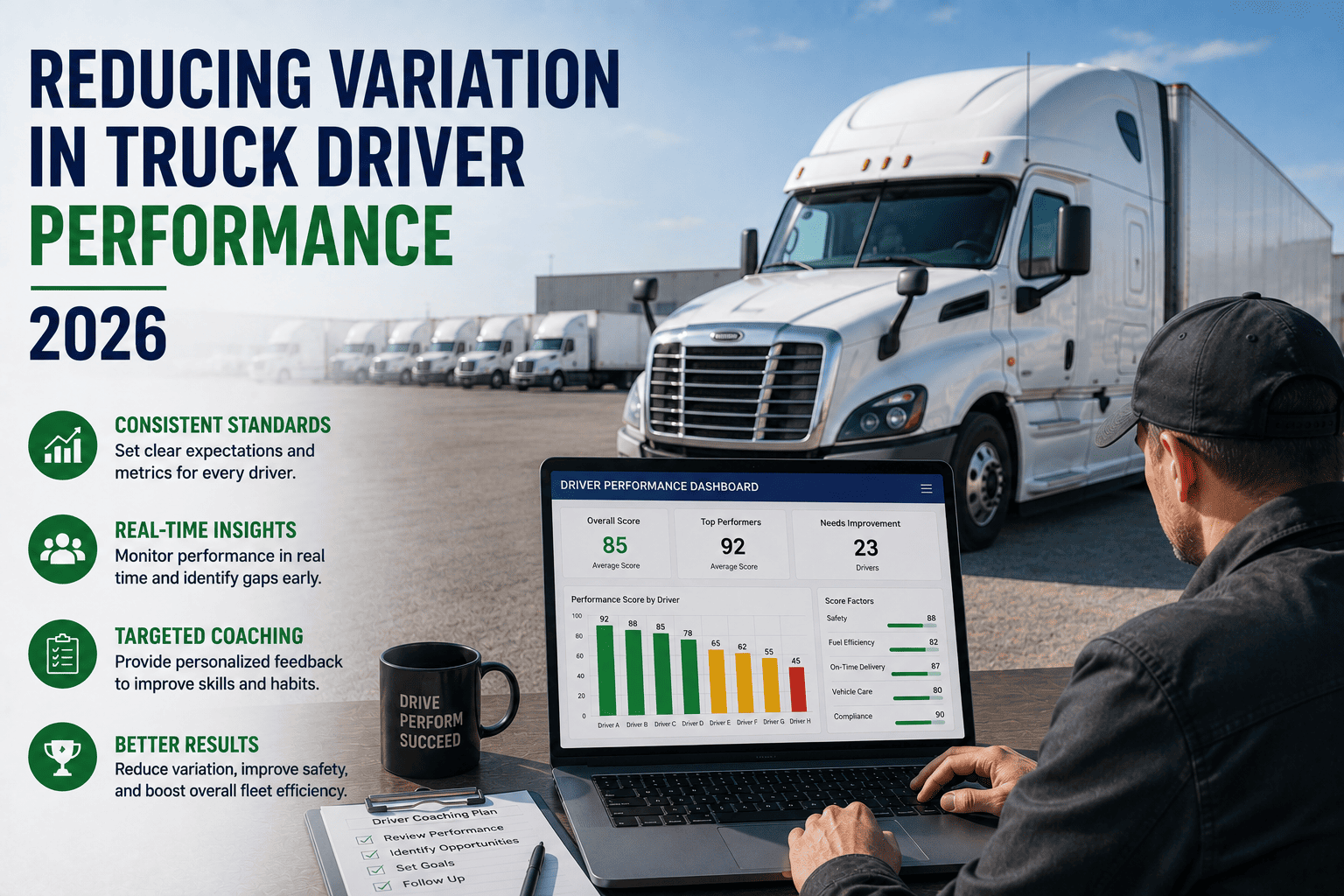
A driver scorecard that combines speeding, harsh braking, cornering, and acceleration into one consistent score gives both the manager and the driver a shared reference point. Drivers respond better to a number they can track and improve than to a general warning about attitude or care.
Coach The Lowest Scores First
Not every driver needs the same attention. A coaching queue that automatically surfaces the lowest-scoring drivers each week focuses limited manager time on the people generating the most risk, instead of spreading attention evenly across a fleet where most drivers are already doing fine.
Show, Don't Just Tell
Pairing a flagged event with the actual trip footage or data trace turns a coaching session from a lecture into a shared review. A driver who sees the exact moment a harsh brake occurred, and the traffic that caused it, engages with the feedback instead of dismissing it.
Signing up for FleetRabbit builds this scorecard and coaching queue automatically from your existing telematics data, so a coaching program is running within days instead of months of manual setup.
FleetRabbit ranks drivers automatically, flags who needs coaching first, and logs every session so improvement is documented, measurable, and ready to show your insurance underwriter at renewal.
Metrics That Show Coaching Is Actually Working
A coaching program is only as good as the numbers you use to check it. A short set of metrics tracked monthly tells you whether behavior is genuinely improving or just looking better on paper.
Events Per 1,000 Miles
Normalizing harsh events and speeding incidents per 1,000 miles driven, rather than raw counts, lets you compare drivers fairly regardless of route length or shift schedule.
Score Improvement After Coaching
Track how much a driver's score moves in the 30 days after a coaching session. A driver who climbs from a flagged score into the above-average range confirms the session worked, not just that it happened.
Fuel Efficiency As A Side Benefit
Drivers who reduce harsh acceleration and speeding typically also show 8 to 15 percent better fuel economy, giving fleet managers a second, budget-visible signal that coaching is paying off beyond the safety numbers alone.
Booking a demo walks through exactly how these benchmarks would look against your own fleet's current driver behavior data.
Key Takeaways
Speeding and harsh braking are rarely the result of a driver deciding to take a risk. They're habits that repeat quietly because nobody is watching closely enough to catch the pattern before it becomes an incident. Waiting for a citation or a claim to start the coaching conversation means the behavior has already had months to become routine, which is exactly why after-the-fact discipline rarely changes anything.
What actually works is continuous, data-backed coaching: a scorecard every driver can see, a queue that surfaces the highest-risk drivers first, and sessions built around real trip data instead of general reminders. Fleets that adopt this approach consistently cut incident rates by 20 to 35 percent within 90 days, while also picking up lower insurance premiums and better fuel economy along the way.
FleetRabbit scores every driver automatically, flags who needs coaching first, and gives you the documented improvement your insurer wants to see. Start free and watch your first scorecard build itself from data you already have.