By the time a dashboard warning light turns on, the problem behind it has usually been developing for weeks. The engine control unit noticed the abnormal reading long before the driver ever saw a light, but that information sat unused because nobody was watching for it in real time. That gap between "the truck knew" and "the fleet manager found out" is exactly where unplanned breakdowns come from, and it's exactly what condition monitoring is built to close.
Condition monitoring tracks engine temperature, vibration, fault codes, and battery health in real time, catching developing problems weeks before a warning light appears. Fleets using real-time diagnostic trouble code monitoring reduce breakdowns by up to 75 percent and cut unplanned downtime in half, while unplanned breakdowns otherwise cost 448 to 760 dollars per vehicle per day. Sign up free to start watching your fleet's real-time health data.
The Warning Light Comes On Too Late
Diagnostic trouble codes, the alphanumeric signals an engine control unit generates the instant a sensor reading falls outside its normal range, often appear weeks before the dashboard warning light does. Capturing that code the moment it fires is what creates the lead time a maintenance team actually needs. Waiting for the warning light means waiting for the problem to get loud enough to notice on its own, usually right around the point where a 200 dollar scheduled repair has already become an 8,000 dollar roadside emergency.
How Much Lead Time You're Actually Losing
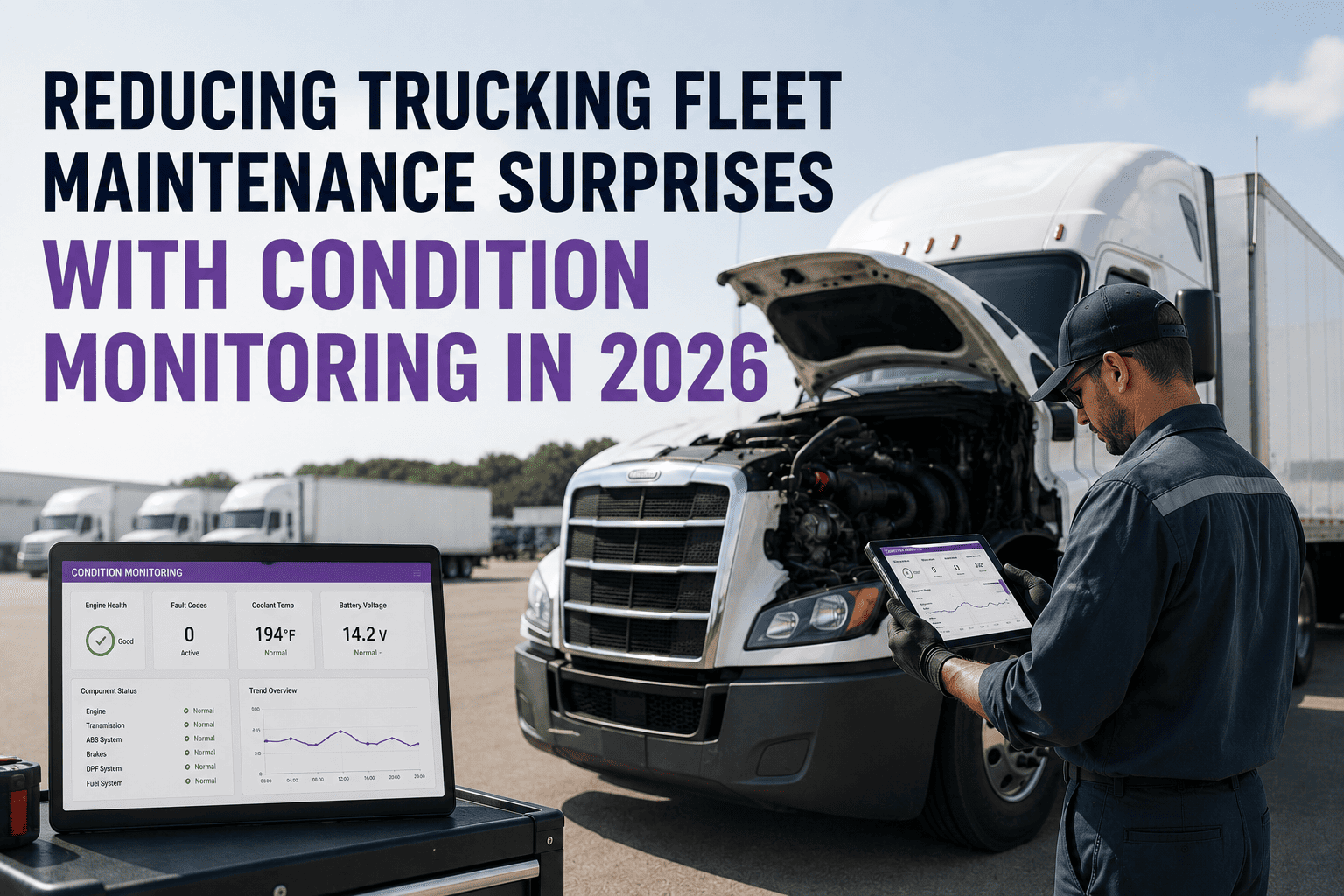
FleetRabbit monitors fault codes, engine temperature, and vibration data in real time, giving your team the same lead time the engine control unit already has, before a dashboard light ever appears.
What Condition Monitoring Actually Tracks
Modern telematics units connect directly to a truck's CAN-bus or J1939 data stream, pulling hundreds of live parameters that used to be invisible until a technician plugged in a scan tool after something went wrong.
Engine Temperature
Rising temperature trends flag cooling system issues before an overheating shutdown strands a load hundreds of miles from the nearest shop.
Vibration Patterns
Abnormal vibration signatures surface early-stage bearing wear and drivetrain issues invisible during a normal walk-around inspection.
Fault Codes (DTCs)
Every diagnostic trouble code is captured and scored by severity the instant it fires, instead of waiting to be pulled at the next scheduled visit.
Battery Voltage
Gradual voltage decline gets flagged well before a dead battery turns into a missed morning dispatch and a roadside jump.
Reactive Maintenance vs. Condition-Based Monitoring
Most fleets don't choose reactive maintenance on purpose, it's simply what happens by default when nobody is watching the data a truck is already generating.
| What Happens | Reactive Maintenance | Condition-Based Monitoring |
|---|---|---|
| When Issues Get Caught | Only after a warning light or a breakdown occurs | Weeks earlier, the moment a fault code or trend fires |
| Repair Cost | Emergency repairs run 3 to 9 times more than planned work | Scheduled repairs at normal labor and parts pricing |
| Daily Downtime Cost | 448 to 760 dollars per vehicle per day, unplanned | Repairs scheduled around routes, minimizing lost revenue |
| Fleet-Wide Impact | 73 percent of fleets still run largely reactive programs | Breakdown rates cut by up to 75 percent with real-time DTC alerts |
| Diagnostic Process | Guesswork until a technician plugs in a scan tool | Full code definitions and probable causes available instantly |
What Condition Monitoring Looks Like in Practice
From Live Data to a Scheduled Repair
Continuous Data Capture
Telematics units already installed on most trucks stream engine, vibration, and fault code data around the clock.
Severity Scoring
Each fault code is scored by severity, separating an issue that needs attention today from one that can wait for the next scheduled visit.
Automatic Manager Alerts
High-severity codes trigger an immediate alert, with plain-language explanations replacing raw diagnostic strings nobody has time to decode.
Scheduled Shop Visit
The repair gets booked around the route instead of interrupting it, turning a potential roadside emergency into routine maintenance.
Over 90 percent of trucks manufactured in 2026 already ship with embedded telematics, and if your fleet has GPS tracking installed, it likely has fault code transmission capability that simply needs to be switched on. You can book a free demo to see what your existing trucks are already telling you.
FleetRabbit activates fault code monitoring on your existing telematics hardware, scoring every diagnostic trouble code by severity and alerting your team before small issues turn into roadside emergencies.
Frequently Asked Questions
FleetRabbit turns the fault codes and engine data your trucks already generate into real-time alerts, scheduled repairs, and fewer roadside surprises across your entire fleet.