A reefer trailer that looks fine from the outside can still ruin an entire load if nobody checks the parts that actually keep it cold. Temperature excursions rarely start as a dramatic breakdown on the highway. They start small: a slipping belt nobody noticed, a torn air chute, a fuel tank that was never topped off. A disciplined reefer unit pre-trip inspection catches these problems while they are still cheap and quiet, long before they become a rejected load or an FSMA violation.
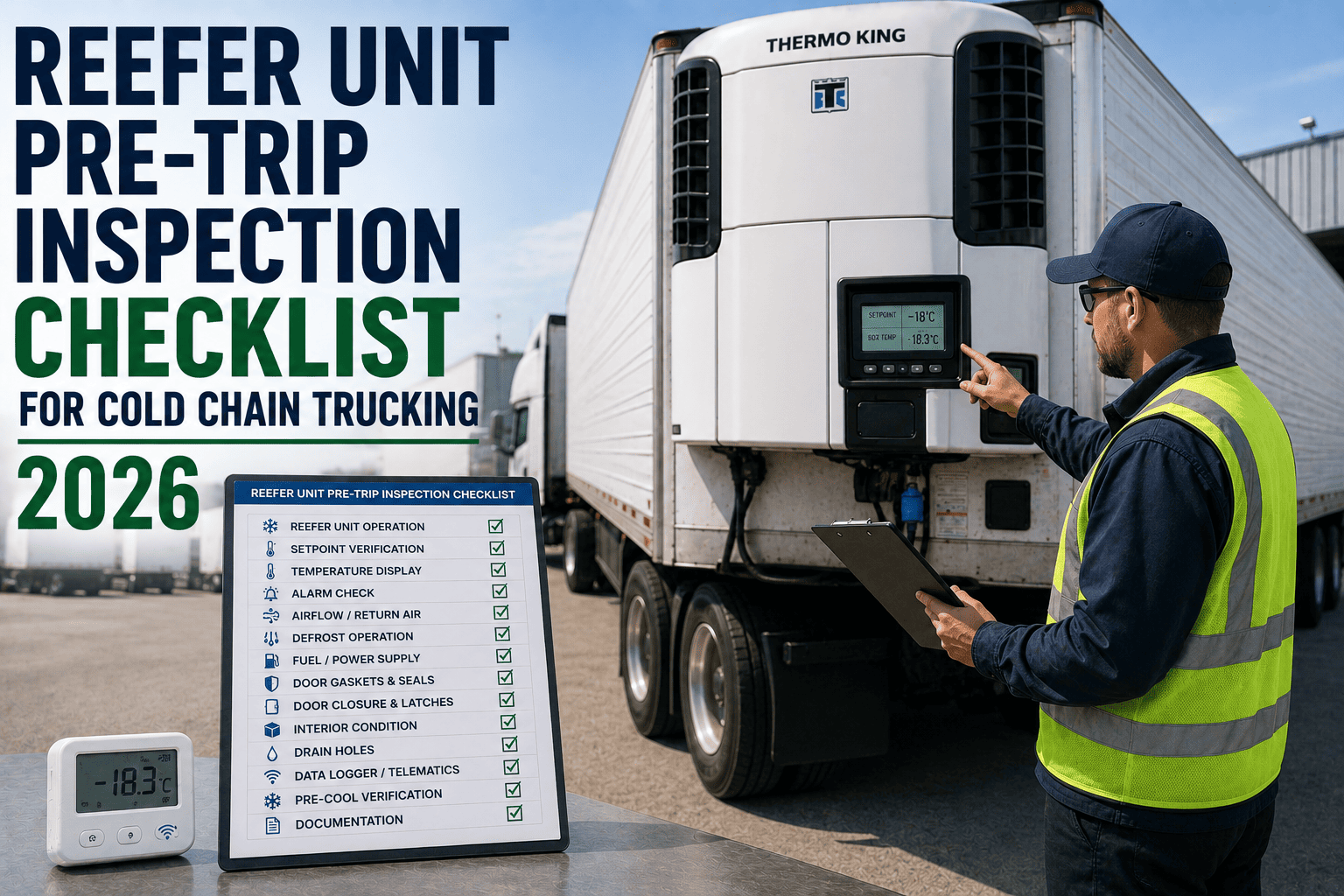
A proper reefer pre-trip inspection covers five areas: fuel and fluid levels, the refrigeration unit itself, airflow inside the trailer, door seals and structural integrity, and the electrical and alarm systems. Running the unit on diesel power (not just shore power) for at least 15 minutes before departure confirms it can actually hold temperature on the road. Fleets that log this inspection digitally instead of on paper catch defects earlier and build an audit-ready compliance trail automatically.
Why a Five-Minute Check Prevents a Five-Figure Loss
Refrigerated cargo does not forgive a mechanical shortcut. A pharmaceutical pallet or a truckload of produce can lose its entire value if the reefer drifts out of range for even a few hours. Beyond the cargo loss, the Food Safety Modernization Act requires sanitary, temperature-controlled transport, and a driver who skipped the pre-trip has no documentation to prove the unit was fit for the load. A ten-minute walk-around at the yard is far cheaper than a spoiled trailer, a customer claim, or a compliance audit finding.
Fleets that treat the pre-trip as a formality tend to discover problems only after the cargo is already compromised. Fleets that treat it as a real diagnostic step catch a slipping belt, a low refrigerant sight glass, or a torn air chute while the trailer is still parked, not somewhere on the interstate at 2 a.m.
The Sequence That Actually Works
Skilled reefer inspectors follow the same order every time so nothing gets skipped under time pressure. Start outside the trailer, move to the refrigeration unit itself, then finish inside the box with the doors closed.
| Inspection Zone | What to Check | Warning Sign | Why It Matters |
|---|---|---|---|
| Fuel & Engine Fluids | Fuel gauge, engine oil level, coolant level, exhaust condition | Fuel below a quarter tank, milky or low oil, coolant discoloration | The reefer's diesel engine powers cooling independently of the tractor |
| Belts & Compressor | Belt tension, cracking, fraying, refrigerant sight glass, compressor sound | Visible glazing, bubbles in the sight glass, grinding noise | Belts typically need replacement every 1,500 to 3,000 engine hours |
| Air Chute & Vents | Chute attachment, tears, cargo blocking floor channels | Loose chute, cargo stacked against the wall or floor tracks | Blocked airflow spoils the rear of the load even when the front reads cold |
| Door Seals & Walls | Gasket condition, light test, wall and roof panels for damage | Cracked rubber, visible light through seals, dented panels | Air infiltration forces the unit to run harder and burn more fuel |
| Electrical & Alarms | Door alarm test, temperature display accuracy, battery terminals | Corrosion on terminals, alarm fails to trigger, display error codes | Alarms are the only early warning once the trailer is on the road |
| Setpoint Run Test | Run unit on diesel power to setpoint for 15+ minutes | Unit cycles off before reaching target, unusual vibration | Shore power alone cannot confirm over-the-road cooling capacity |
FleetRabbit turns this checklist into a mobile inspection your drivers complete before every dispatch, with photo evidence and instant defect alerts sent straight to maintenance. Sign up for a free trial and see how much faster compliant inspections can be.
Failures a Good Pre-Trip Catches Before They Cost You
Most reefer breakdowns on the road trace back to something visible during a careful pre-trip. Learning to recognize these early signs turns a routine inspection into real breakdown prevention.
Common Cooling Failures and Their Root Cause
If a unit fails to reach setpoint, the cause is usually one of four things: low refrigerant, a slipping belt, a clogged condenser coil, or the unit stuck in a defrost cycle. A quick sight-glass check, a visual belt inspection, and confirming the unit is not locked in defrost mode will identify most of these issues on the spot.
Frost, Noise, and Fuel Spikes Are Not Normal
Frost buildup on the evaporator coil, grinding or rattling from the compressor, and a sudden jump in fuel burn are all signs the refrigeration system is under stress. None of these should be waved off as "just how the unit sounds." Each one is a maintenance ticket waiting to happen.
Documentation That Holds Up in an Audit
A pre-trip inspection only protects you if it is documented. Paper forms get lost, smudged, or filled out after the fact from memory. Digital inspection logs timestamp every check, attach photos of defects, and route failed items straight to a maintenance queue. This creates the kind of audit-ready trail that FSMA compliance reviews and insurance claims actually require.
How Often Reefer Units Should Be Inspected
Pre-trip checks belong at the start of every dispatch, no exceptions. Beyond that daily habit, most refrigeration units run roughly 1,800 to 5,000 hours a year depending on route length, which means a deeper service inspection every few months keeps belts, coils, and electrical components ahead of failure rather than reacting to it.
FleetRabbit's inspection app flags failed items instantly, tracks belt and coil service intervals automatically, and keeps a compliance record ready for any audit. Book a demo to see it running on your own fleet's routes.
Frequently Asked Questions
A reefer unit pre-trip inspection is not paperwork for its own sake. It is the one habit standing between a normal delivery and a spoiled load, an FSMA finding, or a stranded trailer on the shoulder. Build the five-zone check into every dispatch, document it consistently, and the cold chain takes care of itself. Sign up for FleetRabbit to move this checklist onto your drivers' phones, or book a demo to walk through it with our team.
FleetRabbit gives your drivers a guided reefer inspection on their phone, alerts maintenance the moment something fails, and keeps every record ready for audit. Start free, no credit card required.