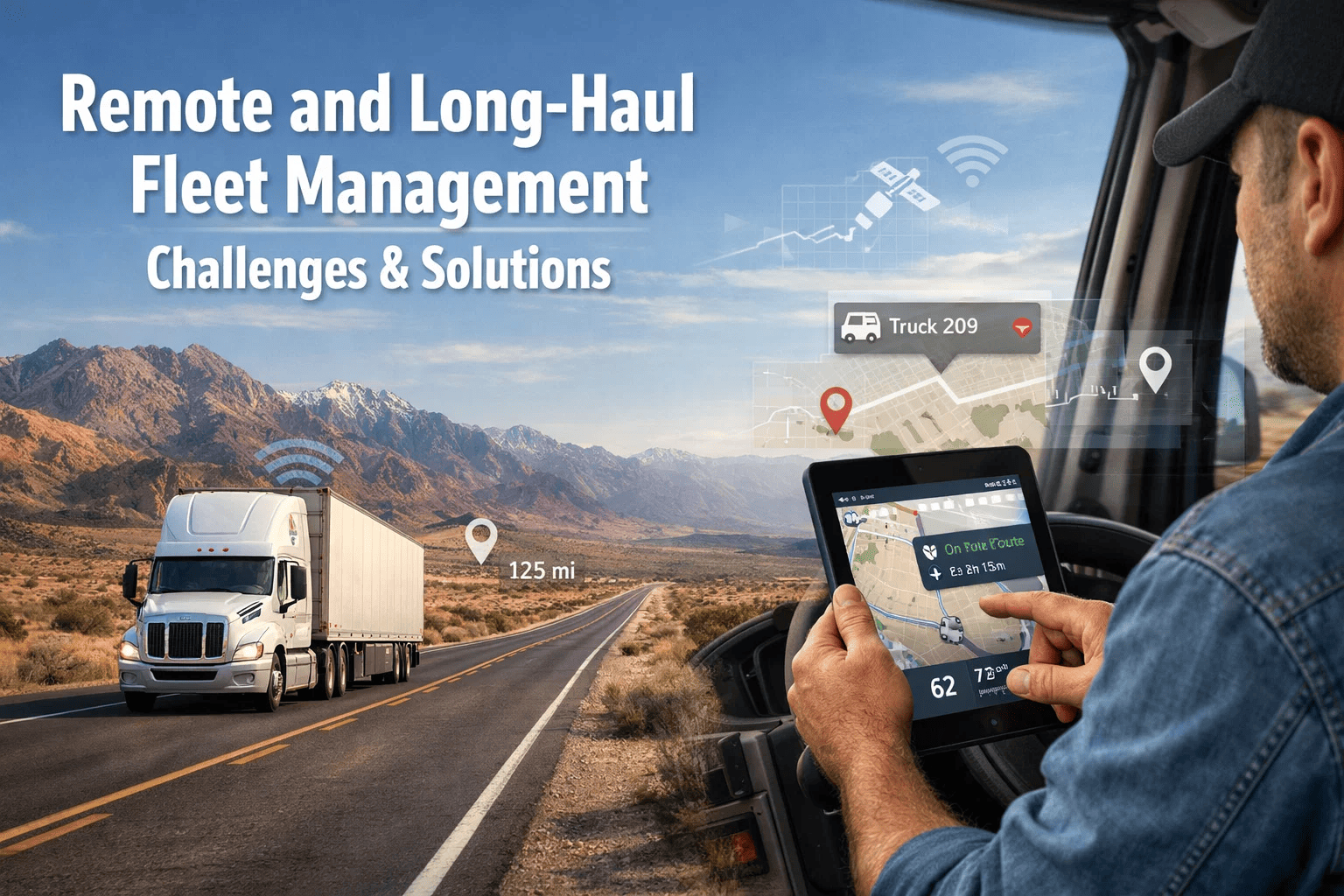
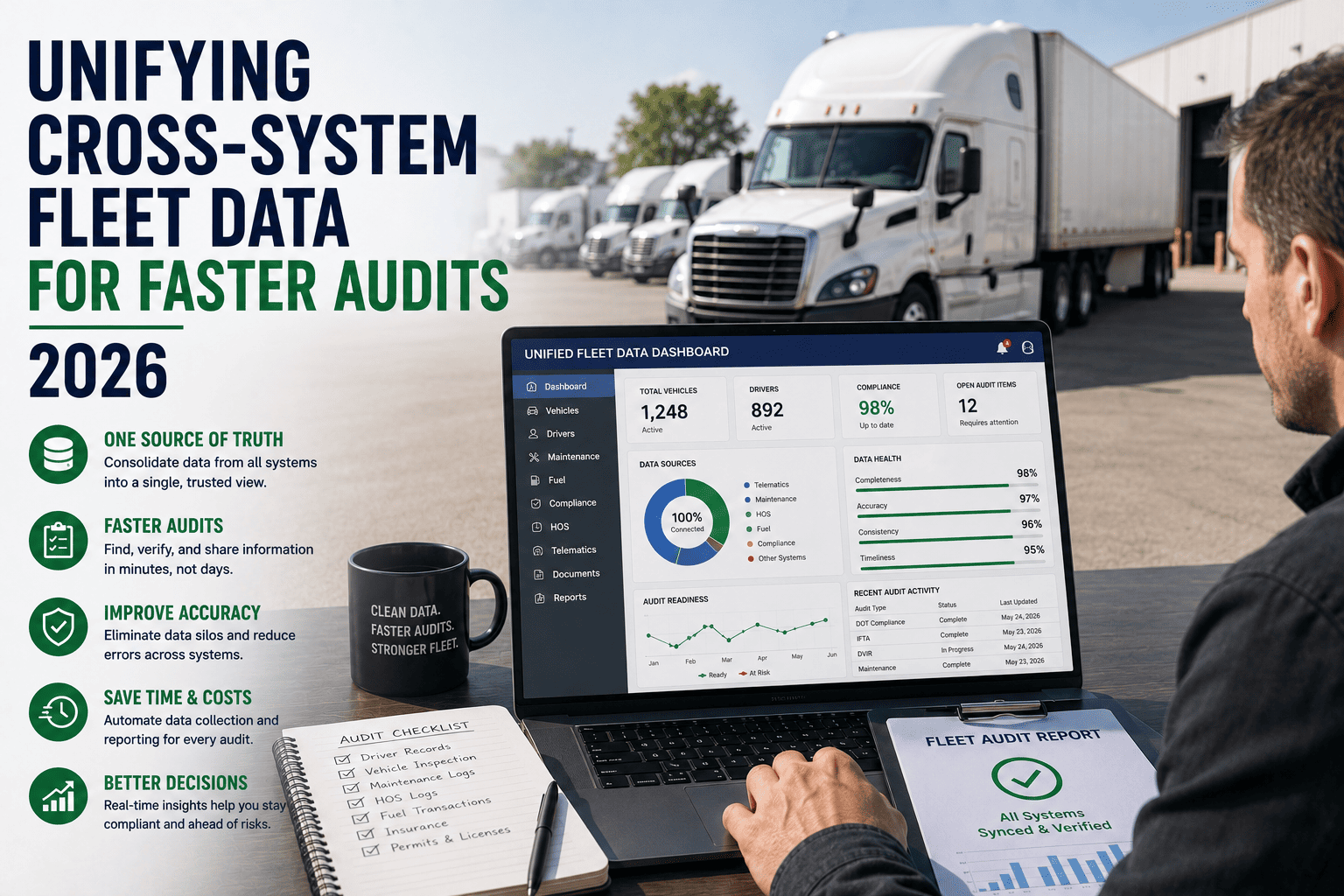
Managing remote and long-haul trucking fleets comes with challenges such as limited connectivity, driver isolation, route unpredictability, and delayed communication. To overcome these issues, fleet managers can leverage advanced GPS tracking, cloud-based fleet software, and real-time communication tools to stay connected with drivers across long distances. Implementing predictive maintenance, digital documentation, and efficient route planning also helps reduce downtime and improve operational control. With the right combination of technology and strategy, companies can ensure smooth coordination, enhance driver safety, and maintain consistent delivery performance even in remote and complex environments.
The Unique Operational Demands of Long-Haul and Remote Fleet Management
Long-haul trucking operations present a fundamentally different management challenge from local or regional fleet operations. When a driver is 1,400 miles from the home terminal navigating a mountain corridor with intermittent cellular coverage, the fleet manager sitting at the operations center does not have the luxury of sending a shop technician to diagnose a check engine light, reviewing paper DVIRs to check inspection compliance, or walking out to the yard to assess a vehicle condition report. Every decision has to be made with remote data, and every intervention has to be coordinated across distances that make face-to-face management impossible.
The operational gaps that remote fleet management creates — in vehicle health visibility, driver safety oversight, regulatory compliance documentation, customer communication, and maintenance coordination — represent the primary sources of cost variance, service reliability failures, and regulatory risk for long-haul logistics operators. Fleets that close these gaps with connected fleet management technology outperform those that rely on driver self-reporting and periodic check-in calls at every measurable operational dimension.
FleetRabbit is built for the operational reality of long-haul trucking. Its connected vehicle monitoring, digital compliance tools, real-time driver performance tracking, and remote maintenance coordination capabilities give fleet managers the visibility and control over vehicles operating thousands of miles from the home terminal that was previously only achievable for local operations.
67%
Of long-haul fleet managers report inadequate real-time vehicle health visibility as their most significant operational challenge in remote territory operations
$18,600
Average total cost of a single long-haul breakdown including remote towing, mobile repair premium rates, driver detention, and missed load penalties
44%
Of driver HOS violations in long-haul operations are attributable to poor dispatch communication about available driving time versus planned route completion requirements
39%
Reduction in long-haul breakdown incidents achieved by fleets implementing predictive maintenance and remote vehicle health monitoring through FleetRabbit
Real-Time Vehicle Health Monitoring Across Remote Operating Corridors
The most operationally damaging aspect of long-haul trucking is the elapsed time between when a vehicle begins developing a problem and when anyone in a position to act on that information becomes aware of it. In local fleet operations, a driver returns to the terminal each day and a technician can walk the equipment, check fluid levels, and observe developing issues. In long-haul operations, a vehicle may be away from the home terminal for two or three weeks, and the only insight the maintenance team has into its condition is whatever the driver chooses to communicate during check-in calls.
FleetRabbit's telematics and vehicle diagnostics integration changes this fundamental information asymmetry. Connected vehicles transmit engine diagnostic codes, fluid temperature alerts, tire pressure readings, emission system status, and electrical fault codes in real time to the FleetRabbit monitoring dashboard, giving maintenance teams continuous visibility into vehicle condition regardless of geographic distance. Early awareness allows maintenance teams to advise drivers, coordinate preemptive repairs at authorized service locations along the route, and prevent developing issues from becoming breakdown events in remote locations where recovery is expensive and time-consuming.
Diagnostic Code Monitoring and Alert Management
Modern commercial vehicle engines generate hundreds of diagnostic parameters that indicate the health of every monitored system — fuel injection, emissions controls, cooling system temperature, turbocharger performance, transmission fluid temperature, and dozens more. FleetRabbit's diagnostics integration captures active fault codes as they are set, categorizes them by severity, and generates alerts to maintenance managers and dispatch teams with severity-appropriate urgency levels. Critical codes that indicate risk of imminent system failure generate immediate escalation alerts, while advisory codes are queued for scheduled service at the next maintenance opportunity.
Tire Pressure Monitoring Across Long Distance Runs
Tire failures are the most common cause of unexpected breakdown events for long-haul commercial vehicles, and the majority of tire failures are preceded by pressure loss that TPMS sensors would have detected well before the catastrophic event. FleetRabbit integrates with TPMS data streams to show real-time tire pressure readings by axle position for connected vehicles, generating low-pressure alerts when any tire drops below configured thresholds. Drivers receive in-cab alerts from the connected system, and dispatch receives simultaneous notification enabling coordinated response to tire pressure events before they become blowouts.
Engine Temperature and Cooling System Monitoring
Engine overheats in remote operating corridors — particularly in mountain regions during warm weather or in desert southwest operations — represent severe mechanical damage risk because the distances to cooling system service are measured in hundreds of miles rather than the streets that separate shops in urban areas. FleetRabbit monitors coolant temperature and cooling system efficiency indicators continuously, generating alerts when temperature trends indicate developing cooling problems before the temperature gauge reaches the red zone. Early warning allows drivers to reduce speed and engine load while service coordination is initiated.
Fuel Level Monitoring and Range Estimation
Running out of diesel fuel in a remote operating corridor is an expensive and operationally embarrassing event that is entirely preventable with proper monitoring. FleetRabbit tracks fuel levels by vehicle and calculates estimated range to empty based on current fuel consumption rate and GPS route data, generating low-fuel alerts when range to the next identified fuel stop approaches minimum safe reserve thresholds. For long-haul operations in remote western corridors where fuel stops may be separated by 150 miles or more, this monitoring capability prevents costly fuel delivery service calls.
Remote Driver Safety and Hours-of-Service Management
Managing driver safety for operators who may spend 20 consecutive nights away from the home terminal, driving through multiple time zones, weather systems, and regulatory jurisdictions requires a level of real-time oversight that is impossible to achieve through periodic check-in calls. Drivers under the pressure of long-haul schedule demands, customer delivery windows, and extended time away from home are at elevated risk for fatigue-related decision making that compromises both their safety and the carrier's compliance record.
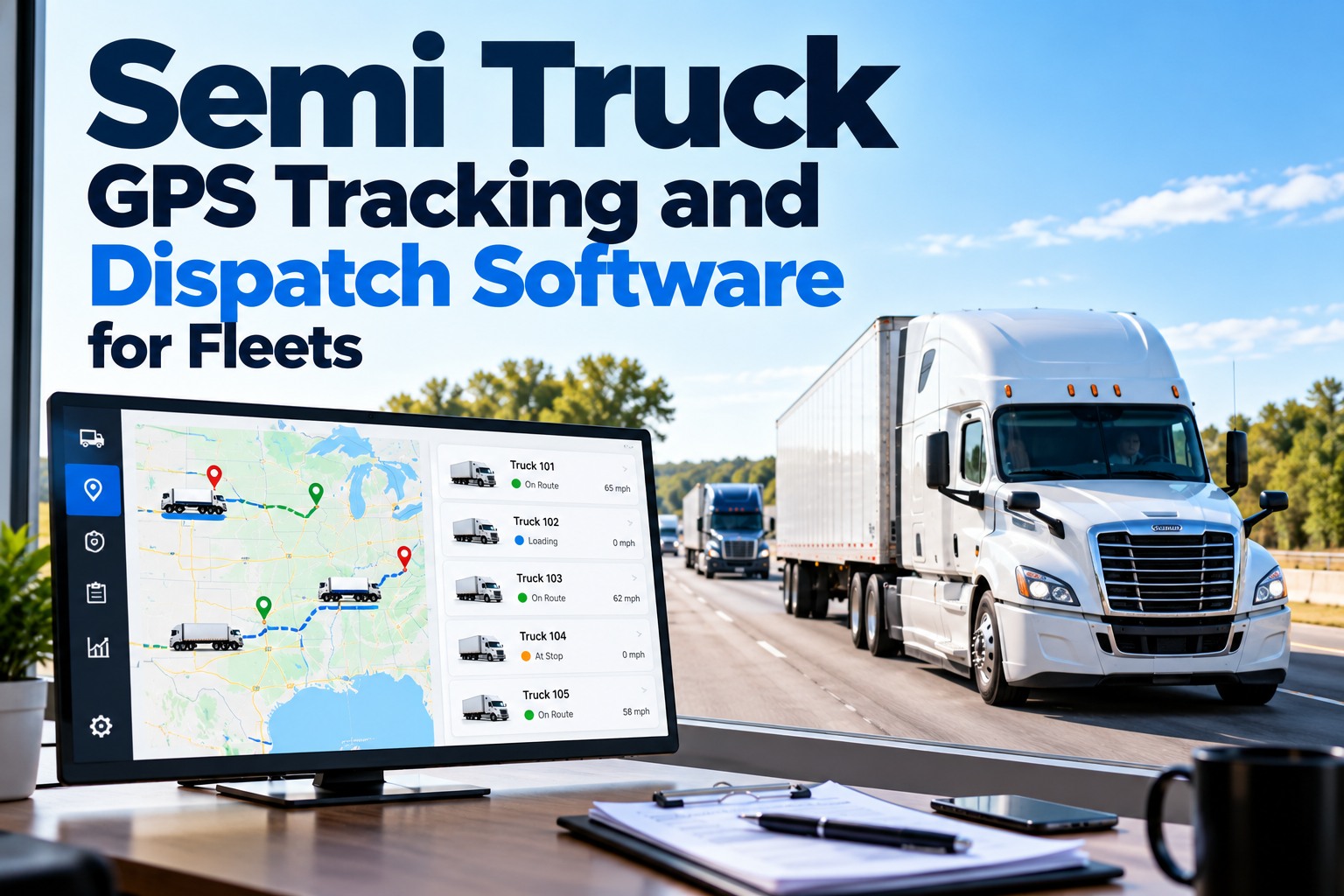
FleetRabbit's integrated ELD and driver monitoring platform provides the continuous visibility into long-haul driver status, behavior, and compliance that distance prevents through any other means. Operations managers can see which drivers are currently driving, which are in their mandatory rest period, which have hours available for the next dispatch, and which are approaching driving time limits that will require a stop before route completion — all from a single dashboard view that updates in real time.
Electronic Logging Device Integration and HOS Compliance
FleetRabbit's ELD integration captures hours-of-service data from connected driver devices, providing dispatch teams with real-time visibility into available driving time for every active long-haul driver. Dispatch assignments are made with accurate remaining hours data rather than estimates from driver self-reporting, preventing load assignments that require driving time a driver does not have — the dispatch error that drives the majority of HOS violations in long-haul operations. Automated alerts notify dispatch when drivers approach driving time limits, enabling proactive stop planning and load schedule adjustments before violations occur.
Driver Behavior Monitoring for Long-Haul Safety
Speed management, following distance, hard braking frequency, lane departure events, and rapid acceleration patterns are behavioral indicators that correlate with accident risk across all driver populations. In long-haul operations where a single serious accident can cost a carrier millions in vehicle damage, cargo loss, injury liability, and insurance premium increases, identifying and correcting high-risk driver behavior before an incident is the highest-return safety investment available. FleetRabbit captures and scores driver behavior continuously, generating coaching alerts for drivers demonstrating elevated risk behavior before safety managers review the monthly performance report.
Remote Driver Communication and Emergency Response
When a long-haul driver encounters an emergency situation — a vehicle breakdown in a remote location, a load securing failure, a medical situation, or severe weather conditions that require immediate dispatch support — the quality and speed of fleet management response depends entirely on the communication and location data infrastructure available. FleetRabbit provides dispatch teams with precise GPS location for every active driver, enabling accurate coordination with roadside assistance, emergency services, and mobile repair providers without relying on driver descriptions of their location on unfamiliar roadways in stressful situations.
Maintenance Coordination for Vehicles Operating Away From Home Terminal
Long-haul fleet maintenance presents a coordination challenge that local and regional operations never encounter: how do you maintain systematic, documented preventive maintenance on a vehicle that is away from the home terminal for weeks at a time, accumulating thousands of miles on a schedule that has no predictable return date? The temptation is to defer all maintenance until the vehicle returns to the home terminal — an approach that allows oil changes, filter replacements, brake adjustments, and lubrication services to go overdue for extended periods during long runs.
FleetRabbit solves this problem by enabling maintenance managers to establish authorized service locations along recurring long-haul corridors, trigger maintenance work orders based on mileage and time thresholds regardless of vehicle location, and direct drivers to authorized shops for specific services when work orders come due on route — maintaining preventive maintenance intervals without requiring vehicles to make unproductive trips back to the home terminal for service.
Authorized Road Service Location Management
FleetRabbit enables maintenance teams to maintain a database of authorized service vendors along major long-haul corridors — Loves, Petro, TA service locations, and regional truck repair shops that meet the fleet's service standards and pricing agreements. When a maintenance work order comes due on a vehicle operating on an extended run, maintenance can identify the nearest authorized service location along the planned route and coordinate the service appointment without interrupting the load schedule more than a planned service stop requires. Vendor authorization management ensures drivers are directed only to shops that have agreed pricing and quality standards.
Mileage-Triggered Maintenance Alerts for Remote Vehicles
FleetRabbit tracks cumulative mileage for every vehicle regardless of geographic location and generates maintenance work orders when mileage thresholds are reached — oil changes, filter replacements, brake service intervals, and other mileage-based preventive maintenance items. When a work order is generated for a vehicle on long-haul assignment, maintenance coordinators can see both the vehicle's current location and its planned route to identify the optimal location and timing for service execution. Deferred maintenance that cannot be completed on route is queued for priority scheduling on the vehicle's first available return to a home terminal facility.
Digital Work Order Completion Documentation
When a long-haul vehicle receives service at a road vendor location, FleetRabbit's mobile work order platform enables the servicing technician or the driver to document service completion including services performed, parts used, mileage at service, and vendor invoice information directly in the vehicle's digital maintenance record. This documentation ensures the home terminal maintenance team has complete service history for vehicles serviced on road, preventing duplicate services, missed subsequent services, and compliance documentation gaps that can create DOT audit exposure for carriers managing large long-haul fleets.
Recall and Safety Campaign Management for Long-Haul Vehicles
Safety recalls affecting long-haul vehicles present a unique coordination challenge because the affected vehicles may be weeks from returning to the home terminal and the recall may involve safety-critical components that create compliance or liability issues if left unaddressed. FleetRabbit's recall tracking module monitors NHTSA and Transport Canada recall databases, identifies affected vehicles by VIN, and enables maintenance managers to assess recall urgency and coordinate completion at authorized dealer locations along the vehicle's operating corridor when safety criticality warrants immediate action rather than deferral to the next home terminal visit.
Connectivity Solutions for Remote Territory Operations
The Achilles heel of remote fleet management technology is connectivity — telematics data, ELD synchronization, and dispatch communication systems depend on cellular network coverage that is unavailable in significant portions of the western and rural North American fleet operating territory. Mountain corridors, portions of interstate routes through Nevada, Wyoming, Montana, and the Dakotas, and extensive areas of western Canada have cellular coverage gaps that can last for hours during long-haul transits.
FleetRabbit is designed to maintain data continuity through connectivity gaps. Onboard data logging captures vehicle diagnostics, GPS position, driver ELD data, and sensor readings during periods of connectivity loss, synchronizing the complete dataset when network connection is restored. This store-and-forward architecture ensures that compliance records, maintenance alerts, and driver performance data are complete even when real-time transmission is temporarily unavailable.
Store-and-Forward Data Architecture for Connectivity Gaps
FleetRabbit's onboard data logging maintains a buffer of up to 30 days of vehicle telemetry, ELD, and sensor data that synchronizes automatically when network connectivity is restored. During periods without cellular coverage, drivers continue operating on compliant ELD records stored locally on the device, vehicles continue logging diagnostic and GPS data onboard, and all buffered data uploads on reconnection with complete timestamp integrity for regulatory compliance purposes. Drivers and dispatch teams both receive notification when connectivity is restored and data synchronization is complete.
Satellite Communication for Deep Remote Operations
For fleets operating in areas with persistent cellular coverage gaps — logging operations, mining support, oil field services, or remote western routes where cellular towers are separated by hundreds of miles — FleetRabbit integrates with satellite communication systems that provide two-way data and messaging capability independent of cellular network availability. Satellite integration enables dispatch communication, GPS tracking, and critical alert transmission in geographic areas where cellular-dependent telematics systems provide no value. Satellite communication is configurable as a primary or failover communication path based on fleet operating territory.
Frequently Asked Questions
What are the biggest challenges in managing long-haul truck drivers remotely?
The three most significant challenges in remote long-haul driver management are hours-of-service compliance oversight, fatigue detection and intervention, and timely response to vehicle mechanical issues that drivers may underreport. Without real-time ELD data integration, dispatch teams assign loads without accurate driving time information, creating inadvertent HOS violation patterns. Without behavioral telematics, safety managers have no visibility into driver behavior between trips back to the home terminal. Without connected vehicle diagnostics, drivers self-report vehicle problems with varying accuracy and urgency assessment. FleetRabbit addresses all three challenges through integrated ELD, driver behavior monitoring, and vehicle diagnostics in a single platform that gives operations teams the remote visibility that long-haul fleet management requires.
How does FleetRabbit handle telematics data when trucks are in areas without cellular coverage?
FleetRabbit uses a store-and-forward data architecture that maintains complete data continuity through cellular coverage gaps. The onboard unit continues logging GPS position, vehicle diagnostics, ELD data, and sensor readings locally when network connectivity is unavailable. When the vehicle re-enters cellular coverage, the buffered data synchronizes automatically with the FleetRabbit platform, filling in the complete timeline of the connectivity gap with accurate timestamps. The ELD component specifically maintains locally stored records that satisfy FMCSA requirements for electronic logging during connectivity gaps, and those records upload to the FleetRabbit carrier account upon reconnection for compliance documentation purposes.
How can fleet managers prevent long-haul breakdowns before they happen?
Preventing long-haul breakdowns requires a combination of pre-departure inspection discipline, mileage-current preventive maintenance before vehicles leave the terminal on extended runs, and real-time diagnostic monitoring that detects developing problems while the vehicle is still in a location where service coordination is feasible. FleetRabbit supports all three approaches: digital pre-trip inspection workflows ensure drivers complete thorough inspections with documented findings before departing, automated maintenance scheduling identifies overdue service items that should be completed before an extended run begins, and continuous diagnostic monitoring generates real-time alerts on developing fault codes that maintenance can assess and triage while the vehicle is still within range of viable repair options. The combination reduces long-haul breakdown frequency by an average of 39 percent among FleetRabbit transportation customers.
What communication tools does FleetRabbit provide for driver and dispatch coordination?
FleetRabbit provides integrated two-way messaging between dispatch and drivers through the driver mobile application, enabling communication without requiring drivers to use personal mobile devices unsafely while operating. Dispatch teams can send load updates, route modifications, weather alerts, and coordination messages to individual drivers or groups. Drivers can send status updates, mechanical concern reports, and delay notifications through the app. All communications are logged with timestamps in the FleetRabbit platform, creating a documented communication trail that supports load status tracking and provides context for any compliance or incident review. The messaging system integrates with driver HOS status, preventing dispatch messages from requiring driver action during mandatory rest periods.
How does FleetRabbit help coordinate preventive maintenance for long-haul vehicles away from home terminal?
FleetRabbit's road service coordination capability allows maintenance managers to establish authorized vendor networks along major long-haul corridors and route incoming maintenance work orders to appropriate vendors based on vehicle location and route. When a mileage-triggered service comes due on a vehicle running an extended assignment, FleetRabbit identifies the vehicle's current location, maps the authorized service vendor options along the planned route, and enables maintenance to coordinate a service stop that minimizes load schedule disruption. Service completion documentation is submitted through the FleetRabbit mobile platform, maintaining the vehicle's digital maintenance record regardless of where the service was performed.
What reporting capabilities does FleetRabbit offer for long-haul fleet performance analysis?
FleetRabbit's reporting suite provides comprehensive long-haul performance analytics across cost, safety, compliance, and operational efficiency dimensions. Available reports include cost-per-mile analysis by driver, vehicle, and route corridor; fuel efficiency benchmarking by route and vehicle specification; HOS compliance rates and violation frequency; driver safety score trends and ranking; breakdown frequency and cost by vehicle and maintenance interval adherence; and customer delivery performance including on-time arrival rates and weather impact tracking. Reports are available on configurable schedules and can be exported in standard formats for integration with financial and logistics management systems. Long-haul specific analytics help fleet managers identify route corridors with elevated cost or incident rates, driver populations requiring additional training investment, and vehicle specifications that underperform in specific operating conditions.
Manage Every Mile — No Matter Where Your Trucks Are Running
Distance should not create operational blind spots for fleet managers overseeing long-haul and remote trucking operations. With the right technology platform, every vehicle in your fleet is as visible and manageable at 2,000 miles from the home terminal as it is in the yard next door. FleetRabbit delivers that visibility — connected vehicle monitoring, real-time driver oversight, remote maintenance coordination, and complete compliance documentation — across every mile your drivers run.
Leading long-haul carriers are choosing FleetRabbit because remote operations require more operational intelligence, not less — and FleetRabbit delivers that intelligence at scale, regardless of where the miles are being run.
Bring Your Remote Fleet Under Full Management Control
Schedule a demonstration with a FleetRabbit long-haul operations specialist to see how real-time vehicle monitoring, integrated ELD compliance, remote maintenance coordination, and driver performance management work together to close the operational visibility gaps that distance creates in long-haul trucking operations.
Book a Free Demo
Start Free Trial
April 14, 2026
By Nathan Smith
All Posts