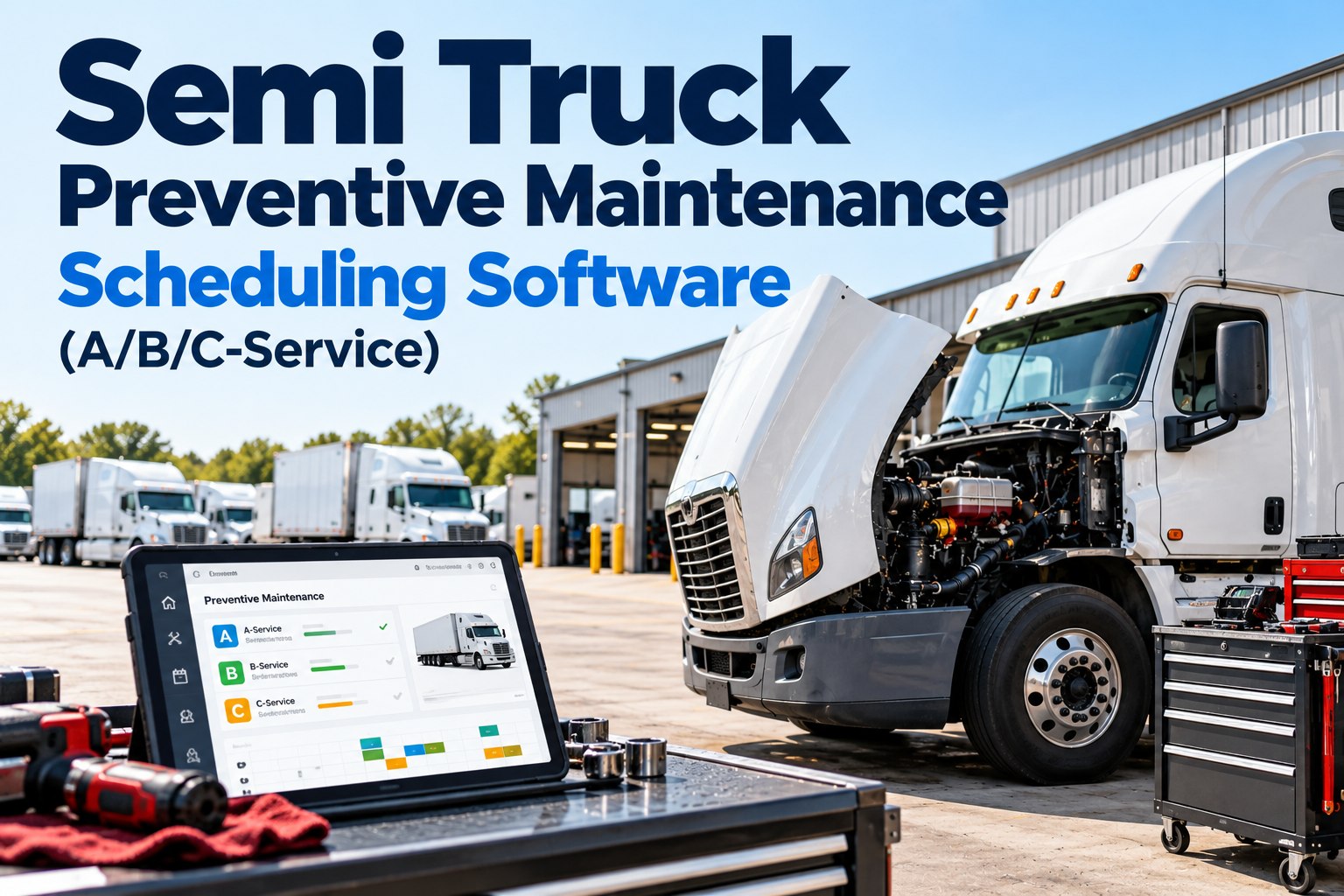
Implementing trucking fleet software requires careful planning and a clear timeline to ensure a smooth transition. The process typically includes requirement analysis, vendor selection, system configuration, data migration, testing, and employee training. Setting realistic milestones and involving key stakeholders at each stage helps avoid delays and operational disruptions. Continuous monitoring and post-implementation support are also critical for long-term success. By following a structured implementation plan, companies can maximize software benefits while minimizing risks and downtime.
What a Successful Trucking Fleet Software Implementation Actually Requires
Fleet management software implementation is one of the most operationally consequential technology projects a trucking company undertakes. Done well, it transforms operational visibility, compliance management, maintenance discipline, and administrative efficiency in ways that compound in value year over year. Done poorly — with inadequate planning, rushed data migration, insufficient staff training, or misaligned vendor expectations — it creates months of operational disruption that erodes driver and staff confidence in the technology, leaves compliance gaps that create regulatory exposure, and often results in expensive re-implementation on a different platform.
The gap between successful and failed fleet software implementations is rarely the technology itself. It is almost always the implementation process — how thoroughly the deployment was planned before configuration began, how completely the organization's data was prepared before migration, how purposefully staff training was designed for different user roles, and how rigorously the go-live period was supported by both the vendor and the carrier's internal implementation team.
This guide provides trucking fleet operators with a realistic, phase-by-phase implementation timeline framework that reflects the actual work required to deploy fleet management software successfully — not an optimistic sales projection, but a practical operational roadmap built from implementation experience across logistics fleets of every size.
Weeks 1-2
Discovery and requirements documentation — the most critical and most frequently under-invested phase of fleet software implementation
Weeks 3-5
System configuration, data preparation, and integration setup — the technical foundation on which operational deployment success depends
Weeks 6-7
Staff training, parallel operation testing, and pre-go-live validation across all user roles and operational workflows
Weeks 8-12
Go-live, hypercare support, performance monitoring, and optimization of initial configuration based on live operational experience
Phase 1: Discovery and Requirements Documentation (Weeks 1 to 2)
The most common cause of fleet software implementation failure is inadequate investment in the discovery phase. Organizations that rush through requirements documentation to reach the configuration phase find themselves reconfiguring the system repeatedly throughout deployment as undocumented requirements surface, creating delays, cost overruns, and technician frustration that undermines platform adoption before the system is fully live.
Discovery is the phase where the implementation team maps the organization's actual operational processes — not how management believes the fleet operates, but how dispatchers actually coordinate loads, how maintenance coordinators actually track service intervals, how drivers actually complete inspections, and how compliance documentation actually flows from the field to the file — and translates those processes into a platform configuration specification that the vendor can implement against defined requirements rather than assumptions.
Operational Workflow Mapping
Every operational workflow that will be managed through the fleet software must be documented in its current state before configuration begins. Dispatch workflow, maintenance request submission and approval, DVIR processing and defect resolution, driver onboarding and credential management, fuel card reconciliation, and compliance reporting are the core workflows that require pre-configuration documentation. The discovery process identifies which current workflows are efficient enough to replicate in the new system and which are broken processes that the new platform should be configured to improve, not just digitize.
Data Inventory and Quality Assessment
Fleet software is only as valuable as the data it contains. A discovery phase that does not rigorously assess the quality and completeness of existing vehicle records, driver files, maintenance histories, and compliance documentation will encounter painful migration realities during the data preparation phase. Discovery should produce a complete inventory of data that needs to migrate — vehicles, drivers, maintenance records, compliance documentation — along with an honest quality assessment of each data set that informs realistic migration timeline estimates and identifies data remediation work required before migration.
Integration Requirements Identification
Fleet management platforms rarely operate in isolation. ELD devices generate data that must flow into the fleet management system. Fuel card programs generate purchase data that reconciles against fleet consumption records. Accounting systems need maintenance cost and driver pay data. Customer visibility portals need load status and location data. The discovery phase must identify every external system that needs to exchange data with the fleet management platform, document the data flow requirements for each integration, and confirm technical feasibility with both the fleet software vendor and the integration partners before configuration begins.
User Role and Permission Planning
Fleet management software serves multiple user roles with different access needs, workflow responsibilities, and training requirements. The discovery phase documents every user type that will access the platform — owner/executive, operations manager, dispatcher, maintenance coordinator, shop technician, driver — maps the data access and workflow permissions appropriate for each role, and designs the organizational hierarchy that determines which users have visibility into which vehicles, drivers, and operational data. Role and permission planning in discovery prevents the configuration rework required when permission structures are built incorrectly and require reconstruction after deployment.
Phase 2: Configuration and Data Migration (Weeks 3 to 5)
The configuration phase translates the requirements documented in discovery into a working platform implementation. Vehicle records are created or imported, maintenance programs are built, user accounts are configured, integrations are connected and validated, and the organizational structure determined during discovery is built into the system hierarchy. Simultaneously, the data migration workstream prepares historical data for import — cleaning records, resolving quality issues identified in discovery, and staging data in formats that meet the platform's import specifications.
These two workstreams — configuration and data migration — must be sequenced carefully. Data can only be imported after the system configuration that it will land in is complete and validated. Attempting to import data into an incomplete or incorrectly configured system creates corruption and data quality problems that require significant remediation effort, adding weeks to the implementation timeline and creating accuracy risks in migrated records that affect compliance documentation reliability.
Vehicle and Equipment Record Configuration
Every vehicle and equipment unit in the fleet requires a complete record in the fleet management system — VIN, year, make, model, engine specifications, tire specifications, maintenance interval standards appropriate for the vehicle type, regulatory compliance parameters, and current status. For a fleet with complete, accurate existing records, this configuration can proceed rapidly through import automation. For fleets with incomplete, distributed, or inconsistent vehicle records — a common reality in organizations that have managed vehicles through multiple systems over many years — vehicle record remediation may be the most time-consuming element of the configuration phase.
Preventive Maintenance Program Build
Building the preventive maintenance program in FleetRabbit involves defining every maintenance service type, its interval triggers (mileage, calendar, or engine hours), the inspection checklist associated with the service, the estimated labor time, and the notification workflow that alerts maintenance coordinators when services come due. For fleets with well-documented maintenance programs, this build follows existing standards. For fleets transitioning from reactive maintenance to systematic preventive maintenance, this phase represents a significant process improvement investment — defining what the maintenance program should be, not just digitizing an existing one.
Integration Configuration and Validation
Each integration identified during discovery requires technical configuration — API credential setup, data mapping between the external system's fields and the FleetRabbit data model, workflow trigger configuration that determines when and how data flows between systems, and validation testing that confirms data is transferring accurately in both directions. ELD integration validation requires particular rigor — HOS data that flows incorrectly from ELD devices to the fleet management platform creates compliance documentation errors that can create FMCSA audit exposure. Integration validation should use live system data, not sample data, to confirm real-world accuracy before declaring integrations complete.
Historical Data Migration Execution
Historical data migration is typically the highest-risk element of fleet software implementation. The volume of records, the quality variability in source data, and the consequential impact of migration errors on compliance documentation and maintenance history continuity make this a workstream that requires careful execution and thorough validation rather than speed. FleetRabbit's implementation team provides migration templates and import validation tools that allow carriers to stage, validate, and confirm data accuracy before finalizing the migration — ensuring that the historical records that exist in the new system match the source of truth in the outgoing system.
Phase 3: Training and Pre-Go-Live Validation (Weeks 6 to 7)
Staff training is the most frequently underestimated phase of fleet software implementation. Organizations that allocate adequate time to configuration but compress training into a single half-day session find that platform adoption fails not because the system doesn't work, but because users don't know how to use it effectively under the time and operational pressure of their actual job responsibilities. Role-specific training designed for how each user type will interact with the platform on a daily basis produces dramatically better adoption outcomes than generic platform overview training delivered uniformly to all user types.
Role-Specific Training Design
Each user role interacts with fleet management software differently. Dispatchers need training on vehicle status visibility, load assignment workflows, driver communication tools, and HOS monitoring dashboards. Maintenance coordinators need training on work order management, preventive maintenance scheduling, vendor management, and parts inventory. Drivers need training on mobile DVIR completion, pre and post-trip inspection workflows, and driver communication tools. Executives need training on performance dashboards and reporting. One-size training fails all of these audiences by spending time on irrelevant content for each role.
Parallel Operation Testing Period
Before the go-live date, a parallel operation period where staff use the new platform alongside existing tools allows users to validate platform workflows against real operational scenarios, identify configuration gaps before the old system is retired, and build operational confidence in the new platform under low-risk conditions. Parallel operation should last a minimum of one to two weeks for most fleet operations, longer for complex multi-terminal deployments. Findings from the parallel operation period feed into a pre-go-live configuration adjustment list that the implementation team addresses before the final go-live date.
Driver Mobile Application Adoption Preparation
Driver adoption of mobile inspection and communication applications is one of the most critical and challenging elements of fleet software implementation. Drivers who have completed paper DVIRs for years may resist changing to a mobile application workflow, particularly if training is inadequate or the initial application experience is frustrating. FleetRabbit's driver adoption program includes bite-sized training materials for drivers, a dedicated driver support channel for first-week questions, and a driver ambassador program where early-adopter drivers provide peer coaching to teammates during the adoption period. This structured adoption approach produces measurably higher driver compliance rates than simple application distribution with minimal training.
Compliance Documentation Transition Planning
The transition from paper-based or legacy digital compliance documentation to the new platform creates a compliance continuity risk if the transition is not planned carefully. DVIR records, maintenance documentation, HOS logs, and driver qualification files must be complete and accessible throughout the transition — both in the old system for records predating the cutover and in the new system for records generated after the cutover date. The compliance documentation transition plan documents the cutover date for each record type, the retention location for pre-cutover records, and the verification process that confirms all required documentation is accessible in the new system from the first day of operational deployment.
Phase 4: Go-Live and Hypercare Support (Weeks 8 to 12)
The go-live transition is the moment of maximum operational risk in fleet software implementation. Staff are operating under real workload pressure using a platform they are not yet fully proficient with, workflows that felt familiar in training feel different in the pressure of actual operations, and every configuration gap that was not caught during parallel testing surfaces simultaneously as the fleet tries to conduct normal operations. The quality of support available during the first two to four weeks after go-live determines whether implementation succeeds or devolves into a crisis that erodes organizational confidence in the platform.
FleetRabbit's hypercare support model provides dedicated implementation support resources for the first four weeks after go-live — not general customer support, but the implementation team members who built the specific configuration for the carrier's fleet, available at rapid response times to resolve configuration issues, answer training questions, and address workflow gaps that surface in live operations. This dedicated hypercare period is the difference between a go-live that stabilizes quickly and one that requires months of remediation.
Post-Go-Live Configuration Optimization
The initial configuration built during weeks three through five is based on documented requirements and the implementation team's experience with similar fleet operations. Live operational experience inevitably surfaces adjustments that were not apparent until the system was running under real workload — notification thresholds that generate too many or too few alerts, report configurations that need adjustment for management's actual reporting requirements, workflow steps that create unnecessary friction for specific user roles. The hypercare period is the structured time to make these optimizations, converting the initial configuration into a refined implementation that fits the organization's actual operational patterns.
Performance Baseline Establishment
The first weeks of live operation provide the data foundation for measuring the fleet software's impact on operational performance. FleetRabbit's implementation team assists carriers in establishing performance baselines during the hypercare period — breakdown frequency before and after implementation, maintenance budget variance, compliance violation rates, fuel cost per mile, and driver inspection compliance rates. These baselines enable the carrier to measure and document the platform's operational value impact as the implementation matures, supporting ROI analysis and the internal business case for expanding platform utilization across additional modules and user groups.
Ongoing Optimization and Advanced Feature Activation
Fleet management platform value is not static — it increases as the organization builds operational discipline around the platform workflows, accumulates data that enables performance trend analysis, and activates additional modules that address evolving operational needs. The implementation process does not end at the conclusion of the hypercare period; it transitions into an ongoing customer success relationship where FleetRabbit's team works with carrier operations leadership to identify optimization opportunities, plan additional feature activations, and ensure the platform continues delivering advancing value as the organization's operational sophistication grows.
Common Implementation Pitfalls and How FleetRabbit Helps You Avoid Them
Understanding the most common fleet software implementation failures helps organizations make deliberate choices that avoid them. These pitfalls are not random — they follow predictable patterns that emerge from the same organizational decisions across carriers of every size and operational type. Awareness of these patterns before implementation begins is the most effective protection against them.
Underestimating Data Quality Remediation Time
The single most common cause of implementation timeline overruns is the discovery — during the migration phase — that existing vehicle and driver records are significantly less complete and accurate than anticipated. Fleets that have managed maintenance in spreadsheets, driver records in paper files, and vehicle information in disconnected systems often find that assembling a complete, accurate, import-ready data set takes two to three times longer than initially estimated. Honest data quality assessment during discovery, and realistic remediation timeline planning before configuration begins, prevents this pattern from derailing implementation schedules.
Insufficient Driver Training Investment
Compressed driver training is the most common adoption failure point in fleet software implementations. Drivers who receive inadequate training revert to paper-based inspection workarounds, submit incomplete digital DVIRs, or simply avoid using the mobile application entirely — creating the compliance gaps that the digital inspection system was implemented to eliminate. Adequate driver training investment is not a nice-to-have; it is a direct predictor of whether inspection compliance improves or deteriorates following implementation.
Integration Validation Shortcuts
Integration testing shortcuts during configuration — accepting sample data validation as equivalent to live data validation, or validating a subset of integration data fields rather than the complete data model — create integration problems that surface in operation after go-live. ELD data that appears to integrate correctly with sample data may generate mapping errors with the full range of duty status codes that appear in live operations. Fuel card data that maps correctly for one card type may fail for other card types in the fleet. Full integration validation using representative live data is not optional in fleet software implementations where compliance documentation accuracy is at stake.
Inadequate Change Management Communication
Technology implementation resistance from operations staff is rarely about the technology. It is about inadequate communication of why the change is happening, what it means for each person's daily workflow, and what support will be available during the transition. Organizations that communicate the implementation rationale clearly to all affected staff — starting with operational leadership and extending to drivers — experience measurably faster adoption than those that announce go-live dates without implementing a structured change management communication program that addresses the questions and concerns of each affected user group.
Frequently Asked Questions
How long does it realistically take to fully implement fleet management software?
Full fleet management software implementation — from initial discovery through stable post-go-live operation — realistically requires eight to twelve weeks for most mid-market trucking fleets with one or two terminals. Small fleets with ten to twenty vehicles and straightforward operational models can achieve implementation in four to six weeks. Enterprise deployments with multiple terminals, complex integrations, large data migration volumes, and diverse fleet compositions may require three to six months for full deployment across all locations and user groups. Implementation timelines that vendors represent as two to three weeks for full deployment almost always reflect initial access setup, not complete operational deployment including data migration, integration validation, training, and go-live stabilization.
What data do I need to prepare before starting a fleet software implementation?
The core data categories to prepare for fleet software implementation are: complete vehicle records for every unit in the fleet including VIN, year, make, model, engine type, and current mileage; driver records including license information, medical certificate status, drug test history, and training completion; maintenance history records showing service dates, mileage, and service type for each vehicle over the past one to three years for preventive maintenance interval calculation; current fuel card program data including card assignments by driver and vehicle; and ELD device assignments by driver if ELD integration is included in the implementation scope. Data preparation quality directly determines migration timeline and initial platform data accuracy — incomplete preparation at implementation start extends the timeline and creates data remediation work during the most operationally sensitive phase of the deployment.
Who needs to be involved from our organization in the implementation process?
Fleet software implementation requires meaningful time investment from four internal roles: an implementation project sponsor from operations or executive leadership who has authority to make configuration decisions and resolve cross-functional questions that arise during deployment; a maintenance coordinator or shop manager who designs and validates the preventive maintenance program configuration; a dispatch or operations coordinator who validates workflow configurations for vehicle tracking, driver management, and load coordination; and an IT or technical contact who manages integration configurations and coordinates with technology vendors whose systems need to connect with the fleet management platform. Driver involvement during the training phase is also critical — driver representation in mobile application training design produces training that fits actual driver workflow better than training designed entirely by managers.
What integrations should be prioritized in the initial implementation scope?
The highest-priority integrations for initial implementation scope are those where data flows have direct compliance implications or where manual data re-entry creates immediate operational errors and inefficiency. ELD integration is the highest priority for any carrier subject to FMCSA ELD mandate requirements — HOS data flowing accurately from ELD to fleet management determines compliance documentation accuracy. Fuel card integration is the second priority for most fleets — capturing fuel purchase data automatically eliminates manual reconciliation labor and the accuracy errors it introduces. Accounting system integration is typically the third priority, automating the flow of maintenance costs and driver pay data that would otherwise require double-entry. Additional integrations — customer portals, load board connections, tire vendor programs — can be sequenced in subsequent implementation phases after core system stability is established.
How does FleetRabbit support the implementation process specifically?
FleetRabbit provides structured implementation support through a dedicated implementation team assigned to each new carrier deployment rather than generalist customer support staff. The implementation team includes a project manager who owns timeline coordination and stakeholder communication, a configuration specialist who builds the platform setup to documented requirements, a data migration specialist who manages vehicle and driver record import, and an integration engineer who configures and validates connections with ELD, fuel card, and accounting systems. The dedicated team delivers weekly project status reports, maintains a real-time issue log visible to carrier implementation contacts, and provides hypercare support in the first four weeks after go-live. This dedicated delivery model produces consistently shorter implementation timelines and significantly higher satisfaction scores than implementations delivered by generalist support staff.
What should we do if the implementation falls behind schedule?
Implementation schedule slippage is best addressed by identifying the root cause and distinguishing between carrier-side delays and vendor-side delays before determining the remediation path. Carrier-side delays — data preparation taking longer than planned, internal resource availability gaps, decisions delayed by stakeholder schedules — require internal project management remediation: dedicated sprint time to complete overdue data preparation tasks, executive schedule prioritization for pending decisions, and timeline revision that reflects the actual work remaining rather than the original plan. Vendor-side delays — configuration errors requiring rework, integration validation failures, training resource availability gaps — should be addressed through direct escalation to the vendor's implementation leadership with documented timeline impact and remediation commitments. The implementation project plan should include a change control process that formally documents timeline changes with root cause attribution, maintaining accountability on both sides of the implementation relationship throughout the deployment.
Implement With Confidence — FleetRabbit Makes the Process Work
Trucking fleet software implementation success is not accidental. It is the product of disciplined discovery, realistic timeline planning, thorough data preparation, role-specific training investment, and hypercare support during the critical go-live period. FleetRabbit's implementation methodology is built on the actual experience of deploying fleet management technology across logistics fleets of every size and operational complexity — not on optimistic sales estimates designed to minimize perceived friction during the vendor selection process.
FleetRabbit customers achieve full operational deployment consistently within the planned implementation window because the process is designed to succeed, staffed by dedicated implementation specialists, and supported through a hypercare period that ensures go-live stability. When you implement with FleetRabbit, you have a partner who is as invested in implementation success as you are — because your operational outcomes are our reference cases.
Start Your FleetRabbit Implementation Planning Today
Request a detailed implementation planning session with a FleetRabbit implementation specialist. We will review your fleet size, current technology environment, integration requirements, and project timeline objectives — and provide a specific, realistic implementation plan that sets accurate expectations for every phase of the deployment and the resources required to achieve them.
Book a Free Demo
Start Free Trial
April 14, 2026
By Nathan Smith
All Posts