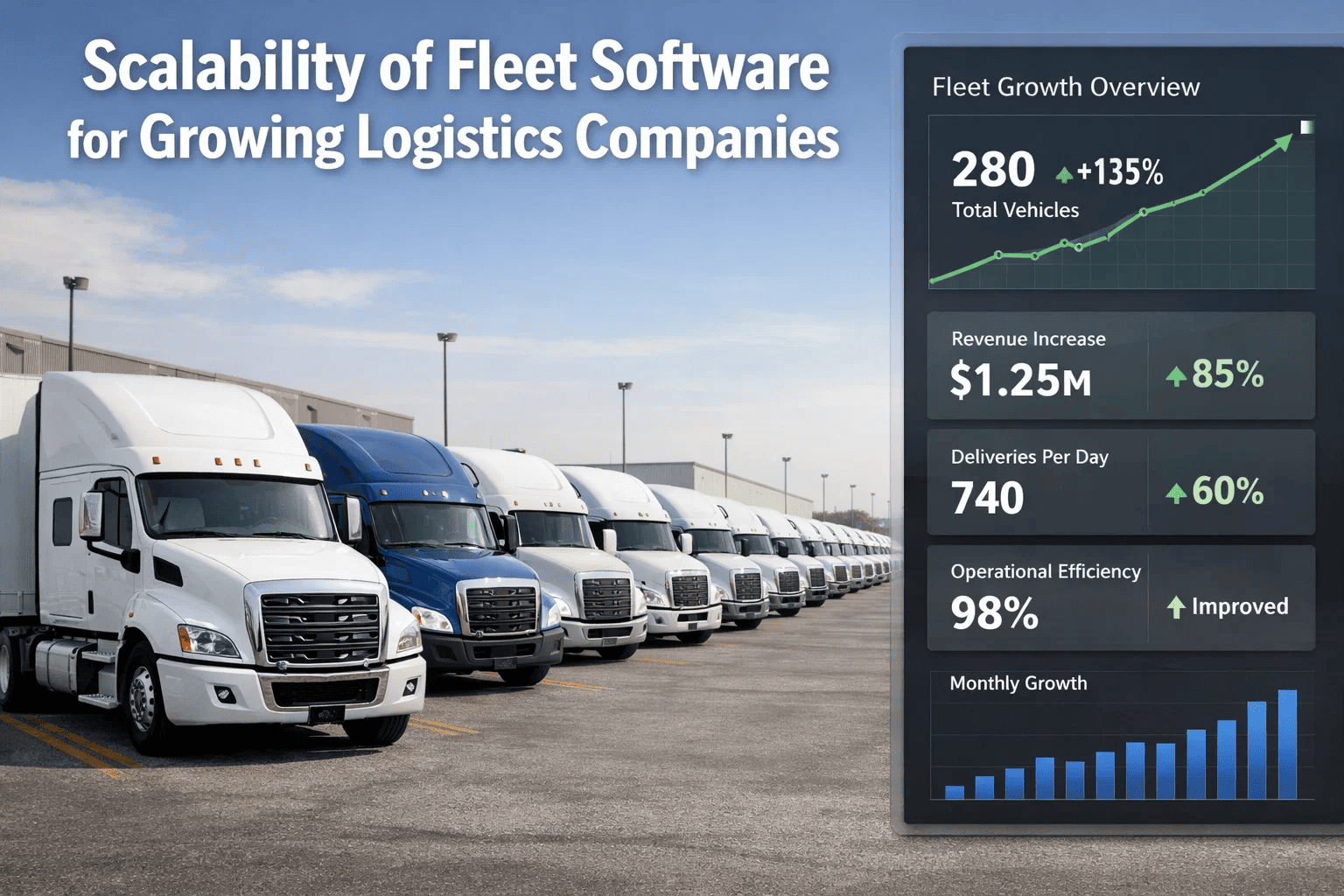
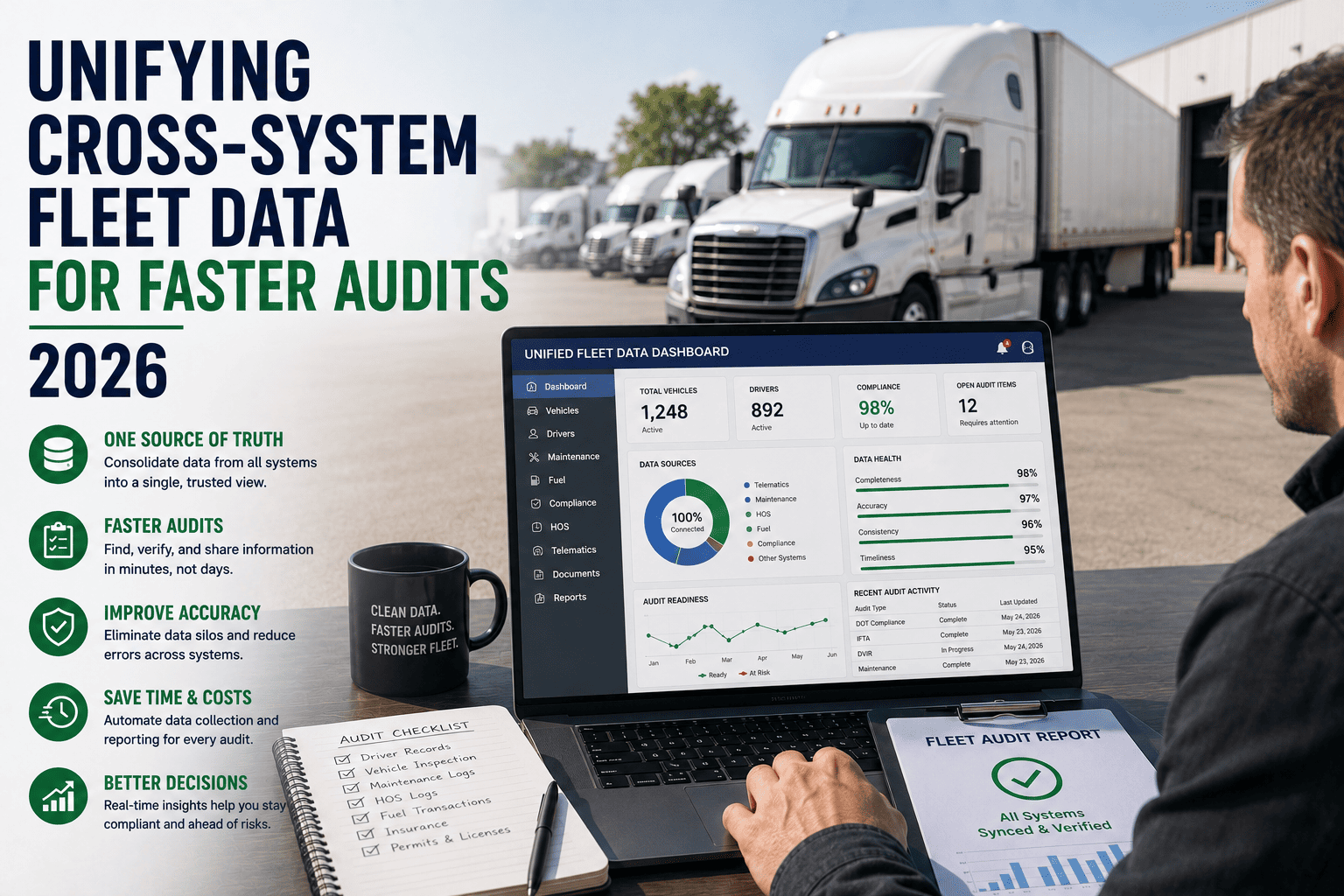
As logistics companies expand, their operational needs become more complex, making scalable fleet software essential for sustained growth. A well-designed system should easily adapt to increasing fleet size, additional routes, and higher data volumes without compromising performance. Features like cloud infrastructure, modular design, and integration capabilities allow businesses to add new functionalities as needed. By investing in scalable solutions, companies can streamline operations, improve decision-making, and avoid costly system replacements, ensuring long-term efficiency and flexibility as they grow.
How Fleet Software Scalability Determines Long-Term Logistics Growth Outcomes
Every logistics company that has grown beyond a handful of trucks has encountered the moment when the spreadsheets, phone calls, and manual processes that worked adequately at smaller scale begin actively limiting the business's ability to grow further. Dispatch misses a maintenance window because the tracking spreadsheet wasn't updated. A driver runs a HOS violation because the dispatch team lost track of available hours. A customer escalates because no one had accurate load status visibility at the moment the call came in.
These are not management failures — they are system failures. The operational systems that served a five-truck fleet cannot scale to a twenty-truck fleet, and the systems that work at twenty trucks will crack under the demands of sixty trucks and two terminals. Selecting fleet management software that can scale with the business from the current operating size through the projected growth trajectory is one of the most consequential technology decisions a growing logistics company makes.
FleetRabbit is built on a scalable cloud architecture designed to support fleets from their first five vehicles through enterprise operations managing thousands of units, multiple terminals, and diverse fleet compositions — without requiring platform migrations, significant configuration rebuilds, or operational disruptions as the business grows.
5x
Fleet size at which logistics companies typically outgrow manual management tools and require dedicated fleet software with structured workflow automation
73%
Of mid-market logistics companies report that their initial fleet software selection limits growth by requiring expensive replacement rather than scalable expansion
62%
Reduction in per-vehicle administrative overhead reported by FleetRabbit customers who scaled from under 20 vehicles to over 100 vehicles on the platform
4.2x
Average efficiency improvement in fleet operations management per administrative staff member for FleetRabbit customers scaling from 25 to 100+ vehicles
The Growth Inflection Points That Expose Fleet Software Limitations
Fleet software scalability failures do not typically announce themselves with a sudden crisis. They reveal themselves gradually — through increasing report generation delays as database size grows, through feature limitations that require workarounds as operational complexity increases, through user license costs that make adding the next terminal economically painful, and through integration failures as the fleet adds new vehicle types, services, or operational models that the software was not designed to accommodate.
Understanding where fleet software typically fails to scale helps logistics company leaders evaluate their current platforms and prospective replacements through the right lens — not just whether the software works adequately for today's operations, but whether it has the architecture and feature depth to support the operations you plan to be running in three to five years.
The Five-to-Twenty Truck Transition
The transition from a very small fleet to a small-to-medium fleet is the first scalability test for fleet management systems. At five trucks, a skilled dispatcher can maintain operational awareness through direct driver communication and manual record-keeping. At twenty trucks, that model breaks down — the cognitive load exceeds what any individual can manage effectively without structured workflow software, vehicle monitoring automation, and systematic compliance documentation. Software that simply digitizes existing manual processes without automating workflow, alerts, and reporting fails at this transition point as clearly as the manual processes it replaced.
The Multi-Terminal Expansion Challenge
Adding a second terminal is a scalability test that many fleet software platforms fail decisively. Single-terminal fleet management software is often architected around a single geographic operating center — with local user access assumptions, terminal-specific configuration constraints, and reporting structures that don't accommodate cross-terminal visibility. The operational reality of multi-terminal logistics requires a platform that provides consolidated fleet-wide visibility across all terminals, enables terminal-specific configuration within a unified data environment, and supports users at different terminals with appropriate access to shared data.
Fleet Composition Diversification
Growing logistics companies frequently diversify their fleet composition as they expand service offerings — adding refrigerated trailers, flatbed equipment, specialized over-dimension vehicles, or specialized vocational trucks to a previously homogeneous fleet. Fleet software that was configured for a uniform fleet often requires significant restructuring or vendor-assisted configuration work to accommodate new vehicle types, HOS rule sets for different commodity categories, specialized maintenance requirements, or regulatory requirements specific to certain cargo or vehicle types. FleetRabbit's configuration flexibility accommodates diverse fleet compositions within a single unified platform.
Driver and Staff Workforce Growth
Scaling from 10 drivers to 50 drivers is not just a quantitative increase — it is a qualitative change in how driver management, training documentation, performance oversight, and compliance monitoring must be organized to remain effective. Manual driver management processes that work at 10 drivers become impossible at 50. FleetRabbit's driver management platform scales seamlessly from small owner-operator fleets through large truckload operations, maintaining the same quality of performance monitoring, compliance documentation, training tracking, and dispatch coordination regardless of fleet size.
Core Scalability Architecture: What Makes Fleet Software Genuinely Scale
Not all fleet software platforms that claim scalability actually deliver it. Genuine scalability in fleet management software requires specific architectural characteristics — cloud-native deployment, database performance that maintains speed as record volumes grow, user permission structures that support role-based access across complex organizations, API integration capability for connecting to other business systems, and configuration flexibility that adapts to diverse operational models without requiring custom software development.
Cloud-Native Infrastructure
Fleet management software built on cloud-native infrastructure scales database capacity, processing resources, and storage automatically as fleet size and data volume grow — without requiring hardware upgrades, server migrations, or planned downtime windows. FleetRabbit's cloud architecture means that a fleet growing from 50 to 500 vehicles experiences no degradation in platform performance, report generation speed, or data access time as the underlying data volume expands by an order of magnitude. The platform infrastructure scales automatically without fleet administrator intervention.
Role-Based Access and Organizational Hierarchy Support
Small fleet operations typically have a flat organizational structure where the owner, dispatcher, and maintenance coordinator may be the same individual. Large fleet operations require structured role-based access — maintenance technicians see maintenance workflows but not financial data, terminal managers see their terminal's full operations but not other terminals' proprietary performance data, and executives have consolidated visibility across the entire organization. FleetRabbit's permission architecture supports complex organizational hierarchies with granular role-based access control that grows with the organization without requiring architectural changes to the underlying platform.
API Integration and Third-Party Connectivity
As logistics companies grow, their technology ecosystems grow with them — ERP systems, accounting platforms, customer-facing tracking portals, load board integrations, fuel card programs, tire management vendors, and dispatch optimization tools all need to exchange data with the core fleet management platform. Fleet software with robust API architecture enables data to flow between systems efficiently, eliminating manual double-entry and the errors it introduces. FleetRabbit's open API architecture supports integration with the business systems growing logistics companies rely on across accounting, dispatch, ELD, and customer visibility applications.
Configurable Workflow Automation
Workflows that are appropriate for a small, centralized operation become inefficient or non-functional as organizational complexity grows. The preventive maintenance approval chain that works for a single shop with one fleet manager requires restructuring when the fleet operates three maintenance facilities with separate managements. FleetRabbit's configurable workflow engine allows maintenance, compliance, dispatch, and driver management workflows to be configured to match the organization's actual operational structure — and reconfigured as that structure evolves with growth — without requiring vendor-assisted custom development.
Reporting at Scale Without Performance Degradation
Fleet management reporting that generates results in seconds for a 20-vehicle fleet should generate results in seconds for a 200-vehicle fleet and a 2,000-vehicle fleet. Many fleet software platforms built on traditional database architectures suffer significant report generation degradation as record volumes grow — a reality that becomes apparent only after the fleet has been on the platform long enough to accumulate the data volume that exposes the limitation. FleetRabbit's reporting infrastructure is architected for high-volume reporting performance, delivering executive dashboard views and detailed operational reports at consistent speed regardless of fleet size or historical data volume.
Multi-Fleet and Sub-Fleet Management
Enterprise logistics operations frequently manage multiple distinct fleet entities within a single organizational structure — different operating divisions, joint ventures, managed fleet contracts, or owner-operator carrier networks that require consolidated visibility alongside entity-level separation. FleetRabbit's multi-fleet architecture enables a single platform deployment to manage multiple distinct fleet entities with separate operational configurations, separate compliance documentation, and entity-level reporting alongside consolidated enterprise reporting across all managed entities. This architecture eliminates the need for separate platform instances for each fleet entity.
FleetRabbit's Approach to Supporting Growth at Every Stage
FleetRabbit is the fleet management platform that logistics companies do not need to outgrow. Built from the ground up on cloud-native infrastructure with API-first integration architecture, configurable workflows, and enterprise-grade organizational hierarchy support, FleetRabbit provides small fleets with the same platform power that enterprise logistics operations rely on — with a user experience and implementation approach that is accessible at every scale.
Modular Platform Expansion
FleetRabbit's modular architecture allows logistics companies to implement the feature sets most relevant to their current operational complexity and activate additional modules as operational needs evolve with growth. A fleet starting with preventive maintenance scheduling and digital DVIR can later activate advanced ELD integration, driver performance analytics, fuel management reporting, IFTA filing automation, and customer visibility portals as those capabilities become operationally relevant — without migrating to a new platform or rebuilding existing configurations.
Implementation Support That Scales From Start-Up to Enterprise
FleetRabbit provides structured implementation support designed for logistics companies at every stage of growth — from guided self-service onboarding for small fleets getting started with fleet management software for the first time, to dedicated implementation consultants for mid-market carriers executing complex multi-terminal deployments, to enterprise implementation programs for large logistics networks transitioning from legacy fleet management systems. The implementation approach scales with the organization's complexity, ensuring every FleetRabbit customer achieves operational effectiveness in the minimum time.
Performance Benchmarking Across Fleet Scale
Understanding how a growing fleet is performing relative to industry benchmarks — cost per mile, breakdown frequency, fuel efficiency, driver safety scores, maintenance budget variance — requires benchmarking data contextualized by fleet size, operating region, equipment type, and freight category. FleetRabbit's benchmarking capabilities are calibrated against actual performance data from fleets across the size and operational diversity spectrum represented in the FleetRabbit customer base, providing growing companies with peer-contextualized performance comparisons that reveal genuine improvement opportunities rather than comparing against inappropriate reference points.
Data Migration and Legacy System Transition Support
Logistics companies upgrading from existing fleet management platforms or transitioning from manual management systems have historical vehicle records, driver files, maintenance histories, and compliance documentation that must be migrated to maintain operational continuity. FleetRabbit provides data migration tools and migration support services that import historical records from common fleet management platform formats and structured export files, ensuring that the vehicle maintenance histories, driver credential records, and compliance documentation that exist in prior systems are available in FleetRabbit from day one of the deployment without manual re-entry.
Frequently Asked Questions
At what fleet size should a logistics company invest in dedicated fleet management software?
The functional threshold for dedicated fleet management software investment is typically five to ten vehicles, though the business case strengthens significantly at larger fleet size. At five vehicles, fleet management software provides meaningful value through maintenance scheduling automation, digital inspection compliance, and driver documentation management. At ten to twenty vehicles, the operational complexity of coordinating multiple drivers, maintaining required HOS documentation, tracking preventive maintenance across multiple vehicles, and managing regulatory compliance creates a clear productivity and compliance case for structured fleet software. Beyond twenty vehicles, manual management systems create material operational risk and cost inefficiency that fleet management platform investment eliminates with clear, measurable return.
How does FleetRabbit handle multi-terminal logistics operations?
FleetRabbit's multi-terminal architecture provides consolidated fleet-wide visibility at the enterprise level while maintaining terminal-specific operational management for each location. Terminal managers access full operational data for their facility — vehicle status, maintenance queue, driver availability, compliance documentation — while executive users have consolidated visibility across all terminals in a unified dashboard. Cross-terminal vehicle transfers, shared maintenance resources, and driver assignments spanning multiple terminals are all managed within the same platform instance with appropriate data visibility controls by user role. Configuration changes at the enterprise level can be applied uniformly across all terminals, while terminal-specific workflows and vendor relationships remain independently manageable.
Will FleetRabbit integrate with the accounting and ERP systems we already use?
FleetRabbit provides API integration capability designed to connect with common accounting, ERP, and logistics management systems used by growing logistics companies. For popular accounting platforms and logistics management systems, FleetRabbit offers pre-built integration connectors that synchronize maintenance costs, fuel expenses, driver pay data, and other financial records without manual data entry. For systems without pre-built connectors, FleetRabbit's open API architecture enables custom integration development through the carrier's own technical resources or FleetRabbit's integration partner network. The API documentation is publicly available, and FleetRabbit's technical team supports integration implementation for customers requiring direct assistance.
How does the pricing model scale as our fleet grows?
FleetRabbit's pricing is structured on a per-vehicle or per-user basis that scales proportionally with fleet size — growing fleets pay more as they add vehicles, but the per-unit cost remains consistent and predictable rather than increasing at step-change thresholds that create budget surprises as fleet milestones are crossed. There are no punitive pricing tiers that create disincentive for growth, and additional module activation for growing operational needs is priced transparently. For specific pricing for your fleet size and desired feature set, a FleetRabbit commercial representative can provide a detailed proposal aligned with your current and projected operations.
What happens to our existing data if we migrate from another fleet management platform?
FleetRabbit provides data migration support for logistics companies transitioning from other fleet management platforms. The migration process typically includes extraction of vehicle records, maintenance histories, driver files, compliance documentation, and cost data from the existing system, data mapping and cleansing to ensure records translate correctly into FleetRabbit's data model, and import validation to confirm data integrity before the migration is finalized. Migration scope and timeline depend on the volume and complexity of historical data, the export capabilities of the outgoing platform, and the level of historical data completeness required for compliance and operational purposes. FleetRabbit's implementation team provides migration planning guidance early in the transition process to ensure expectations are aligned.
How long does it take to get FleetRabbit fully operational for a growing mid-market fleet?
FleetRabbit implementation timeline for a growing mid-market fleet — typically defined as 25 to 100 vehicles with one or two terminals — is typically four to eight weeks from contract execution to full operational deployment. The timeline encompasses initial system configuration, vehicle and driver record setup, maintenance program configuration, user training for operations and maintenance staff, integration activation for connected systems such as ELD providers and fuel card programs, and go-live support during the first active operational period. Fleets with complex legacy data migration requirements or multiple terminal deployments may have longer implementation timelines, and FleetRabbit's implementation team develops a project plan with specific milestones early in the engagement to give fleet leadership accurate timeline expectations.
Choose a Platform Your Fleet Will Not Outgrow — Choose FleetRabbit
The most expensive fleet management software decision a growing logistics company makes is the one that requires a replacement migration when the platform cannot scale with the business. Platform migrations during periods of growth are costly, disruptive, and operationally risky — pulling management attention away from growth execution and into technology transition while creating compliance documentation gaps that create audit risk during the changeover period.
FleetRabbit is the platform that grows with you — from the day you decide to move beyond spreadsheets through the enterprise operations you are building toward. Start where you are, scale without limitation, and manage every vehicle in your fleet from a single platform that never becomes the bottleneck to your growth.
Build Your Fleet's Technology Foundation on FleetRabbit
Request a demonstration tailored to your current fleet size and growth trajectory. FleetRabbit's team will show you exactly how the platform serves your current operational needs and scales to support the operations you are building toward — without the migrations, re-implementations, and growing pains that fleet software transitions cause.
Book a Free Demo
Start Free Trial
April 14, 2026
By Nathan Smith
All Posts