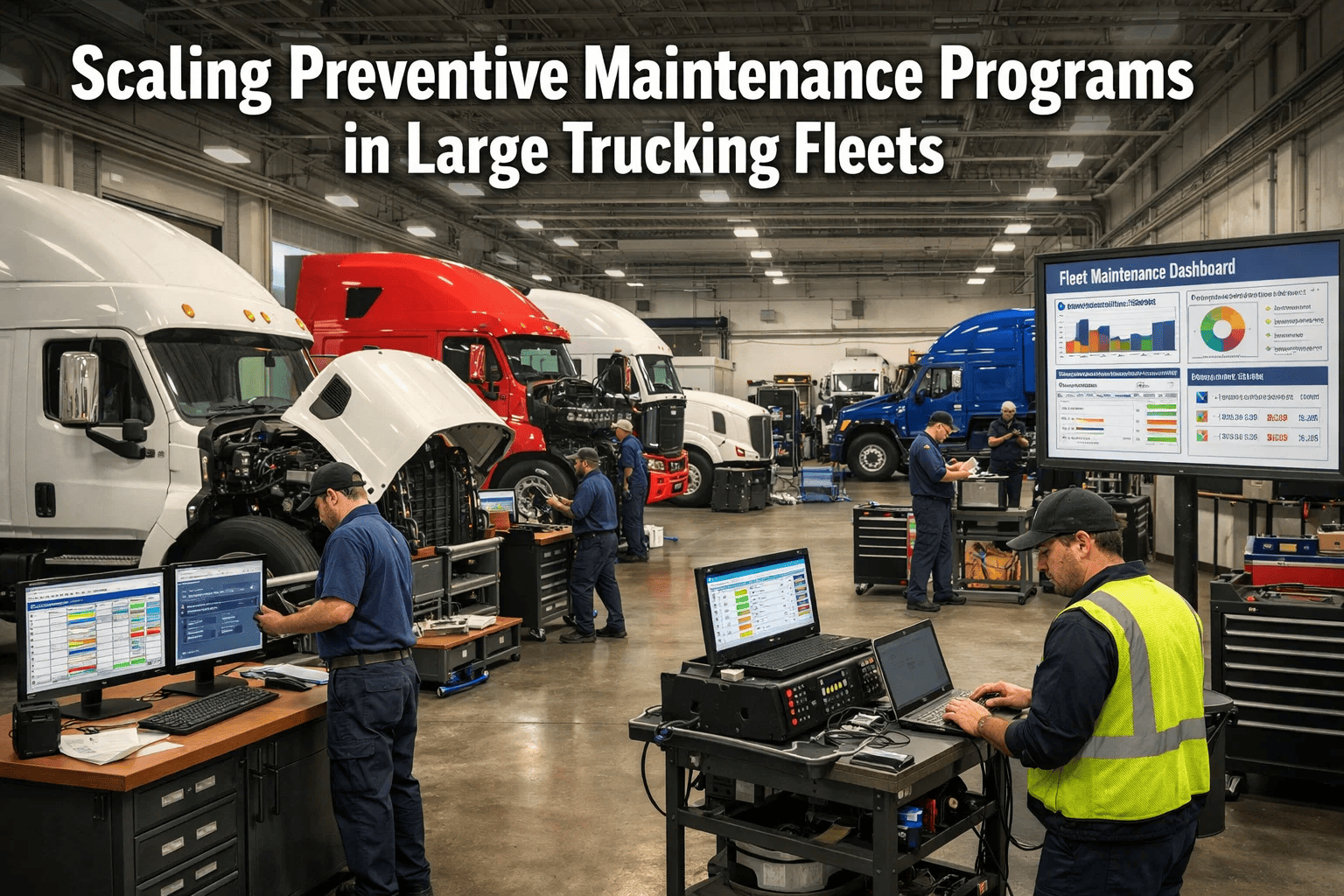
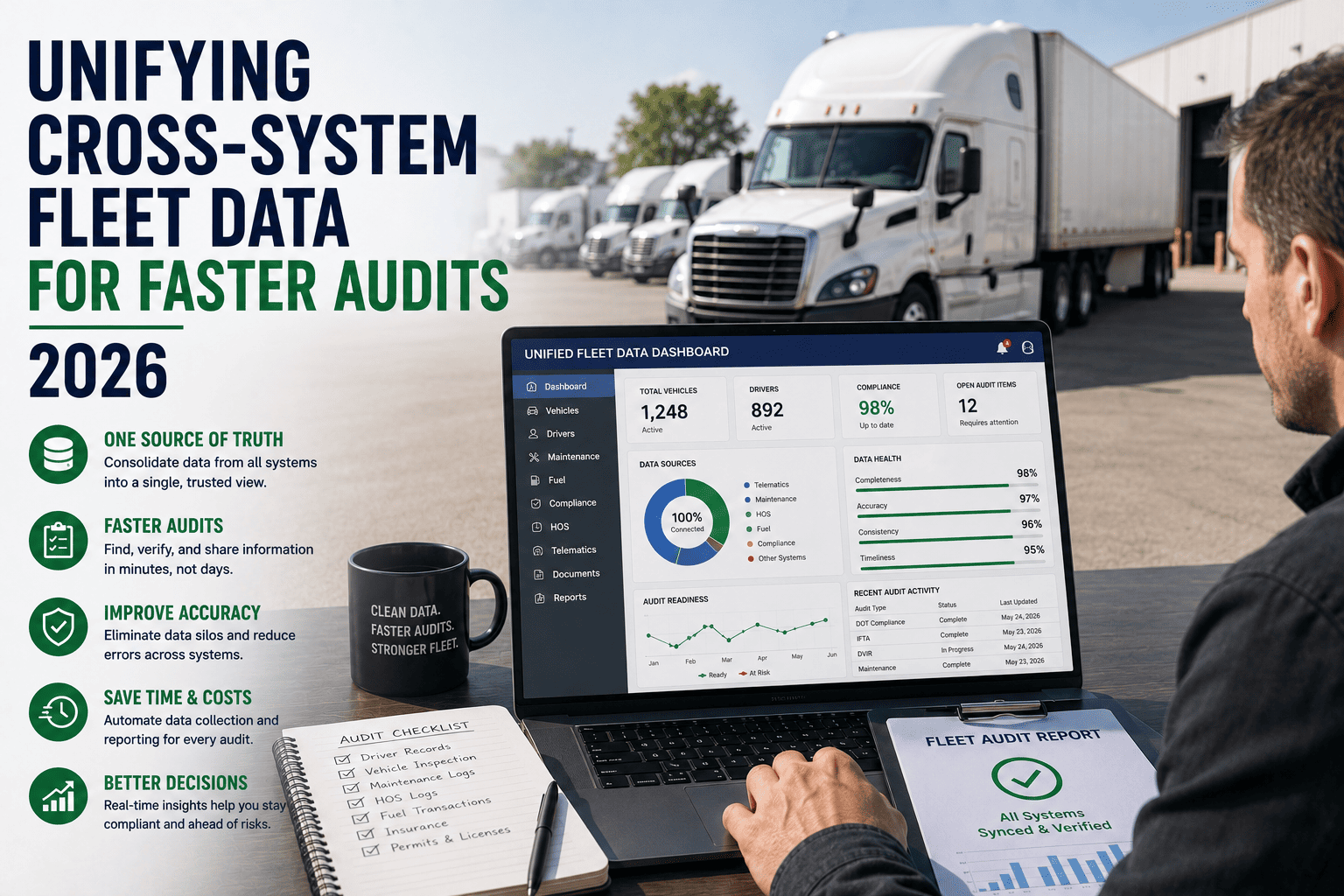
Preventive maintenance programs that work effectively for a fleet of 15 vehicles frequently break down when applied to 150 or 500. The scheduling logic, notification workflows, technician capacity planning, and parts procurement processes that function through informal coordination in smaller operations become inadequate when they must handle thousands of service events annually across multiple terminals, vehicle types, and maintenance facilities. Scaling preventive maintenance in large trucking fleets requires deliberate program architecture, automated scheduling infrastructure, and fleet management technology that turns maintenance planning from a coordination challenge into a systematic operational function. Book a demo to see how FleetRabbit's preventive maintenance platform scales across large transportation fleets.
Best Practices
Scaling Preventive Maintenance Programs in Large Trucking Fleets: Strategies, Automation, and Fleet Management Technology for High-Volume Transportation Operations
FLEET MAINTENANCE AND OPTIMIZATION GUIDE
Building a Scalable Preventive Maintenance Program for Large Trucking Fleets: From Reactive Repairs to Systematic Fleet Uptime Management
Large trucking fleets face a preventive maintenance scaling challenge that technology is specifically designed to solve. When maintenance scheduling, service reminders, technician dispatch, parts procurement, and compliance documentation must operate across hundreds of vehicles, dozens of drivers, and multiple maintenance facilities, the operational complexity demands automated systems and real-time data infrastructure that manual coordination cannot deliver at scale.
Why Preventive Maintenance Programs Fail at Scale
The failure modes of PM programs in large fleets are predictable and consistent across the industry. Understanding these failure patterns is essential for fleet managers designing or redesigning PM programs intended to operate reliably across large vehicle populations.
Interval Tracking Breaks Down
Manual tracking of service intervals across hundreds of vehicles by mileage, engine hours, and calendar time exceeds human capacity for accuracy. Missed service reminders result in overdue PM events that accumulate silently until vehicles reach failure thresholds that require significantly more expensive reactive repairs.
Service Documentation Becomes Inconsistent
Without centralized maintenance records, large fleets accumulate service histories distributed across paper records, spreadsheets, and shop management systems that are not accessible to dispatchers and fleet managers who need vehicle maintenance status information for operational decisions.
Parts Procurement Lacks Predictability
PM programs that cannot forecast upcoming service events across the fleet create reactive parts procurement that increases costs through emergency ordering, premium vendor pricing for unplanned parts needs, and vehicle downtime while parts are sourced for maintenance that could have been scheduled and stocked in advance.
Technician Capacity Is Misallocated
Without visibility into scheduled PM workload versus reactive repair demand, maintenance managers cannot staff appropriately or sequence work efficiently. Reactive repairs displace scheduled PM, which creates more future reactive repairs — a cycle that degrades fleet uptime and increases total maintenance cost over time.
Compliance Documentation Gaps
Large fleets operating under FMCSA maintenance record requirements face significant compliance risk when service records are distributed across multiple systems, locations, or paper archives. DOT inspections and compliance audits that reveal incomplete maintenance records expose carriers to civil penalties regardless of whether the maintenance was actually performed.
Executive Visibility Is Absent
Fleet executives managing large operations cannot assess PM program performance, identify systemic vehicle reliability issues, or make informed capital expenditure decisions about aging equipment without aggregated fleet maintenance data that manual systems cannot produce in a usable format.
The Architecture of a Scalable PM Program: Core Components
Effective preventive maintenance programs at scale share a common structural architecture regardless of fleet size or operational complexity. The following components are essential elements of PM programs that maintain reliability and cost control across large vehicle populations.
Commercial vehicle PM intervals operate on three independent triggers: mileage accumulation, engine hours, and calendar time. An engine oil service interval expressed only by mileage will be missed for vehicles accumulating low miles but high idle hours — a common pattern for vehicles operating in port, warehouse, or stop-and-go delivery environments. Scalable PM programs define service triggers across all three dimensions and service vehicles at whichever threshold is reached first.
FleetRabbit's PM scheduling module supports multi-trigger interval configuration for each service type, ensuring that vehicles in different operational profiles — long-haul, regional, local delivery, specialty equipment — each receive maintenance on the interval logic appropriate to their usage pattern rather than a generic mileage schedule applied uniformly.
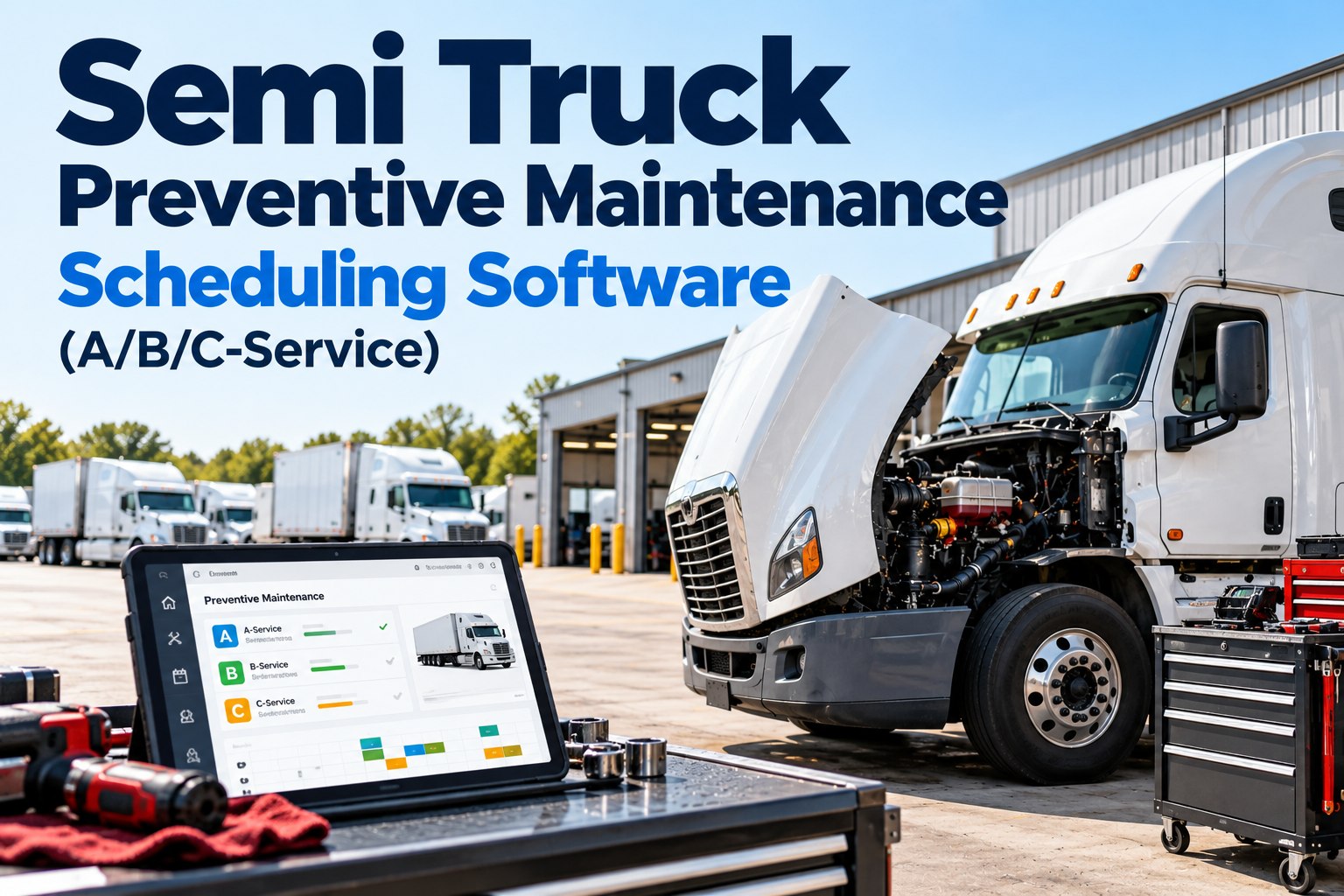
Large fleet PM programs organize preventive maintenance into service tiers that define which components are inspected and serviced at each interval level. PM-A services typically address fluid and filter services. PM-B services add brake inspection and adjustment. PM-C services incorporate more comprehensive drivetrain inspection. PM-D services represent major system reviews completed at extended intervals.
Tiered service classification enables maintenance managers to sequence work efficiently, allocate technician time appropriately by service tier scope, and communicate service requirements to parts procurement teams with sufficient lead time to stage required materials. FleetRabbit's maintenance module supports service tier configuration with checklist templates for each tier that guide technicians through required inspection and service items.
Scalable PM programs require a single system of record for maintenance history across all vehicles. When service records are distributed across shop management systems, paper work orders, or spreadsheets at individual terminals, fleet-level maintenance intelligence is inaccessible to executives and fleet managers who need it for decision-making. Centralized records also enable compliance documentation retrieval during DOT inspections without requiring coordination across multiple record-keeping systems.
FleetRabbit provides centralized maintenance record storage accessible to authorized users across multiple terminals and management levels. Every PM service completed on any vehicle in the fleet is recorded in a searchable, auditable format that supports both operational decision-making and regulatory compliance documentation.
How FleetRabbit Scales Preventive Maintenance Across Large Trucking Fleets
FleetRabbit's maintenance management platform provides the automated scheduling, real-time visibility, and integrated documentation tools that large trucking fleet PM programs require. The platform addresses each of the scaling failure modes that manual PM management encounters as fleet size and operational complexity grow.
01
Automated PM Scheduling and Reminder Generation
FleetRabbit automatically tracks service intervals for every vehicle in the fleet against their configured PM schedules and generates service reminders before vehicles reach overdue status. Fleet managers receive notification of upcoming PM events with sufficient lead time to schedule maintenance appointments, order required parts, and plan operational coverage without last-minute dispatch disruption. Automated scheduling eliminates the interval tracking workload that makes manual PM management unscalable across large fleets.
02
Fleet-Wide PM Status Dashboard
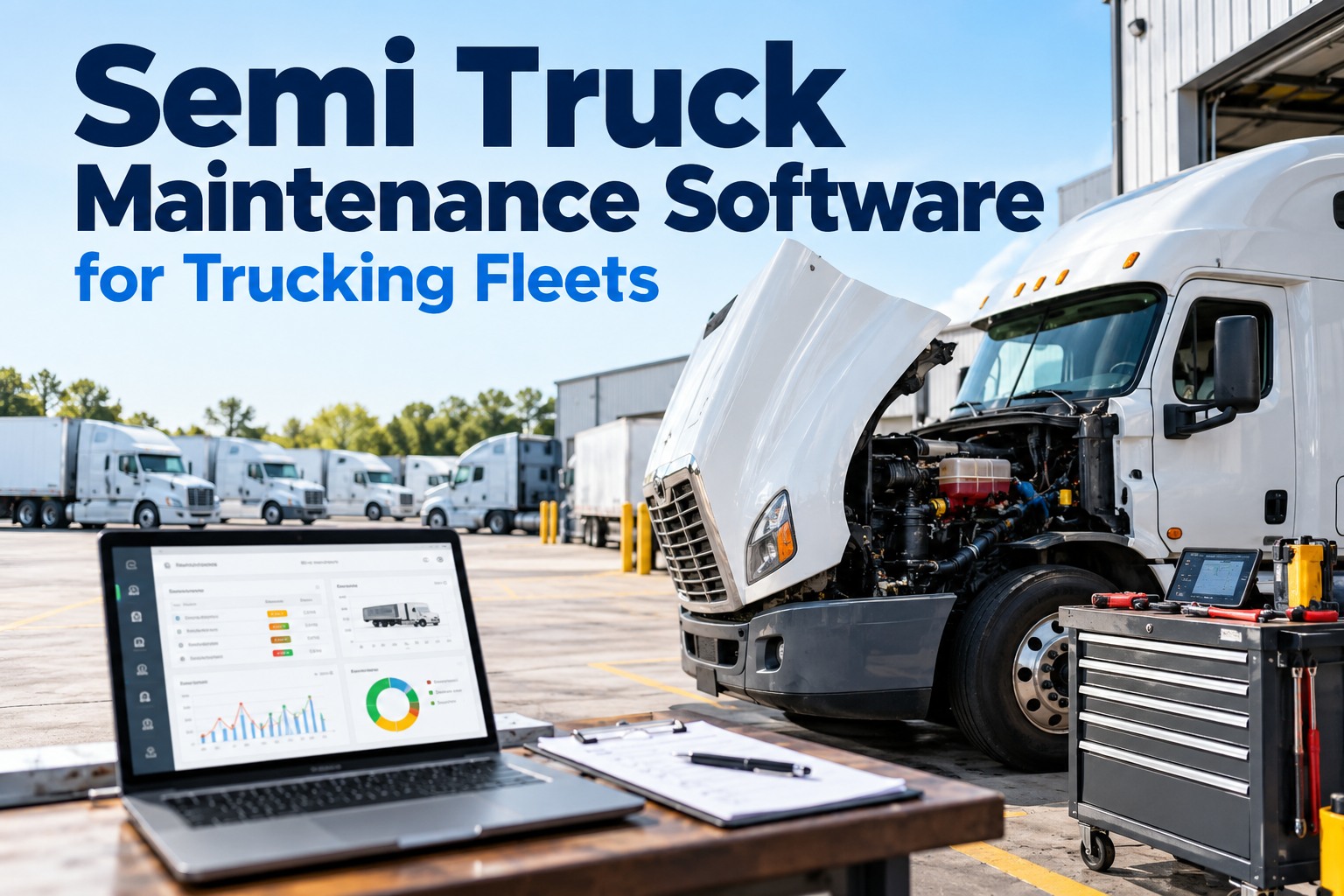
The FleetRabbit maintenance dashboard provides fleet managers and executives with real-time visibility into PM status across the entire fleet — which vehicles are current on all service intervals, which are approaching service thresholds, and which are overdue for PM events. This fleet-wide visibility enables proactive maintenance scheduling rather than reactive response to overdue reminders, and gives executives the operational intelligence to assess fleet maintenance readiness without requiring manual status reports from individual terminal managers.
03
Work Order Management and Technician Assignment
FleetRabbit's work order system enables maintenance managers to create, assign, and track service work orders from PM scheduling through technician completion and quality verification. Work order status visibility gives dispatchers real-time information about vehicle availability during maintenance events, enabling operational scheduling decisions that account for planned maintenance without requiring manual communication between maintenance and dispatch departments.
04
Parts and Inventory Integration
Integration between PM scheduling and parts inventory management enables maintenance coordinators to assess parts availability against upcoming service events before scheduling conflicts arise. Visibility into parts requirements for scheduled PM events supports proactive procurement that reduces emergency ordering costs, minimizes vendor premium pricing for unplanned parts needs, and decreases vehicle downtime attributable to parts unavailability during maintenance appointments.
05
DVIR Integration for Condition-Based Maintenance Triggers
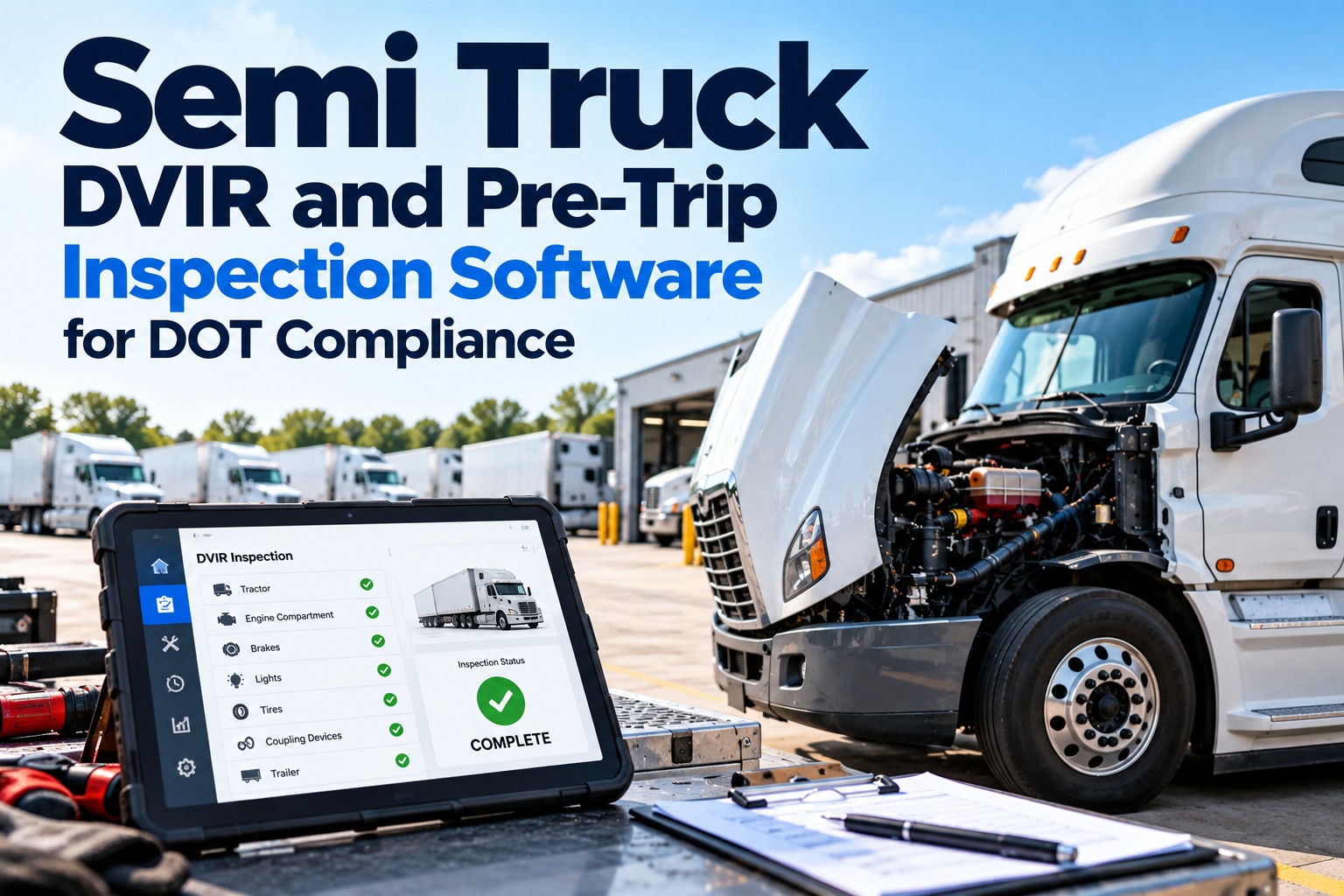
FleetRabbit connects pre-trip inspection findings from the digital DVIR module to the maintenance management system, creating automatic work order generation from driver-reported deficiencies. This integration ensures that condition-based maintenance needs identified through daily inspections receive the same systematic tracking and response as scheduled PM events — closing the gap between driver-reported issues and maintenance resolution that creates vehicle condition risk in paper-based systems.
06
Recall Tracking for Fleet-Wide Vehicle Safety Management
FleetRabbit's recall tracking module identifies active recalls applicable to vehicles in the fleet and tracks recall completion status. Large fleets managing recall compliance manually across hundreds of VINs face significant documentation and tracking challenges that create both safety and liability exposure. Automated recall identification and resolution tracking ensures that no vehicle in the fleet remains in service with an unaddressed safety recall beyond its resolution timeline.
Scale Your Preventive Maintenance Program Without Scaling Your Administrative Workload
FleetRabbit's maintenance management platform automates the interval tracking, scheduling, work order management, and compliance documentation that large fleet PM programs require — giving operations teams the visibility and control to manage maintenance across hundreds of vehicles with the same precision as smaller operations. Book a demo to assess FleetRabbit's PM capabilities for your fleet size and structure.
Preventive Maintenance Metrics Every Fleet Executive Should Monitor
Large fleet PM programs require executive-level metrics that translate maintenance operational data into strategic performance visibility. The following metrics provide fleet executives with the information needed to assess PM program effectiveness, identify systemic issues, and make informed capital and operational decisions.
PM Compliance Rate
Percentage of scheduled PM events completed on time versus completed late or skipped, calculated fleet-wide and by vehicle group or terminal.
Target: Above 92% fleet-wide. Rates below 85% indicate scheduling or capacity gaps requiring structural intervention rather than individual follow-up.
Reactive-to-Planned Maintenance Ratio
Percentage of total maintenance labor hours consumed by reactive repairs versus planned PM work. High reactive ratios indicate PM program failure upstream of the repair event.
Target: Planned PM work should represent 70% or more of total maintenance hours in a well-managed large fleet PM program.
Mean Time Between Failures
Average operational time between unplanned maintenance events requiring vehicle removal from service, tracked by vehicle segment and powertrain age cohort.
Benchmark against OEM specifications for vehicle age and mileage. Consistently lower MTBF than benchmarks indicates PM program gaps or accelerated wear issues requiring route or load analysis.
Cost Per Mile by Vehicle Age Cohort
Total maintenance cost per revenue mile disaggregated by vehicle age group, enabling comparison of actual maintenance cost against vehicle depreciation and replacement cost thresholds.
Vehicles where maintenance cost per mile approaches or exceeds the lifecycle cost of replacement are candidates for accelerated cycling rather than continued PM investment.
Seasonal PM Preparation: Managing Maintenance at Scale for Weather Transitions
Large fleets face significant logistical challenges completing seasonal maintenance preparation across hundreds of vehicles in the compressed timelines that weather transitions require. Systematic seasonal PM execution at scale requires advance planning, parts staging, and technician scheduling that fleet management software supporting PM program visibility makes possible.
Antifreeze concentration verification and coolant system flush for vehicles approaching coolant change intervals
Battery load testing with replacement of units below cold cranking ampere specification for anticipated temperature ranges
Brake system inspection with adjustment for optimal cold-weather performance and winter road condition braking requirements
Tire chain compliance audit for vehicles operating through chain-required corridors by state DOT specification
Diesel fuel system winterization including anti-gel additive specification for anticipated minimum temperature exposure
Cooling system capacity testing and radiator inspection for vehicles approaching high-heat operational conditions
Tire pressure and tread depth verification with blowout risk assessment for extended highway operation in high-temperature conditions
Refrigeration unit PM for cold-chain vehicles including temperature calibration verification and condenser cleaning
Air conditioning system service for driver comfort compliance in states with cab temperature requirements
Belt and hose inspection with proactive replacement of components approaching heat-cycle degradation thresholds
Common Questions About Scaling PM Programs in Large Trucking Fleets
QHow should large fleets structure PM programs across multiple terminals with different maintenance capabilities?
Multi-terminal PM programs should distinguish between maintenance work that can be performed at any location versus work requiring specialized equipment or technician certification. The PM scheduling system should route service events to the appropriate facility based on service tier requirements, vehicle location, and facility capability — ensuring that vehicles are not dispatch-routed to distant terminals for routine PM that could be completed locally, and that complex service work is routed to facilities with the appropriate capabilities. FleetRabbit's work order routing and fleet-wide visibility supports this multi-terminal service coordination for large distributed operations.
QWhat is the right approach for managing PM compliance for owner-operators in a large mixed fleet?
Owner-operators with their own vehicles present a PM compliance challenge because carrier maintenance standards must be enforced on equipment not directly controlled by the carrier. Carriers using owner-operator vehicles should establish maintenance compliance standards as part of the operating agreement, require documentation of PM completion at specified intervals, and use digital record submission through platforms like FleetRabbit to verify compliance rather than relying on self-reporting alone. Pre-dispatch vehicle inspection requirements enforced through digital DVIR provide an additional layer of vehicle condition verification for owner-operator units entering service rotations.
QHow does FleetRabbit handle PM scheduling for fleets with multiple vehicle types and different service interval requirements?
FleetRabbit's PM scheduling module supports vehicle-type-specific service configurations, enabling fleet managers to define different PM intervals, service tier checklists, and trigger criteria for each vehicle category in the fleet — tractors, straight trucks, trailers, refrigerated units, specialty vehicles, and support equipment can each operate under independently configured maintenance programs within the same platform. Fleet-wide dashboard views aggregate status across all vehicle types while enabling drill-down by vehicle category, terminal, or individual unit for operational decision-making.
QAt what fleet size does preventive maintenance management require dedicated software infrastructure?
The inflection point at which manual PM tracking consistently produces interval compliance breakdowns varies by fleet operational complexity, but most transportation organizations find that managing more than 25 to 30 vehicles on manual systems begins generating preventable PM compliance gaps that manifest as increased reactive repair events and declining vehicle availability. Fleets above 50 vehicles operating without dedicated PM management software reliably accumulate deferred maintenance that creates compounding vehicle condition and compliance cost over time. The ROI case for PM management software is typically strongest for fleets in the 30 to 100 vehicle range where administrative PM tracking has clearly exceeded manual management capacity.
PM Program Performance: What Scalable Maintenance Delivers
25–40%
Reduction in Unplanned Maintenance Events
Fleets with systematic PM programs enforced through automated scheduling consistently experience fewer reactive maintenance events than those managing intervals manually or reactively.
Fleet-Wide
Real-Time PM Status Visibility
Every vehicle's maintenance status visible to fleet managers and executives from a single dashboard — current, upcoming, and overdue PM events across all terminals and vehicle types.
Automated
Service Interval Tracking
Multi-trigger interval monitoring by mileage, engine hours, and calendar time eliminates manual tracking workload that becomes unmanageable as fleet size grows beyond small-fleet thresholds.
Complete
Maintenance Record Compliance
Every PM service event documented in a centralized, searchable, auditable record system that supports DOT compliance verification and insurance documentation without manual record retrieval.
Conclusion: PM Scale Requires PM Systems
Preventive maintenance programs that are designed for small fleets and stretched to large ones produce predictable results: increasing reactive repair rates, rising maintenance costs per mile, declining vehicle availability, and growing compliance exposure from documentation gaps that manual systems cannot manage at scale. The investment in fleet management software with integrated PM scheduling, work order management, fleet-wide status visibility, and compliance documentation is not a luxury for large trucking fleets — it is the operational infrastructure that makes PM program performance possible at scale.
FleetRabbit provides the PM management platform that large transportation fleets need to move from informal maintenance coordination to systematic uptime management. With automated interval tracking, fleet-wide status dashboards, work order workflows, parts integration, and DVIR connectivity, FleetRabbit delivers the operational infrastructure that PM program performance at scale demands.
Scale Your Fleet PM Program With FleetRabbit
FleetRabbit's preventive maintenance platform provides the automated scheduling, real-time status visibility, work order management, and compliance documentation capabilities that large trucking fleet PM programs require — enabling fleet managers and executives to manage maintenance performance across hundreds of vehicles with the precision and accountability that manual systems cannot deliver.
Automated PM Scheduling
Fleet-Wide Maintenance Visibility
Work Order Management
Recall Tracking
Compliance Documentation
Parts Integration
April 17, 2026
By Jason Smith
All Posts