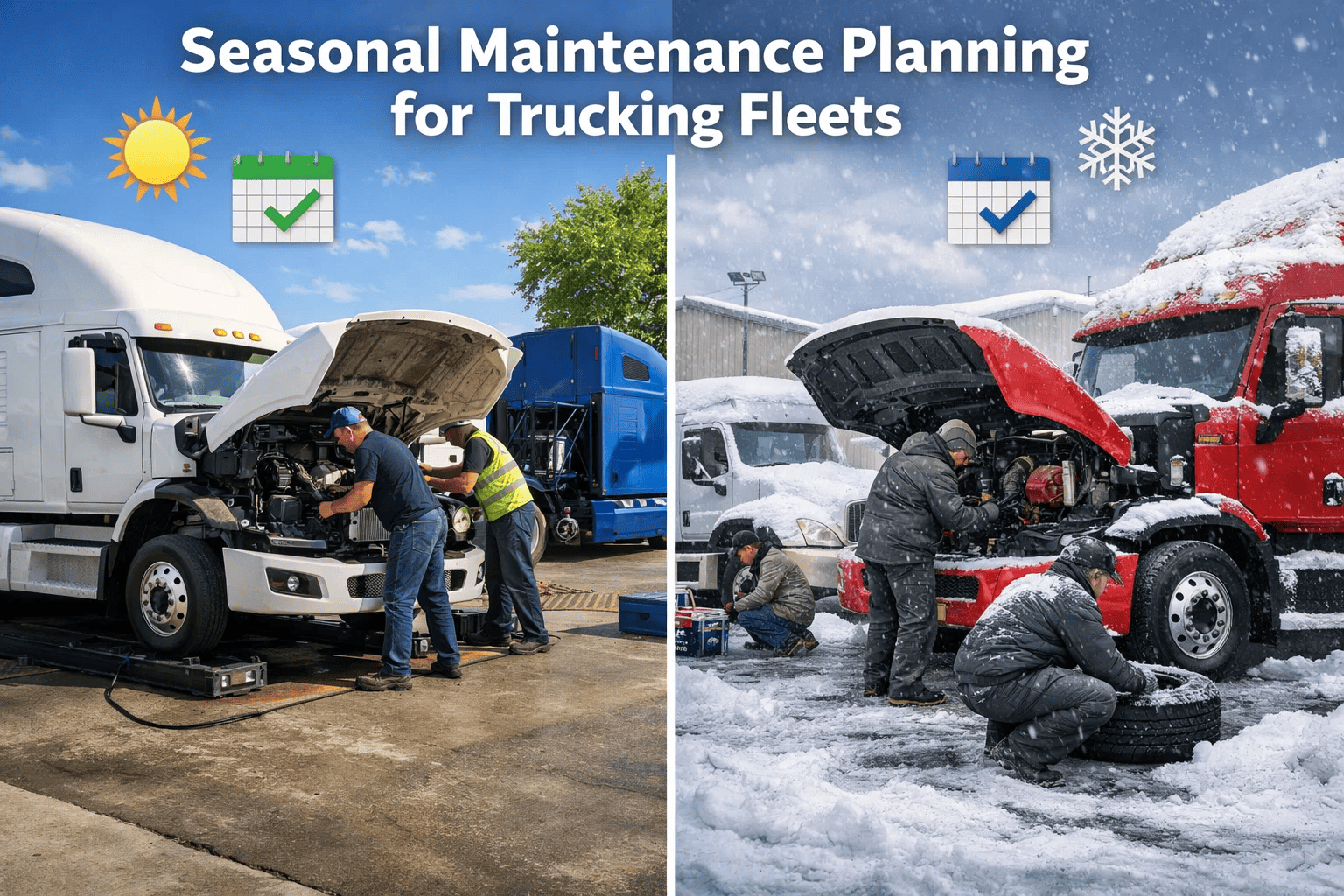
Seasonal maintenance planning is essential for keeping trucking fleets reliable, safe, and cost-efficient throughout the year. Changing weather conditions—whether extreme summer heat, monsoon moisture, or winter cold—can significantly impact vehicle performance, tire health, battery life, and engine efficiency. By implementing preventive maintenance strategies aligned with each season, fleet managers can reduce unexpected breakdowns, minimize downtime, and extend vehicle lifespan. Regular inspections, fluid checks, tire monitoring, and climate-specific adjustments help ensure trucks are always road-ready, even during peak demand periods. A well-structured seasonal maintenance plan not only improves operational continuity but also enhances safety, compliance, and overall fleet performance in a competitive logistics environment.
Why Seasonal Maintenance Planning Is Non-Negotiable for Logistics Fleets
Every season brings a distinct set of mechanical stresses, road hazards, regulatory inspection priorities, and operational demands that determine how reliably a trucking fleet performs. Fleets that approach maintenance on a reactive, break-and-fix basis are perpetually behind — repairing weather-related failures that predictive seasonal preparation would have prevented, losing vehicle uptime during peak freight periods, and absorbing emergency repair premiums that erode margins on every load.
Seasonal maintenance planning is the discipline of anticipating the specific mechanical and operational challenges each season introduces and preparing fleet vehicles systematically before those challenges arrive. A fleet that completes its winter readiness inspections in October is not scrambling to source coolant additives in December when temperatures drop and brake lines begin failing. A fleet that addresses summer cooling system service before July is not losing days to engine overheats on interstate runs in peak heat.
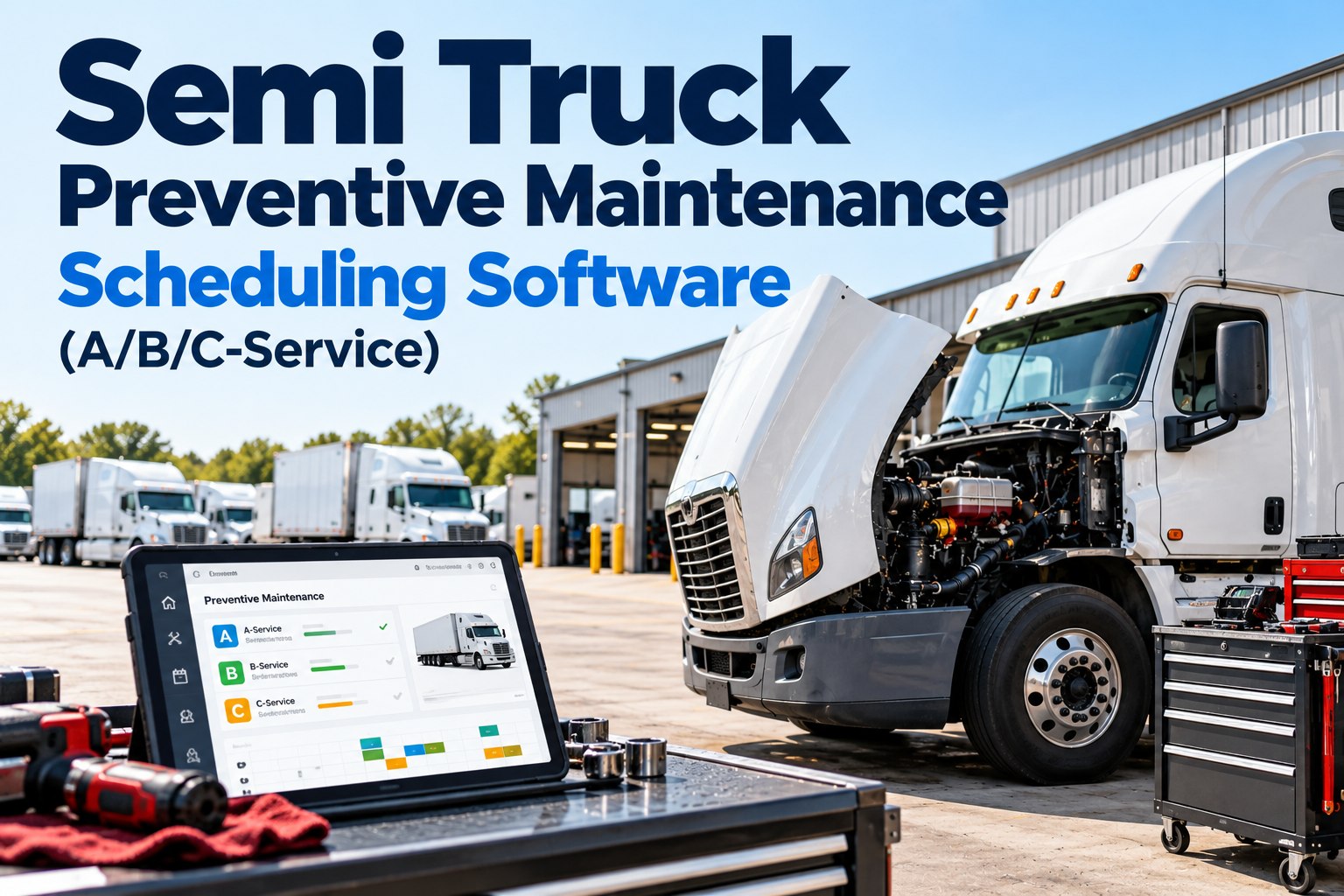
FleetRabbit's preventive maintenance scheduling platform enables logistics fleet managers to build and execute season-specific maintenance programs that ensure every vehicle enters each seasonal period in peak condition. Automated service reminders, digital inspection checklists, work order tracking, and compliance documentation keep seasonal preparation organized, accountable, and defensible during DOT audits and insurance reviews.
34%
Of all commercial vehicle roadside inspection failures during winter months are attributable to brake system deficiencies that seasonal inspection would have identified
$8,500
Average cost of a single weather-related roadside breakdown for a Class 8 truck including towing, repair, driver downtime, and missed load penalties
41%
Reduction in seasonal breakdown incidents reported by fleets implementing structured pre-season vehicle preparation protocols
28%
Lower emergency repair costs achieved by fleets using FleetRabbit's preventive maintenance scheduling against seasonal mileage and time triggers
Winter Preparation: The Most Critical Seasonal Maintenance Window
Winter is the highest-risk season for commercial trucking fleets in most of North America. Cold temperatures degrade battery performance, thicken engine and hydraulic fluids, stress cooling systems, compromise tire traction and pressure, and increase the frequency of brake system failures as moisture in air lines freezes. Preparing every vehicle in the fleet for winter operations before cold weather arrives is the single highest-return seasonal maintenance investment a logistics operator can make.
Battery Testing and Replacement
Battery performance degrades rapidly in cold temperatures. A battery at 50 percent capacity that starts reliably in summer may fail completely at sub-zero temperatures. Pre-winter battery load testing identifies batteries approaching end of life before the first cold snap creates no-start situations at shipper yards, truck stops, or roadside locations. FleetRabbit schedules battery tests as component of winter readiness work orders, tracking battery age and test results by vehicle.
Coolant System Service and Freeze Protection Verification
Engine coolant must maintain adequate antifreeze concentration to prevent freeze-related cracking of engine blocks, radiators, and coolant lines. Pre-winter coolant service includes concentration testing, flush and refill where concentration is inadequate, thermostat function verification, and visual inspection of hoses and clamps for deterioration. FleetRabbit maintenance records capture coolant service history, ensuring no vehicle enters winter season with expired or weakened coolant protection.
Air System Moisture Elimination
Moisture accumulation in compressed air systems is a primary cause of winter brake failures in commercial vehicles. Air dryers, moisture separator service, and drain valve function checks must be completed before winter to prevent ice formation in brake lines, chambers, and valves that can cause total brake failure at dangerous moments. Air dryer element replacement is typically scheduled on an annual or mileage basis and should be aligned with the pre-winter service window.
Engine Oil and Fluid Viscosity Adjustments
Engine oil viscosity grades affect cold-start lubrication performance. Fleets operating in severe winter climates should verify that oil specifications meet manufacturer cold-temperature requirements. Hydraulic fluid, power steering fluid, and differential lubricants may also require winter-grade products in extreme cold environments. FleetRabbit's maintenance specification records capture fluid type and grade requirements by vehicle, ensuring technicians use correct specifications during seasonal service.
Tire Inspection, Pressure, and Traction Assessment
Cold temperatures reduce tire pressure at approximately 1 PSI per 10 degrees Fahrenheit, and tires checked at summer pressures may be significantly under-inflated when temperatures drop. Winter tire condition inspections assess tread depth, sidewall integrity, and valve stem condition across all axle positions. Fleets operating in heavy snow regions should evaluate whether drive axle tires meet traction requirements for state and provincial winter traction regulations.
Lighting Systems and Visibility Equipment
Shorter daylight hours and reduced visibility from snow, fog, and road spray make lighting system performance critical in winter. Pre-winter lighting inspections cover headlights, taillights, brake lights, marker lights, turn signals, and reflective tape condition. Defective lighting generates CSA points during roadside inspections and creates direct accident risk in reduced-visibility winter conditions. FleetRabbit DVIR records capture lighting defect history, enabling trend analysis that identifies chronic electrical system issues by vehicle.
Summer Maintenance Planning: Heat, Cooling Systems, and High-Load Operations
Summer introduces a different category of mechanical stress from winter, centered on heat management, increased freight volume pressure, and prolonged high-speed highway operations. Engines, transmissions, braking systems, and tires all face elevated stress in summer operating conditions, and maintenance programs that are not adjusted for summer demands produce preventable failures during the season when freight volume pressure is highest and vehicle downtime is most costly.
Cooling System Capacity Verification
The cooling system must maintain engine temperature within safe operating range under maximum load conditions in ambient temperatures that may exceed 100 degrees Fahrenheit. Pre-summer cooling system service includes radiator flush and inspection, cooling fan clutch operation test, thermostat verification, pressure cap testing, and hose replacement where deterioration is present. Coolant additives that inhibit rust and scaling should be verified at recommended concentrations. FleetRabbit schedules cooling system service as a triggered work order based on mileage or calendar interval aligned with summer preparation timing.
Air Conditioning System Service for Driver Comfort and Safety
Driver fatigue and heat stress are significant safety risks during summer operations, and functioning cab air conditioning is both a driver retention factor and a safety prerequisite for long-haul operations in hot climates. Pre-summer AC service includes refrigerant level check, compressor belt inspection, condenser cleaning, and cabin filter replacement. FleetRabbit work orders capture AC service history and schedule return intervals to ensure systems are serviced before summer heat arrives rather than after the first failure.
Tire Heat Management and Blowout Prevention
Tire blowouts increase dramatically in summer due to the combination of high ambient temperatures, heat generated by sustained highway speeds, and pre-existing tire damage that is not visible during routine visual inspections. Summer tire preparation includes inflation pressure verification to manufacturer specifications accounting for summer temperature expansion, complete tread depth assessment across all positions, and removal of tires with visible sidewall damage, uneven wear patterns, or nail penetrations. TPMS sensor function should be verified as part of summer tire service.
Brake System Service for High-Load Freight Periods
Summer and fall typically represent peak freight periods for many logistics operations, with higher load weights and more frequent heavy braking on congested urban routes. Pre-peak-season brake drum, shoe, and lining inspections ensure the braking system has adequate capacity remaining to perform through the high-demand period without requiring emergency in-season repairs. Brake adjustment and slack adjuster inspection should be completed before peak season, not during it.
Fall Maintenance Planning: Bridge Season Between Peak Demand and Winter Preparation
Fall represents a transitional maintenance window that serves two simultaneous purposes: completing any deferred maintenance from the summer peak demand period and beginning winter preparation activities. For many logistics fleets, fall is also a period of elevated freight volume as retailers prepare inventory for the holiday season, compressing the available time for fleet maintenance between load commitments.
FleetRabbit's maintenance scheduling system helps fleet managers navigate this compressed preparation window by sequencing fall and winter preparation work orders across the fleet in coordination with dispatch availability data. Rather than pulling multiple trucks simultaneously at the worst time, preventive maintenance can be staged across the available pre-winter window, ensuring all vehicles are prepared without creating fleet availability gaps during peak freight periods.
Staggered Pre-Winter Preparation Scheduling
FleetRabbit enables fleet managers to sequence winter preparation work orders across a rolling preparation window — for example, rotating through the entire fleet over six weeks before anticipated first freeze dates. This staggered approach ensures maintenance shop resources are not overwhelmed, vehicles are not simultaneously unavailable, and no truck enters winter season with deferred preparation work outstanding. Preparation completion is tracked per vehicle with documented check-off on digital inspection checklists.
Annual Component Life Cycle Tracking
Many components on commercial vehicles have service life cycles aligned with annual intervals that correspond naturally with seasonal preparation windows. Water pump replacement, serpentine belt service, fuel filter replacement, and air filter service are often best aligned with either pre-winter or pre-summer preparation windows to ensure fresh components enter each high-stress season. FleetRabbit tracks component installation dates and mileage, alerting maintenance teams when annual components approach the seasonal service window for proactive replacement.
Spring Maintenance Planning: Post-Winter Recovery and Road Readiness
After a demanding winter season, fleet vehicles require thorough assessment to identify damage accumulated from road salt corrosion, freeze-thaw stress on seals and gaskets, pothole impacts on suspension and alignment, and the cumulative strain of cold-weather operations on batteries, starters, and alternators. Spring maintenance is the post-winter recovery program that restores fleet vehicles to full-season readiness before summer operations begin.
Undercarriage and Corrosion Assessment
Road salt and de-icing chemicals applied during winter operations accelerate corrosion on frame rails, brake components, fuel lines, electrical connectors, and exhaust systems. Spring undercarriage inspection identifies corrosion damage that, if unaddressed, leads to structural weakening and system failures later in the year. FleetRabbit digital inspection forms capture undercarriage assessment findings with photo documentation, creating visual records that support warranty claims and track corrosion progression over multiple winters.
Suspension and Alignment Verification
Winter road conditions — potholes, frost heaves, and ice-damaged road surfaces — impose significant impact loading on suspension components including shock absorbers, leaf springs, air bags, steering linkages, and wheel bearings. Spring suspension inspections verify that these components have not suffered winter damage that would compromise vehicle handling, tire wear, or load stability. Alignment checks following winter operations often reveal significant front-end displacement that, left uncorrected, accelerates tire wear and increases fuel consumption through added rolling resistance.
Post-Winter Brake System Comprehensive Service
Brake drums, rotors, shoes, and linings that performed adequately entering winter may be at or near minimum specification thresholds after a full winter of operation. Spring brake inspection provides a complete assessment of remaining service life across all braking components, scheduling replacements during the spring maintenance window rather than waiting for in-season failures. Spring is also the ideal time to lubricate slack adjusters, inspect chamber diaphragms, and verify brake balance across axles.
Electrical System Post-Winter Health Check
Winter's repeated cold-start demands, increased lighting and defrost system loads, and the corrosion effects of moisture and salt on connectors and terminals take a measurable toll on commercial vehicle electrical systems. Spring electrical inspections include alternator output testing, starter current draw testing, battery condition re-assessment, and connector cleaning and resealing across the trailer and tractor harness. Ground strap condition is particularly critical after winter, as corroded ground connections cause a wide range of intermittent electrical faults that are difficult to diagnose in season.
How FleetRabbit Automates Seasonal Maintenance Planning
The most significant barrier to effective seasonal maintenance planning in most logistics fleets is not lack of knowledge about what needs to be done — it is the operational complexity of tracking what has been done, what is due, and what is overdue across a fleet of dozens or hundreds of vehicles simultaneously. Manual seasonal maintenance tracking in spreadsheets and physical binders creates gaps, inconsistencies, and documentation failures that expose fleets to CSA violations during roadside inspections and compliance deficiencies during DOT audits.
FleetRabbit eliminates this complexity through automated maintenance scheduling, digital work order tracking, and documentation management that scales from small fleets to enterprise operations without adding administrative headcount. Seasonal maintenance programs are built once in FleetRabbit and then execute automatically, generating work orders, notifying maintenance staff, tracking completion, and producing compliance documentation as standard platform functions.
Season-Specific Maintenance Templates
FleetRabbit allows maintenance teams to build seasonal preparation checklists as reusable templates — pre-winter, pre-summer, spring recovery, and fall transition programs — that can be applied to the entire fleet or to specific vehicle types and model years with a single scheduling action. Templates include every required inspection item, fluid specification, part number, and labor time estimate, ensuring consistent execution quality regardless of which technician performs the service. Completed templates become permanent digital records in the vehicle's maintenance file.
Mileage and Calendar Trigger Automation
FleetRabbit generates seasonal maintenance work orders automatically based on mileage thresholds and calendar triggers, ensuring that preparation windows are not missed due to scheduling oversight or staff changes. When a vehicle reaches a defined mileage threshold within a seasonal preparation window, FleetRabbit creates the work order, assigns it to the designated shop or mobile technician, and tracks it to completion. Overdue work orders escalate through alert notifications to maintenance managers and fleet operations leadership.
Digital Inspection Records for DOT Compliance
Every seasonal maintenance service completed through FleetRabbit produces a digital record that documents the inspection findings, services performed, parts replaced, technician credentials, and completion timestamp. These records are retained in searchable form within the FleetRabbit platform, making DOT audit preparation straightforward. Fleet managers can pull complete seasonal maintenance histories for any vehicle in seconds, demonstrating systematic, documented preparation practices that reduce violation risk and support compliance defense when needed.
Recall Tracking Integration with Seasonal Maintenance
FleetRabbit's recall tracking module monitors NHTSA safety recall databases for active recalls affecting fleet vehicles and integrates recall completion into the seasonal maintenance workflow. Seasonal service windows are the most practical time to address outstanding safety recalls, and FleetRabbit surfaces any open recall notices alongside the seasonal preparation work order, ensuring recalls are cleared during planned shop visits rather than requiring separate unscheduled shop visits. Recall completion is documented in the vehicle file alongside preventive maintenance records.
Peak Season Preparedness: Managing Maintenance During High-Demand Periods
Peak freight periods — the pre-holiday season from October through December, agricultural harvest periods, and summer construction activity peaks — create competing demands between maintenance schedules and dispatch availability. Fleet managers are under pressure to keep every available vehicle moving, creating a temptation to defer scheduled maintenance when trucks are needed for high-value loads.
FleetRabbit's maintenance scheduling system incorporates vehicle availability data from the dispatch module, enabling maintenance managers to identify windows within the dispatch schedule where vehicles can be brought in for service without disrupting committed load assignments. Rather than choosing between maintenance and operations, FleetRabbit makes it possible to coordinate both through visibility into the intersection of maintenance requirements and dispatch commitments. Fleets that defer seasonal maintenance through peak periods invariably pay the cost in higher breakdown rates during the period when breakdowns are most damaging to customer relationships and profitability.
Frequently Asked Questions
When should trucking fleets begin winter maintenance preparation?
Winter maintenance preparation for trucking fleets should begin 6 to 8 weeks before anticipated first freeze dates in the fleet's primary operating region. For most of the northern United States and Canada, this means starting winter preparation in late September or early October to ensure the entire fleet can be serviced before temperatures consistently drop below freezing. Fleets operating in multiple regions with different climate patterns should use the earliest freeze date in their operating territory as the planning anchor. FleetRabbit allows fleet managers to set preparation deadlines by vehicle and generates work orders on a schedule that distributes the workload across the available preparation window.
What are the most commonly overlooked items in truck winter maintenance inspections?
The most commonly overlooked winter maintenance items in commercial truck inspections are air dryer element replacement, fifth wheel coupling lubrication, trailer electrical connector cleaning and sealing, door seal and weather stripping condition, and fuel filter replacement with winter-grade anti-gel additives in diesel fuel systems. Many fleets focus on the high-visibility items — batteries, coolant, tires — and overlook these secondary systems that have significant failure consequences. FleetRabbit's seasonal maintenance templates include all these items as mandatory inspection checklist points, ensuring nothing is omitted regardless of technician experience level.
How does FleetRabbit track seasonal maintenance completion across a large fleet?
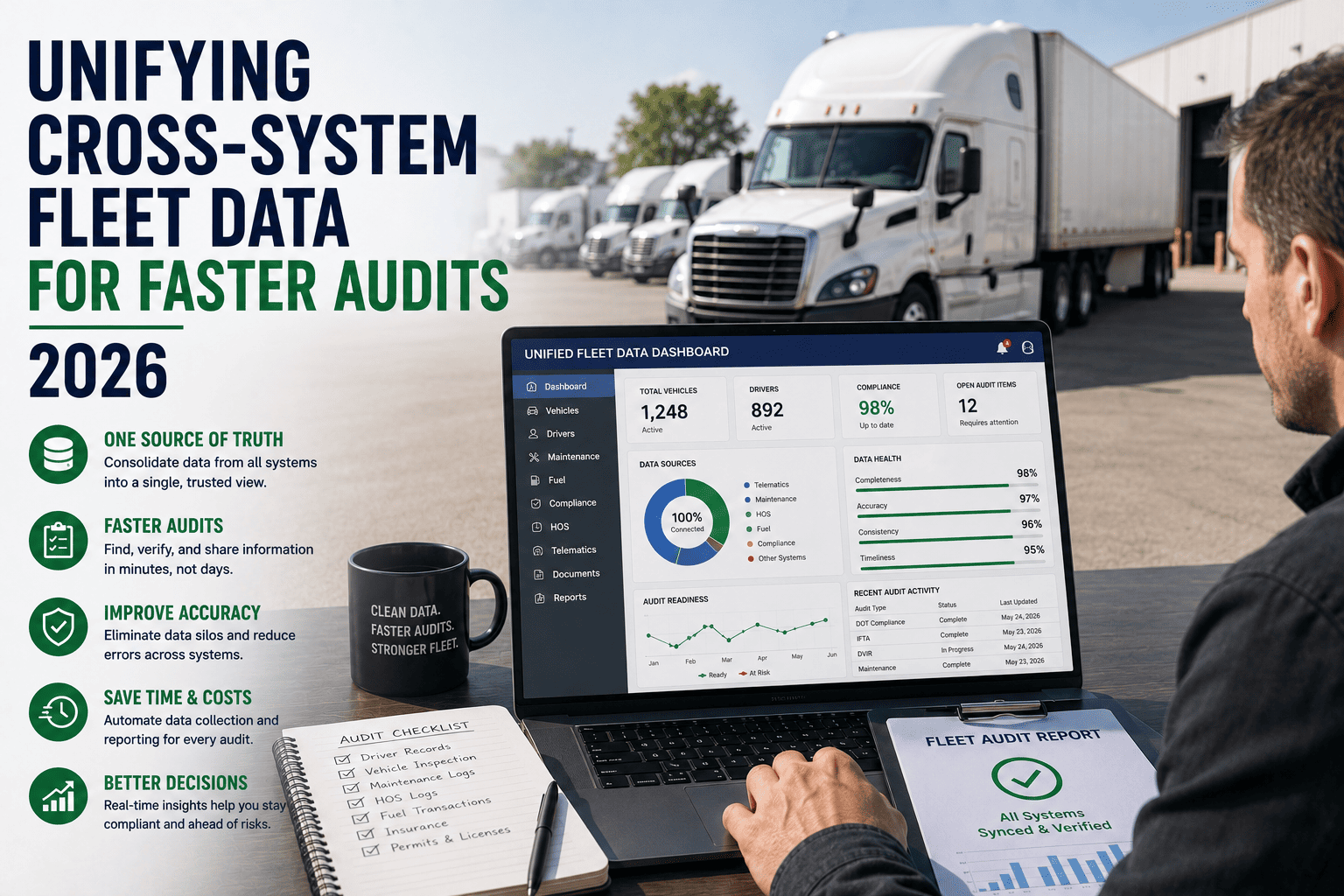
FleetRabbit tracks seasonal maintenance through a combination of vehicle-level work order management, digital inspection checklist completion records, and fleet-wide status dashboards. Maintenance managers can view the seasonal preparation status for every vehicle simultaneously — which trucks have been serviced, which are scheduled, and which are overdue — from the FleetRabbit maintenance dashboard. Overdue work orders trigger escalating notifications to maintenance staff and fleet operations management. At the close of each preparation window, FleetRabbit generates a completion report documenting the status of every vehicle's seasonal service for audit and compliance purposes.
Can seasonal maintenance planning reduce commercial vehicle insurance premiums?
Yes. Documented systematic seasonal maintenance programs are a recognized risk mitigation factor that many commercial trucking insurers consider during premium underwriting and renewal negotiations. Fleets with comprehensive digital maintenance records demonstrating consistent pre-winter preparation, regular brake system service, and proactive recall completion are statistically lower risk profiles than fleets without documented maintenance practices. FleetRabbit's maintenance records provide the documentation depth that insurance underwriters require to recognize systematic maintenance practices in their risk assessment, and the records are exportable in formats suitable for submission to carriers or brokers during renewal discussions.
What is the difference between preventive maintenance and seasonal maintenance in fleet management?
Preventive maintenance is the broader practice of servicing vehicle components on defined mileage or time intervals to prevent failures — oil changes, filter replacements, brake adjustments, and lubrication services performed at regular intervals regardless of season. Seasonal maintenance is a focused subset of preventive maintenance specifically addressing the mechanical vulnerabilities and operational demands introduced by each changing season — winter freeze protection, summer heat management, spring corrosion recovery, and fall transition preparation. Both programs are necessary: preventive maintenance maintains ongoing vehicle health, while seasonal maintenance specifically addresses the predictable stress concentrations that each season introduces to commercial vehicle systems.
How should fleet managers prioritize maintenance when operating budgets are constrained during peak seasons?
When maintenance budgets are under pressure during peak freight periods, the prioritization framework should follow safety and compliance risk. Brake systems, tire condition, lighting, and cooling systems represent the highest-consequence failure categories and should never be deferred regardless of budget constraints. Secondary systems — AC, cosmetic components, minor audio or convenience features — can be deferred to post-peak maintenance windows without safety or compliance risk. FleetRabbit's maintenance priority classification system allows maintenance managers to tag work orders by priority level, ensuring that safety-critical items are always scheduled first and that deferred secondary items are captured for execution when budget and availability permit.
Protect Your Fleet Year-Round With FleetRabbit Seasonal Maintenance Planning
Seasonal maintenance planning is the practice that separates logistics fleets that run reliably through every climate challenge from those that absorb preventable breakdowns, emergency repair costs, CSA violations, and missed delivery penalties season after season. The investment in systematic pre-season preparation returns multiples in avoided downtime, lower emergency repair premiums, extended component life, and protected customer relationships.
FleetRabbit provides the platform infrastructure — automated scheduling, digital inspection checklists, work order tracking, compliance documentation, and recall management — that makes comprehensive seasonal maintenance planning executable at scale, regardless of fleet size or number of maintenance facilities.
Build Your Fleet Seasonal Maintenance Program With FleetRabbit
Schedule a live demonstration with a FleetRabbit fleet maintenance specialist to see how seasonal maintenance templates, automated work order scheduling, digital inspection records, and fleet-wide completion tracking work together in a platform designed specifically for transportation and logistics fleet maintenance operations.
Book a Free Demo
Start Free Trial
April 18, 2026
By Jason Smith
All Posts