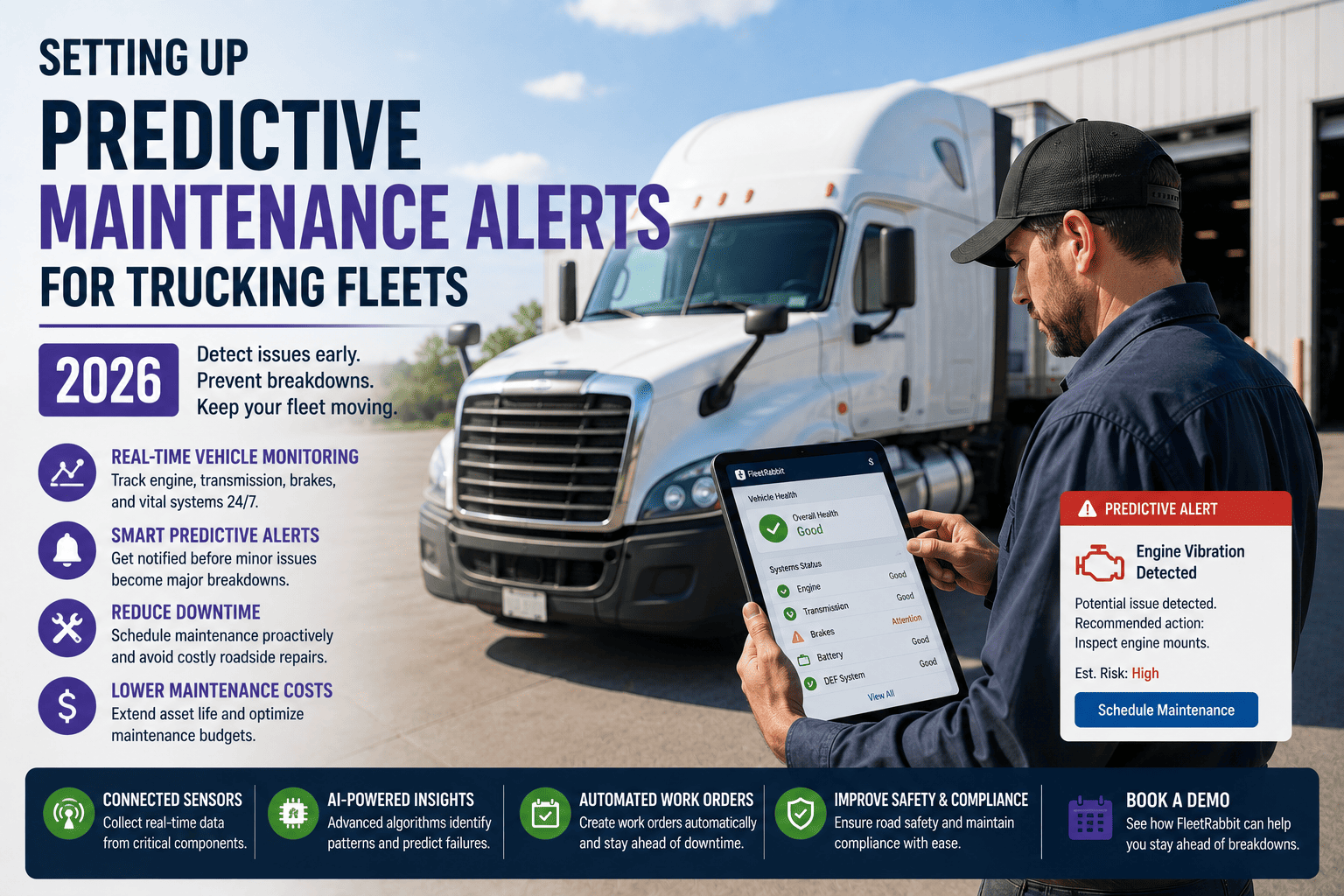
A commercial truck engine control module can generate 300 to 400 diagnostic codes in a single month, and most of them mean nothing urgent. The problem is not a lack of data. Modern trucks are already telling fleet managers exactly what is about to break. The problem is that raw fault codes without severity scoring, routing, and thresholds turn into noise that technicians learn to ignore, which is how a warning that appeared three weeks earlier still ends up as a roadside breakdown. Setting up predictive maintenance alerts correctly, not just turning telematics on, is what separates fleets that catch failures early from fleets that are still surprised by them. This guide walks through exactly how to build an alert system that gets acted on instead of ignored.
A single truck can generate 300 to 400 fault codes monthly, but AI-driven filtering can reduce that to just 5 to 10 actionable alerts per vehicle each year. Fleets that monitor diagnostic trouble codes in real time and score them by severity reduce breakdowns by up to 75 percent and cut emergency repair costs by 3 to 9 times compared to fleets waiting for scheduled inspections.
Why Most Fleets Get Maintenance Alerts Wrong
Almost every modern truck already has the hardware needed to send maintenance alerts. Over 90 percent of vehicles manufactured in 2026 ship with embedded telematics, and if a truck already has GPS tracking installed, it very likely has fault code transmission capability sitting unused. The failure point is rarely the hardware. It is the setup. Fleets that simply forward every raw fault code to a maintenance inbox quickly drown their own team in noise, and technicians start clearing codes during a shop visit instead of investigating each one individually. That habit is exactly how a coolant pressure warning that first appeared three weeks earlier gets missed until the truck is stranded on the shoulder.
The fix is not more alerts, it is smarter ones. AI-driven filtering can take a fleet from thousands of raw diagnostic codes down to five to ten alerts per vehicle per year that actually require a maintenance decision. That kind of filtering only happens when severity scoring, routing rules, and escalation logic are configured deliberately, rather than left to default settings on a telematics dashboard nobody checks daily.
The Cost Of Getting Alert Setup Wrong
When alerts are not tuned, fleets end up back in the reactive maintenance cycle they were trying to escape. A vehicle fails mid-route, gets towed to a service center, absorbs premium labor rates, and returns to service days later. Once towing, lost productivity, and driver downtime are factored in, a single reactive breakdown can cost well over 1,900 dollars, and that number multiplies quickly across a fleet of any real size.
FleetRabbit captures, scores, and routes every diagnostic signal your fleet generates so your team only sees what actually needs attention. Sign up free and start receiving prioritized alerts today.
The Anatomy Of A Good Maintenance Alert
A useful alert does more than tell you a fault code fired. It tells a maintenance team what the problem likely is, how urgent it is, and what to do next. Alerts configured without severity tiers force every notification to look equally urgent, which is exactly what trains staff to ignore them. Structuring alerts into clear tiers gives your team a way to triage instantly instead of opening every notification to figure out what it means.
| Severity Tier | What It Signals | Typical Lead Time | Recommended Action |
|---|---|---|---|
| Critical | Active fault directly tied to a known failure pattern, safety-relevant system, or immediate breakdown risk | Hours to a few days | Pull vehicle from service or route to nearest shop before next dispatch |
| Warning | Pending code or threshold drift outside normal range, not yet affecting performance | One to three weeks | Schedule repair at next planned maintenance window |
| Watch | Minor deviation flagged by AI pattern analysis, within tolerance but trending | Three or more weeks | Log for review, monitor trend, no immediate action required |
Step-By-Step: Setting Up Your Alert System
Building an alert system that your team actually trusts happens in a defined sequence. Skipping steps, especially severity scoring and routing, is the most common reason fleets end up back at raw, unfiltered fault codes within a few months of switching on telematics.
Connect Your Telematics And Diagnostic Ports
Confirm your platform reads directly from OBD-II or J1939 ports rather than relying only on secondhand telematics feeds. Deeper, direct vehicle data produces more accurate alerts, and most trucks already have this hardware active without requiring a swap.
Define Safe Operating Thresholds
Set baseline ranges for the metrics that matter most, engine temperature, coolant pressure, turbo boost, DPF pressure differential, and fuel injector pulse width. These thresholds are what trigger alerts before an official fault code ever fires.
Apply Automated Severity Scoring
Every incoming code or threshold breach should be scored automatically into Critical, Warning, or Watch tiers based on failure-pattern history, not left for a human to manually judge urgency in the moment.
Route Alerts To The Right People
Critical alerts should reach dispatch and maintenance leads immediately, while Warning and Watch tier alerts can route into a queue reviewed during regular shop planning, keeping urgent issues from getting buried in routine notifications.
Integrate Alerts With Maintenance Scheduling
Warning-tier alerts should feed directly into your shop calendar so repairs get booked into the next available planned downtime window instead of sitting in an inbox until the part fails.
FleetRabbit connects to your existing telematics, scores every diagnostic signal by severity, and routes alerts to the right person automatically. Book a 30-minute demo to see it configured for your fleet.
Alert Types Worth Configuring First
Not every metric deserves its own alert on day one. Start with the components most responsible for unplanned downtime, then expand coverage as your team gets comfortable acting on what comes through.
Engine Temperature And Coolant System Alerts
Gradual coolant pressure variation or engine temperature drift is one of the earliest and most reliable predictors of a developing cooling system failure, often surfacing days to weeks before a dashboard warning appears.
DPF Pressure Differential Alerts
A rising pressure differential across the diesel particulate filter signals clogging long before it triggers a derate or forces an unplanned regeneration cycle that pulls a truck off its route.
Brake Wear And Air System Alerts
Threshold-based alerts on pad thickness estimates and air system pressure catch brake issues while replacement is still a scheduled, low-cost repair instead of an emergency roadside fix.
Battery And Electrical System Alerts
State-of-charge and voltage trend alerts catch a failing battery or charging system before it strands a driver, and for fleets running electric assets, this extends to battery state of health and charging session diagnostics.
Avoiding Alert Fatigue As Your Fleet Scales
Alert fatigue is the single biggest reason predictive maintenance programs quietly fail after a strong start. As fleets grow, the raw volume of diagnostic data grows with it, and without ongoing tuning, teams that once responded quickly to every notification start skimming past them. Review your severity thresholds quarterly, since failure patterns shift as your fleet's average vehicle age changes. Track how many alerts actually resulted in a maintenance action versus how many were dismissed, and adjust scoring rules for any alert type with a high dismissal rate. Keep a short weekly review of Watch-tier trends, since a metric drifting slowly for months is often the earliest true signal your system has, even if no single reading ever crossed a hard threshold.
Measuring Whether Your Alert System Is Working
A well-tuned alert system should show a rising ratio of planned to unplanned maintenance events over time, a shrinking gap between when an alert fires and when it gets actioned, and a declining rate of roadside breakdowns for components already covered by alerts. If any of these numbers are flat or moving the wrong direction, it usually means thresholds need retuning or routing rules are sending alerts to the wrong queue.
Key Takeaways On Setting Up Maintenance Alerts
The hardware for predictive maintenance is already sitting in most trucking fleets today. What separates fleets that catch failures weeks early from fleets still getting surprised on the roadside is deliberate setup: direct diagnostic port connections, clearly defined thresholds, automated severity scoring, and routing rules that get Critical alerts in front of the right person immediately. Skip any one of those steps and you are back to raw fault codes nobody has time to review.
Done correctly, an alert system built this way reduces breakdowns by up to 75 percent and cuts emergency repair costs by a factor of three to nine compared to reactive maintenance. It turns hundreds of monthly diagnostic codes into a short, trustworthy list your maintenance team actually acts on, and it moves your fleet from reacting to failures to scheduling around them.
FleetRabbit connects to your existing telematics, filters hundreds of monthly fault codes down to what actually matters, and routes every alert to the right person automatically. Stop discovering problems when a truck is already stranded.