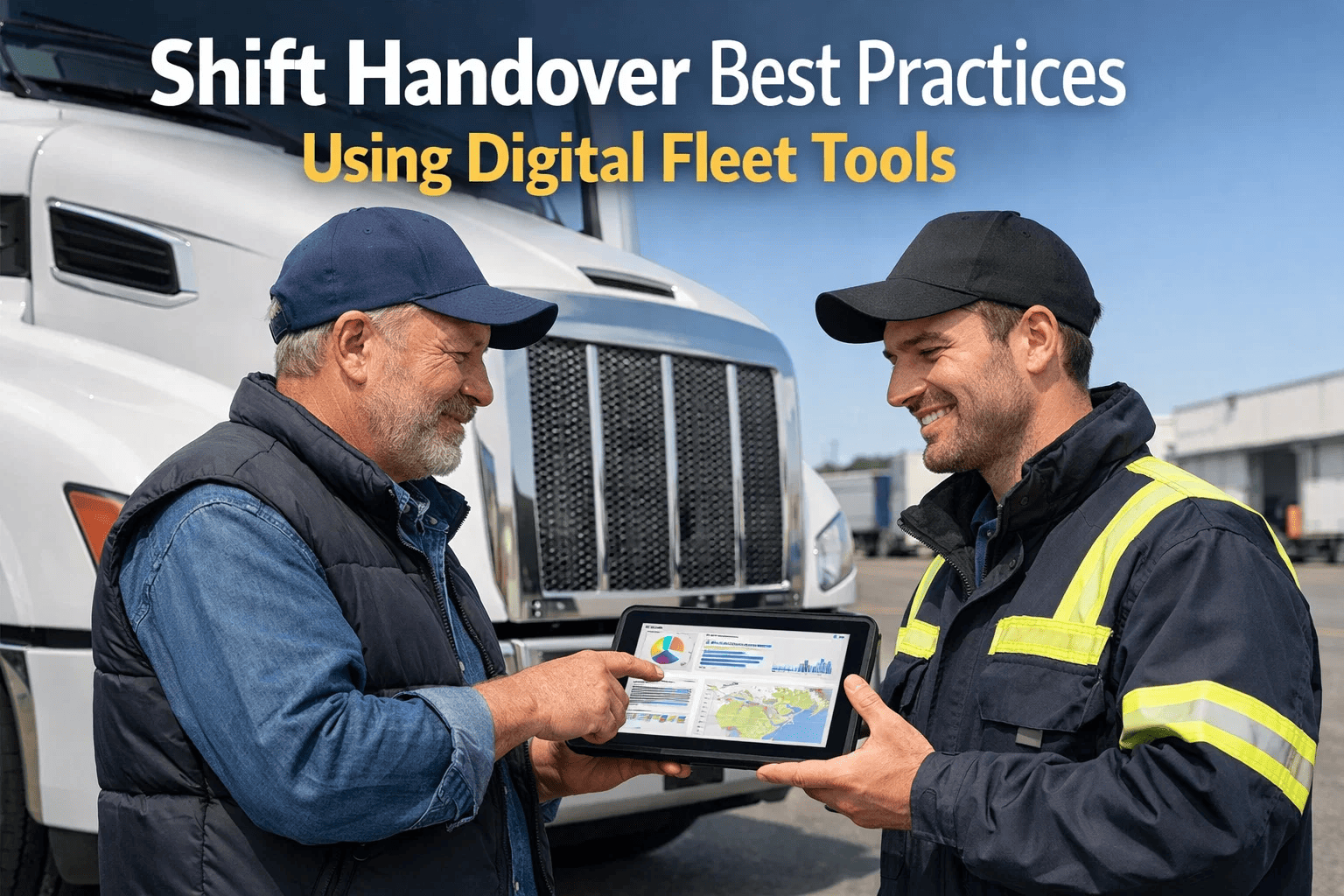
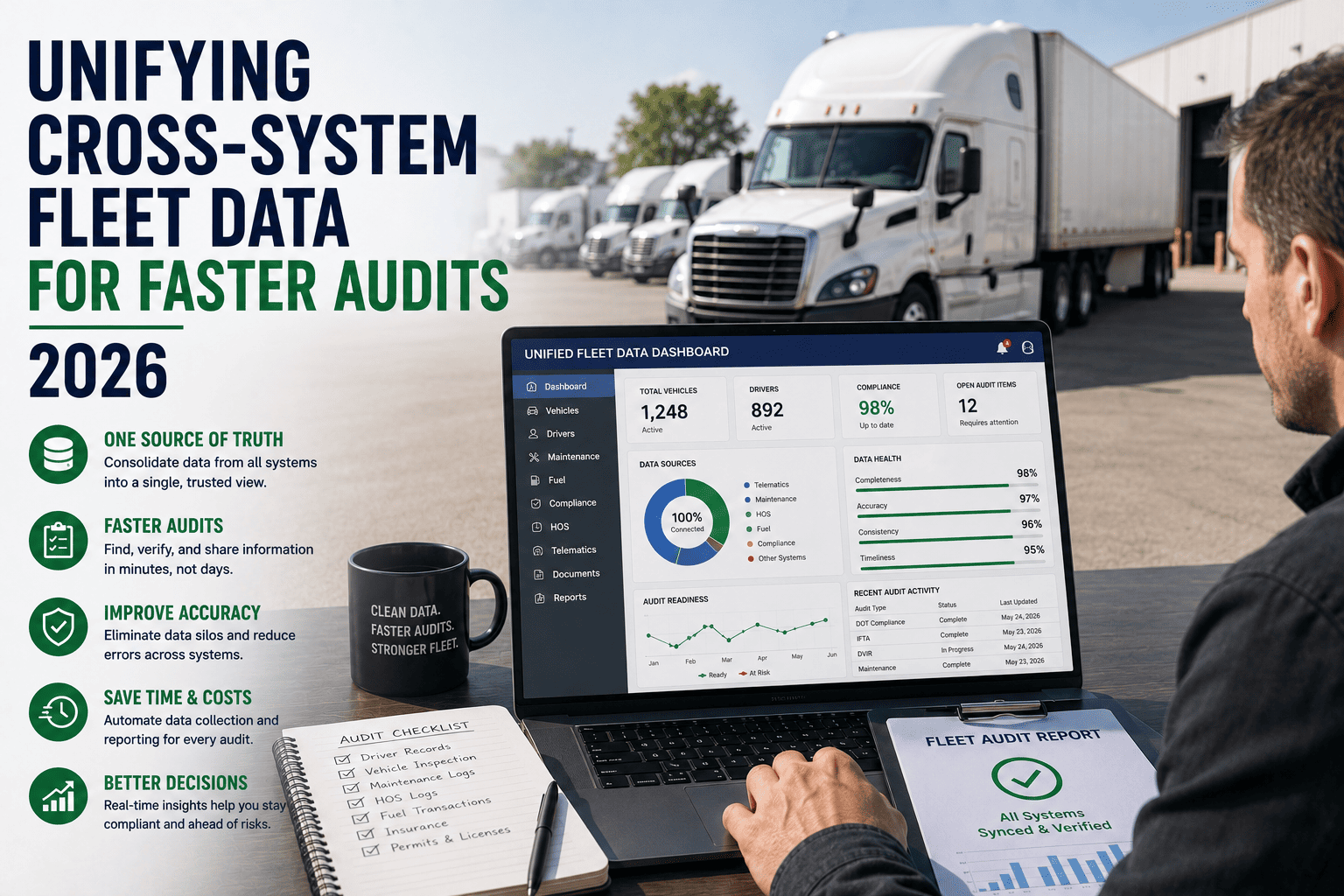
Trucking operations run around the clock. When one driver's shift ends and another begins, every minute of disorganized handover translates directly into delayed dispatches, missed pre-trip inspections, and compliance gaps that expose your fleet to DOT audit liability. Digital fleet tools eliminate the guesswork from shift transitions — giving incoming drivers instant visibility into vehicle condition, active alerts, and pending work orders before they ever turn the ignition. Book a demo to see how FleetRabbit transforms shift handovers across your entire trucking operation.
Best Practices
Shift Handover Best Practices Using Digital Fleet Tools: Real-Time Data Sharing and Seamless Driver Communication for Trucking Operations
FLEET MANAGEMENT & OPERATIONS GUIDE
Driver Shift Handover Done Right: How Digital Tools Eliminate Transition Failures in Trucking Fleets
Every unstructured shift change is a risk event. Missing inspection data, undocumented defects, and verbal-only briefings create liability gaps that cascade into compliance violations, unexpected breakdowns, and driver safety incidents. FleetRabbit's digital handover platform gives your fleet a structured, auditable, and real-time approach to every single shift transition.
Why Shift Handover Failures Are Costing Trucking Fleets More Than They Realize
In high-volume trucking operations, shift changes happen dozens of times each day across multiple terminals, depots, and yards. Each transition carries the potential for information loss — a brake issue reported verbally by the outgoing driver but never documented, a tire pressure alert that goes unacknowledged, a scheduled PM service that gets missed because the next driver had no visibility into the maintenance queue.
Fleet managers and operations directors often underestimate the compounding cost of fragmented handovers. Research across commercial transportation operations consistently shows that breakdown incidents, compliance violations, and delivery delays cluster disproportionately around shift change windows. The root cause is almost always the same: information did not transfer reliably from one driver to the next.
Verbal-Only Handover
72%
of reported defects are lost or miscommunicated when handovers rely on verbal briefings alone
Paper-Based Transition
45 min
average time wasted per shift change when teams rely on paper logs and manual inspection sheets
Digital Handover Platform
6 min
average transition time when digital tools, structured DVIRs, and automated alerts guide the handover
The Four Core Failures in Traditional Shift Transitions
01
No Documented Vehicle Condition at Handover Point
When the outgoing driver completes a shift without a formal digital inspection record, the incoming driver has no verified baseline for the vehicle's current condition. Mechanical defects discovered later in the shift cannot be traced back to origin. Liability becomes disputed, and DOT compliance is compromised because the inspection chain is broken.
02
Maintenance Alerts Not Visible to Incoming Drivers
Preventive maintenance due dates, open work orders, and sensor threshold alerts exist in fleet management systems — but if incoming drivers have no direct access to that information at shift start, they operate vehicles without understanding maintenance urgency. The result is continued operation of equipment that maintenance has already flagged for service.
03
Dispatch Context Lost Between Drivers
Load status, route deviations, customer communication notes, and delivery exceptions documented by the outgoing driver rarely transfer automatically to the incoming team. Dispatchers scramble to reconstruct context. Drivers call in repeatedly for information that should have been available digitally on their mobile device the moment the shift began.
04
No Audit Trail for Compliance Accountability
Without timestamped, driver-attributed handover records, compliance officers cannot demonstrate to DOT auditors that systematic inspection and handover protocols were followed. When incidents occur near shift change windows, the absence of structured records creates significant exposure for fleet operators and safety directors.
How FleetRabbit Structures the Digital Shift Handover
FleetRabbit's platform approaches shift handover as a structured, multi-step workflow rather than a single form submission. Every handover event generates a complete digital record — inspection status, outstanding alerts, maintenance queue visibility, and driver acknowledgment — that travels with the vehicle assignment, not the individual driver.
Step 1: Outgoing Driver Completes DVIR
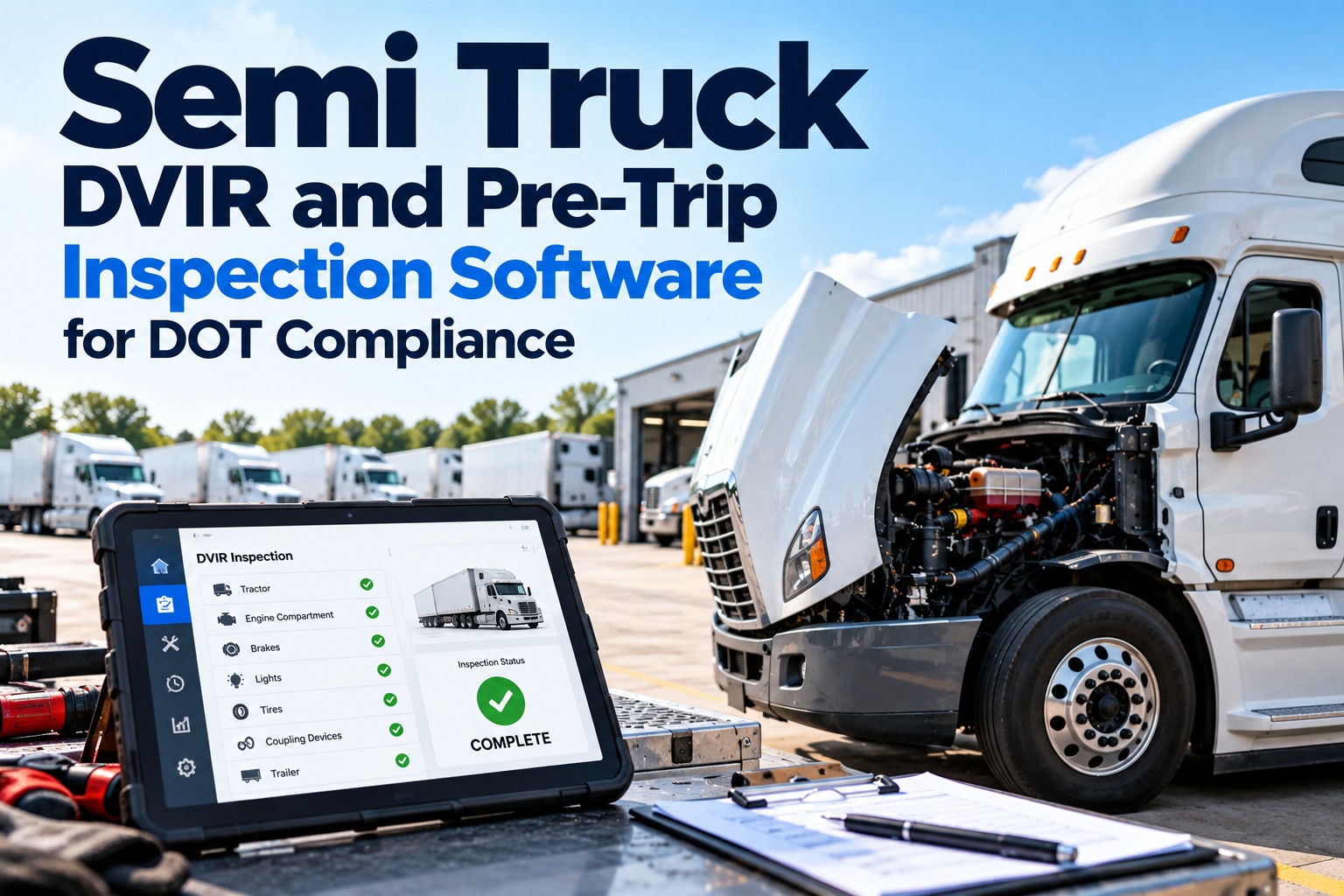
The outgoing driver completes a structured Digital Vehicle Inspection Report through the FleetRabbit mobile app. Checklist items include brakes, tires, lights, fluid levels, cargo securement, and any route-specific observations. Photos are attached to flagged items. The DVIR is timestamped and signed digitally — creating an unambiguous record of vehicle condition at the exact moment of shift end.
Step 2: System Consolidates Handover Package
FleetRabbit automatically compiles the shift handover package: the completed DVIR, open maintenance alerts, pending work orders, active HOS summary, and any dispatch notes flagged for handover. The package is vehicle-linked, not driver-linked, so it automatically populates for the next assigned driver without any manual assembly by dispatchers or fleet managers.
Step 3: Incoming Driver Reviews and Acknowledges
The incoming driver opens the FleetRabbit app and receives the full handover package for their assigned vehicle. Critical alerts require explicit acknowledgment before the driver can proceed. Open defects flagged by the previous driver are displayed with photos and severity ratings. The driver confirms understanding of each item — creating a dual-signature compliance trail.
Step 4: Maintenance Team Receives Real-Time Escalations
Items marked as critical defects in the DVIR immediately trigger notifications to the maintenance supervisor. The maintenance team can assess severity, authorize continued operation with restrictions, or pull the vehicle for immediate service — all before the next shift departs. Fleet managers receive a consolidated view of all shift-level defects across the entire fleet in real time.
Step 5: Supervisor Approval Workflow for Critical Items
For vehicles with open safety-critical defects, FleetRabbit enforces a supervisor approval gate before the next shift proceeds. The fleet manager or operations director must digitally authorize the vehicle's operational status. This approval is logged with timestamp, user identity, and the basis for the decision — providing complete accountability documentation for DOT compliance purposes.
Step 6: Complete Audit Trail Archived Automatically
Every handover event — outgoing DVIR, incoming acknowledgment, maintenance escalations, supervisor approvals, and subsequent trip data — is archived automatically in FleetRabbit's compliance record system. HSE audits and DOT inspections can pull complete shift-by-shift vehicle history in seconds. What previously required hours of manual records assembly takes seconds with FleetRabbit's indexed audit system.
FleetRabbit Features That Make Digital Handover Work in Real Operations
Mobile-First DVIR Completion
Drivers complete inspections on iOS or Android devices. No paper forms, no clipboard, no desk required. Inspection checklists are vehicle-type specific — a flatbed trailer checklist differs from a refrigerated unit checklist. Completion rates for digital DVIRs average 94% higher than paper equivalents across FleetRabbit fleets.
Real-Time Maintenance Queue Visibility
Incoming drivers see exactly which maintenance items are scheduled, which alerts are active, and which work orders are open for their assigned vehicle. Maintenance visibility is part of the standard handover package — drivers are informed, not discovered-in-the-field. Fleet managers can see which vehicles are approaching service thresholds across the entire fleet from a single dashboard.
HOS Integration at Shift Transfer
Hours of Service data for both outgoing and incoming drivers is visible in the handover context. Dispatchers can confirm that the incoming driver has sufficient available hours for the planned assignment before committing to the route. HOS violations arising from shift assignment errors are prevented before departure — not discovered after.
Photo-Documented Defect Handover
Every defect flagged during the outgoing DVIR includes timestamped photos attached to the specific checklist item. Incoming drivers see the exact condition, not a verbal description. Maintenance supervisors assess severity from photos before the vehicle departs on the next shift. Ambiguity about defect status is eliminated.
Offline Functionality for Remote Yards
FleetRabbit's mobile app operates without cellular connectivity. Drivers in remote drop yards, intermodal facilities, or areas with poor coverage complete DVIRs offline. Data syncs automatically when connectivity is restored. Remote locations never compromise handover quality or compliance documentation.
Fleet-Wide Handover Dashboard for Executives
Operations directors and fleet executives see a real-time overview of all active shift handovers, outstanding defects pending maintenance disposition, and vehicles awaiting supervisor approval. The executive dashboard provides instant situational awareness without requiring phone calls to individual terminals or dispatchers.
Eliminate Shift Handover Risk Across Your Entire Fleet
FleetRabbit's digital handover platform gives every driver, dispatcher, and maintenance supervisor the real-time information they need to execute a safe, compliant, and efficient shift transition — every time. Book a demo to see the platform in action.
Shift Handover Compliance: What DOT Expects and How FleetRabbit Delivers
Federal Motor Carrier Safety Administration regulations require commercial vehicle operators to perform pre-trip and post-trip inspections, document defects, and ensure that defects affecting safe operation are repaired before the vehicle returns to service. These requirements create specific obligations at every shift transition point — obligations that paper-based and verbal handover systems routinely fail to satisfy at audit time.
DOT Requirement
49 CFR Part 396.11 — Driver Vehicle Inspection Reports must document vehicle condition and be signed by the driver.
FleetRabbit delivers digital DVIR completion with driver e-signature, timestamp, and photo documentation. Records retained for minimum compliance periods with instant retrieval capability.
DOT Requirement
49 CFR Part 396.13 — Driver must review prior DVIR and certify defects noted are repaired or not safety-affecting before operating the vehicle.
FleetRabbit's incoming driver acknowledgment workflow requires explicit digital certification of defect review. No departure permitted without confirmed acknowledgment. Supervisor approval enforced for safety-critical items.
DOT Requirement
Motor carrier must maintain DVIR records for minimum 3 months at the principal place of business.
FleetRabbit archives all DVIR records, handover packages, and associated documentation automatically. Cloud-based retention exceeds regulatory minimums. Searchable by vehicle, date, driver, and defect type for instant audit response.
Implementation: Deploying Digital Handover in Your Trucking Operation
Week 1: Configure Vehicle-Specific Inspection Checklists
Work with FleetRabbit's onboarding team to build inspection checklists for each vehicle category in your fleet — Class A trucks, trailers, refrigerated units, flatbeds, tankers. Checklists reflect your actual operational requirements and any existing internal inspection standards. Custom fields accommodate company-specific items beyond standard DOT requirements.
Outcome: Standardized checklists deployed across all vehicle types. Drivers have consistent, vehicle-specific inspection workflows on day one.
Week 2: Driver and Dispatcher Training on Mobile Platform
FleetRabbit provides structured mobile app training for drivers through video guides, in-app tutorials, and dispatcher-led orientation sessions. Average driver proficiency achievement takes less than two hours. The interface is intentionally straightforward — DVIR completion requires no technical background and supports drivers with varying levels of technology comfort.
Outcome: All drivers capable of completing digital DVIRs independently. Dispatchers trained on handover package review and escalation workflows.
Weeks 3–4: Activate Maintenance Integration and Supervisor Workflows
Connect FleetRabbit's handover system to the maintenance management module. Configure alert thresholds, escalation routing, and supervisor approval requirements based on your operational protocols. Maintenance supervisors receive defect notifications at the appropriate severity level. Fleet executives configure dashboard views for their monitoring preferences.
Outcome: Complete end-to-end handover workflow operational. Maintenance team integrated into the defect escalation chain. Executive visibility dashboard active.
Ongoing: Monitor Compliance Metrics and Refine Protocols
FleetRabbit's analytics module tracks DVIR completion rates, defect frequency by vehicle and route, handover duration benchmarks, and maintenance escalation response times. Fleet managers use these metrics to identify compliance gaps, reward high-performing drivers, and refine inspection protocols based on real operational data rather than assumptions.
Outcome: Continuous compliance improvement driven by data. Shift handover becomes a measurable operational KPI rather than an assumed activity.
Common Questions About Digital Shift Handover
QOur drivers operate across multiple time zones. Does FleetRabbit handle multi-terminal handovers?
Yes. FleetRabbit's platform is built for distributed fleet operations. Every vehicle's handover record is accessible from any terminal location. A driver picking up a truck in Phoenix sees the complete DVIR completed in Denver without any manual transfer. Fleet managers at headquarters monitor all terminals from a single unified dashboard regardless of time zone.
QWhat happens when a driver identifies a critical safety defect at the start of a shift?
Critical defects trigger immediate notifications to the maintenance supervisor and fleet manager. The platform enforces a hold status on the vehicle pending supervisor disposition. The supervisor can authorize continued operation with documented restrictions, schedule immediate repair, or pull the vehicle from service — all tracked with timestamps and user identity for full compliance documentation.
QHow does FleetRabbit handle driver reluctance to adopt digital tools?
FleetRabbit is designed for professional drivers, not technology specialists. The mobile interface requires no training beyond a two-hour orientation. Completion workflows guide drivers step by step through inspection items — no open-ended text entry, no complex navigation. Fleets that deploy FleetRabbit consistently report driver adoption rates over 90% within the first three weeks of operation.
QCan we integrate FleetRabbit's handover data with our existing TMS or ERP system?
FleetRabbit supports API integrations with major transportation management systems, ERP platforms, and accounting software. Handover data, DVIR records, and maintenance alerts can flow into your existing operational systems. Integration scope and available connectors are reviewed during the onboarding process based on your specific technology environment.
QWhat measurable improvements do fleets typically see after implementing digital handovers?
Fleets implementing FleetRabbit's digital handover system typically see DVIR completion rates increase from 60–70% to 94%+, shift transition times reduce by 70–80%, and DOT audit deficiency findings related to inspection records fall to near zero within the first 60 days. Maintenance-identifiable defects caught pre-departure increase significantly, reducing in-route breakdown events.
Outcomes Fleet Managers and Executives Should Expect
94%+
DVIR Completion Rate
Digital checklists with driver acknowledgment workflows achieve completion rates that paper-based systems cannot approach. Every vehicle departure is documented.
70%
Reduction in Handover Time
Automated handover packages eliminate manual assembly. Drivers spend time driving, not sorting through paper handover notes or waiting for verbal briefings.
Zero
Missing Audit Records
Every handover event is archived automatically. DOT auditors receive complete inspection histories immediately — no scramble, no gaps, no exposure.
3x
Increase in Pre-Departure Defect Detection
Structured digital checklists surface defects that verbal and paper processes routinely miss. Breakdowns caught in the yard cost a fraction of breakdowns caught on the road.
Conclusion: Shift Handover Is a Compliance and Operations Priority
Every shift transition is either a controlled, documented, compliant event — or an information gap waiting to become an incident. The difference between fleet operations that consistently maintain high uptime, clean DOT records, and low breakdown costs versus those that struggle with chronic compliance issues and reactive maintenance almost always traces back to the quality of information transfer at shift change points.
FleetRabbit's digital handover platform gives trucking operations the structure, visibility, and accountability that manual processes cannot provide. From the outgoing DVIR to the incoming driver acknowledgment to the maintenance escalation workflow to the executive dashboard — every step is documented, automated, and archived. The result is a shift handover process that protects your drivers, your fleet, your compliance record, and your operational efficiency simultaneously.
Ready to Transform Shift Handovers in Your Trucking Operation?
FleetRabbit gives every driver, dispatcher, and fleet manager the digital tools to execute structured, compliant, and efficient shift transitions at every terminal, every vehicle, every shift. See how leading trucking fleets are eliminating handover gaps and protecting their compliance record with FleetRabbit's platform.
Digital DVIR
Shift Transition Management
Driver Communication Tools
DOT Compliance
Real-Time Fleet Visibility
April 16, 2026
By Jason Smith
All Posts