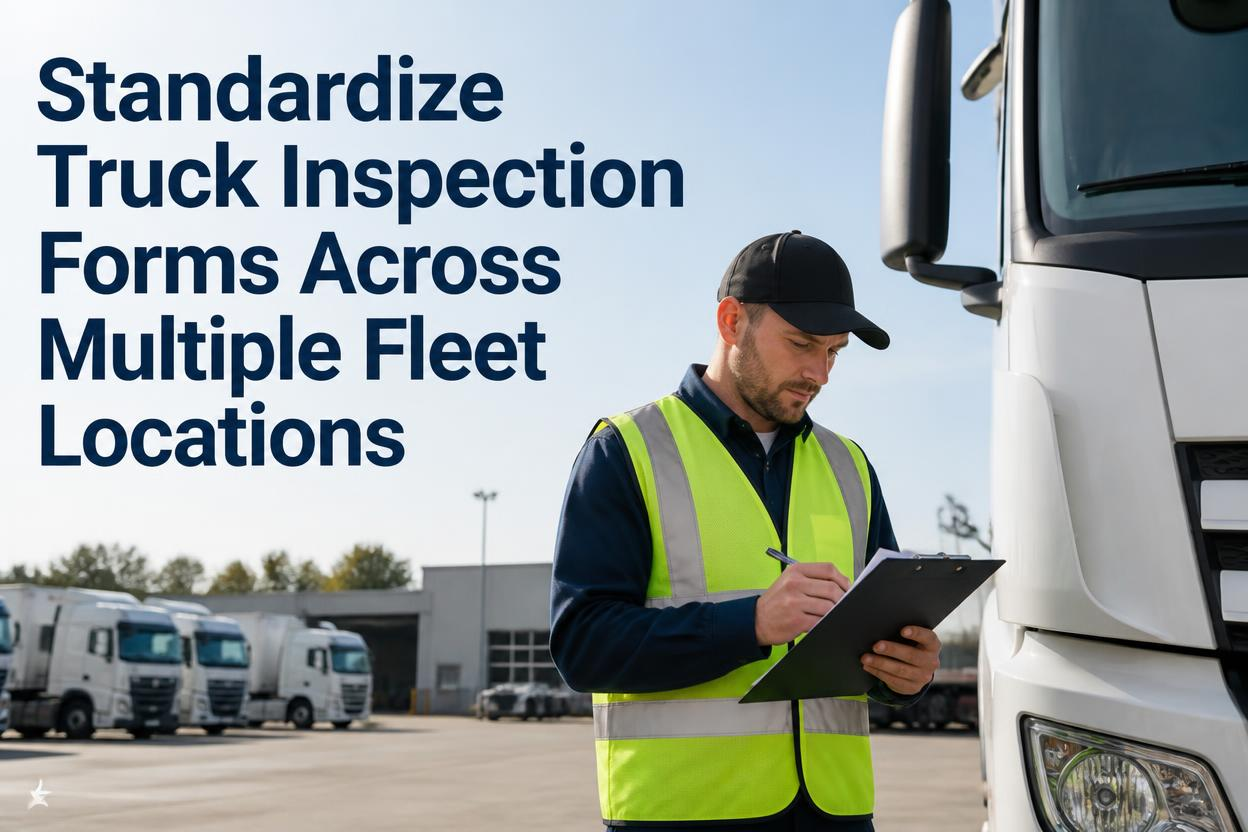
A single depot can run inspections however it wants and mostly get away with it. The moment a second, third, and fourth terminal joins the fleet, that freedom turns into a liability. One yard uses a paper form. Another logs defects in a spreadsheet nobody else can see. A third has drivers snap a photo and text it to a supervisor. Compliance still rolls up to one DOT number no matter how many different systems feed into it, which means one inconsistent terminal can drag the entire fleet's safety score down. Standardizing inspection forms across every location is how you stop that from happening.
What Fragmented Inspections Actually Look Like
Growth is usually what breaks a fleet's inspection process, not neglect. A program that worked fine at one yard quietly falls apart as new terminals get added, each one building its own version of "how we do inspections here."
Paper checklist, filed in a folder nobody outside the yard sees
Spreadsheet log kept by one supervisor, updated inconsistently
Photos texted to a manager, never entered into any system
A different inspection app than the rest of the fleet uses
One DOT Number, Zero Consistent Picture
Leadership has no comparable data across sites, the same brake defect gets logged four different ways, and a violation at any single terminal still counts against the whole fleet's compliance score.
Why Consistency Breaks Down as Fleets Grow
Inspection programs rarely fail because a company decides to ignore safety. They fail quietly, one workaround at a time, as the organization scales past what informal oversight can manage.
Every Site Builds Its Own Process
Without a shared standard, each regional manager or site supervisor ends up designing their own version of the inspection form, deciding independently what gets checked, how defects are logged, and where records are stored.
Records Live in Places Nobody Else Can Reach
A paper form filed at Terminal B never reaches the safety office at Terminal A. When an audit or an incident review needs those records fast, someone is calling around to individual yards instead of pulling a report.
The Same Defect Gets Categorized Differently Everywhere
One multi-depot fleet discovered that a recurring brake issue had been hiding in plain sight simply because every location logged it under a different defect category, making the pattern invisible at the corporate level.
Bring Every Terminal Onto One Inspection Standard
FleetRabbit gives every location the same digital checklist structure, with records feeding into one searchable system instead of scattered folders. Sign up and start a free trial, or book a demo to see multi-terminal rollout in action.
Four Pillars of a Standardized Inspection Program
A standardized program is more than everyone using the same app. It requires four elements working together, and skipping any one of them leaves a gap that fragments right back into a patchwork.
Shared Form Structure
Every terminal uses the same core checklist structure for a given vehicle type, with the same defect categories and severity definitions across every location.
Centralized Recordkeeping
Every inspection, at every site, lands in one searchable system that leadership can access without contacting individual terminals for records.
Automatic Defect Routing
A defect logged at any terminal routes directly to a work order and the right maintenance team, instead of sitting in a folder or a text thread.
A Shared Compliance Scoreboard
Every location is held to the same DVIR completion, PM compliance, and defect-to-repair targets, so strong sites become the benchmark and weak ones are visible early.
What Should Stay Fixed vs What Can Flex by Location
Standardization does not mean every terminal loses local control. It means drawing a clear line between what has to be identical everywhere and what individual sites can still manage themselves.
| Element | Owned Centrally | Owned by the Terminal |
|---|---|---|
| Inspection Checklist Structure | Yes, one structure per vehicle type across the fleet | No |
| Defect Categories and Severity | Yes, standardized definitions company-wide | No |
| Compliance Reporting Format | Yes, one audit-ready export format | No |
| Daily Work Order Assignment | No | Yes, local maintenance team manages execution |
| Shift Scheduling and Staffing | No | Yes, terminal decides based on local operations |
Rolling Out Standardization Without Disrupting Operations
Switching every terminal to a shared standard at once invites chaos. A phased rollout keeps daily operations running while the new process takes hold.
Step 1: Build the Standard From Your Best-Performing Terminal
Start with the checklist and workflow already working well at your strongest site rather than designing a form from scratch, then adapt it to the vehicle types used fleet-wide.
Step 2: Onboard One Terminal at a Time
Bring each location fully live before moving to the next. A sequential rollout, often spread across roughly ten weeks for several depots, keeps support focused and lets each site build confidence with the new process.
Step 3: Split Ownership Between HQ and the Terminal
Leadership owns the standard, the reporting structure, and compliance targets. Local teams keep control of daily execution, staffing, and their own work orders. Neither side loses the flexibility it actually needs.
Step 4: Put Every Site on the Same Scoreboard
Once every terminal is live, track DVIR completion, PM compliance, and defect-to-repair time side by side across locations, so gaps surface immediately instead of during the next audit.
Roll Out Standardized Inspections Terminal by Terminal
FleetRabbit supports a phased, location-by-location rollout with one shared standard and full visibility from day one. Sign up free to start with your first terminal, or book a demo to map out your rollout plan with our team.
Frequently Asked Questions
Give Every Terminal the Same Inspection Standard
Fragmented inspection forms across locations create blind spots that surface at the worst possible moment, during an audit or after an incident. FleetRabbit gives every terminal the same digital checklist structure, routes every defect automatically, and keeps every record in one searchable system.