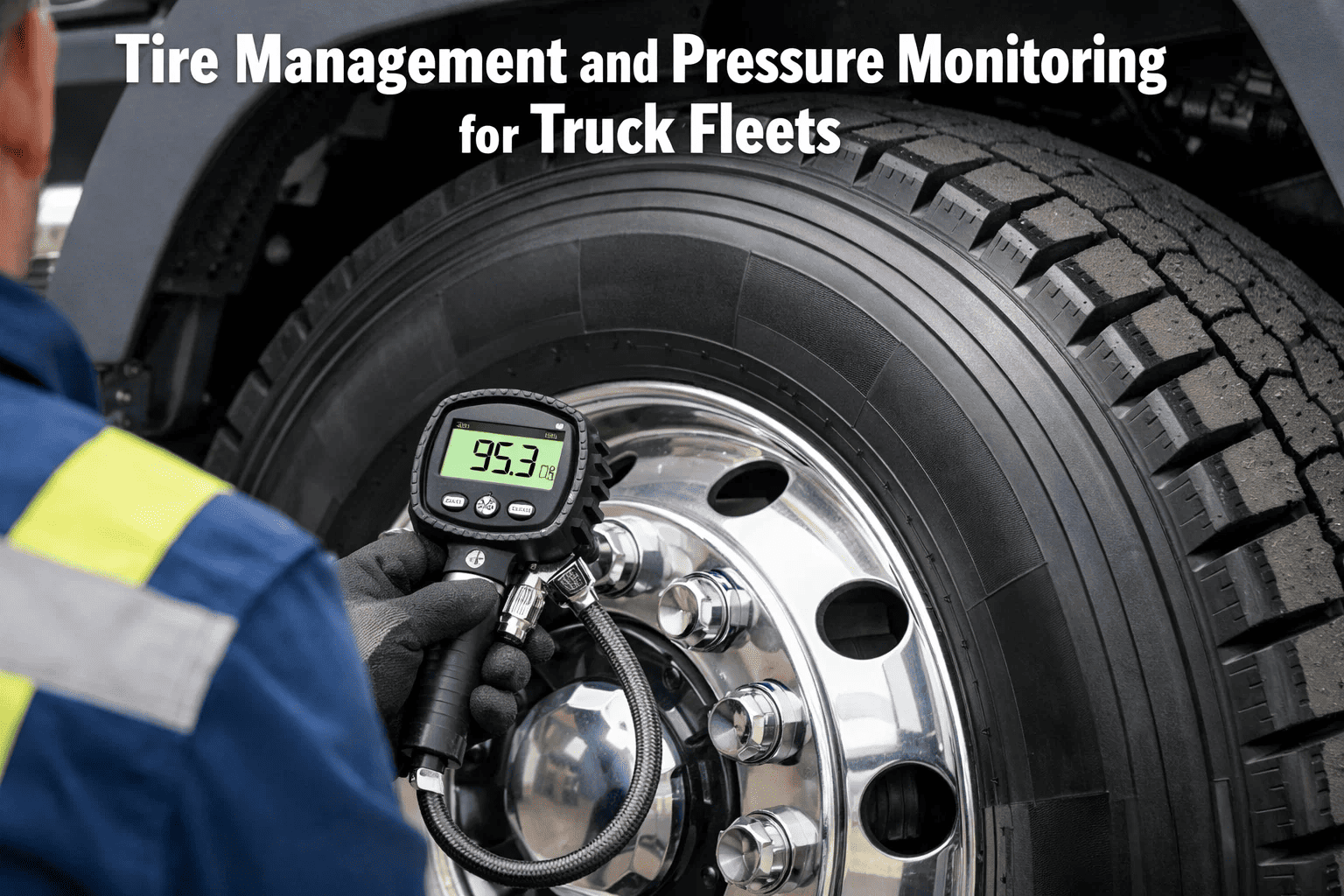
Tires are the single most operationally consequential maintenance category in commercial trucking that fleet managers routinely manage reactively. For a Class 8 tractor-trailer combination, the tire system consists of 18 contact points — each operating under load conditions, temperature extremes, and surface variation that create a constant pressure toward failure. Tire-related breakdowns account for approximately 46 percent of all commercial vehicle roadside incidents, making tire management failure the leading cause of unplanned vehicle downtime in trucking operations. Yet the majority of tire failures that cause roadside incidents are attributable to conditions — improper inflation, irregular wear, deferred rotation, and undetected internal damage — that are preventable with a systematic tire management program supported by appropriate monitoring technology. Book a demo to see how FleetRabbit structures tire tracking, inspection documentation, and pressure monitoring as part of a comprehensive fleet maintenance program.
Effective tire management for commercial truck fleets requires three integrated disciplines: systematic tire pressure monitoring to maintain optimal inflation across all positions, structured inspection protocols that identify wear patterns, damage, and tread depth concerns before they cause failures, and digital documentation that creates the maintenance record trail required for warranty management, safety audits, and cost-per-mile analysis. This guide covers the technical specifications of commercial truck tire management, the operational consequences of inadequate tire programs, the structure of a defensible tire inspection and monitoring protocol, and how FleetRabbit supports each element of tire management within the daily preventive maintenance workflow.
The Economics of Commercial Tire Management: Why Inflation and Inspection Programs Pay for Themselves
Fleet operators who approach tire management as a cost category to be minimized rather than an investment category to be optimized consistently generate higher total tire costs per mile than operators who maintain disciplined inflation and inspection programs. The reason is straightforward: the cost of systematic tire management (technician labor for inflation checks, TPMS hardware investment, inspection labor) is significantly lower than the cost of the failures that systematic management prevents (roadside service, replacement tires purchased at emergency pricing, driver downtime, cargo delays, and potential accident liability).
Consider the economics of a single tire position running at 20 PSI underinflation for 10,000 miles before detection and correction. The underinflated tire operates at elevated temperature, accelerating compound fatigue. Tread wear rate increases by 15 to 25 percent relative to a properly inflated tire. Fuel consumption increases by approximately 1 percent. The risk of a heat-related blowout in highway operation increases substantially. If the tire fails on the highway, the cost of roadside service ($350 to $650 for a mobile tire service call), lost driver hours (2 to 4 hours average), potential cargo impact, and emergency tire replacement at retail pricing easily exceeds $1,200 per event. At a fleet-wide tire pressure check cost of $2 to $4 per tire per month — total monthly fleet tire inspection cost of $216 to $432 for a 50-truck fleet — the prevention math strongly favors the management investment.
Commercial Truck Tire Pressure: Specifications, Monitoring, and Maintenance Protocols
Proper tire pressure management for commercial trucks begins with understanding the specification requirements for each tire position on each vehicle configuration in the fleet. Steer axle tires, drive axle tires, and trailer tires operate under different load conditions and require different inflation pressures. Dual rear wheels add the complexity of inner versus outer tire pressure monitoring, as inner dual tires are inaccessible for manual pressure checks without removing the outer dual — a procedural step frequently skipped in manual inspection routines.
FMCSA regulations at 49 CFR Part 393 require that commercial motor vehicle tires must not be underinflated to the point where the tire's load capacity would be exceeded. The regulatory floor, however, is significantly below the manufacturer-recommended inflation range for optimal performance and tire life. Fleet tire management programs should target inflation within 5 PSI of the manufacturer-recommended pressure for the specific tire model and load configuration — not merely compliance with the FMCSA minimum. Deviation from the recommended range in either direction degrades performance: underinflation reduces load-carrying capacity, accelerates wear, and increases blowout risk; overinflation reduces traction, increases sensitivity to road hazard damage, and creates irregular center-tread wear patterns.
| Tire Position | Typical Recommended PSI | Inspection Frequency | Underinflation Risk | Monitoring Note |
|---|---|---|---|---|
| Steer Axle (Front) | 100-120 PSI | Pre-trip inspection every shift | Very High | Steer tire failure has highest accident consequence — TPMS mandatory for this position |
| Drive Axle (Outer Dual) | 95-115 PSI | Pre-trip inspection daily | High | Accessible for manual check — include in every DVIR pre-trip routine |
| Drive Axle (Inner Dual) | 95-115 PSI | Weekly at minimum — TPMS preferred | High | Inaccessible for routine manual check — most commonly underinflated position in fleet |
| Trailer Axle (Outer Dual) | 90-110 PSI | Pre-trip at each trailer pickup | Medium-High | Trailer tire ownership and inspection accountability must be defined for drop-and-hook operations |
| Trailer Axle (Inner Dual) | 90-110 PSI | Weekly — TPMS strongly recommended | Medium-High | Trailer inner duals accumulate pressure loss from slow leaks — often undetected until blowout |
| Spare Tire | Per vehicle specification | Monthly inspection | Low | Spare tire inflation frequently neglected — roadside spare unusable at incorrect pressure |
Tire Pressure Monitoring Systems: Technology Options and Fleet Integration
Tire Pressure Monitoring Systems (TPMS) for commercial vehicles provide real-time or continuous tire pressure data without requiring manual access to each tire position. For fleet operations managing large numbers of vehicles, TPMS technology addresses the fundamental inspection coverage limitation of manual inflation checks: a manually checked fleet can realistically achieve inflation verification for accessible tire positions at pre-trip inspection, but cannot maintain continuous awareness of pressure changes that occur during route operation — heat-induced pressure changes, slow valve leaks, puncture events, and dual-tire pressure variance that develops between inspection intervals.
Commercial-grade TPMS options range from direct-sensing systems with sensor hardware at each valve stem to flow-through cap sensors and hub-mounted automatic inflation systems. The appropriate technology for a given fleet depends on vehicle age, existing telematics infrastructure, and budget parameters. All technology tiers should be evaluated against the total cost of a single tire-related roadside incident — the comparison typically demonstrates that TPMS hardware investment achieves payback within three to six months purely from the prevention of events that would have occurred without sensor data.
Building a Structured Tire Inspection Protocol
A tire inspection protocol is only as effective as the consistency with which it is executed and documented. Many fleet tire programs suffer not from inadequate inspection standards but from inconsistent execution — inspections skipped under time pressure, findings recorded in formats that cannot be tracked over time, and corrective actions not linked to the inspection finding that triggered them. The structure of the inspection protocol and the documentation system that captures its results are inseparable from the protocol's operational value.
FleetRabbit's digital inspection module allows fleet managers to configure tire inspection checklists that address every required check point — tread depth by position, visual damage assessment, inflation verification, valve stem condition, and dual-tire pressure differential check — and deploy those checklists to drivers and maintenance technicians on mobile devices. Each completed inspection is timestamped, driver-attributed, and linked to the specific vehicle's asset record. Inspection findings that require corrective action automatically generate linked work orders in FleetRabbit's maintenance module, creating a verifiable chain from inspection finding to corrective action completion that satisfies both internal audit requirements and DOT compliance documentation standards.
Tire Wear Pattern Analysis: Reading the Signs of Mechanical Problems
Tire wear patterns are diagnostic data — they communicate information about vehicle mechanical condition, load management practices, and maintenance discipline that experienced technicians can read as reliably as instrument panel readings. A fleet maintenance program that trains technicians to recognize and document abnormal wear patterns transforms routine tire inspections into a vehicle health monitoring function, providing early warning of alignment issues, suspension component wear, wheel balance problems, and improper loading practices before these conditions cause component failures beyond the tire.
FleetRabbit's inspection module supports wear pattern documentation with structured reporting fields that allow technicians to record wear category, affected position, severity, and associated vehicle observations in a consistent format. Over time, this structured data enables maintenance managers to identify which vehicles in the fleet are generating repeat abnormal wear findings — indicating persistent mechanical conditions that require investigation beyond tire replacement — and which vehicle types in the fleet have systematically higher tire wear rates that warrant specification review or route assignment changes.
Digitize Your Tire Inspection Program with FleetRabbit
FleetRabbit's digital inspection module captures tire condition data at every position, every vehicle, on every inspection cycle — creating the timestamped, structured record that transforms routine inspections into fleet health intelligence. Book a demo to see how FleetRabbit structures tire inspection documentation for your fleet's specific inspection protocol and vehicle mix.
Tire Life Management: Rotation, Retread, and Replacement Program Structure
A complete tire management program extends beyond inflation monitoring and inspection to the active management of tire life across the rotation, retread, and replacement cycle. Tire rotation — the systematic repositioning of tires across axle positions to equalize wear rates — is the most cost-effective tool for extending average tire life in a diverse-duty-cycle fleet. Drive axle positions typically wear faster than trailer positions due to the traction forces involved in powered axle operation. Rotating tires from drive to trailer positions when drive tread depth reaches a threshold level — typically 8/32" remaining — extends the useful life of the casing and reduces total cost per mile by distributing wear more evenly across the casing's service life.
Retread programs offer an additional cost reduction layer for fleets managing high tire budgets. A quality retread tire produced on a sound, inspected casing costs 40 to 60 percent less than a new tire and, when applied to appropriate positions with appropriate casing inspection protocols, delivers comparable tread life to new tires in drive and trailer positions. Steer axle positions are not appropriate for retread application in most fleet policies due to the higher consequence of steer tire failure — the cost-savings incentive for retreading steer tires does not justify the risk profile for most risk-conscious fleet operators.
How FleetRabbit Integrates Tire Management into the Daily PM Workflow
FleetRabbit does not treat tire management as a separate program from the broader fleet maintenance workflow — it integrates tire tracking, inspection documentation, and pressure monitoring data into the same preventive maintenance structure that manages engine services, brake inspections, lubrication intervals, and all other maintenance categories. This integration has a practical significance: when tire inspections are embedded in the existing PM workflow rather than managed as a standalone process, compliance rates are substantially higher because technicians document tire condition as part of a scheduled maintenance event they are already completing, rather than as an additional standalone task that competes with their workload priorities.
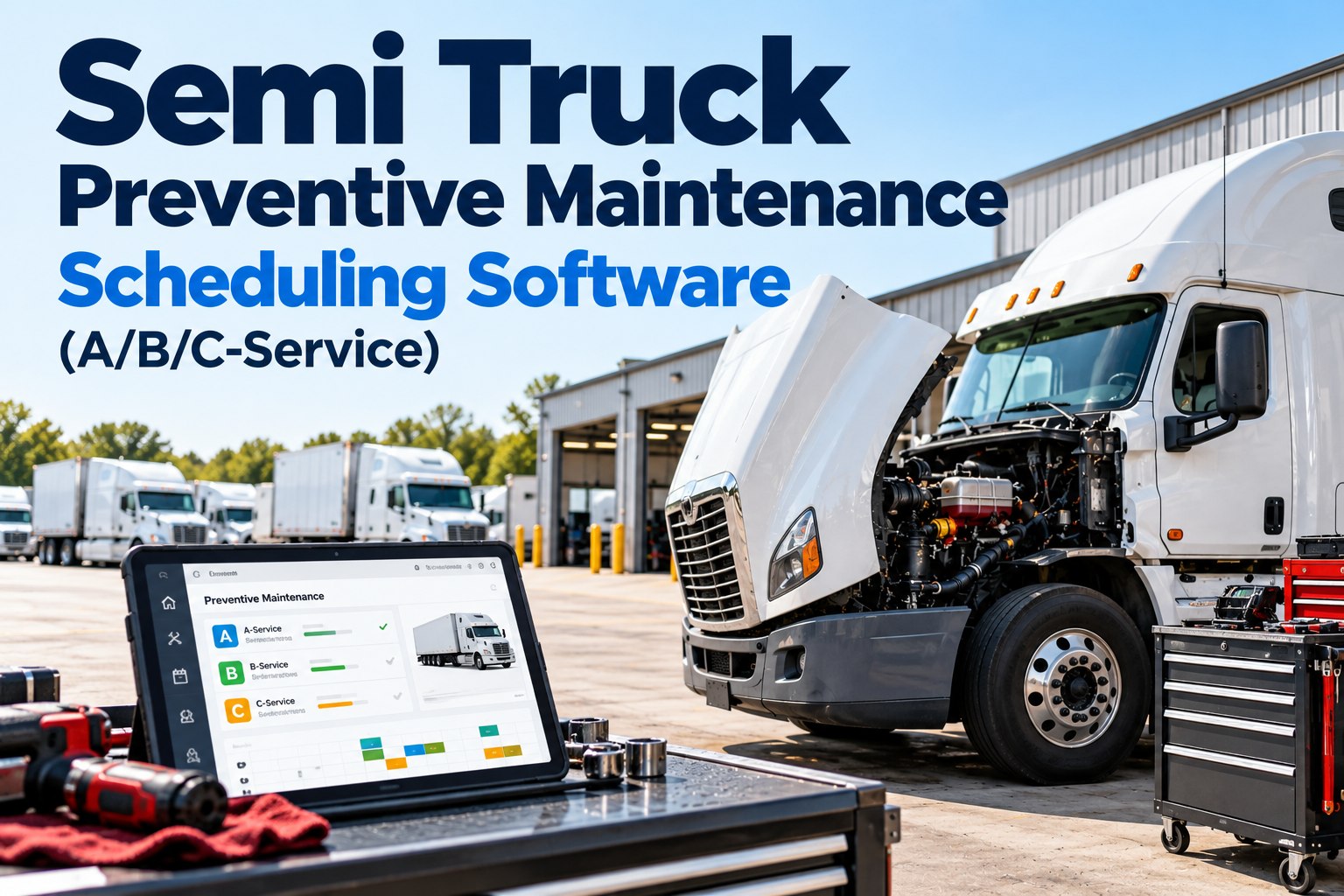
Fleet maintenance managers using FleetRabbit configure tire inspection requirements at each PM service tier — A, B, C, and D services — specifying which tire checks are required at each level and what threshold readings trigger corrective action work orders. When a scheduled PM comes due, the technician receives the complete PM checklist on their mobile device, including tire inspection tasks appropriate for that service level. Completed readings flow into the vehicle's maintenance record, flagged items generate automatic work orders, and the maintenance manager's dashboard shows tire condition status across the entire fleet updated from each completed PM event without manual data entry or report compilation. Book a demo to review how FleetRabbit's PM module structures tire management for your fleet's service schedule and vehicle mix.
Regulatory Compliance: Tire Records Required for DOT Audits
The Federal Motor Carrier Safety Administration's inspection, repair, and maintenance record requirements at 49 CFR 396.3 require motor carriers to maintain records showing that each vehicle, including tires, is in safe operating condition at all times. For DOT compliance auditors reviewing a carrier's compliance posture, tire records are examined to verify that deficiencies identified during inspection are corrected promptly, that drivers are performing pre-trip inspections that include tire assessment, and that vehicles with tire defects are not placed in service before repair.
The documentation requirements that satisfy a DOT compliance review are precisely the outputs that FleetRabbit produces from a properly configured tire inspection and PM program. DVIR records with tire findings and driver signatures, maintenance work orders showing corrective action on flagged tire conditions, PM service records showing tire inspection completion at scheduled intervals, and parts records showing tire purchases and replacements all exist in FleetRabbit's system without requiring supplementary record assembly for the audit. Carriers using FleetRabbit report significantly faster DOT compliance audit completion for tire-related record requests, as all required documentation is available in a single system with date-filtering and vehicle-filtering capabilities that make it straightforward to produce the specific records any auditor requests.
Tire Cost-Per-Mile Analysis and Fleet Budget Management
Tire cost-per-mile is the primary financial metric for evaluating a fleet's tire program effectiveness. It accounts for tire purchase cost, retread program cost, mounted labor, and disposal in a single normalized metric that enables year-over-year comparison and inter-fleet benchmarking. Carriers without structured tire tracking programs can typically tell you how much they spent on tires in total — they cannot tell you what they paid per mile at the tire position or vehicle level, making it impossible to identify which positions, vehicles, or routes are generating above-average tire costs that require investigation.
FleetRabbit's parts and inventory module tracks tire purchases, serial numbers, installation positions, and vehicle-mile records that allow automatic calculation of tire cost per mile at any level of granularity — individual position, vehicle, vehicle type, route, or fleet-wide. This data enables maintenance managers and fleet executives to make evidence-based decisions about tire specification changes (upgrading to a higher-mileage tire if the cost-per-mile calculation justifies the higher acquisition cost), retread program expansion (identifying casings that would generate positive retread economics based on remaining life), and rotation program optimization (identifying the rotation intervals that produce the best cost-per-mile outcomes for specific vehicle types).
Frequently Asked Questions
Build a Tire Management Program That Reduces Failures, Extends Tire Life, and Satisfies DOT Compliance Requirements
FleetRabbit integrates tire inspection documentation, pressure monitoring data, rotation scheduling, and parts tracking into the daily PM workflow — giving fleet managers the structured tire management program they need without additional headcount or standalone systems.