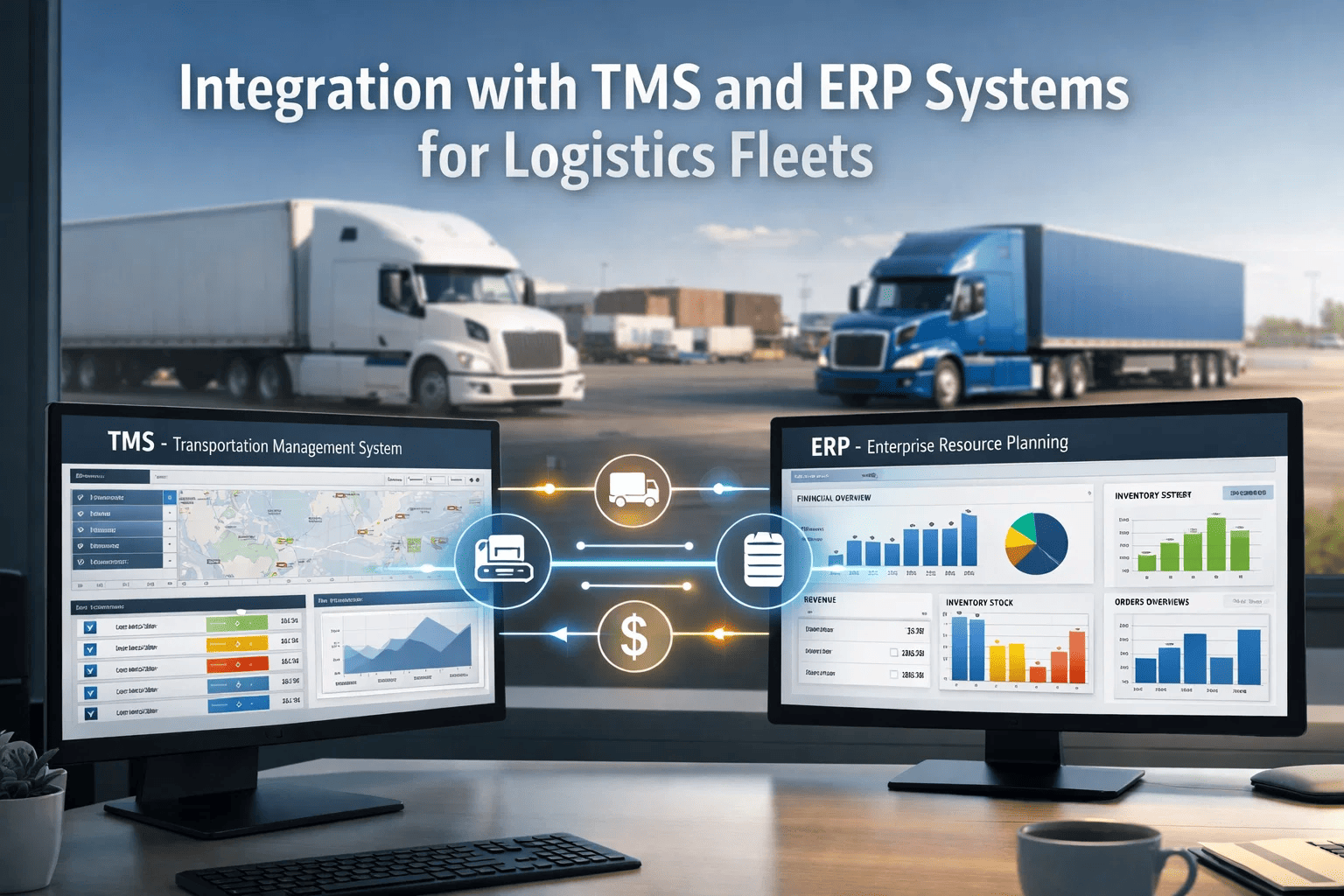
Logistics operations running disconnected systems — a transportation management system that doesn't talk to the ERP, an ELD platform that exports only to spreadsheets, a fleet maintenance tool with no connection to parts procurement — burn 12 to 18 hours weekly in manual data re-entry, reconciliation, and reporting consolidation. Fleet managers and operations executives making decisions from stale, fragmented data don't compete effectively against operations where systems share intelligence in real time. FleetRabbit's open integration architecture connects your fleet management platform to the TMS and ERP systems your operation already runs — eliminating data silos, automating workflows, and giving decision-makers a unified operational picture. Book a demo to see how FleetRabbit integrates with your existing systems.
Integration Guide
TMS and ERP Integration for Logistics Fleets: Eliminating Data Silos, Automating Workflows, and Building a Unified Operational Intelligence Platform
FLEET INTEGRATION & OPTIMIZATION GUIDE
Connect Your Fleet Management Platform to TMS and ERP — Stop Losing 18 Hours a Week to Manual Data Work
Disconnected systems don't just waste time — they create decision-making blind spots that cost fleets millions in suboptimal routing, missed maintenance windows, and compliance failures. FleetRabbit's integration framework connects your operational data into a single, actionable intelligence layer.
18hrs
Weekly lost to manual data sync
67%
Of fleets run 3+ disconnected systems
$280K
Annual cost of operational data silos
The Real Cost of Disconnected Fleet Systems
Dispatch Operations
TMS shows available trucks, but ELD system shows actual HOS status in separate platform. Dispatchers manually check both before assigning loads. 8 minutes per dispatch decision. 40 dispatches daily. 5.3 hours lost every day.
5.3 hrs/day
Maintenance & Procurement
Fleet maintenance platform identifies parts need. Procurement system in ERP holds vendor contracts. No connection means manual PO creation, duplicate data entry, and parts delays of 3 to 5 days per order cycle.
3–5 day delays
Finance & Reporting
Fuel costs in fleet system, driver pay in payroll, freight revenue in TMS. Monthly financial reporting requires 3 to 4 days of spreadsheet assembly. Executives make decisions from data that is already weeks old when reviewed.
3–4 days monthly
Compliance Documentation
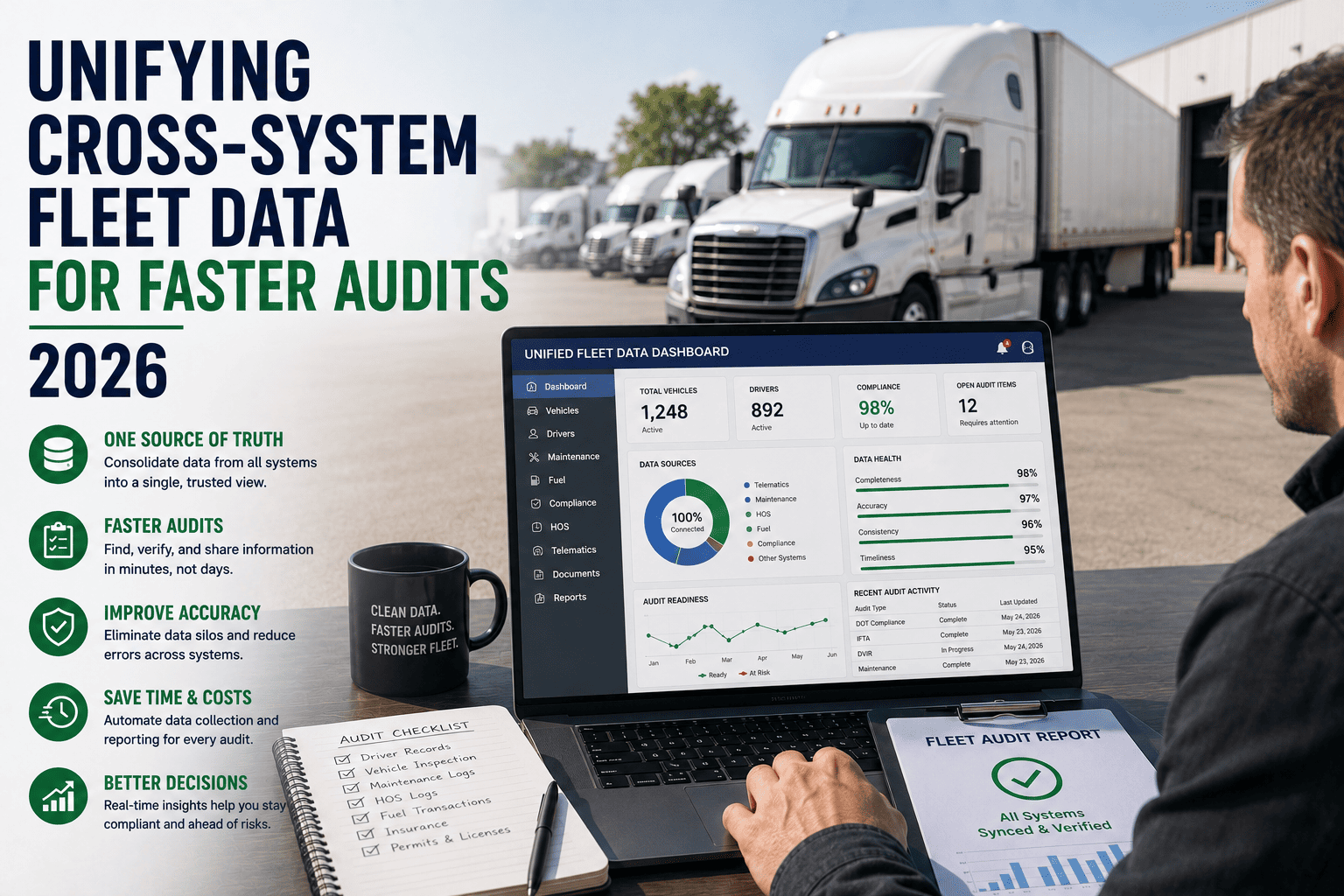
FMCSA audits require DOT records from ELD, vehicle records from maintenance system, and driver files from HR. Assembling complete audit packages manually takes 3 to 7 days. Integrated system produces complete audit package in minutes.
3–7 days per audit
The Integration Opportunity Fleet Leaders Miss
Every hour spent manually moving data between systems is an hour not spent analyzing that data. Fleets with fully integrated systems don't just save administrative time — they gain the analytical capacity to identify optimization opportunities that fragmented operations never discover. Integration is not an IT project; it is a strategic competitive advantage.
How FleetRabbit Integrates With Your Existing Technology Stack
FleetRabbit Platform
Central Integration Hub
TMS Systems
MercuryGate, McLeod, TMW, Oracle TMS, SAP TM, project44
ERP Platforms
SAP S/4HANA, Oracle ERP, Microsoft Dynamics, NetSuite, Sage
Fuel Management
Comdata, WEX, EFS, Pilot Flying J, Love's Fuel Cards
HR & Payroll
ADP, Paychex, Workday, UKG, DriverReach
TMS Integration: Unifying Dispatch, Load, and Fleet Data
Transportation Management Systems hold your freight workflow: load tendering, carrier dispatch, route planning, and customer invoicing. FleetRabbit's TMS integration connects real-time vehicle data, driver HOS availability, and maintenance status directly into that workflow — giving dispatchers the complete operational picture they need to make smart assignment decisions.
01
Real-Time HOS Availability in Dispatch
FleetRabbit's ELD data streams live into your TMS. Dispatchers see remaining drive time, current location, and break status for every driver — directly in the load assignment screen. No tab-switching. No phone calls to verify availability. Load-to-driver matching in seconds, not minutes.
02
Vehicle Health Status in Load Planning
Maintenance alerts from FleetRabbit surface inside your TMS before a vehicle is assigned to a load. A truck scheduled for brake service in 48 hours doesn't get dispatched on a 5-day multi-stop run. Automated scheduling conflicts resolved before dispatch, not during delivery.
03
GPS Tracking and ETA Accuracy
Live vehicle location from FleetRabbit updates TMS ETA calculations automatically. Customer-facing delivery windows reflect actual vehicle position and traffic conditions, not planned schedule assumptions. Late delivery exceptions flagged automatically before customers call to ask.
04
Digital DVIR Results in Load Completion
Driver Vehicle Inspection Reports completed at delivery sync to TMS load records. Cargo condition documented at time of delivery. Dispute resolution for freight claims supported by timestamped inspection photos tied to specific load records. No paper DVIR filing required.
ERP Integration: Connecting Fleet Operations to Financial and Procurement Systems
Procurement Integration
Automated Parts PO Creation
FleetRabbit maintenance recommendations trigger automatic purchase requisitions in your ERP. Approved vendors, contract pricing, and budget cost centers pre-populated. Purchasing team approves, not creates. Parts ordered days faster. Emergency expedited shipping eliminated for predictable maintenance needs.
Finance Integration
Fuel and Maintenance Cost Allocation
Fuel card transactions, maintenance invoices, and tire purchasing data from FleetRabbit allocate automatically to vehicle, driver, route, and cost center in your ERP. Monthly cost reporting goes from 4-day spreadsheet exercise to automated dashboard refresh. Cost per mile calculated accurately without manual consolidation.
Asset Management
Fleet Asset Register Synchronization
Vehicle acquisitions, depreciation schedules, and disposal records maintained in ERP asset register. FleetRabbit's operational data updates actual utilization and maintenance cost against book value. CFOs see true total cost of ownership, not estimated depreciation schedules that ignore real maintenance spending.
HR Integration
Driver Hours to Payroll Automation
Certified HOS data from FleetRabbit exports directly to payroll systems. Driving hours, waiting time, and detention automatically separated per payroll classification. Manual timesheet entry eliminated. Pay disputes resolved with ELD-certified timestamps. Driver settlements processed faster with self-service record access.
Stop Rebuilding Data That Already Exists in Your Fleet Platform
FleetRabbit's integration framework connects your fleet data to the TMS, ERP, and workflow systems your operation already runs. Automated workflows, unified reporting, and real-time data sharing — without replacing the systems your teams already know. Book a technical integration review with our team.
Implementation Approach: Connecting Systems Without Disrupting Operations
Phase 1
Integration Discovery and Mapping (Week 1–2)
FleetRabbit integration team maps your current system landscape: TMS platform, ERP version, API availability, data schemas, and authentication methods. Integration architecture designed for your specific stack. No assumptions about what systems you run — full documentation before any development begins.
Outcome: Complete integration blueprint and timeline with identified dependencies.
Phase 2
Priority Integration Deployment (Week 3–5)
Highest-value integrations deployed first: HOS data to TMS dispatch, fuel card to ERP cost allocation, maintenance alerts to procurement. Each integration tested in staging before production activation. Operations continue without interruption during transition — no big-bang cutover.
Outcome: Top 3 workflow automations active, immediate time savings measurable.
Phase 3
Secondary Workflow Automation (Week 6–8)
DVIR to TMS load records, driver hours to payroll, asset data to ERP depreciation schedules. Reporting dashboards configured to aggregate data from integrated sources. Teams trained on automated workflows replacing manual processes.
Outcome: Full automation across all identified manual data workflows.
Phase 4
Analytics and Optimization (Week 9+)
Cross-system reporting configured: cost per load from ERP revenue + fleet cost data, driver performance combining HOS compliance + fuel efficiency + safety score, vehicle profitability from TMS revenue + FleetRabbit total maintenance cost. Intelligence that was impossible with disconnected systems becomes routine reporting.
Outcome: Executive dashboards showing true operational performance across the full business.
Integration Use Cases by Fleet Role
Fleet Manager
Sees all vehicle health, location, and HOS status from one screen without logging into three systems
Maintenance notifications appear in dispatch workflow before vehicles are assigned to loads
DVIR defects automatically escalate to maintenance work orders without manual ticket creation
Dispatch & Operations
Live HOS availability, vehicle location, and ETAs visible inside TMS load board
Load-to-driver assignment conflicts surfaced before dispatch — not discovered after departure
Customer delivery updates generated from live GPS, not estimated schedules
Finance & CFO
Monthly cost reports generated automatically from integrated data — no 4-day spreadsheet assembly
True cost per mile calculated from combined fleet, fuel, and maintenance data
Vehicle total cost of ownership visible against ERP asset book values in real time
Safety & Compliance
FMCSA audit packages assembled automatically from integrated ELD, inspection, and maintenance records
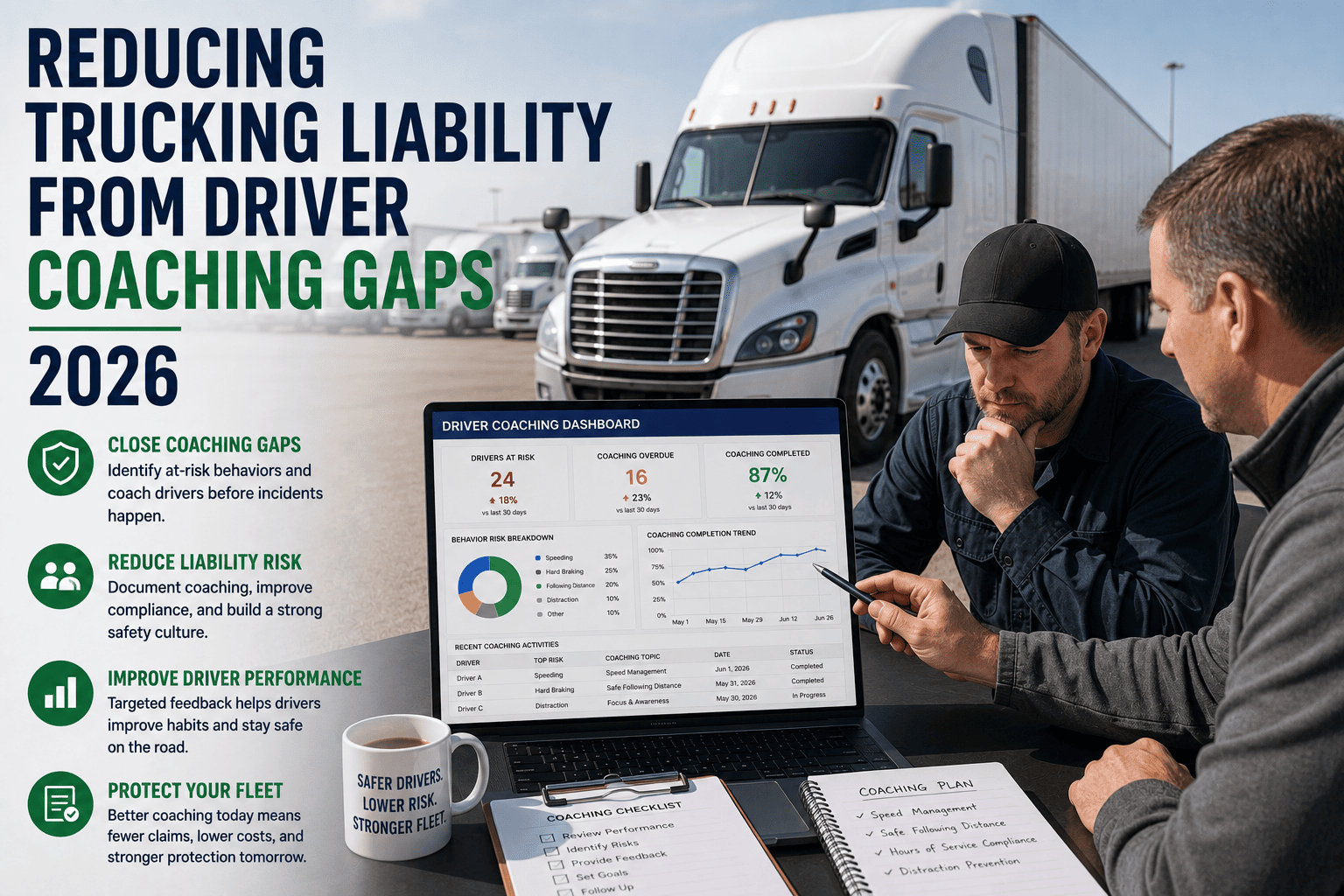
HOS violations flagged in real time — safety team notified before logs are certified
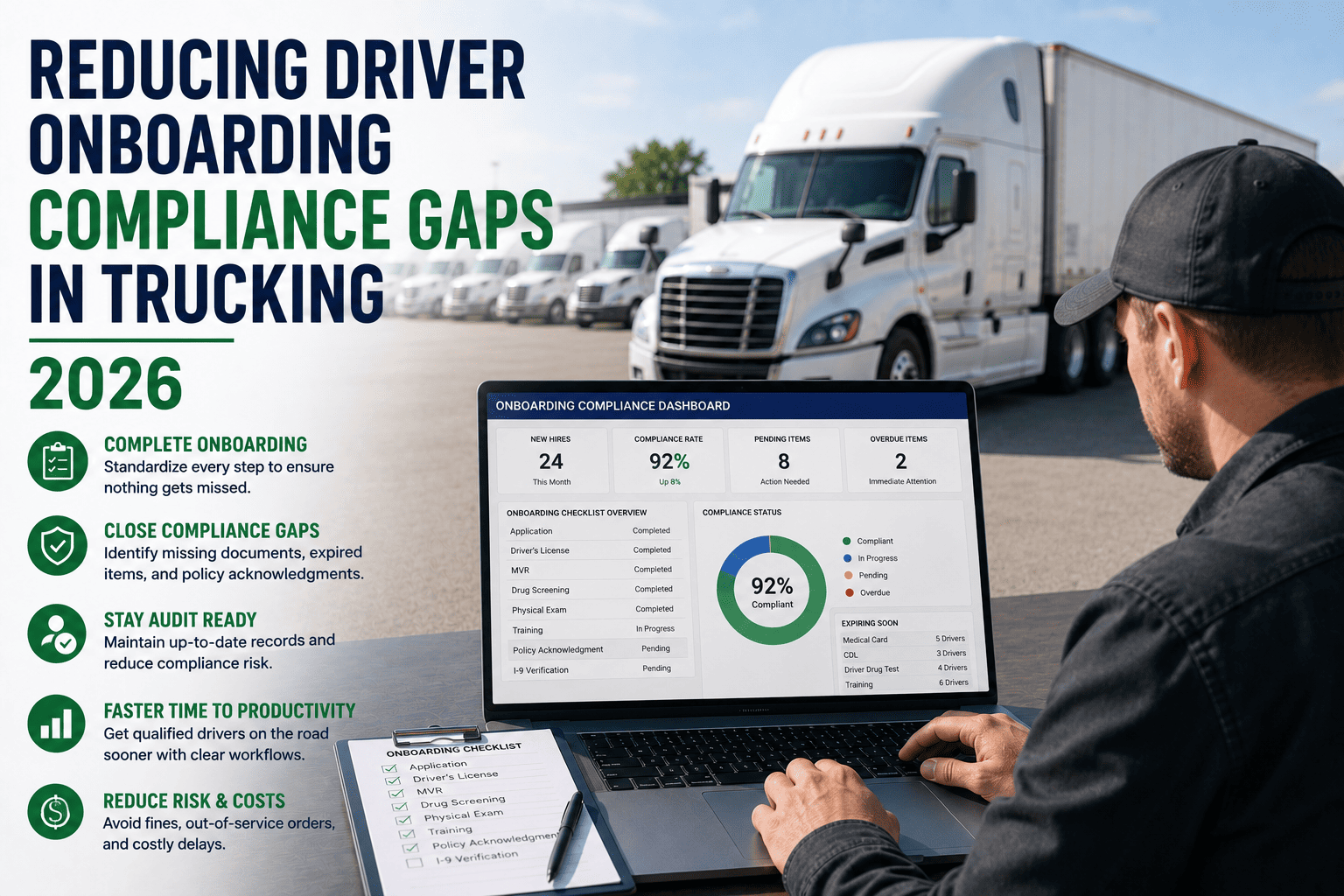
Driver qualification file expiration alerts from HR system linked to dispatch authorization
Frequently Asked Questions: TMS and ERP Integration
QDoes FleetRabbit require replacing our existing TMS or ERP?
No. FleetRabbit integrates alongside your existing systems as a connected data layer. Your TMS and ERP continue to operate as the systems of record for their respective domains. FleetRabbit adds real-time fleet operational data to those systems through API connections — no replacement, no migration, no retraining on new platforms.
QWhat if our TMS or ERP doesn't have a public API?
FleetRabbit supports multiple integration methods: REST APIs for modern platforms, database-level integration for legacy systems, flat file exchange for systems without API access, and webhook-based event streaming. Integration discovery phase identifies the right approach for each system in your stack. Most legacy platforms have at least one viable integration method.
QHow long does a full TMS and ERP integration take to deploy?
Priority integrations delivering immediate time savings typically deploy within 3 to 5 weeks. Full workflow automation across all identified integration points typically completes within 8 to 10 weeks. Timeline depends on API availability, system complexity, and internal IT approval processes. FleetRabbit provides project management support throughout deployment.
QWhat happens to existing data in our TMS and ERP during integration?
Existing data in your TMS and ERP is not affected by integration. FleetRabbit adds new data streams — it does not modify, overwrite, or interfere with data already in your systems. Integration is additive, not transformative. Historical data migration is a separate optional service for customers wanting FleetRabbit analytics on historical fleet records.
QCan we integrate with custom in-house built systems?
FleetRabbit's open API allows custom integration with any system capable of making HTTP requests. Enterprise customers with proprietary TMS or dispatch platforms built in-house access FleetRabbit's full API documentation and integration support services. Custom integration projects scoped during integration discovery phase with dedicated technical resources assigned.
What Integrated Fleet Operations Achieve
18hrs
Weekly Admin Time Recovered
Manual data re-entry eliminated across dispatch, procurement, payroll, and reporting workflows.
94%
Dispatch Decision Accuracy
Load-to-driver assignments made with complete HOS, location, and vehicle health data — not assumptions.
3 min
Audit Package Preparation
FMCSA audit packages generated automatically from integrated records — 3 days of manual assembly eliminated.
Real-Time
Financial Reporting
Cost per load, cost per mile, and fleet profitability updated continuously — not assembled monthly from spreadsheets.
Fleet technology investments only deliver their full value when systems communicate with each other. A best-in-class TMS managing fragmented fleet data, a sophisticated ERP working from outdated cost inputs, and a compliance platform disconnected from daily operations — each system underperforms because it lacks the context the others hold.
FleetRabbit's integration architecture was designed so that fleet management data flows where it creates value — into dispatch decisions, financial analysis, procurement workflows, and compliance reporting — without requiring manual intervention to move it. Fleets that integrate achieve outcomes that disconnected operations cannot reach, regardless of how good the individual systems are in isolation.
Connect Your Fleet Platform to the Systems That Drive Your Business
FleetRabbit integrates with your TMS, ERP, fuel management, and HR systems — turning disconnected data into unified operational intelligence. See how integration transforms fleet management from a cost center into a strategic advantage.
TMS Integration
ERP Connectivity
Fuel Card Sync
Payroll Automation
Compliance Reporting
April 15, 2026
By Nathan Smith
All Posts