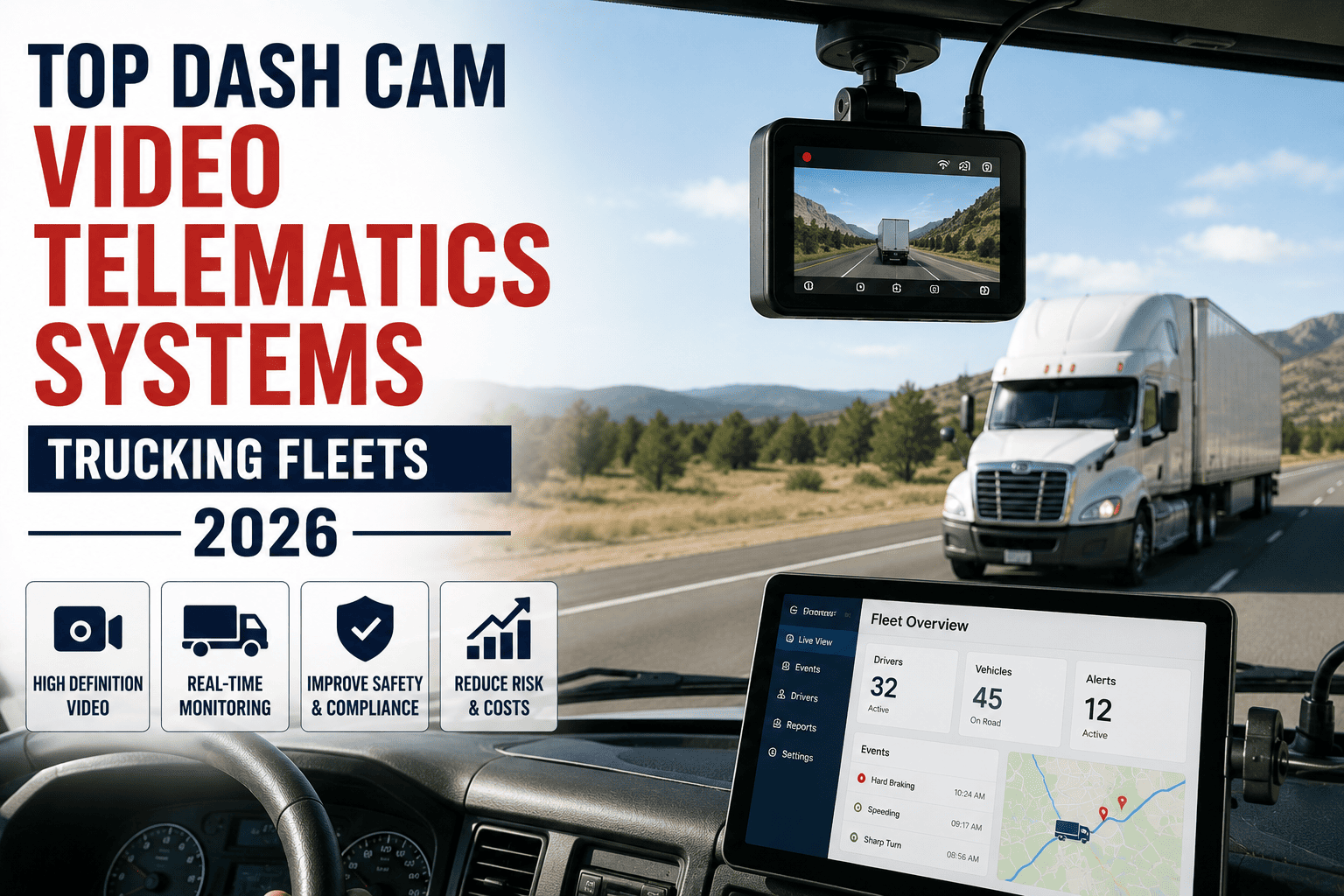
A truck gets rear-ended on the interstate. The other driver claims your truck cut them off. Without video, it becomes a costly he-said-she-said battle that can drag on for months and end in a settlement your fleet pays for regardless of fault. With the right footage, the same incident gets resolved in under 48 hours, in your favor, at no cost beyond the camera subscription you were already paying. That is the entire case for video telematics in one sentence, and it is why dash cams have become one of the fastest-growing investments in trucking.
The best dash cam and video telematics systems for trucking fleets in 2026 combine dual-facing AI cameras, real-time driver coaching alerts, and automatic event detection for harsh braking, distraction, and collision risk. Fleets using AI video telematics report roughly 38 percent fewer preventable accidents and 60 percent fewer distraction events within 90 days, while a single exoneration clip can cover years of subscription cost.
Why Trucking Fleets Are Racing to Add Video Telematics
Commercial vehicle accidents cost the trucking industry tens of billions of dollars annually, and a striking share of truck accidents are caused by other vehicles, not the truck driver. Without video, fleets lose these disputes by default, since insurers and courts default to circumstantial evidence when no recording exists. With dual-facing cameras, the truth is on file the moment it happens.
The shift in 2026 is that dash cams have stopped being passive recorders and started actively preventing incidents before they occur. Modern systems run dozens of AI models simultaneously, watching for drowsy eyelids, phone use, tailgating distance, and lane drift, then firing an in-cab alert within roughly 200 milliseconds of detecting risk. The driver gets a chance to correct the behavior before it becomes a claim.
The Two Cameras Doing Two Different Jobs
A proper video telematics system is not one camera. It is two, each protecting the fleet from a different kind of risk.
Road-Facing Camera
Captures traffic conditions, near-misses, and collisions ahead of the truck, providing the exact footage needed to prove fault when another vehicle causes an incident.
Driver-Facing Camera
Monitors attention, fatigue, and phone use inside the cab, catching the early warning signs of a preventable accident before it happens, not after.
FleetRabbit pairs road-facing and driver-facing AI cameras with instant in-cab alerts that correct risky behavior in real time. Sign up free to start protecting your fleet today, or book a demo to see live event detection in action.
What AI Video Telematics Actually Detects
The value of a modern camera system is not the footage itself. It is what the AI does with that footage before a manager ever has to review it. Instead of scrolling through hours of video looking for a problem, the system flags the moment it happens and routes only the events that matter.
From Raw Footage to Operational Intelligence
The most useful systems do not stop at the individual event. Video data tied to GPS routes can reveal that a specific stretch of road consistently produces harsh braking across multiple drivers, which points to a routing fix rather than a driver problem. Aggregated behavior scores can also feed directly into scheduling, helping fleets put higher-risk shifts in the hands of better-rested, better-scored drivers.
The Real Financial Case for Cameras
Fleet owners often treat dash cams as a compliance expense rather than a profit decision. The numbers tell a different story once you account for what a single incident actually costs without footage to back up the driver's account.
| Scenario | Without Video Telematics | With Video Telematics |
|---|---|---|
| Not-At-Fault Claim | Lengthy dispute, often settled against the fleet by default | Resolved with exoneration footage, sometimes within 48 hours |
| Preventable Accidents | Risky habits go uncorrected until an incident occurs | Roughly 38 percent fewer preventable accidents through real-time coaching |
| Insurance Renewal | Premiums climb steadily without documented safety improvement | Carriers reward declining event trends with 5 to 20 percent reductions |
| Driver Coaching | Reactive conversations only after a complaint or incident | Proactive coaching from flagged events before patterns escalate |
Why One Clip Can Cover Years of Cost
An average FMCSA-recorded injury crash carries a six-figure cost once medical, legal, and downtime expenses are included. Preventing even one such incident can justify the camera investment across an entire fleet of trucks, not just the vehicle involved. Exoneration footage works the same way in reverse, protecting a fleet from absorbing costs for accidents it did not cause.
FleetRabbit's video telematics gives you the evidence to settle claims fast and the coaching data to prevent the next one. Book a quick demo to walk through real event footage, or sign up to get your first truck recording today.
Choosing a System That Fits Your Fleet
Not every fleet needs the same camera setup. Driver-facing footage raises legitimate privacy questions for some operations, while others rely on it heavily for coaching and recruitment culture. Knowing what to prioritize before evaluating vendors saves time and avoids paying for capability you will not use.
Road-Facing Only vs Dual-Facing Systems
Road-facing-only cameras can be a meaningful recruiting advantage in a tight driver market, since some experienced drivers object strongly to in-cab monitoring. Dual-facing systems offer stronger protection and coaching depth but require clear communication with drivers about how footage is used and stored.
Integration With Existing Fleet Data
A camera that only saves clips to a memory card is fundamentally a different tool than one whose events sync automatically with GPS, route history, and driver profiles. The second category turns a safety device into a source of operational intelligence that improves scheduling, routing, and coaching all at once.
Frequently Asked Questions
The Bottom Line
Dash cams used to be a defensive purchase, something fleets added after a bad claim to avoid the next one. In 2026, the best systems have flipped that logic entirely. They prevent the incident in the first place through real-time coaching, and they settle the disputes that still happen in a fraction of the time, with evidence instead of arguments.
For a trucking fleet weighing the cost of a camera system against the cost of doing without one, the math rarely favors waiting. A single exoneration clip or a single prevented injury crash can cover years of subscription cost, and every mile driven without that protection is a mile where your fleet is betting against the odds.
FleetRabbit brings dual-facing AI cameras, real-time coaching alerts, and full route integration together in one platform built for trucking fleets. Protect your drivers, your trucks, and your bottom line, starting today.