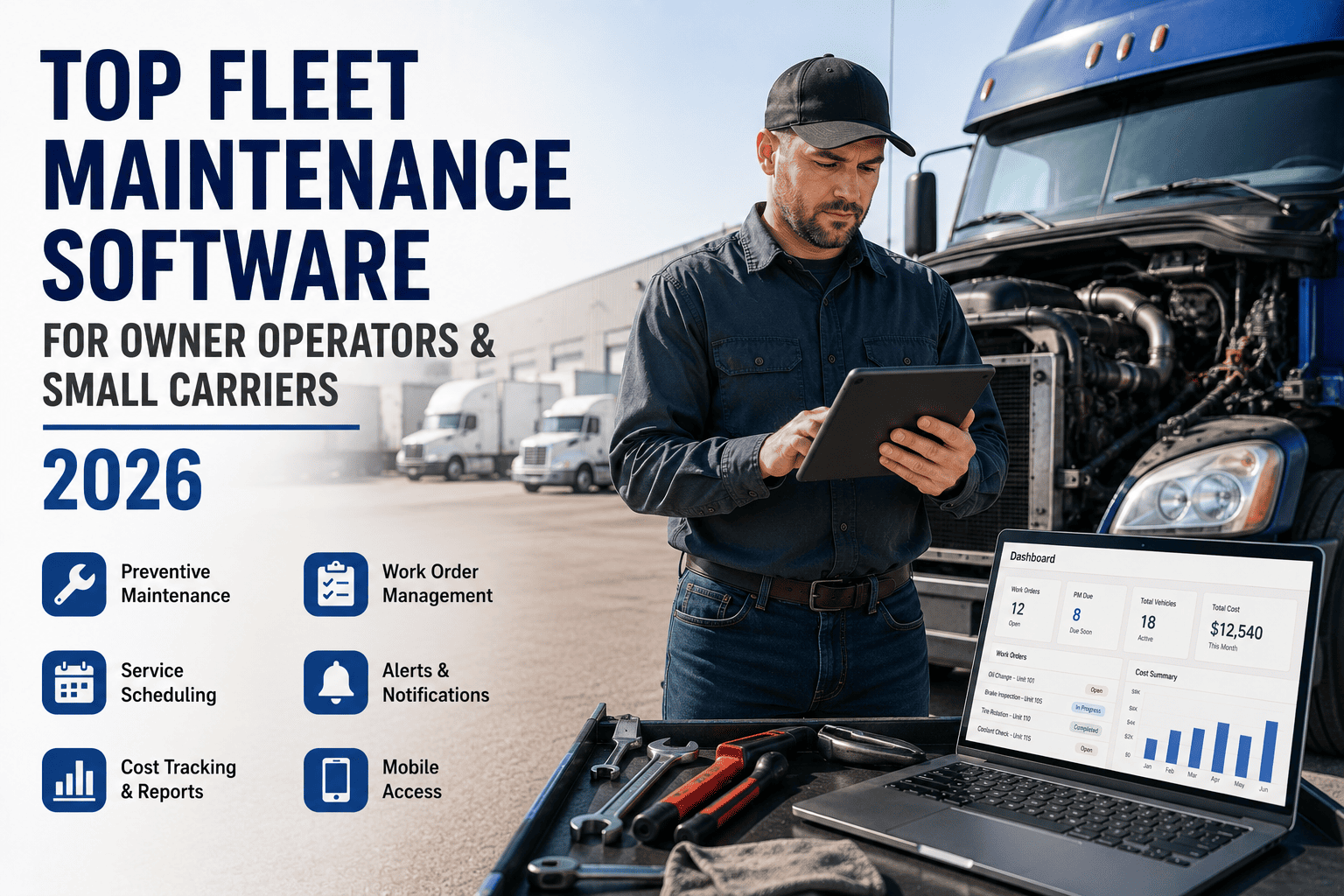
Most fleet maintenance software is not built for you. It is built for a 500-truck carrier with a dedicated maintenance department, a parts warehouse, and a team of dispatchers feeding data into a system nobody on the shop floor actually opens. If you are an owner-operator or running a small carrier with five, ten, or twenty trucks, you do not need that. You need something that catches the small problem before it becomes a blown engine on the side of the interstate, without adding hours of paperwork to your week.
The best fleet maintenance software for owner-operators and small carriers in 2026 combines mobile DVIR inspections, automated preventive maintenance scheduling, and instant work order creation in one simple app, without enterprise pricing or long-term contracts. Small fleets using digital maintenance tracking cut administrative time by up to 65 percent and complete repairs roughly 40 percent faster than fleets still running on paper logs and spreadsheets.
Why Small Carriers Get Burned by Generic Maintenance Tools
Walk into most fleet software demos as a small carrier and you will hear about features built for fleets ten times your size: multi-depot scheduling, enterprise procurement integrations, and dashboards meant for a maintenance director, not a single owner-operator juggling dispatch, paperwork, and the wrench at the same time. These tools are not wrong. They are just aimed at someone else.
What actually breaks small fleets is simpler than any of that. A driver notices a brake issue during a pre-trip inspection, writes it on a paper DVIR, and that paper sits in the cab or the glovebox until someone remembers to look at it. Days pass. The defect gets worse. What should have been a 400 dollar scheduled repair becomes a 2,000 dollar roadside breakdown, plus a missed delivery, plus a frustrated customer.
The Real Cost of Paper-Based Maintenance Tracking
Manually turning a driver-reported defect into a work order takes roughly 23 minutes of someone's time once you account for finding the paperwork, calling the shop, and confirming parts availability. Multiply that across every defect, every inspection, every truck, and small fleet owners lose hours every week to a process that should take seconds.
What Small Fleet Maintenance Software Should Actually Do
Strip away the enterprise jargon and small carriers need just a handful of capabilities working well together. Here is what separates software that genuinely helps an owner-operator from software that just adds another login to remember.
Driver Completes a Digital Inspection
A guided pre-trip or post-trip DVIR walks the driver through every check, with photo capture required for anything flagged as a defect, all from a phone in under five minutes.
Defect Becomes a Work Order Automatically
No manual data entry. A flagged defect generates a prioritized work order in seconds, with the vehicle ID, issue type, and driver notes already attached.
Repair Gets Scheduled and Tracked
The work order routes to the shop or mechanic, parts and labor get logged, and the status updates in real time until the repair is marked complete.
Vehicle History Builds Automatically
Every inspection and repair becomes part of a permanent record per truck, so recurring issues and true maintenance costs are visible at a glance.
FleetRabbit turns driver inspections into work orders automatically, so defects get fixed before they become breakdowns. Sign up free and digitize your first inspection today, or book a demo to see the full workflow in action.
Paper Logs vs Digital Maintenance Tracking
The difference between a fleet running on clipboards and one running on digital tools is not a minor convenience upgrade. It changes how fast a problem gets caught and how much it costs to fix once it is found.
| Task | Paper and Spreadsheets | Digital Maintenance Software |
|---|---|---|
| Reporting a Defect | Written on paper, often forgotten in the cab for days | Logged instantly on a phone with photo proof |
| Creating a Work Order | Roughly 23 minutes of manual data entry per defect | Generated automatically in under 10 seconds |
| Maintenance History | Scattered across notebooks, texts, and memory | One searchable record per vehicle, always current |
| Preventive Scheduling | Relies on someone remembering mileage intervals | Automatic alerts based on mileage or calendar date |
| DOT Inspection Readiness | Scrambling to find paperwork before an audit | Complete digital records ready to pull up instantly |
Why Preventive Scheduling Matters More for Small Fleets
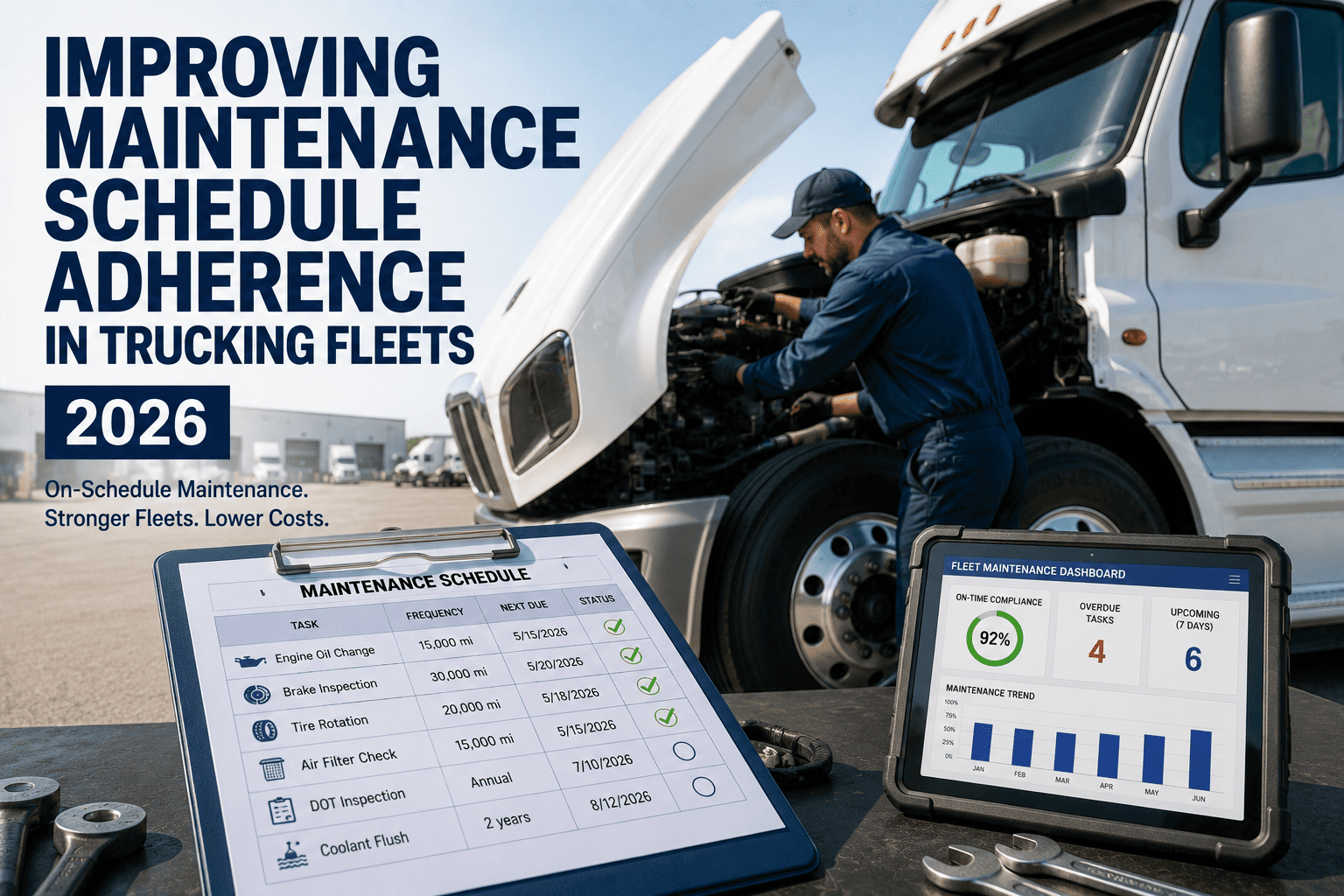
A 200-truck carrier can absorb one breakdown without much disruption. An owner-operator with three trucks cannot. When a third of your fleet is sitting in a shop, you are losing a third of your revenue that day. Preventive maintenance scheduling that automatically tracks mileage and calendar intervals is not a luxury for small carriers. It is the single biggest lever for keeping every truck earning instead of waiting in a bay.
Choosing Software That Fits How You Actually Work
Owner-operators and small carriers do not have a back office staffed with administrators. Whatever software you pick has to work from a phone, in a cab, between loads, without a training manual.
What to Avoid When Comparing Platforms
Be cautious of software priced and packaged for fleets with dedicated maintenance staff. Features like multi-site procurement workflows or enterprise asset hierarchies add cost and complexity without solving the actual problem facing a small carrier, which is simply catching defects early and keeping repair records organized.
FleetRabbit gives owner-operators and small carriers digital DVIR, automated work orders, and preventive scheduling without enterprise pricing. Book a quick demo to see it on your own trucks, or sign up and get your first vehicle tracked today.
Frequently Asked Questions
The Bottom Line
Owner-operators and small carriers do not need software built for someone else's fleet. They need a tool that turns a driver's pre-trip walkaround into an organized, trackable record, catches small problems before they become expensive ones, and does not require a contract longer than the truck loan. That is the entire job, done well, without the enterprise bloat.
The fastest way to know whether a platform actually fits your operation is to put it in front of your own trucks and your own drivers. A feature list looks the same on every website. A real inspection, completed from a real cab, in under five minutes, tells you everything else you need to know.
FleetRabbit brings digital DVIR, automated work orders, and preventive scheduling together in one simple app built for owner-operators and small carriers. No contracts, no enterprise pricing, just an organized fleet from day one.