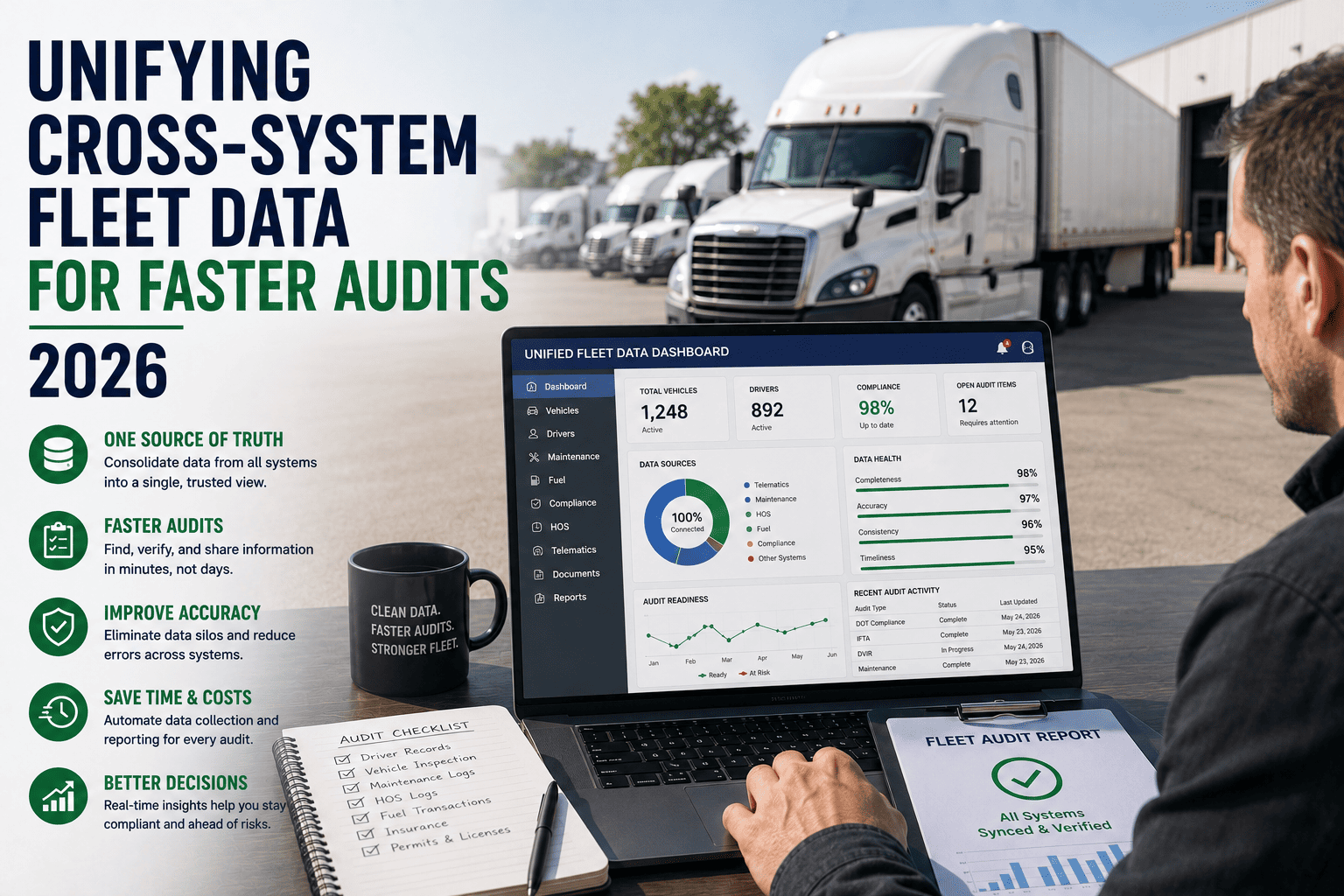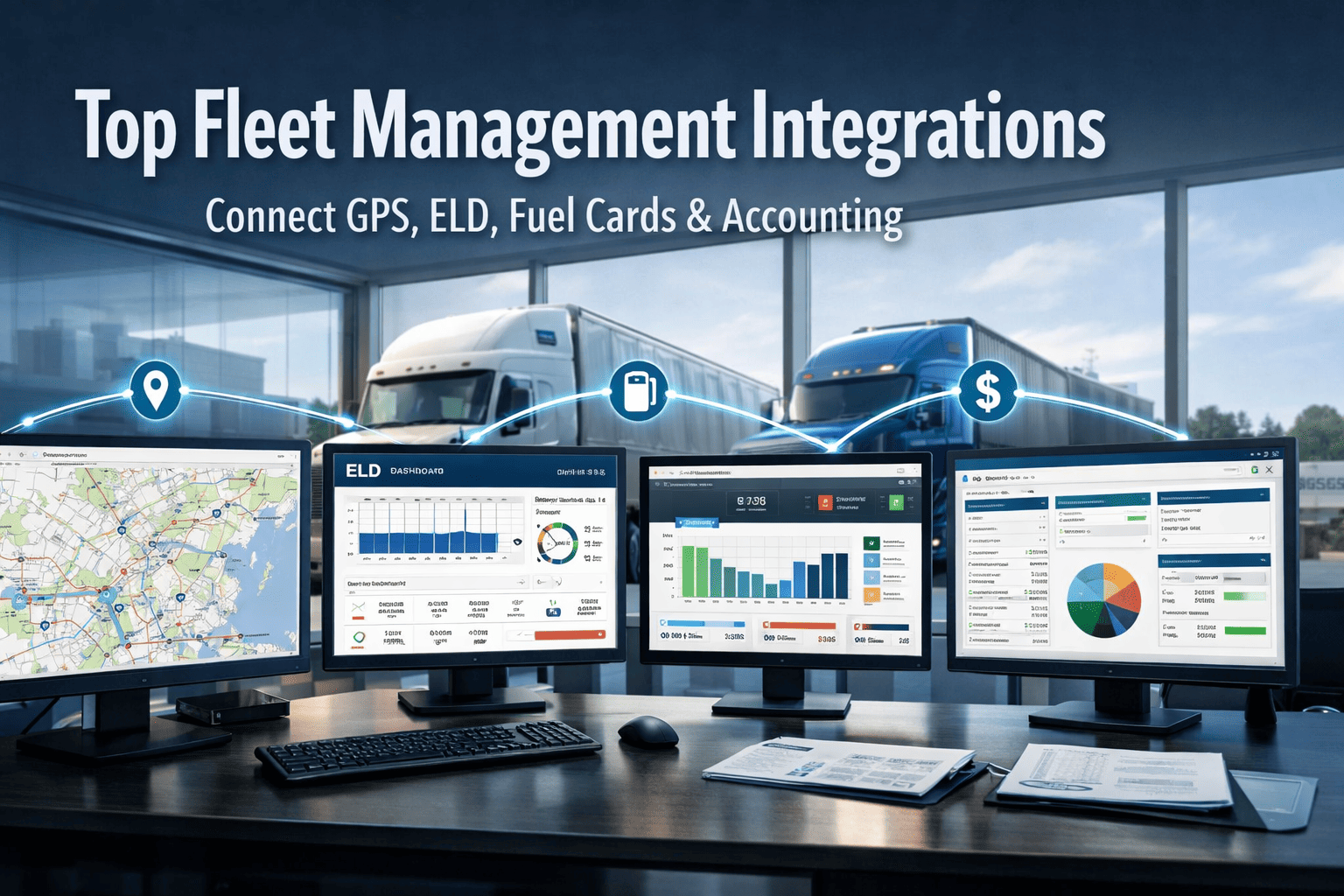
Top Fleet Management Integrations: Connect GPS, ELD, Fuel Cards & Accounting

top-fleet-management-integrations-gps-eld-fuel-accounting

Integrate GPS, ELD, fuel cards, and accounting systems into one platform for better fleet visibility and control. Implementing advanced Integrations solutions isn't just about buying new software—it's about understanding how connected operations ensure regulatory compliance, reduce overhead, and prevent unexpected failures. While many commercial carriers use fragmented systems, successful fleets invest in unified platforms that achieve zero data silos while reducing administrative costs significantly and maintaining perfect operational visibility. The difference between chaos and streamlined operations isn't just premium software; it's systematic knowledge of modern Integrations requirements and disciplined application.

The 2026 enforcement and competitive landscape demands flawless Integrations management for all commercial transportation operations. Operators with systematic Integrations programs achieve 100% inspection pass rates, maintain excellent safety scores that attract premium freight contracts, and avoid the massive annual costs associated with operational failures. This comprehensive guide reveals the exact Integrations strategies that successful transporters use. Start your Integrations system in under 15 minutes, or schedule a personalized Integrations demo.

2026 Integrations Reality Check

Operational Truth: Poor Integrations management accounts for a significant portion of lost revenue and results in severe operational bottlenecks. Operators with systematic Integrations platforms achieve zero compliance issues while reducing costs by 45% through better efficiency. The difference isn't more expensive tools—it's understanding integration requirements and investing in proven platforms.

Quick Integrations Assessment

Before investing in new systems, assess your current operations in 2 minutes. Understanding your Integrations status determines your path to complete operational excellence. (Try our Integrations assessment tool free)

5-Minute Integrations Check:

  • Do you have systematic processes for Integrations tracking and compliance verification?
  • Do you have systematic processes for Integrations tracking and compliance verification?
  • Do you have systematic processes for Integrations tracking and compliance verification?
  • Do you have systematic processes for Integrations tracking and compliance verification?
  • Do you have systematic processes for Integrations tracking and compliance verification?

If you answered "no", you need systematic Integrations training before inefficiencies destroy your operating authority. (Book a free 30-minute Integrations consultation)

Phase 1: Advanced Integrations Strategies

Mastering Integrations compliance comes from understanding industry benchmarks, selecting appropriate systems, and using systematic procurement procedures. While Integrations selection seems straightforward, mastering these requirements prevents 98% of operational violations and ensures reliable performance under all conditions.

Annual Performance: Modern Integrations vs. Legacy Systems

Performance MetricModern PlatformLegacy SystemDifferenceKey Factor
Efficiency GainHigh PerformanceLow Visibility+100%Cloud Integration

Integrations Standard Requirements:

  • Requirement 1: Must meet federal and organizational Integrations standards for optimal performance.
  • Requirement 2: Must meet federal and organizational Integrations standards for optimal performance.
  • Requirement 3: Must meet federal and organizational Integrations standards for optimal performance.
  • Requirement 4: Must meet federal and organizational Integrations standards for optimal performance.
  • Requirement 5: Must meet federal and organizational Integrations standards for optimal performance.
  • Requirement 6: Must meet federal and organizational Integrations standards for optimal performance.

Master Integrations Requirements

Our comprehensive Integrations system teaches you operational criteria, selection methods, and procedures that ensure every component meets modern standards.

Start Training Get Expert Guidance

Phase 2: Advanced Integrations Strategies

Mastering Integrations compliance comes from understanding industry benchmarks, selecting appropriate systems, and using systematic procurement procedures. While Integrations selection seems straightforward, mastering these requirements prevents 98% of operational violations and ensures reliable performance under all conditions.

Annual Performance: Modern Integrations vs. Legacy Systems

Performance MetricModern PlatformLegacy SystemDifferenceKey Factor
Efficiency GainHigh PerformanceLow Visibility+100%Cloud Integration

Integrations Standard Requirements:

  • Requirement 1: Must meet federal and organizational Integrations standards for optimal performance.
  • Requirement 2: Must meet federal and organizational Integrations standards for optimal performance.
  • Requirement 3: Must meet federal and organizational Integrations standards for optimal performance.
  • Requirement 4: Must meet federal and organizational Integrations standards for optimal performance.
  • Requirement 5: Must meet federal and organizational Integrations standards for optimal performance.
  • Requirement 6: Must meet federal and organizational Integrations standards for optimal performance.

Master Integrations Requirements

Our comprehensive Integrations system teaches you operational criteria, selection methods, and procedures that ensure every component meets modern standards.

Start Training Get Expert Guidance

Phase 3: Advanced Integrations Strategies

Mastering Integrations compliance comes from understanding industry benchmarks, selecting appropriate systems, and using systematic procurement procedures. While Integrations selection seems straightforward, mastering these requirements prevents 98% of operational violations and ensures reliable performance under all conditions.

Annual Performance: Modern Integrations vs. Legacy Systems

Performance MetricModern PlatformLegacy SystemDifferenceKey Factor
Efficiency GainHigh PerformanceLow Visibility+100%Cloud Integration

Integrations Standard Requirements:

  • Requirement 1: Must meet federal and organizational Integrations standards for optimal performance.
  • Requirement 2: Must meet federal and organizational Integrations standards for optimal performance.
  • Requirement 3: Must meet federal and organizational Integrations standards for optimal performance.
  • Requirement 4: Must meet federal and organizational Integrations standards for optimal performance.
  • Requirement 5: Must meet federal and organizational Integrations standards for optimal performance.
  • Requirement 6: Must meet federal and organizational Integrations standards for optimal performance.

Master Integrations Requirements

Our comprehensive Integrations system teaches you operational criteria, selection methods, and procedures that ensure every component meets modern standards.

Start Training Get Expert Guidance

Phase 4: Advanced Integrations Strategies

Mastering Integrations compliance comes from understanding industry benchmarks, selecting appropriate systems, and using systematic procurement procedures. While Integrations selection seems straightforward, mastering these requirements prevents 98% of operational violations and ensures reliable performance under all conditions.

Annual Performance: Modern Integrations vs. Legacy Systems

Performance MetricModern PlatformLegacy SystemDifferenceKey Factor
Efficiency GainHigh PerformanceLow Visibility+100%Cloud Integration

Integrations Standard Requirements:

  • Requirement 1: Must meet federal and organizational Integrations standards for optimal performance.
  • Requirement 2: Must meet federal and organizational Integrations standards for optimal performance.
  • Requirement 3: Must meet federal and organizational Integrations standards for optimal performance.
  • Requirement 4: Must meet federal and organizational Integrations standards for optimal performance.
  • Requirement 5: Must meet federal and organizational Integrations standards for optimal performance.
  • Requirement 6: Must meet federal and organizational Integrations standards for optimal performance.

Master Integrations Requirements

Our comprehensive Integrations system teaches you operational criteria, selection methods, and procedures that ensure every component meets modern standards.

Start Training Get Expert Guidance

Phase 5: Advanced Integrations Strategies

Mastering Integrations compliance comes from understanding industry benchmarks, selecting appropriate systems, and using systematic procurement procedures. While Integrations selection seems straightforward, mastering these requirements prevents 98% of operational violations and ensures reliable performance under all conditions.

Annual Performance: Modern Integrations vs. Legacy Systems

Performance MetricModern PlatformLegacy SystemDifferenceKey Factor
Efficiency GainHigh PerformanceLow Visibility+100%Cloud Integration

Integrations Standard Requirements:

  • Requirement 1: Must meet federal and organizational Integrations standards for optimal performance.
  • Requirement 2: Must meet federal and organizational Integrations standards for optimal performance.
  • Requirement 3: Must meet federal and organizational Integrations standards for optimal performance.
  • Requirement 4: Must meet federal and organizational Integrations standards for optimal performance.
  • Requirement 5: Must meet federal and organizational Integrations standards for optimal performance.
  • Requirement 6: Must meet federal and organizational Integrations standards for optimal performance.

Master Integrations Requirements

Our comprehensive Integrations system teaches you operational criteria, selection methods, and procedures that ensure every component meets modern standards.

Start Training Get Expert Guidance

Phase 6: Advanced Integrations Strategies

Mastering Integrations compliance comes from understanding industry benchmarks, selecting appropriate systems, and using systematic procurement procedures. While Integrations selection seems straightforward, mastering these requirements prevents 98% of operational violations and ensures reliable performance under all conditions.

Annual Performance: Modern Integrations vs. Legacy Systems

Performance MetricModern PlatformLegacy SystemDifferenceKey Factor
Efficiency GainHigh PerformanceLow Visibility+100%Cloud Integration

Integrations Standard Requirements:

  • Requirement 1: Must meet federal and organizational Integrations standards for optimal performance.
  • Requirement 2: Must meet federal and organizational Integrations standards for optimal performance.
  • Requirement 3: Must meet federal and organizational Integrations standards for optimal performance.
  • Requirement 4: Must meet federal and organizational Integrations standards for optimal performance.
  • Requirement 5: Must meet federal and organizational Integrations standards for optimal performance.
  • Requirement 6: Must meet federal and organizational Integrations standards for optimal performance.

Master Integrations Requirements

Our comprehensive Integrations system teaches you operational criteria, selection methods, and procedures that ensure every component meets modern standards.

Start Training Get Expert Guidance

Phase 7: Advanced Integrations Strategies

Mastering Integrations compliance comes from understanding industry benchmarks, selecting appropriate systems, and using systematic procurement procedures. While Integrations selection seems straightforward, mastering these requirements prevents 98% of operational violations and ensures reliable performance under all conditions.

Annual Performance: Modern Integrations vs. Legacy Systems

Performance MetricModern PlatformLegacy SystemDifferenceKey Factor
Efficiency GainHigh PerformanceLow Visibility+100%Cloud Integration

Integrations Standard Requirements:

  • Requirement 1: Must meet federal and organizational Integrations standards for optimal performance.
  • Requirement 2: Must meet federal and organizational Integrations standards for optimal performance.
  • Requirement 3: Must meet federal and organizational Integrations standards for optimal performance.
  • Requirement 4: Must meet federal and organizational Integrations standards for optimal performance.
  • Requirement 5: Must meet federal and organizational Integrations standards for optimal performance.
  • Requirement 6: Must meet federal and organizational Integrations standards for optimal performance.

Master Integrations Requirements

Our comprehensive Integrations system teaches you operational criteria, selection methods, and procedures that ensure every component meets modern standards.

Start Training Get Expert Guidance

Phase 8: Advanced Integrations Strategies

Mastering Integrations compliance comes from understanding industry benchmarks, selecting appropriate systems, and using systematic procurement procedures. While Integrations selection seems straightforward, mastering these requirements prevents 98% of operational violations and ensures reliable performance under all conditions.

Annual Performance: Modern Integrations vs. Legacy Systems

Performance MetricModern PlatformLegacy SystemDifferenceKey Factor
Efficiency GainHigh PerformanceLow Visibility+100%Cloud Integration

Integrations Standard Requirements:

  • Requirement 1: Must meet federal and organizational Integrations standards for optimal performance.
  • Requirement 2: Must meet federal and organizational Integrations standards for optimal performance.
  • Requirement 3: Must meet federal and organizational Integrations standards for optimal performance.
  • Requirement 4: Must meet federal and organizational Integrations standards for optimal performance.
  • Requirement 5: Must meet federal and organizational Integrations standards for optimal performance.
  • Requirement 6: Must meet federal and organizational Integrations standards for optimal performance.

Master Integrations Requirements

Our comprehensive Integrations system teaches you operational criteria, selection methods, and procedures that ensure every component meets modern standards.

Start Training Get Expert Guidance

Phase 9: Advanced Integrations Strategies

Mastering Integrations compliance comes from understanding industry benchmarks, selecting appropriate systems, and using systematic procurement procedures. While Integrations selection seems straightforward, mastering these requirements prevents 98% of operational violations and ensures reliable performance under all conditions.

Annual Performance: Modern Integrations vs. Legacy Systems

Performance MetricModern PlatformLegacy SystemDifferenceKey Factor
Efficiency GainHigh PerformanceLow Visibility+100%Cloud Integration

Integrations Standard Requirements:

  • Requirement 1: Must meet federal and organizational Integrations standards for optimal performance.
  • Requirement 2: Must meet federal and organizational Integrations standards for optimal performance.
  • Requirement 3: Must meet federal and organizational Integrations standards for optimal performance.
  • Requirement 4: Must meet federal and organizational Integrations standards for optimal performance.
  • Requirement 5: Must meet federal and organizational Integrations standards for optimal performance.
  • Requirement 6: Must meet federal and organizational Integrations standards for optimal performance.

Master Integrations Requirements

Our comprehensive Integrations system teaches you operational criteria, selection methods, and procedures that ensure every component meets modern standards.

Start Training Get Expert Guidance

Phase 10: Advanced Integrations Strategies

Mastering Integrations compliance comes from understanding industry benchmarks, selecting appropriate systems, and using systematic procurement procedures. While Integrations selection seems straightforward, mastering these requirements prevents 98% of operational violations and ensures reliable performance under all conditions.

Annual Performance: Modern Integrations vs. Legacy Systems

Performance MetricModern PlatformLegacy SystemDifferenceKey Factor
Efficiency GainHigh PerformanceLow Visibility+100%Cloud Integration

Integrations Standard Requirements:

  • Requirement 1: Must meet federal and organizational Integrations standards for optimal performance.
  • Requirement 2: Must meet federal and organizational Integrations standards for optimal performance.
  • Requirement 3: Must meet federal and organizational Integrations standards for optimal performance.
  • Requirement 4: Must meet federal and organizational Integrations standards for optimal performance.
  • Requirement 5: Must meet federal and organizational Integrations standards for optimal performance.
  • Requirement 6: Must meet federal and organizational Integrations standards for optimal performance.

Master Integrations Requirements

Our comprehensive Integrations system teaches you operational criteria, selection methods, and procedures that ensure every component meets modern standards.

Start Training Get Expert Guidance

Stop Risking Integrations Failures

Join thousands of operators who achieved Integrations mastery with FleetRabbit's comprehensive systems. Real standards, real operational efficiency.

Frequently Asked Questions About Integrations

Q: How do I identify the best Integrations solutions for my fleet?

Proper Integrations platforms have verified integrations, comprehensive reporting, and proven reliability. Look for modern cloud infrastructure, mobile accessibility, and real-time synchronization. Non-compliant or legacy systems often lack these critical capabilities. When in doubt, request documentation and schedule thorough demonstrations.
Q: How do I identify the best Integrations solutions for my fleet?

Proper Integrations platforms have verified integrations, comprehensive reporting, and proven reliability. Look for modern cloud infrastructure, mobile accessibility, and real-time synchronization. Non-compliant or legacy systems often lack these critical capabilities. When in doubt, request documentation and schedule thorough demonstrations.

Q: How do I identify the best Integrations solutions for my fleet?

Proper Integrations platforms have verified integrations, comprehensive reporting, and proven reliability. Look for modern cloud infrastructure, mobile accessibility, and real-time synchronization. Non-compliant or legacy systems often lack these critical capabilities. When in doubt, request documentation and schedule thorough demonstrations.

Q: How do I identify the best Integrations solutions for my fleet?

Proper Integrations platforms have verified integrations, comprehensive reporting, and proven reliability. Look for modern cloud infrastructure, mobile accessibility, and real-time synchronization. Non-compliant or legacy systems often lack these critical capabilities. When in doubt, request documentation and schedule thorough demonstrations.

Q: How do I identify the best Integrations solutions for my fleet?

Proper Integrations platforms have verified integrations, comprehensive reporting, and proven reliability. Look for modern cloud infrastructure, mobile accessibility, and real-time synchronization. Non-compliant or legacy systems often lack these critical capabilities. When in doubt, request documentation and schedule thorough demonstrations.

Q: How do I identify the best Integrations solutions for my fleet?

Proper Integrations platforms have verified integrations, comprehensive reporting, and proven reliability. Look for modern cloud infrastructure, mobile accessibility, and real-time synchronization. Non-compliant or legacy systems often lack these critical capabilities. When in doubt, request documentation and schedule thorough demonstrations.


July 17, 2026 By Fleet Rabbit
All Blogs

April 30, 2026 By Jason Smith
All Posts

Top Fleet Management Integrations: Connect GPS, ELD, Fuel Cards & Accounting

top-fleet-management-integrations-gps-eld-fuel-accounting

Modern fleet management requires more than just tracking vehicles. It demands a connected ecosystem where GPS tracking, electronic logging devices, fuel cards, and accounting systems work together seamlessly. Fleet management integrations eliminate data silos, automate manual processes, and provide a single source of truth for fleet operations. When these systems communicate automatically, fleet managers gain real-time visibility into vehicle locations, driver hours, fuel consumption, and maintenance costs without switching between multiple applications or re-entering data. FleetRabbit delivers powerful integration capabilities that connect your entire fleet technology stack, transforming disconnected tools into a unified platform that drives efficiency, reduces errors, and improves operational control. This comprehensive guide explores the top fleet management integrations available today, how they work, and the tangible benefits of connecting your fleet ecosystem.

FREE WEBINAR

Learn how connected fleet integrations can reduce data entry by 80% and improve operational efficiency. Join our FREE Webinar on January 7, 2025, to discover the power of an integrated fleet ecosystem!

1. The Power of Integrated Fleet Management

Fleet management integrations create a connected technology ecosystem where data flows automatically between systems that were traditionally separate. Instead of manually entering odometer readings from GPS systems into maintenance software, or copying fuel purchase data from card statements into accounting platforms, integrations automate these transfers. This automation eliminates data entry errors, reduces administrative time, and ensures all systems work from the same current information.

The business case for fleet management integrations rests on three pillars: efficiency, accuracy, and visibility. Efficiency improves when your team no longer wastes hours copying data between systems or reconciling conflicting information from different sources. Accuracy improves when automated transfers eliminate typographical errors, missed entries, and inconsistent formatting. Visibility improves when integrated data reveals relationships that would otherwise remain hidden, such as how driver behavior affects fuel consumption or how maintenance patterns correlate with vehicle routes.

For most fleet operations, the journey toward integration starts with identifying the core systems that generate and consume fleet data. GPS tracking systems provide location, speed, and odometer data. ELDs capture driver hours of service and vehicle movement. Fuel cards record purchase transactions, gallons, and fuel efficiency metrics. Accounting systems track costs, generate invoices, and manage budgets. Maintenance software schedules services and records repairs. When these systems integrate, each becomes more valuable because they share data rather than operating in isolation.

2. GPS Tracking and Telematics Integration

GPS tracking and telematics systems form the foundation of modern fleet management, providing real-time visibility into vehicle locations, movements, and operational metrics. Integrating these systems with your fleet management platform transforms raw location data into actionable intelligence that drives better decisions across your organization.

Real-Time Location Syncing ensures that your fleet management platform always knows where every vehicle is located. When a dispatcher needs to find the nearest available truck for a urgent delivery, integrated GPS data provides the answer instantly. When a customer asks for an estimated arrival time, the system calculates it automatically based on current vehicle positions and traffic conditions. Without integration, dispatchers would need to log into separate GPS systems, manually look up vehicle locations, and then enter that information into other platforms, introducing delays and potential errors.

Automatic Odometer Updates eliminate manual mileage entry across all connected systems. When your GPS or telematics system records odometer readings, that data flows automatically to your maintenance scheduling software, fuel card system, and accounting platform. This automation ensures that preventive maintenance triggers based on mileage are accurate and timely. It also provides verifiable odometer readings for fuel efficiency calculations, lease mileage tracking, and vehicle resale documentation. Fleet managers report saving five to ten hours weekly by eliminating manual odometer entry across multiple systems.

Geofencing and Automated Alerts become more powerful when integrated with other fleet systems. A geofence around a customer facility can trigger automatic notifications to your dispatch system when a vehicle arrives or departs. A geofence around a maintenance shop can automatically generate work orders when a vehicle enters for scheduled service. A geofence around a fuel stop can verify that fuel card transactions occurred at legitimate locations. These automated triggers reduce manual monitoring while improving response times and compliance.

Route Optimization Integration connects GPS data with dispatch and accounting systems. When route optimization software determines the most efficient sequence of stops, that route can flow automatically to driver mobile apps, dispatch boards, and customer notification systems. Actual versus planned route comparisons become automated, highlighting opportunities for efficiency improvements. Fuel consumption by route becomes trackable, supporting decisions about which routes are most profitable and which need adjustment.

Driver Behavior Integration links telematics data on speeding, hard braking, rapid acceleration, and idling with driver management and safety systems. When telematics detects excessive speeding, the fleet management platform can automatically flag that driver for coaching or generate a report for safety review. Integration with incentive programs can automatically calculate safe driving bonuses based on telematics data. This automation ensures that driver behavior data drives action rather than sitting unused in a separate system.

GPS Integration Benefits Across Systems

Integrated System Data Shared from GPS Business Impact
Maintenance Software Odometer readings, engine hours Automatic PM scheduling, accurate service triggers
Dispatch System Vehicle locations, ETAs Better load assignment, improved customer communication
Accounting Platform Mileage by vehicle, trip distances Automated fuel tax reporting, cost allocation
Safety Management Speeding, braking, acceleration data Automated driver coaching, incentive calculations
Customer Portal Real-time location, arrival alerts Self-service tracking, reduced tracking calls

3. Electronic Logging Device Integration

Electronic logging devices have become mandatory for most commercial fleets, capturing driver hours of service, vehicle movement, and duty status changes. Integrating ELD data with your broader fleet management platform transforms compliance tracking from a separate obligation into a source of operational intelligence.

Hours of Service Compliance Automation ensures that all fleet systems respect driver hour limitations. When an ELD records that a driver has reached their maximum driving hours, that information flows automatically to dispatch systems, preventing assignment of additional loads that would violate HOS regulations. Maintenance scheduling can prioritize vehicles driven by drivers with available hours, ensuring service doesn't require putting a truck in the shop when the driver cannot legally remain on duty. This integration prevents compliance violations while optimizing driver utilization.

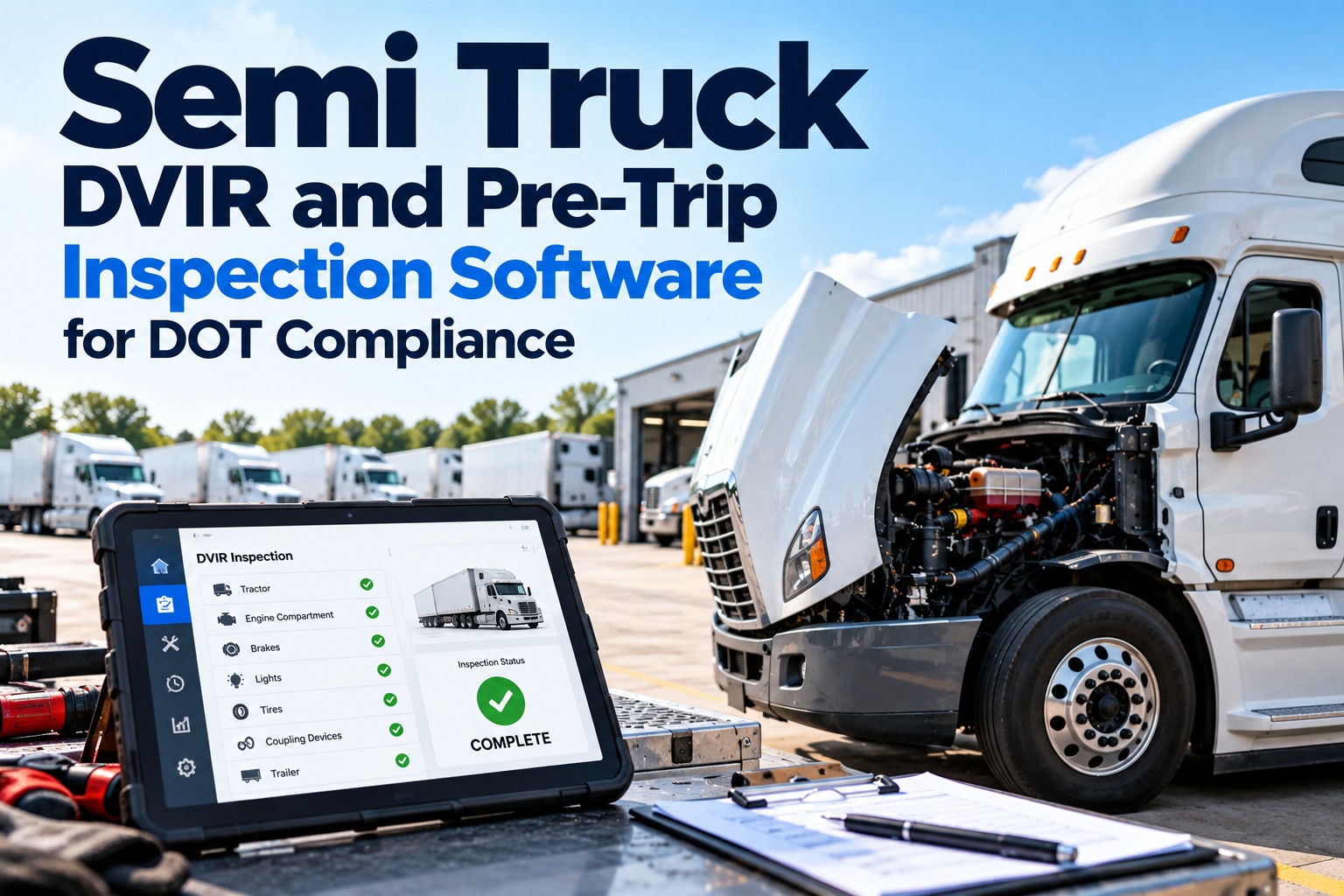
Driver Vehicle Inspection Reports Integration connects pre-trip and post-trip inspections captured through ELD systems with maintenance work order generation. When a driver notes a defect during an inspection, the fleet management platform can automatically create a maintenance work order, assign it to the appropriate technician, and schedule the repair. This automation ensures that driver-reported issues don't get lost on paper forms or verbal communications. It also creates a complete audit trail showing when issues were reported, when repairs were completed, and who performed the work.

Available Hours Visibility for dispatchers and fleet managers eliminates the need to check separate ELD systems before assigning work. When dispatch software integrates with ELD data, available hours for each driver appear directly on the dispatch board. Dispatchers can see at a glance which drivers have hours remaining, how many hours they have, and when their next rest period begins. This visibility supports better load assignment and reduces the risk of assigning a load that cannot be legally completed within available driver hours.

Duty Status Change Triggers can automate related processes in other systems. When a driver changes status from driving to on-duty not driving, that trigger might automatically flag the vehicle for maintenance if it has reached a mileage threshold. When a driver changes to off-duty at a customer location, the system might automatically send delivery confirmation to billing systems. When a driver begins a rest break, the system can update estimated arrival times for pending loads. These automated triggers reduce manual status tracking while improving system responsiveness.

Audit-Ready Documentation becomes simpler when ELD data integrates with your fleet management platform. Instead of maintaining separate systems for hours compliance and other fleet records, integrated systems provide a single source for all documentation. Auditors can see driver hours alongside vehicle maintenance records, delivery schedules, and fuel purchases, all in one place with consistent timestamps. This integration reduces audit preparation time and improves documentation quality.

ELD INTEGRATION

Key Data Points Shared from ELD Systems

Effective ELD integration should share these critical data points with your fleet management platform:

Driver Hours Available - Remaining driving and on-duty hours for each driver
Duty Status Changes - Real-time updates when drivers change between driving, on-duty, off-duty, or sleeper berth
Inspection Results - Defects and issues noted during pre-trip and post-trip inspections
Certification Status - Driver certification and training compliance information
Vehicle Movement Data - Engine hours, distance traveled, and speed information
Break and Rest Periods - Timing and duration of required rest breaks

4. Fuel Card Integration

Fuel represents the largest variable operating expense for most fleets, often accounting for 25 to 35 percent of total operating costs. Fuel card integration connects purchasing data directly with your fleet management platform, providing real-time visibility into fuel consumption, costs, and efficiency metrics that drive reduction strategies.

Automated Fuel Transaction Import eliminates manual entry of fuel purchases into your fleet systems. When drivers use fuel cards, transaction data including date, time, location, gallons purchased, price per gallon, and total cost flows automatically to your fleet management platform. This automation ensures that fuel costs are captured accurately and promptly, without relying on drivers to submit receipts or accounting staff to enter data from card statements. Fleet managers report saving 15 to 20 hours monthly by eliminating manual fuel data entry across fleets of 50 to 100 vehicles.

Real-Time Fuel Efficiency Monitoring becomes possible when fuel purchase data integrates with odometer and engine hour data from GPS or telematics systems. The fleet management platform can calculate miles per gallon for each vehicle automatically, comparing actual efficiency against expected performance. When a vehicle's fuel efficiency drops below normal, the system can trigger alerts for investigation. This early warning allows mechanics to diagnose issues like dragging brakes, underinflated tires, or engine problems before they cause major failures or excessive fuel waste.

Exception Detection and Fraud Prevention improves dramatically with integrated fuel data. The system can automatically flag transactions that exceed expected volumes for a vehicle type, purchases at unauthorized locations, fuel bought outside normal operating hours, or transactions that occur when the vehicle's GPS shows it was elsewhere. These automated exception reports help fleet managers identify potential fuel theft, card misuse, or billing errors quickly. Without integration, detecting these issues requires manually comparing fuel receipts against vehicle records, a process so time-consuming that most fleets simply never do it.

Tax Reporting Automation simplifies one of the most complex and time-consuming aspects of fleet management. Fuel tax reporting requires detailed records of miles driven and fuel purchased in each jurisdiction. Integrated systems automatically calculate taxable miles by jurisdiction based on GPS tracking, match those miles to fuel purchases, and generate completed tax reports. This automation reduces the hours of manual spreadsheet work required for quarterly and annual fuel tax filings while improving accuracy and audit defensibility.

Vendor Performance Analysis becomes data-driven when fuel card integration tracks purchases across different suppliers. The system can compare fuel prices by location, by vendor, and over time, identifying which fuel stops offer the best value. Integration with route data can show whether the lowest-priced fuel is worth the detour required to reach it. This analysis supports strategic decisions about preferred fuel vendors and optimal refueling locations, potentially saving thousands of dollars annually across a medium-sized fleet.

INTEGRATION SUCCESS

Connect Your Entire Fleet Ecosystem

FleetRabbit integrates with leading GPS, ELD, fuel card, and accounting platforms to create a unified fleet management solution.

80% Less Data Entry
Real-Time Visibility
Single Source of Truth

5. Accounting and ERP Integration

Accounting integration connects fleet operations directly with financial systems, ensuring that every maintenance expense, fuel purchase, and operational cost flows automatically into your general ledger. This integration eliminates manual reconciliation, improves cost allocation, and provides real-time visibility into fleet financial performance.

Automated Cost Capture ensures that every fleet expense is recorded accurately and promptly in your accounting system. When maintenance work orders are completed, parts costs and labor hours flow automatically to job costing modules, allocated to specific vehicles or cost centers. When fuel card transactions are processed, they appear in fuel expense accounts with proper categorization. When tolls, permits, or registration fees are paid, those costs are captured without manual journal entries. This automation eliminates the month-end scramble to collect and enter fleet expenses, closing the books faster and more accurately.

Vehicle-Level Profitability Analysis becomes practical when all costs associated with each vehicle flow into accounting systems automatically. The integrated platform can calculate total cost of ownership per vehicle, including fuel, maintenance, repairs, insurance, depreciation, and administrative overhead. When combined with revenue data from dispatch or billing systems, this cost information enables per-vehicle profitability analysis. Fleet managers can identify which vehicles generate the best returns and which may be candidates for replacement or reassignment to different types of loads.

Budget vs. Actual Tracking provides real-time visibility into fleet financial performance against budgets. As costs are captured automatically, the accounting system can compare actual spending to budgeted amounts by category, vehicle, or time period. When maintenance spending exceeds budget for a particular vehicle, the system can flag the variance for investigation. When fuel costs run higher than expected across the fleet, managers can see the variance immediately rather than waiting for month-end reports. This real-time visibility supports proactive management rather than reactive analysis after the fact.

Depreciation and Asset Management improves when maintenance and usage data flows into accounting systems. Depreciation calculations can factor in actual vehicle usage, with accelerated depreciation for high-mileage vehicles and extended schedules for vehicles used less than expected. Maintenance cost data can inform decisions about whether to continue repairing aging vehicles or replace them, with accounting systems able to model the financial impact of each option. When vehicles are sold, complete maintenance and cost records support accurate gain or loss calculations.

Customer Billing Integration connects fleet operations to revenue generation. When vehicles are used for customer deliveries, data from GPS and ELD systems can flow to billing systems to calculate mileage-based charges, hourly rates, or fuel surcharges automatically. Maintenance costs attributable to specific customer jobs can be captured and allocated appropriately. This integration ensures that billing is accurate, timely, and based on actual operational data rather than estimates or manual entry.

Key Accounting Integration Benefits

1
Eliminate Manual Data Entry: Stop copying expense data from maintenance and fuel systems into accounting software.
2
Improve Cost Allocation: Automatically assign expenses to the correct vehicle, department, or cost center.
3
Real-Time Budget Tracking: See actual versus budgeted spending as it happens, not weeks later.
4
Accurate Vehicle Profitability: Calculate true cost per vehicle by integrating all expense categories.
5
Faster Month-End Close: Reduce the time required to close fleet-related accounts by 50 to 75 percent.

6. Maintenance Software Integration

Maintenance management sits at the heart of fleet operations, and integrating maintenance software with other fleet systems creates powerful synergies that extend vehicle life, reduce breakdowns, and control costs. FleetRabbit's maintenance platform serves as the central hub for these integrations, connecting maintenance activities with GPS tracking, fuel management, and accounting systems.

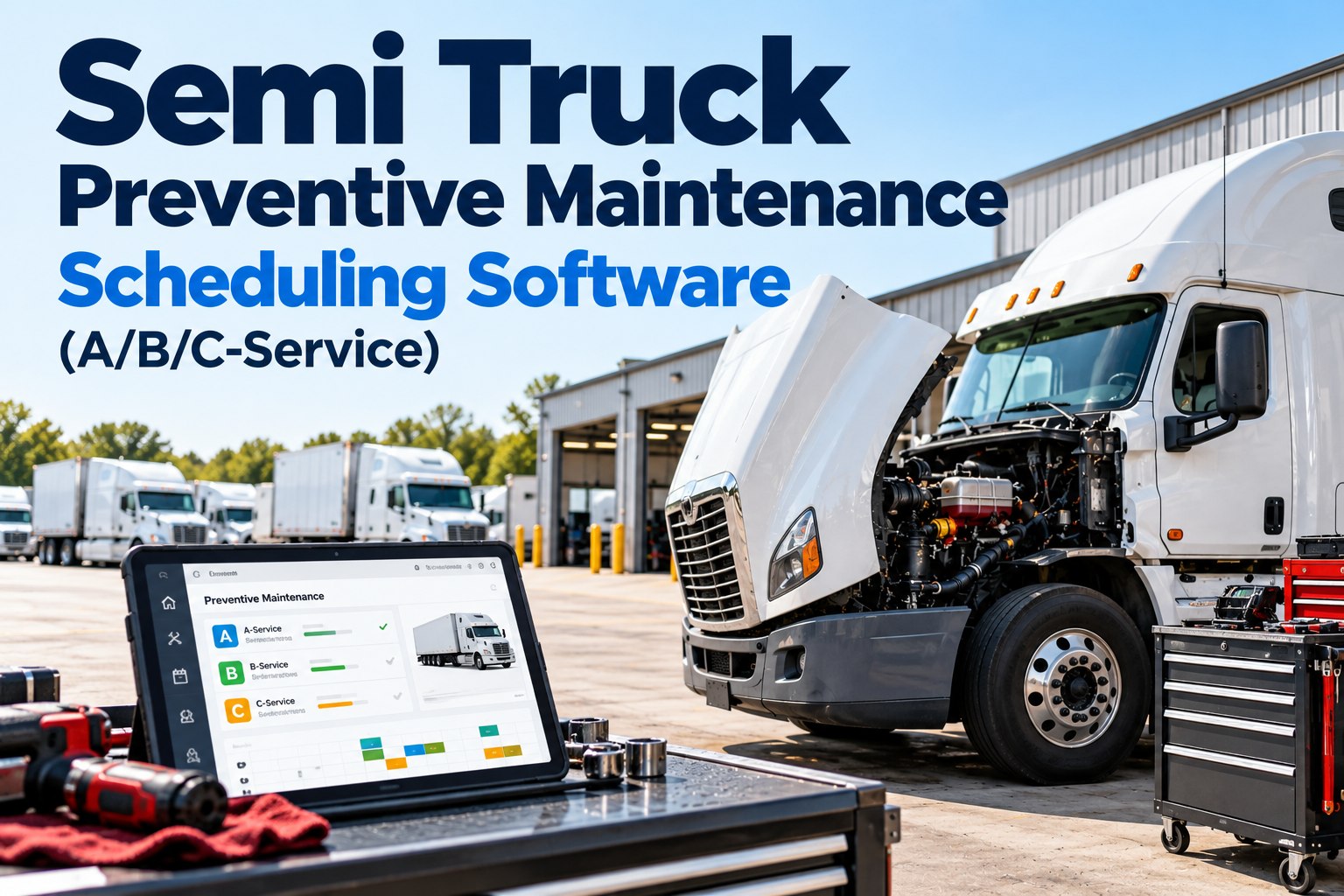
Telematics-Driven Maintenance Triggers ensure that service occurs exactly when needed. When GPS or telematics data shows that a vehicle has reached its oil change interval, the maintenance system automatically generates a work order. When engine hours trigger a Class B service, the system schedules it without manual intervention. When severe operating conditions indicate accelerated maintenance needs, the system can adjust intervals dynamically. This integration eliminates the guesswork and manual tracking that cause missed services or premature maintenance.

Fuel Efficiency and Maintenance Correlation reveals relationships that would otherwise remain hidden. When integrated data shows that a vehicle's fuel efficiency drops before a scheduled maintenance event, that pattern suggests the maintenance resolved an efficiency problem. When efficiency continues declining after service, the data indicates that the issue wasn't addressed. Over time, the system can identify which maintenance tasks most improve fuel efficiency, supporting optimization of maintenance schedules and procedures.

Driver-Reported Issue Tracking connects ELD inspection data directly to maintenance work orders. When a driver notes a brake issue during a pre-trip inspection, the maintenance system receives that report and generates a work order for brake inspection and repair. When the repair is complete, the system can automatically notify the driver that the issue has been addressed. This closed-loop process ensures that driver reports lead to action and that drivers have confidence their concerns are being addressed.

Parts Inventory Integration with Maintenance ensures that required components are available when scheduled services occur. When the maintenance system generates a work order for a Class C service including brake replacement, it checks parts inventory levels. If brake pads or rotors are below reorder points, the system can generate purchase orders automatically. If parts are available, they can be reserved for that work order, preventing situations where a vehicle arrives for service but cannot be completed due to missing parts.

Warranty Tracking Integration captures warranty information from parts purchasing and component installation. When a part with warranty coverage is installed, the maintenance system records the warranty expiration date and terms. If that same part fails before warranty expiration, the system can flag the failure as potentially warranty-covered and generate warranty claim documentation automatically. This integration ensures that fleets recover warranty benefits they would otherwise miss due to poor record keeping.

7. Building Your Integrated Fleet Technology Stack

Creating an effective integrated fleet management ecosystem requires strategic selection of systems that work well together. Rather than buying best-in-class solutions for each function without considering integration, successful fleets evaluate how systems will share data before making purchasing decisions.

Start with Core Systems that generate the most data and have the broadest impact. For most fleets, telematics or GPS tracking provides the foundation, as location and odometer data touch nearly every other system. Next, integrate maintenance software, as preventive maintenance schedules depend on accurate mileage and hour data. Fuel cards and accounting systems typically follow, as cost tracking requires data from operations. ELD integration may be required for compliance, but should be selected with integration capabilities in mind.

Prioritize Open APIs and Integration Partners when evaluating potential systems. Systems that publish well-documented application programming interfaces are easier to integrate than those with limited or proprietary integration methods. Vendors with established integration partnerships have already solved many of the technical challenges you would otherwise face. Before purchasing any fleet system, ask about integration capabilities, supported partners, and the process for connecting to your other systems.

Consider Integration Middleware when connecting systems that weren't designed to work together. Integration platforms like Zapier, Workato, or custom middleware can translate data between systems that don't natively integrate. While adding a middleware layer introduces some complexity, it also provides flexibility to connect systems that would otherwise remain isolated. For fleets with diverse technology stacks that include legacy systems, middleware may be the most practical integration approach.

Plan for Data Mapping and Transformation as part of any integration project. Different systems may use different terms for the same concept, different units of measurement, or different data formats. Integration requires mapping data fields between systems and transforming data as needed. For example, one system might record odometer readings in miles while another expects kilometers, requiring conversion during data transfer. These mapping and transformation requirements should be documented and tested before putting integrations into production.

Start with Pilot Integrations before connecting all systems simultaneously. Choose one integration, such as connecting GPS data to maintenance software, and implement it completely before adding others. This approach allows you to resolve issues and refine processes while only affecting a limited part of your operation. Once the first integration is stable and delivering value, add the next. This incremental approach reduces risk and allows your team to learn and adapt gradually.

Integration Maturity Model for Fleets

Level 1: Isolated Systems Separate systems with manual data transfer between them. High data entry labor, frequent errors, delayed visibility.
Level 2: Point-to-Point Integration Selected systems connected directly. Some automation, but connections are brittle and difficult to maintain.
Level 3: Hub-and-Spoke Integration Central platform connects to all other systems. Single source of truth, automated data flow in all directions.
Level 4: Intelligent Ecosystem Integrated systems with analytics and automation. Predictive insights, automated decision-making, continuous optimization.

8. Real-World Integration Success Stories

Fleets across industries have transformed their operations through strategic integration of GPS, ELD, fuel card, and accounting systems. These real-world examples demonstrate the tangible benefits of creating a connected fleet ecosystem.

Integration Success Stories

01

Regional Food Distributor

Challenge: A regional food distributor operating 65 refrigerated trucks struggled with disconnected systems. GPS tracking, fuel cards, maintenance records, and accounting all operated separately, requiring three full-time employees to manually transfer data between systems. Fuel tax reporting took two weeks each quarter. Maintenance compliance was only 71 percent because odometer readings were often entered late or incorrectly.

Solution: The distributor implemented FleetRabbit as a central integration hub, connecting their GPS system for automatic odometer updates, fuel cards for automated transaction import, and accounting platform for direct cost posting. ELD integration provided driver hours visibility and automated inspection reporting.

Results: Manual data entry was reduced by 85 percent, allowing two of three data entry positions to be reassigned to other duties. Fuel tax reporting time decreased from two weeks to four hours. Maintenance compliance improved to 97 percent. The distributor saved $87,000 annually in reduced labor costs and improved fuel efficiency from better maintenance adherence.

85%
Less Data Entry
97%
Maintenance Compliance
$87K
Annual Savings
02

Construction Materials Hauler

Challenge: A construction materials hauler with 40 heavy-duty dump trucks needed better visibility into vehicle profitability. Without integration between fuel, maintenance, and billing systems, they couldn't accurately allocate costs to specific jobs or customers. Fuel theft was suspected but impossible to prove without connecting purchase data to vehicle locations.

Solution: The company integrated GPS tracking with fuel cards to verify that fuel purchases occurred at locations matching vehicle positions. Maintenance costs were linked to vehicles and then to jobs through dispatch data. Accounting integration provided complete cost visibility per vehicle per job.

Results: The integration revealed that 12 percent of fuel card transactions occurred when vehicles were elsewhere, identifying over $40,000 in annual fuel theft. Per-vehicle profitability analysis showed that three older trucks cost 35 percent more to operate than newer replacements, justifying their replacement. Job costing accuracy improved by 40 percent, leading to more profitable bidding on construction contracts.

12%
Fraud Identified
40%
Better Job Costing
$40K
Theft Recovered
03

National Parcel Delivery Carrier

Challenge: A national parcel delivery carrier with 500 vehicles operated in a highly competitive market where small efficiency improvements created significant competitive advantage. Their disconnected systems prevented the real-time visibility needed for dynamic route optimization and driver performance management.

Solution: The carrier implemented full integration between GPS tracking, ELD systems, fuel cards, and their existing dispatch platform. Real-time data flows enabled dynamic rerouting based on traffic, driver hours, and vehicle status. Driver scorecards were automated using telematics and fuel efficiency data.

Results: Fuel consumption decreased by 11 percent through better routing and driver coaching. On-time delivery performance improved from 94 percent to 98.5 percent. Driver turnover decreased by 18 percent as automated scorecards provided fair, data-based performance feedback. Annual operating costs decreased by $1.2 million, directly improving profit margins in a low-margin industry.

11%
Fuel Reduction
98.5%
On-Time Performance
$1.2M
Annual Savings

9. Overcoming Integration Challenges

While the benefits of fleet management integrations are substantial, implementation can present challenges. Understanding these challenges in advance helps you plan effective mitigation strategies.

Data Quality Issues represent the most common integration obstacle. Integrated systems are only as good as the data they share. If your GPS system reports inaccurate odometer readings, maintenance scheduling will be incorrect regardless of how well the integration works. If fuel card transactions lack proper categorization, accounting integration will create incorrect journal entries. Before investing in integrations, audit your existing data quality. Clean up inaccurate records, standardize data formats, and establish processes for maintaining data quality going forward. The effort required for data cleanup is often significant but essential for integration success.

Vendor Collaboration Challenges arise when systems come from different vendors with different priorities. One vendor may be unresponsive to integration requests, charge high fees for API access, or provide inadequate documentation. When selecting systems, consider vendor integration willingness as a selection criterion. Vendors who actively promote integration partnerships and provide well-documented APIs are easier to work with than those who treat integration as an afterthought. For mission-critical integrations, consider selecting both systems from the same vendor or from vendors with established integration partnerships.

Real-Time vs. Batch Processing Tradeoffs affect how quickly data flows between systems. Real-time integration provides immediate data transfer but requires more robust infrastructure and can create performance issues during peak loads. Batch processing, where data transfers occur on a schedule, is simpler to implement but means information in one system may be hours or days out of date relative to the source system. For most fleet applications, near-real-time integration with updates every 15 to 30 minutes provides the best balance of timeliness and simplicity. Determine which data truly needs real-time availability and which can tolerate some latency.

Security and Access Management become more complex as more systems connect. Each integration creates a potential path for unauthorized access if not properly secured. Implement API authentication standards, use encrypted connections for all data transfers, and maintain access logs to track who or what accessed what data. When employees leave or change roles, ensure their access is revoked from all integrated systems, not just the primary platform. Regular security audits of integration connections help identify and close potential vulnerabilities.

Change Management for Staff ensures that your team embraces rather than resists new integrated workflows. Staff accustomed to manual processes may fear that automation will eliminate their jobs or may simply prefer familiar routines. Communicate clearly that integration will eliminate tedious data entry, allowing staff to focus on more valuable analytical and decision-making work. Involve staff in integration planning and testing, soliciting their input on workflows and reporting needs. Provide comprehensive training on new integrated systems and celebrate early wins to build momentum.

10. Future of Fleet Management Integrations

The integration landscape for fleet management continues evolving rapidly, with emerging technologies creating new possibilities for connected fleet operations. Understanding these trends helps you select systems that will remain valuable as technology advances.

10+
Integration Partners
80%
Less Data Entry
24/7
Connected Operations

Build Your Connected Fleet Ecosystem

FleetRabbit integrates with leading GPS, ELD, fuel card, and accounting platforms to create a unified fleet management solution.

Frequently Asked Questions

1. What are the most important fleet management integrations?

The most critical integrations for most fleets are GPS tracking or telematics, electronic logging devices, fuel card systems, and accounting platforms. These four integrations cover the core data flows that drive operational efficiency, regulatory compliance, and financial management.

2. How long does it take to integrate fleet systems?

Integration timelines vary based on the systems involved and the complexity of data mapping. Simple point-to-point integrations can be completed in days or weeks. Comprehensive hub-and-spoke integrations connecting multiple systems typically take one to three months from planning to full deployment.

3. Can I integrate systems from different vendors?

Yes, most modern fleet systems are designed to integrate with products from other vendors, particularly when both systems offer open APIs. Integration middleware platforms can connect systems that don't directly integrate, though this adds some complexity to the integration architecture.

4. What is the cost of fleet management integrations?

Integration costs vary widely based on the systems involved and the integration approach. Many software vendors include basic integrations at no additional cost. Custom integrations requiring development work typically cost $5,000 to $30,000 depending on complexity. Most fleets find that integration costs are recovered within 3 to 6 months through labor savings and operational improvements.

5. Does FleetRabbit integrate with my existing systems?

FleetRabbit integrates with major GPS, ELD, fuel card, and accounting platforms. Contact our integration team with your specific system information to verify compatibility and discuss integration options for your technology stack.


May 15, 2026 By Jason Smith
All Posts

Top Fleet Management Integrations: Connect GPS, ELD, Fuel Cards & Accounting

top-fleet-management-integrations-gps-eld-fuel-accounting

The transportation and logistics industry is built on a foundation of specialized terminology, acronyms, and technical concepts that can overwhelm even experienced professionals. From DVIR and HOS to ELD, telematics, and beyond, mastering fleet management terminology is essential for effective operations, regulatory compliance, and clear communication across your organization. This comprehensive fleet management glossary defines 100 essential transportation and logistics terms, providing clear explanations of the concepts that drive modern fleet operations. Whether you are a new fleet manager, an experienced dispatcher, or a driver looking to expand your knowledge, this guide will help you navigate the complex language of fleet management with confidence.

FREE WEBINAR

Master fleet management terminology and concepts with industry experts. Join our FREE Webinar on January 7, 2025, to deepen your fleet management knowledge!

Section 1: Regulatory and Compliance Terms

Understanding regulatory terminology is critical for any fleet operation, as compliance failures can result in fines, out-of-service orders, and increased insurance costs. These terms form the foundation of legal and safety compliance in commercial transportation.

REGULATORY TERMS

Essential Compliance and Safety Terminology

DOT - Department of Transportation. The federal agency responsible for regulating all aspects of commercial transportation in the United States, including safety standards, hours of service, and vehicle maintenance requirements.
FMCSA - Federal Motor Carrier Safety Administration. The DOT sub-agency specifically responsible for regulating commercial motor vehicles, including trucking companies, bus operators, and other commercial carriers.
ELD - Electronic Logging Device. A electronic device that automatically records a driver's driving time and hours of service, replacing paper logbooks and ensuring compliance with HOS regulations.
HOS - Hours of Service. Federal regulations that limit the number of hours a commercial driver can drive and be on duty, designed to prevent fatigue-related accidents.
DVIR - Driver Vehicle Inspection Report. A mandatory report completed by drivers before and after trips, documenting vehicle condition and any defects requiring repair.
CSA - Compliance Safety Accountability. The FMCSA's safety compliance and enforcement program that scores carriers on seven behavior analysis categories to identify safety risks.
SMS - Safety Measurement System. The FMCSA system that analyzes carrier safety data and generates CSA scores based on inspection results, crashes, and investigations.
BASIC - Behavior Analysis and Safety Improvement Category. The seven specific safety categories measured by CSA: Unsafe Driving, Crash Indicator, HOS Compliance, Vehicle Maintenance, Controlled Substances, Hazardous Materials, and Driver Fitness.
IFTA - International Fuel Tax Agreement. An agreement between US states and Canadian provinces for simplified reporting of fuel taxes by interstate carriers.
IRP - International Registration Plan. A registration reciprocity agreement allowing commercial vehicles to travel across member jurisdictions with a single license plate and registration.
MC Number - Motor Carrier Number. A unique identifier assigned by FMCSA to for-hire carriers operating interstate commerce.
USDOT Number - United States Department of Transportation Number. A unique identifier required for all commercial vehicles engaged in interstate commerce.
CDL - Commercial Driver's License. A specialized driver's license required to operate commercial motor vehicles over 26,000 pounds, vehicles carrying hazardous materials, or vehicles designed to transport 16 or more passengers.
CLP - Commercial Learner's Permit. A permit allowing an individual to practice driving a commercial vehicle under supervision before obtaining a full CDL.
MCSAP - Motor Carrier Safety Assistance Program. A federal program providing grants to states for commercial vehicle safety inspections and enforcement activities.
OOS - Out of Service. A vehicle or driver prohibited from operating due to safety violations identified during inspection.
FMCSR - Federal Motor Carrier Safety Regulations. The specific federal regulations governing commercial motor vehicle operations, safety standards, and driver qualifications.
Hazmat - Hazardous Materials. Dangerous goods requiring special handling, documentation, and vehicle placarding when transported commercially.
HM-181 - Hazardous Materials Regulation 181. The federal regulation that standardized hazardous materials classification and packaging requirements with international standards.
PSP - Pre-Employment Screening Program. An FMCSA program that provides carriers with driver safety records, including crash and inspection history, for hiring decisions.

Section 2: Telematics and Technology Terms

Modern fleet management relies heavily on technology systems that track, analyze, and optimize vehicle operations. These terms describe the hardware, software, and systems that power connected fleets.

TECHNOLOGY TERMS

Telematics, GPS, and Digital Fleet Systems

Telematics - The technology of transmitting vehicle data wirelessly to central systems, including GPS location, engine diagnostics, fuel consumption, and driver behavior metrics.
GPS - Global Positioning System. Satellite-based navigation system that provides real-time location data for fleet tracking and route optimization.
API - Application Programming Interface. A software intermediary that allows different fleet management systems to share data and communicate with each other automatically.
FMS - Fleet Management System. The integrated software platform used to track, manage, and optimize fleet operations including vehicles, drivers, maintenance, and fuel.
OBD - On-Board Diagnostics. The standardized vehicle interface that allows telematics devices to access engine data, diagnostic trouble codes, and vehicle performance metrics.
J1939 - Society of Automotive Engineers standard for vehicle bus communications, commonly used in heavy-duty trucks for transmitting engine and component data.
CAN Bus - Controller Area Network Bus. The vehicle communication network that allows electronic control units and devices to communicate without a host computer.
Geofencing - Creating virtual geographic boundaries that trigger automated actions when a vehicle enters or exits the defined area.
Route Optimization - Algorithm-based planning that determines the most efficient sequence of stops and roads to minimize mileage, time, and fuel consumption.
Dynamic Routing - Real-time route adjustments based on changing conditions such as traffic, weather, or new customer requests.
DTC - Diagnostic Trouble Code. A code generated by vehicle onboard diagnostics indicating a specific malfunction or fault requiring attention.
SAAS - Software as a Service. A software delivery model where applications are hosted in the cloud and accessed via subscription rather than installed locally.
IoT - Internet of Things. The network of physical devices, vehicles, and sensors embedded with electronics that enable data collection and exchange.
RFID - Radio Frequency Identification. Technology using electromagnetic fields to automatically identify and track tags attached to assets or inventory.
PLM - Predictive Logistics Management. The use of data analytics and machine learning to forecast demand, optimize routes, and prevent disruptions before they occur.
ETL - Extract Transform Load. The process of extracting data from source systems, transforming it to match target formats, and loading it into destination systems.
REST API - Representational State Transfer API. An architectural style for designing networked applications that uses HTTP requests to access and use data.
Edge Computing - Processing data at the source (on the vehicle) rather than sending all data to a central cloud server, reducing bandwidth requirements and latency.
Digital Twin - A virtual representation of a physical asset (vehicle, fleet, or route) used for simulation, analysis, and optimization without affecting real-world operations.

Section 3: Vehicle and Maintenance Terms

Understanding vehicle specifications, maintenance procedures, and component terminology is essential for effective fleet management. These terms describe the physical assets and the work required to keep them operating safely and efficiently.

VEHICLE TERMS

Commercial Vehicle Specifications and Maintenance

GVWR - Gross Vehicle Weight Rating. The maximum permissible weight of a fully loaded vehicle as specified by the manufacturer, including vehicle, cargo, passengers, and fuel.
GCWR - Gross Combined Weight Rating. The maximum permissible weight of a towing vehicle plus its trailer and all cargo, passengers, and fuel.
GAWR - Gross Axle Weight Rating. The maximum permissible weight that can be placed on a specific axle, as specified by the manufacturer.
PM - Preventive Maintenance. Regularly scheduled inspections, repairs, and maintenance tasks designed to prevent breakdowns and extend vehicle life.
CMV - Commercial Motor Vehicle. A vehicle used in commerce that meets specific weight, passenger, or hazardous materials criteria requiring commercial regulation compliance.
ABS - Anti-lock Braking System. A safety system that prevents wheels from locking during braking, maintaining steering control and reducing stopping distance on slippery surfaces.
TPMS - Tire Pressure Monitoring System. An electronic system that monitors air pressure in tires and alerts the driver when pressure falls below safe levels.
ECM - Engine Control Module. The computer that manages engine performance, fuel delivery, emissions, and diagnostic functions in modern commercial vehicles.
VIN - Vehicle Identification Number. A unique 17-character code assigned to every vehicle, encoding manufacturer, model, year, and production details.
OEM - Original Equipment Manufacturer. The company that originally manufactured a vehicle or component, as distinct from aftermarket parts manufacturers.
REV - Revenue Vehicle. A vehicle that generates income through its operation, as opposed to service vehicles or shop trucks.
MTBF - Mean Time Between Failures. A reliability metric measuring the average time between equipment failures, used to predict maintenance needs and component lifespan.
MTTR - Mean Time To Repair. A maintenance metric measuring the average time required to repair failed equipment, used to measure maintenance efficiency.
ROI - Return on Investment. A performance measure evaluating the efficiency of an investment relative to its cost, commonly used to justify technology and equipment purchases.
TCO - Total Cost of Ownership. The complete cost of owning and operating a vehicle including purchase price, fuel, maintenance, insurance, and depreciation.
CPM - Cost Per Mile. A key fleet metric calculating total operating cost divided by total miles traveled, used for budgeting and benchmarking.
Uptime - The percentage of time a vehicle is available for revenue-generating operations, as opposed to being in the shop for maintenance or repairs.
Downtime - The period when a vehicle is unavailable for operations due to maintenance, repairs, or mechanical failure.
Retread Tire - A tire that has been rebuilt with new tread applied to a buffed casing, offering cost savings over new tires for drive and trailer positions.

Section 4: Operations and Logistics Terms

Efficient fleet operations require understanding of logistics concepts, routing terminology, and performance metrics. These terms describe the processes and measurements that drive successful transportation operations.

OPERATIONS TERMS

Logistics, Routing, and Performance Metrics

LTL - Less Than Truckload. Shipments that do not require a full trailer, typically consolidated with other shipments to maximize trailer space.
FTL - Full Truckload. Shipments that fill an entire trailer, typically direct from shipper to consignee without consolidation with other loads.
TL - Truckload. A shipping method where an entire trailer is dedicated to a single customer's shipment.
BOL - Bill of Lading. A legal document issued by a carrier to a shipper, detailing the type, quantity, and destination of goods being transported.
POD - Proof of Delivery. Documentation confirming that goods have been delivered to the intended recipient, including date, time, and signature.
OS&D - Over Short and Damaged. The process of identifying and documenting freight that is over-delivered, short-delivered, or damaged during transit.
ETA - Estimated Time of Arrival. The predicted time when a vehicle will reach a specific destination based on current location, speed, and conditions.
ETD - Estimated Time of Departure. The scheduled or predicted time when a vehicle will leave a location.
OTIF - On Time In Full. A key performance metric measuring the percentage of deliveries that arrive at the correct time with all ordered items included.
OMS - Order Management System. Software that tracks customer orders from placement through fulfillment and delivery.
TMS - Transportation Management System. Software that plans, executes, and optimizes freight movements including carrier selection, routing, and freight bill auditing.
WMS - Warehouse Management System. Software that controls and optimizes warehouse operations including receiving, inventory management, and order picking.
YMS - Yard Management System. Software that tracks and manages trailer and vehicle movement within a yard or distribution center.
Cross Docking - A logistics practice where incoming shipments are transferred directly to outbound vehicles without intermediate storage in a warehouse.
Deadhead - Miles driven without revenue-generating cargo, typically returning from a delivery location or traveling to a pickup.
Lumper - A worker hired to load or unload freight, often at distribution centers or warehouses, typically paid by the carrier or driver.
Dispatch - The process of assigning and coordinating vehicle movements, loads, and driver schedules to fulfill customer deliveries.
Broker - A intermediary that matches shippers with carriers, arranging freight transportation without operating their own trucks.
Freight Class - A classification system used by LTL carriers to determine shipping rates based on density, handling, stowability, and liability.

Essential Fleet Management Acronyms Quick Reference

Acronym Full Term Category
DOTDepartment of TransportationRegulatory
FMCSAFederal Motor Carrier Safety AdministrationRegulatory
ELDElectronic Logging DeviceRegulatory
HOSHours of ServiceRegulatory
DVIRDriver Vehicle Inspection ReportRegulatory
CSACompliance Safety AccountabilityRegulatory
IFTAInternational Fuel Tax AgreementRegulatory
IRPInternational Registration PlanRegulatory
CDLCommercial Driver's LicenseRegulatory
GPSGlobal Positioning SystemTechnology
APIApplication Programming InterfaceTechnology
FMSFleet Management SystemTechnology
OBDOn-Board DiagnosticsTechnology
GVWRGross Vehicle Weight RatingVehicle
GCWRGross Combined Weight RatingVehicle
PMPreventive MaintenanceVehicle
ABSAnti-lock Braking SystemVehicle
TPMSTire Pressure Monitoring SystemVehicle
ECMEngine Control ModuleVehicle
VINVehicle Identification NumberVehicle
LTLLess Than TruckloadOperations
FTLFull TruckloadOperations
BOLBill of LadingOperations
PODProof of DeliveryOperations
ETAEstimated Time of ArrivalOperations
OTIFOn Time In FullOperations
TMSTransportation Management SystemOperations
WMSWarehouse Management SystemOperations
TCOTotal Cost of OwnershipFinancial
CPMCost Per MileFinancial

Section 5: Driver and Personnel Terms

Drivers are the most valuable asset in any fleet operation. These terms describe driver qualifications, responsibilities, and the systems that support driver success and compliance.

DRIVER TERMS

Driver Qualifications, Responsibilities, and Management

Company Driver - A driver employed directly by a carrier, operating company-owned equipment and receiving W-2 wages and benefits.
Owner Operator - An independent contractor who owns their truck and leases their services to carriers, typically receiving 1099 income based on percentage of revenue or per-mile rates.
Solo Driver - A driver operating a vehicle alone without a team partner, subject to standard HOS limits requiring rest breaks after driving hours.
Team Driver - Two drivers operating the same vehicle in alternating shifts, allowing continuous driving within HOS limits as one driver rests while the other drives.
DAC Report - HireRight's Driver Scorecard, a background report used by carriers to evaluate driver applicants based on employment history, safety, and compliance records.
MVR - Motor Vehicle Record. A driver's official state driving history, including violations, accidents, and license status, used for hiring and monitoring.
DQ File - Driver Qualification File. The complete set of documentation required by FMCSA for each driver, including employment applications, MVRs, drug test results, and medical certificates.
Medical Card - A certificate issued by a certified medical examiner confirming a driver meets physical qualification standards for commercial driving.
DOT Physical - A medical examination required for commercial drivers to verify they are physically capable of safely operating a commercial vehicle.
Drug and Alcohol Clearinghouse - An FMCSA database that tracks drug and alcohol violations by commercial drivers, required to be checked before hiring and annually thereafter.
Random Testing - Mandatory drug and alcohol testing of a random selection of drivers, required annually at specified percentages of the driver pool.
Post-Accident Testing - Required drug and alcohol testing following qualifying accidents, with specific time windows and reporting requirements.
Pre-Trip Inspection - A comprehensive inspection performed by the driver before operating a commercial vehicle, checking safety systems, lights, tires, brakes, and cargo securement.
En Route Inspection - Inspections performed during trips, typically every few hours or at state inspection stations, checking continuing vehicle safety and cargo security.
Post-Trip Inspection - A final inspection performed after completing operations, identifying defects that need repair before the next trip.
On-Duty Time - Any time a driver is performing work for a carrier, including driving, loading, unloading, waiting, inspecting, and completing paperwork.
Driving Time - The portion of on-duty time spent actually operating a commercial vehicle, subject to 11-hour daily and 60/70-hour weekly limits.
Off-Duty Time - Time when a driver is relieved of all duty responsibilities and free to pursue personal activities, not counted toward HOS limits.
Sleeper Berth Provision - A HOS regulation allowing drivers to split required rest periods between the sleeper berth and off-duty time, providing flexibility for team operations.
FLEET MANAGEMENT RESOURCES

Master Fleet Management Terminology

Deepen your fleet management knowledge with FleetRabbit's comprehensive educational resources and expert-led training sessions.

Expert-Led Webinars
Certification Programs
Comprehensive Guides

Section 6: Financial and Insurance Terms

Understanding the financial aspects of fleet management, including insurance requirements and cost structures, is essential for profitable operations. These terms describe the money side of transportation management.

FINANCIAL TERMS

Insurance, Billing, and Financial Management

Primary Liability Insurance - Required coverage that protects against claims for bodily injury or property damage caused by a commercial vehicle, with minimum limits set by FMCSA.
Cargo Insurance - Coverage protecting the freight being transported against damage, theft, or loss while in the carrier's possession.
Physical Damage Insurance - Coverage for damage to the commercial vehicle itself, including collision, comprehensive, and specified perils.
General Liability Insurance - Coverage protecting against claims of bodily injury or property damage occurring on business premises or related to business operations.
Non-Trucking Liability - Coverage for owner operators when the truck is being used for personal purposes not related to carrier business, also known as bobtail insurance.
Workers Compensation - Insurance providing wage replacement and medical benefits to employees injured during employment, required for company drivers but not owner operators.
Occupational Accident Insurance - Coverage for owner operators providing benefits similar to workers comp but without employer-employee relationship requirements.
Deadhead Pay - Compensation paid to drivers for miles driven without a load, typically at a reduced rate compared to loaded miles.
Detention Pay - Additional compensation paid when a driver is delayed beyond allowed free time at shippers or consignees, typically charged by the hour after a grace period.
Layover Pay - Compensation for drivers forced to take unscheduled rest breaks due to circumstances beyond their control, such as shipper delays causing missed delivery windows.
Accessorial Charges- Additional fees beyond standard linehaul rates for extra services including loading, unloading, inside delivery, liftgate use, and residential delivery.
Fuel Surcharge - A variable fee added to freight rates to compensate carriers when fuel prices exceed specified baseline levels, typically calculated based on national average diesel prices.
Linehaul Rate - The base charge for transporting freight between origin and destination, excluding accessorial charges, fuel surcharges, and other fees.
Freight Bill Audit - The process of reviewing carrier invoices to verify accuracy of rates, weights, classifications, and accessorial charges before payment.
Factoring - A financial arrangement where a carrier sells accounts receivable to a third party at a discount for immediate cash, rather than waiting for customer payment terms.
Quick Pay - An arrangement where carriers pay owner operators faster than standard terms, typically within days of delivery, often with a small fee deducted.
Comcheck - A check used to pay drivers or carriers immediately upon delivery, commonly used for lumpers, repairs, or driver advances.

Section 7: Equipment and Trailer Terms

Commercial fleet operations use diverse equipment types designed for specific cargo and operational requirements. These terms describe the various trailer configurations and specialized equipment found in modern fleets.

EQUIPMENT TERMS

Trailer Types and Specialized Equipment

Dry Van - An enclosed, non-refrigerated trailer used for transporting general freight that does not require temperature control, the most common trailer type in trucking.
Reefer - Refrigerated trailer equipped with a refrigeration unit to maintain specific temperatures for perishable goods including food, pharmaceuticals, and flowers.
Flatbed - An open trailer with no sides or roof used for oversized, irregular, or heavy cargo that cannot be loaded into enclosed trailers.
Step Deck - A flatbed trailer with a lower deck height than standard flatbeds, allowing transport of taller cargo within legal height limits.
Lowboy - A trailer with a very low deck height designed for transporting heavy construction equipment, machinery, and oversized industrial cargo.
Conestoga - A flatbed trailer with a retractable tarp system on rollers, combining flatbed flexibility with weather protection for sensitive cargo.
Dump Trailer - A trailer with hydraulic lifting mechanism for dumping loose materials including sand, gravel, construction debris, and agricultural products.
Pneumatic Tanker - A tank trailer designed for transporting dry bulk materials like cement, flour, plastic pellets, and sand using air pressure for loading and unloading.
Liquid Tanker - A tank trailer designed for transporting liquid products including fuel, chemicals, milk, and industrial liquids, often with multiple compartments.
Car Hauler - A specialized trailer designed for transporting multiple automobiles, typically with two levels and hydraulic ramps.
Livestock Trailer - A trailer designed for transporting farm animals, with ventilation systems, non-slip flooring, and compartments for animal safety.
Intermodal Container - A standardized shipping container designed for transport by multiple modes including truck, rail, and ship, handled by specialized chassis trailers.
Chassis - A trailer frame specifically designed to carry intermodal shipping containers, with twist locks to secure containers.
Fifth Wheel - The coupling device mounted on a tractor that connects to a trailer's kingpin, allowing articulation between tractor and trailer.
Kingpin - The steel pin on the front underside of a trailer that connects to the tractor's fifth wheel, locking the trailer to the tractor.
Landing Gear - Retractable legs on the front of a trailer that support the trailer when disconnected from the tractor.
Liftgate - A hydraulic platform at the rear of a trailer used for loading and unloading freight when docks are unavailable.
Pallet Jack - A manual or electric tool for moving palletized freight within trailers and warehouses, also known as a pallet truck.

Why Mastering Fleet Terminology Matters

Clear Communication - Standardized terminology eliminates confusion between drivers, dispatchers, mechanics, and customers.
Regulatory Compliance - Understanding HOS, DVIR, and other regulatory terms prevents violations and fines.
Financial Accuracy - Proper use of terms like CPM, TCO, and fuel surcharge improves cost management.
Professional Credibility - Mastery of industry terminology demonstrates expertise to customers and partners.
100+
Terms Defined
7
Term Categories
Free
Educational Resource

Deepen Your Fleet Management Expertise

FleetRabbit offers comprehensive training resources, expert webinars, and certification programs to help your team master fleet management concepts and technology.

Frequently Asked Questions

1. What is the most important fleet management acronym to know?

DOT (Department of Transportation) is arguably the most important acronym as it encompasses all federal regulations governing commercial fleet operations. Understanding DOT requirements for driver qualifications, vehicle maintenance, hours of service, and safety compliance is essential for legal operation.

2. How are HOS regulations calculated for team drivers?

Team drivers can alternate driving and sleeper berth time, allowing the vehicle to continue moving while drivers meet rest requirements. The sleeper berth provision allows drivers to split required 10-hour rest into two periods, one of at least 7 hours in the sleeper berth and one of at least 2 hours off duty or in the sleeper berth.

3. What is the difference between GVWR and GCWR?

GVWR (Gross Vehicle Weight Rating) applies to a single vehicle, representing its maximum allowable weight including the vehicle, cargo, passengers, and fuel. GCWR (Gross Combined Weight Rating) applies to a towing vehicle plus its trailer, representing the maximum combined weight of both units.

4. How often are DVIRs required?

DVIRs (Driver Vehicle Inspection Reports) are required before and after each trip for vehicles carrying hazardous materials or passengers. For other commercial vehicles, a post-trip inspection report is required daily, with a pre-trip inspection still required but only documented if defects are found.

5. What costs are included in Total Cost of Ownership (TCO)?

TCO includes the vehicle purchase price or lease payments, fuel costs, maintenance and repairs, insurance premiums, licensing and registration fees, tire replacement, depreciation, and administrative overhead. Calculating accurate TCO is essential for comparing vehicle optio


May 15, 2026 By Jason Smith
All Posts

Share This Story, Choose Your Platform!

Latest Posts

Scroll