.png)
Fleet tracking systems represent the operational backbone of modern transportation and logistics companies. Real-time visibility into vehicle location, driver behavior, fuel consumption, and maintenance schedules determines whether your fleet operates at peak efficiency or struggles with invisible inefficiencies that drain profitability. The difference between fleets using basic GPS tracking and those using comprehensive telematics platforms reaches $30,000-50,000 annually in fuel savings alone, plus significant reductions in accident rates, insurance claims, and driver misconduct.
Selecting the right fleet tracking system in 2026 requires understanding not just current capabilities, but how platforms scale with your growth, integrate with existing operational systems, and deliver measurable ROI. This guide compares leading fleet tracking solutions across the dimensions that matter: real-time accuracy, geofencing capabilities, driver behavior monitoring, fuel optimization, maintenance scheduling, and cost efficiency. The right system transforms fleet management from reactive problem-solving into proactive operational optimization.
Modern fleet tracking provides real-time GPS location, geofencing alerts, driver behavior monitoring, fuel optimization, and maintenance scheduling. Comprehensive systems reduce fuel costs by 15-20%, improve safety metrics by 30-40%, and increase driver accountability across your entire fleet. Choosing the right platform depends on fleet size, budget, integration needs, and operational priorities.
What Modern Fleet Tracking Systems Deliver
Fleet tracking has evolved far beyond simple GPS location mapping. Current-generation platforms integrate telematics data from vehicle systems, mobile apps for driver communication, automated alerts for safety violations and maintenance issues, and predictive analytics that identify problems before they impact operations. These capabilities work together to create complete operational visibility where dispatch, compliance, and maintenance teams share real-time information rather than working from outdated reports.
Modern fleet tracking systems capture continuous data from multiple sources: GPS satellites provide location accuracy within 5-10 meters, onboard telematics equipment records engine diagnostics and vehicle performance, driver mobile apps enable two-way communication and task management, and cloud-based analytics transform raw data into actionable insights. This integration means your entire team operates from current information rather than historical reports compiled hours or days after events occurred.
Key Fleet Tracking Capabilities Compared
Evaluating fleet tracking systems requires understanding which capabilities directly impact your operational challenges. Some features deliver immediate ROI through cost reduction, while others provide risk mitigation that prevents expensive incidents. The most effective fleets select platforms matching their specific priorities rather than choosing based on feature count alone.
| Tracking Capability | Impact on Operations | ROI Timeline | Priority Level |
|---|---|---|---|
| Real-Time GPS Location | Enables dispatch optimization, customer communication, emergency response. Improves customer service satisfaction by 25-35% | Immediate (days) | Critical |
| Geofencing & Route Alerts | Prevents unauthorized routes, detects time-wasting detours, reduces fuel consumption by 5-10% | 2-4 weeks | High |
| Driver Behavior Analysis | Reduces accident rates by 30-40%, lowers insurance premiums by 15-25%, improves fleet safety culture | 4-8 weeks | High |
| Fuel Consumption Tracking | Identifies fuel waste from inefficient driving, reduces fuel costs by 10-15%, detects fuel theft | 2-3 weeks | High |
| Maintenance Alerts | Prevents breakdown downtime, extends vehicle lifespan by 20-30%, reduces emergency repair costs | 4-6 weeks | High |
| Driver Communication | Enables real-time task updates, reduces radio chatter, improves customer responsiveness | 1-2 weeks | Medium |
| Historical Reporting | Supports compliance audits, documents driver performance, provides evidence for disputes | Ongoing | Medium |
| Telematics Integration | Captures engine diagnostics, predicts failures, enables condition-based maintenance scheduling | 6-8 weeks | Medium |
FleetRabbit's tracking system integrates GPS, telematics, and behavioral analytics into unified fleet visibility. Monitor location, driver behavior, and vehicle health in real time. Free trial for 3 vehicles lets you measure impact before committing.
GPS Tracking Accuracy and Update Frequency
Fleet tracking accuracy determines whether your system provides useful operational intelligence or just general location awareness. GPS accuracy varies based on weather conditions, urban vs rural terrain, and satellite availability. Most commercial fleet systems achieve 5-15 meter accuracy under normal conditions, with accuracy degrading in tunnels, dense urban canyons, or areas with limited sky visibility.
Update frequency defines how current your location data remains. Systems updating every 5-10 seconds provide precise route tracking useful for accident reconstruction and customer communication. Systems updating every 60-120 seconds reduce bandwidth costs but lose granular movement details. Real-time dispatch optimization requires 30-60 second updates minimum; historical analysis tolerates slower update intervals. Your platform choice should match your specific use cases.
Geofencing: From Basic Zones to Advanced Intelligence
Geofencing represents one of the most immediately valuable fleet tracking capabilities. Basic geofencing creates simple geographic boundaries and alerts when vehicles cross them. Advanced geofencing systems define multiple zone types (job sites, delivery areas, restricted zones, customer locations), monitor dwell time inside zones, detect unauthorized entries or early departures, and automatically log time spent at each location for billing and payroll purposes.
The business applications expand with sophistication. A basic geofence alerts when a service vehicle leaves an assigned area. An advanced geofence system automatically logs arrival at customer locations, triggers paperless inspection workflows, detects time spent waiting at job sites, and alerts dispatch when service calls run longer than expected. These capabilities transform geofencing from a safety tool into an operational intelligence system.
Geofencing accuracy depends on GPS accuracy, meaning urban environments with building interference see larger geofence boundaries required to avoid false alerts. Most effective systems use 100-300 meter buffer zones in urban areas, 50-100 meter zones in rural areas, and tighter zones for critical locations like fuel stations or maintenance facilities. Your platform should allow customizable zone sizes for different location types.
Driver Behavior Monitoring and Safety Analytics
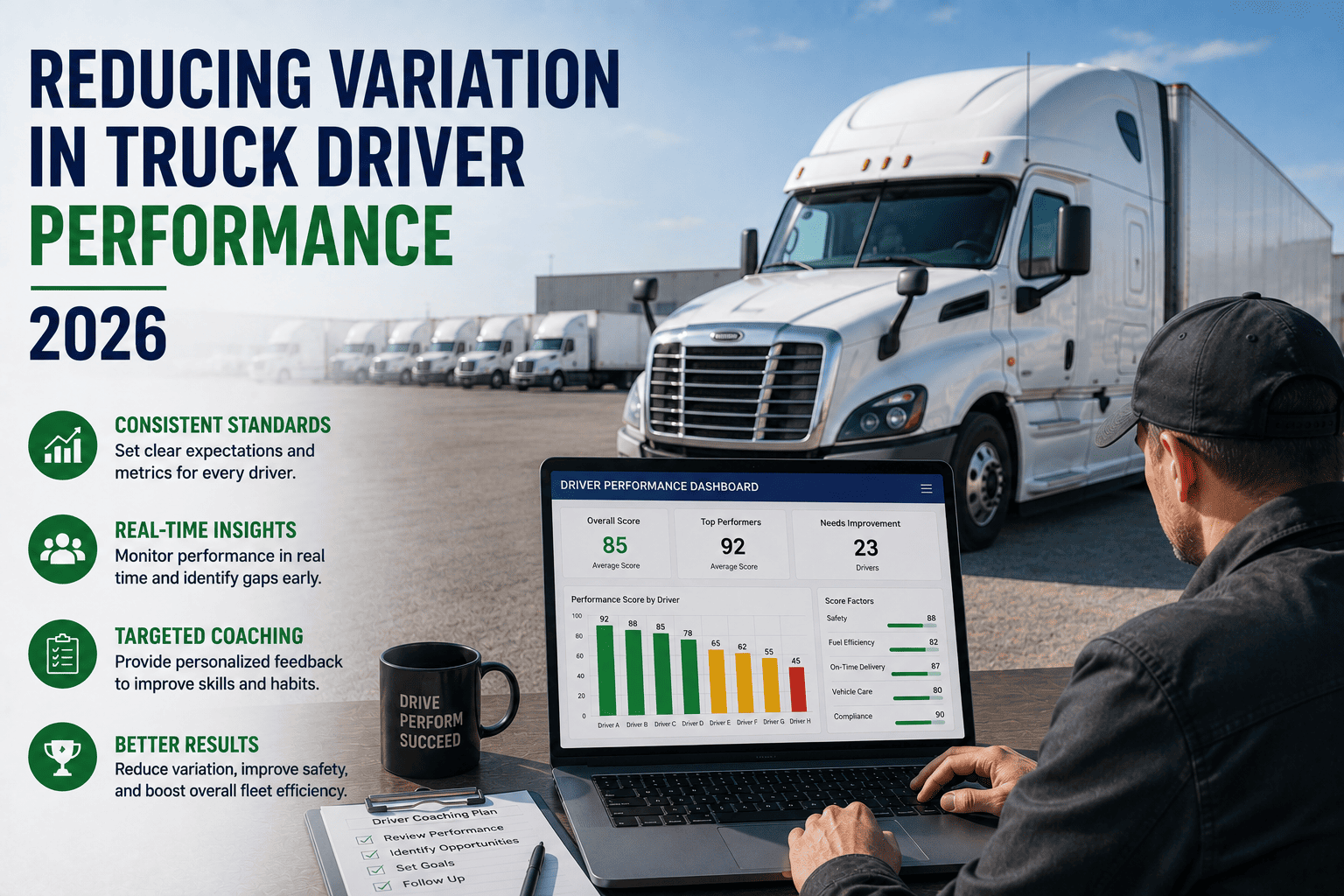
Modern fleet tracking systems quantify driver behavior through continuous analysis of acceleration, braking, speed, and cornering patterns. Harsh braking events, rapid acceleration, speeding violations, and excessive cornering all correlate with accident risk and vehicle wear. Systems that identify specific drivers exhibiting problem behaviors enable targeted coaching that improves safety metrics across your entire fleet.
The most effective driver monitoring systems combine automated alerts with historical analytics. When a driver triggers a harsh braking alert, the system records video if available and notifies the driver or supervisor immediately for coaching. Historical reports show each driver's safety score, trends over time, and identify drivers needing retraining. Insurance companies increasingly offer premium discounts for fleets demonstrating continuous safety improvement through telematics data.
Safety coaching from objective telematics data proves more effective than subjective performance reviews. Drivers see specific events triggered alerts, understand the safety implications, and respond to numeric performance scores. Fleets report 30-40% accident reductions within 6-12 months of implementing comprehensive behavior monitoring with active coaching programs.
Fuel Optimization and Cost Reduction
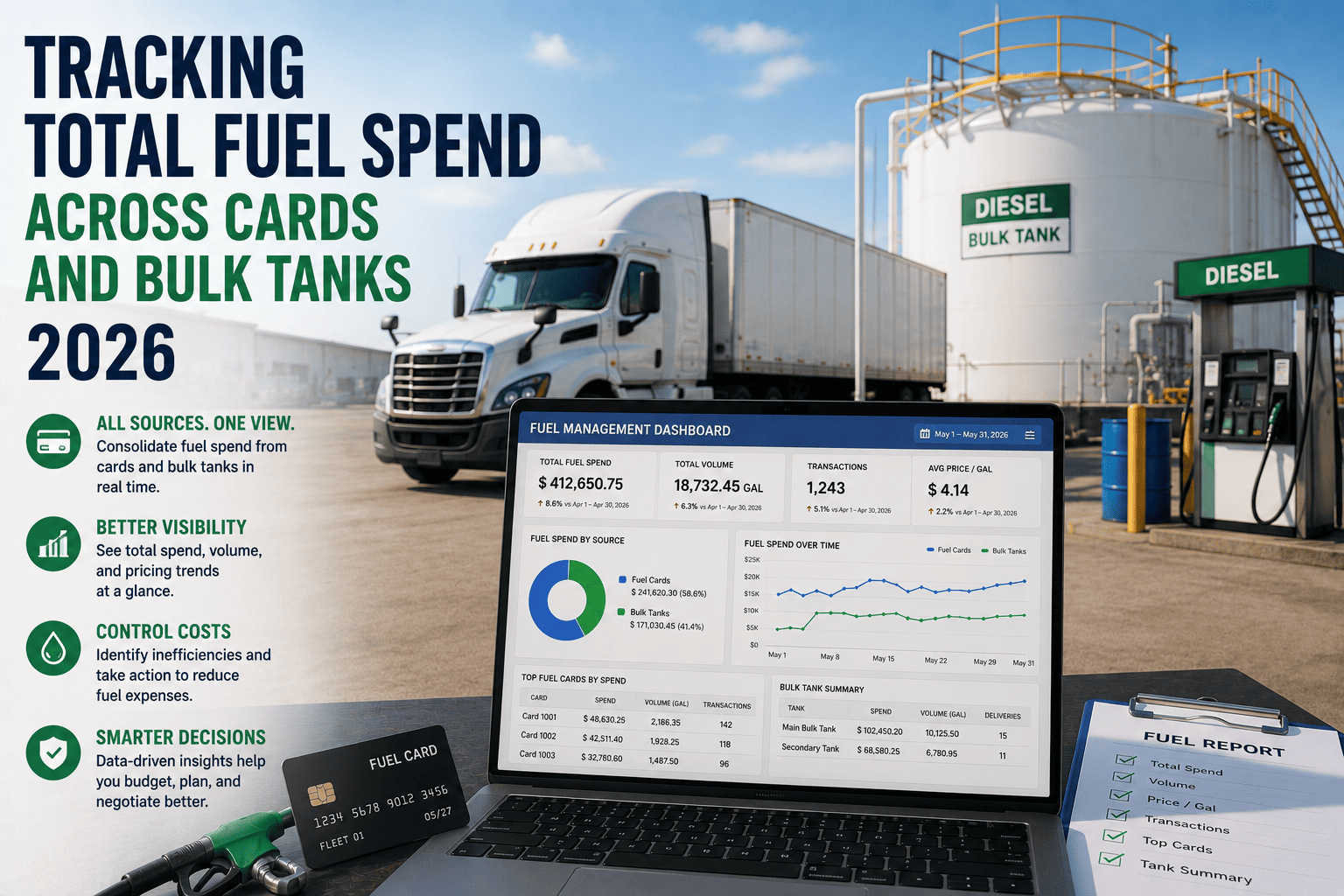
Fuel represents 25-35% of fleet operating costs for many transportation companies. Fleet tracking systems reduce fuel consumption through multiple mechanisms: identifying inefficient driving patterns that increase fuel consumption, detecting unauthorized vehicle use, alerting when fuel theft occurs, optimizing routes to reduce distance traveled, and providing data showing which drivers operate most efficiently.
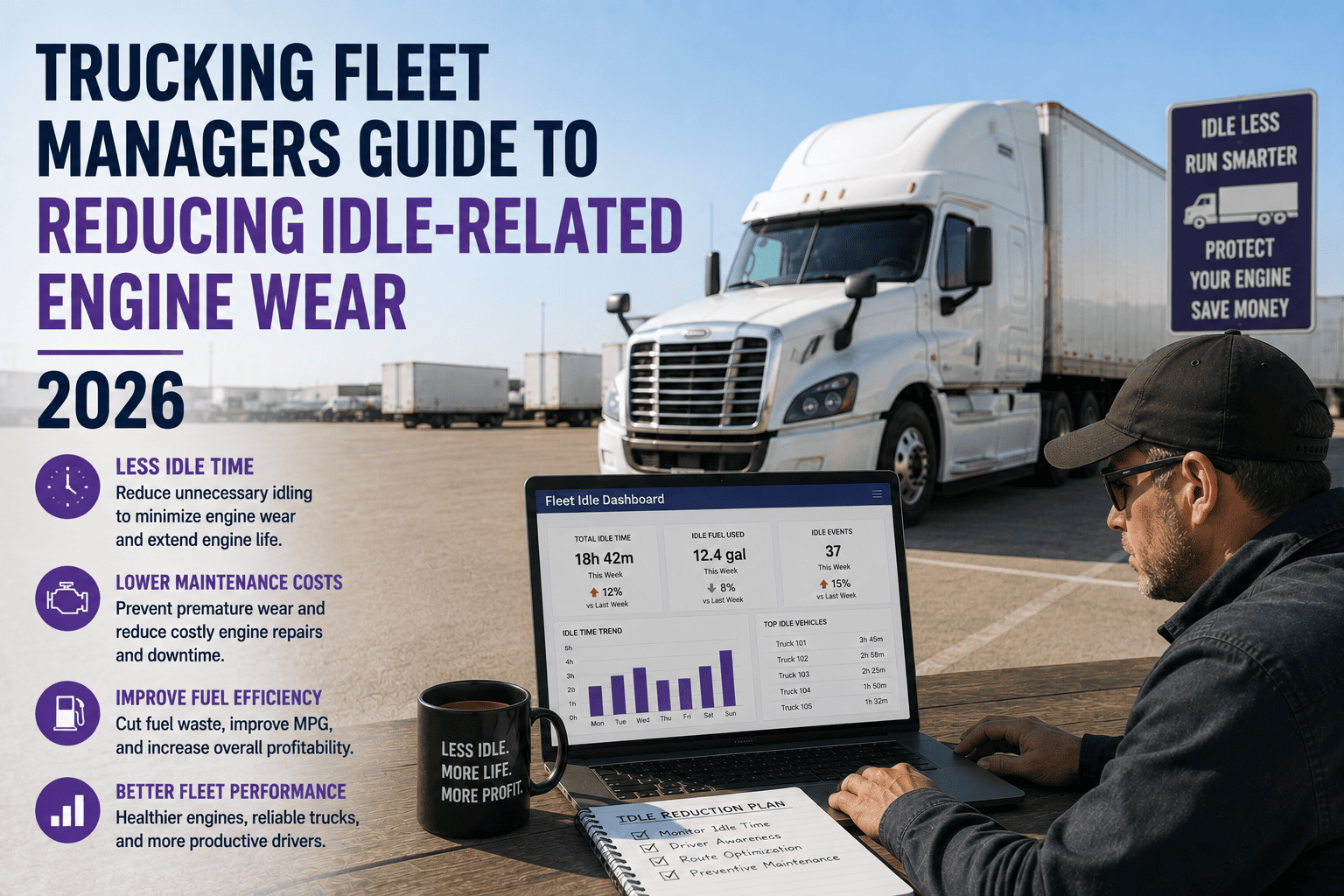
Harsh acceleration and braking, excessive idling, speeding, and poor maintenance all increase fuel consumption. A driver who accelerates harshly consumes 15-25% more fuel than one with smooth acceleration. Extensive idling wastes 2-4 gallons hourly. Underinflated tires increase fuel consumption by 3-5%. Comprehensive fleet tracking quantifies these behaviors and enables targeted improvements.
Route optimization combined with real-time traffic data reduces distance traveled and time spent in congestion. A 50-vehicle fleet optimizing routes typically reduces fuel consumption by 8-15%, worth $20,000-50,000 annually. Fuel tracking also detects anomalies: if a vehicle normally consumes 6 gallons per 100 miles but suddenly requires 8 gallons per 100 miles, the system alerts maintenance that the vehicle likely has a mechanical issue reducing efficiency.
Maintenance Scheduling and Predictive Alerts
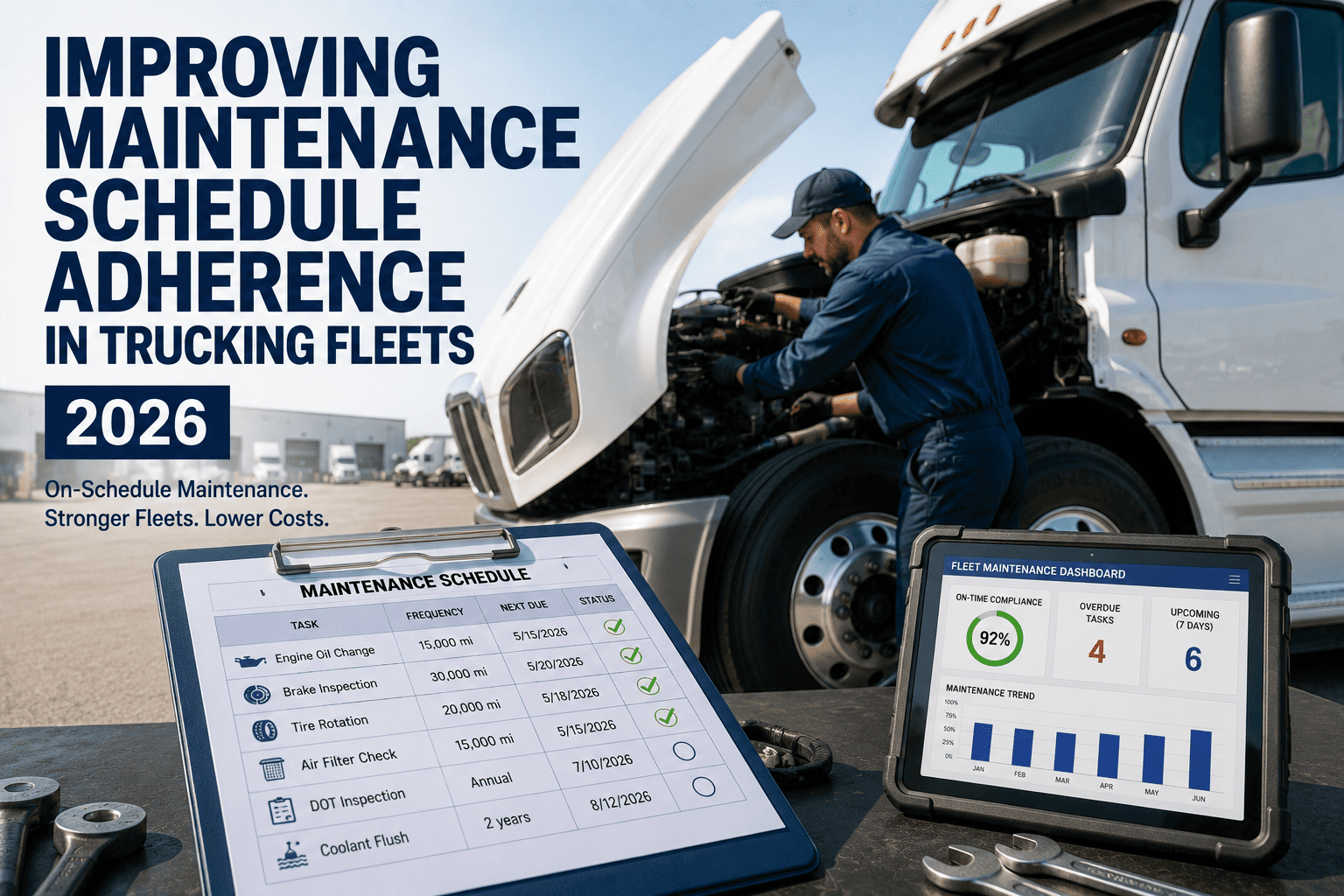
Preventive maintenance extends vehicle lifespan, reduces emergency repairs, and keeps vehicles operational rather than stranded. Modern telematics systems move beyond simple mileage-based maintenance to condition-based scheduling: oil change alerts trigger based on oil analysis data, brake service alerts activate when brake wear patterns indicate imminent failure, transmission fluid condition triggers maintenance before damage occurs.
Predictive maintenance uses telematics data to forecast failures before they happen. Rising engine temperatures indicate cooling system stress. Increasing vibration suggests bearing wear. Changing electrical patterns flag charging system problems. Systems that alert maintenance teams days or weeks before failures occur enable preventive service that costs 30-50% less than emergency repair. For a 50-vehicle fleet, this represents $15,000-30,000 annual savings.
Telematics integration reveals the full maintenance picture: oil pressure, coolant temperature, battery voltage, transmission performance, and component diagnostic codes. Your maintenance team receives alerts when service is needed, complete with the specific vehicle condition data explaining why service is required. This moves maintenance from reactive crisis response to proactive operational planning.
Mobile Apps for Drivers and Field Teams
Fleet tracking effectiveness depends heavily on driver adoption. Systems requiring drivers to manually log activities face resistance and incomplete data. Modern platforms use mobile apps that automate data capture: arrival at locations triggers automatic check-in, task completion logs automatically, and drivers receive real-time dispatch updates through notifications rather than radio communication.
Effective driver apps reduce driver workload while improving data quality. Rather than manually logging location changes, GPS location is captured automatically. Rather than radio calls about task status, app notifications update dispatch instantly. Drivers appreciate apps that reduce communication burden and provide real-time navigation guidance. Most drivers prefer push notifications to radio traffic when implemented correctly.
Field team apps extend beyond simple location tracking to complete job management: job details display with customer information and task requirements, photo capture documentation is integrated into job records, signature capture completes customer proof of delivery, and real-time communication keeps drivers connected to dispatch. Paperless field operations reduce administrative overhead while improving data accuracy.
Integration with Existing Systems and Data Portability
Your fleet tracking system must integrate with existing operational infrastructure: dispatch systems, maintenance management platforms, telematics providers already installed in vehicles, fuel card networks, and accounting systems. Platforms requiring manual data entry between systems create duplicate work and data quality problems. Integration reduces administrative overhead and ensures all teams work from consistent current information.
Data portability determines long-term flexibility. Your historical data belongs to you and should be exportable in standard formats at any time. Platforms locking data into proprietary formats trap you into permanent vendor relationships. The most flexible systems export data as CSV, JSON, or database formats you can analyze with standard tools or migrate to competing platforms if needed.
FleetRabbit integrates natively with common telematics providers including Geotab, Samsara, Verizon Connect, and others without requiring hardware replacement. Your existing GPS and telematics equipment becomes more valuable through deeper integration, not obsolete. Data exports happen instantly without vendor gates or additional fees.
FleetRabbit's tracking platform integrates with existing telematics without hardware replacement. Export data anytime in standard formats. No vendor lock-in, no long-term contracts. Free trial for 3 vehicles demonstrates real value before any financial commitment.
Cost Structure and ROI Timeline
Fleet tracking platforms operate on per-vehicle monthly pricing, typically $3-15 per vehicle depending on features included. Lower-cost systems provide basic GPS tracking with limited analytics. Higher-cost systems include comprehensive telematics, advanced analytics, and extensive integration options. The right choice depends on your operational priorities and fleet size.
ROI calculation differs from initial cost. A 50-vehicle fleet paying $5 per vehicle monthly costs $3,000 annually. However, that fleet typically realizes $25,000-50,000 in annual value through fuel savings alone, plus $15,000-30,000 in reduced accident costs and insurance premiums. True cost of ownership after accounting for value delivered is often negative: the platform pays for itself through operational improvements.
Implementation costs vary dramatically. Systems requiring custom integration, professional services, and technical staff to deploy cost $20,000-50,000 to implement. Systems designed for self-deployment cost nothing to implement. A system costing $3 per vehicle monthly with $30,000 implementation costs is far more expensive than a $5 per vehicle system with zero implementation costs when calculated across typical fleet lifetime.
Frequently Asked Questions About Fleet Tracking Systems
Compare fleet tracking capabilities with FleetRabbit's free trial for 3 vehicles. Real-time GPS, driver behavior monitoring, fuel optimization, and maintenance alerts. Experience measurable improvements before upgrading to full platform. No credit card required.
Selecting the Right Fleet Tracking Platform for Your Operations
Choosing a fleet tracking system should be based on your specific operational challenges rather than feature count or vendor marketing claims. Start by identifying your highest-priority improvements: if fuel costs are your biggest challenge, prioritize platforms with strong route optimization and driver behavior analytics. If safety is your primary concern, focus on real-time behavior monitoring and video integration. If maintenance costs drain your budget, emphasize predictive analytics and telematics integration.
Evaluate platforms through trial periods with your actual fleet and drivers. How easy is the mobile app to use? Do dispatch teams understand the dashboard? Are alerts too frequent and annoying, or valuable and actionable? Does integration with existing systems work smoothly or require manual workarounds? Your evaluation team should include dispatch supervisors, drivers, and maintenance personnel whose daily work will change with the new system.
Request references from fleets similar to yours in size and industry. Ask specifically about actual ROI achieved, implementation challenges encountered, and how well the platform performs during peak operational periods. Avoid vendors offering generic promises without specific metrics. The right platform shows concrete results from comparable operations.
FleetRabbit's approach prioritizes transparency and measurable results. Our free trial for 3 vehicles includes all core tracking features, no credit card required. Install the app, track a few vehicles for a week, measure actual fuel consumption, safety metrics, and maintenance alerts. After experiencing real data from your own fleet, you can make an informed decision backed by evidence rather than marketing claims.
Modern fleet tracking delivers measurable operational improvements: fuel savings of 15-20%, accident reduction of 30-40%, and insurance premium reductions of 10-25%. Evaluate platforms with real data from your own fleet before committing. Start your free trial today.