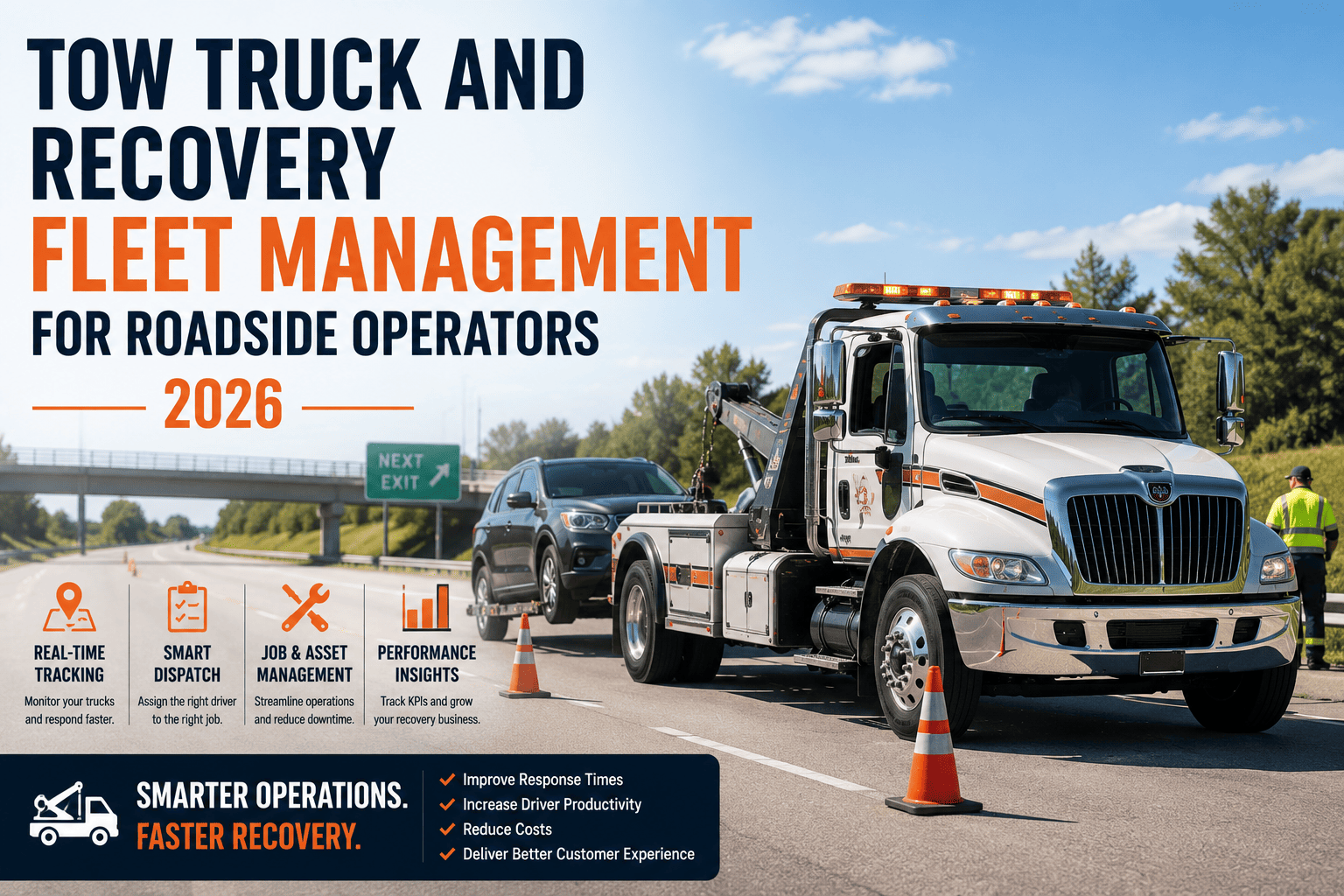
A tow truck sitting at the shop with a bad hydraulic line is not just a maintenance ticket, it is a missed motor club deadline, a customer stranded on the shoulder, and a contract renewal that gets a little shakier. The towing and recovery industry runs on speed and documentation: how fast a truck reaches the scene, and how well the operator can prove the job was done right. With the U.S. towing industry generating close to $9.8 billion a year, the gap between operators winning contracts and operators losing them almost always comes down to response time, uptime, and paperwork that holds up when a dispute lands on someone's desk. In 2026, roadside operators managing this with a whiteboard and a radio are falling behind the ones running dispatch, maintenance, and compliance through one connected system.
Tow truck and recovery fleet management means coordinating fast GPS-based dispatch, equipment-specific maintenance for winches, PTOs, and wheel lifts, and DVIR-compliant inspection records across a mixed fleet of light-duty, medium-duty, and heavy-duty recovery units. Motor clubs typically require response times of 30 to 45 minutes and track performance closely, while operators hitting 20-minute averages are winning more contracts than competitors averaging 45 minutes or more.
Dispatch Speed Wins Motor Club Contracts
Every towing operator has felt the pressure of a ringing phone and a customer who has already been waiting twenty minutes on the shoulder. Motor clubs measure response time closely, and the difference between a 20-minute average and a 45-minute average is often the difference between renewing a contract and losing it to a competitor. Dispatchers relying on radio check-ins and guesswork routinely send the wrong truck, the one three miles further away, simply because they could not see live positions.
Response Time Benchmarks by Service Type
Different job types carry different expectations, and knowing them helps a dispatcher prioritize the fleet correctly during a busy shift.
| Service Type | Typical Time Expectation | What Drives Compliance |
|---|---|---|
| Roadside assistance | 30 to 45 minutes | Motor club contracts, live GPS routing to nearest available truck |
| Light-duty tow | 20 to 30 minutes | Wheel-lift readiness and driver availability tracking |
| Repossession recovery | Scheduled, discretion required | State-specific repo laws and documented chain of custody |
| Property or municipal tow | On-call, signage dependent | Proper signage documentation and photo evidence at pickup |
| Heavy-duty recovery | Extended, safety first | Rotator and winch readiness, scene stabilization protocols |
FleetRabbit shows dispatchers live GPS positions for every truck in the fleet, so the closest available unit gets the call every time. Sign up to see how much faster dispatch becomes with real visibility.
Equipment Types Demand Different Inspection Standards
A light-duty flatbed picking up a sedan and a Class 8 rotator preparing for a semi-truck rollover recovery are not the same job, and they should never be inspected the same way. Treating every truck in the fleet with one generic checklist is how hydraulic leaks, worn winch cables, and PTO faults slip through unnoticed until they fail on the road.
Light-Duty Versus Heavy-Duty Inspection Cycles
A light-duty unit performing a passenger car tow can typically complete a focused pre-trip inspection in around 15 minutes. A heavy-duty recovery rig preparing for a complex rollover job needs a much longer 35 to 45 minute cycle covering rotator stability, chassis condition, and winch capacity checks specific to that equipment class. Matching inspection depth to truck type keeps drivers safe without slowing down the simple jobs.
PTO, Winch, and Wheel-Lift Checks
Power take-off engagement, winch cable condition, and wheel-lift working load limits are the systems that fail quietly and fail expensively. A hydraulic fluid check before engaging the PTO, a full unspool of the winch cable to check for fraying, and a cycle of the bed through its full tilt range are basic steps that catch problems before a truck is stuck mid-recovery with a customer's vehicle already hooked.
Tie-Down and Load Securement Standards
Federal rules require a minimum of four tie-down points rated to a combined working load equal to or exceeding the towed vehicle's weight, and wheel stops alone are not considered sufficient. Skipping this check is one of the fastest ways to trigger an out-of-service order and a fine that stacks on top of a delayed delivery.
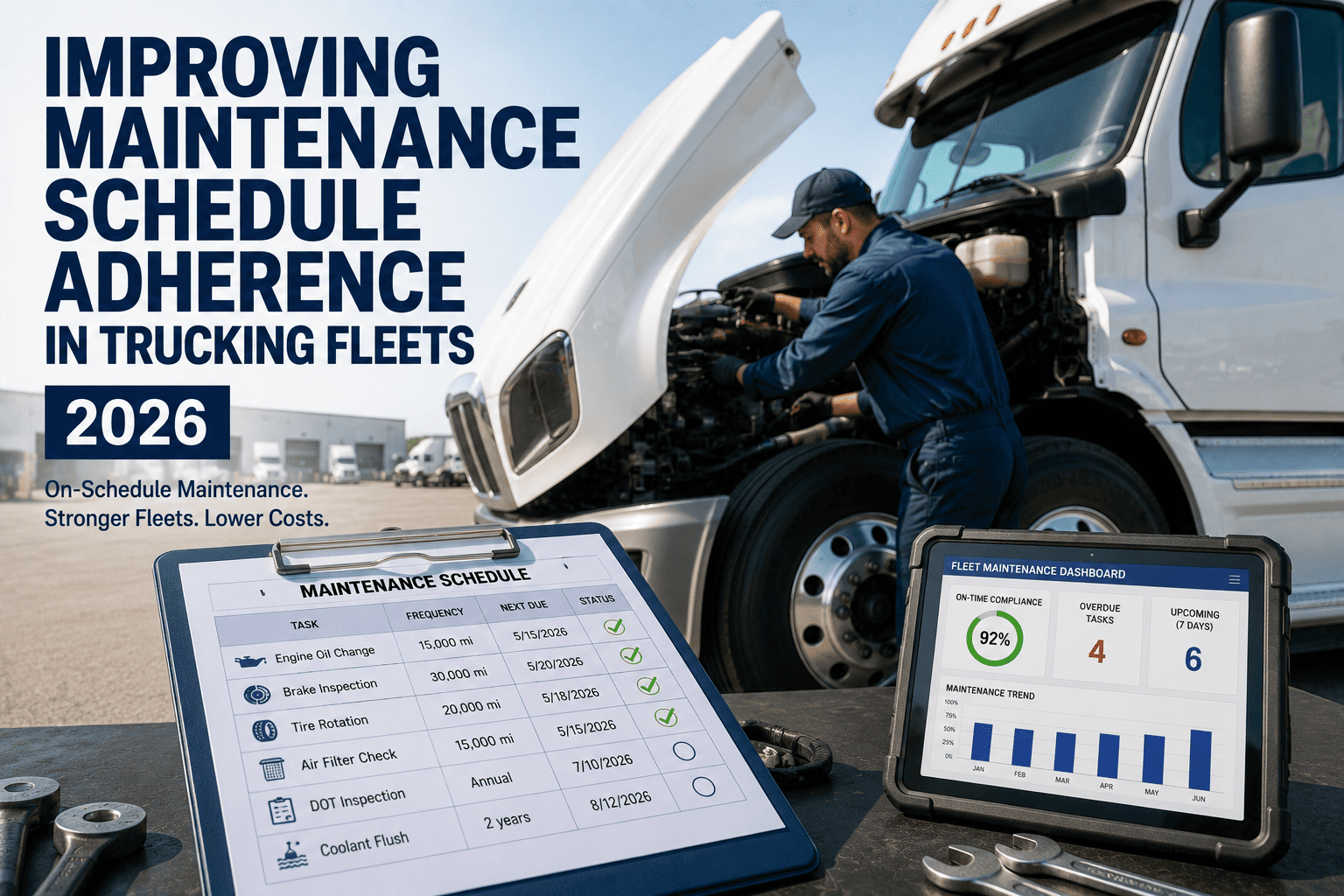
FleetRabbit tracks hydraulic service intervals, winch inspections, and PTO checks separately for every truck class in your fleet. Book a demo to see maintenance scheduling built around real towing equipment.
Compliance and DVIR Documentation That Holds Up
Towing operations sit under close regulatory scrutiny, and paper inspection logs rarely hold up when a claim or citation is challenged. Digital, photo-documented, GPS-tagged inspection records give an operator proof that a truck was checked, a vehicle's condition was recorded, and a defect was reported the moment it was found.
Tracking the Metrics That Separate Top Operators
The towing operators winning long-term motor club and repossession contracts track performance the same way logistics companies track fleet health. Average response time, truck uptime percentage, and inspection completion rate reveal whether a fleet is reliable enough to trust with high-volume contracts or quietly losing ground to competitors.
Uptime and Utilization
A truck parked with a hydraulic leak or a worn winch cable is a truck that cannot take calls, and every missed call is revenue and reputation lost. Tracking utilization by truck class shows which units are carrying the workload and which ones need attention before they become the next roadside failure.
Towing and recovery is a business built on trust: motor clubs, lenders, and customers all need to believe a truck will show up fast and the job will be documented correctly. Every hour lost to a breakdown that could have been caught in inspection, and every response time missed because dispatch could not see the fleet clearly, chips away at that trust. Operators bringing dispatch, equipment-specific maintenance, and compliance documentation into one connected system are the ones hitting 20-minute response times and keeping the contracts that matter.
FleetRabbit gives roadside operators real-time GPS dispatch, equipment-specific maintenance tracking, and DVIR-compliant documentation in one platform built for towing and recovery fleets. See it in action before your next busy shift.