Trailer Tracking and Management in Logistics Fleets
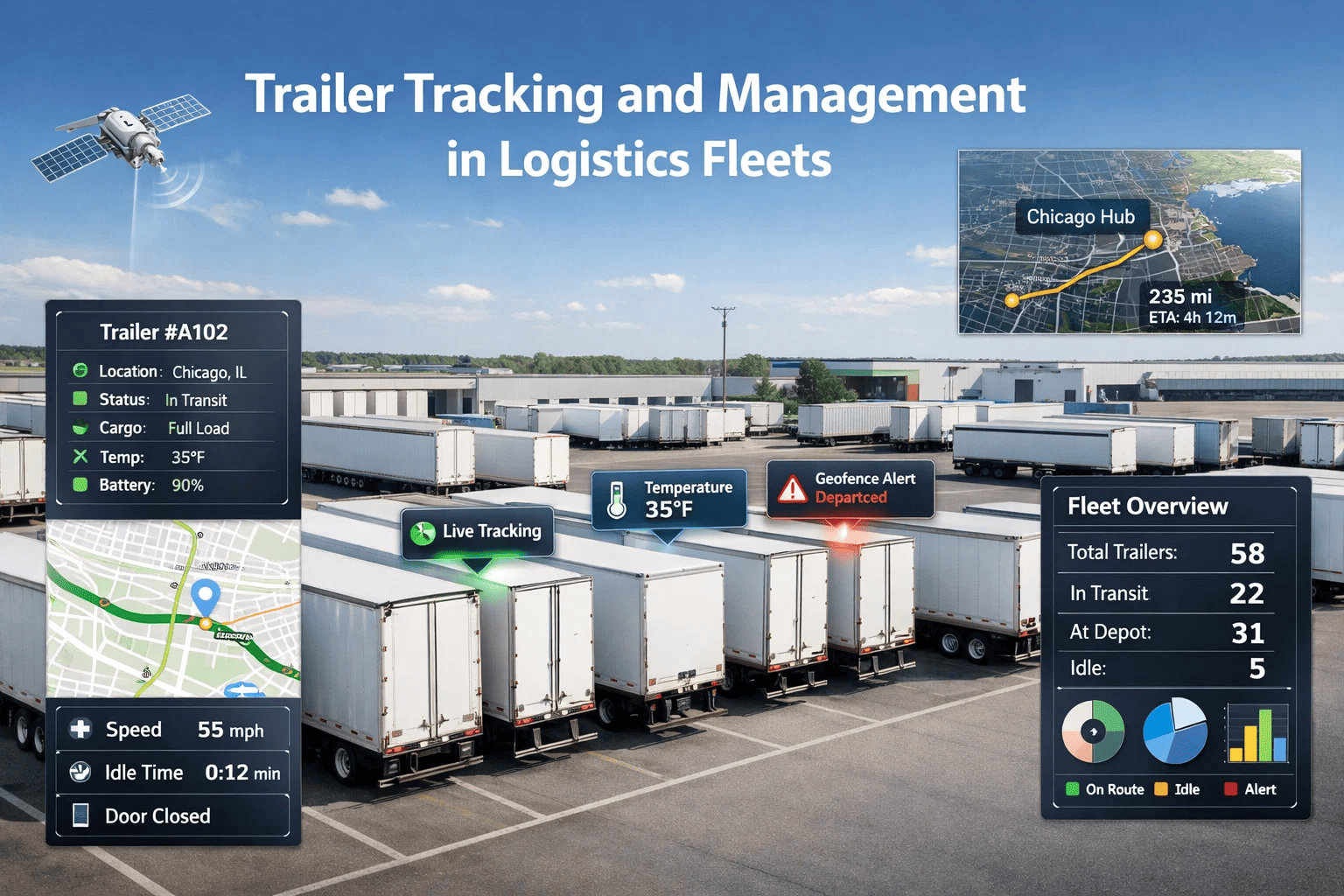
Trailers represent one of the largest capital investments in a logistics fleet — yet most fleet managers lack real-time visibility into where their trailers are, how extensively they are being used, and whether they are generating revenue or sitting idle at customer yards, drop lots, and terminal facilities. A typical 40-trailer fleet with inadequate tracking averages 22% idle time, $180,000 annually in unnecessary trailer rentals, and significant compliance exposure from missing FMCSA inspection records on units parked at third-party locations. FleetRabbit's trailer tracking and management platform gives fleet managers and operations executives complete visibility and control over every trailer in their fleet — from live GPS location to utilization analytics to maintenance scheduling — eliminating the asset management blind spots that cost fleets money every day. Book a FleetRabbit demo to see trailer tracking in your operation.
22%
Average idle rate for untracked trailer fleets
$180K
Annual excess trailer rental cost saved after deployment
89%
Fleet utilization achieved vs. 68% industry average
<4 hr
Average time to locate any trailer in the fleet
The Hidden Cost of Unmanaged Trailer Fleets
Trailers parked invisibly at customer locations, drop yards, and distribution centers are not just idle assets — they are actively generating cost through detention fees, lost rental opportunities, missed maintenance deadlines, and compliance exposure from uninspected units. The following cost categories compound daily for fleets without active trailer management tools.
Excessive Trailer Rentals
When dispatchers cannot locate owned trailers quickly, they rent — even when owned units are available at nearby yards or customer locations. A 40-trailer fleet with no visibility tools rents an average of 3–5 trailers per week in excess of operational need, at $85–$140/day each.
Typical annual waste: $120,000–$220,000
Unrecovered Detention Fees
Without automated dwell time monitoring at customer locations, detention fees owed by shippers or receivers frequently go unrecorded and unbilled. Each hour of untracked detention time at $25–$50/hour represents direct margin loss — compounded across dozens of loads per week for a busy regional fleet.
Trailers parked at customer yards for extended periods miss scheduled maintenance intervals — accumulating brake, tire, and lighting defects that go undetected until the unit is dispatched. When the defect is discovered at a roadside inspection, the out-of-service order and FMCSA violation compound what would have been a $300 maintenance event into a $3,000+ incident.
OOS incident cost: $3,000–$8,000+ per event
Compliance Exposure on Uninspected Trailers
FMCSA regulations require periodic inspection of all trailers in commercial service — including units not actively moving but still available for dispatch. Without trailer location visibility, ensuring inspection compliance for every unit in a dispersed fleet is operationally impossible with paper-based systems.
Fine exposure: Up to $16,000 per uninspected unit violation
FleetRabbit Trailer Tracking — What Fleet Managers See in Real Time
FleetRabbit's trailer management dashboard gives fleet managers a live operational view of every trailer in their fleet — regardless of whether the unit is attached to a tractor, dropped at a customer yard, or staged at a terminal. The visibility infrastructure that empowers this view requires no proprietary hardware beyond a standard trailer GPS tracking device.
Live Fleet Map — All Trailers
Color-coded trailer status indicators on live map: loaded-in-transit (green), dropped-loaded (yellow), empty-available (blue), maintenance-hold (red). Click any trailer icon to view unit number, current location, dwell time, last driver, and next scheduled maintenance date.
In TransitDropped LoadedAvailable EmptyMaintenance Hold
Utilization Analytics by Unit
Individual trailer utilization scores calculated as percentage of available days the unit was in active revenue service. Fleet managers identify chronically underutilized units — those averaging below 60% utilization — as candidates for disposal, redeployment, or rental rather than owned asset continuation.
Unit
Days Active
Utilization
Status
TR-041
28/30 days
93%
In Transit
TR-019
14/30 days
47%
Dropped — Day 12
TR-057
26/30 days
87%
Available
FleetRabbit Trailer Management — Six Core Capabilities
01
Real-Time GPS Location — Every Trailer, Every Location
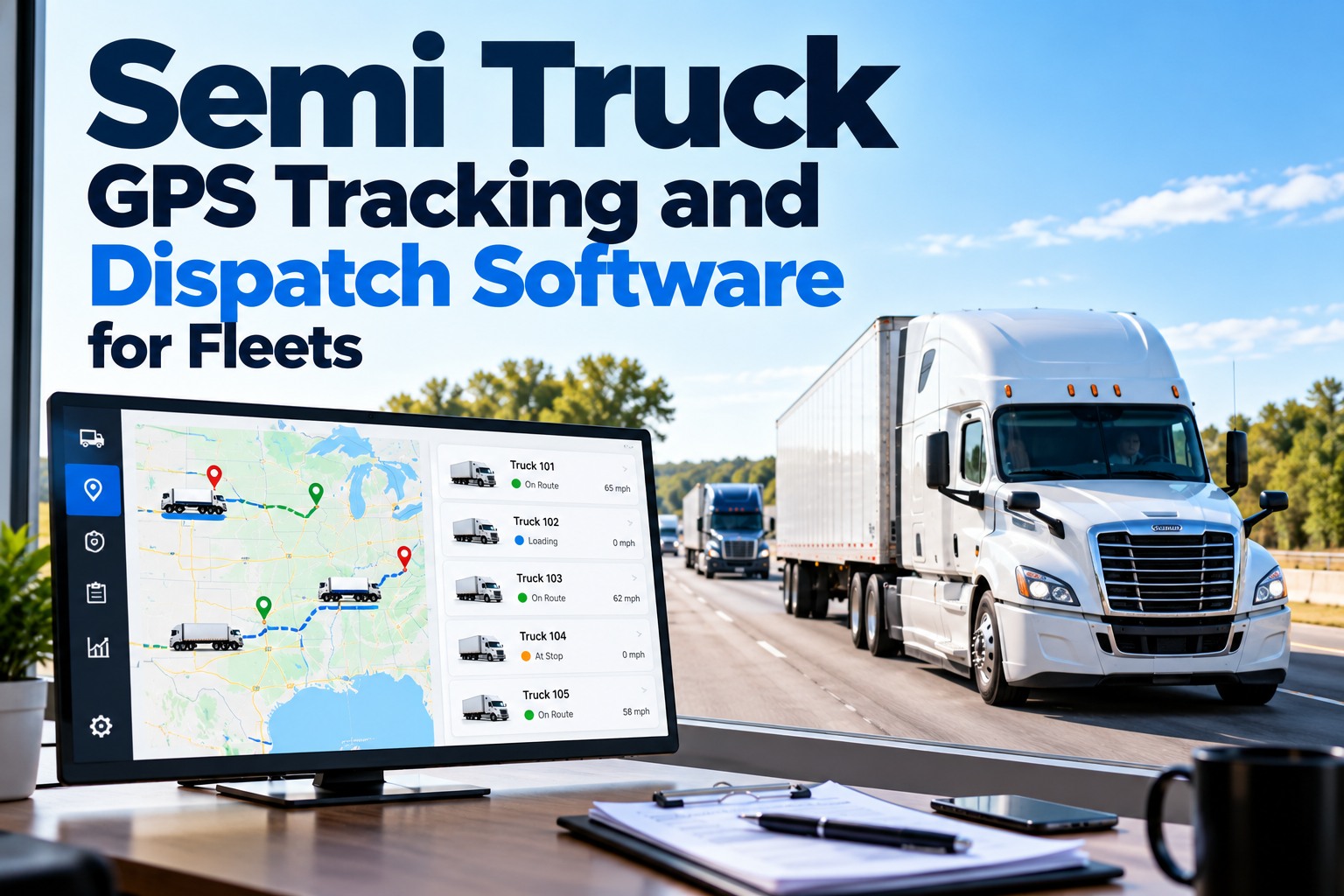
FleetRabbit provides live GPS position for every trailer in your fleet — including dropped trailers at customer yards, drop lots, maintenance facilities, and staging areas. Location updates every 30–60 seconds for moving trailers, with position confirmation and dwell time logging for stationary units. Fleet managers locate any trailer within minutes — ending the "where is that trailer?" dispatcher calls that consume operational time daily.
Fleet managers locate any trailer in under 4 hours vs. 24–48 hours without tracking
02
Utilization Reporting — Maximize Revenue per Trailer
FleetRabbit calculates utilization for each trailer as a percentage of available operating days the unit was in active revenue service — broken down by week, month, and rolling 90-day period. Fleet executives identify underperforming assets, understand idle patterns by yard location, and make fleet sizing decisions based on verified utilization data rather than estimates. Fleets typically eliminate 2–4 excess trailers within 12 months of deployment based on utilization data.
Average fleet utilization improves from 68% to 89% within 6 months
03
Dwell Time Monitoring and Detention Fee Recovery
FleetRabbit automatically records the precise time a trailer arrives at a shipper or receiver location and when it departs — calculating dwell time for every stop on every load. Detention alerts notify dispatchers when a trailer exceeds the contractual free time at a customer location, triggering detention fee billing capture before the load is closed. Dwell time data by customer location identifies chronic detention offenders for contract renegotiation or rate adjustment.
Fleets recover $40,000–$90,000 in previously uncaptured detention billing annually
04
Trailer Maintenance Scheduling — No Unit Gets Missed
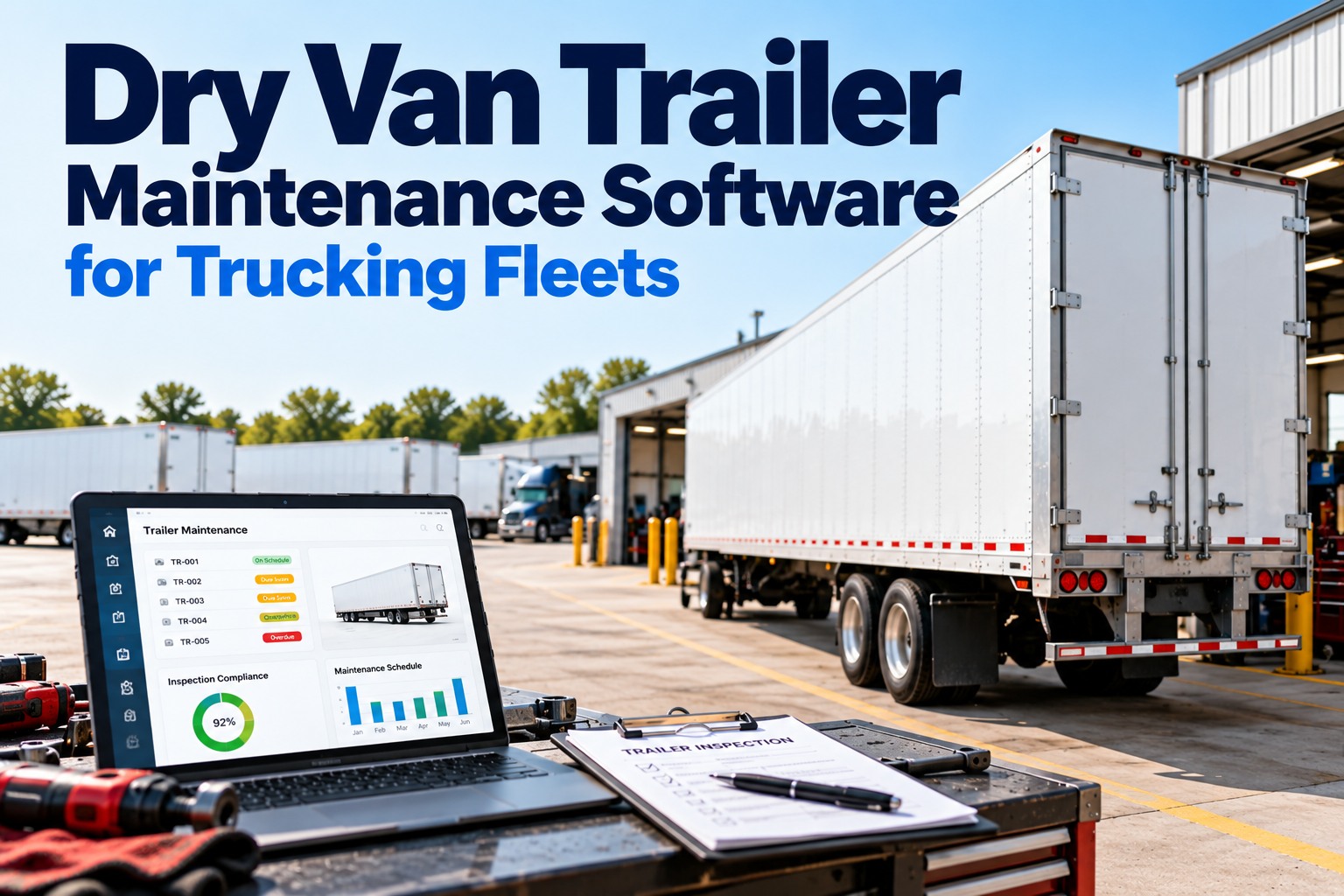
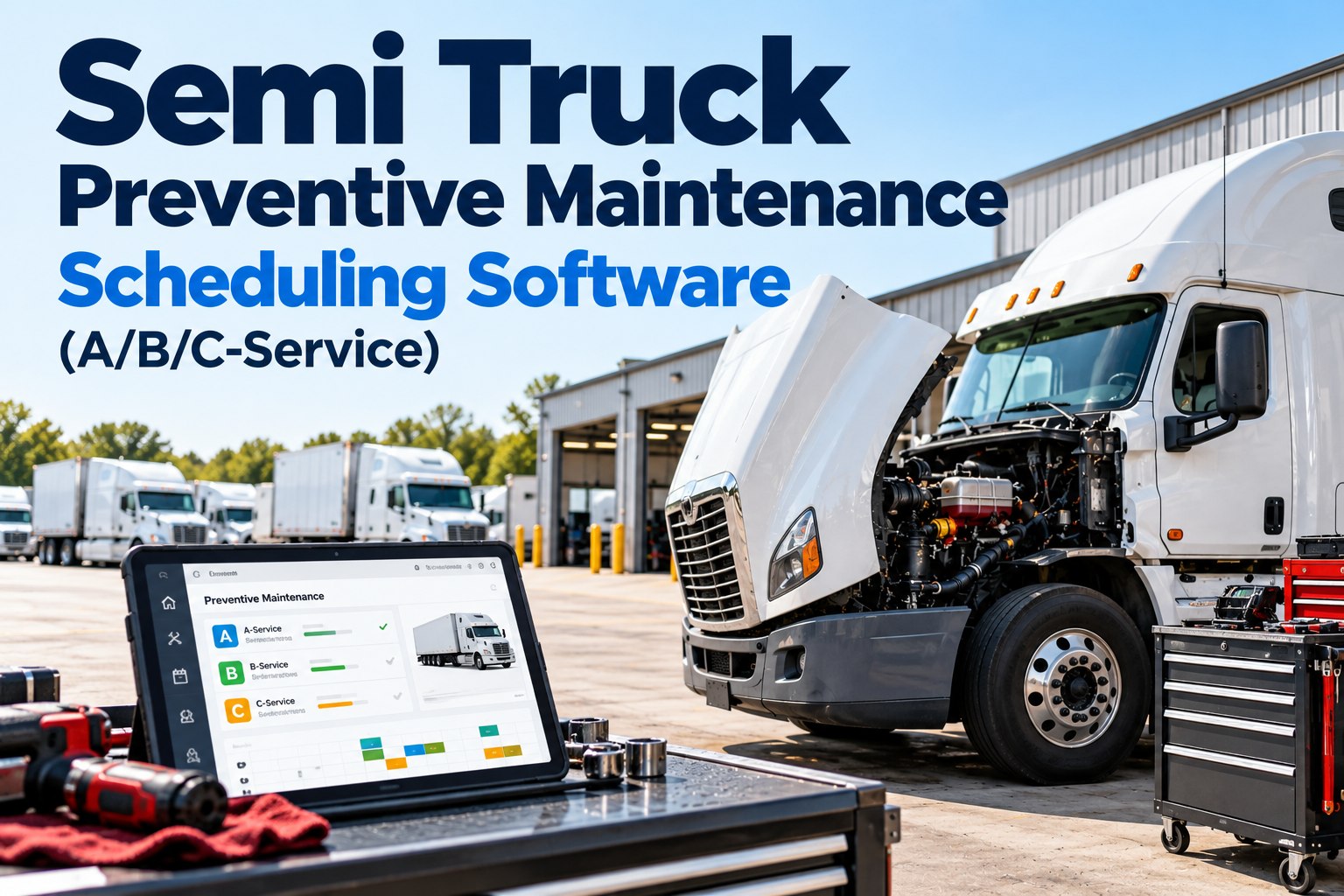
FleetRabbit tracks maintenance intervals for every trailer — including units that are not actively moving. As a trailer approaches a scheduled service milestone (mileage, time-based, or inspection interval), maintenance alerts are generated and dispatchers are notified before sending the unit on a load. Trailers are systematically cycled through maintenance regardless of current location, eliminating the "out of sight, out of mind" compliance failure that creates FMCSA exposure on remote assets.
100% of trailers maintained on schedule — zero missed inspection violations
05
Geofenced Yard and Facility Management
Fleet managers configure geofences around terminal yards, customer locations, maintenance facilities, and drop lots. When a trailer enters or exits a geofenced location, FleetRabbit records the event with precise timestamp — creating an automated yard inventory that eliminates manual yard checks. Dispatchers see exactly how many trailers are at each yard in real time, enabling intelligent load planning that keeps owned trailers moving before rental units are ordered.
Trailer rental orders reduced by 35–60% through improved owned-asset visibility
06
Trailer Inspection Compliance — Digital DVIR for Every Unit
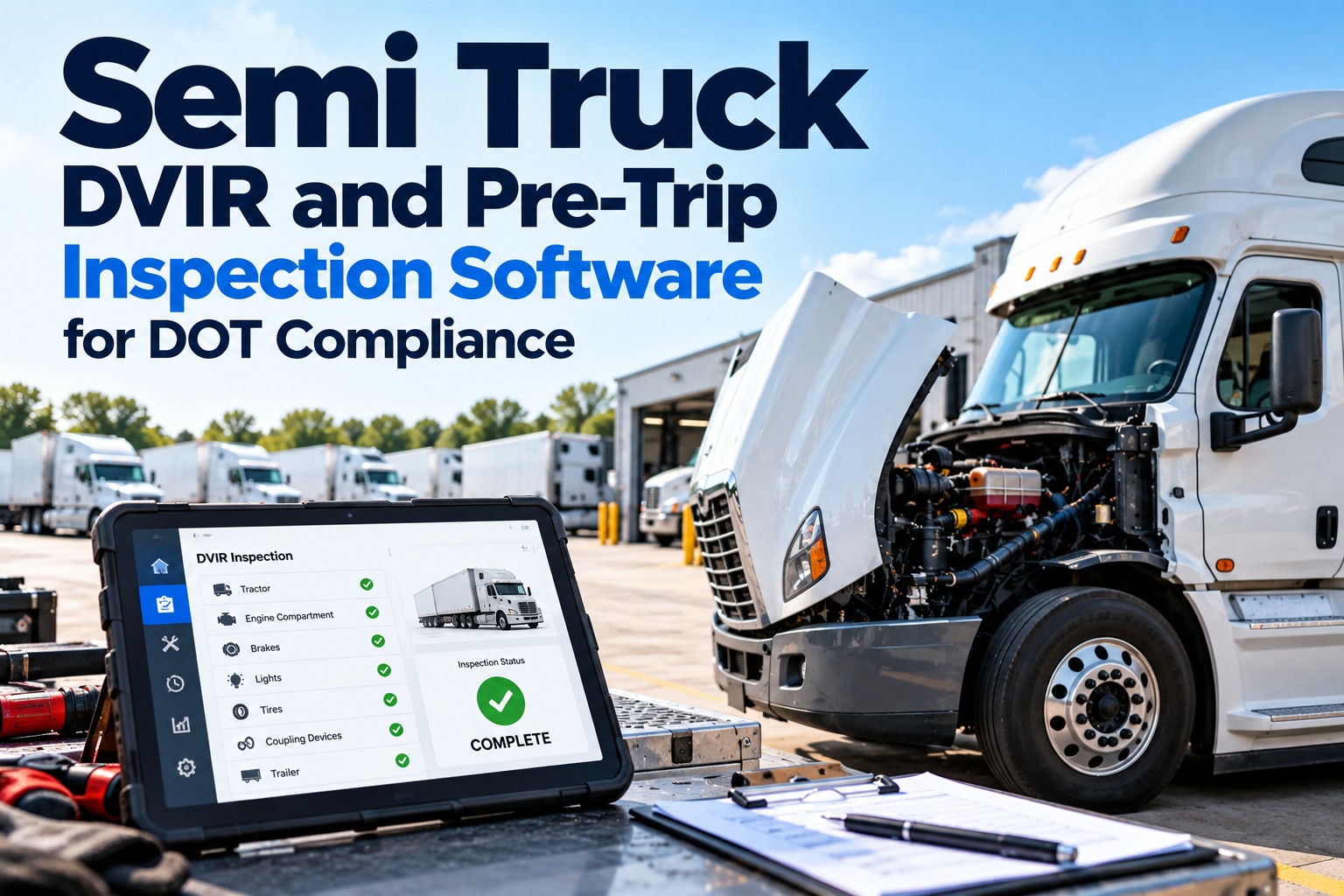
FleetRabbit's digital DVIR system extends to trailer inspections — requiring drivers to complete a structured chassis inspection when coupling or decoupling from a trailer. Defects found on the trailer are routed to the maintenance work order system exactly as tractor defects are, creating a complete inspection-to-repair chain for every trailer unit. Remote trailer inspections can also be scheduled as standalone tasks for units that have been dropped at customer locations for extended periods.
Full FMCSA inspection compliance for every trailer — including remote dropped units
ROI Summary — What Trailer Tracking Delivers for a 40-Trailer Fleet
Eliminated Excess Trailer Rentals
$160,000/yr
Based on 3 unnecessary rental trailers/week eliminated at $100/day average
Recovered Detention Billing
$65,000/yr
Based on 2 hours/day of previously unrecorded detention at $35/hour average
Avoided Compliance Violations
$48,000/yr
Based on 3 avoided OOS incidents per year at $16,000 maximum per incident
Eliminated Trailer Disposal (2 units decommissioned)
$24,000/yr
Based on elimination of 2 owned trailers at $12,000 annual carrying cost each
Total Estimated Annual Value — 40-Trailer Fleet
$297,000/yr
Trailer Tracking & Asset Intelligence
Know Where Every Trailer Is. Maximize What Every Trailer Earns.
FleetRabbit gives logistics fleet managers complete trailer visibility, automated dwell time monitoring, utilization analytics, and maintenance compliance enforcement — turning an invisible asset fleet into a precisely managed revenue-generating operation.
Live GPS TrackingUtilization AnalyticsDetention Billing RecoveryYard Inventory ManagementTrailer DVIR Compliance
Frequently Asked Questions — Trailer Tracking and Fleet Management
QWhat hardware is required to track trailers with FleetRabbit?
FleetRabbit supports industry-standard trailer GPS tracking devices — solar-powered, battery-powered, and hardwired options — compatible with most trailers in commercial service. If your trailers already have installed tracking hardware, FleetRabbit likely integrates with your existing device vendor. For trailers without tracking hardware, FleetRabbit can recommend cost-effective device options during the onboarding process. Installation typically takes 15–30 minutes per trailer and requires no trailer modification beyond the tracking device mounting. Discuss hardware options in a FleetRabbit demo.
QHow does FleetRabbit handle trailers that are dropped at customer locations for extended periods?
FleetRabbit maintains continuous location visibility for all dropped trailers regardless of how long they remain at a customer facility. The platform automatically records dwell duration, triggers detention alerts when contractual free time is exceeded, and schedules maintenance checks for units that have been dropped beyond a configurable dwell threshold. Fleet managers can see all drop trailers and their current dwell status in the trailer management dashboard, enabling proactive decisions about trailer retrieval, swap, or continued use at the customer location.
QCan FleetRabbit track temperature and cargo condition for refrigerated trailers?
Yes. FleetRabbit integrates with refrigeration unit telematics — including major reefer unit manufacturers — to monitor temperature zone data, setpoint compliance, and reefer unit fuel consumption in real time. Temperature alerts notify dispatchers when cargo is exposed to out-of-range conditions, enabling immediate action before a temperature-sensitive load is compromised. Temperature records are maintained for regulatory compliance and customer load verification. Start your free trial to explore reefer monitoring.
QHow can fleet managers use trailer utilization data to make fleet sizing decisions?
FleetRabbit's utilization analytics identify trailers averaging below threshold utilization (typically 60%) over a trailing 90-day period — flagging these units as candidates for disposal, lease return, or redeployment to a higher-demand yard. Fleet executives can model the financial impact of fleet size reduction based on actual utilization data — comparing the carrying cost of a low-utilization trailer against the rental cost of supplemental capacity when needed. Most fleets eliminate 8–15% of their trailer fleet within 12 months of deployment based on utilization intelligence.
QDoes FleetRabbit track third-party trailers or only company-owned assets?
FleetRabbit can track any trailer with compatible GPS hardware — including leased trailers, customer-provided trailers, and interchange equipment pulled under intermodal or rail drayage arrangements. Third-party trailer tracking is managed within a separate asset category in the FleetRabbit dashboard, allowing fleet managers to maintain full visibility across owned, leased, and customer trailer inventories within a single operational view. Contact our implementation team to discuss interchange or third-party trailer configurations for your specific operation.
Your Trailers Are Your Second-Largest Fleet Investment — Start Managing Them Like It.
FleetRabbit gives logistics fleet managers the real-time trailer visibility, utilization intelligence, and compliance enforcement needed to maximize the return on every trailer in the fleet — eliminating the hidden costs that accumulate daily when assets operate invisibly.