Somewhere between the engine and the tailpipe, a diesel truck is running a small chemical plant. The DOC, DPF, and SCR system quietly convert soot and nitrogen oxides into something the atmosphere can tolerate, and most drivers never think about it until the dash lights up and the truck drops into limp mode on a packed route. Aftertreatment failures are some of the most expensive and most preventable events in modern diesel maintenance, and the frustrating part is that the warning signs almost always show up in the data days, sometimes weeks, before anyone notices them.
DPF problems are the leading cause of unexpected downtime on modern diesel fleets. A clogged DPF can force a 3000 to 5000 dollar emergency repair, and a full aftertreatment system failure involving DPF, SCR, and DOC components can run 15000 to 25000 dollars. Warning signs typically appear 5 to 14 days before a complete failure, and a disciplined monitoring program can catch most of them for under 400 dollars in proactive service.
Exhaust passes through three stages before it leaves the tailpipe. A failure at any one of them can derate the whole truck.
How the Aftertreatment System Works
The DOC Starts the Process
The diesel oxidation catalyst sits closest to the engine, oxidizing unburned hydrocarbons and generating the heat the system needs to burn off soot further downstream.
The DPF Traps and Burns Soot
The diesel particulate filter physically traps soot, then periodically regenerates by burning it off at high temperature. A normal regen happens roughly every 300 to 500 miles and finishes in well under 40 minutes.
SCR and DEF Handle NOx
Selective catalytic reduction injects diesel exhaust fluid into the exhaust stream, converting nitrogen oxides into harmless nitrogen and water. Poor DEF quality or a fouled doser can quietly drop conversion efficiency long before a fault code appears.
FleetRabbit tracks regen frequency, soot load, and SCR efficiency across your fleet in real time. Start your free trial and get an alert the moment a truck's regen pattern starts drifting from normal.
Warning Signs Before a Derate
Aftertreatment failures rarely happen without notice. They escalate through three recognizable stages, and each one gives fleets a shrinking window to act before the truck forces the issue itself.
Early Signals
Regen frequency increasing beyond every 300 to 500 miles, regen duration stretching past 40 minutes, and fuel economy dropping 5 to 15 percent.
Escalating Signs
DPF warning lights, fault codes appearing on the dash, and noticeably reduced engine power under load.
Critical Indicators
Soot levels above 85 percent, engine derate mode, black smoke from the exhaust, and failed forced regeneration attempts.
What an Aftertreatment Failure Actually Costs
| Component | Typical Repair Cost |
|---|---|
| DPF Cleaning | $300 - $600 |
| DPF Full Replacement | $3,000 - $10,000 |
| SCR Catalyst Replacement | $4,000 - $10,000 |
| NOx Sensor Replacement | $400 - $800 each, often needed in pairs |
| Complete System Failure | $15,000 - $25,000 including labor and downtime |
Building a Preventive Aftertreatment Program
Monitor Regen Behavior, Not Just Warning Lights
By the time a DPF lamp illuminates, the problem is already affecting efficiency. Tracking regen frequency and duration against the normal baseline catches drift long before a fault code forces the issue.
Protect DEF Quality
Non-certified DEF can reduce NOx conversion efficiency within just 15,000 to 20,000 miles, accelerating SCR catalyst wear. Using API-certified DEF and keeping storage clean protects one of the most expensive components in the system.
Schedule DPF Cleaning Proactively
Cleaning a DPF proactively around 300,000 miles, or earlier on short-haul or heavy duty cycles, costs a fraction of an emergency cleaning or replacement triggered by a roadside derate.
FleetRabbit correlates regen patterns, DEF quality signals, and SCR efficiency trends so your team can schedule aftertreatment service before a truck ever hits limp mode. Talk to our team and book a demo to see it applied to your fleet.
Reactive vs. Monitored Fleet Outcomes
| Metric | Reactive Fleet | Monitored Fleet |
|---|---|---|
| Detection Point | Dash warning light or roadside derate | 5 to 14 days earlier, via trend data |
| Typical Repair Cost | $3,000 - $25,000 emergency repair | $50 - $600 planned service |
| Unplanned Downtime | 2 to 3 days per incident | Scheduled during planned maintenance window |
| Fuel Economy Impact | 5% - 15% loss during undetected drift | Corrected before efficiency drops |
How FleetRabbit Manages Aftertreatment Health
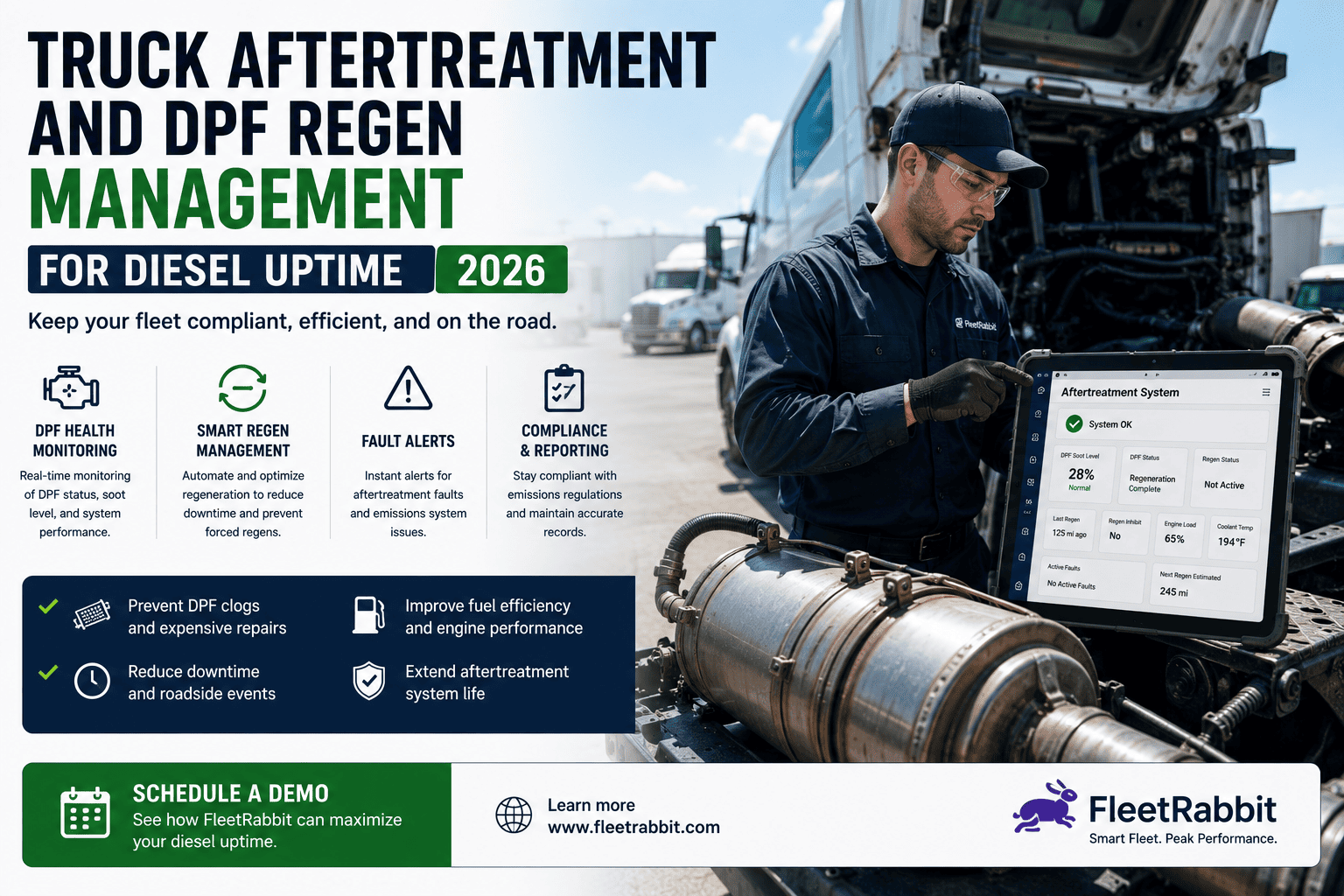
FleetRabbit brings DPF, SCR, and DEF performance into one live view instead of a warning light nobody sees until it's too late.
Regen Pattern Tracking
Regen frequency and duration are logged continuously, flagging trucks whose regen behavior is drifting away from a healthy baseline.
Soot Load and SCR Efficiency Alerts
Rising soot levels and declining NOx conversion rates trigger alerts before they escalate into fault codes or a forced derate.
DEF Quality and Consumption Monitoring
Unusual DEF consumption patterns are flagged early, often the first sign of a NOx sensor issue or a doser problem developing upstream.
Maintenance Schedule Integration
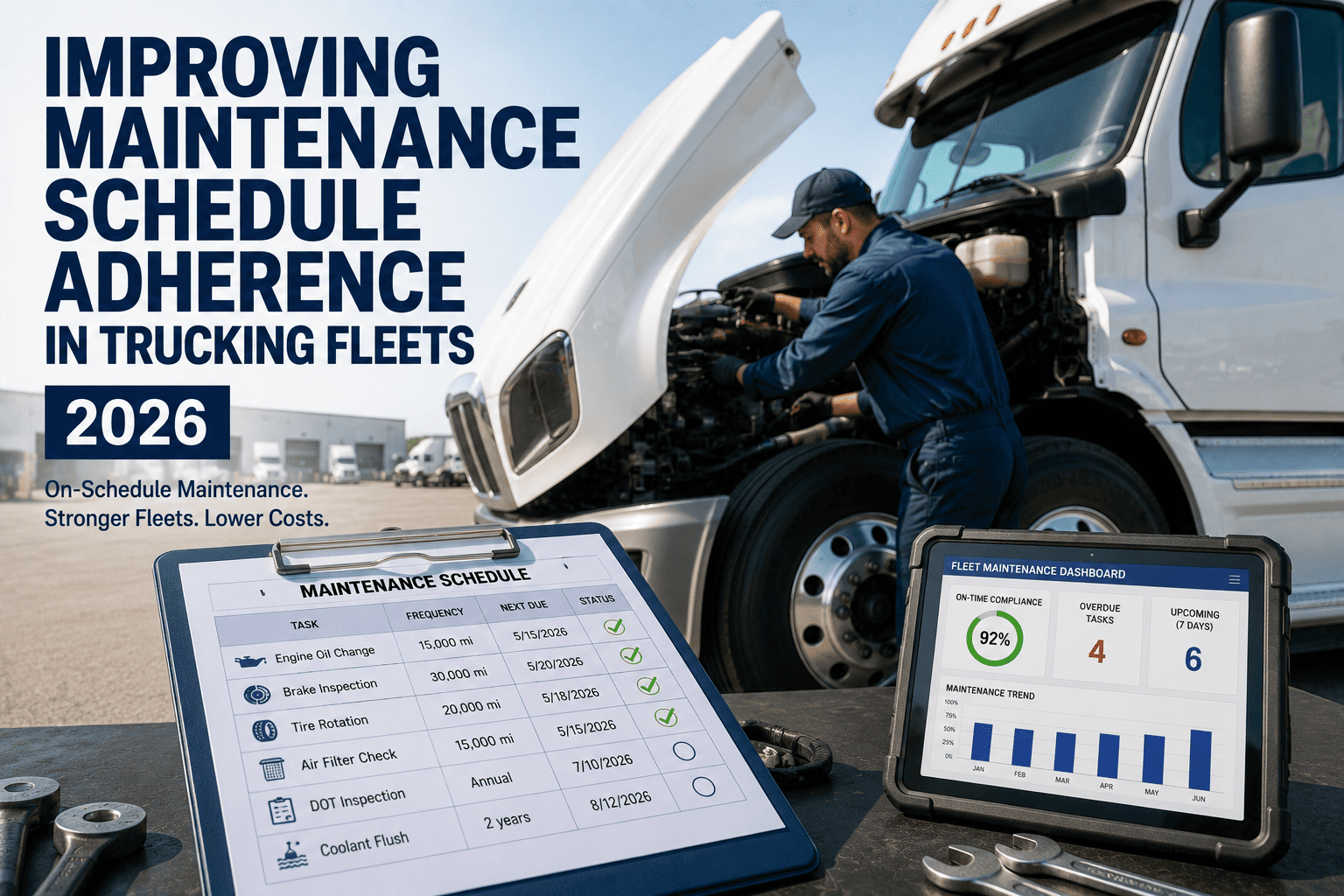
DPF cleaning intervals, DEF doser service, and SCR inspections are scheduled and tracked alongside the rest of the fleet's preventive maintenance plan.
DPF, SCR, and DEF problems send warning signals for days or weeks before they force a truck into limp mode. FleetRabbit puts those signals in one place so your team can act before the dash lights up. Start your free trial today with no credit card required.