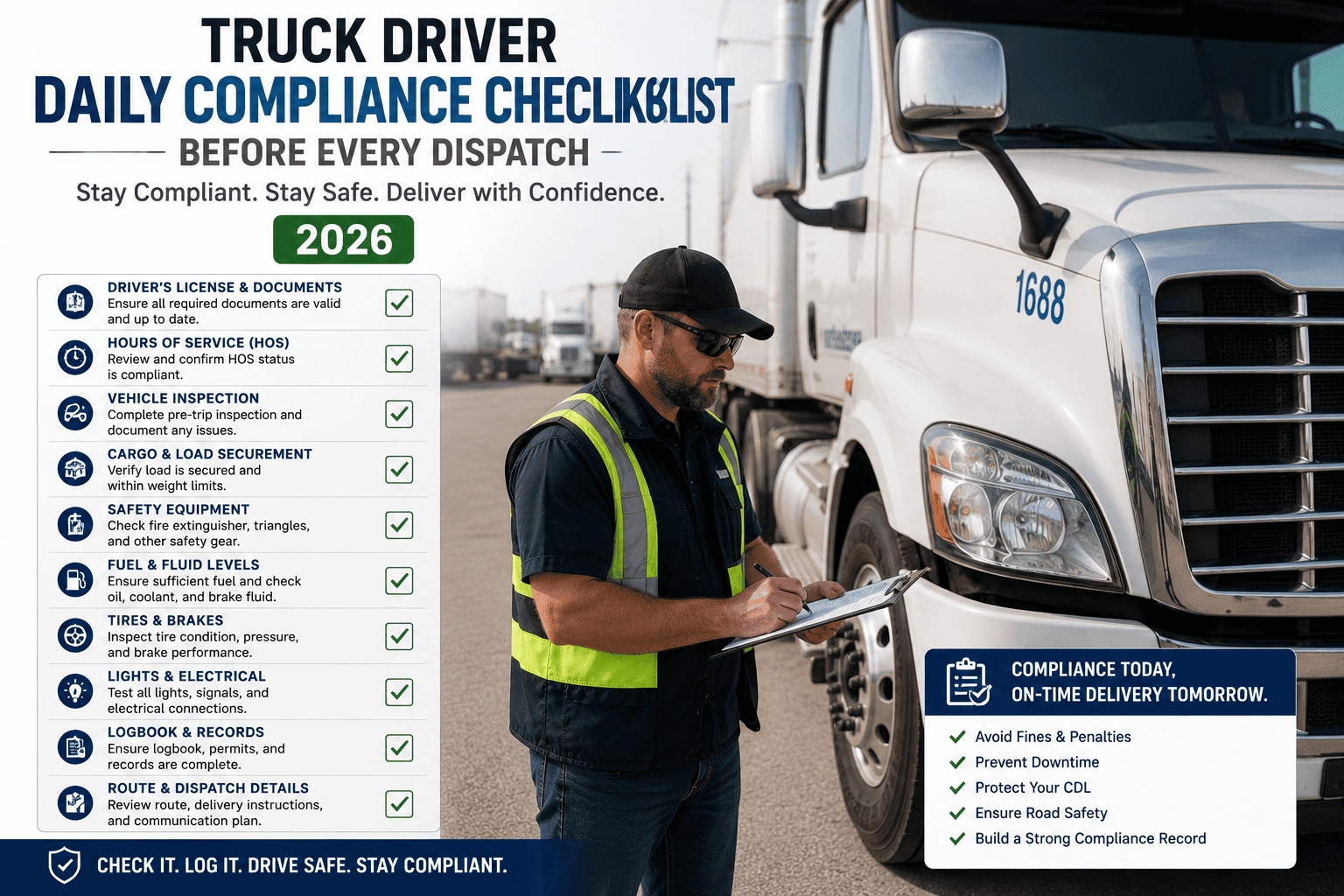
A dispatch call takes thirty seconds. Making sure that dispatch is actually legal to run takes a little longer, and skipping it is how a routine trip turns into a roadside shutdown. Hours of service, driver qualification status, vehicle inspection, and paperwork all have to line up before a truck leaves the yard, and every one of them is checkable in minutes if it becomes a habit instead of an afterthought.
Before every dispatch, verify the driver has enough hours of service remaining under the 11-hour driving and 14-hour on-duty limits, confirm the CDL and medical certificate are both current, complete and certify the pre-trip DVIR, and make sure any required permits or hazmat endorsements match the load. Drivers flagged in the FMCSA Clearinghouse cannot be dispatched at all. Fleets that check these four items digitally before dispatch catch problems before the truck leaves, not after a roadside inspector finds them.
The Five Checks That Happen Before the Key Turns
Daily compliance is not one big review, it is five small ones done in sequence. Skip the order and it is easy to miss something, because each check depends on the one before it.
Why the Order Matters
Checking hours of service first prevents wasted time on a driver who cannot legally take the load anyway. Confirming credentials next avoids dispatching someone whose CDL or medical card lapsed since their last run. The DVIR and permit checks come last because they are load-specific, done once the driver and hours are already confirmed valid.
The Hours of Service Math Behind Every Dispatch
HOS violations remain one of the most common citation categories at roadside inspections, and most of them trace back to a dispatch that did not check the clock first. The core limits every dispatcher should verify before assigning a route are straightforward, but they compound quickly on a tight schedule.
| Limit | Rule | Dispatch Check |
|---|---|---|
| Driving Window | Maximum 11 hours of driving after 10 consecutive hours off duty | Confirm remaining drive time on the ELD covers the planned route |
| On-Duty Window | Maximum 14 consecutive hours on duty before required rest | Factor loading, fueling, and inspection time into the 14-hour clock |
| 30-Minute Break | Required after 8 cumulative hours of driving | Build the break into the route plan, not as an afterthought |
| Weekly Limit | 60/70-hour limit over 7/8 consecutive days | Check cumulative weekly hours before adding another dispatch |
FleetRabbit pulls live ELD hours, CDL and medical card expiration, and Clearinghouse status into one dispatch readiness screen, so a driver who fails any check simply cannot be assigned. Sign up for a free trial to see it running before your next dispatch.
Documentation Every Driver Should Carry
Beyond the pre-dispatch check, a driver on the road needs a specific set of documents accessible at all times. A roadside inspector will ask for these before anything else, and a missing document creates a violation even if the driver and truck are otherwise fully compliant.
The Core Cab Documents
A valid CDL with the correct class and endorsements, a current medical examiner's certificate, the day's ELD records or paper logs if the device malfunctions, and the completed DVIR from the day's pre-trip inspection all need to be within reach. Registration, permits specific to the load, and proof of insurance round out the core set.
What Changes for Hazmat and Oversize Loads
Hazmat loads add shipping papers, emergency response information, and the correct placarding to the list, along with the H or X endorsement on the driver's CDL. Oversize and overweight loads require route-specific permits that must match the exact dimensions and weight of the load being hauled, not a general annual permit.
FleetRabbit tracks CDL, medical card, and permit expiration dates automatically and alerts your team well before anything lapses. Book a demo to see how expiration tracking fits into your dispatch workflow.
Frequently Asked Questions
Daily compliance is not about slowing dispatch down, it is about not finding out something was wrong after the truck is already three hours down the highway. Build hours of service, credential status, Clearinghouse checks, DVIR completion, and permit matching into every dispatch, and roadside surprises become rare. Sign up for FleetRabbit to automate this checklist for your dispatch team, or book a demo to see it working with your own fleet's routes.
FleetRabbit checks hours of service, CDL and medical status, Clearinghouse standing, and DVIR completion automatically before a load ever leaves the yard. Start free, no credit card required.