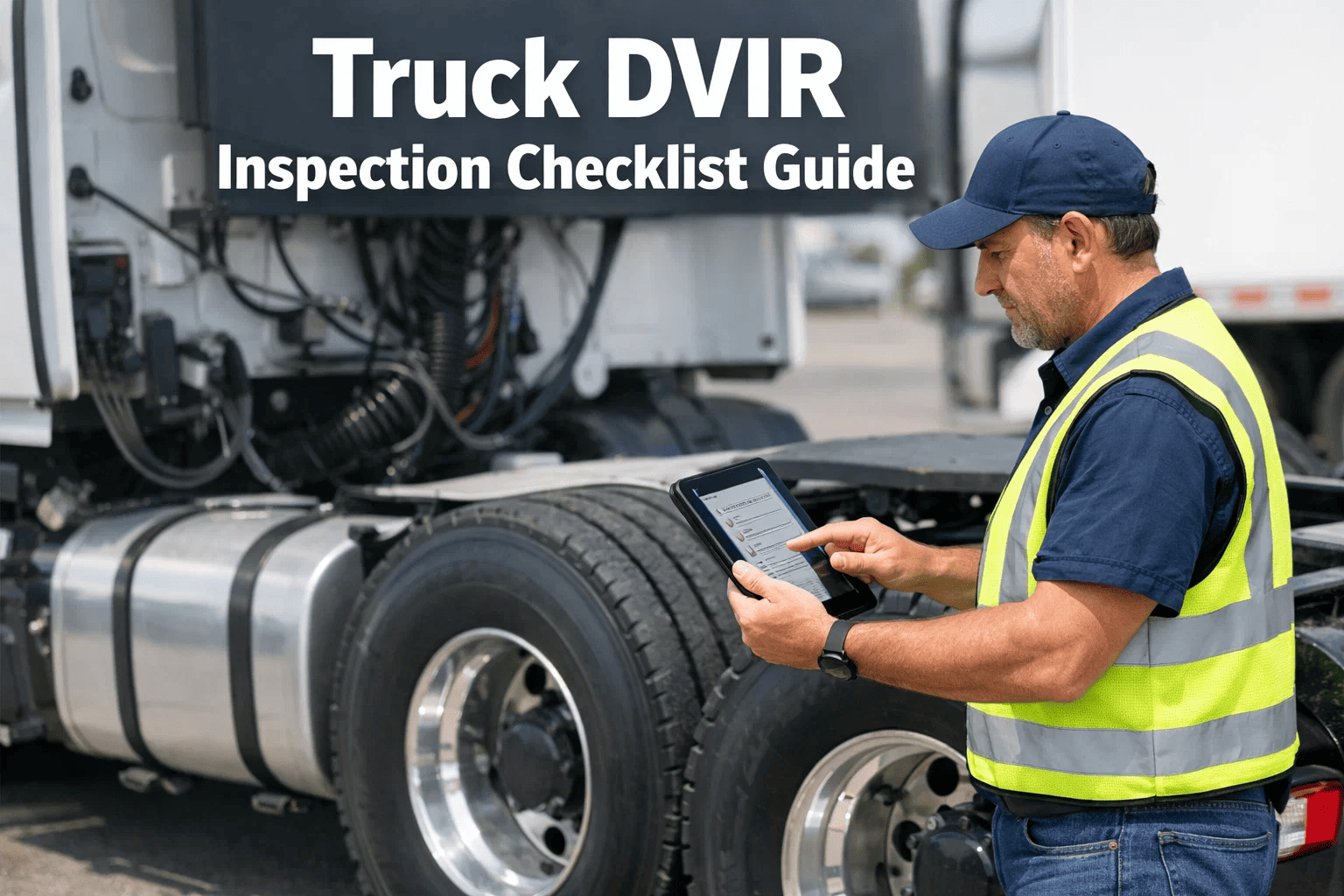
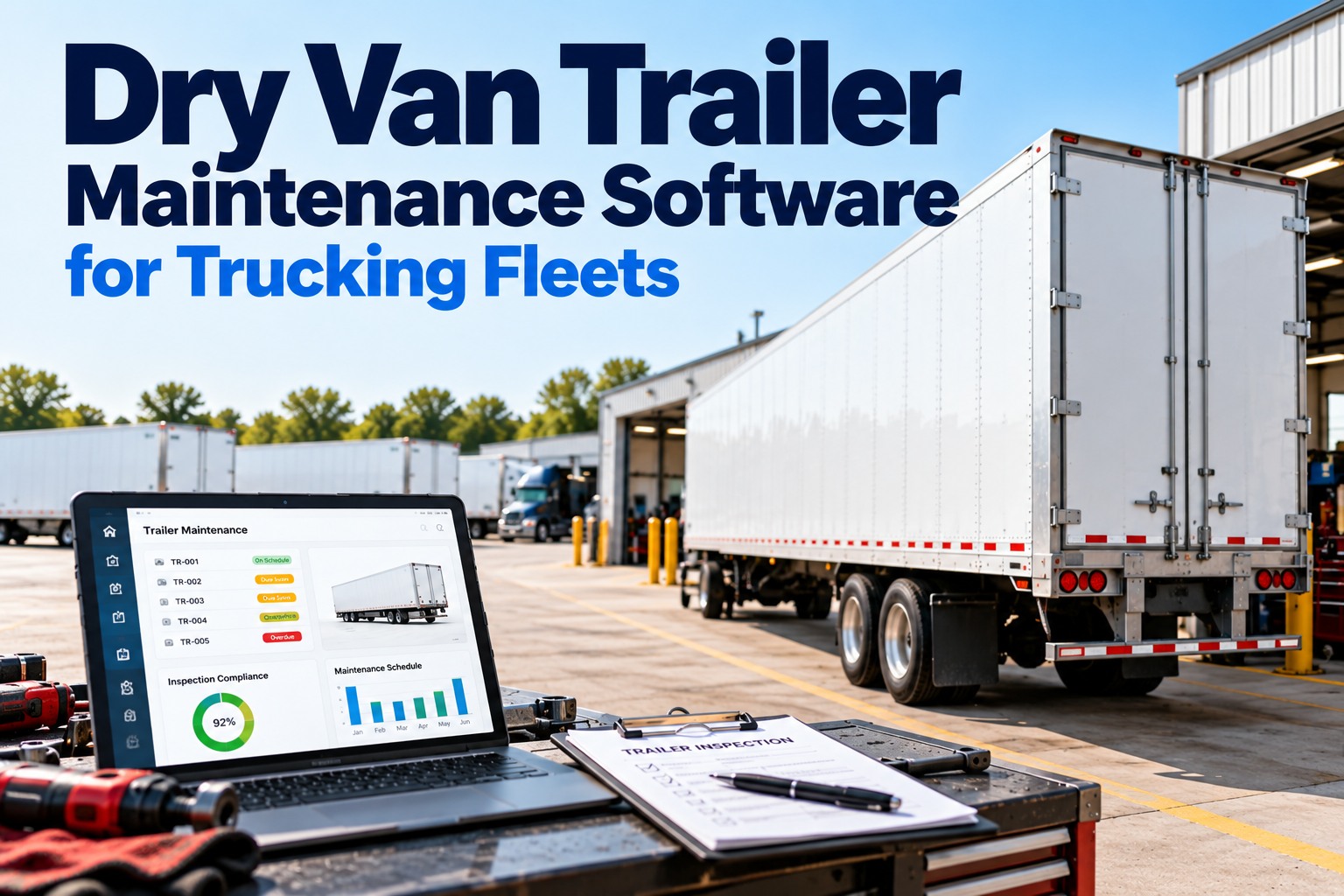
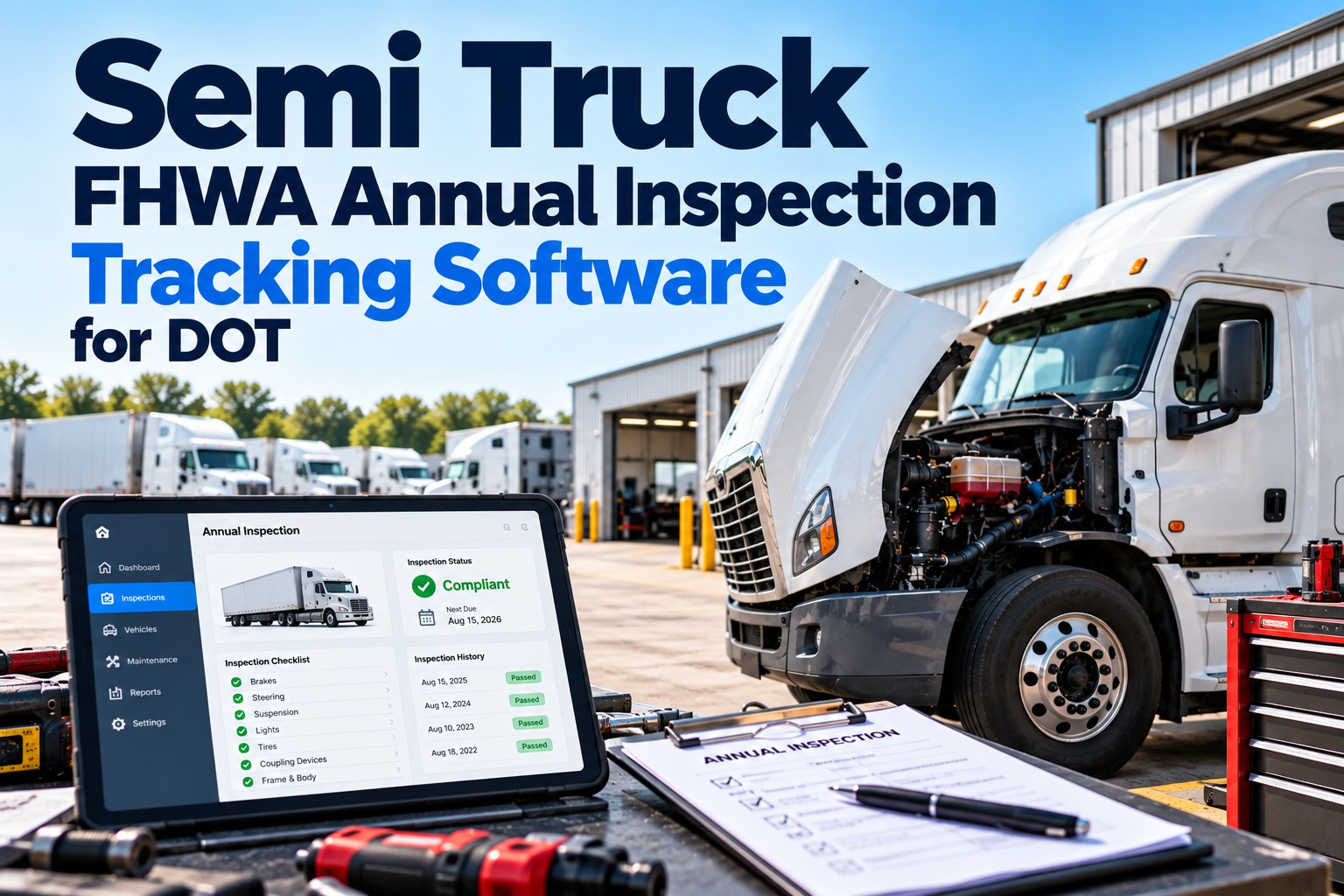
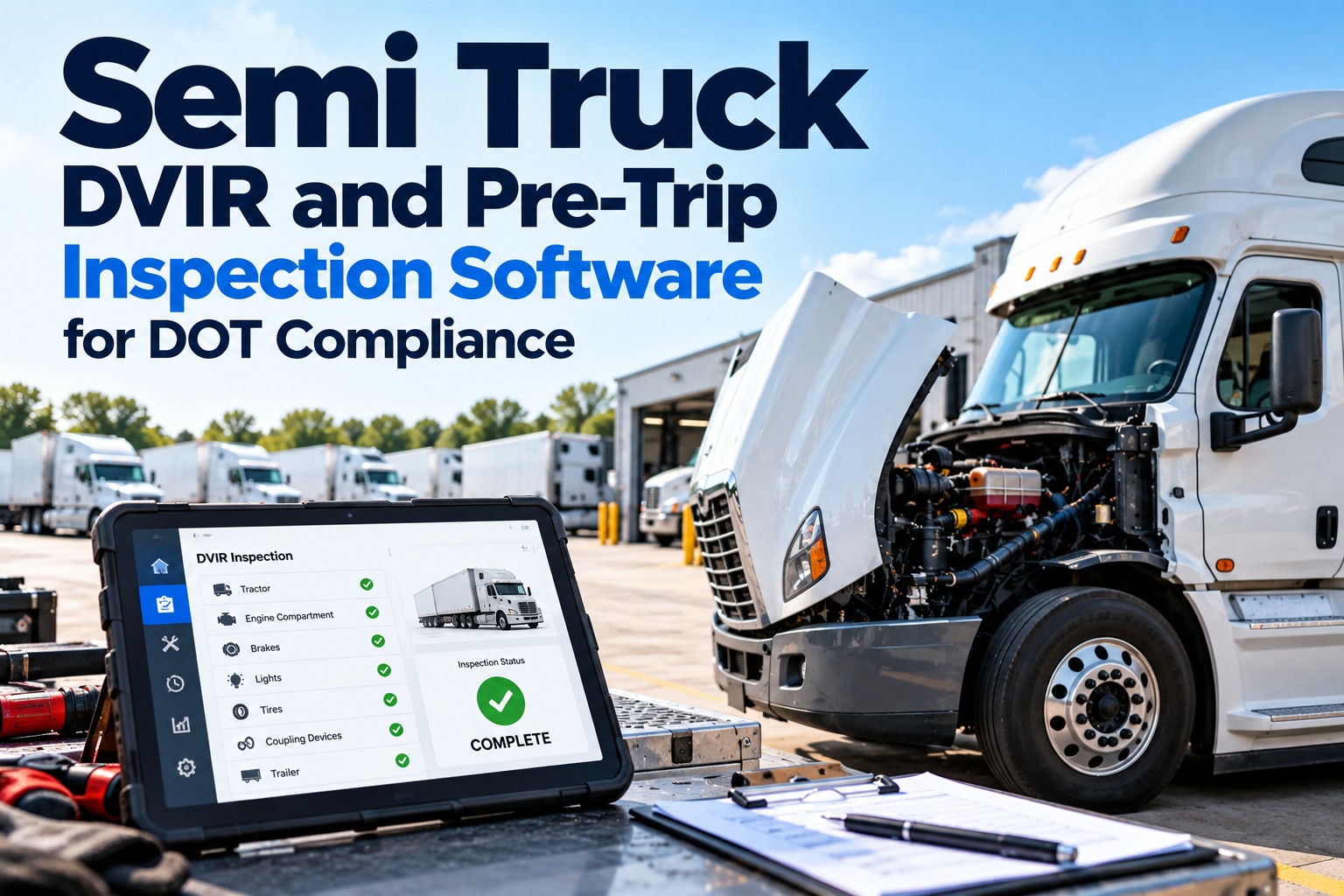
A complete, FMCSA-compliant Driver Vehicle Inspection Report (DVIR) is the safety and compliance foundation every commercial carrier depends on — and one of the most commonly cited deficiencies during DOT audits and roadside inspections. Under 49 CFR 396.11, drivers must complete a DVIR before and after every trip, identify all vehicle defects, and certify the vehicle's condition. Mechanics must sign off on all required repairs before the driver's next departure. Paper-based processes fail this requirement systematically. FleetRabbit's digital DVIR system closes the compliance loop automatically, capturing driver certifications, defect photos, mechanic repair confirmations, and inspection timestamps in a searchable, audit-ready record. This guide covers every inspection category drivers must complete and explains how FleetRabbit makes compliance consistent at scale. Book a demo to see digital DVIR in action.
$11K
Maximum FMCSA fine per DVIR violation — per infraction, compounding with every incomplete or missing inspection record
24 mo
CSA score impact window for DVIR violations — every missed or deficient inspection record affects carrier safety ratings for two years
98.9%
Average DVIR pass rate across FleetRabbit fleets — versus 71–78% industry average for paper-based inspection processes
3 mo
Minimum FMCSA retention requirement for DVIR records — FleetRabbit stores complete audit-ready records beyond the mandated period
FMCSA DVIR Requirements — What 49 CFR 396.11 Mandates
FMCSA Requirement
49 CFR 396.11 requires drivers to complete a pre-trip and post-trip vehicle inspection daily. All defects affecting safe operation must be recorded on the DVIR. A qualified mechanic must certify repairs and sign the DVIR before the vehicle re-enters service. The certifying mechanic must confirm either that defects were repaired or that the vehicle was determined to have no defect. Failure to maintain compliant DVIR records carries fines of $1,000–$11,000 per infraction and contributes to CSA score deterioration for 24 months.
The following inspection categories represent the full scope a compliant DVIR must cover under FMCSA regulations. Every item below is an inspection point that, if found defective and not documented, creates immediate compliance exposure at roadside inspection and during DOT audit cycles. FleetRabbit's digital DVIR template includes all categories — configurable by vehicle type, with photo-capture for defects and severity flagging to prioritize repair urgency.
DVIR Defect Severity and Required Action
Defect Severity
Definition
Required Action Before Return to Service
FleetRabbit Workflow
Out-of-Service
Defect creates immediate risk of vehicle failure, accident, or FMCSA out-of-service order
Vehicle placed out-of-service immediately. Mechanic repair and certification required before re-entry to service.
Automatic OOS flag, mechanic work order created, driver notification blocked until mechanic sign-off captured
Safety-Affecting
Defect degrades vehicle safety or compliance performance but does not create immediate OOS risk
Defect must be repaired and mechanic re-certification captured before vehicle clears for next departure.
Work order created from DVIR defect, repair confirmation required at work order closure, DVIR loop closed automatically
Maintenance
Defect affects component lifespan or non-safety function — does not create immediate safety or compliance risk
Defect documented and scheduled at next PM interval. Vehicle may depart with documentation.
Brake system defects are the leading cause of commercial vehicle out-of-service orders at FMCSA roadside inspections — and the leading cause of maintenance-related accidents following a maintenance event. Every brake system component must be physically verified by the driver during pre-trip inspection, not assumed operational from the previous shift's report. Under FMCSA 396.11, any brake defect affecting safe operation must be recorded on the DVIR and confirmed repaired by a mechanic before the next departure. Verify every item below through direct inspection, not a dashboard indicator check.
Service Brakes and Foundation Components
FleetRabbit Digital DVIR — Brake Defect Documentation
FleetRabbit's digital DVIR records brake defects with driver photo documentation, severity flagging, and automatic work order creation routed to the shop mechanic in real time. When a driver reports a brake defect, FleetRabbit blocks vehicle clearance until the mechanic's repair certification is captured in the system — eliminating the most common FMCSA violation scenario: a defect documented on paper but never confirmed repaired before the vehicle's next departure. FleetRabbit's brake documentation meets the evidentiary standard required to contest roadside violations through the FMCSA DataQ challenge process.
Tire and wheel defects are among the most preventable causes of commercial vehicle roadside failures — and among the most cited violations in FMCSA inspection data. Wheel-off events following maintenance are catastrophic and almost always traceable to an inspection step that was skipped. The driver's pre-trip tire inspection is the final opportunity to catch an out-of-specification condition before a highway incident occurs. Document every item. Every tire position. Every shift. There is no shortcut that is worth the consequence of a tire failure or wheel separation event on a public highway.
Tire Tread, Condition, and Pressure
FleetRabbit Tire and Wheel DVIR Tracking
FleetRabbit's tire management module connects DVIR tire defect reports to individual tire serial numbers and position records, creating a complete defect history by tire and vehicle. When a driver reports a tire concern in the digital DVIR, FleetRabbit automatically generates a maintenance work order and notifies the maintenance coordinator — preventing the common failure mode where a driver notes a concern on paper and the note is not acted upon before the vehicle's next dispatch. FleetRabbit's re-torque reminder workflow triggers driver notification at the correct mileage interval after any wheel removal event.
Lighting violations are the most frequently cited category in DOT roadside inspections for hazardous materials carriers and among the top three citation categories for all commercial vehicle operations. Every lighting circuit must be physically verified at every pre-trip inspection — not assumed operational because it was functioning on the previous shift. A single inoperative brake light, turn signal, or clearance light is a citable violation. Systematic lighting verification during the DVIR prevents the most common and most preventable roadside citation scenario in commercial trucking.
External Lighting Circuits
Part 4: Engine and Fluid System Inspection
Engine system verification during the DVIR pre-trip is the driver's opportunity to catch post-maintenance issues — fluid leaks, low fluid conditions, warning lights, and abnormal operating sounds — before they become highway failures. Engine-related defects documented on the DVIR create the mechanic review record required under 49 CFR 396.11 and protect the carrier against liability if a mechanical failure follows a maintenance event. Every fluid level check and every warning light inspection must be completed as a physical verification step — not assumed serviceable because the vehicle recently completed a maintenance event.
Engine Fluids and Under-Hood Inspection
FleetRabbit Engine and Fluid DVIR Integration
FleetRabbit integrates with telematics and OBD diagnostic systems to surface active engine fault codes directly in the driver's DVIR inspection view — allowing drivers to identify and document post-maintenance fault codes without requiring a separate scan tool session. The platform's DVIR system prevents work order closure and vehicle clearance when active fault codes are present without documented mechanic resolution. This integration eliminates the most common post-maintenance comeback scenario: a vehicle leaving the shop with an active diagnostic code that the driver discovers during pre-trip and reports as a DVIR defect the same day.
Part 5: Cab, Safety Equipment, and Required Documentation
Cab system and safety equipment verification is as critical to FMCSA compliance as mechanical inspection. A vehicle carrying hazardous materials without current emergency response documentation, operating without a functional fire extinguisher, or departing without the required number of warning triangles is a citable violation independent of the vehicle's mechanical condition. Required documentation must be verified in the cab before departure — not assumed present based on the previous shift's record.
Driver Safety Equipment Inventory
Cab Systems and Visibility
Digital DVIR vs. Paper DVIR — Why Fleets Are Switching
Paper DVIR processes systematically fail FMCSA compliance requirements — not because drivers skip inspections, but because paper-based defect documentation, routing, and record retention introduce failure points at every step. A driver who accurately documents a defect on a paper form has still failed the compliance requirement if that form is lost before mechanic certification, filed incorrectly, or unavailable when a DOT auditor requests it. Digital DVIR eliminates every paper-process failure point while improving documentation quality through photo capture, structured severity flagging, and automatic defect-to-repair routing.
Paper DVIR — The Compliance Risks
Defect Documentation
Text description only — no photo evidence
Mechanic Sign-Off
Manual signature — often unsigned or backdated
Audit Record Retrieval
Manual filing — forms lost, incomplete, unavailable
Defect-to-Repair Loop
Manual handoff — delays and misses are common
DVIR Pass Rate
Industry average: 71–78% with paper forms
Retention Compliance
Depends on physical filing — records frequently missing
FleetRabbit Digital DVIR
Defect Documentation
Photo capture + severity flag + driver note — time-stamped
Mechanic Sign-Off
Digital certification with timestamp — loop closed automatically
Audit Record Retrieval
Searchable cloud records — available within seconds during audit
Defect-to-Repair Loop
Work order created automatically from flagged defect — zero manual handoff
DVIR Pass Rate
FleetRabbit fleets: 98.9% average pass rate
Retention Compliance
Cloud retention beyond FMCSA mandate — export-ready at any time
Replace Paper DVIR Forms With a Compliance Loop That Closes Automatically
FleetRabbit's digital DVIR captures every inspection item, routes defects to mechanics instantly, logs repair confirmations, and stores the complete audit trail — so your fleet is audit-ready at all times without any manual filing. Over 1,000 fleet teams use FleetRabbit DVIR to maintain the 98.9% average pass rate that protects CSA scores and prevents out-of-service orders. Book a personalized demo to see the full inspection workflow for your vehicle types and routes.
What is a DVIR and is it required under FMCSA regulations?
A Driver Vehicle Inspection Report (DVIR) is the written record that a commercial motor vehicle driver must complete before and after every trip under 49 CFR 396.11. The DVIR must cover all major vehicle systems — brakes, tires, lights, steering, and safety equipment — and must document any defects affecting safe vehicle operation. A qualified mechanic must certify either that defects were repaired or that the vehicle was inspected and determined to have no defect before the driver may depart on the next trip. The DVIR is not a best practice — it is a federal regulatory requirement for every commercial carrier operating under FMCSA jurisdiction. Failure to complete DVIR records carries per-infraction fines up to $11,000 and contributes to CSA Unsafe Driving and Vehicle Maintenance BASIC deterioration for 24 months.
How long must DVIR records be retained under FMCSA regulations?
FMCSA requires the original DVIR to be retained at the motor carrier's principal place of business for a minimum of three months from the date of the inspection. Repair certifications must be retained for the same three-month period. However, if the DVIR was completed in connection with a maintenance event that is part of the vehicle's maintenance record under 49 CFR 396.3, best practice is to retain the record for the full vehicle operation period plus six months — consistent with the FMCSA maintenance record retention requirement. FleetRabbit stores all DVIR records in cloud-based, audit-ready format beyond the minimum three-month requirement, ensuring records are instantly available for roadside inspection requests, DOT audit production, or litigation support without physical filing retrieval. See how audit retrieval works in a live demo.
Are drivers required to complete a DVIR if no defects are found?
Yes. Under 49 CFR 396.11, a DVIR must be completed daily regardless of whether defects are identified. If no defects are found during the inspection, the driver must certify in writing that the vehicle was examined and found to be in safe operating condition. The "no defects" certification creates the compliance record required by FMCSA — a missing DVIR record is a violation even when the vehicle is in perfect mechanical condition. FleetRabbit's digital DVIR requires certification for every inspection session, ensuring the no-defect record is created with the correct timestamp and driver identity even when the inspection reveals nothing requiring mechanic attention.
Can drivers complete DVIR inspections without cellular or Wi-Fi connectivity?
Yes. The FleetRabbit driver mobile application is a native iOS and Android application with full offline capability. Drivers can complete every DVIR inspection category, capture photo documentation of defects, record severity flags, and submit mechanic notification requests in airplane mode — in yard environments without cellular coverage, remote delivery locations, or any setting with unreliable connectivity. All inspection data, timestamps, driver certifications, and photo attachments are buffered locally and synchronized to the fleet management platform automatically when connectivity is restored. The offline-completed record is indistinguishable from an online submission in the audit record — documentation quality does not degrade when connectivity is unavailable.
What happens when a driver reports a defect in the FleetRabbit digital DVIR?
When a driver flags a defect in the FleetRabbit digital DVIR, the platform immediately routes the defect notification to the assigned mechanic and maintenance coordinator — no manual handoff required. A maintenance work order is created automatically from the flagged defect, including the driver's description, severity classification, and any attached photo documentation. The vehicle is flagged in the platform for open defect status, and the driver's next departure cannot be confirmed until the mechanic records a repair certification or documents a no-defect determination for the reported item. This automated loop eliminates the most common compliance failure mode in paper-based DVIR processes: a defect documented by the driver that is never confirmed repaired before the vehicle's next departure.
How does a digital DVIR reduce commercial vehicle roadside inspection failure rates?
Roadside DVIR violations trace to three failure modes: an inspection step that was skipped, a defect that was identified but not routed to a mechanic before the next dispatch, or a record that was not retained in accessible form when requested at roadside. FleetRabbit's digital DVIR addresses all three. Sequential checklist completion prevents step-skipping by requiring confirmation at each inspection point before the next is presented. Automatic defect routing eliminates the handoff failure — a reported defect creates an immediate mechanic work order without any manual action. Cloud record retention makes every DVIR instantly accessible without requiring the driver to carry paper forms. FleetRabbit fleets achieve a 98.9% average DVIR pass rate at roadside inspection — compared to the 71–78% industry average for paper-based inspection processes.
Build a DVIR Compliance Program That Works at Scale
FleetRabbit's digital DVIR system includes pre-built inspection templates for every vehicle system category in this checklist — configurable to your fleet's specific vehicle types, operating routes, and compliance requirements. Implement systematic DVIR compliance across your entire fleet without building custom forms, managing paper routing, or relying on individual driver discretion about which defects require documentation.
Fleet managers using FleetRabbit report improved roadside inspection pass rates, faster defect-to-repair resolution, and significantly faster documentation retrieval during DOT compliance audits. The platform is deployed fleet-wide with role-specific workflows for drivers, shop mechanics, supervisors, and maintenance coordinators — configured to your fleet's inspection program, not deployed as a generic software tool.
Schedule Your FleetRabbit Digital DVIR Demonstration
See how FleetRabbit's digital DVIR system connects driver inspection, defect routing, mechanic certification, and DOT-defensible audit records in a single platform — demonstrated against your fleet's vehicle types and operational routes, not in a generic demo environment.