A single drop of used engine oil can tell you more about a truck's internal health than almost any other diagnostic available, yet most fleets still treat oil changes as a calendar task rather than a data source. Every mile an engine runs, it sheds microscopic traces of metal from bearings, cylinder liners, and gears directly into the oil. A structured oil analysis program reads those traces before they turn into a roadside breakdown, often catching a developing failure weeks or months before it would otherwise show up as a check-engine light.
Engine oil analysis measures wear metals, contamination, and oil condition from a routine sample to detect developing engine problems before failure. Iron is typically the most abundant wear metal and the primary indicator of overall engine wear, while elements like copper, aluminum, and lead point to specific components. Fleets running structured oil analysis programs commonly recover the cost of testing within two to three oil changes through avoided major repairs.
What Engine Oil Analysis Actually Measures
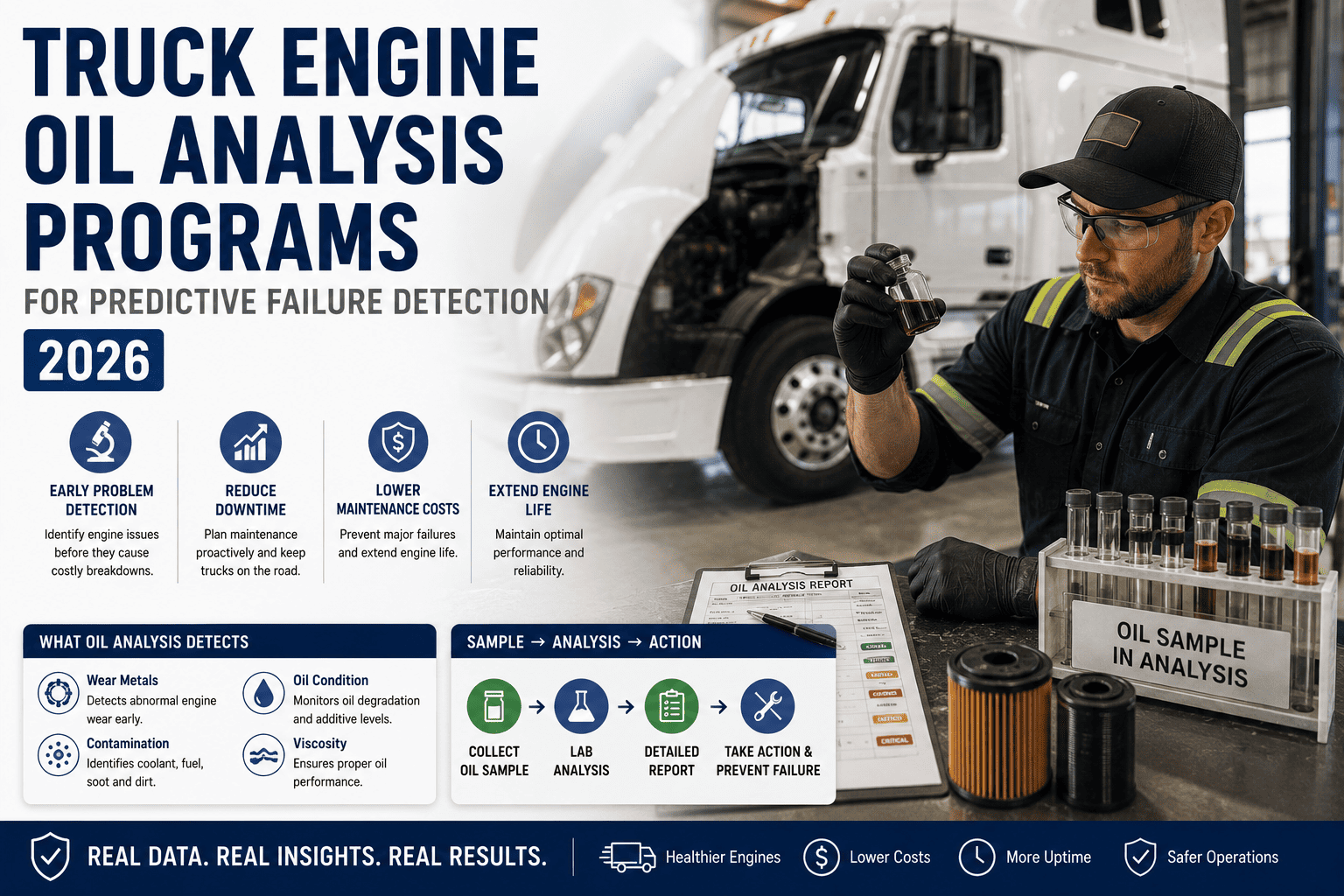
A typical oil analysis report is built around three core categories: wear metals, contamination, and oil condition. Wear metals are measured in parts per million and reveal which internal components are shedding material faster than normal. Contamination testing checks for fuel dilution, coolant intrusion, dirt, and water entering the oil from outside sources. Oil condition testing evaluates viscosity, oxidation, and total base number to confirm whether the lubricant itself is still doing its job or has broken down chemically.
No single number on the report tells the full story on its own. The real value comes from reading these categories together and comparing each sample against the truck's own history. A reading that looks normal in isolation can be a clear warning sign if it has tripled compared to the last three samples taken at the same interval.
The Wear Metals That Matter Most
Each wear metal traces back to a specific set of components, which is why an unusual spike points maintenance teams directly toward the likely source of a problem rather than leaving them guessing.
| Wear Metal | Primary Source | What A Spike Suggests |
|---|---|---|
| Iron | Cylinder liners, crankshaft, camshaft, timing gears, oil pump | General engine wear, usually the first metal to rise as components age |
| Copper | Bearings, bushings, oil cooler | Bearing wear or oil cooler degradation, often an early-stage warning |
| Aluminum | Pistons, turbocharger bearings, engine block | Piston or turbo wear, though dirt contamination can also raise this reading |
| Lead and Tin | Bearing overlays and bushings | Bearing surface wear, frequently rises alongside copper |
| Silicon | Dirt and airborne contamination | Air filter or intake seal failure letting abrasive dust into the engine |
How A Structured Oil Sampling Program Works
Building a reliable oil analysis program comes down to four repeatable steps performed consistently across the fleet rather than as a one-off test on a single problem truck.
Pull A Representative Sample
Sample the oil while it is warm and circulating, ideally during a scheduled service, using a clean sampling port rather than the drain plug to avoid picking up settled sediment that skews results.
Send For Lab Testing
A lab runs elemental spectroscopy to quantify wear metals and additive elements, alongside infrared spectroscopy and viscosity testing to assess contamination and oil condition in a single pass.
Compare Against Trend History
Results are only meaningful when compared to the same vehicle's previous samples. A gradual rise across three consecutive samples is often more significant than a single elevated reading.
Act On Flagged Trends
When a metal or contamination level crosses into a flagged range, schedule an inspection or targeted repair before the issue progresses into a major component failure.
Why Trending Beats A Single Test Result
Most labs flag oil analysis results using a simple green, yellow, and red scale based on absolute concentration limits for each metal. That scale is useful, but it misses the most important signal available: rate of change. An iron reading of 30 parts per million might be completely normal for one engine at a given mileage interval, yet alarming for another engine whose last three samples consistently read closer to 12 to 15 parts per million. The jump itself, not just the final number, is what should trigger investigation.
This is why oil analysis delivers the most value as an ongoing program rather than an occasional spot check. A fleet that samples consistently across every truck at every service interval builds a baseline for each individual engine, turning every new sample into a comparison rather than an isolated data point.
FleetRabbit links oil analysis results directly to each vehicle's maintenance history, flagging rising wear metals before they become failures. Sign up free to start trending your fleet's oil data, or book a demo to see predictive failure detection in action.
Contamination Signals That Demand Immediate Attention
While wear metals reveal slow mechanical degradation, contamination readings often point to an active, ongoing problem that needs faster intervention. Fuel dilution above a moderate threshold thins the oil and reduces its film strength, accelerating wear across every lubricated surface. Coolant or glycol contamination signals a head gasket or cooler leak that will worsen quickly if left unaddressed. Water contamination promotes corrosion and additive breakdown, particularly in engines that sit idle for extended periods between routes.
Reading Oil Condition Alongside Wear And Contamination
Total base number measures the oil's remaining ability to neutralize acids formed during combustion. A low total base number means the oil is nearing the end of its protective life even if wear metals still look acceptable. Oxidation testing works alongside this, since oil that has oxidized significantly loses film strength and accelerates the very wear the program is designed to catch early. Reading these three categories together, rather than in isolation, is what separates a useful oil analysis program from a stack of disconnected lab reports.
Building Oil Analysis Into Your Preventive Maintenance Workflow
Oil analysis delivers the most value when it is built directly into existing preventive maintenance scheduling rather than run as a separate, disconnected process. Sampling at every scheduled oil change means no extra shop visit is required, and results arrive in time to inform the next service interval. Pairing each report with a digital work order record creates a permanent trend history for every vehicle, so a technician reviewing a truck six months from now can see the full wear pattern rather than a single recent snapshot.
This connected approach also makes it far easier to decide which engines need closer attention. Instead of treating every truck identically on a fixed mileage schedule, fleets can shift higher-wear vehicles to shorter sampling intervals while extending intervals on engines that consistently show clean, stable results, focusing labor and lab spend where it actually matters.
A used oil sample holds the earliest warning signs of major engine trouble. FleetRabbit connects oil analysis results to your fleet's full maintenance history, so wear trends are visible before they become breakdowns. Sign up free to get started, or book a demo to see predictive engine monitoring built for your fleet.