.png)
Preventive maintenance is the most cost-effective way to keep commercial trucks running reliably and safely. Vehicles that receive regular maintenance experience fewer unexpected breakdowns, maintain higher resale value, and keep drivers safe on the road. Fleet operators who implement structured preventive maintenance programs reduce unplanned downtime by up to 40 percent, extend vehicle lifespan by 25 percent, and lower fuel consumption through optimized engine performance. This comprehensive truck fleet preventive maintenance checklist covers monthly, quarterly, and annual inspection intervals aligned with manufacturer specifications and industry best practices.
Truck Fleet Preventive Maintenance Checklist
Monthly, quarterly, and annual PM intervals to prevent breakdowns, extend vehicle life, and reduce operational costs
Why Fleet Preventive Maintenance Reduces Costs and Extends Vehicle Life
Unexpected breakdowns cost commercial fleets an average of 2,500 dollars per vehicle annually in towing, lost productivity, and emergency repairs. Preventive maintenance prevents these costly failures by addressing component wear before catastrophic failure occurs. Fleet operators implementing structured monthly and quarterly maintenance schedules report 40 percent fewer unplanned outages, 25 percent longer vehicle lifespan, and 15 percent fuel cost reduction through optimized engine and drivetrain performance. Regular maintenance also ensures compliance with manufacturer warranties, maintains DOT regulatory compliance, and protects against safety violations that trigger costly penalties.
Fleet Preventive Maintenance by Interval: Monthly, Quarterly, and Annual Schedules
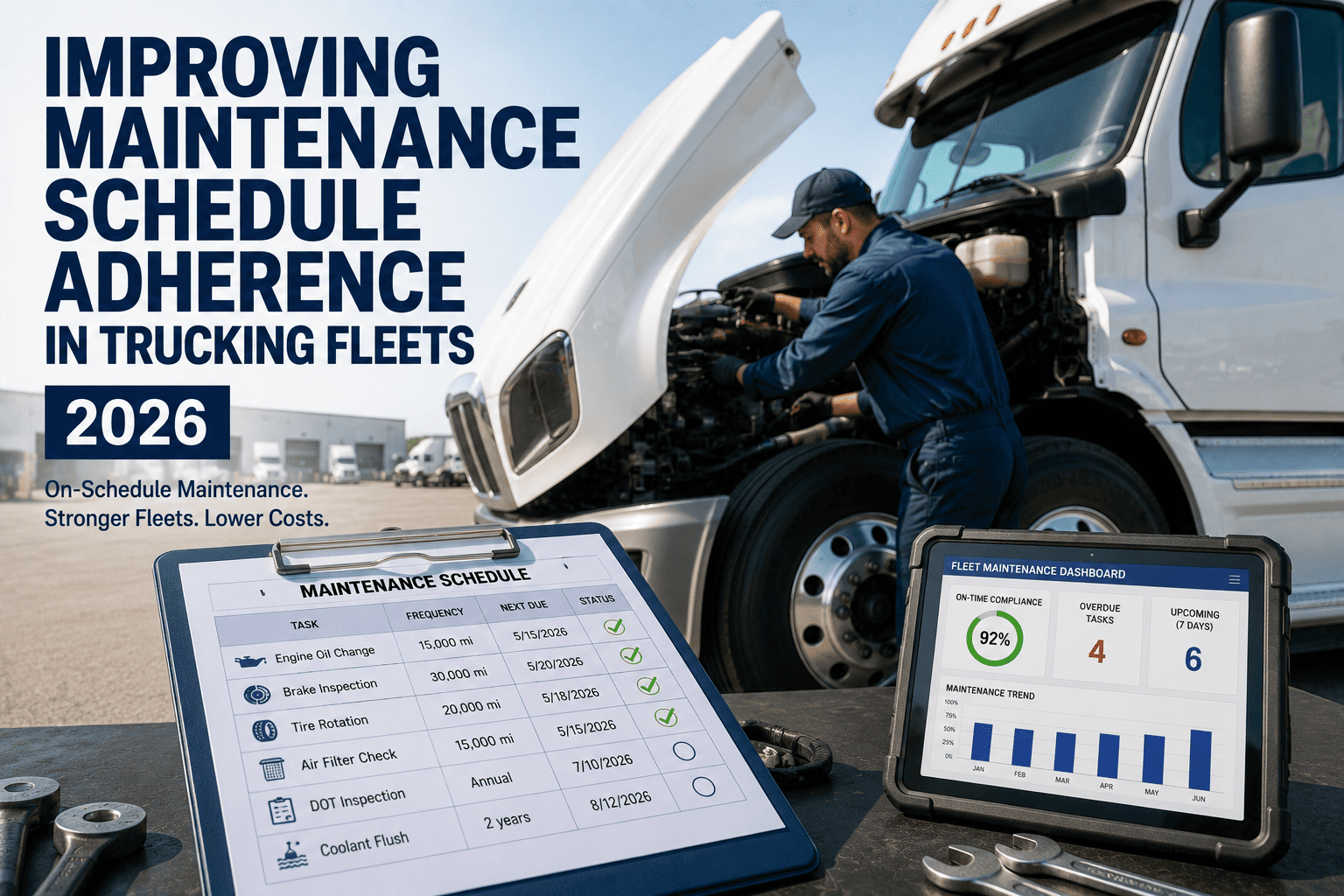
Preventive maintenance effectiveness depends on consistent inspection at proper intervals. Monthly checks catch emerging issues early, quarterly inspections address seasonal stress and accelerated wear, and annual services reset critical systems for another year of reliable operation. The framework below organizes maintenance tasks by interval with specific assessment criteria that technicians can apply systematically across the fleet.
Critical Fleet Preventive Maintenance Rules and Compliance Requirements
Manufacturer specifications and industry standards establish maintenance intervals that protect vehicle reliability and driver safety. These guidelines represent optimized maintenance timing based on engineering analysis and operational experience across thousands of vehicles.
Adhering to OEM maintenance schedules preserves manufacturer warranties and maintains vehicle performance guarantees. Preventive maintenance intervals are calculated based on engineered component wear rates and failure analysis. Deviating from manufacturer specifications creates warranty claims exposure and voids coverage. Fleet managers should reference the owner manual and manufacturer service bulletins for exact intervals specific to each vehicle model and engine type.
Preventive maintenance occurs on whichever schedule comes first: mileage-based intervals or time-based intervals. A vehicle that sits unused still requires periodic servicing to prevent fluid degradation and component corrosion. High-use vehicles may exceed time intervals before reaching mileage thresholds. Fleet managers should track both metrics and schedule maintenance when either threshold approaches.
Preventive maintenance should be performed by certified technicians in licensed repair facilities with proper equipment. Untrained technicians may miss component problems or create new issues through improper service procedures. Manufacturer certification indicates technician training on brand-specific systems. Facilities should maintain equipment calibration records for diagnostic and measurement tools.
Original equipment manufacturer parts maintain quality standards and preserve warranty coverage. Aftermarket parts may create compatibility issues or accelerate wear on related components. Critical systems including brakes, steering, and suspension should use OEM parts. Less critical wear items like wiper blades and air filters may use quality aftermarket alternatives with proper documentation.
Preventive maintenance prevents most emergency repairs but occasional unexpected issues still occur. Fleet managers should budget 10 to 15 percent reserve capacity above baseline PM costs for emergency repairs. Vehicles approaching the end of economic life may require more frequent unexpected service. Reserve planning prevents operational disruption when unexpected repairs are needed.
Drivers and dispatch teams should know which vehicles are due for maintenance to prevent scheduling conflicts. Advance notification prevents drivers from taking vehicles that are scheduled for service. Driver feedback on vehicle condition helps technicians prioritize work. Some vehicles may require overnight or weekend service to minimize operational impact.
Preventive Maintenance Cost Savings and ROI Analysis
Fleet operators can calculate preventive maintenance ROI by comparing PM investment against avoided breakdown costs. The table below shows typical cost comparison between reactive maintenance and preventive maintenance across different truck classes.
| Truck Class | Annual PM Cost | Typical Breakdown Cost | Annual Saved (per vehicle) | ROI Percentage |
|---|---|---|---|---|
| Class A Heavy Duty | 3,200 USD | 8,500 USD | 5,300 USD | 166% |
| Class B Straight Truck | 2,100 USD | 5,800 USD | 3,700 USD | 176% |
| Class C Light Duty | 1,400 USD | 3,200 USD | 1,800 USD | 129% |
| Trailer Refrigerated | 2,800 USD | 7,200 USD | 4,400 USD | 157% |
| Fleet Average | 2,375 USD | 6,175 USD | 3,800 USD | 160% |
Scroll table horizontally on mobile to view all columns. Preventive maintenance delivers 160 percent average ROI through avoided breakdown costs.
Automate Fleet Preventive Maintenance Scheduling with FleetRabbit
FleetRabbit schedules preventive maintenance automatically based on vehicle mileage and time intervals, tracks PM completion with photo verification, converts identified defects into priority work orders, maintains digital maintenance records for warranty tracking, and analyzes fleet-wide maintenance data for cost optimization. Preventive maintenance scheduling ensures no vehicle falls out of compliance, reduces unexpected downtime by up to 40 percent, and extends vehicle lifespan by 25 percent through consistent care.
Frequently Asked Questions About Truck Fleet Preventive Maintenance
1. How often should preventive maintenance be performed on commercial trucks?
Monthly inspections for fluid levels and condition checks, quarterly service for filters and wear items, annual comprehensive maintenance for major systems. Follow manufacturer intervals specific to your truck model.
2. What is the difference between preventive maintenance and breakdown maintenance?
Preventive maintenance identifies and corrects issues before failure occurs, reducing costs and downtime. Breakdown maintenance addresses failures after they occur, creating emergency expenses and operational disruption. Preventive maintenance costs 40 percent less than reactive repairs.
3. Can I use aftermarket parts for truck preventive maintenance?
Aftermarket parts are acceptable for filters, belts, and wiper blades. Critical systems including brakes, steering, and suspension should use OEM parts to maintain warranty coverage and ensure proper compatibility.
4. How much does fleet preventive maintenance cost on average?
Annual PM costs range from 1,400 USD for light duty to 3,200 USD for heavy duty trucks. This investment avoids 3,200 to 8,500 USD in annual breakdown costs, delivering 160 percent ROI through avoided emergency repairs.
5. Does preventive maintenance extend vehicle lifespan?
Yes. Fleet vehicles receiving systematic preventive maintenance last 25 percent longer than those maintained reactively. Consistent service prevents accelerated wear and component damage from neglected maintenance intervals.
6. What happens if I skip scheduled preventive maintenance?
Skipping scheduled maintenance voids manufacturer warranties, accelerates component wear, and increases breakdown risk. A single unexpected breakdown costs more than six months of preventive maintenance.
7. How does FleetRabbit help manage truck fleet preventive maintenance?
Start your free trial to automate PM scheduling based on mileage and time. Book a demo to see how digital maintenance records track PM completion and identify fleet-wide maintenance trends.
8. Can I integrate this preventive maintenance checklist with my current maintenance system?
Yes. This checklist works with any maintenance software or spreadsheet tracking system. FleetRabbit automates the process completely, triggering PM alerts automatically and converting completed maintenance into compliance records.
Reduce Downtime and Extend Vehicle Life with Preventive Maintenance
Systematic preventive maintenance prevents unexpected breakdowns, reduces operational costs, and extends vehicle lifespan. This comprehensive checklist covers monthly, quarterly, and annual maintenance intervals for all truck classes. Start with scheduled preventive maintenance this month and measure improvement in vehicle reliability and cost reduction over the next quarter. Protect your fleet and improve profitability with professional maintenance management.