Every fleet manager has felt it: the sinking feeling when a truck that "seemed fine" gets towed off the highway at 2 a.m. The frustrating part is that most breakdowns aren't random. They follow a pattern that a proper preventive maintenance schedule would have caught weeks earlier. The problem is that a single generic checklist rarely works, because a Class 3 delivery van, a Class 6 box truck, and a Class 8 tractor wear out in completely different ways and on completely different clocks.
This guide breaks down a truck fleet preventive maintenance schedule template by vehicle type for 2026, so you can stop guessing and start scheduling service around real mileage, engine hours, and duty cycle. You'll also see how fleets that automate this process with a platform like FleetRabbit turn a spreadsheet headache into a hands-off system that quietly protects uptime every single day.
Well-run fleets keep 80 to 90 percent of their maintenance planned instead of reactive, and structured preventive maintenance programs cut unplanned breakdowns by roughly 35 to 50 percent while extending vehicle life by 30 percent or more. The trick is matching your service intervals to each vehicle type instead of running one checklist for the whole yard.
Why One Maintenance Schedule Never Fits the Whole Fleet
A light-duty cargo van doing short urban hops wears its brakes and transmission very differently than a Class 8 tractor pulling loaded trailers across state lines. Mixing them into a single PM calendar means one of two things happens: your light vehicles get serviced too often, wasting labor and parts, or your heavy trucks get serviced too rarely, which is exactly how a routine brake job turns into a roadside failure. Vehicle class, duty cycle, and how the truck is actually used on a daily basis should always decide when service happens, not a date on a wall calendar.
The Three Triggers That Actually Matter
Most fleets track maintenance using one of three triggers, and the strongest programs use all three together, acting on whichever one arrives first.
Best for high-utilization, over-the-road trucks running 500+ miles a day. Oil, filters, and drivetrain services trigger off the odometer.
Best for vocational and stationary-run equipment where engine hours reflect wear better than distance traveled.
Best for seasonal or low-mileage vehicles, since fluids degrade and rubber ages even when a truck barely moves.
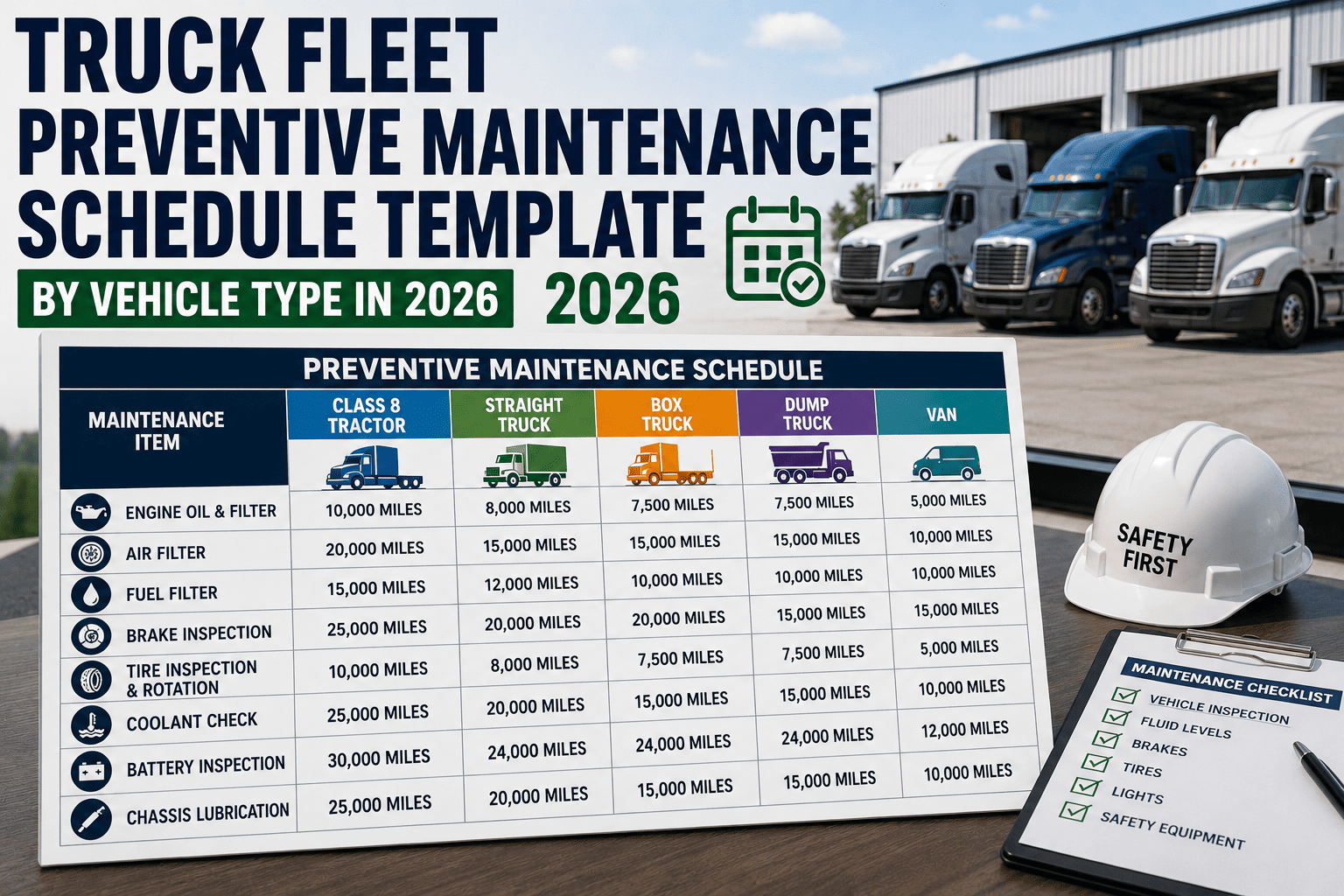
Preventive Maintenance Schedule Template by Vehicle Type
Below is a practical starting template. Treat these as baseline intervals and adjust for severe duty cycles like construction routes, mountain grades, or aggressive stop-and-go delivery work, which shorten every interval below.
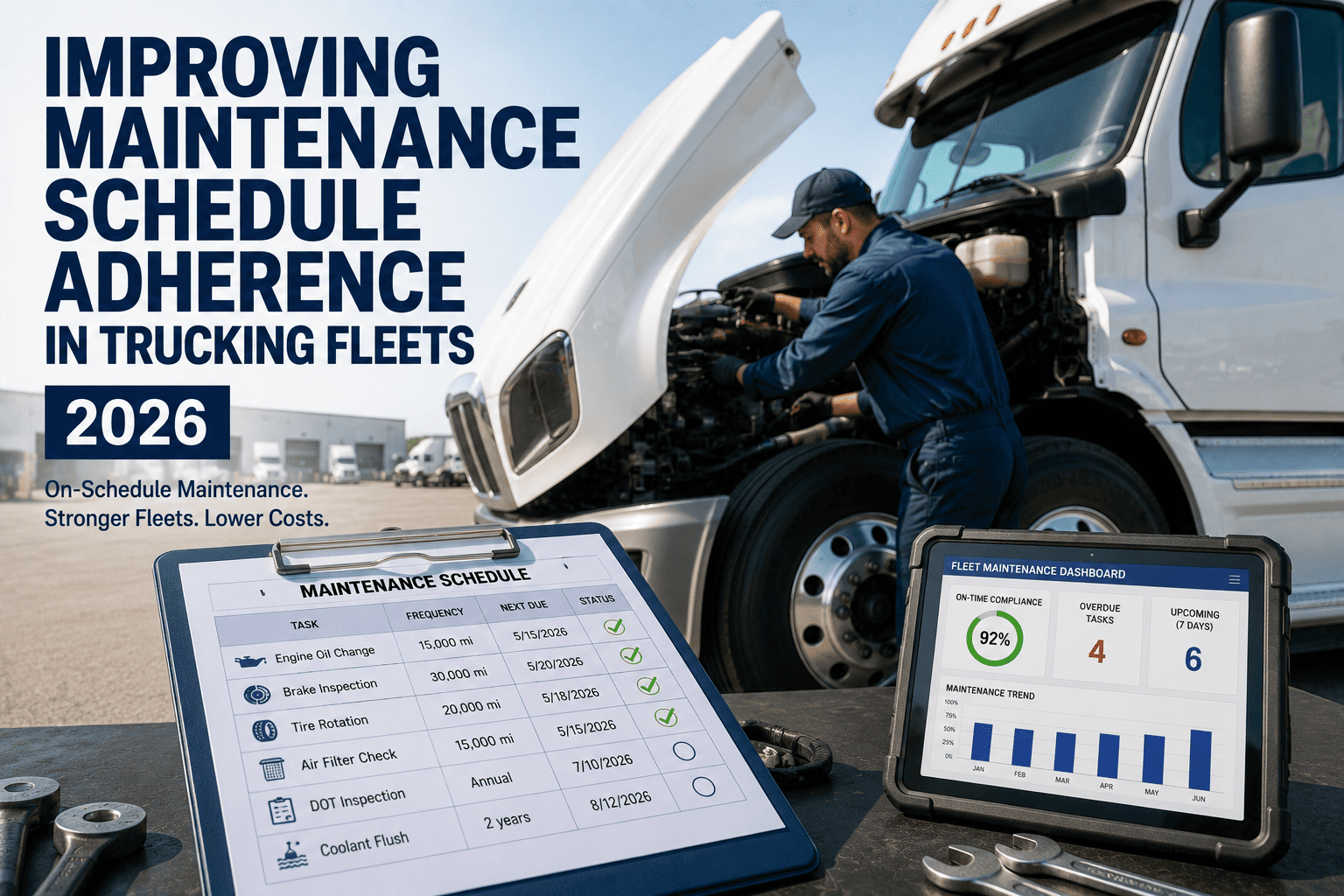
| Vehicle Type | Basic Service | Mid-Level Service | Major Service |
|---|---|---|---|
| Light-Duty Vans & Class 3 | Every 5,000 to 7,500 miles: oil, filters, tire pressure, fluid levels | Every 15,000 miles: brakes, battery, cabin filter, belts | Every 30,000 miles: transmission fluid, coolant, suspension check |
| Medium-Duty Box Trucks (Class 6) | Every 10,000 miles: oil, filters, brake visual, lights | Every 25,000 miles: fuel filter, air filter, steering and suspension | Every 50,000 miles: differential fluid, brake overhaul, wheel bearings |
| Heavy-Duty Tractors (Class 8) | Every 15,000 miles: oil, filters, DVIR follow-up items | Every 30,000 miles: coolant test, exhaust review, wheel bearings | Every 60,000 miles: transmission and DPF service, full electrical check |
| Refrigerated & Specialized Trailers | Weekly: reefer unit check, door seals, hydraulic lift test | Monthly: temperature calibration, pressure testing on auxiliary systems | Every 90 days: full compliance and safety recertification |
| Vocational & Stationary Equipment | Every 250 engine hours: oil, filters, lubrication points | Every 500 engine hours: hydraulic system, undercarriage inspection | Every 1,000 engine hours: major component teardown and inspection |
A note on annual requirements
Regardless of vehicle type, federal rules require a daily pre-trip inspection and an annual DOT inspection for commercial trucks. Build these into the template as non-negotiable line items rather than optional extras, since missing them creates compliance risk that has nothing to do with actual mechanical wear.
FleetRabbit applies the right PM template to every vehicle class automatically, tracking mileage, engine hours, and calendar triggers so nothing gets missed. You can sign up for a free trial and load your fleet in minutes, or book a demo to see the templates configured for your exact vehicle mix.
Building the Schedule Step by Step
Turning this template into a working program for your fleet is a five-step process, and most fleets can complete it within a few weeks.
List every truck, trailer, and piece of equipment by class, make, model, and current mileage or hours. A one-size-fits-all list gets built by accident when this step gets skipped.
Start with manufacturer recommendations, then apply the vehicle-type template above as your working draft.
Shorten intervals for severe-duty routes, harsh climates, or heavy towing. Extend cautiously for low-stress highway-only operation.
Replace whiteboards and spreadsheets with software that fires alerts automatically based on odometer, hours, or date, whichever comes first.
Compare planned versus unplanned repair patterns every quarter and tighten intervals on any vehicle that keeps breaking the same rule.
Seasonal Adjustments by Vehicle Type
Mileage and hours are not the whole story. Weather changes how hard components work, so your template needs seasonal overlays layered on top of the base schedule.
Inspect for pothole and salt damage to suspension and undercarriage after winter driving.
Check cooling systems and tire pressure more frequently, since heat accelerates both fluid breakdown and tire wear.
Complete major service before freezing temperatures arrive, including air dryers and moisture separators.
Add battery testing, fuel tank management, and tire chain checks for vehicles running in snow-prone regions.
Why Fleets Are Automating PM Scheduling in 2026
Fleets still relying on memory or a shared spreadsheet consistently miss mileage triggers by thousands of miles, and that gap is exactly where emergency repairs come from. Every dollar spent on preventive maintenance typically saves several dollars in avoided emergency repair, towing, and downtime costs, which is why automated scheduling has become one of the highest-return investments a fleet manager can make.
What Automation Adds That a Spreadsheet Cannot
A digital system pulls real mileage and engine-hour data directly from the vehicle instead of relying on manual entry, applies a different template automatically to each vehicle class, and escalates overdue services before they turn into a roadside call. Photo-verified inspections also improve driver compliance dramatically compared to paper checkbox forms, since drivers are less likely to rush through a step they know is being documented.
Getting started is simpler than most managers expect
Loading your fleet, assigning the right template to each vehicle class, and turning on automated alerts typically takes a single afternoon. From there, the system quietly runs in the background, and most fleets notice a measurable drop in unplanned downtime within the first 90 days.
Whether your yard is all Class 8 tractors or a mixed fleet of vans, box trucks, and reefers, FleetRabbit sets the right intervals for every vehicle type and alerts your team before anything falls due. Sign up free and see your fleet's schedule built automatically, or book a 30-minute demo with our team.
A generic checklist leaves gaps that turn into breakdowns. FleetRabbit applies the right preventive maintenance template to every vehicle type in your fleet automatically, then tracks it for you day after day. Get started with a free trial, no credit card required, or talk to our team first.