Winter does not break trucks in dramatic ways. It breaks them in boring, predictable ones. A battery that was fine in October quietly loses more than half its cranking power. Diesel fuel that flowed all summer starts forming wax crystals. Moisture that sat harmlessly in an air line turns to ice. None of it looks like an emergency until a driver turns the key at 5 a.m. and nothing happens. A truck fleet winterization checklist exists to catch every one of these failures while they are still sitting in a warm shop, not on a frozen shoulder.
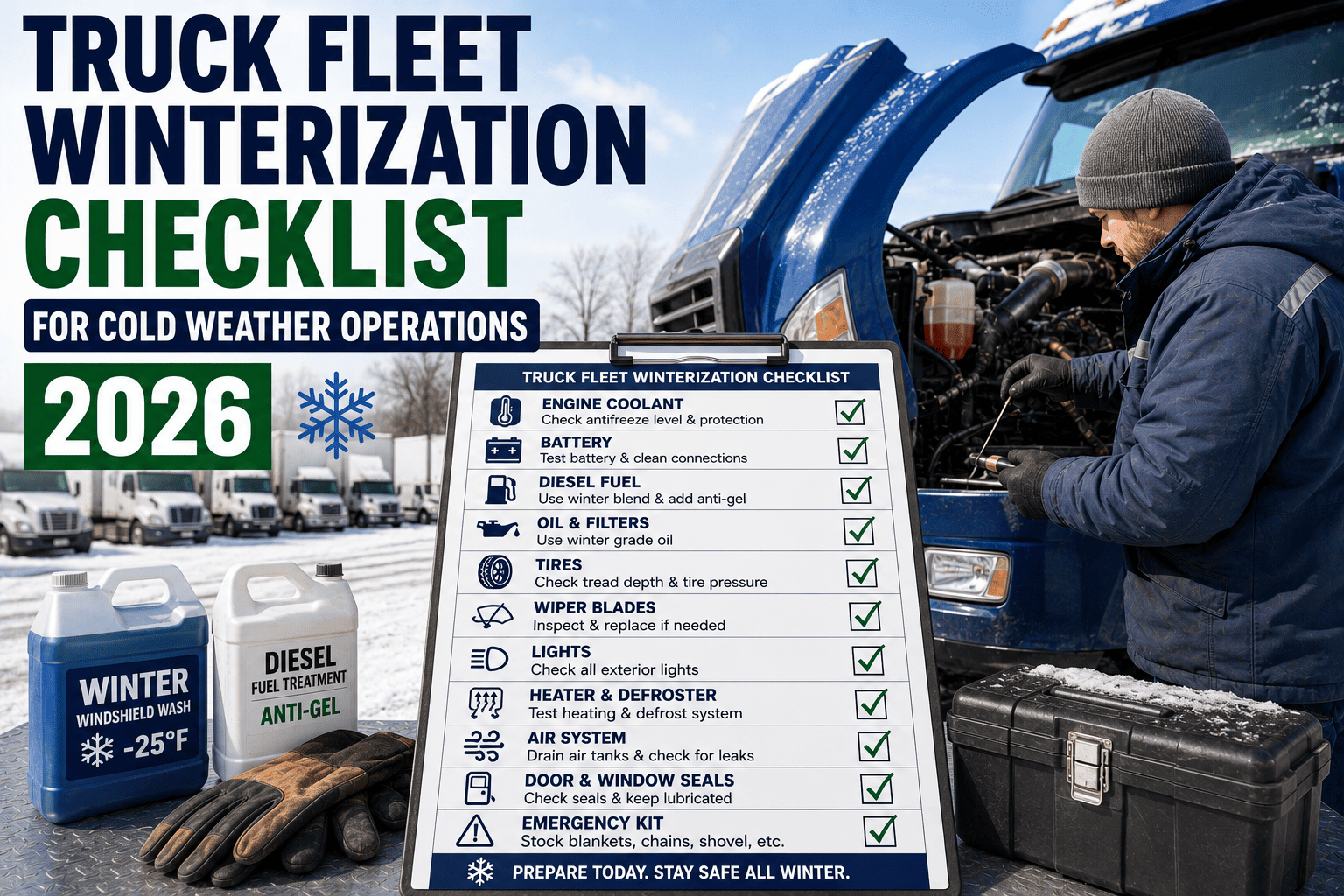
Fleet winterization comes down to five temperature-sensitive systems: batteries, which lose up to 60 percent of their cranking power at 0°F; diesel fuel, which begins forming wax crystals around 10 to 15°F; DEF, which freezes solid at 12°F; air brake systems, where trapped moisture freezes and locks valves; and tires, which lose 1 to 2 PSI for every 10°F drop. Fleets that inspect and treat all five before the first hard freeze avoid the vast majority of cold-weather breakdowns. Waiting until the cold snap hits usually means a tow truck instead of a checklist.
Five Systems, Five Failure Temperatures
Every cold-weather breakdown traces back to one of five systems failing at a predictable temperature. Knowing the threshold for each one turns winterization from a vague seasonal chore into a specific, schedulable task.
Why These Numbers Matter More Than a General Checklist
A discharged battery freezes at 32°F, while a fully charged battery will not freeze until roughly minus 70°F. That single fact explains why a truck that ran fine all fall can suddenly no-start the moment temperatures drop, even though nothing else about the truck changed. The battery was already borderline, and cold weather simply exposed it.
What Each System Actually Needs Before First Frost
Knowing the failure temperature is only half the job. Each system needs a specific fix applied before that threshold arrives, not after.
| System | What to Do Before Winter | Ongoing Winter Check | Cost If Skipped |
|---|---|---|---|
| Battery | Load test every battery, replace anything below 75% capacity | Clean terminals, check cable corrosion monthly | $800 to $2,400 per no-start incident |
| Fuel System | Switch to winter-blend diesel or add anti-gel additive before cloud point | Drain water separators daily, keep tanks above half full | $600 to $1,500 per fuel freeze event |
| DEF System | Verify DEF heater function before dispatch in sub-freezing conditions | Watch for quality or dosing fault warnings that trigger derates | $3,000 to $8,000 per damaged component |
| Air Brake System | Service the air dryer and confirm it purges moisture correctly | Drain air tanks daily during cold weather, not weekly | $3,000 to $15,000+ plus violation and liability risk |
| Tires | Confirm tread depth and set pressure to cold-weather target | Recheck pressure weekly as temperatures continue to swing | Reduced traction, faster wear, blowout risk |
FleetRabbit's seasonal inspection templates walk technicians through battery load tests, fuel system checks, DEF verification, and air dryer service, then track completion across every unit in the fleet. Sign up for a free trial to build your winterization schedule now.
Building a Winterization Timeline That Actually Works
Fleets that start winterization in September or early October avoid the parts shortages and service bottlenecks that hit every shop once the first real cold snap arrives. Waiting until the forecast shows single digits usually means backordered filters and a full shop schedule right when trucks need attention most.
Pre-Season: The Six to Eight Week Window
Review last winter's maintenance records first. Trucks that experienced fuel gelling, battery failures, or starting trouble last season are the ones most likely to repeat the pattern, and they deserve priority attention before anything else on the schedule.
Daily Winter Routine Once Cold Weather Arrives
Once overnight temperatures regularly drop below 32°F, daily habits matter as much as the pre-season inspection. Draining air tanks and water separators daily, not weekly, is the difference between catching moisture before it freezes and finding out about it on the highway. Extended idling to stay warm is generally discouraged since it causes soot buildup and premature aftertreatment wear; a block heater plugged in two to four hours before departure is the better fix.
FleetRabbit assigns winterization work orders by unit, tracks completion, and flags trucks with a history of cold-weather trouble so they get attention first. Book a demo to see it running before your next frost date.
Frequently Asked Questions
Winter breakdowns are almost never a surprise to the truck. Every no-start, gelled fuel line, and frozen brake valve traces back to one of five systems that had a known failure temperature and a missed inspection window. Cover batteries, fuel, DEF, air systems, and tires before the first hard freeze, and the season stops being a gamble. Sign up for FleetRabbit to schedule your fleet's winterization checklist today, or book a demo to see how it tracks across every truck you run.
FleetRabbit schedules and tracks winterization across batteries, fuel systems, DEF, air brakes, and tires, so nothing gets missed once the temperature drops. Start free, no credit card required.