Picture two identical trucks, same year, same mileage, same engine. One has a complete, organized service history going back to day one. The other has a shoebox of faded receipts and a lot of "I think we changed the oil around then." The buyer standing in front of both trucks isn't just paying for steel and mileage, they're paying for confidence, and that confidence has a real dollar value attached to it.
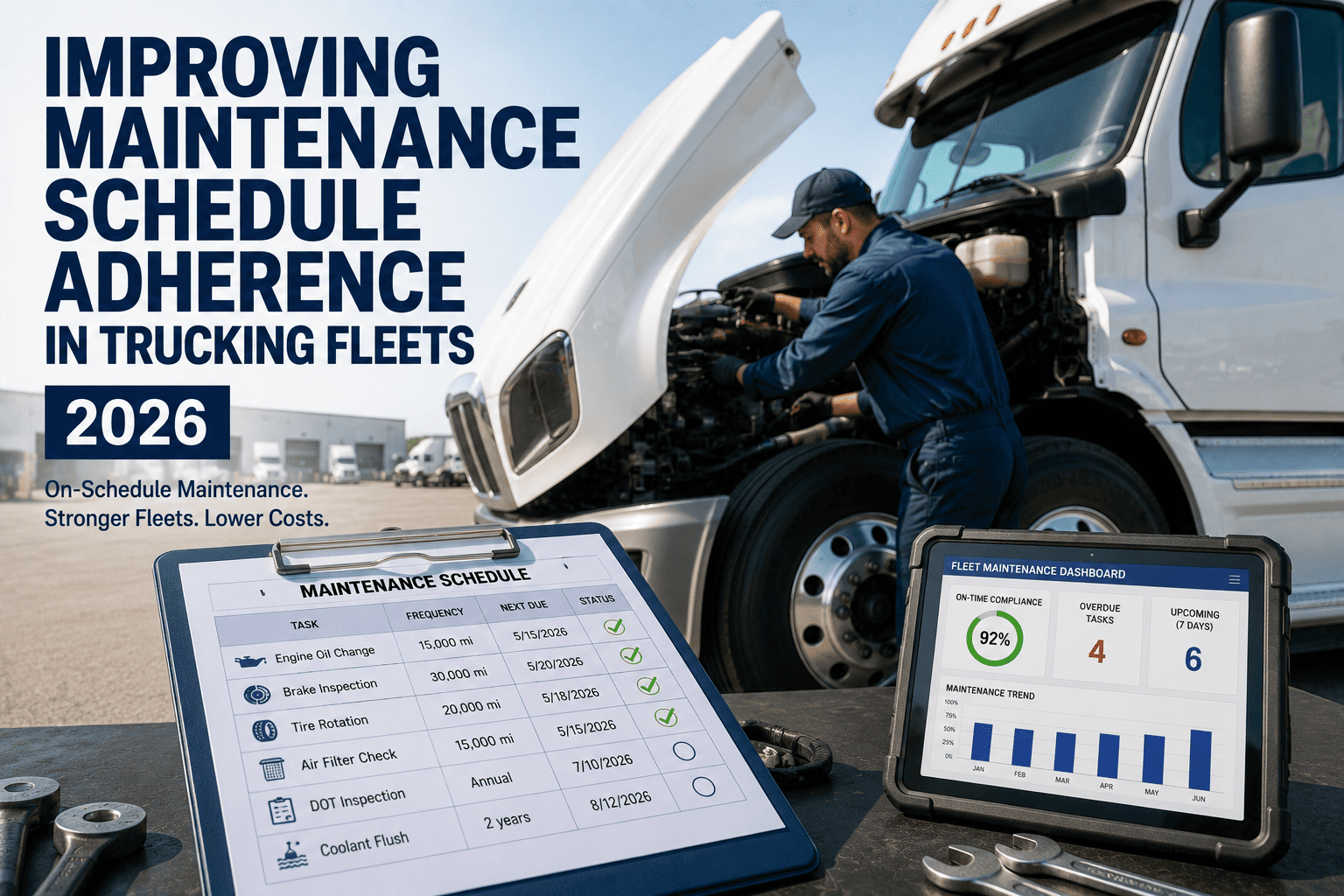
A truck maintenance log template isn't busywork for the shop. It's one of the highest-return habits a fleet can build, quietly adding thousands of dollars back into every vehicle's resale price while also making day-to-day reliability easier to manage. This guide breaks down exactly what a complete maintenance log needs to track in 2026 and how FleetRabbit turns that log into something buyers, auditors, and your own maintenance team can actually trust.
Trucks with complete, verifiable service histories typically command 10 to 15 percent higher resale prices than mechanically identical units without documentation. On a truck worth 20,000 dollars, that gap alone can be worth several thousand dollars, all from simply keeping consistent records.
Why a Maintenance Log Is Worth More Than the Paper It's Written On
A buyer evaluating a used truck cannot see inside the engine, and they know it. What they can see is whether the seller kept a disciplined record of every oil change, brake job, and repair. That record either builds trust or raises red flags, and buyers price that trust directly into their offer.
What Buyers Actually Look For
Serious buyers want a clean, chronological timeline: what was serviced, when, at what mileage, and who did the work. Loose receipts with no mileage notes are better than nothing, but a scattered pile of paper reads as a scattered approach to maintenance, even if the actual mechanical work was done properly.
What Belongs in a Complete Maintenance Log
Every entry in your log should capture enough detail that a stranger could reconstruct the truck's full service history without ever meeting the person who did the work.
| Log Field | What to Record | Why It Matters |
|---|---|---|
| Date & Odometer | Exact service date and mileage or engine hours at time of service | Establishes the service timeline buyers use to verify consistency |
| Service Type | Oil change, brake service, tire rotation, major repair, or inspection | Shows the full scope of care, not just the big-ticket items |
| Parts & Fluids Used | Brand, part number, and fluid specification where applicable | Proves quality parts were used instead of the cheapest available option |
| Cost & Labor Source | Total cost and whether performed in-house or by an outside shop | Supports cost-per-mile tracking and verifies professional service history |
| Photos & Receipts | Scanned receipts and photos of completed work where practical | Turns a claim into evidence a buyer or auditor can independently verify |
| Next Due Date | Mileage or date for the next scheduled service on that item | Keeps the log forward-looking, not just a record of the past |
A note on presentation
Organized digital history feels more credible than a stack of paper, even when the underlying work is identical. When parts, dates, mileage, and photos all live in one place, a buyer spends less time hunting for answers and more time feeling confident about the price you're asking.
FleetRabbit automatically records every service, part, and cost against each vehicle's history, so your maintenance log is always complete and ready to show. You can sign up for a free trial to digitize your fleet's history today, or book a demo to see exactly how it builds resale-ready records.
Organize Your Log Into Four Categories
A log that lumps everything into a single running list is hard for anyone to review quickly. Splitting entries into clear categories makes the file easy to scan for both your own team and a future buyer.
Logging Mistakes That Quietly Cost You at Resale
A log entry that just says "oil changed" without an odometer reading leaves buyers guessing about actual service intervals, which undermines the whole point of keeping records.
Work done by your own shop is just as valuable as an outside invoice, but only if it gets logged with the same detail. Undocumented in-house work looks like a gap in the timeline.
Paper fades, gets misplaced, and rarely survives a multi-year ownership period intact. A missing receipt reads to a buyer as a missing service, even if the work was actually done.
Waiting until a truck is listed for sale to compile records means scrambling to reconstruct history from memory, which almost always leaves gaps a careful buyer will notice.
FleetRabbit keeps a running, exportable service history for every truck in your fleet, so you're never scrambling to piece together records before a sale or an audit. Sign up free to start tracking today, or book a 30-minute demo to see a sample export.
Building a Digital Log That Actually Gets Used
Begin tracking from the day a vehicle joins your fleet, not after the first breakdown or repair.
Use the same fields every time, date, mileage, service type, cost, and technician, so entries stay consistent across every vehicle and driver.
Scan or photograph documentation the same day, since paper and memory both degrade quickly.
Check each vehicle's log every quarter to catch missing entries while they're still easy to fill in.
Present buyers with an organized timeline instead of a raw data dump, since presentation directly affects how much trust the history earns.
A complete maintenance log protects reliability today and resale value tomorrow. FleetRabbit builds that history automatically for every vehicle in your fleet, so you're always ready to sell, trade, or pass a compliance review with confidence. Get started free, no credit card required, or talk to our team first.