A truck is running a full load down the interstate when the dash lights up with an aftertreatment warning. An hour later, ignored, the engine cuts to reduced power. By the next morning, it's crawling at 5 miles per hour with nowhere to go but a shop. This is the derate escalation that DEF, DPF, and SCR system failures set in motion — and almost every stage of it is preventable with the right monitoring in place.
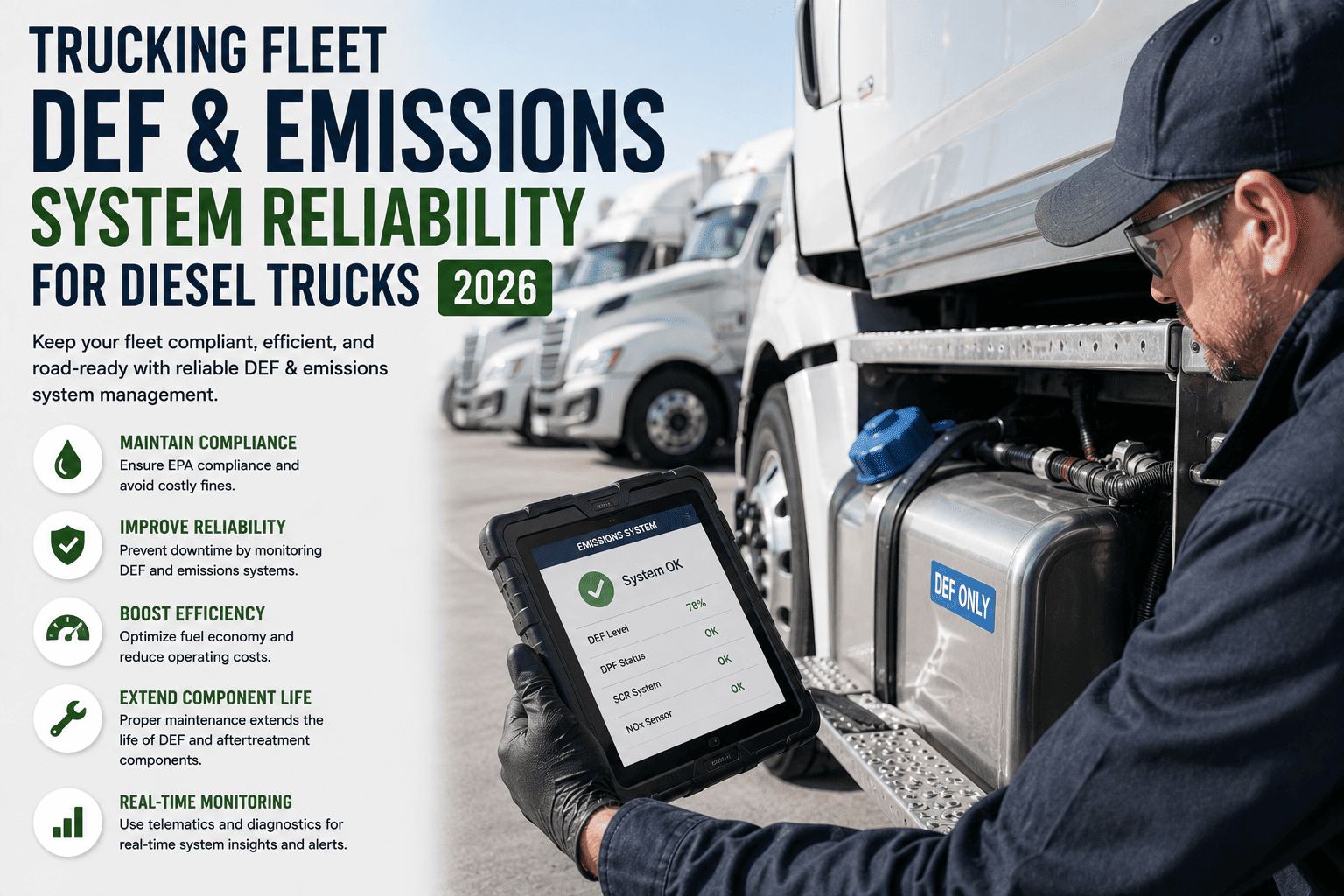
DEF, DPF, and SCR reliability comes down to catching small warning signs before they cascade into a derate. A single DEF system fault can cut engine power by 25 to 65 percent, and roughly 30 percent of all SCR-related fault codes trace back to sensor drift rather than a genuine mechanical failure. A clogged filter alone can cut fuel efficiency by around 5 percent, and that dip is often the first measurable sign of trouble. Telematics-based fault code monitoring lets fleets act on a warning-stage alert instead of discovering the problem at roadside in limp mode.
How DEF, DPF, and SCR Actually Work Together
These three systems are frequently diagnosed as if they're independent, but they function as one connected chain. A problem in one rarely stays isolated to that component alone.
DPF Traps Soot
The diesel particulate filter captures soot before it leaves the exhaust, and periodically burns it off through regeneration to keep flow and backpressure normal.
DEF Is Injected
Diesel exhaust fluid, a precise urea-water solution, is dosed into the exhaust stream at the ratio and timing the ECM calculates from live sensor data.
SCR Converts NOx
The selective catalytic reduction catalyst uses that DEF to convert harmful NOx into nitrogen and water, verified by sensors both upstream and downstream.
Because each stage feeds the next, a DPF running hotter or cooler than expected shifts the exhaust temperature profile the SCR system depends on. A drifting NOx sensor causes the ECM to request the wrong DEF dosing rate. Chasing a single fault code without checking the whole chain is one of the most common reasons a repair doesn't actually fix the underlying problem.
The Derate Escalation Nobody Sees Coming
When the system detects a fault it can't resolve, it doesn't shut the truck down immediately. It follows a structured, staged sequence designed to force a fix before emissions damage compounds — and every stage is a chance to catch the problem before the next one.
| Stage | What Happens | Time Before Escalation |
|---|---|---|
| Stage 1: Warning | Dash warning light appears, full power still available | Typically a day or two of normal driving to schedule a fix |
| Stage 2: Reduced Power | Engine power is cut, noticeably affecting performance under load | Follows within hours to days of continued operation |
| Stage 3: Regen Disabled | Active regeneration is blocked, allowing soot overload to compound | Compounds quickly once triggered, worsening the root problem |
| Stage 4: Limp Mode | Speed capped near 5 miles per hour, truck effectively immobilized | Requires OEM-level diagnostic software to reset once triggered |
FleetRabbit surfaces DEF, DPF, and SCR fault codes across your fleet in real time, so a warning-stage alert gets scheduled instead of ignored until it becomes a roadside derate. Sign up free to start tracking fault code history by vehicle, or book a demo to see it against your own fleet's diagnostics.
What Actually Breaks First
Most DEF and emissions system failures trace back to a handful of recurring root causes. Knowing which one is most likely narrows diagnosis dramatically before a technician ever connects a scan tool.
DEF Fluid Quality
Proper DEF holds a 32.5 percent urea concentration. Diluted fluid causes SCR underperformance and NOx spikes, while over-concentrated or contaminated fluid can damage the catalyst outright. Poor fluid quality causes more system failures than mechanical breakdowns.
What to watch for
White crystalline buildup around injectors, caps, or fittings signals crystallization from low-quality or improperly stored fluid.
NOx Sensor Drift
Sensor failures account for a significant share of SCR-related fault codes, particularly on vehicles with high idle hours or frequent regen events. A sensor drifting by even a small margin causes the ECM to request the wrong DEF dosing rate, which is a common root cause of premature catalyst failure.
What to watch for
A rising DEF consumption rate with no change in duty cycle often points to the system compensating for a sensor reading it can no longer trust.
Cold-Weather Tank Freezing
DEF freezes at 12 degrees Fahrenheit, and the tank heater circuit that prevents this is a common winter failure point. Heater codes spike predictably in the coldest months, and a frozen tank stops the entire SCR system until it thaws or the heater is repaired.
What to watch for
Heater-related fault codes appearing disproportionately between November and February point to circuit failure rather than fluid quality.
Early Warning Signs Worth Tracking Before a Fault Code Appears
Some of the clearest signals of developing trouble show up before the system ever throws a code, which is exactly why continuous monitoring catches problems a scheduled inspection would miss.
| Signal | What It Usually Means | Why Catching It Early Matters |
|---|---|---|
| Rising Regen Count | Aftertreatment system is gradually clogging | Caught early it's a cleaning; ignored it becomes a derate and a stranded load |
| Fuel Economy Dip | A clogged filter can cut fuel efficiency by around 5 percent | Often the first measurable sign of DEF or aftertreatment trouble |
| Rising Backpressure Readings | Ash accumulation or catalyst substrate damage building gradually | A trend tracked monthly identifies degradation before a code appears |
| Increasing DEF Consumption | System compensating for a sensor it no longer trusts | A root-cause signal that predicts sensor replacement before a derate hits |
FleetRabbit logs DEF, DPF, and SCR fault history per vehicle and flags recurring patterns across your fleet, so one truck's problem doesn't repeat itself on five more before anyone notices. Start your free trial today, or book a 30-minute demo to see your own fault code history mapped out.
Frequently Asked Questions
DEF, DPF, and SCR failures rarely happen without warning. FleetRabbit tracks fault codes, fuel economy trends, and regen frequency across your fleet so small problems get fixed before they become roadside derates.