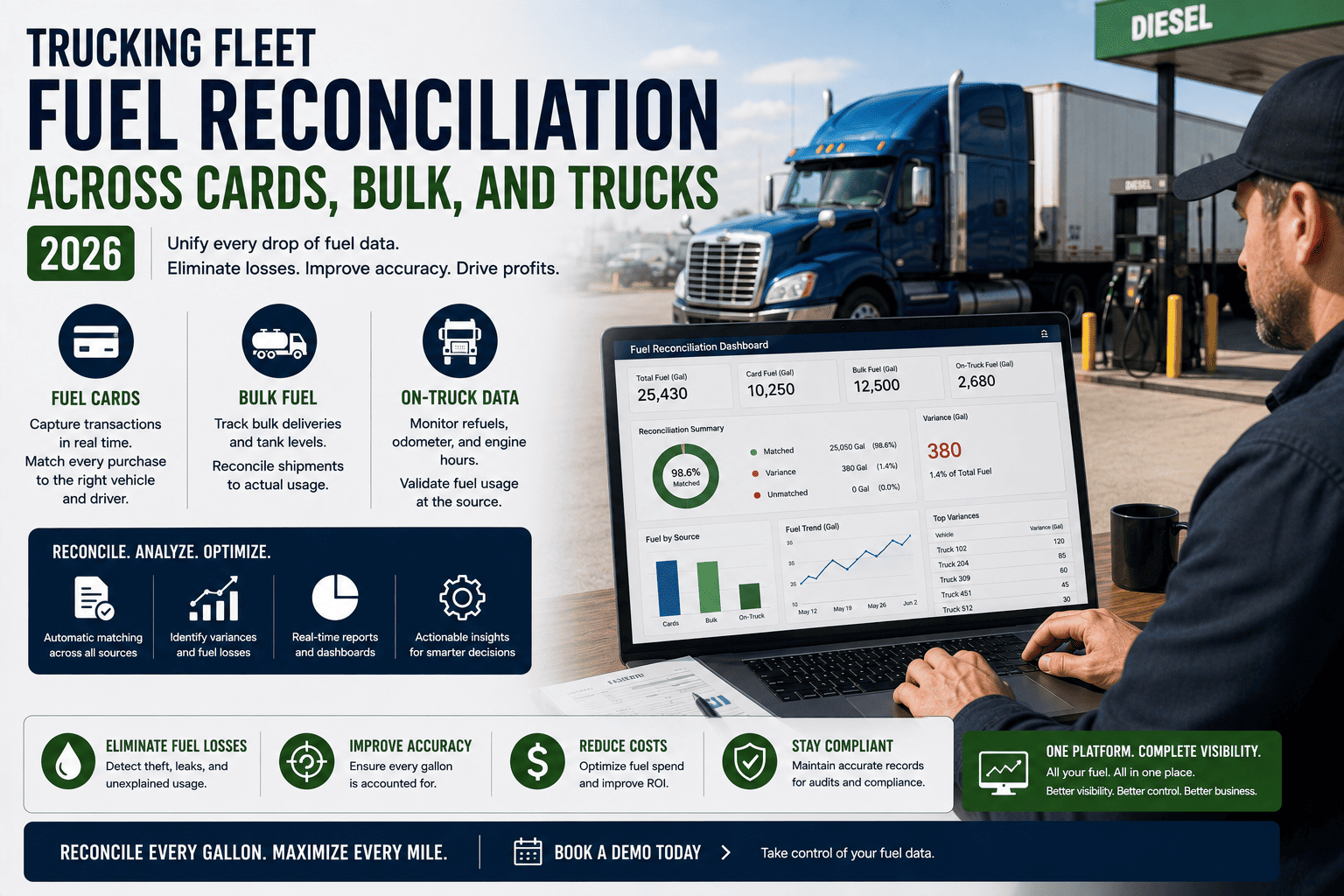
Fuel is usually the single largest line item on a trucking company's expense sheet, and it is also the one most fleets reconcile the least carefully. A card swipe at a truck stop, a bulk tank drawdown at the yard, an odometer reading from telematics: three separate systems, three separate reports, and almost never one person cross-checking all three against each other every week. That gap is exactly where fuel theft, card misuse, and simple data errors hide in plain sight.
Industry estimates put fuel card misuse and fraud at 5 to 15 percent of total fuel spend for fleets that do not cross-reference transactions against GPS and tank data. Roughly 73 percent of commercial fleets report experiencing some form of fuel theft, and internal theft accounts for the majority of those incidents. Fleets that reconcile card, bulk, and vehicle fueling data against telematics typically uncover thousands of dollars in previously invisible losses within the first week of looking.
Three Fuel Sources, One Reconciliation Problem
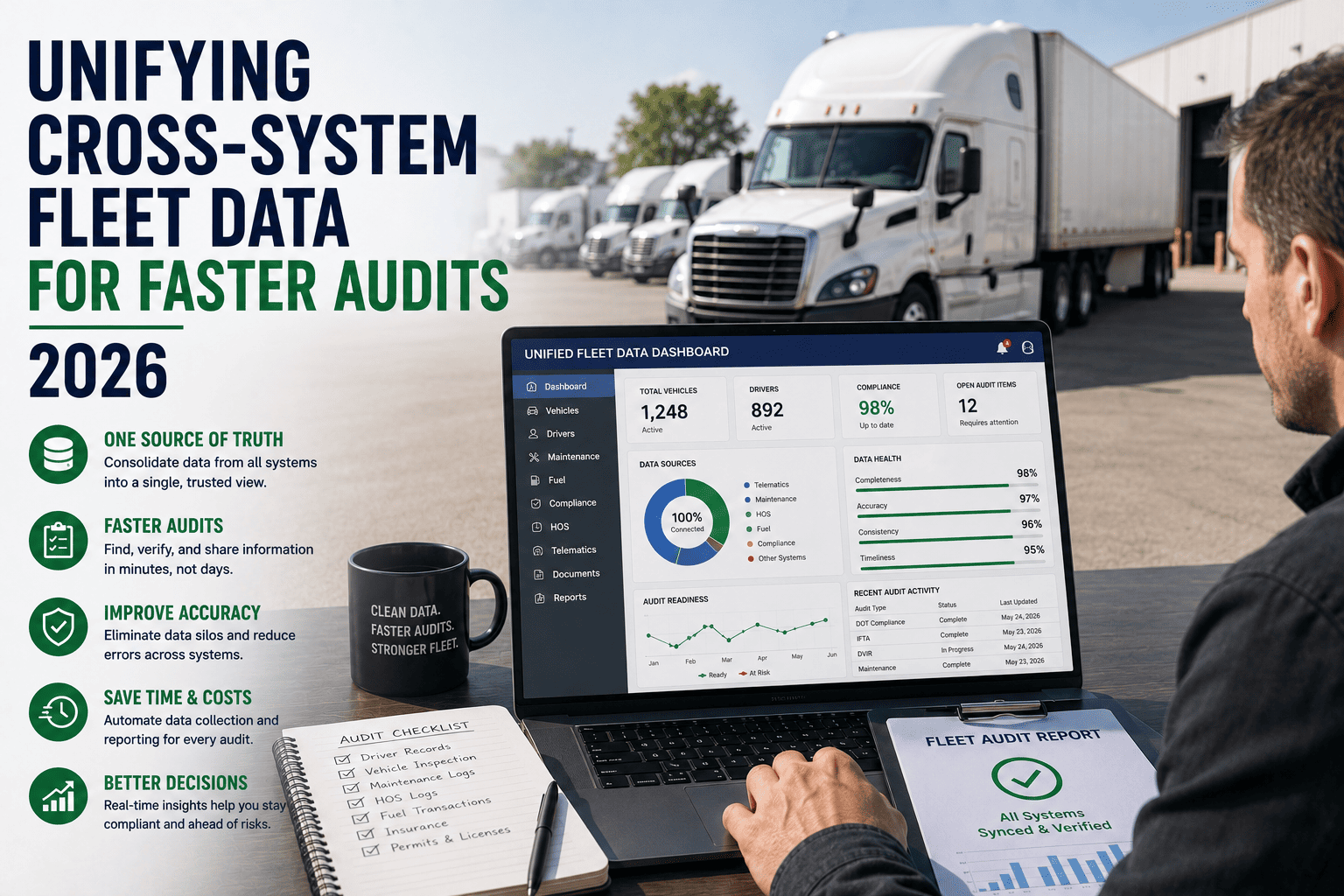
Every fleet fuels vehicles through some combination of card transactions at retail stops, bulk fuel drawn from an on-site tank, and data captured by the vehicle itself. Reconciliation means matching all three against each other so every gallon paid for is a gallon that actually went into a company truck.
Every swipe reports gallons, price, location, and time, but the card network never confirms the truck was physically at the pump.
On-site tank drawdowns are tracked by dip readings or meters, which can drift out of sync with what was actually dispensed to each vehicle.
GPS location, odometer, and engine data show exactly where the truck was and how far it traveled between fills, the missing verification piece.
Reconciliation is the process of pulling all three data sets into one view and asking a simple question for every transaction: does the location, the mileage, and the gallons purchased all agree with each other? When they do not, that mismatch is the signal worth investigating.
FleetRabbit pulls fuel card transactions, bulk tank data, and vehicle telematics into a single reconciled view, flagging mismatches automatically instead of waiting for month-end. Sign up free and see your fleet's fuel data reconciled in one place.
The Discrepancies That Reveal Themselves
When card, bulk, and telematics data are compared side by side, a handful of mismatch patterns come up again and again. Each one points to a different root cause and a different fix.
| Discrepancy Type | What The Data Shows | Likely Cause |
|---|---|---|
| Location Mismatch | Card used at a station far from the truck's GPS position | Card skimming, card sharing, or unauthorized use |
| Volume Mismatch | Gallons purchased exceed the vehicle's tank capacity | Side fueling into a personal vehicle or container |
| Timing Mismatch | Two fill-ups logged for the same truck within a short window | Duplicate charges, card cloning, or data entry error |
| Bulk Tank Drift | Dispensed volume does not match dip-stick or meter readings | Meter calibration issues or unrecorded bulk withdrawals |
| Mileage Inconsistency | Fuel economy drops sharply without a route or load change | Mileage inflation to justify excess fuel purchases |
Building a Reconciliation Process That Actually Works
Fixing fuel reconciliation is less about a single tool and more about a consistent, repeatable process applied to every transaction, every week.
Centralize Every Data Source
Fuel card statements, bulk tank logs, and telematics exports need to land in one system rather than three separate portals. Reconciliation that requires opening multiple logins rarely happens consistently.
What to look for
A platform that ingests fuel card feeds and telematics data automatically, so no one is manually re-typing gallons and locations into a spreadsheet each week.
Match Transactions to Vehicle Position
Every fuel purchase should be checked against the vehicle's GPS location and odometer reading at the time of the transaction. A mismatch here is the single strongest fraud indicator available.
What to look for
Automatic geofencing around approved fueling locations, so a transaction outside the expected radius triggers an alert the same day, not at month-end.
Flag Before You File
Reconciliation should catch discrepancies before an invoice is paid or a monthly report is filed, not after. The earlier a mismatch is caught, the easier it is to investigate while details are still fresh.
What to look for
Real-time alerts sent to a fleet manager the moment a transaction fails a location, volume, or timing check.
Close the Loop With Drivers
Not every discrepancy is fraud. Some are data entry errors, tank calibration drift, or a legitimate off-route stop. A short, documented follow-up with the driver closes each flagged transaction with a clear resolution.
What to look for
A record-keeping system that logs the resolution against the transaction, building a clean audit trail over time.
FleetRabbit checks every fuel transaction against GPS location, tank capacity, and mileage automatically, so location and volume mismatches are flagged the same day. Book a free demo and walk through your fleet's own fuel data with our team.
Warning Signs Worth Watching
A handful of patterns tend to show up consistently ahead of confirmed fuel fraud or reconciliation failures. None of these alone proves wrongdoing, but each one is worth a closer look.
Frequently Asked Questions
Turning Three Reports Into One Reliable Number
Fuel reconciliation will never be glamorous work, but it is some of the highest-leverage work a fleet manager can do. The fleets losing the most to fraud and waste are rarely the ones with a bad fuel card or a bad driver. They are the ones still checking three separate reports by hand, once a month, after the money has already gone out the door. Bringing card, bulk, and telematics data together in one place turns a monthly guessing game into a daily, defensible number.
FleetRabbit reconciles fuel card transactions, bulk tank data, and vehicle telematics automatically, flagging mismatches the same day instead of at month-end. Start free with three vehicles or walk through your own fuel data with our team on a live call.