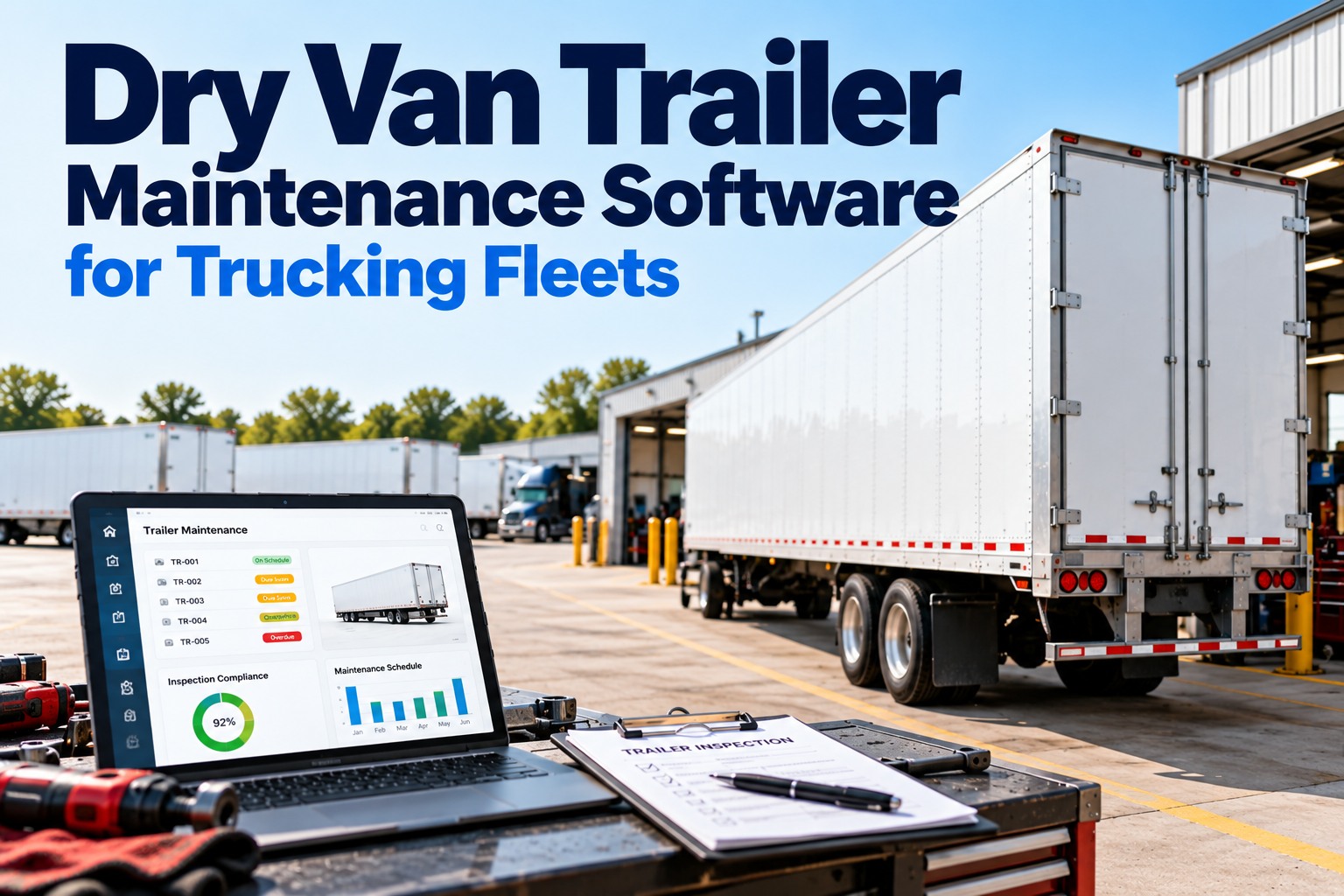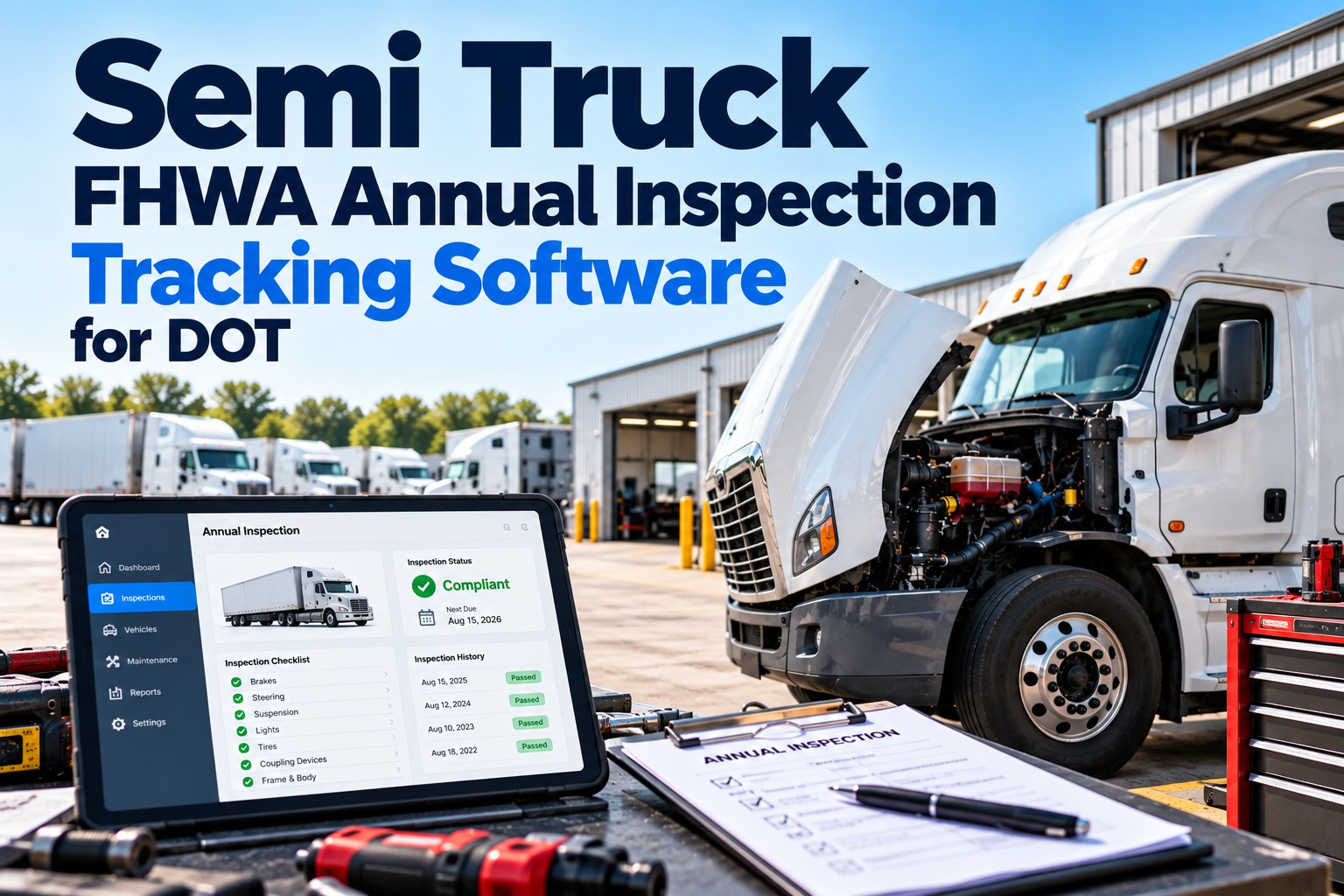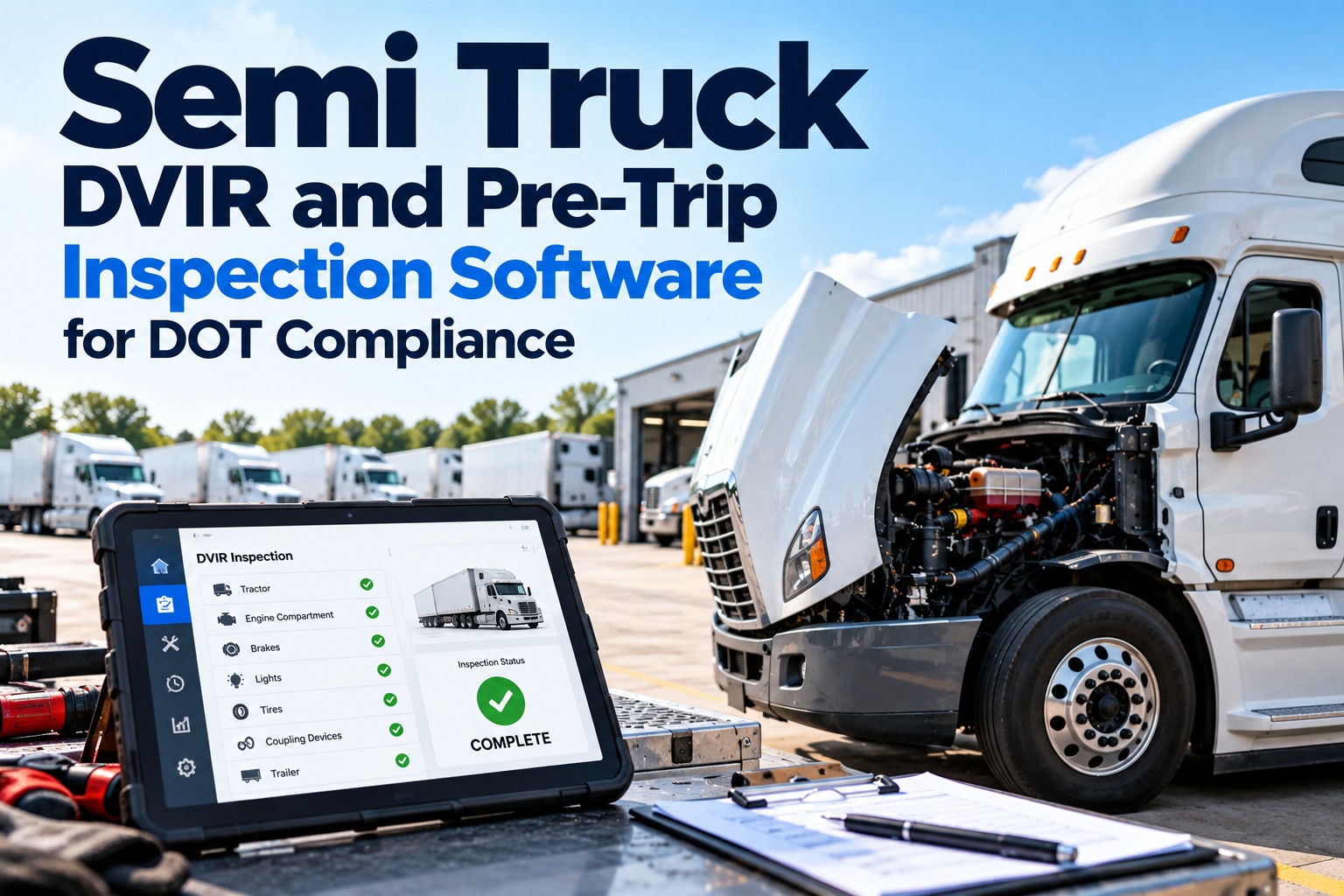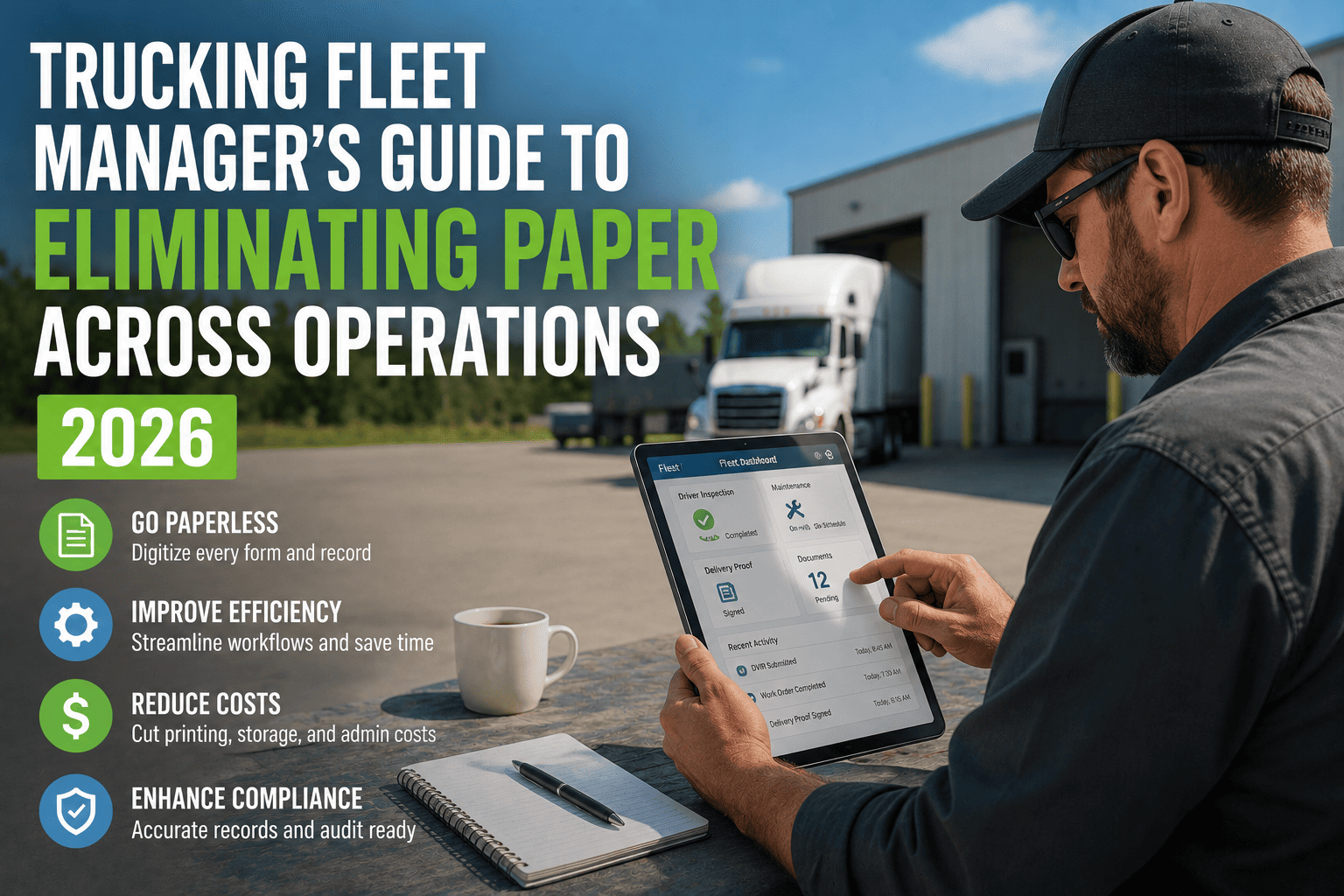
Somewhere in every trucking operation there is a filing cabinet, a glove box, or a dispatch tray stuffed with paper that nobody has time to read. Pre-trip inspection forms with handwriting nobody can decipher. Work orders scribbled on carbon copies. Maintenance records buried in binders that take twenty minutes to search during a DOT audit. In 2026, that paper is no longer just an inconvenience. With FMCSA's February 2026 final rule explicitly authorizing electronic DVIRs and a major overhaul of CSA scoring now live, paper-based fleets are operating at a measurable disadvantage in audit exposure, safety scores, and daily productivity. Going paperless is no longer a nice-to-have upgrade. It is quickly becoming the baseline for staying compliant and competitive.
Fleets eliminate paper by digitizing four core workflows together: DVIRs and inspections, work orders, maintenance and repair records, and compliance documentation. Digital DVIR completion rates jump from 55 to 65 percent on paper to 94 to 98 percent within 30 days, and fleets typically finish the full paper-to-digital transition in two to four weeks with no hardware required.
Where Paper Is Still Hiding in Your Fleet
Most fleet managers underestimate how much of their operation still runs on paper because it happens in small, scattered pieces across the day. A single driver inspecting a tractor, trailer, and reefer unit fills out three separate paper forms every day, which adds up to roughly 780 handwritten forms a year for that one driver alone. Multiply that across a 50-truck fleet and the operation is generating close to 39,000 paper forms annually, every one of them filled by hand, filed in folders, and pulled manually whenever a DOT auditor asks for records.
The 2026 Rule Change That Removed the Last Excuse
On February 19, 2026, FMCSA published a final rule explicitly authorizing electronic DVIRs under 49 CFR 396.11 and 396.13, effective March 23, 2026. Electronic DVIRs were technically permissible since 2018, but grey areas in the language left room for auditors and carriers to interpret the rules differently. That ambiguity is gone. Digital signatures now fully replace wet-ink requirements, and electronic records are treated as a stronger audit trail than paper because they are tamper-evident and cryptographically timestamped. Alongside the rule, the 2026 CSA methodology overhaul split the Vehicle Maintenance BASIC into a "Standard" category and a new "Driver Observed" category, which tracks defects a driver should have caught during a walk-around. Paper-based fleets simply cannot document driver-level defect detection automatically, which means every paper DVIR is now a visible gap in a carrier's safety score.
What Changes When You Go Digital
The shift from paper to digital is not just a compliance checkbox. It changes how fast information moves through your operation. A flagged defect on a paper form waits until someone reviews the stack at the end of a shift. On a digital platform, that same defect creates a maintenance work order and reaches a mechanic in under 60 seconds.
DVIR completion rates before and after digitization
Fleets moving to digital DVIRs typically see completion rates climb from the 55 to 65 percent range common on paper up to 94 to 98 percent within the first 30 days, simply because the app will not let a driver submit an incomplete inspection.
Where the Real Savings Come From
Electronic DVIRs take 2 to 5 minutes to complete compared to 10 to 15 minutes for paper forms. Over a year, that difference alone saves a driver 40 to 60 hours, nearly a full work week, just on inspection paperwork. Across an entire fleet, paperless compliance workflows cut administrative time by up to 80 percent and can save more than 2,400 dollars per vehicle annually in compliance labor while helping fleets avoid DVIR violation fines that can range from 1,000 to 16,000 dollars per incident.
| Operational Area | Paper-Based Process | Digital Process |
|---|---|---|
| Inspection Time | 10 to 15 minutes per DVIR | 2 to 5 minutes per DVIR |
| Defect Routing | Hours to days, filed manually | Under 60 seconds, automatic work order |
| Record Retrieval | Manual search through folders | Any record produced in seconds |
| Audit Readiness | Incomplete responses common | Complete history available on demand |
FleetRabbit replaces clipboards with guided digital checklists your drivers already know how to use on their phones. No hardware, no complicated setup. Start your free trial and see your first digital DVIR completed today.
The Four Workflows Every Fleet Should Digitize First
Fleets that make a clean break from paper do not try to digitize everything at once. They sequence the transition around the four workflows that generate the most paper and the most compliance risk.
1. Digital Inspections and DVIRs
This is the starting point for almost every fleet because it touches every driver, every day. Guided checklists walk drivers through each inspection zone in a logical order, capture photos of any defect, auto-classify severity, and record GPS and timestamp data automatically, so there is no ambiguity about whether or when an inspection actually happened.
2. Electronic Work Orders
When a defect is flagged digitally, it should not sit in a queue. Automated work order routing pushes the issue straight to the assigned mechanic, with the photo and severity classification attached, so nothing gets lost between the yard and the shop.
3. Digital Maintenance Records
Every repair, part, and certification should live in one searchable history tied to the vehicle, not scattered across invoices and handwritten logs. This is what turns maintenance data from a filing obligation into a tool for spotting recurring failures before they become expensive.
4. Centralized Compliance Documentation
Medical certifications, inspection history, and repair certifications need to be retrievable within minutes of an audit request, not days. A centralized digital record satisfies the 90-day DVIR retention requirement automatically and keeps every document ready before an auditor ever asks.
A simple way to sequence your rollout
Start with digital DVIRs in week one, connect work orders to defect alerts by week two, migrate maintenance history by week three, and centralize compliance documentation by week four. Most fleets complete this entire sequence in two to four weeks without pausing operations.
How FleetRabbit Makes the Transition Simple
FleetRabbit was built to remove paper from every point where it slows a fleet down. Drivers complete guided digital inspections on the phones they already carry, with offline mode so a poor signal at a remote yard never delays a required inspection. Flagged defects automatically generate a work order and notify the right mechanic within seconds. Every inspection, repair, and compliance document is stored with photos, timestamps, GPS data, and digital signatures, searchable instantly from any device. When a DOT audit request comes in, fleet managers pull the complete record in seconds instead of searching filing cabinets for hours. If you want to see exactly how the transition would work for your fleet, you can book a free demo and walk through your current paper process with the FleetRabbit team.
Frequently Asked Questions
Paper was never really free. It cost time in the cab, time in the shop, and time during every audit, even when nobody was adding it up. With regulators now explicitly favoring digital records and CSA scoring rewarding documented compliance, the fleets that make the switch early are the ones building a measurable advantage, not just a tidier filing system.
FleetRabbit connects digital DVIRs, work orders, maintenance records, and compliance documentation into one system your team can trust during every audit. Start your free trial with no credit card required, or book a short demo to see your paperless workflow in action.