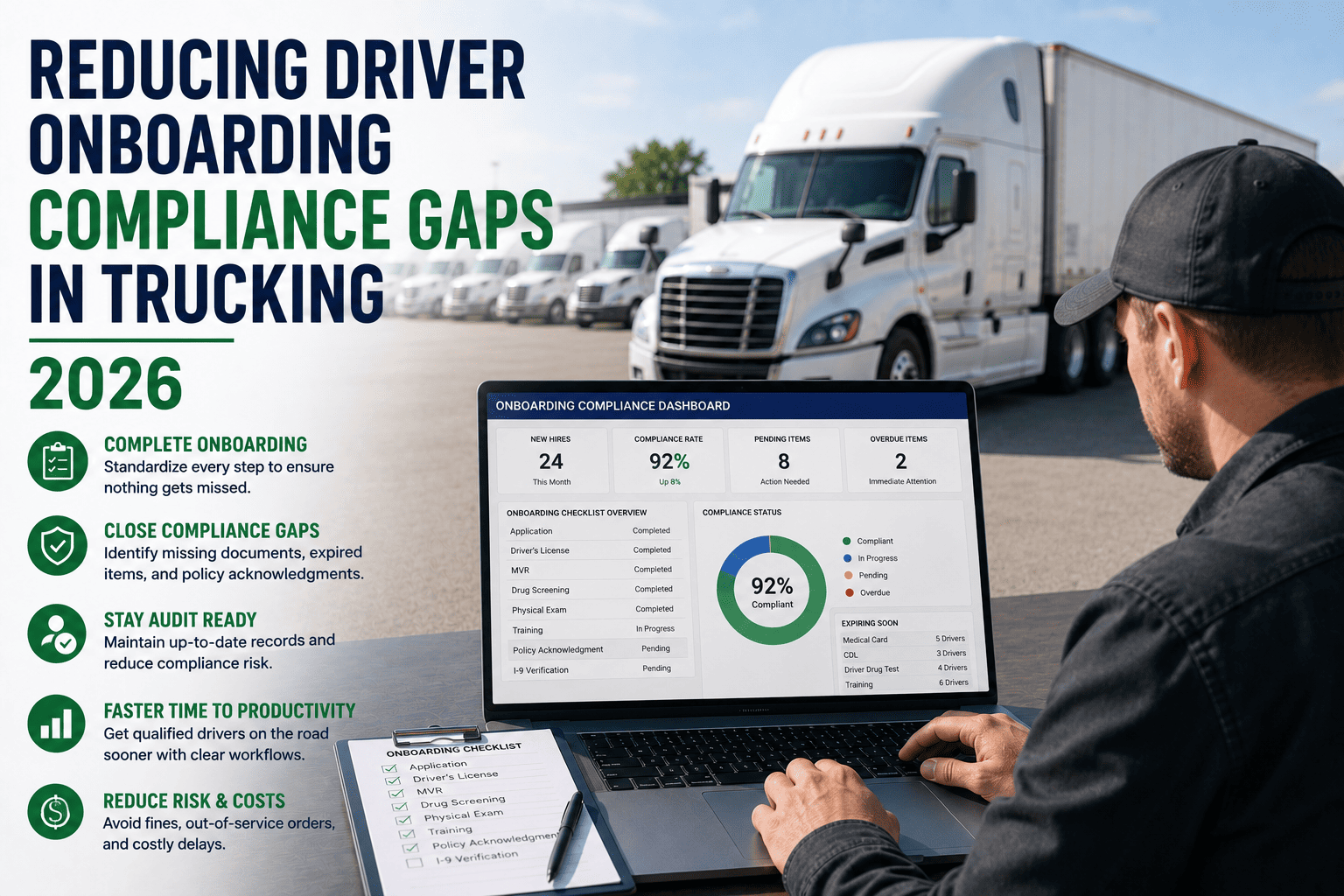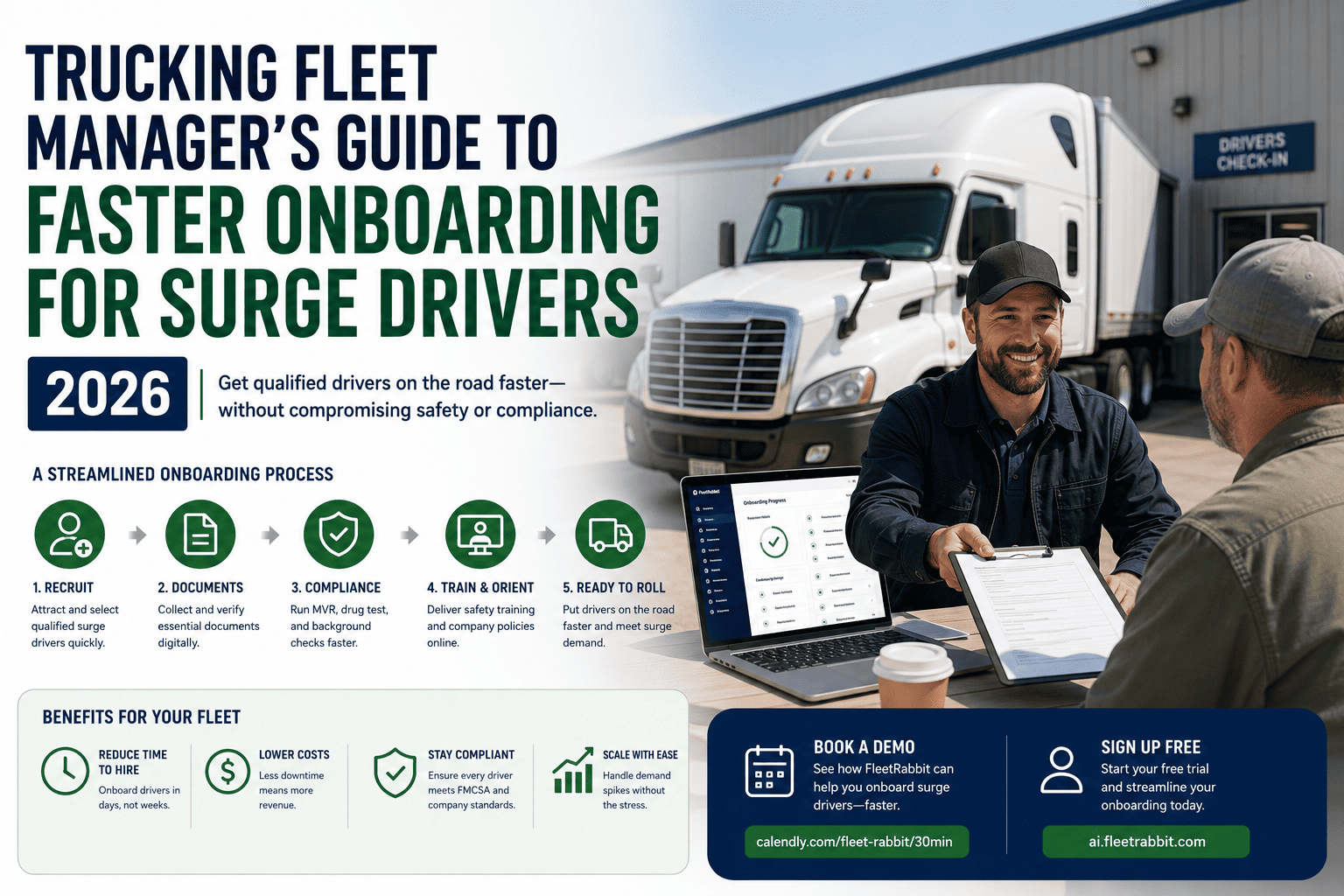
Peak season arrives fast, and every day a truck sits empty because a driver is still waiting on paperwork is a day of freight revenue gone. Seasonal hiring surges put fleets under real pressure, needing to bring drivers on board quickly without cutting corners on the qualification checks that keep operations legal and safe. Traditional onboarding can take one to two weeks per driver, and during a surge that timeline is exactly what stands between a fleet and the freight capacity it needs right now.
Standard driver onboarding commonly takes 1 to 2 weeks per hire, but fleets that maintain digital records for returning seasonal drivers and update only what has changed can cut that down to 2 to 3 days. Driver turnover at large carriers reached roughly 94 percent in 2025, and replacing a single driver now costs more than 12000 dollars once recruiting, training, and lost productivity are counted.
Why Surge Onboarding Breaks Down Under Pressure
Seasonal demand is predictable in shape even when the exact timing shifts. Produce season pulls reefer drivers into the market from spring through summer, construction season drives flatbed hiring, and holiday freight creates a dry van and box truck surge from October through December. What is not predictable is how fast a fleet can actually get a qualified driver behind the wheel once that demand hits, and that is where most surge hiring plans fall apart.
The bottleneck is rarely finding available drivers. It is the paperwork chain behind them: motor vehicle record checks, Clearinghouse queries, drug testing, and Driver Qualification File assembly, all of which still have to happen correctly even when the fleet is hiring under time pressure. Skipping steps to move faster is not a real option, since FMCSA is enforcing existing rules more strictly rather than introducing new ones, and incomplete files carry direct financial penalties.
The Three Points Where Surge Onboarding Slows Down
Rebuilding Files From Scratch Every Season
Many fleets treat every seasonal hire as a brand new file, even for drivers who worked the same route last year, repeating verification steps that did not need to be redone.
Paper Trails That Do Not Scale
Photocopied checklists and filing cabinets work fine for one or two hires a month. They collapse the moment a fleet needs to bring on a dozen drivers in a single week.
Verification Steps Handled By Different People
When MVR checks, Clearinghouse queries, and drug testing results live with different staff members or vendors, nobody has a single view of which drivers are actually ready to drive.
FleetRabbit centralizes credential verification, Driver Qualification Files, and compliance tracking in one place, so your team can onboard a wave of seasonal drivers without losing sight of any single file. Start your free trial and see how much faster your next hiring surge can move.
Seasonal Hiring Peaks By Equipment Type
Knowing when demand hits for your specific equipment type is the first step toward building a surge onboarding plan instead of reacting to one. Fleets that begin recruiting six to eight weeks ahead of peak season consistently pay less and screen more thoroughly than those hiring at the last minute.
| Equipment Type | Peak Season | Demand Driver | Recommended Recruiting Lead Time |
|---|---|---|---|
| Reefer | April to July | Produce season freight | 6 to 8 weeks before season start |
| Flatbed | March to October | Construction and building materials | 6 to 8 weeks before season start |
| Dry Van and Box Truck | October to December | Holiday retail freight surge | 6 to 8 weeks before Q4 peak |
| Hotshot | Spring and fall spikes | Oil field activity cycles | 4 to 6 weeks before expected spike |
Building A Faster Onboarding Workflow
Speed and compliance are not actually in conflict. The fleets that onboard fastest are the ones that removed the manual re-entry and hand-off steps, not the ones that skipped verification. A well-built digital workflow lets a returning driver's file get refreshed in days while a brand new hire still moves through full verification in a controlled, trackable sequence.
Keep A Standing File For Returning Seasonal Drivers
Retain records for drivers who return season after season, and update only what has actually changed, such as a new MVR pull, a refreshed Clearinghouse query, or a new drug test. This single habit is what turns a one to two week onboarding process into two to three days.
Centralize Every Verification Step In One System
When MVR results, Clearinghouse queries, drug testing, and DQF documents all live in one place, your team can see at a glance exactly which drivers are cleared and which are still waiting on one outstanding item, instead of chasing status across emails and spreadsheets.
Set Automated Alerts For Missing Documentation
Automated tracking flags an incomplete Driver Qualification File well before the 30 day deadline, giving your team time to close the gap instead of discovering the miss during an audit.
A Quick Surge Onboarding Checklist
Pull existing files for returning seasonal drivers before starting from scratch. Refresh only the documents that have expired or changed. Centralize MVR, Clearinghouse, and drug test results in one system. Set alerts for any Driver Qualification File approaching the 30 day deadline.
FleetRabbit tracks MVR checks, Clearinghouse queries, drug testing, and DQF completeness in a single dashboard, so your team always knows which drivers are cleared to drive. Book a demo and see how your next seasonal surge could move twice as fast.
Benchmarks For A Healthy Surge Onboarding Program
Track time from application to fully cleared status, and aim to keep returning seasonal drivers under three days while new hires stay within the standard one to two week window. Measure how many Driver Qualification Files are completed within the 30 day FMCSA deadline, targeting 100 percent completion rather than treating deadline misses as routine. Watch first-90-day accident rates among new hires, since fleets running structured onboarding report meaningfully fewer preventable incidents in this window. Fleets hitting these benchmarks consistently move faster during surges while carrying less compliance risk than fleets still relying on manual paperwork.
Frequently Asked Questions
Surge season rewards the fleets that prepared before the demand hit, not the ones scrambling once it arrives. A faster, centralized onboarding process means more trucks on the road when freight volume peaks, without trading away the compliance record that protects your fleet the rest of the year.
FleetRabbit brings credential verification, Driver Qualification Files, and compliance tracking into one system, so your team can onboard a wave of seasonal drivers quickly without missing a single requirement. Start your free trial with no credit card required, or book a short call with our team to plan for your next surge.