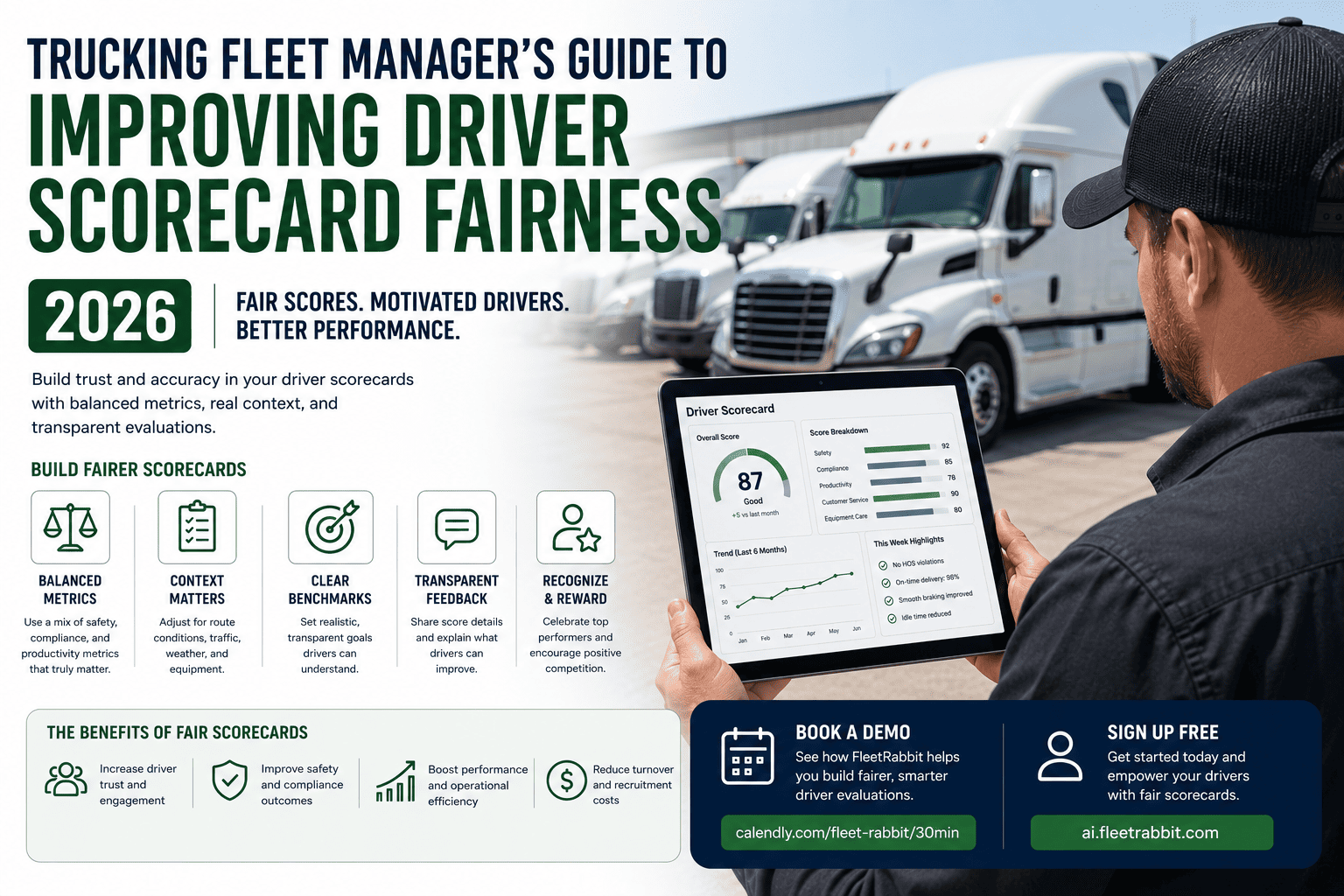
Ask any driver what they think of their fleet's scorecard, and you will get one of two reactions. Either they trust it enough to check it daily, or they have quietly stopped believing the number means anything at all. That difference matters more than most fleet managers realize, because in 2026 drivers expect transparency and fairness from safety systems, not just rules handed down with no explanation. A scorecard that feels arbitrary does not just frustrate drivers, it actively undermines the safety culture it was built to support.
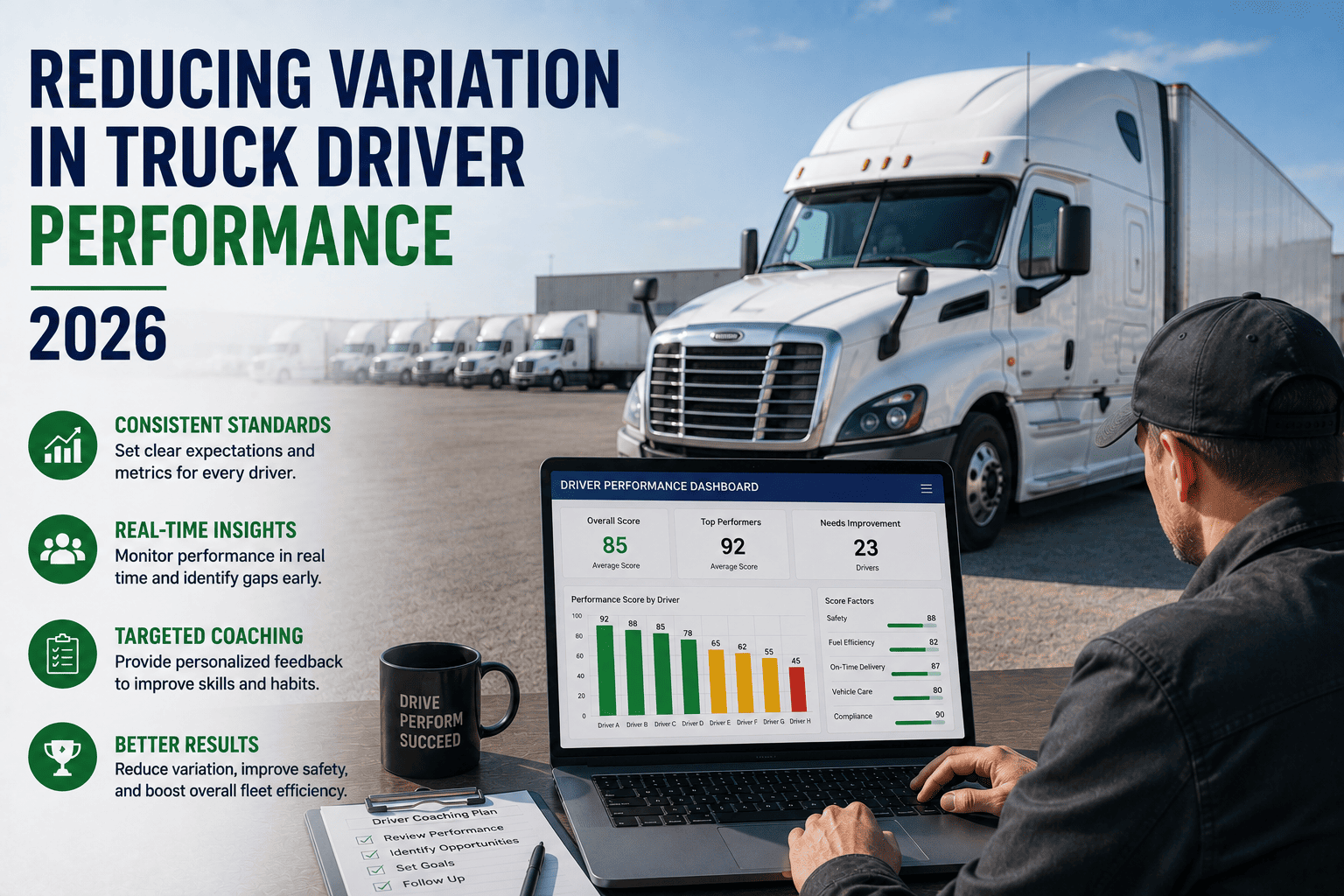
Good scorecard systems score every driver against the same criteria while accounting for context, such as scoring safety events per 1000 miles driven rather than raw event counts, so a long-haul driver and a city delivery driver are compared fairly. Fleets that document a consistent downward trend in harsh events and speeding frequency are often priced 13 to 30 percent below fleet-average insurance premiums.
Why Scorecards Feel Unfair To Drivers
Most scorecard resentment does not come from drivers rejecting accountability. It comes from a scoring system that ignores the reality of the job. A single hard-braking event caused by another vehicle cutting in gets treated the same as one caused by tailgating. A driver running unfamiliar mountain routes gets compared directly against a driver running flat interstate lanes for years. None of that is intentional unfairness, it is simply a scoring model that never accounted for context in the first place.
The fix is not to stop scoring driver behavior, since removing subjectivity from performance evaluation is exactly what gives every driver a fair and consistent goal to aim for. The fix is building a system precise enough to separate a driver's actual choices from circumstances outside their control, and transparent enough that drivers can see the data behind their own number.
The Three Fairness Gaps Most Fleets Overlook
Raw Counts Instead Of Normalized Rates
Comparing total events instead of events per 1000 miles driven automatically penalizes drivers who simply spend more hours on the road, regardless of how safely they drive.
No Fault Context On Flagged Events
A hard-braking event caused by another driver cutting in and one caused by following too closely look identical in raw telematics data unless the scoring system accounts for cause.
One Standard Applied To Every Route Type
A city delivery driver and a long-haul trucker face very different conditions, and scoring criteria that do not adjust for vehicle class, route, or job function will always feel arbitrary to at least part of the fleet.
FleetRabbit builds driver scorecards that normalize for mileage, account for event context, and adjust criteria by route and vehicle class. Start your free trial and see a scoring model your drivers will actually believe in.
Fair Versus Unfair Scorecard Practices
Small design choices separate a scorecard that motivates drivers from one that quietly breeds resentment. Here is how the most common practices compare.
| Scoring Practice | Common Unfair Approach | Fairer Alternative | Why It Matters |
|---|---|---|---|
| Event Counting | Raw number of harsh events per driver | Events measured per 1000 miles driven | Prevents penalizing drivers simply for logging more miles |
| Route Comparison | Every driver scored on identical criteria regardless of route | Criteria adjusted by vehicle class, route type, and job function | Accounts for genuinely different driving conditions |
| Score Visibility | Scores buried in a monthly spreadsheet | Weekly updates with a monthly formal coaching review | Keeps drivers aware of standing before patterns get reinforced |
| Public Ranking | Fully public individual scores for the whole fleet | Anonymized quartile rankings, individual scores shared privately | Creates healthy competition without hostility between drivers |
| Event Attribution | Same penalty regardless of who caused the event | Context review to confirm fault before scoring impact | Avoids punishing drivers for incidents outside their control |
Building A Context-Aware Scoring System
A scorecard drivers trust is not necessarily a more lenient one, it is a more precise one. The goal is separating genuine risk behavior from circumstances a driver could not control, then presenting that distinction transparently so drivers understand exactly what is being measured and why.
Normalize Every Metric By Miles Driven
Scoring safety events per 1000 miles rather than as a raw total ensures fair comparisons regardless of how much distance a driver actually covers, which removes one of the most common sources of scorecard resentment immediately.
Layer In Review Before Scoring Ambiguous Events
Not every hard-braking event or harsh turn reflects poor driving. Reviewing dashcam footage or event context before it affects a driver's score keeps only relevant, coachable behaviors contributing to the final number.
Adjust Criteria By Route And Vehicle Type
Good scorecard systems let fleets tailor criteria by vehicle class, route type, or job function, since a city delivery driver and a long-haul trucker genuinely face different conditions that a single universal standard cannot fairly capture.
A Quick Fairness Checklist For Your Scorecard
Normalize events per 1000 miles instead of raw counts. Review ambiguous events for fault before they affect a score. Adjust scoring criteria by route type and vehicle class. Share individual scores privately while publishing anonymized quartile rankings.
FleetRabbit combines telematics data, event context, and route-adjusted criteria into a scorecard your drivers can see and understand. Book a demo and walk through how fairer scoring can lower turnover and premiums together.
Benchmarks For A Fair Scoring Program
Fleets running scorecards drivers actually trust track a small set of practices consistently. Update scores weekly and hold a structured monthly coaching conversation, since quarterly reviews are too infrequent to correct a pattern before it becomes habit. Publish anonymized quartile rankings to fuel healthy competition, while keeping individual scores private between the driver and their manager. Review any event driving a significant score change before it counts, confirming fault rather than assuming the telematics data tells the whole story. Fleets hitting these benchmarks consistently report stronger driver engagement and steadier improvement trends than fleets treating the scorecard as a purely automated system.
Frequently Asked Questions
A fair scorecard does more than settle disputes about who deserves a bonus. It builds the kind of trust that keeps drivers engaged with their own safety data instead of ignoring it, and that trust is what actually drives the behavior change fleets are trying to score in the first place.
FleetRabbit builds context-aware driver scorecards that normalize for mileage, adjust for route and vehicle type, and give your team the coaching insights to act on real risk instead of noise. Start your free trial with no credit card required, or book a short call with our team to see fairer scoring in action.