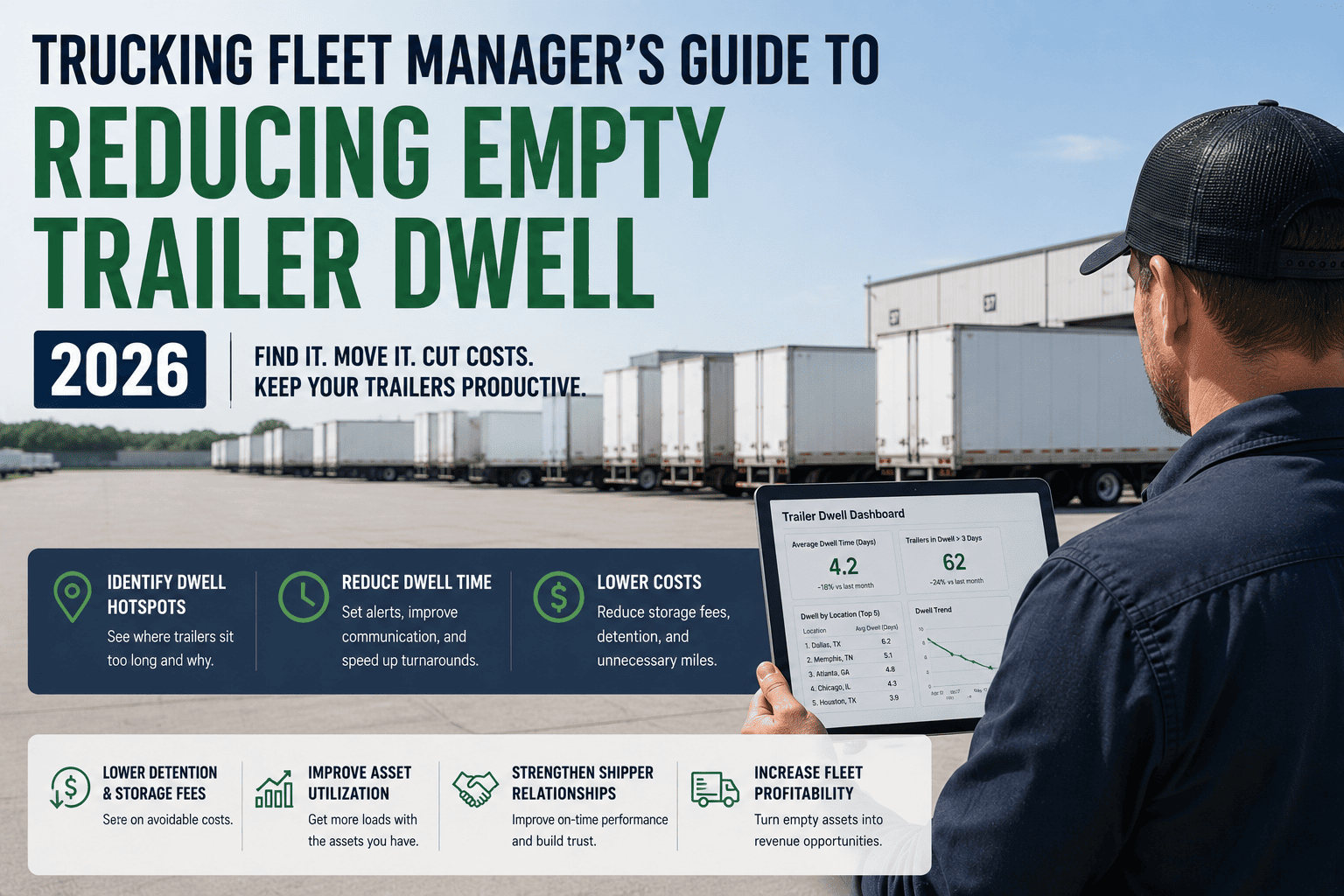
Somewhere across your yard, a customer dock, or a drop lot right now, a trailer is sitting empty and nobody is quite sure how long it has been there. It is not lost, and it is not stolen. It is simply invisible, and invisibility is expensive. Industry research consistently shows that 10 to 20 percent of trailers in any given fleet are unaccounted for at any point in time, quietly accumulating dwell days that never show up on a dispatch board until someone goes looking.
The average trailer spends 30 to 40 percent of its operational time sitting idle without a load assignment, and each idle trailer represents 150 to 400 dollars in daily lost revenue depending on trailer type and market rate. For a 200-trailer fleet, even a 15 percent idle rate can translate to 4500 to 12000 dollars in daily losses, or up to 4.3 million dollars a year.
Where Empty Trailer Dwell Actually Hides
Trailer dwell does not look like a single dramatic failure. It looks like a trailer dropped at a customer dock three days ago that nobody flagged for pickup. It looks like a unit sitting in a drop yard corner because the last driver never logged where they left it. It looks like a dispatcher calling a rental company because locating an owned trailer would take longer than just paying for a new one. None of these moments feel like a crisis in isolation, but together they represent a meaningful share of trucking equipment sitting underutilized across the industry every year.
The deeper problem is that dwell time is invisible until someone actively looks for it. Without dwell monitoring at customer locations, detention fees your fleet is owed frequently go unrecorded and unbilled entirely, turning a cost your fleet is entitled to recover into money left on the table twice over: once in idle trailer time, and again in unclaimed detention revenue.
The Three Ways Dwell Quietly Compounds
Network Imbalance
Idle trailers accumulate unevenly, creating a surplus in one market while another market runs short and pays premium rates to rent capacity that technically already exists elsewhere in the fleet.
Depreciation Without Return
A typical dry van depreciates 8 to 15 percent annually whether it is running or not. A trailer sitting idle produces zero revenue against that ongoing depreciation cost.
Unbilled Detention
When dwell time at a customer location is not tracked precisely, detention charges the fleet is contractually owed simply go unbilled, month after month.
FleetRabbit gives you live location and dwell time for every trailer, whether it is at your yard, a customer dock, or a drop lot across the network. Start your free trial and find out how many of your trailers are sitting idle right now.
The True Cost Breakdown Of An Idle Trailer
Trailer dwell cost is rarely just the missed freight revenue. It stacks across several categories at once, and most fleets only ever see the most visible layer.
| Cost Category | Typical Annual Impact | Why It Happens | How Visibility Helps |
|---|---|---|---|
| Depreciation Without Use | 1500 to 3000 dollars per trailer | Dry vans depreciate 8 to 15 percent yearly whether active or idle | Flags chronically underused trailers for redeployment or disposal |
| Storage And Yard Space | 600 to 1500 dollars per trailer | Idle trailers occupy paid yard space or opportunity-cost owned space | Identifies trailers that can be redeployed instead of stored |
| Unnecessary Rentals | 85 to 140 dollars per rented trailer per day | Dispatchers rent because they cannot locate an available owned unit | Live location data lets dispatch assign owned trailers first |
| Unbilled Detention | Varies, often thousands per trailer annually | Dwell time at customer docks is not tracked precisely enough to bill | Automated dwell alerts create a documented, billable timeline |
| Network Imbalance | Premium rental rates in short markets | Idle trailers cluster in one region while another region runs short | Fleet-wide visibility supports smarter trailer repositioning |
Building A Trailer Visibility System That Actually Works
Cutting empty trailer dwell is less about buying more trailers and more about knowing exactly where the ones you already own are sitting, and for how long. The fleets seeing the biggest utilization gains are not the ones with the most equipment, they are the ones that turned invisible dwell time into a number dispatch checks every day.
Track Every Trailer With Live Location Data
Real-time GPS tracking on every trailer, including dropped units at customer yards and drop lots, removes the guesswork from where an asset actually sits. Location updates every 30 to 60 seconds give dispatch a live picture instead of a last-known guess from days ago.
Set Dwell Time Alerts By Location
Long-dwell trailers flagged automatically for dispatcher review let your team decide quickly whether a unit should be activated for a load, billed for detention, or scheduled for maintenance while it sits idle anyway.
Score Utilization Per Trailer, Not Just Per Fleet
Calculating utilization as the percentage of available days each trailer spent in active revenue service reveals which specific units are chronically underused, candidates for redeployment, sale, or rental rather than continued ownership.
A Quick Trailer Dwell Reduction Checklist
Enable live GPS tracking across the full trailer fleet, including dropped units. Set automatic alerts for trailers exceeding your target dwell threshold. Review individual trailer utilization scores monthly, not just fleet averages. Bill documented detention time instead of writing it off as unrecorded.
FleetRabbit flags long-dwell trailers automatically, tracks detention time at every customer stop, and scores utilization per trailer so you know exactly which assets need attention. Book a demo and see your fleet's real utilization picture.
Benchmarks Worth Tracking Every Week
Fleets that keep dwell time under control track a small set of numbers consistently rather than discovering problems during an annual asset audit. Aim to keep average trailer utilization above 60 percent, since units consistently falling below that threshold are strong candidates for redeployment or disposal. Track how many trailers are located and confirmed each week rather than assumed to be somewhere in the network. Measure detention revenue billed against dwell time actually recorded, since a gap between the two usually signals money left uncollected. Fleets hitting these benchmarks consistently rent less, lose fewer trailers, and recover more of the detention revenue they are already owed.
Frequently Asked Questions
Every trailer sitting idle right now is capacity your fleet already paid for and is not using. Closing that gap does not require buying more equipment, it requires knowing exactly where your existing trailers are, how long they have been there, and when to move them.
FleetRabbit gives your dispatch team real-time trailer location, dwell alerts, and utilization scoring across the entire fleet, so idle capacity gets found and redeployed before it becomes a permanent cost. Start your free trial with no credit card required, or book a short call with our team to see your fleet's dwell picture today.