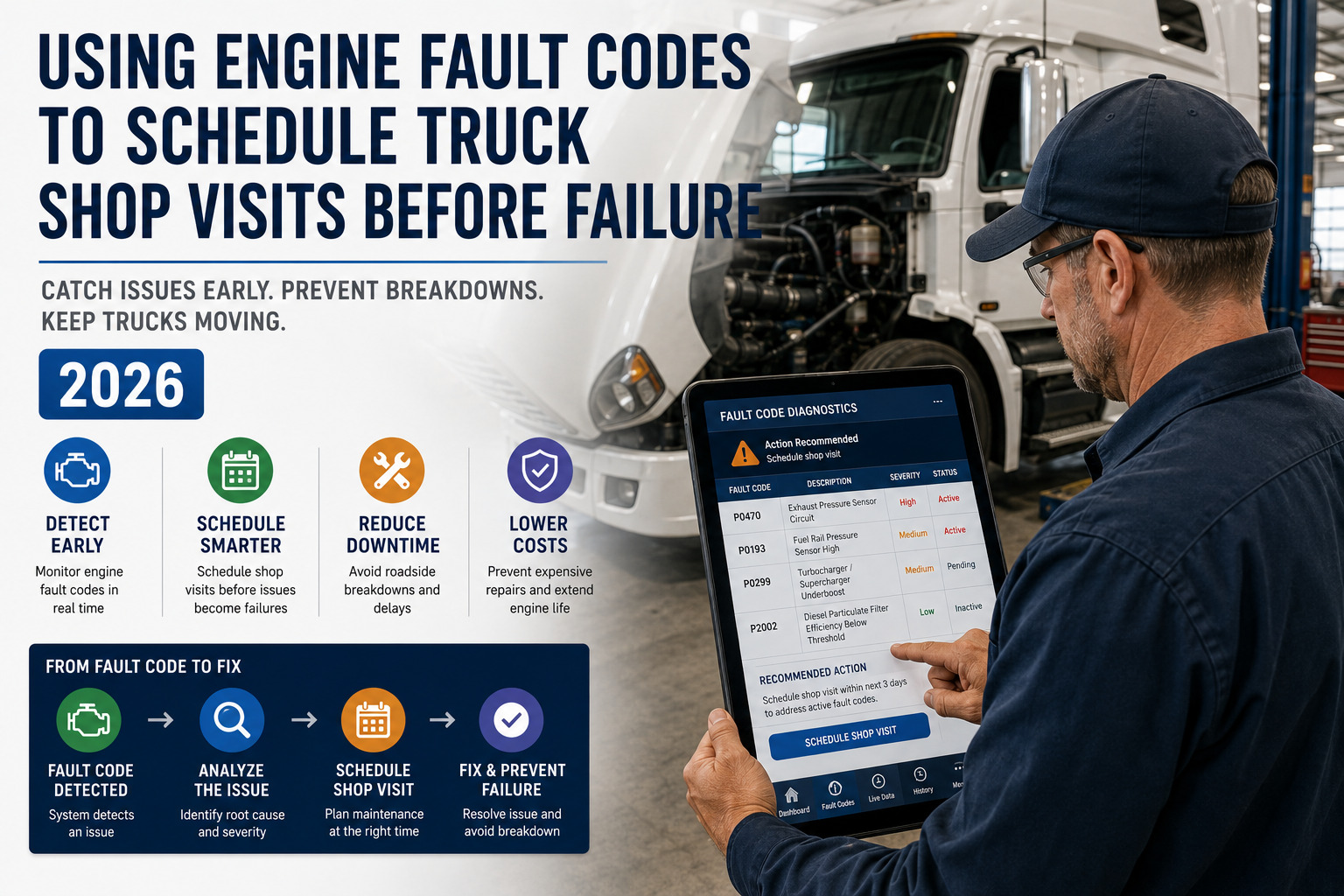
Somewhere on your fleet right now, a truck's engine computer is quietly logging a fault code that nobody has looked at yet. Most fleets generate hundreds of these codes every month and the vast majority get ignored, cleared, or discovered weeks later during a routine inspection. That gap between when a code fires and when someone actually acts on it is where breakdowns are born. Engine fault codes are not a nuisance to clear. They are a written warning, and reading them correctly is what separates a planned shop visit from a roadside emergency.
Engine fault codes, known as Diagnostic Trouble Codes or DTCs, are alphanumeric signals an engine control unit generates the moment a sensor reading falls outside its normal range, often weeks before a dashboard warning light appears. Fleets that monitor DTCs in real time and score them by severity reduce breakdowns by up to 75 percent and cut emergency repair costs by 3 to 9 times compared to fleets that wait for the next scheduled inspection. Sign up free to start receiving live, prioritized fault alerts from your own fleet.
What a Fault Code Is Actually Telling You
Every fault code follows a structure, and once you know how to read it, a five-character string stops looking like gibberish and starts looking like a diagnosis. Light and medium-duty vehicles use the OBD-II standard, while heavy-duty trucks, buses, and vocational equipment use the J1939 standard, which carries more detail through a Suspect Parameter Number and a Failure Mode Identifier.
System Letter
P for powertrain, C for chassis, B for body, or U for network. This single letter tells you which part of the truck is affected before you read anything else.
Generic or Specific
A 0 means the code is standardized across all manufacturers. A 1 means it is specific to that engine or chassis builder and needs a manufacturer reference.
Subsystem
Identifies which subsystem within that broader category is throwing the fault, such as fuel and air metering, ignition, or auxiliary emission controls.
Specific Fault Index
The exact problem. This is the level of detail that tells a technician precisely what to inspect instead of guessing where to start.
Heavy-duty trucks running J1939 add two more layers on top of this structure. The Suspect Parameter Number pinpoints the exact component or circuit involved, and the Failure Mode Identifier describes what kind of failure is happening, whether that is a signal reading too high, too low, or behaving erratically. Together, these fields turn a fault code from a vague check engine light into a specific, actionable lead.
Why Most Fleets Drown in Codes Instead of Using Them
A single truck can generate 300 to 400 fault codes a month. Most of them are minor, transient, or duplicates of something already being tracked, and that volume is exactly why so many fleets default to ignoring fault data entirely. Technicians clear codes during a shop visit without investigating them because there is no easy way to tell which ones actually matter. The result is that a fleet sits on an enormous amount of early warning data and uses almost none of it.
The Real Cost of Treating Every Code the Same
Unplanned breakdowns cost fleets 448 to 760 dollars per vehicle per day in lost productivity alone, and emergency repairs run 3 to 9 times higher than the same repair completed during planned maintenance. The difference between a 200 dollar scheduled fix and an 8,000 dollar roadside emergency is rarely the severity of the underlying problem. It is whether someone acted on the code the day it fired instead of the day the truck stopped moving.
FleetRabbit captures every DTC the instant your ECU generates it, scores it by severity, and creates a work order automatically, so nothing sits unread until it becomes a breakdown.
From Fault Code to Scheduled Shop Visit
The fix is not reading every code manually. It is building a pipeline that scores codes automatically and only surfaces the ones that genuinely need a technician's attention, while routing low-priority codes into the next regular service window.
Code Fires at the ECU
A sensor reading crosses its threshold and the engine control unit logs the fault the instant it happens.
Telematics Transmits It Live
The OBD-II port or J1939 data bus streams the code to a connected platform in real time, not at the next shop visit.
Severity Is Scored Automatically
The code is matched against its definition, probable cause, and historical outcome data to assign a priority level.
A Work Order Is Created
High-priority codes generate an immediate work order. Low-priority codes get logged and bundled into the next scheduled visit.
This is the structural shift that makes fault codes useful instead of overwhelming. Instead of a technician wading through hundreds of entries to find the one that matters, the system has already done that triage and handed over a short, prioritized list. If you want to see this scoring engine work against your own fleet's fault history, book a free demo and we will walk through real examples from comparable vehicles.
Sorting Fault Codes Into Action Tiers
Not every fault code deserves the same response, and treating a minor sensor drift the same way as an imminent engine derate is exactly what causes shop schedules to break down. A clear severity tier gives dispatch and maintenance a shared language for what happens next.
| Severity Tier | Example Trigger | Recommended Action | Response Window |
|---|---|---|---|
| Critical | High coolant temperature, low oil pressure, severe derate codes | Pull vehicle from service, route to nearest shop immediately | Same day, often within hours |
| Serious | EGR flow faults, charge air system restrictions, turbo actuator issues | Schedule shop visit within the current operating week | 1 to 5 days |
| Moderate | DPF backpressure trends, sensor drift, intermittent codes | Bundle into next scheduled preventive maintenance visit | Within 1 to 2 weeks |
| Informational | Minor emissions codes, single-occurrence transient faults | Log and monitor for recurrence, no immediate action needed | Ongoing tracking |
Why EGR and DPF Codes Deserve Extra Attention
Exhaust gas recirculation faults and diesel particulate filter backpressure codes are two of the most persistent fault categories in commercial diesel engines, and technicians frequently describe them as difficult or lengthy to fully diagnose. A clogged DPF that gets ignored creates backpressure that can force exhaust back into the engine, risking damage to the turbocharger and cylinder head gasket. These are exactly the kind of moderate codes that look harmless in isolation but compound quickly if they sit unaddressed for weeks.
Building a Fault Code Program That Actually Gets Used
Connect Telematics to Your Fault Data
If your trucks already have GPS tracking, they very likely have DTC transmission capability sitting unused. Activating it requires no new hardware on most fleets manufactured in the last several years.
Apply Severity Scoring, Not a Single Alert Stream
A flat feed of every code a truck generates is unusable. Scoring by severity is what turns 300 monthly codes into a handful of items someone actually needs to act on.
Auto-Generate Work Orders From High-Priority Codes
Critical and serious codes should create a work order without anyone manually transcribing them, closing the gap between detection and action.
Track Outcomes to Improve Future Scoring
When a technician closes a work order and finds nothing wrong, that feedback should refine future severity scoring for that code on that vehicle class.
Most fleets that build this pipeline manually spend months stitching telematics data to spreadsheets and still end up missing codes during busy weeks. Sign up for FleetRabbit and this entire workflow, from live code capture through automatic work order creation, comes configured out of the box.
OBD-II vs. J1939: Knowing Which Standard Applies
One detail trips up a lot of mixed fleets. Light and medium-duty vehicles under 26,000 pounds use the OBD-II standard, while heavy-duty trucks, buses, and vocational equipment over that weight threshold use J1939. The two standards format fault data differently, and a fleet running both vehicle classes needs a platform that can translate both rather than forcing every vehicle into one protocol. Getting this wrong is a common reason fault alerts silently stop working on part of a mixed fleet without anyone noticing for weeks.
Frequently Asked Questions
The Bottom Line on Engine Fault Codes
A fault code is the cheapest, earliest warning a fleet will ever get about a developing problem, and most fleets are sitting on thousands of them every month without using a single one. The technology to capture, score, and act on these codes in real time already exists and runs on the telematics most fleets have installed. What separates a fleet that turns codes into scheduled shop visits from one that discovers problems on the shoulder of the highway is whether anyone built the pipeline to actually read them.
FleetRabbit captures every diagnostic trouble code the moment your engine control unit generates it, scores it for severity using historical outcome data, and creates a work order automatically so your team acts on the warning instead of clearing it.
Connect your telematics and let FleetRabbit capture, score, and route every diagnostic trouble code your fleet generates. See live fault alerts in action and stop discovering problems when a truck is already stranded.