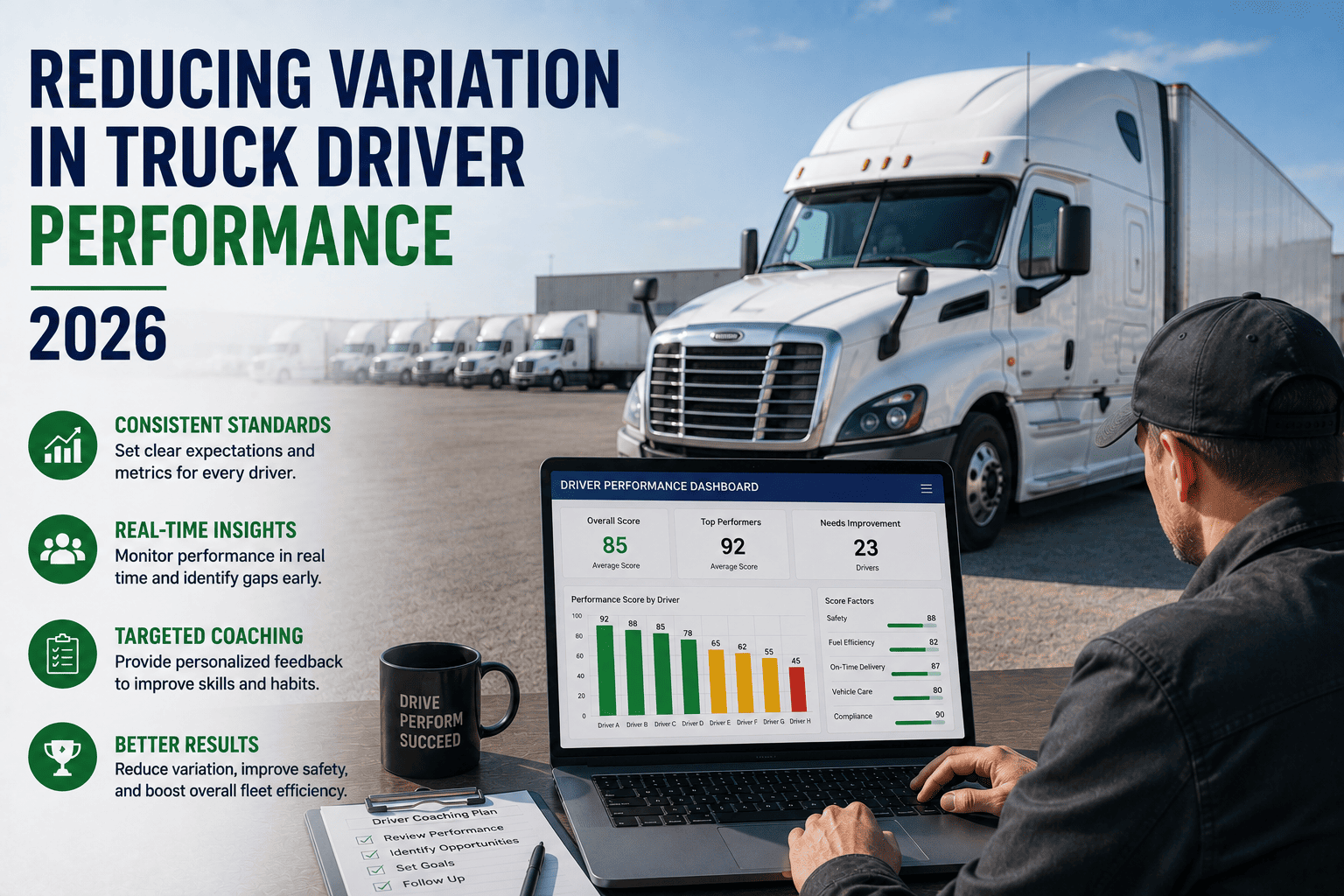
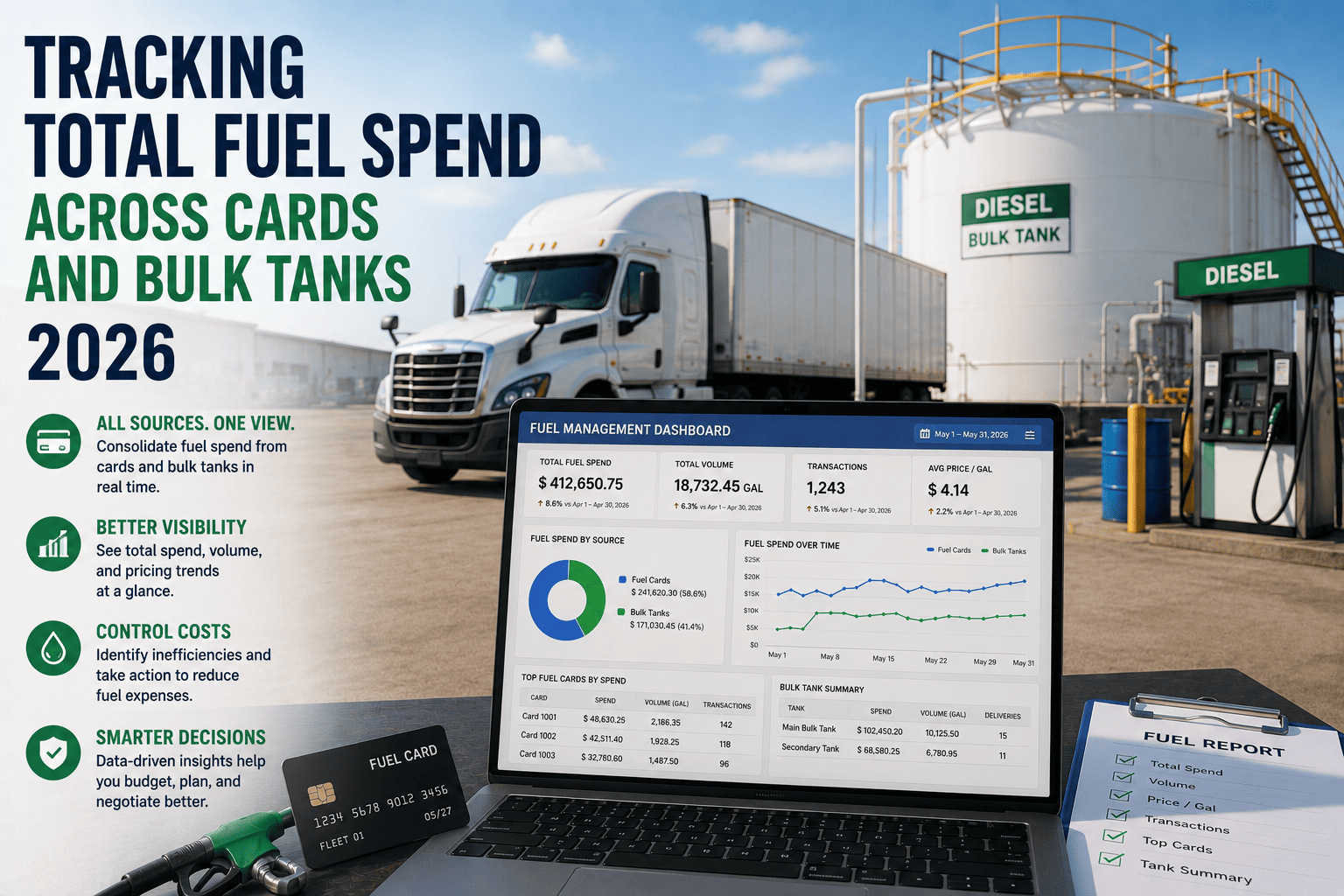
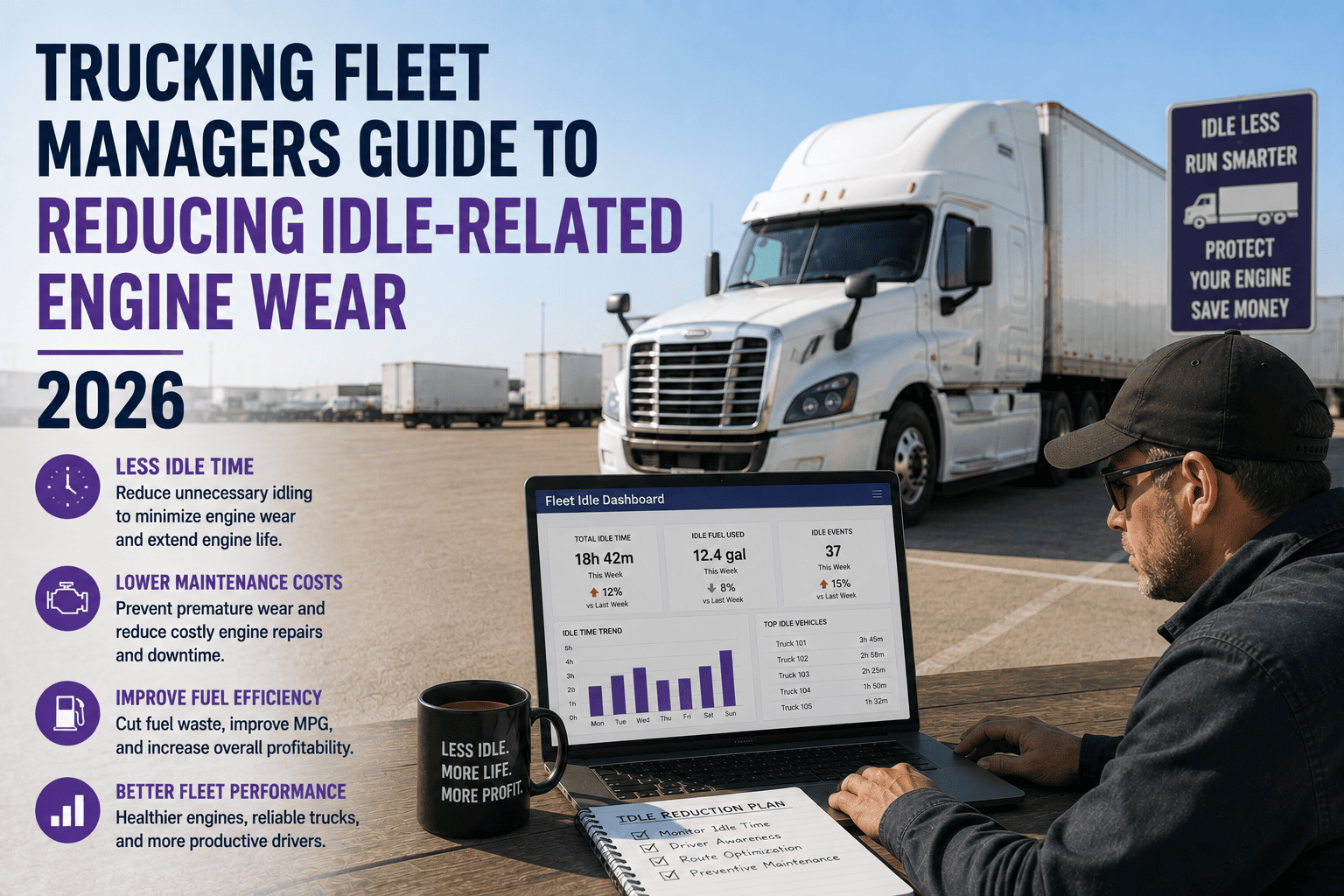
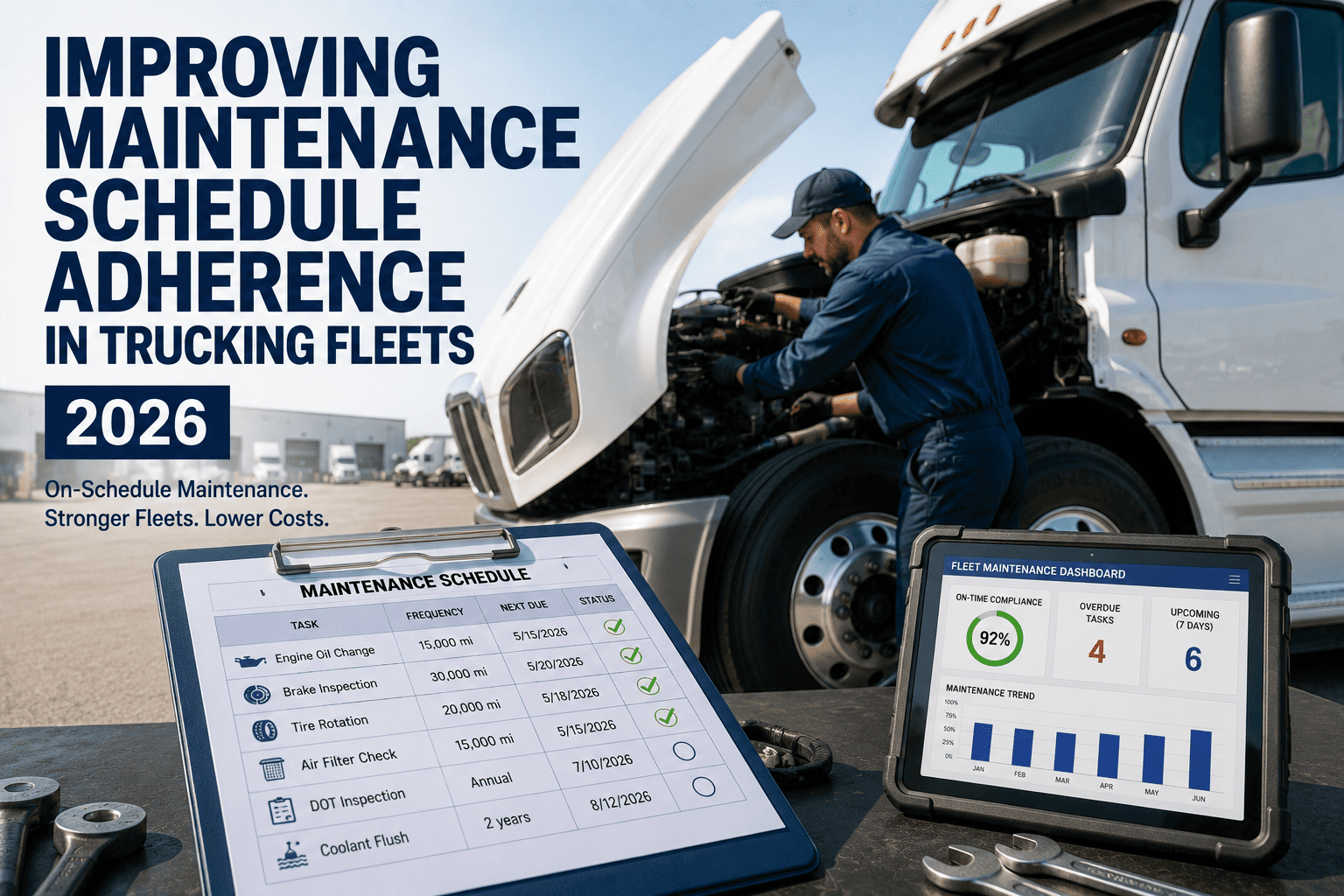
Fleet compliance failures are not random events. They follow a predictable pattern: a driver logs past the 11-hour driving limit, a DVIR defect goes unresolved, a brake inspection is skipped during a pre-trip check — and nothing happens until a DOT roadside inspection, a serious accident, or a federal audit surfaces the paper trail. By that point, the fleet is facing per-violation fines between $1,000 and $16,000, potential out-of-service orders, and CSA score damage that inflates insurance premiums for the next 24 months. The problem is not a lack of rules. Every carrier knows the HOS regulations, the DVIR requirements, the inspection timelines. The problem is the gap between knowing the rule and executing consistently across 20, 50, or 200 active vehicles operated by drivers who are under delivery pressure and time constraints. Book a FleetRabbit demo to see automated violation detection applied to your fleet configuration.
Quick Answer
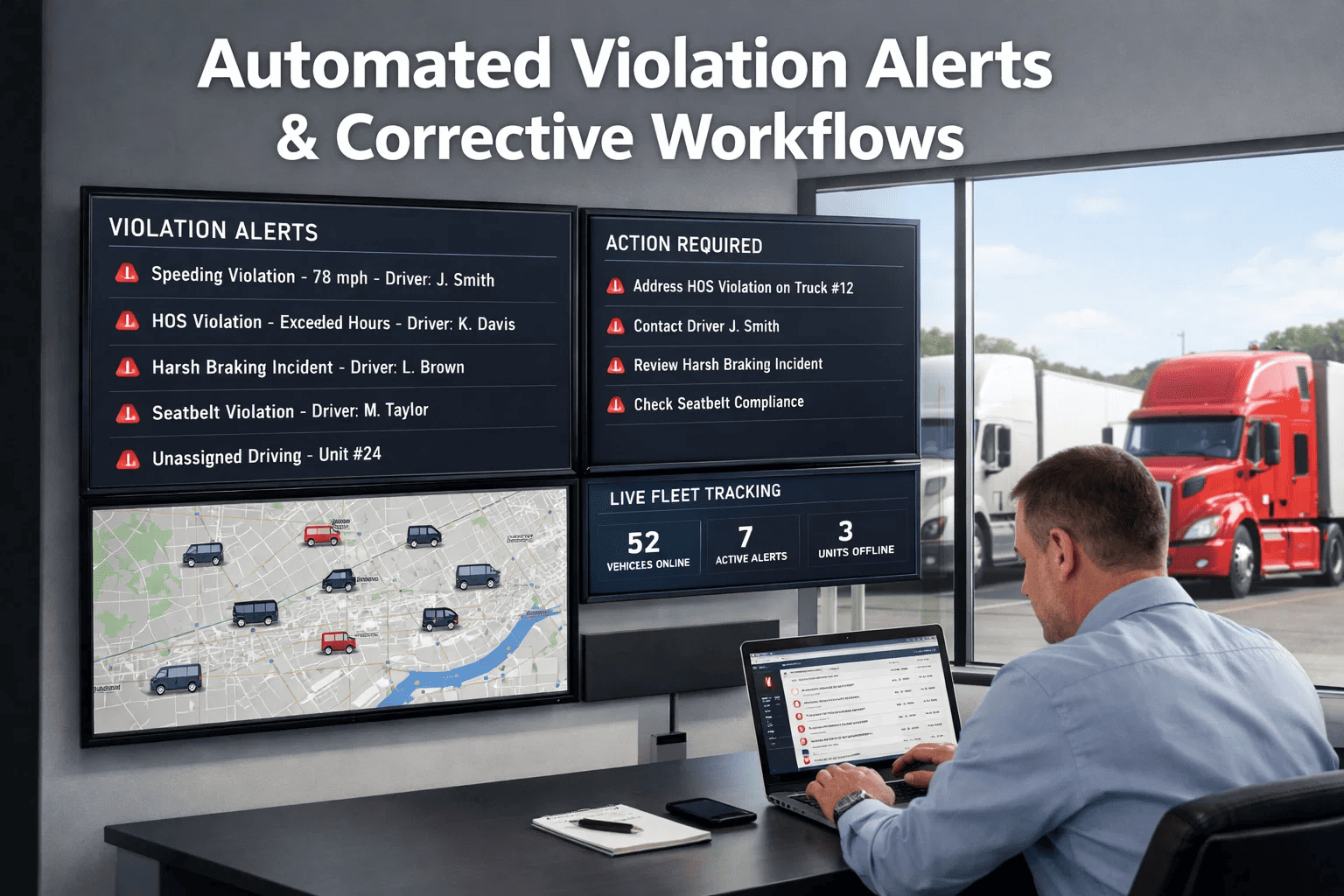
FleetRabbit's automated compliance system monitors HOS logs, DVIR submissions, inspection records, and driver activity in real time — flagging violations the moment they occur and triggering structured corrective action workflows that assign accountability, track resolution, and generate audit-ready documentation. Fleet managers receive prioritized violation alerts before small infractions escalate into DOT citations or CSA score events that affect carrier authority and insurance rates.
Why Traditional Compliance Monitoring Fails Trucking Fleets
Most trucking operations rely on one of three compliance methods: manual log review by a dispatcher, periodic ELD report audits, or after-the-fact review of DOT inspection results. Each of these approaches shares a fundamental structural weakness — they detect violations after the compliance window has already closed. A missed rest break cannot be corrected after the shift ends. A DVIR defect not reported before a vehicle leaves the yard creates liability the moment that truck enters traffic. A driver's 30-minute break taken at the wrong point in a shift is already a violation by the time anyone reviews the log.
FleetRabbit addresses the compliance gap at its source by monitoring activity continuously and triggering alerts during the compliance window, not after it closes. The system integrates with ELD data feeds, digital DVIR submissions, preventive maintenance schedules, and inspection records to create a unified compliance picture updated in real time across every vehicle and driver in the fleet.
The Six Violation Categories FleetRabbit Monitors Continuously
Commercial fleet compliance spans multiple regulatory frameworks — each with distinct rules, documentation requirements, and enforcement thresholds. FleetRabbit monitors all critical compliance categories simultaneously, not as separate modules but as a unified monitoring layer that correlates violations across categories to identify drivers or vehicles with compounding risk profiles.
01
Hours of Service Violations
FleetRabbit monitors the 11-hour driving limit, 14-hour on-duty window, 30-minute break requirement, 60/70-hour weekly limits, and restart provisions in real time. Alerts trigger before a driver enters violation territory — giving dispatchers the window to adjust routes, swap drivers, or authorize rest periods before a chargeable event occurs. Violation logs are automatically timestamped, geotagged, and stored in audit-ready format.
Alert triggered: 45 minutes before HOS limit breach, not after
02
DVIR Defect Reporting and Resolution
Digital vehicle inspection reports are submitted through the FleetRabbit mobile app by drivers at pre-trip and post-trip stages. Reported defects trigger immediate corrective action workflows — assigning the defect to a maintenance technician, requiring sign-off before the vehicle is cleared for service, and escalating to fleet management if resolution is delayed beyond configurable thresholds. Vehicles with open defects cannot be dispatched without documented management override.
Defect-to-clearance cycle tracked with full accountability chain
03
Preventive Maintenance Compliance
DOT requires commercial vehicles to be maintained in safe operating condition at all times. FleetRabbit tracks PM schedules by mileage, engine hours, and calendar intervals — sending alerts to fleet managers and drivers when service is approaching and escalating to violation status when service windows are missed. Overdue PM on critical safety components (brakes, tires, steering) generates immediate corrective action assignments not subject to routine deferral.
PM compliance rate tracked per vehicle with overdue escalation workflows
04
Driver Document and Certification Expiry
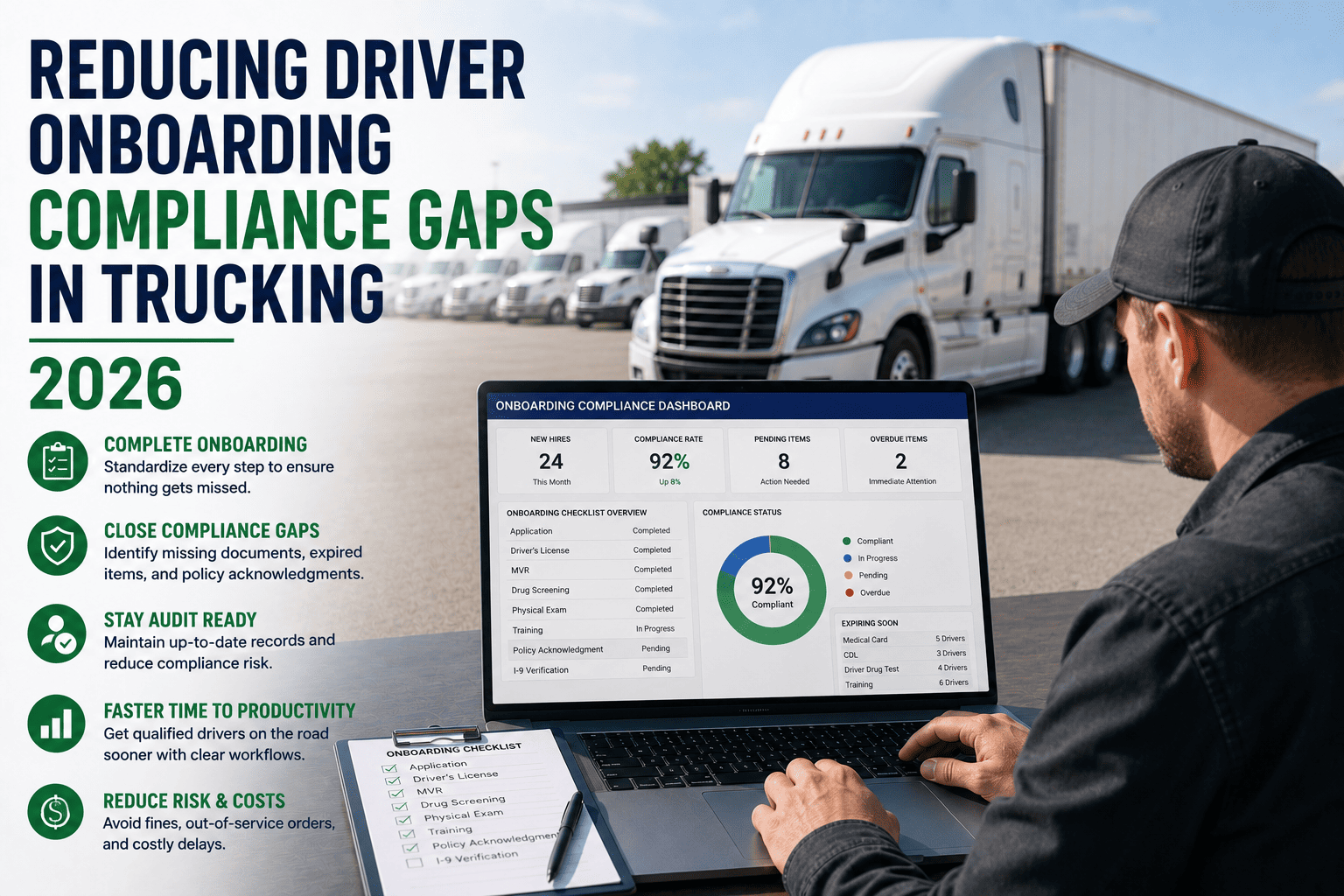
CDL expiration, medical certificate renewal, drug and alcohol testing cycle compliance, and hazmat endorsement validity are monitored against configurable alert windows. FleetRabbit notifies drivers, dispatchers, and fleet managers at 90-day, 60-day, 30-day, and 7-day intervals before expiry. Drivers with lapsed documentation are flagged as ineligible for dispatch until compliance is restored and documented.
Zero expired-document dispatch with automated eligibility blocking
05
Inspection Interval Compliance
Annual DOT inspection deadlines, periodic brake adjustments, tire replacement cycles, and state-mandated inspection schedules are tracked across every vehicle in the fleet. FleetRabbit generates inspection work orders automatically when intervals approach, assigns them to technicians, tracks completion, and stores inspection certificates in the digital vehicle record accessible during roadside stops and federal audits.
Inspection certificate retrieval in under 30 seconds during DOT stops
06
Fuel Compliance and IFTA Reporting
IFTA fuel tax reporting requires accurate mileage tracking by jurisdiction and fuel purchase documentation. FleetRabbit integrates with fuel card systems to capture fuel purchases automatically, correlates with GPS mileage data by state, and generates quarterly IFTA reports with audit-ready backup documentation. Discrepancies between fuel card records and mileage logs are flagged for review before report submission.
IFTA quarterly reports generated in minutes, not days of manual reconciliation
How FleetRabbit's Corrective Action Workflow Operates
Detecting violations is only the first step. The operational value of compliance automation depends on what happens after a violation is flagged — how quickly it reaches the right person, how accountability is assigned, how resolution is tracked, and how evidence is preserved. FleetRabbit's corrective action system transforms each flagged violation into a structured workflow with clear ownership, escalation paths, and documentation requirements.
1
Violation Detection and Initial Alert
Real-time monitoring identifies the violation event — HOS threshold exceeded, DVIR defect unresolved within timeout window, PM overdue, document expired. System generates a timestamped violation record with vehicle ID, driver ID, violation type, regulatory reference, and severity classification (Warning, Minor, Major, Critical).
Alert UP-7234: Driver J. Martinez — 10h 45m drive time, 15 minutes to HOS limit. Route: Dallas to Houston (remaining: 140 miles). Recommended action: Authorize extended rest at next truck stop or arrange driver swap.
↓
2
Responsibility Assignment
The system assigns the violation to the appropriate responsible party based on violation type — dispatcher for HOS routing issues, maintenance supervisor for DVIR defects and PM overdue, HR or compliance officer for driver document expiry, fleet manager for systemic or repeat violations. The assigned party receives push notification, email alert, and dashboard task simultaneously.
Assigned: Dispatch Supervisor — Sarah ChenResponse Required: 2 hoursSeverity: Major
↓
3
Corrective Action Execution and Documentation
The assigned party takes corrective action — rerouting the driver, scheduling the repair, initiating the renewal process — and documents steps taken within the FleetRabbit platform. Each action is timestamped, attributed to the responsible user, and linked to the original violation record. Notes, photos, and supporting documentation can be attached to the corrective action log.
Action Taken: Driver authorized 10-hour rest — Pilot Travel Center, Exit 51Documented: 14:32 CST
↓
4
Escalation if Unresolved
If the corrective action is not documented within the required response window, the violation automatically escalates to the next management level. Critical violations (vehicles in service with open safety defects, drivers operating beyond HOS limits) escalate to fleet director level within configurable timeframes. Escalation history is preserved in the audit log regardless of subsequent resolution.
Escalated to: Fleet Operations Director — Mike ThompsonEscalation Time: 2h 15m after initial assignment
↓
5
Audit Trail Preservation and Compliance Reporting
All violation records, corrective action logs, escalation history, and resolution documentation are preserved in the fleet compliance record indefinitely. During DOT audits, the entire compliance history for any vehicle or driver can be retrieved and exported in standard formats within minutes. Compliance reports by violation type, driver, vehicle, time period, and resolution status are available on demand.
Compliance Record VIO-7234: Detected 14:17 CST. Assigned 14:18 CST. Corrective action documented 14:32 CST. Resolution confirmed 14:33 CST. Status: Resolved — No Chargeable Event. Audit trail preserved: Complete.
CSA Score Impact — Why Early Violation Detection Matters to Fleet Executives
Fleet executives often view compliance as an operational department problem. The financial reality is different. CSA scores — calculated from roadside inspection violations, crash involvement, and out-of-service orders — directly affect insurance premiums, shipper contract eligibility, and operating authority renewal. A fleet with a BASIC score above intervention threshold pays materially higher cargo insurance rates, loses access to shipper bid lists that require carrier score minimums, and faces increased frequency of targeted DOT roadside inspections.
$1,000
to $16,000 per violation — FMCSA civil penalty range for HOS and DVIR violations
24 months
CSA score visibility window — violations affect carrier scores for two full years
34%
Average insurance premium increase for fleets with elevated BASIC scores
72 hours
Average time to detect violations with manual log review vs. real-time with FleetRabbit
91%
Reduction in chargeable violations reported by FleetRabbit-managed fleets after 6 months
3.2x
Greater likelihood of DOT targeted inspection for fleets with elevated Unsafe Driving BASIC
FleetRabbit HOS Monitoring — Beyond Basic ELD Compliance
The FMCSA ELD mandate requires electronic logging of driving time, on-duty periods, and rest breaks. Basic ELD systems record what happens — they do not prevent violations from occurring or guide dispatchers toward better routing decisions that keep drivers compliant throughout their shifts. FleetRabbit's HOS monitoring layer adds the predictive and advisory functions that transform compliance data into operational intelligence.
Real-time HOS status for every driver is visible on the fleet dashboard — showing remaining driving time, time until mandatory rest, current duty status, and projected end-of-shift location based on current route. Dispatchers see the full compliance picture before assigning new loads, preventing the common scenario where a driver accepts a dispatch that cannot be completed within available HOS without violating the 11-hour or 14-hour rule. Trip planning integration calculates whether a route is feasible within HOS constraints before dispatch occurs, not after the driver is two hours into a trip that requires a six-hour rest break at an inconvenient location.
HOS and DVIR Compliance Automation
Detect Violations Before They Become DOT Citations
See how FleetRabbit's real-time monitoring and corrective action workflows keep your fleet ahead of compliance events — reducing CSA score exposure and audit risk across every driver and vehicle.
91%
Reduction in Chargeable Violations
Real-Time
HOS and DVIR Alert Delivery
DVIR Workflow — From Driver Defect Report to Vehicle Clearance
The daily vehicle inspection report is one of the most consequential compliance documents in commercial trucking. An accurate, complete DVIR submitted before and after each trip documents that the driver inspected the vehicle, identifies any mechanical defects, and creates the chain of evidence showing that defects were addressed before the vehicle returned to service. Failures in the DVIR process — skipped inspections, unreported defects, unresolved items, missing mechanic sign-off — are among the most commonly cited violations during DOT audits and road checks.
FleetRabbit converts the DVIR from a paper form into a digital workflow with built-in accountability. Drivers complete pre-trip and post-trip inspections through the mobile app, selecting from a configurable checklist of inspection items specific to their vehicle class. Photo documentation of defects is captured within the inspection record. Submitted DVIRs are immediately visible to the maintenance team — generating repair work orders for items requiring attention, tracking repair status in real time, and requiring electronic sign-off by a qualified mechanic before the vehicle is cleared for next-day dispatch. The entire cycle — inspection, defect report, work order, repair, clearance — is documented with timestamps and user attribution, creating an audit trail that demonstrates regulatory compliance with no manual data entry required.
Repeat Violation Analysis — Identifying Systemic Problems Before They Compound
Individual violations represent compliance failures. Repeat violations represent systemic problems with operational processes, driver training, or management oversight that generate continuous regulatory exposure. FleetRabbit's analytics layer identifies violation patterns that point to root causes rather than isolated incidents.
Driver Pattern Analysis
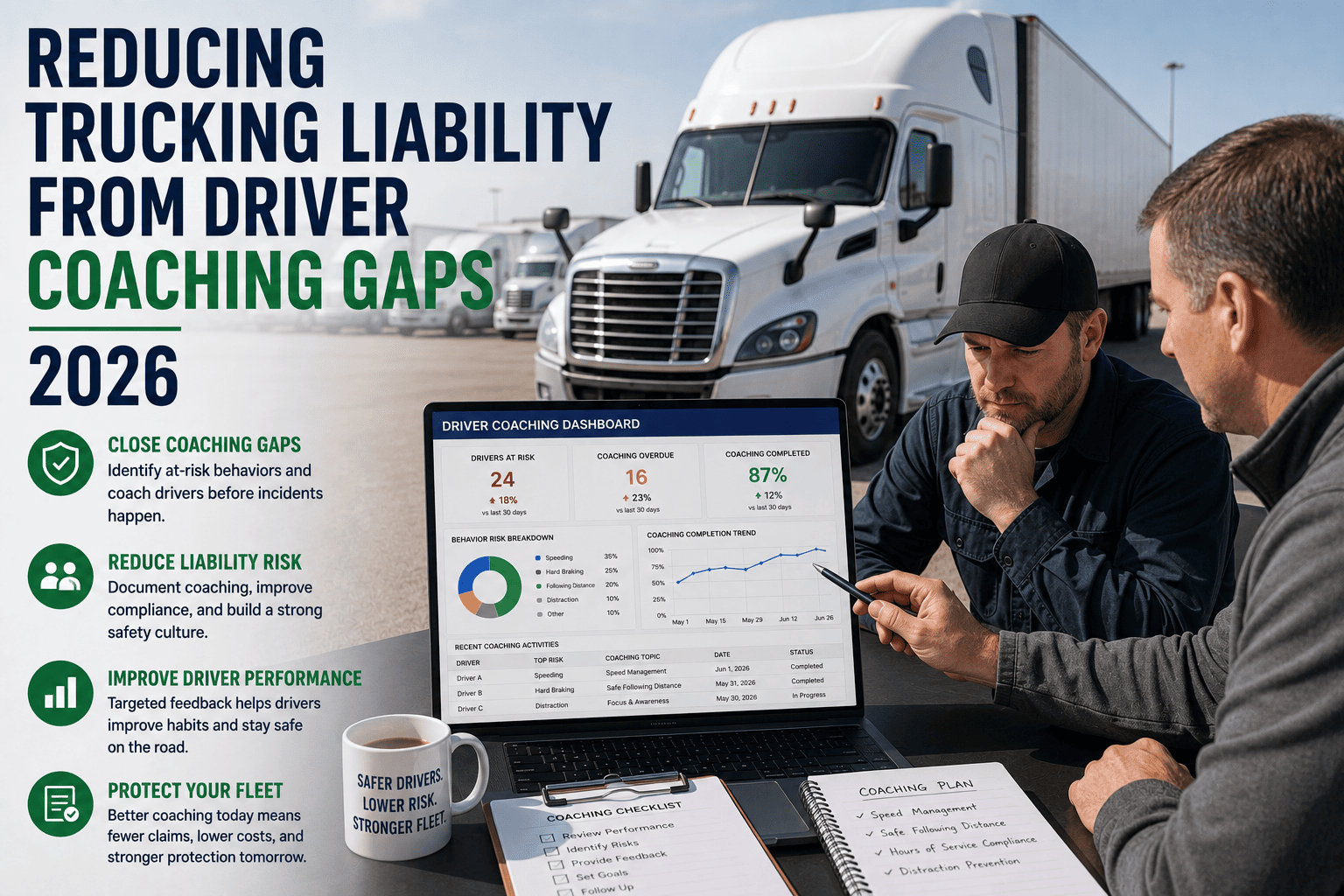
When a specific driver generates repeated HOS violations across different routes and dispatchers, the data points to a driver behavior problem rather than a routing issue. FleetRabbit identifies drivers with violation frequency above fleet average and triggers structured coaching workflows — assigning review sessions, documenting improvement commitments, and tracking subsequent compliance rates. Progressive discipline documentation is preserved in the driver record for HR and legal purposes.
Vehicle Pattern Analysis
When a specific vehicle generates repeated DVIR defects in the same system — brakes, tires, lighting — the defect pattern indicates a maintenance problem not being resolved at root cause. FleetRabbit flags vehicles with recurring defects for root-cause repair rather than repeat symptom correction, reducing the total cost of maintenance and eliminating the compliance risk of a vehicle with known recurring safety issues operating in revenue service.
Route and Dispatch Pattern Analysis
When HOS violations concentrate on specific routes or under specific dispatchers, the pattern points to dispatch planning problems — routes routinely assigned with insufficient time margins, dispatchers who assign drivers already close to their daily limits, geographic areas where traffic conditions consistently create time pressure. FleetRabbit surfaces these patterns to operations leadership, enabling dispatch process improvements that reduce violation frequency at the structural level.
Time and Shift Pattern Analysis
Compliance failure rates often concentrate at specific times — end-of-week when drivers are approaching 60/70-hour limits, overnight shifts when supervision is reduced, month-end when delivery pressure increases. FleetRabbit's pattern analysis identifies temporal concentrations in violation data, allowing compliance managers to apply targeted monitoring during high-risk periods and adjust operational processes that create systematic pressure toward compliance shortcuts.
Audit Readiness — What FleetRabbit Delivers When the DOT Knocks
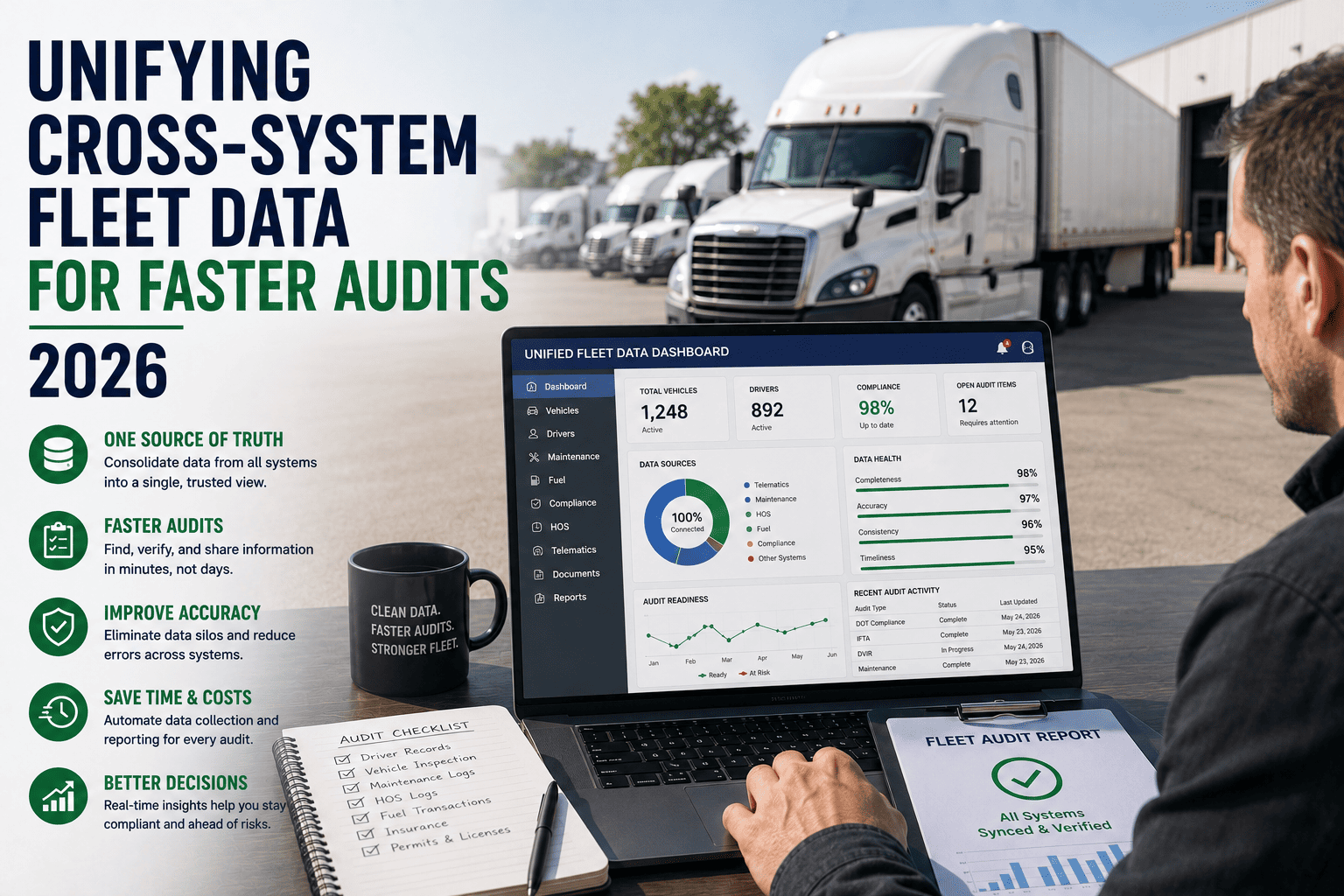
Federal motor carrier safety audits can be scheduled with 24 hours notice or arrive unannounced following a serious accident or complaint. Fleets that rely on paper-based or manually compiled compliance records typically spend days preparing for audits — locating driver logs, assembling maintenance records, pulling inspection certificates, compiling HOS data — often discovering gaps in documentation that create additional audit exposure. FleetRabbit maintains a continuously updated, fully searchable compliance archive that transforms audit preparation from a crisis response into a straightforward data retrieval exercise.
During an audit, FleetRabbit generates compliance summary reports covering any time period, any subset of drivers or vehicles, and any violation category. Drive-time summaries, inspection records, maintenance histories, DVIR cycle documentation, and driver qualification files are all accessible from a single platform with export capability to standard audit formats. Auditors requesting documentation for specific drivers or vehicles receive complete records within minutes rather than hours. The confidence that comes from knowing your compliance documentation is complete, current, and immediately accessible is itself a material operational advantage when carriers operate under ongoing FMCSA scrutiny.
Integration with FleetRabbit's Complete Compliance Platform
Violation alerts and corrective action workflows derive their value from the broader compliance data ecosystem they operate within. FleetRabbit's compliance monitoring draws data from and contributes to the platform's full feature set — creating a connected compliance picture that single-purpose alert tools cannot replicate.
ELD and HOS Integration
Direct data feed from ELD systems provides real-time driving status, on-duty classification, and rest break compliance without manual data entry. HOS alerts trigger from live ELD data, not manually compiled logs reviewed hours after the compliance window has closed. Supported integrations include major ELD providers used across the commercial trucking industry.
GPS and Telematics Integration
Vehicle location data from GPS and telematics systems provides geolocation context for compliance events — confirming driver locations during rest periods, documenting vehicle movement patterns, and correlating route data with HOS consumption for trip planning optimization. GPS integration also supports automated IFTA mileage tracking by jurisdiction.
Maintenance Management Integration
DVIR defects automatically generate maintenance work orders within FleetRabbit's maintenance module. Repair completion and technician sign-off in the maintenance system automatically updates the vehicle's compliance status — eliminating the coordination gap between maintenance operations and compliance documentation that creates audit vulnerability in paper-based systems.
Fuel Card Integration
Fuel card transaction data imports automatically into FleetRabbit, supporting IFTA compliance and providing additional location verification for HOS audit purposes. Fuel purchase records correlated with GPS position data create a secondary documentation layer that strengthens compliance records during audits questioning driver location or activity during specific time periods.
Frequently Asked Questions
QHow quickly does FleetRabbit generate violation alerts after a compliance event occurs?
Violation alerts for HOS events are generated within 60 seconds of the triggering condition being detected in the ELD data feed. DVIR defect escalation alerts trigger when resolution timeouts are reached — configurable by violation severity from 1 hour to 24 hours. Document expiry alerts are generated on daily schedule at configurable days-before-expiry thresholds. All alerts are delivered simultaneously via push notification to the mobile app and email to designated recipients, with dashboard notification updated in real time.
QCan FleetRabbit's violation alerts integrate with our existing ELD system?
FleetRabbit integrates with major ELD providers used across the commercial trucking industry. The integration approach depends on the ELD system — some providers support direct API data feeds, others provide periodic data exports that FleetRabbit imports automatically. During onboarding, FleetRabbit's implementation team assesses your current ELD configuration and establishes the appropriate integration method. Where direct integration is not available, FleetRabbit's mobile app includes an ELD-compliant HOS logging module that can replace your current solution.
QHow does FleetRabbit handle violations discovered during retrospective log review rather than in real time?
FleetRabbit performs retrospective analysis during nightly compliance review cycles — identifying violations that may not have triggered real-time alerts (historical log edits, late-submitted DVIR entries, data sync gaps). Retrospectively identified violations generate standard corrective action workflows with historical violation records, documentation requirements, and escalation paths appropriate to the violation age and severity. This ensures that compliance review failures do not create gaps in the audit record even when real-time monitoring is temporarily interrupted.
QHow does the corrective action system assign violations to the right person automatically?
FleetRabbit uses configurable assignment rules based on violation type, severity, vehicle assignment, driver's assigned dispatcher, and geographic location. HOS violations are assigned to the driver's current dispatcher and operations supervisor. DVIR defects are assigned to the maintenance supervisor for the vehicle's home terminal. Document expiry violations are assigned to the HR or compliance coordinator. Fleet managers can customize assignment rules for their organizational structure, including shift-based assignments and geographic routing. All assignment rules are documented and versioned — maintaining an audit record of who was responsible for managing each violation type during any historical period.
QWhat compliance reports does FleetRabbit generate for executive review?
FleetRabbit generates weekly and monthly compliance summary reports showing violation frequency by type, driver, vehicle, route, and terminal — with trend analysis comparing current period to prior periods. Executive-level reports include CSA score impact assessment, cost-of-compliance tracking, and projected insurance premium impact of current violation trends. Custom reports can be configured to match the compliance KPI framework used by your operations leadership team. All reports are available for download in PDF and spreadsheet formats.
See the reporting dashboard in a live demo.
"Before FleetRabbit, our compliance process was entirely reactive. We would find out about HOS violations during DOT inspections or when reviewing logs at the end of the week — by then there was nothing we could do except document the violation and hope it did not affect our CSA score significantly. After deploying FleetRabbit, our dispatchers receive alerts while the driver is still on route and can take action before the violation occurs. In the 12 months since deployment, our chargeable HOS violations dropped by 87%. Our insurance renewal last quarter came in $140,000 lower than the prior year — the broker attributed it directly to our improved CSA profile. That single outcome paid for the platform three times over."
VP of Fleet Operations
Regional LTL Carrier — 340 Power Units — Midwest Operations
Stop Discovering Violations After the Compliance Window Has Closed
FleetRabbit's automated violation monitoring and corrective action workflows keep your fleet ahead of HOS limits, DVIR deadlines, and inspection requirements — delivering the early warning that prevents citations, protects CSA scores, and builds the audit-ready documentation that proves compliance when DOT comes knocking.
Real-Time HOS Alerts
DVIR Corrective Workflows
CSA Score Protection
Audit-Ready Documentation
91% Violation Reduction
April 17, 2026
By Jason Smith
All Posts