.png)
Fleet management is the centralized oversight of all vehicles operated by an organization, integrating inspection, maintenance, compliance, safety, and operational efficiency into a unified system. For transportation companies managing even a small number of vehicles, fleet management transforms what would otherwise be fragmented administrative tasks into coordinated workflows that reduce costs, improve safety, ensure regulatory compliance, and maximize vehicle uptime. This complete guide explains what fleet management is, why it matters for transportation operations, which core functions every effective fleet management system must support, and how modern digital platforms enable scalable fleet operations across single-location and multi-location deployments.
Understand Fleet Management and Transform Your Operations
FleetRabbit's complete fleet management platform integrates digital inspections, maintenance tracking, compliance documentation, and operational analytics into one unified system designed for transportation companies.
What Exactly Is Fleet Management?
Fleet management is the systematic approach to acquiring, maintaining, tracking, and operating a group of vehicles to achieve organizational objectives efficiently and safely. It encompasses everything from vehicle procurement decisions through end-of-life disposal, including day-to-day operational management, maintenance scheduling, regulatory compliance, driver management, fuel and cost optimization, and safety protocols. The core purpose of fleet management is to ensure that every vehicle in a fleet operates reliably, meets safety and regulatory standards, minimizes operational costs, and generates maximum value for the organization deploying it.
For small operations, fleet management might be informally handled by one person tracking maintenance on spreadsheets and managing driver schedules manually. For larger transportation companies, fleet management becomes a sophisticated discipline involving multiple specialized roles, dedicated software platforms, comprehensive data analysis, and integrated workflows spanning procurement, operations, compliance, and finance departments. Regardless of fleet size, effective fleet management creates visibility into vehicle condition, identifies problems before they become costly failures, documents compliance with transportation regulations, and enables data-driven decision-making about which vehicles to retain, when to replace aging assets, and how to optimize operations across all deployed vehicles.
The Seven Core Functions of Fleet Management
Every effective fleet management system, whether manual or digital, must address seven fundamental operational functions. These functions create the infrastructure that enables safe, compliant, cost-effective fleet operations.
Regular inspections document vehicle condition and identify developing problems before they become safety hazards or expensive repairs. For commercial fleets, Federal Motor Carrier Safety Administration regulations require pre-trip and post-trip inspections with documented records. Digital inspection systems capture inspection results with photos, timestamps, and defect severity classification, creating the audit trail required for compliance verification.
Preventive maintenance addresses component wear before failure occurs, reducing unplanned downtime and repair costs. Maintenance scheduling tracks when each vehicle is due for service based on manufacturer recommendations, usage patterns, or mileage intervals. Work order systems route maintenance tasks to technicians, track completion status, and create the service history documentation needed for vehicle lifecycle management.
Transportation companies operate under multiple regulatory frameworks. Driver hours of service regulations, vehicle maintenance standards, inspection requirements, and safety protocols all require documented proof of compliance. Fleet management systems must capture and organize compliance-related data so that auditors can quickly verify regulatory adherence without extensive manual record compilation.
Drivers are critical fleet assets, and managing driver qualifications, training compliance, hours of service, and performance metrics directly impacts safety and regulatory compliance. Fleet management includes tracking driver licenses, medical certificates, training completion, safety records, and performance metrics that identify coaching opportunities or recognition for safe practices.
Fuel represents one of the largest operational costs for transportation fleets. Fleet management tracks fuel consumption per vehicle, identifies efficiency anomalies that indicate maintenance problems or driving behavior issues, and enables optimization of fuel purchasing and tank routing to minimize cost exposure from price volatility.
Real-time location tracking enables dispatch optimization, improves customer service transparency, and provides evidence for liability disputes. Telematics systems capture vehicle performance data including fuel efficiency, harsh acceleration, speeding, idle time, and component diagnostics that reveal operational and mechanical issues before they create larger problems.
Fleet management requires tracking all vehicle-related expenses: fuel, maintenance, insurance, licensing, tolls, repairs, and depreciation. Cost analysis by vehicle, vehicle type, or operational category reveals which assets are performing financially, where cost reduction opportunities exist, and whether individual vehicles should be retained or replaced to optimize total cost of ownership.
Fleet safety depends on proper vehicle maintenance, driver training and discipline, and organizational safety culture. Fleet management systems track safety incidents, near-misses, violations, and insurance claims to identify patterns requiring intervention, measure safety program effectiveness, and demonstrate to insurance carriers and regulators that the fleet prioritizes safety.
Why Fleet Management Matters for Transportation Operations
Transportation companies that do not systematically manage fleets encounter several operational challenges. Without organized maintenance tracking, vehicles fail unexpectedly, creating unplanned downtime that disrupts operations and loses revenue. Without documented inspections, defects go unaddressed until they cause safety incidents or catastrophic failures. Without compliance documentation systems, companies cannot efficiently respond to regulatory audits and face violation penalties. Without cost tracking, managers cannot identify which vehicles are becoming expensive liabilities or which operational improvements would deliver financial return.
Effective fleet management prevents these problems by creating visibility, discipline, and accountability across all fleet operations. When vehicle condition is visible through regular inspections, maintenance teams can address issues proactively. When maintenance is scheduled systematically, components are serviced before failure occurs. When compliance documentation is automatically captured and organized, regulatory audits become routine checkpoints rather than stressful scrambles. When costs are tracked systematically, financial decisions about vehicle retention or replacement are based on data rather than guesswork.
For companies with significant vehicle investments, fleet management transforms fleet operations from a cost center focused on minimizing expenses to a strategic asset class focused on maximizing value delivery. Well-managed fleets operate more safely, achieve higher uptime, cost less per mile to operate, generate better customer service through improved delivery reliability, and produce better financial returns on vehicle investments.
Fleet Management Approaches: Manual vs Digital Systems
Transportation companies have managed fleets long before modern software existed, using paper logs, spreadsheets, and manual coordination. These approaches still work for very small fleets (under 10 vehicles) where the owner or single manager personally oversees all operations. However, as fleet size grows, manual approaches create bottlenecks, information silos, and compliance risks that become increasingly expensive to manage.
Manual vs Digital Fleet Management Comparison
| Function | Manual/Spreadsheet Approach | Digital Fleet Management |
|---|---|---|
| Inspection Tracking | Paper forms, manual filing, slow retrieval | Mobile app submission, instant digital records, searchable history |
| Maintenance Scheduling | Calendar reminders, manual work order creation | Automated scheduling, automatic work order generation from defects |
| Compliance Documentation | Manual compilation for audits, weeks of preparation | Audit reports generated instantly, complete documentation always ready |
| Real-Time Visibility | Delayed, end-of-day reporting only | Instant dashboard access, real-time alerts for critical issues |
| Cost Analysis | Manual calculation, months to complete analysis | Automated reports, cost per mile instantly available by vehicle |
| Defect Response Time | 24-72 hours from identification to work order | Under 4 hours, immediate notification to maintenance |
| Data Accuracy | Manual entry errors, transcription gaps | Automatic data capture, reduced human error, audit trails |
| Scalability | Becomes unmanageable beyond 25-30 vehicles | Scales seamlessly to hundreds of vehicles across multiple locations |
| Regulatory Compliance Risk | High, paper records vulnerable to loss or challenge | Low, digital records with timestamps and version history |
| Implementation Cost | Low startup, high ongoing administrative labor | Low startup, minimal ongoing overhead, fast ROI |
Key Components of Modern Digital Fleet Management
Digital fleet management platforms integrate multiple functional modules into a unified system. Understanding these components helps transportation companies evaluate whether a platform addresses their specific operational needs.
Digital Vehicle Inspection Report (DVIR) System
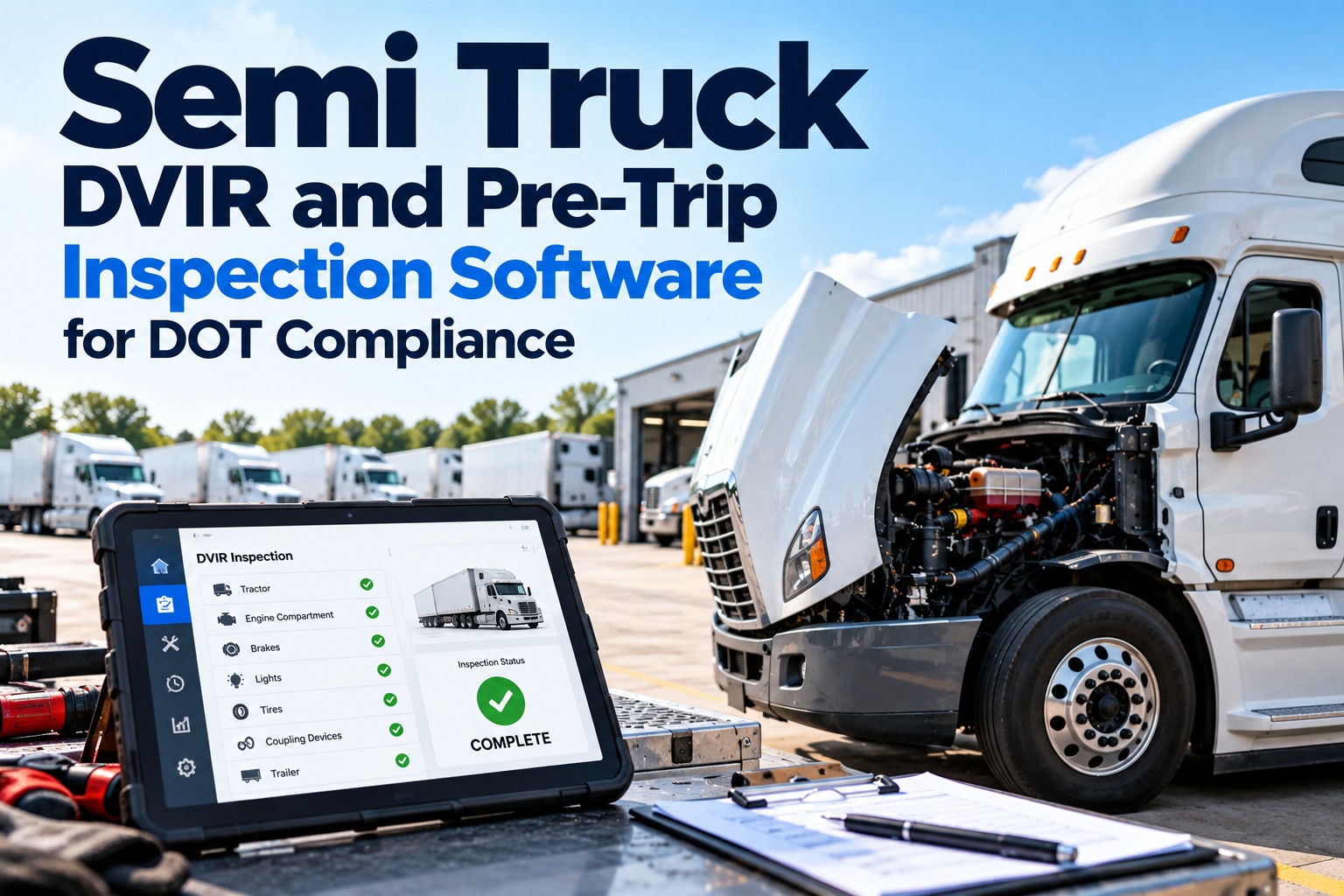
Drivers use mobile apps to complete pre-trip and post-trip vehicle inspections. The system guides drivers through FMCSA-compliant 57-item inspection checklists specific to their vehicle type. Drivers can photograph defects, rate severity, and submit inspections instantly. The system immediately notifies fleet managers and maintenance personnel of reported defects, enabling rapid response rather than delayed notification through manual paper form submission.
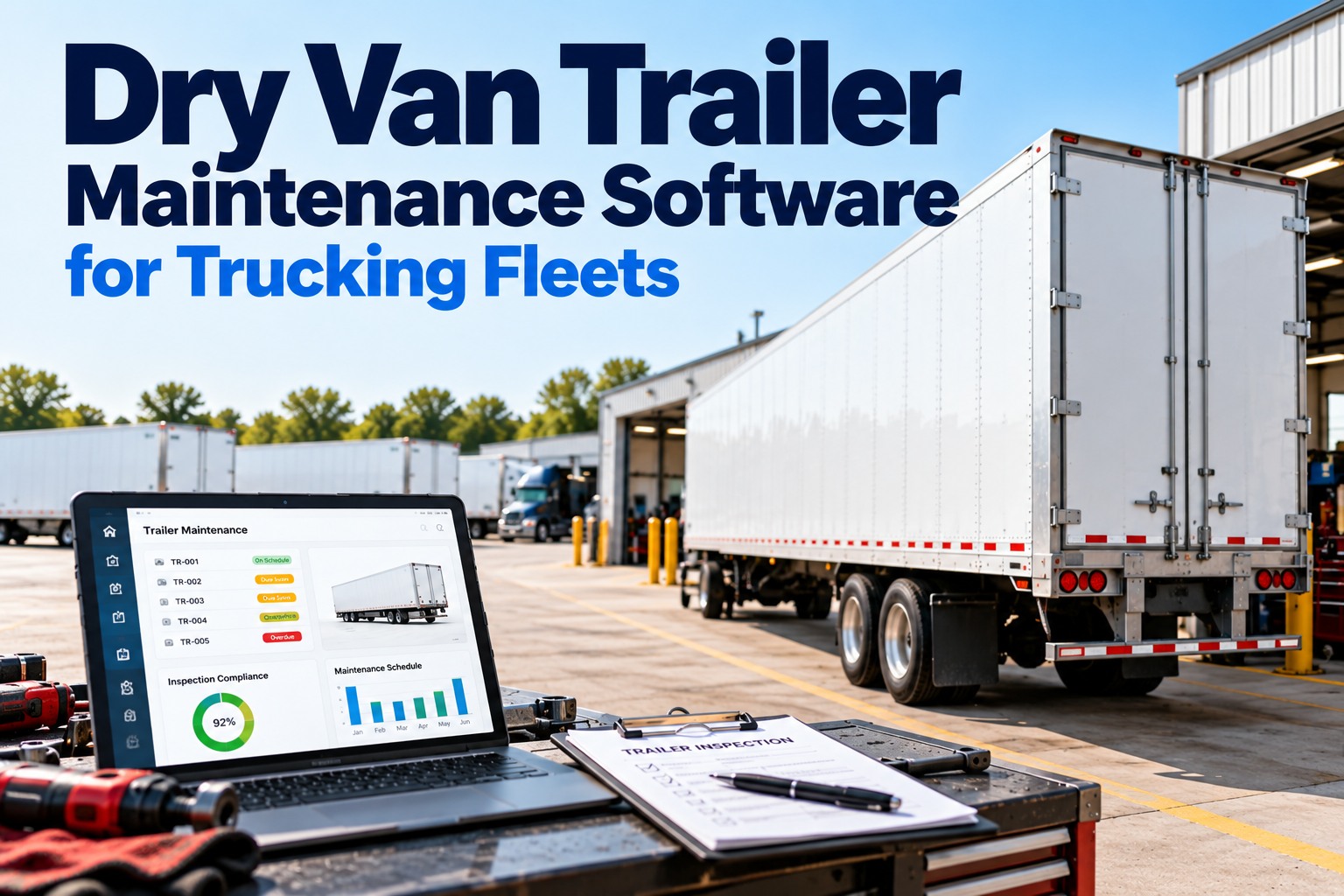
Maintenance and Work Order Management
When drivers report defects during inspections, the system automatically generates maintenance work orders with defect details, vehicle information, and repair priority. Mechanics access work orders through a mobile app or shop interface, track parts needed, record time spent on repairs, and mark work complete with photographs documenting the repair. The system tracks maintenance history for every vehicle, enabling analysis of which components fail repeatedly and identifying systematic maintenance problems.
Preventive Maintenance Automation
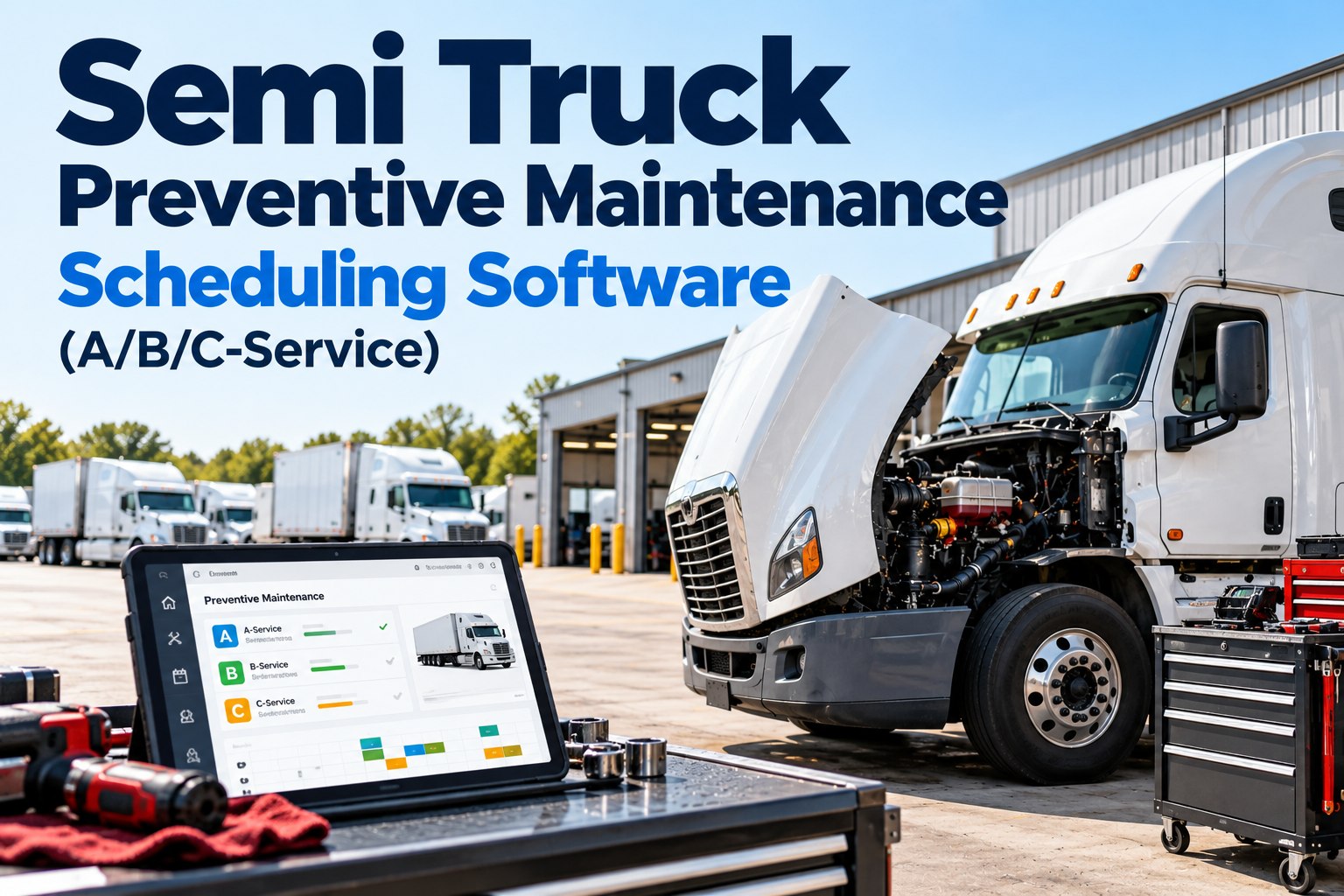
The system tracks maintenance intervals based on manufacturer recommendations and mileage thresholds. When vehicles approach maintenance due dates, the system automatically generates preventive maintenance work orders and notifies maintenance teams. This automation ensures preventive services are completed on schedule, preventing component wear from progressing to failure and the emergency repairs that accompany unexpected vehicle failures.
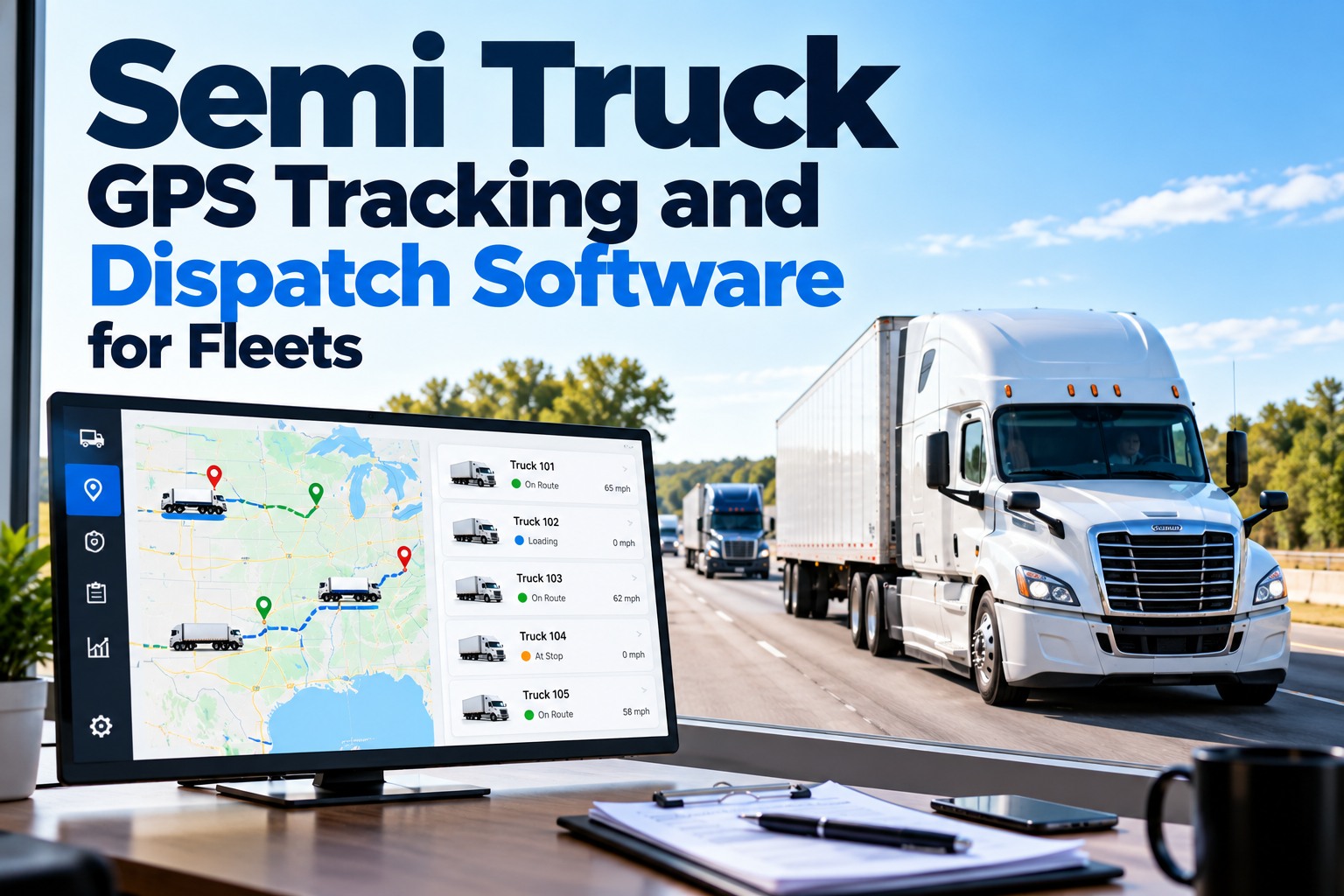
GPS Tracking and Real-Time Telematics
Modern fleet management integrates location tracking, providing real-time vehicle position and route history. Telematics data captures vehicle performance metrics including fuel consumption, harsh driving events, speeding, idle time, and onboard diagnostics that reveal mechanical issues. This data enables managers to identify fuel-efficient versus inefficient routes, recognize driving behavior patterns requiring coaching, and catch emerging mechanical problems through diagnostic readings.
Compliance and Audit Documentation
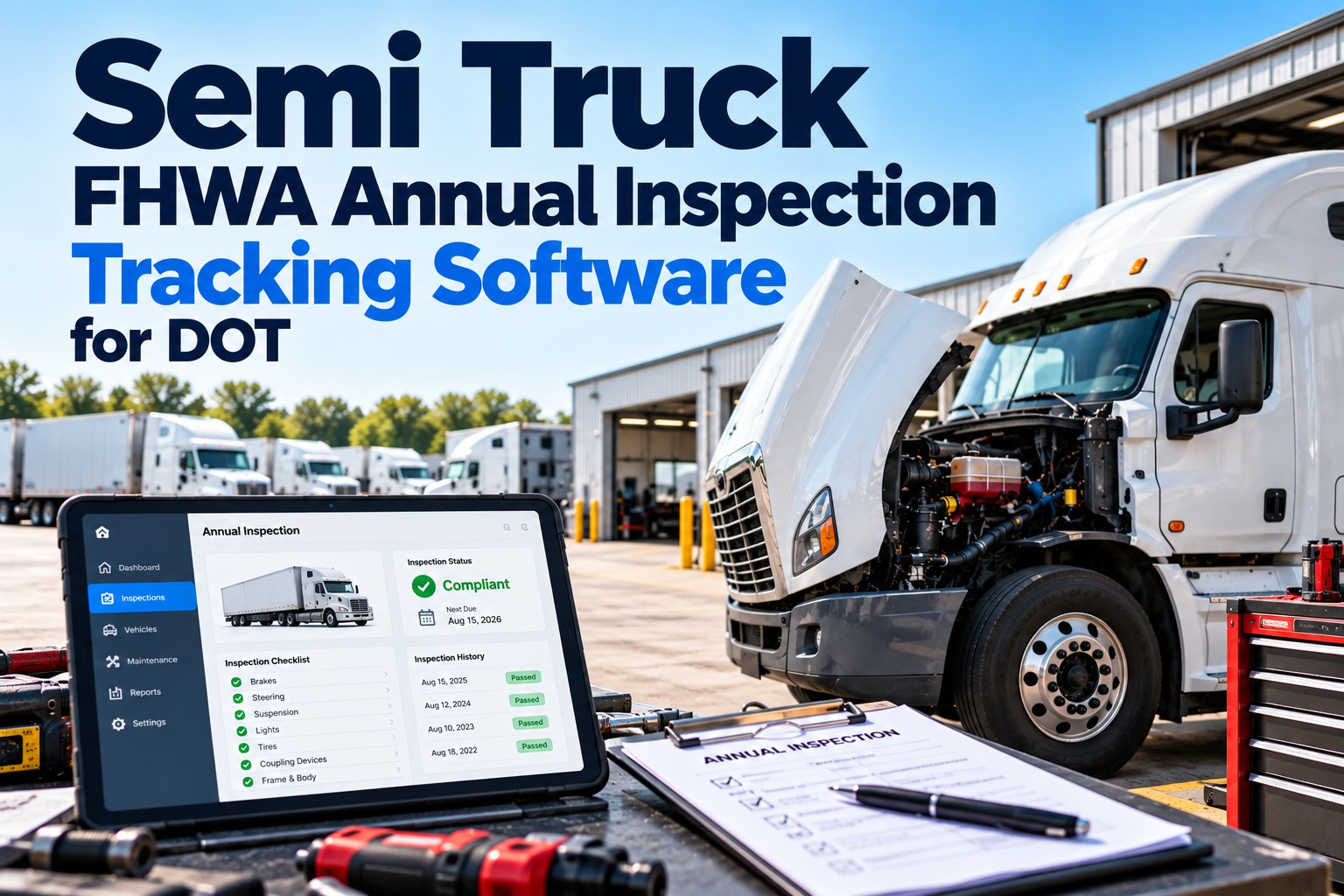
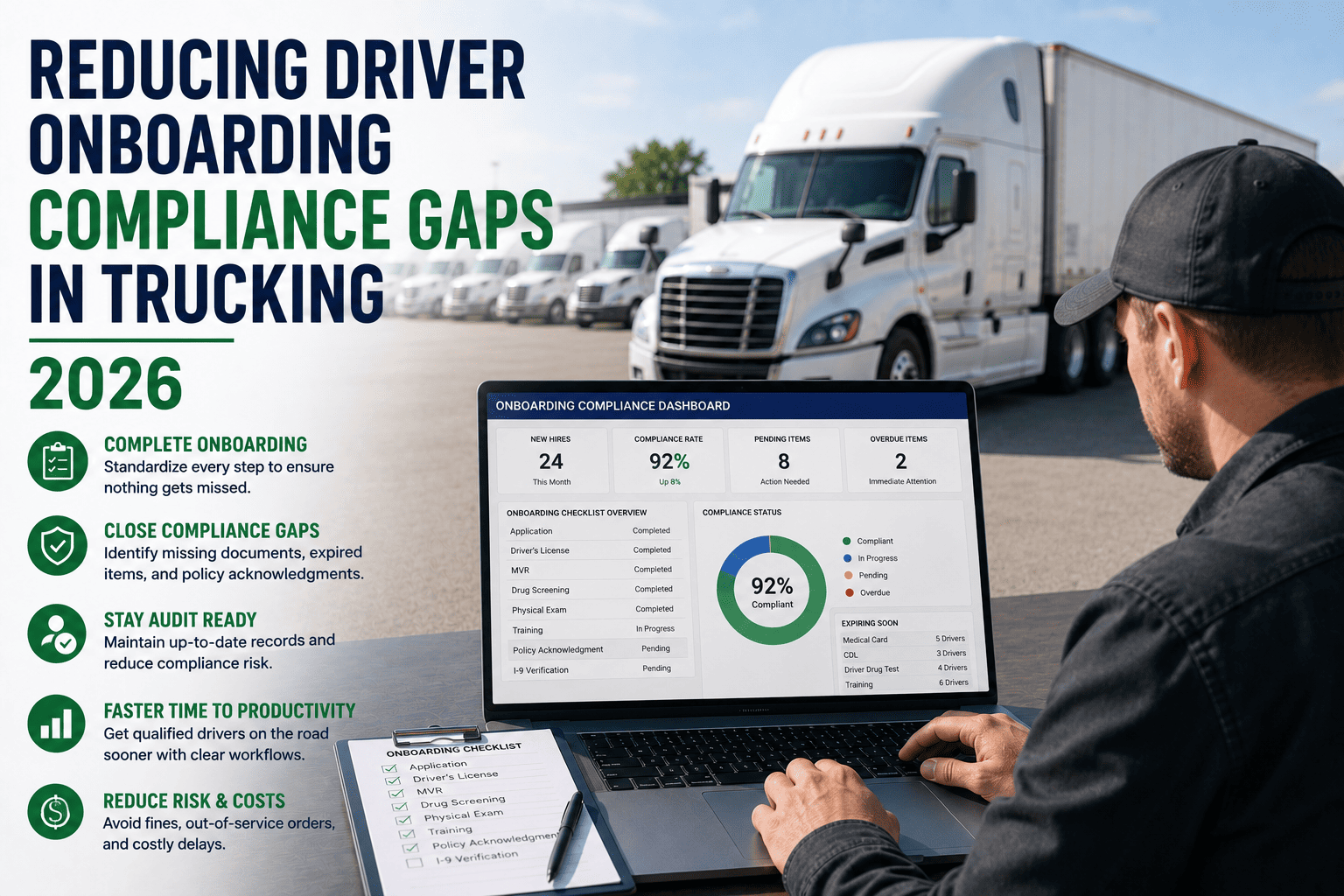
The system automatically organizes inspection records, maintenance documentation, driver qualifications, and compliance data in formats required by regulatory agencies. With a single click, managers can generate comprehensive compliance reports showing inspection histories, maintenance completion records, and driver documentation. This instant report generation transforms DOT audits from stressful document compilation exercises into routine compliance reviews.
Fuel Management and Cost Tracking
Integrated fuel tracking monitors fuel consumption per vehicle and per driver, reveals fuel efficiency trends, and identifies anomalies indicating maintenance problems or inefficient driving. Cost tracking systems capture all vehicle-related expenses and calculate total cost per mile, enabling financial analysis that shows which vehicles justify continued operation and which vehicles have become too expensive relative to their revenue contribution.
Analytics and Reporting Dashboards
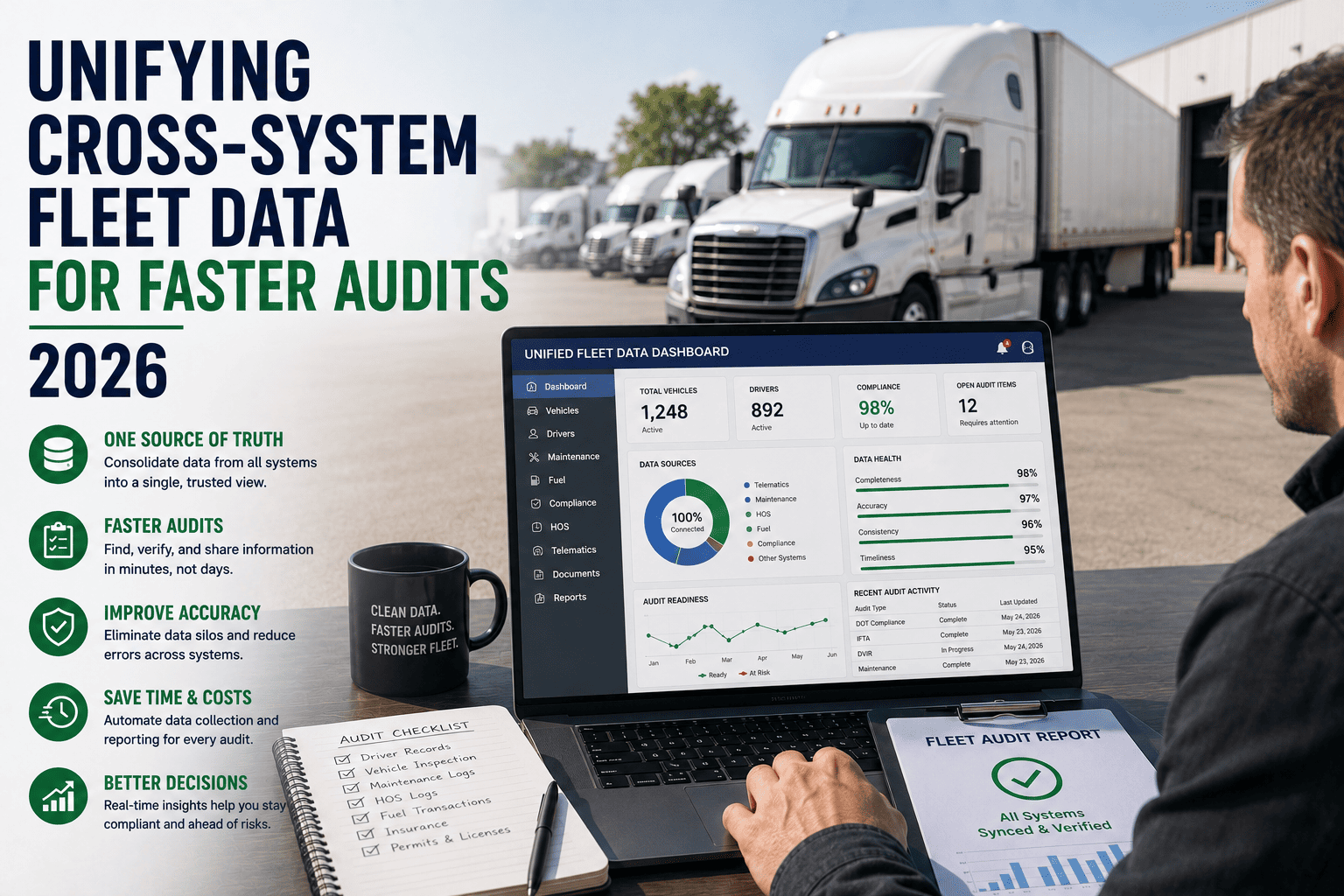
Unified dashboards provide fleet managers with real-time visibility into operational metrics: inspection completion rates, maintenance status, vehicle availability, fuel costs, compliance status, and driver performance. Custom reports can be generated to analyze specific questions about fleet performance, cost drivers, and operational improvement opportunities.
How Fleet Management Drives Operational and Financial Improvements
Transportation companies implementing comprehensive fleet management typically experience measurable improvements across several operational dimensions within the first six months of deployment.
Faster defect identification and maintenance response reduces the time vehicles spend in the shop. With manual inspection systems, defects may not be communicated to maintenance until end of shift or the following day. Digital systems notify maintenance instantly. The average improvement: 8-15% increase in vehicle availability, meaning more time vehicles spend generating revenue.
Preventive maintenance addressing components before failure costs significantly less than reactive emergency repairs. Digital systems enable systematic preventive maintenance, preventing the cycle of neglect followed by crisis repairs. Typical improvement: 15-20% reduction in total maintenance spending as fleets shift from reactive to preventive maintenance patterns.
Digital inspection systems eliminate hours of paper form processing, filing, retrieval, and data entry. A fleet processing 30-50 inspections daily spends 3-5 hours managing inspection paperwork. Digital systems reduce this administrative burden by 70-80%. Freed-up labor can be redeployed to higher-value activities.
Paper-based systems are vulnerable to missing records, incomplete documentation, and retrieval failures during DOT audits. Digital records with automatic backup and complete audit trails eliminate documentation gaps that create violations. Compliance improvement: near-elimination of recordkeeping violations and faster audit completion.
When vehicles receive systematic inspections and maintenance, safety-critical components (brakes, steering, lighting, tires) are checked regularly and repaired promptly. Digital inspection systems with immediate defect notification enable rapid response to safety issues before they create hazards. Improved maintenance correlates strongly with reduced accidents and insurance claims.
Complete cost tracking enables financial analysis showing which vehicles justify continued operation based on maintenance costs, fuel efficiency, and revenue contribution. Managers can make evidence-based decisions about vehicle replacement rather than emotional or political decisions about specific vehicles.
Fleet Management by Organization Type
Fleet management needs vary based on organization type and operational complexity. Transportation companies, logistics providers, utility companies, government agencies, construction firms, and service contractors all benefit from fleet management, but with different priorities and feature requirements.
For-Hire Transportation and Trucking Companies
These carriers operate commercial vehicles for customer shipments. Regulatory compliance is critical because FMCSA violations can trigger operational restrictions. Driver hours of service management is essential because drivers are mobile employees working independently. Customers increasingly demand real-time shipment tracking. Fleet management must integrate inspection, maintenance, driver HOS monitoring, GPS tracking, and customer communication to provide complete operational control.
Utility and Field Service Companies
These organizations maintain vehicles for field technicians performing repairs or service calls. Fleet management must track vehicle location and technician dispatch efficiency. Since technicians spend time away from the shop, mobile inspection and work order capabilities are essential. Maintenance tracking helps ensure company vehicles remain reliable in the field where vehicle failure creates service delays and poor customer experience.
Construction and Heavy Equipment Operations
These companies operate specialized equipment under demanding field conditions. Maintenance is critical because equipment failure halts job progress and creates significant financial impact. Fleet management must track equipment location, usage intensity, maintenance intervals, and rental status if equipment is hired out to third parties. Digital inspection and maintenance systems provide the oversight needed to keep expensive equipment operational.
Government and Public Sector Fleets
Municipal, county, and state government fleets serve public safety, infrastructure maintenance, and administrative functions. Compliance and safety are paramount. Public accountability requires transparent documentation of vehicle operations and maintenance. Fleet management enables transparent reporting of how public vehicle assets are being managed and maintained.
Fleet Management Best Practices and Implementation Strategy
Transportation companies implementing fleet management for the first time should follow a structured approach to ensure successful adoption and rapid value realization.
Start With Current State Assessment
Document current inspection and maintenance processes, compliance documentation methods, and operational pain points. Identify which functions consume the most administrative time, which compliance risks represent greatest exposure, and which operational inefficiencies cause the highest financial impact. This assessment guides feature prioritization when selecting a fleet management platform.
Implement in Phases
Rather than attempting to implement all fleet management functions simultaneously, start with the highest-impact function first. Most fleets see fastest ROI starting with digital inspections, which immediately reduces administrative labor and accelerates defect notification to maintenance. After inspection implementation stabilizes, add maintenance work order automation, then expand to additional modules like GPS tracking, fuel management, and analytics.
Invest in Adequate Training
Successful fleet management requires discipline in data entry and process adherence. Train drivers on the importance of thorough inspections and understanding that inspection data guides maintenance decisions affecting their safety. Train mechanics on work order systems and the importance of complete repair documentation. Invest time in management understanding analytics and using data to guide decisions.
Establish Key Performance Indicators
Define metrics that will demonstrate fleet management success: inspection completion rates, defect resolution time, vehicle uptime percentage, maintenance cost per mile, and compliance violation frequency. Track these metrics monthly and review progress toward improvement targets. Use data to identify teams or vehicles requiring additional attention or coaching.
Integrate With Existing Systems
Modern fleet management platforms should integrate with accounting systems for cost tracking, telematics providers for vehicle tracking and diagnostics, and ERP systems for parts inventory and procurement. This integration reduces manual data entry and ensures all systems reflect the same vehicle and operational data.
Fleet Management Fundamentals
Fleet Management Operations
Common Questions About Fleet Management
What is the difference between fleet management and vehicle maintenance?
Vehicle maintenance is one component of fleet management focused on keeping vehicles in safe operating condition. Fleet management is the broader discipline encompassing inspections, maintenance, compliance, safety, driver management, cost optimization, and operational efficiency. Fleet management uses maintenance as one tool to achieve overall fleet performance objectives.
Do I need fleet management software for a small fleet under 10 vehicles?
For fleets under 5-10 vehicles, manual processes with spreadsheets can work if discipline is strong. However, digital systems are increasingly affordable even for small fleets, and the time savings and compliance benefits often justify adoption. Many platforms offer free plans for small fleets, making adoption very low-risk. Start a free trial to evaluate whether digital fleet management fits your operation.
What are the FMCSA requirements for fleet management documentation?
The Federal Motor Carrier Safety Administration requires carriers to maintain records showing vehicles have been inspected and maintained per 49 CFR Part 396. You must document pre-trip and post-trip inspections, maintain defect repair records, and track preventive maintenance completion. Digital systems simplify compliance by automatically organizing required documentation. Book a demo to see how digital inspections meet FMCSA requirements.
How long does it take to implement fleet management?
Basic implementation with digital inspections typically takes 1-2 days for system setup and driver training. Most fleets see measurable improvements within the first 30 days as inspection data becomes visible and maintenance response accelerates. Full maturity with optimized processes and all features active typically takes 90 days as teams develop proficiency with the system.
Can fleet management improve driver safety?
Yes. Fleet management improves safety by ensuring vehicles receive proper inspections and maintenance so safety-critical components are checked and repaired promptly. Digital systems track inspection completion rates and driver behavior metrics. Regular training based on inspection and safety data helps develop a safety-focused culture. Book a demo to discuss safety improvement strategies.
What ROI can I expect from fleet management implementation?
Most fleets achieve payback within 3-6 months through reduced administrative labor, maintenance cost improvement from preventive repair focus, and compliance violation avoidance. Ongoing annual savings typically range from 15-25% of current fleet operating costs. ROI varies based on current operational structure and cost baseline. Sign up free to evaluate specific ROI for your fleet.
How does fleet management handle multi-location operations?
Digital fleet management centralizes vehicle data across all locations on a unified platform accessible from anywhere. Inspection and maintenance records for all vehicles are instantly accessible regardless of location. Fleet managers can compare performance across locations, ensure consistent maintenance standards, and coordinate vehicle transfers or assignments. Multi-location visibility is one of the strongest benefits of digital systems.
Can fleet management integrate with my existing accounting or ERP system?
Modern fleet management platforms integrate with accounting software (QuickBooks, Xero) for cost tracking, ERP systems for parts inventory, and telematics providers for vehicle data. These integrations eliminate manual data entry and ensure all systems reflect current vehicle status and costs. Ask vendors about specific integrations before selecting a platform.
What happens if a vehicle fails inspection or has critical defects?
Digital systems immediately notify fleet managers and maintenance personnel when critical defects are reported. Managers can restrict vehicle operation, schedule urgent repair, and track defect resolution through completion. The system can prevent defective vehicles from being dispatched, ensuring safety and compliance. This rapid response prevents defects from escalating into safety hazards or catastrophic failures.
How does fleet management help with insurance and compliance?
Complete digital records with timestamps and audit trails demonstrate proactive maintenance and compliance to insurance carriers and regulators. Insurance companies factor fleet safety records into rates, and complete documentation of maintenance and inspections can reduce premiums. During DOT audits, organized digital records speed up the audit process and demonstrate superior compliance practices.
Start Your Fleet Management Journey Now
FleetRabbit makes implementing fleet management simple. Start with digital inspections and expand to maintenance, compliance, tracking, and analytics as your team develops proficiency. No contracts, no hardware required, and free plans available for small fleets.