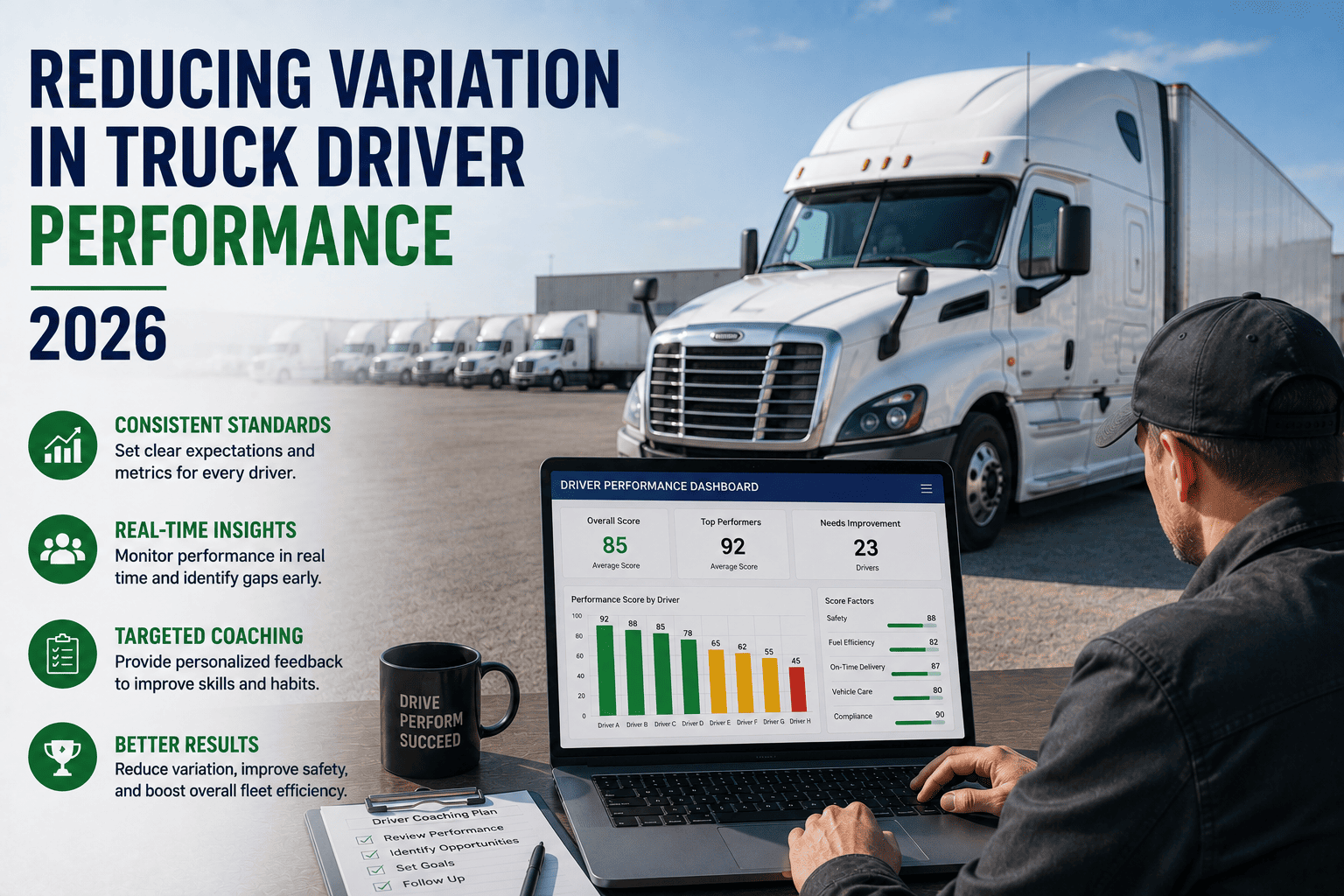
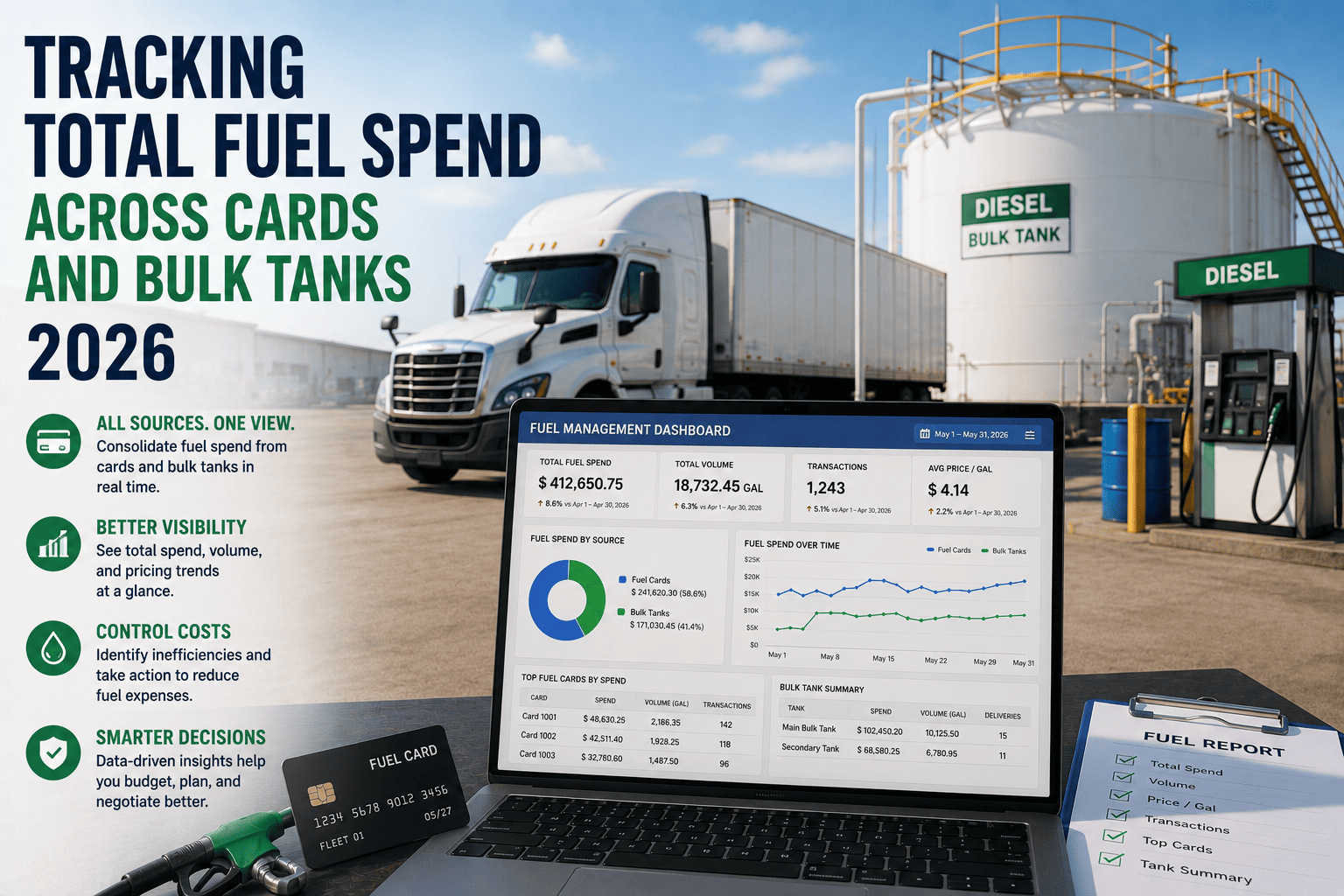
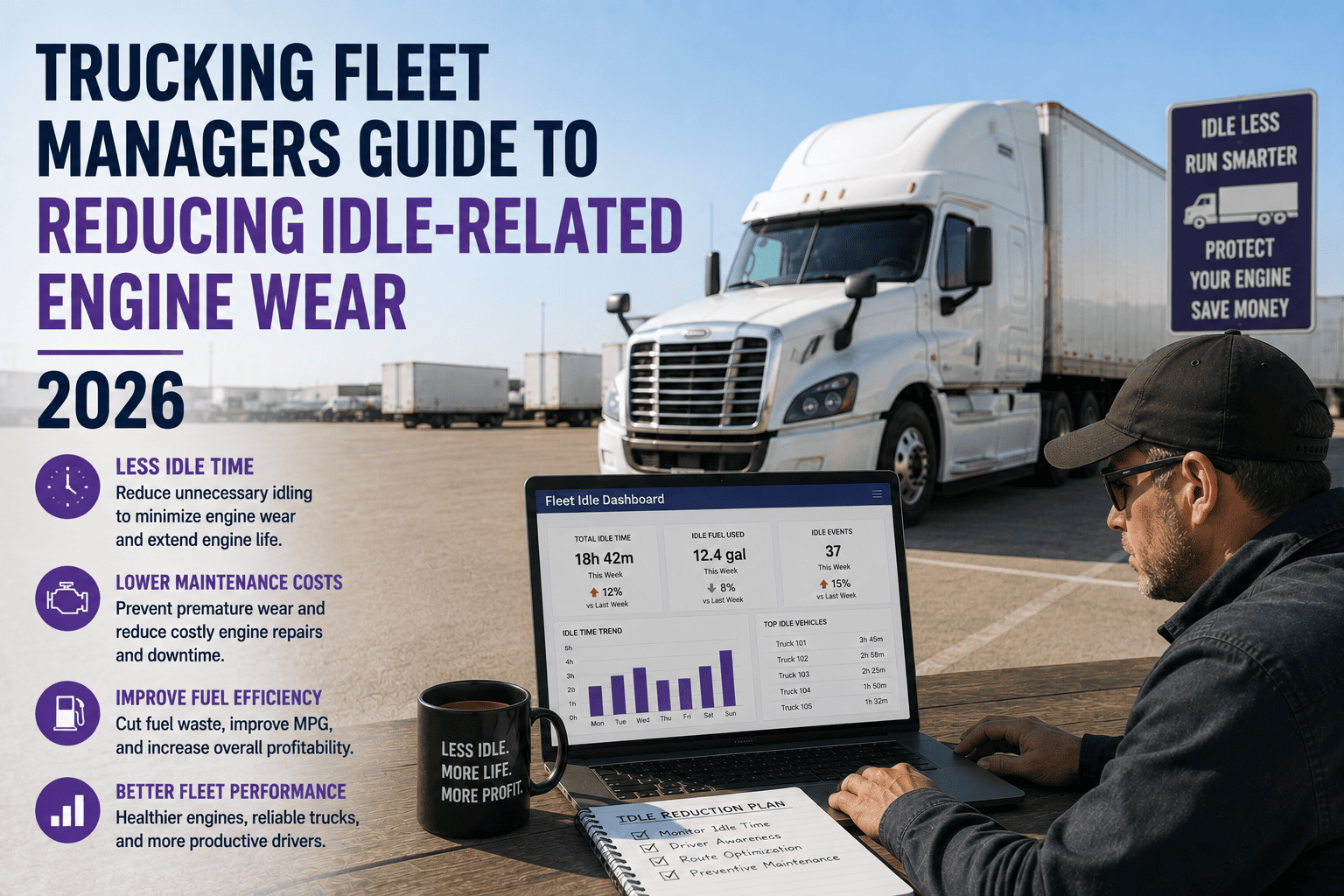
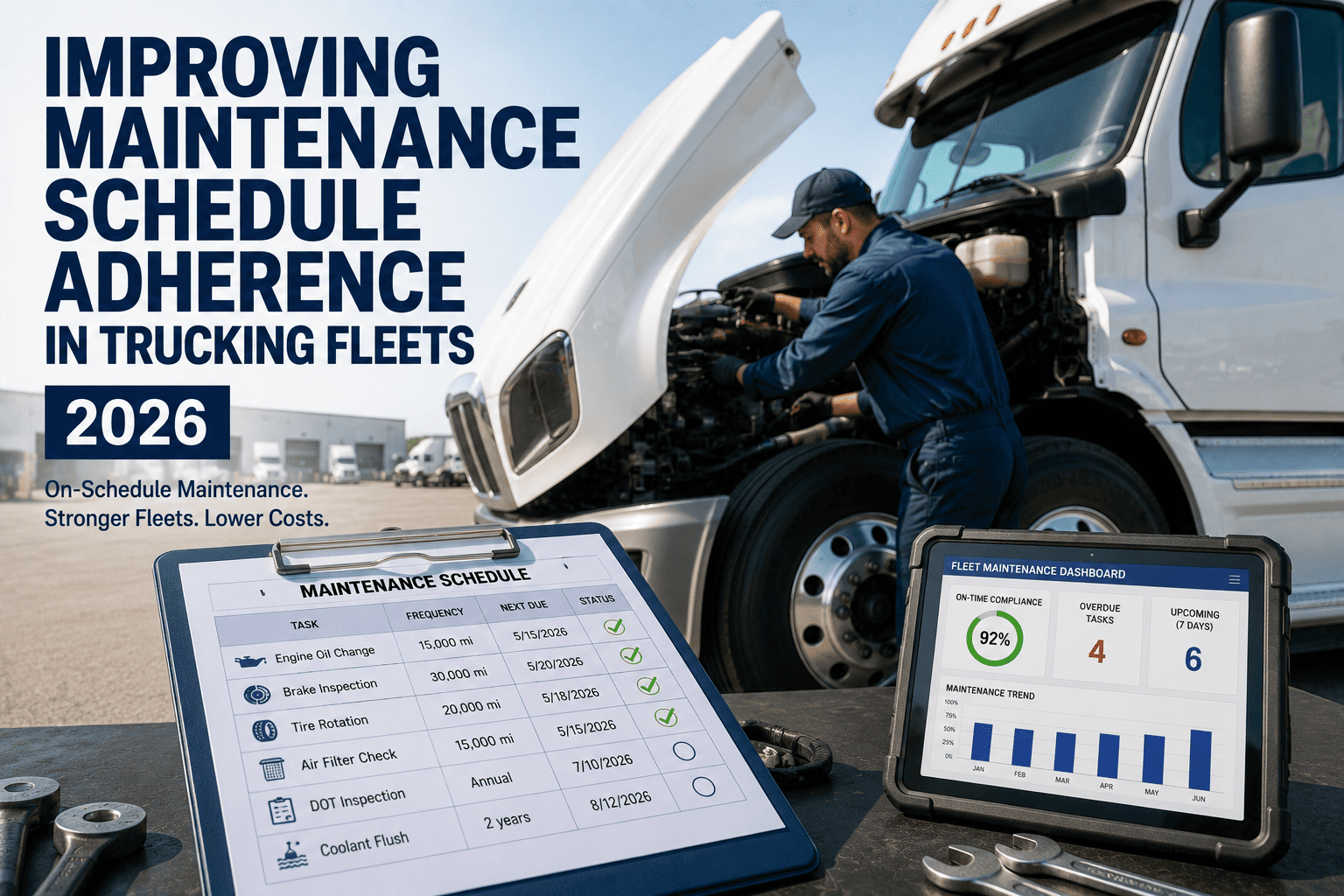
A fleet management system (FMS) is a comprehensive digital platform that centralizes all operational functions of your fleet into a single, unified dashboard. Instead of managing vehicles through spreadsheets, paper logs, and disconnected tools, modern fleet management software provides real-time visibility into vehicle tracking, maintenance schedules, driver performance, fuel consumption, compliance documentation, and operational costs. For transportation companies, logistics operations, and service-based fleets, an FMS transforms how you operate—reducing downtime, controlling costs, and ensuring regulatory compliance across your entire operation.
FMS Essentials
A fleet management system centralizes tracking, maintenance, compliance, and analytics in one platform. FleetRabbit combines GPS tracking, digital inspections, preventive maintenance scheduling, real-time fuel monitoring, and AI-powered analytics. Result: 35% downtime reduction, 20-40% cost savings, and automatic DOT/FMCSA compliance.
What Problems Does a Fleet Management System Solve?
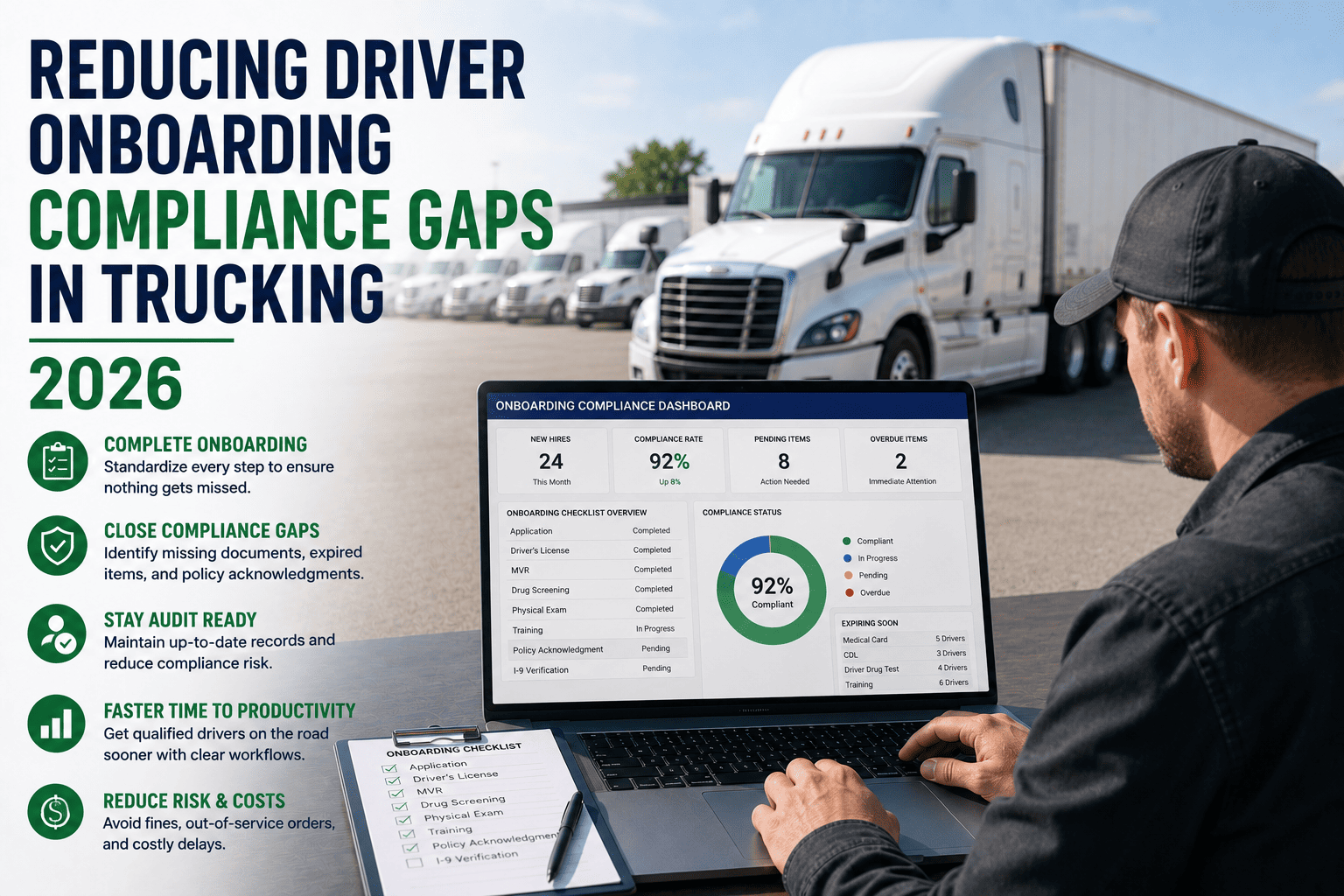
Fleet operations built on manual processes create compounding costs and compliance risks. Maintenance schedules tracked in spreadsheets miss preventive service windows, leading to unexpected breakdowns that ground vehicles and upset customers. Paper inspection logs disappear or get filled out incorrectly, leaving no audit trail for DOT inspections. Driver hours tracked across multiple systems create gaps that expose companies to Hours of Service violations. Fuel cards don't integrate with maintenance systems, so you cannot identify when a vehicle has developed a fuel economy problem. Without a unified platform, operations managers spend 10-15 hours weekly compiling data from different sources, verifying accuracy, and reconciling discrepancies.
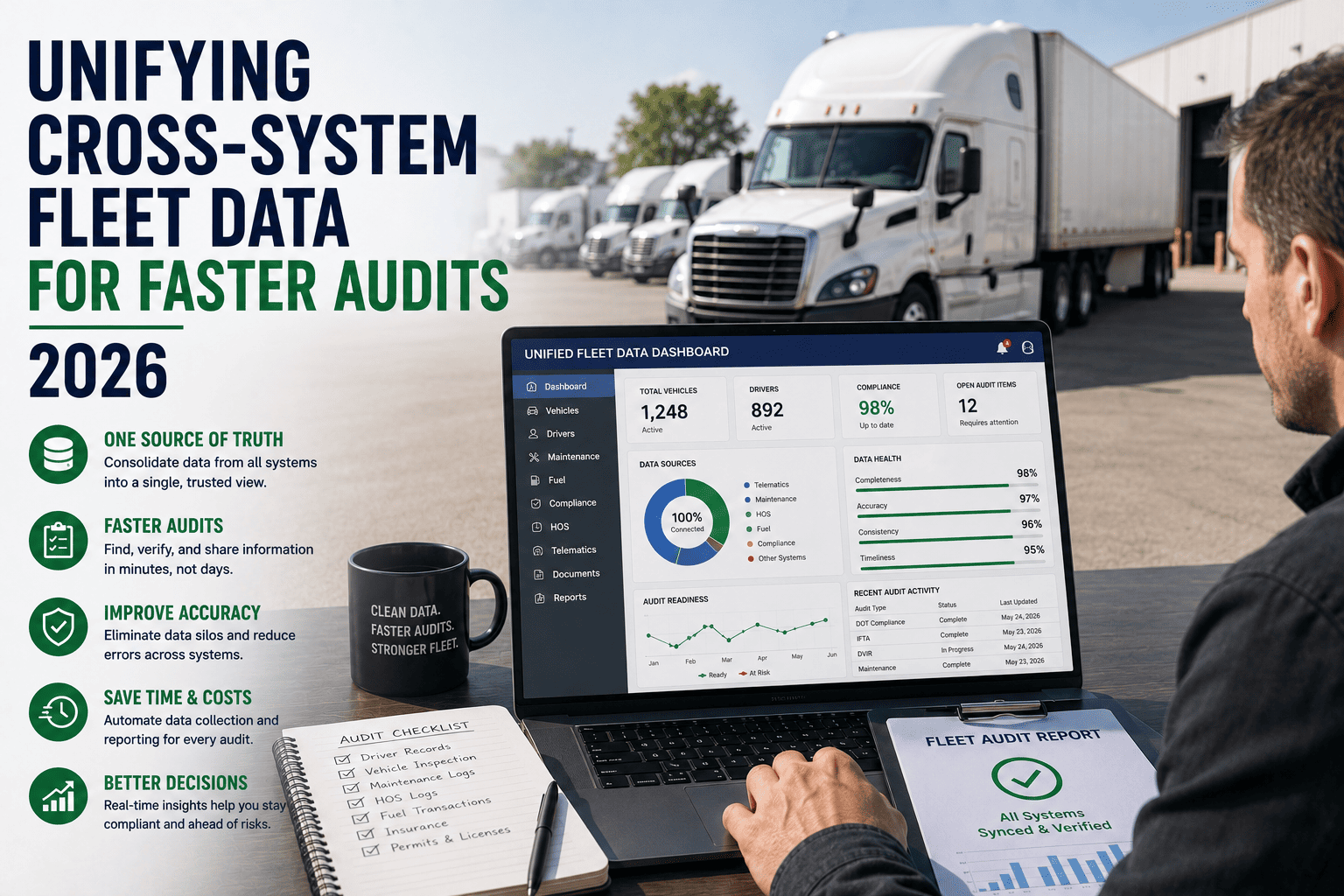
A modern fleet management system solves these problems by eliminating data silos. All vehicle, maintenance, compliance, driver, and financial data flows into a single system that calculates, analyzes, and alerts in real-time. Preventive maintenance schedules automatically trigger work orders when service intervals approach. Digital inspections create instantaneous records linked to maintenance. Fuel data automatically flags vehicles consuming fuel outside normal ranges. Hours of Service tracking integrates with dispatch, preventing violations before they occur. The result is a system that operates proactively instead of reactively, catching problems before they become costly failures.
See Fleet Management In Action
Book Your Free Demo Today
See exactly how FleetRabbit centralizes tracking, maintenance, compliance, and analytics into one connected platform. Watch live demos of vehicle monitoring, maintenance automation, and compliance reporting. 30-minute personalized consultation included.
40%
Cost Savings Possible
Core Features Every Fleet Management System Must Have
Vehicle Location and Movement
Monitor every vehicle's location continuously with live GPS updates. Track route history, identify stop duration and idle time, set up geofencing alerts for unauthorized areas, and receive notifications when vehicles enter or exit designated zones. Real-time tracking enables faster customer response, proof of delivery for service calls, and detection of unauthorized vehicle use.
Preventive Maintenance Scheduling
Automated Service Planning
Schedule maintenance services based on time intervals (every 30/60/90 days) or mileage milestones. Automatically generate work orders when service windows approach. Link maintenance history to vehicle records for complete service tracking. Predictive maintenance alerts identify emerging issues before they cause breakdowns, keeping vehicles operational and reducing emergency repair costs.
Digital Vehicle Inspections (DVIR)
FMCSA-Compliant Checklists
Replace paper inspection forms with digital checklists accessible on driver mobile apps. Capture defect photos, timestamps, and driver signatures automatically. Link inspection findings to maintenance work orders for immediate corrective action. Maintain complete audit trails proving compliance with federal inspection requirements during roadside stops and safety audits.
Hours of Service (HOS) Monitoring
ELD Integration and Compliance
Integrate with Electronic Logging Devices to automatically capture driving hours, on-duty time, and rest periods. Prevent Hours of Service violations before they occur through real-time alerts. Generate audit-ready HOS records for DOT inspections. Eliminate manual log entries and reduce falsified record risk through objective telematics data.
Real-Time Consumption Tracking
Monitor fuel consumption in real-time by integrating fuel card data and telematics. Identify vehicles with declining fuel economy indicating mechanical problems. Detect fuel theft through sudden consumption anomalies. Optimize routes to reduce fuel consumption. Track fuel costs per vehicle for accurate cost allocation and budgeting.
Compliance and Regulatory Automation
DOT/FMCSA Documentation
Automate compliance tracking for FMCSA regulations including maintenance records, inspection documentation, and driver qualification files. Generate audit-ready reports with single-click export. Maintain historical compliance records for multi-year audits. Receive alerts for upcoming compliance deadlines and regulatory requirement changes.
Fleet Analytics and Reporting
Data-Driven Decision Making
Access comprehensive dashboards showing fleet-wide metrics: vehicle utilization, maintenance costs, fuel efficiency, downtime hours, driver performance, and ROI calculations. Generate custom reports on any metric across any time period. Export data for budget planning and strategic analysis. AI-powered insights identify optimization opportunities automatically.
How Fleet Management Systems Deliver ROI
Fleet management software investment returns through multiple revenue and cost reduction channels. The most significant savings come from preventive maintenance. When a commercial vehicle breaks down unexpectedly, the downtime costs $500-2,000 per day depending on fleet type. A fleet management system that schedules maintenance proactively eliminates 30-45% of breakdowns, translating directly to vehicle availability and customer delivery performance. For a 50-vehicle fleet, this represents $100,000-150,000 in avoided downtime annually.
Fuel costs represent the second-largest operational expense after labor. A fleet management system that monitors fuel consumption, optimizes routes, and identifies mechanical issues affecting economy delivers 8-15% fuel savings. Route optimization alone reduces mileage 5-10% by eliminating inefficient paths. For fleets consuming 10,000 gallons monthly at current fuel prices, this means $10,000-15,000 monthly savings. Labor efficiency represents the third cost category. Maintenance teams spend 15-25 hours weekly manually scheduling service, tracking parts inventory, and documenting work performed. Automated maintenance management reduces this to 5-10 hours, freeing team capacity for proactive repair work instead of administrative overhead.
Compliance savings emerge when you account for violation avoidance. A single DOT inspection violation carries $1,000-15,000 fines. Pattern violations trigger out-of-service orders halting operations entirely. Fleet management systems prevent violations through real-time monitoring and automated documentation, eliminating these catastrophic cost risks.
Preventive Maintenance Impact
Scheduled maintenance catches problems before catastrophic failure. Reducing unexpected downtime by 35-45% through proactive service scheduling. Emergency repairs cost 3-5x more than planned maintenance. Complete maintenance history enables warranty claim recovery when manufacturer defects appear. Better-maintained vehicles retain resale value longer.
Annual Impact: $100,000-150,000 for 50-vehicle fleets
Fuel Efficiency Optimization
Real-time fuel monitoring identifies vehicles developing mechanical issues affecting consumption. Route optimization reduces unnecessary mileage 5-10%. Idle time alerts eliminate wasteful engine running. Driver behavior analytics show coaching opportunities for efficient operation. Fuel card integration provides objective consumption verification.
Annual Impact: $120,000-180,000 for high-mileage fleets
Labor Efficiency
Automated work order generation eliminates manual scheduling overhead. Digital inspection forms reduce paperwork by 90%. Maintenance records automatically generated save 10-15 hours weekly of data entry. Predictive maintenance alerts allow maintenance teams to plan work efficiently instead of reacting to failures. Mobile work order access enables technicians to work without returning to office.
Annual Impact: $40,000-60,000 in labor cost reduction
Compliance Cost Avoidance
Violation prevention eliminates $1,000-15,000 per-violation fines. Out-of-service order avoidance prevents operational shutdown costing $10,000+ daily. Complete audit documentation reduces inspection cycle time. Automated records eliminate re-inspection penalties from incomplete documentation. Insurance carrier partnerships maintained through clean compliance history.
Annual Impact: $50,000-250,000 for multi-vehicle fleets
Customer Service Improvement
Real-time tracking enables accurate delivery estimates and customer updates. Better-maintained vehicles mean fewer service delays and customer complaints. Proof of delivery and service completion tracking improves customer confidence. On-time performance data demonstrates service quality value in contract renewals.
Impact: Improved retention, faster sales cycles, premium pricing support
Data-Driven Optimization
Fleet analytics reveal which vehicles drain profits through excessive maintenance or poor utilization. Cost-per-mile tracking identifies underutilized assets for redeployment or sale. Driver performance metrics show training and retention opportunities. Growth decisions supported by reliable operational metrics instead of gut feeling.
Impact: Strategic fleet composition optimization, better capital allocation
Fleet Management System ROI by Fleet Size
ROI calculations vary based on fleet size, operation type, and current management approach. Let us break down realistic annual savings by fleet category:
| Fleet Size |
Annual FMS Cost |
Typical Annual Savings |
Year 1 ROI |
| 5-15 Vehicles |
$600-1,800 |
$15,000-30,000 |
8x-50x Return |
| 15-50 Vehicles |
$1,800-6,000 |
$50,000-120,000 |
8x-67x Return |
| 50-100 Vehicles |
$6,000-12,000 |
$150,000-350,000 |
12x-58x Return |
| 100+ Vehicles |
$12,000-30,000 |
$400,000-1,000,000+ |
13x-83x Return |
| Average Across All Sizes |
$5,000-12,000 |
$150,000-300,000 |
20x-60x Return |
These ROI figures assume typical transportation and logistics operations using manual tracking before implementation. ROI improves for fleets experiencing high maintenance costs, frequent violations, fuel-intensive operations, or driver safety issues. Companies with already-optimized operations may see more modest gains in the 5-10x range, though compliance automation benefits apply universally.
Comparing Fleet Management System Types
Fleet management software comes in three primary architecture types, each with distinct benefits and limitations. Understanding these differences helps you select a system matching your operational complexity and budget.
Basic Vehicle Location
Low-cost solutions showing only vehicle location on a map. No maintenance integration, no compliance automation, no analytics beyond location history. Suitable only for basic courier or service businesses needing delivery proof. Cannot support transportation companies with regulatory requirements or maintenance complexity.
Best-of-Breed Point Solutions
Specialized Single Function
Dedicated platforms excelling in one area: maintenance management, compliance tracking, or dispatch optimization. Excellent depth in specialized function, but require manual data bridges to other systems. Two systems must be maintained with duplicate data entry and mismatched update cycles. Higher total cost of ownership despite lower per-system pricing due to integration overhead.
Integrated Multi-Function Suite
Single platform integrating tracking, maintenance, compliance, fuel management, and analytics with shared data foundation. Single source of truth eliminates manual data bridges. All modules update automatically with vehicle and driver data. No duplicate data entry. Lower total cost of ownership, faster implementation, and more powerful analytics through integrated datasets. Scales efficiently from 5 to 500+ vehicles.
Ready To Calculate Your Fleet's ROI?
Get Started With Fleet Management Today
FleetRabbit's unified platform combines GPS tracking, maintenance automation, compliance documentation, and analytics in one integrated system. Free trial for up to 3 vehicles with all features included. See your potential savings in real-time.
$15-45
Per Vehicle Monthly
Key Benefits of Implementing Fleet Management Software
Operational Efficiency Automated maintenance scheduling eliminates manual work while preventing breakdowns. Real-time dispatch optimization routes vehicles efficiently, reducing mileage and fuel consumption. Work order automation streamlines maintenance team coordination.
Safety & Compliance Digital inspections and maintenance records provide audit-ready documentation for DOT inspections. HOS integration prevents Hours of Service violations. Automated compliance alerts ensure you never miss regulatory deadlines. Complete inspection trails demonstrate due diligence in safety protocols.
Operational Visibility Real-time dashboards show fleet health across all metrics: vehicle location, maintenance status, fuel consumption, driver performance, and compliance standing. Executive reporting reveals profitability by vehicle, customer, or route. Mobile access lets managers monitor operations from anywhere.
Fleet Management System Implementation and Timeline
Modern fleet management platforms deploy quickly without requiring fleet-wide equipment replacement. Most systems connect to existing telematics, GPS devices, and fuel card networks through API integration. Implementation follows a standard four-week timeline for typical fleets.
Week 1: Configuration and Integration
Connect telematics devices, configure HOS rules, set up user accounts, deploy mobile apps. System begins capturing real-time data. First dashboards show vehicle status and maintenance history.
Week 2: Team Training and Parallel Running
Train operations teams on new interfaces, explain alert thresholds, validate data accuracy against existing records. Run manual and automated processes in parallel to verify system reliability.
Week 3: Operational Adoption
Dispatch begins using system for real assignments. Maintenance team processes first automated work orders. Compliance team validates alert accuracy. First cost savings visible through avoided emergency repairs.
Week 4: Full Deployment and Optimization
Transition completely to new system. Retire manual processes. Begin analyzing historical data to identify further optimization opportunities. Generate first ROI reports documenting actual savings achieved.
Common Questions About Fleet Management Systems
QDo I need to replace my GPS devices to implement a fleet management system?
No. Modern platforms integrate with existing telematics and GPS devices through APIs. FleetRabbit connects to providers including Verizon Connect, Samsara, Geotab, and Teletrac Navman without equipment replacement.
QHow quickly will I see ROI from fleet management software?
Most fleets see positive ROI within 60-90 days through downtime reduction and fuel optimization. Compliance benefits begin immediately through violation prevention. Full ROI potential realized after 6-12 months of operational optimization.
QWhat integrations does FleetRabbit support?
FleetRabbit integrates with major telematics providers, ELD systems, fuel card networks, accounting software, and custom systems through REST API.
Book a demo to discuss your specific integration requirements.
QCan a fleet management system work with mixed vehicle types?
Yes. Platforms like FleetRabbit handle trucks, vans, service vehicles, and specialized equipment in one system. Maintenance scheduling adapts to each vehicle type. GPS and telematics work across all vehicle categories.
QHow are driver privacy and data security handled?
Cloud-based platforms use enterprise-grade encryption and security protocols. Data access controls limit visibility to authorized personnel.
Start your free trial to review security infrastructure meeting your requirements.
QWhat happens if I need to replace a vehicle during the year?
Platforms scale flexibly. Remove old vehicle, add new vehicle, system automatically integrates telematics data. No contract penalties or downtime. Pricing adjusts based on actual vehicles in fleet.
QHow does cloud-based fleet management compare to on-premise solutions?
Cloud platforms scale easily, integrate faster with external systems, and receive continuous updates. On-premise solutions require capital investment and IT staff. Cloud ROI typically appears 6-12 months faster.
Transform Your Fleet Operations
Start Your Free Trial Today
FleetRabbit's unified fleet management platform connects GPS tracking, maintenance automation, compliance documentation, and analytics. Free for up to 3 vehicles with all features. No credit card required. See your fleet's potential in minutes.
4 weeks
Full Implementation
Fleet Management Systems Enable Sustainable Fleet Growth
For fleet operators planning growth from 20 vehicles to 100, fleet management systems represent essential infrastructure that scales with you. Manual tracking methods fail predictably at scale. The operations manager cannot monitor 100 drivers' hours, 100 maintenance schedules, and 100 compliance requirements manually. Violations accumulate invisibly until regulatory audits discover patterns. By implementing fleet management software early, you build the infrastructure supporting 10x growth without adding equivalent overhead. Software costs scale linearly while operational burden remains constant. That is how market leaders scale efficiently while competitors struggle with administrative burden.
Understand Your Fleet's True Potential
A comprehensive fleet management system reveals where your fleet loses money and where optimization opportunities exist. FleetRabbit's unified platform transforms spreadsheets and manual processes into real-time operational control. Start your journey today.
Real-Time GPS Tracking
Preventive Maintenance
FMCSA Compliance
Fuel Optimization
20x Average ROI
May 29, 2026
By Herry smith
All Posts
.png)