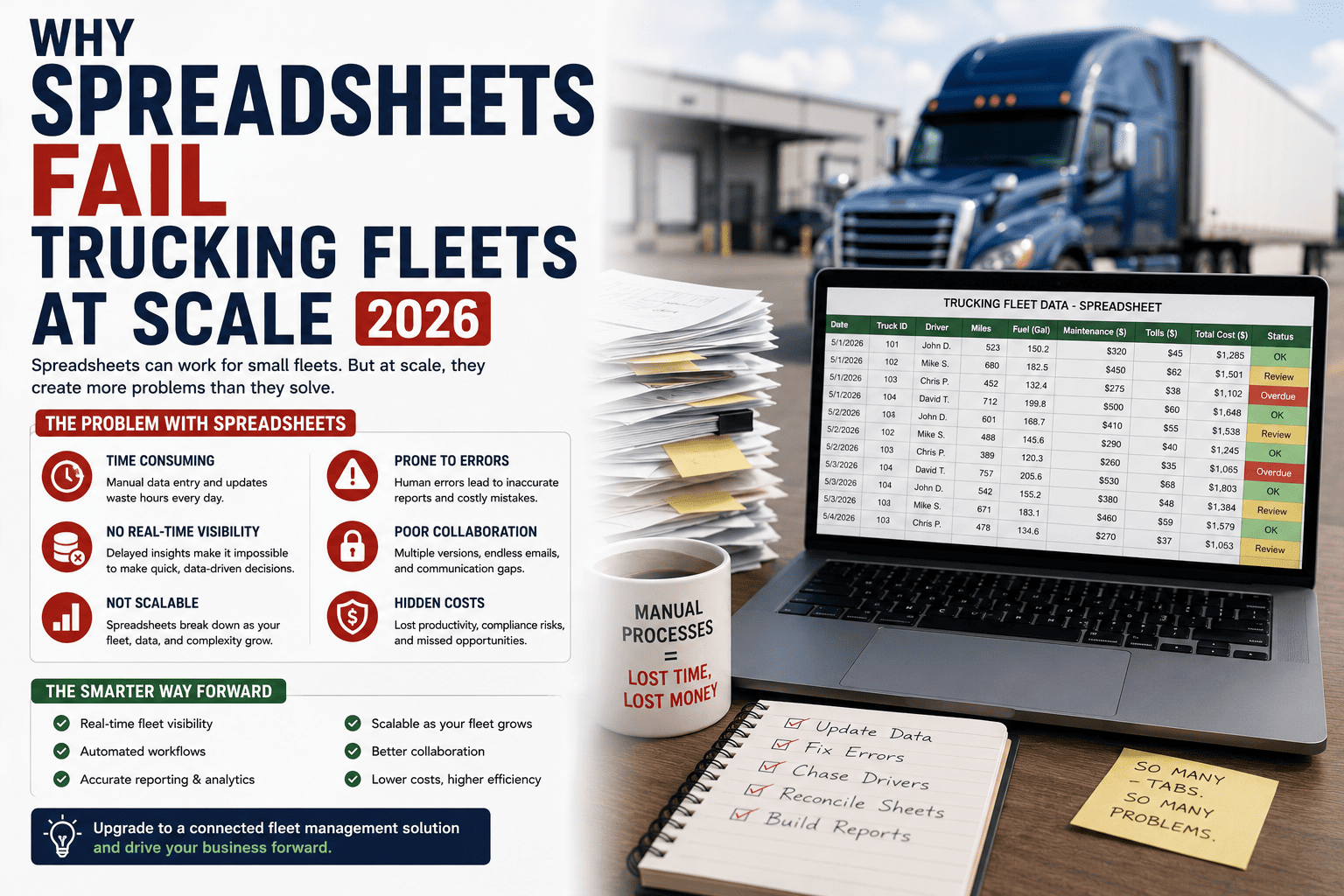
Every trucking company starts with a spreadsheet, and for a while, it works fine. One owner-operator, a handful of trucks, one person who knows where every file lives. Then a fleet grows past five trucks, then fifteen, then fifty, and the same spreadsheet that once felt simple starts quietly costing hours every week, hiding errors nobody notices until a compliance deadline slips or a truck breaks down that should have been serviced weeks earlier. Spreadsheets don't fail all at once. They fail slowly, in ways that are easy to blame on "operational complexity" instead of the tool itself.
Research suggests up to 88 percent of spreadsheets contain errors, and fleet managers relying on manual tracking typically lose 5 to 10 hours a week to data entry and reconciliation alone. The breaking point isn't a fixed truck count, it's the moment administrative work starts cutting into revenue-generating time. You can sign up for a free trial and see what centralized, automated fleet tracking looks like without the manual upkeep.
Spreadsheets Aren't The Problem, Scale Is
Spreadsheets are free, flexible, and familiar, which is exactly why so many fleets start with them. The problem isn't the tool itself, it's what happens as a fleet grows. A single owner tracking three trucks can hold most of it in their head with a spreadsheet as backup. A fifty-truck operation with multiple dispatchers, drivers, and maintenance shops asks a spreadsheet to do a job it was never built for.
Five Ways Spreadsheets Break As Fleets Scale
The failure points below aren't hypothetical. They're the specific, recurring reasons growing fleets abandon manual tracking, in the order they usually show up.
Data Accuracy Becomes Fragile
As more people edit the same file, version conflicts and small errors become unavoidable. A mileage log entry of 15 instead of 51 seems trivial in isolation, but these mistakes compound over time into inaccurate cost data and poor decisions built on numbers nobody double-checked.
Compliance Deadlines Live In Too Many Places
Medical certificate renewals, annual inspections, and MVR reviews often end up scattered across multiple tabs or separate files. Compliance deadlines get missed not because anyone forgot the rule, but because the reminder existed in a spreadsheet nobody opened that week.
Maintenance Becomes Reactive Instead Of Planned
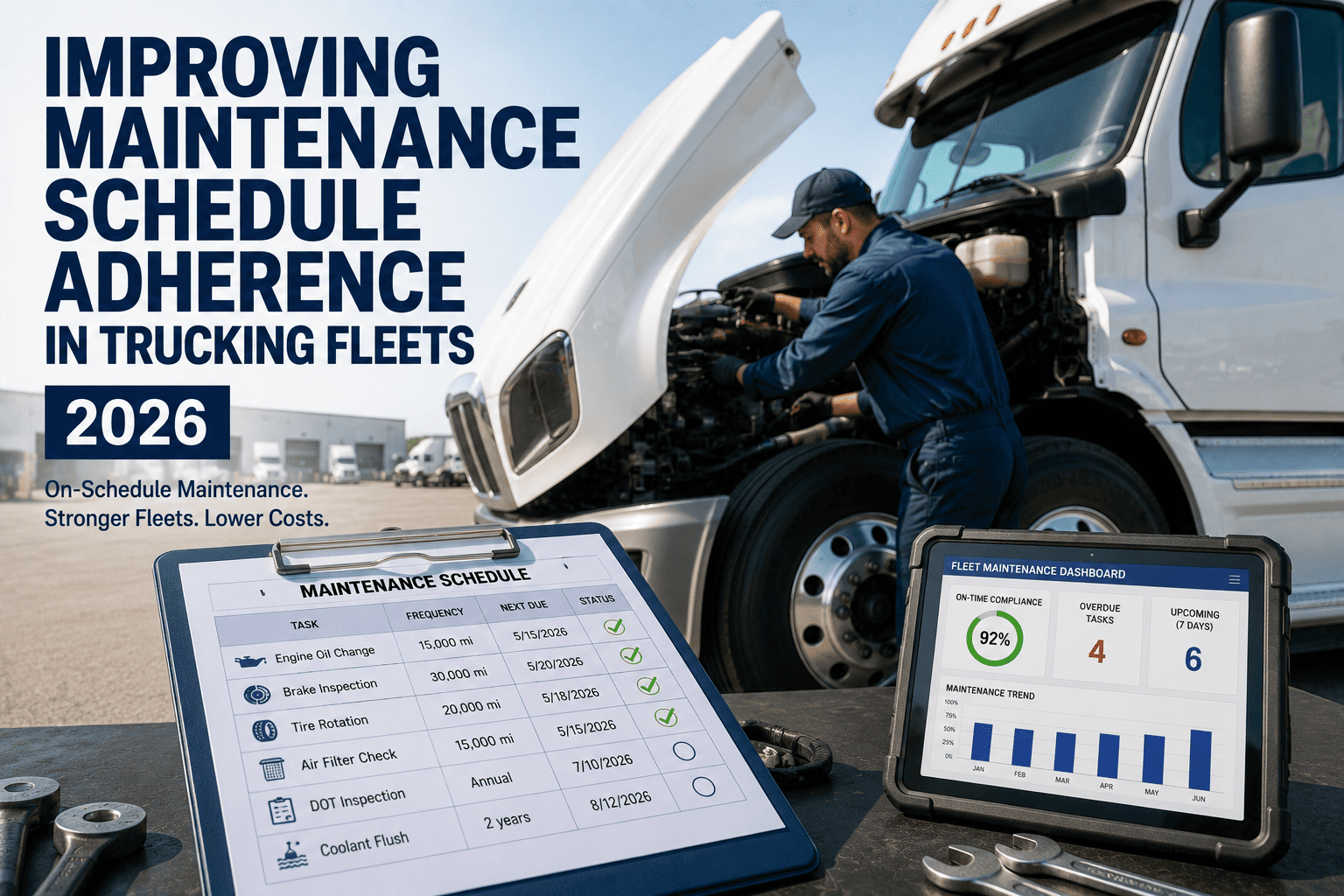
Maintenance work orders created manually invite data entry errors and delays. Without automated intervals tied to actual mileage or engine hours, small fleets slide into reacting to breakdowns instead of preventing them, and a single unexpected transmission failure can cost 5,000 to 8,000 dollars and sideline a truck for weeks.
Data Stays Isolated From Everything Else
Spreadsheets don't talk to telematics systems, fuel cards, or compliance platforms. Every connection between them has to be built by hand, importing and exporting data between tools, which multiplies the exact error risk the spreadsheet was supposed to prevent.
Growth Multiplies The Administrative Load
Adding trucks doesn't add administrative work in a straight line, it multiplies it. Many small fleet operators hit a real growth ceiling here, not because they can't win more freight, but because the back office can't keep up with the paperwork that comes with it.
FleetRabbit centralizes maintenance, compliance, and inspection data automatically, replacing the spreadsheet tabs, missed reminders, and version conflicts that quietly cost growing fleets hours every week.
Spreadsheets Versus Connected Fleet Software
The comparison isn't about which tool is inherently better, it's about which one still works once a fleet crosses a certain size and complexity.
| Category | Spreadsheets | Connected Fleet Software |
|---|---|---|
| Data Entry | Manual, error-prone, duplicated across tabs | Automatic sync from telematics, fuel cards, and inspections |
| Maintenance Scheduling | Manual reminders, easy to miss or overlook | Automated intervals based on mileage, hours, or time |
| Compliance Tracking | Scattered across files, deadlines easily missed | Centralized alerts sent ahead of expiration dates |
| Visibility | Reactive, only as current as the last manual update | Real-time, updated automatically as data comes in |
| Scaling With Fleet Growth | Administrative burden multiplies with every new truck | Adding vehicles scales without adding manual work |
Signs Your Fleet Has Already Outgrown Its Spreadsheet
There's no fixed truck count where spreadsheets stop working. The signal is workload and complexity, not headcount alone. These are the clearest tells.
Billing And Reporting Take Longer Every Month
If closing the books or pulling a compliance report takes noticeably longer than it did six months ago, that's growth outpacing your tracking system, not just a busy season.
You've Caught A Compliance Gap After The Fact
An expired medical certificate or a missed annual inspection discovered during an audit, rather than before it, is the clearest sign that manual reminders are no longer reliable at your current scale.
Maintenance Feels Unpredictable
If repairs increasingly feel like they come out of nowhere, it's rarely bad luck. It's usually a sign that maintenance intervals are being tracked reactively instead of on an automated schedule.
Multiple People Edit The Same File
Once more than one or two people are updating the same spreadsheet, version conflicts and overwritten data become a matter of when, not if.
A short call with FleetRabbit's team can walk through your current tracking setup and show exactly where manual processes are creating risk, before it turns into a missed deadline or an unplanned breakdown.
Making The Switch Without Disrupting Operations
Moving off spreadsheets doesn't need to be a disruptive overhaul. Most modern platforms are designed for quick onboarding, and many fleets transition within a few weeks without needing dedicated IT support.
Start With The Highest-Risk Data
Compliance deadlines and maintenance schedules carry the most immediate risk if they slip, so they're the natural starting point. Moving these off spreadsheets first delivers the fastest reduction in real exposure.
Keep Spreadsheets For What Still Works
Some fleets continue using spreadsheets for smaller, low-risk tasks even after adopting fleet software for core operations. The goal isn't eliminating spreadsheets entirely, it's removing them from the processes where an error actually costs money or creates compliance risk.
Frequently Asked Questions
The Bottom Line
Spreadsheets aren't a bad tool, they're just the wrong tool once a fleet crosses a certain scale. The errors, the missed deadlines, and the hours lost to reconciliation aren't operational bad luck, they're the predictable cost of asking a manual system to do a connected system's job. Fleets that make the switch early avoid the compliance gaps and breakdown surprises that force the change later, under worse circumstances.
Every week on manual tracking is another week of hidden errors, missed reminders, and hours that could go toward growing the business instead of reconciling tabs. See what a connected system looks like on your own fleet.