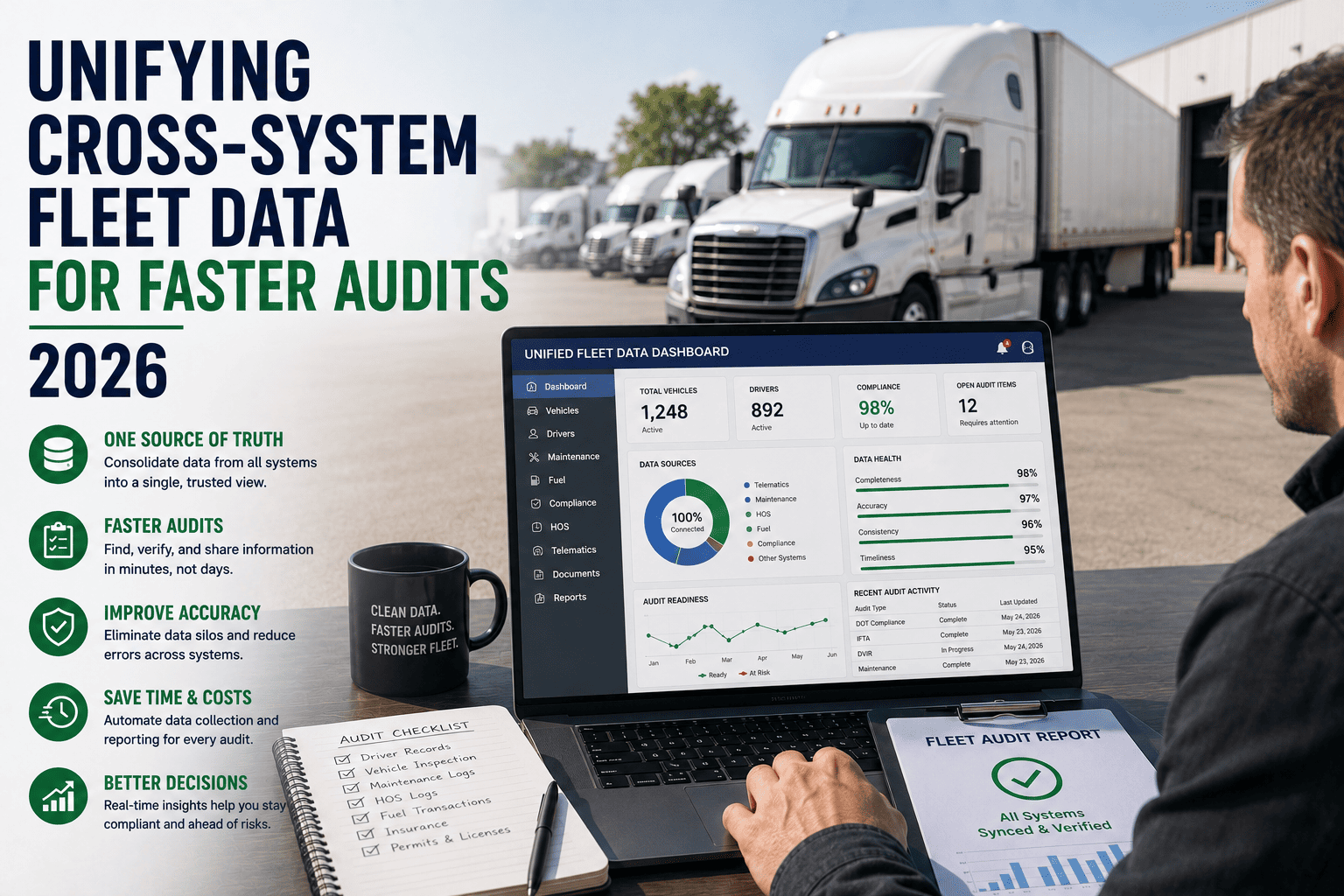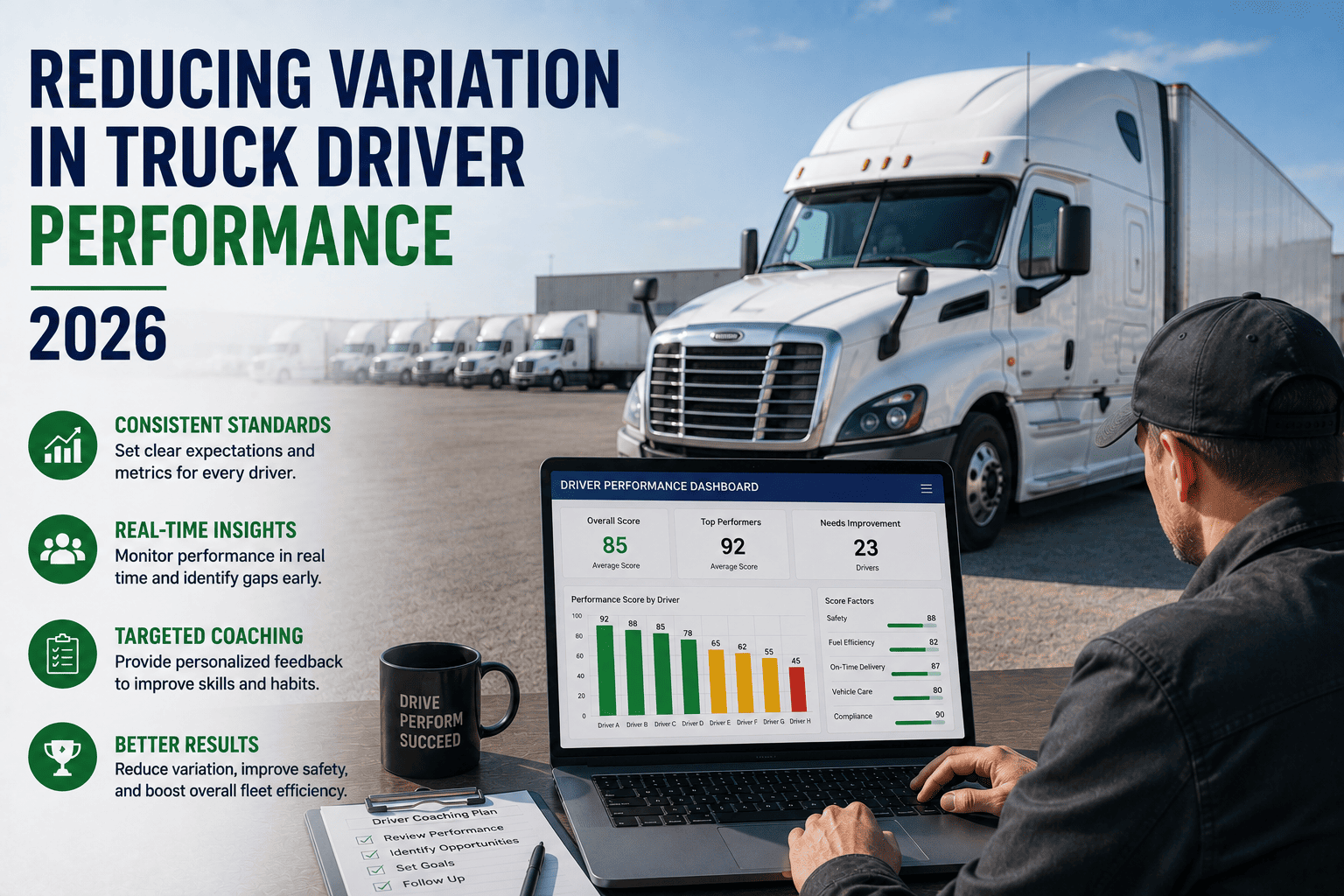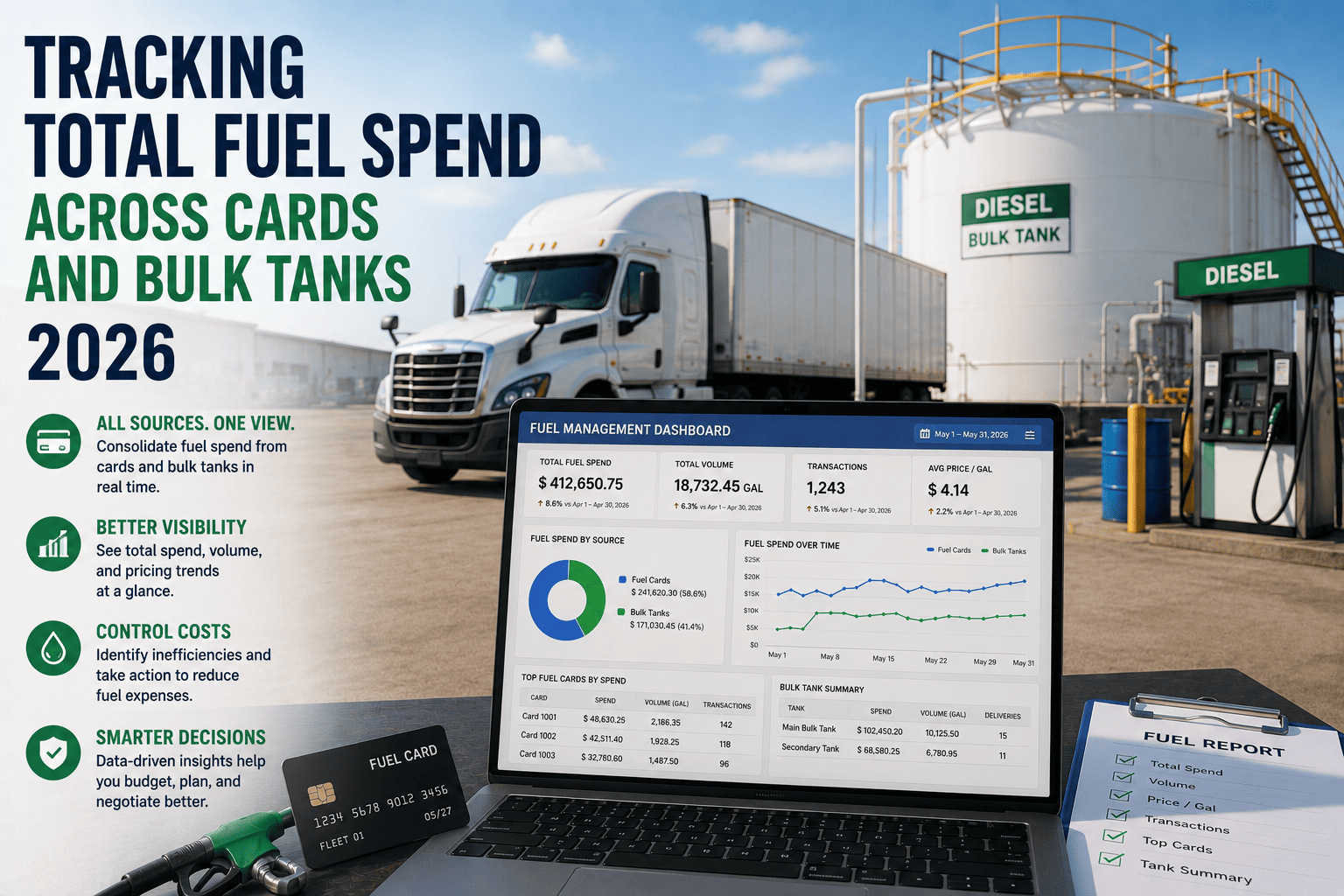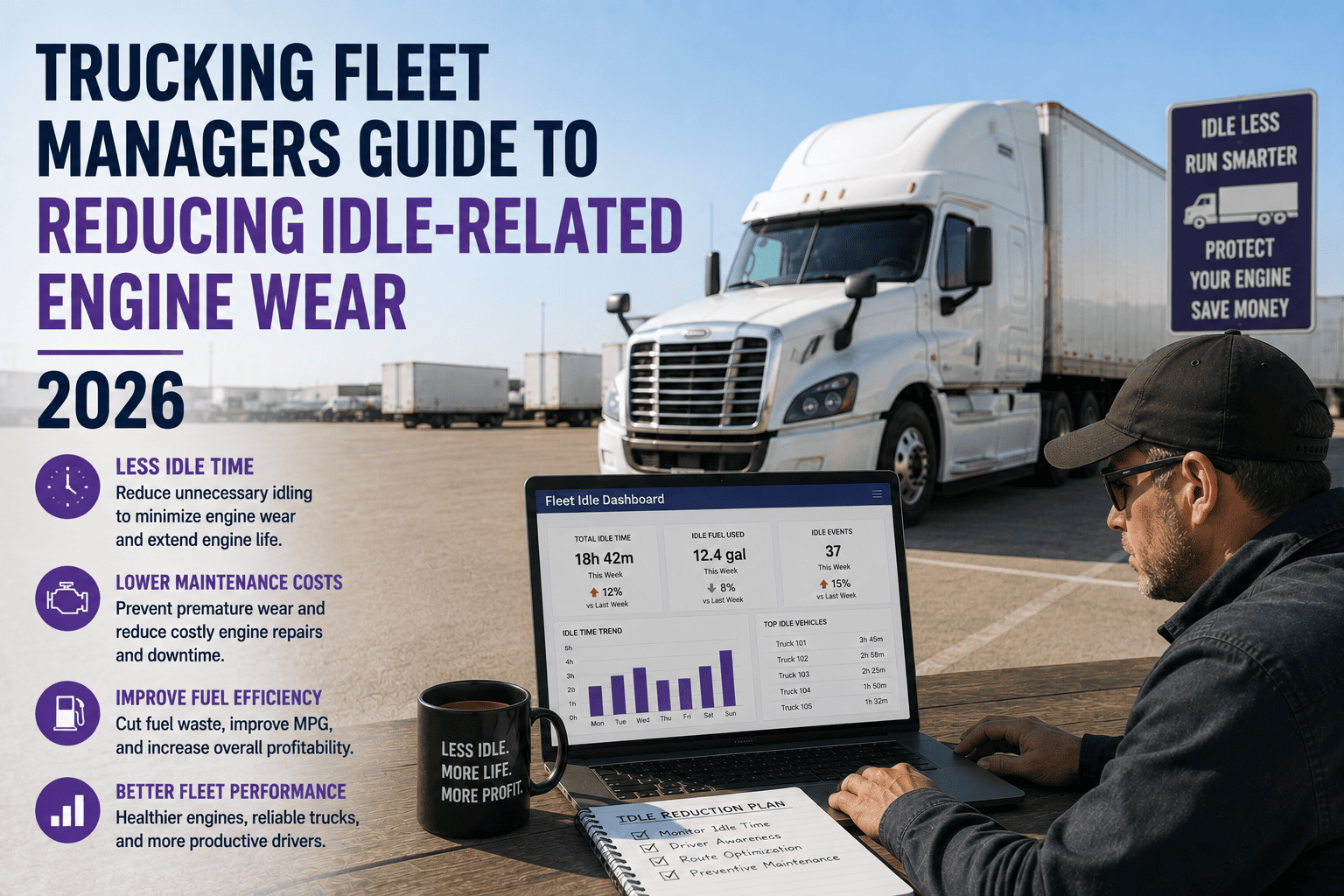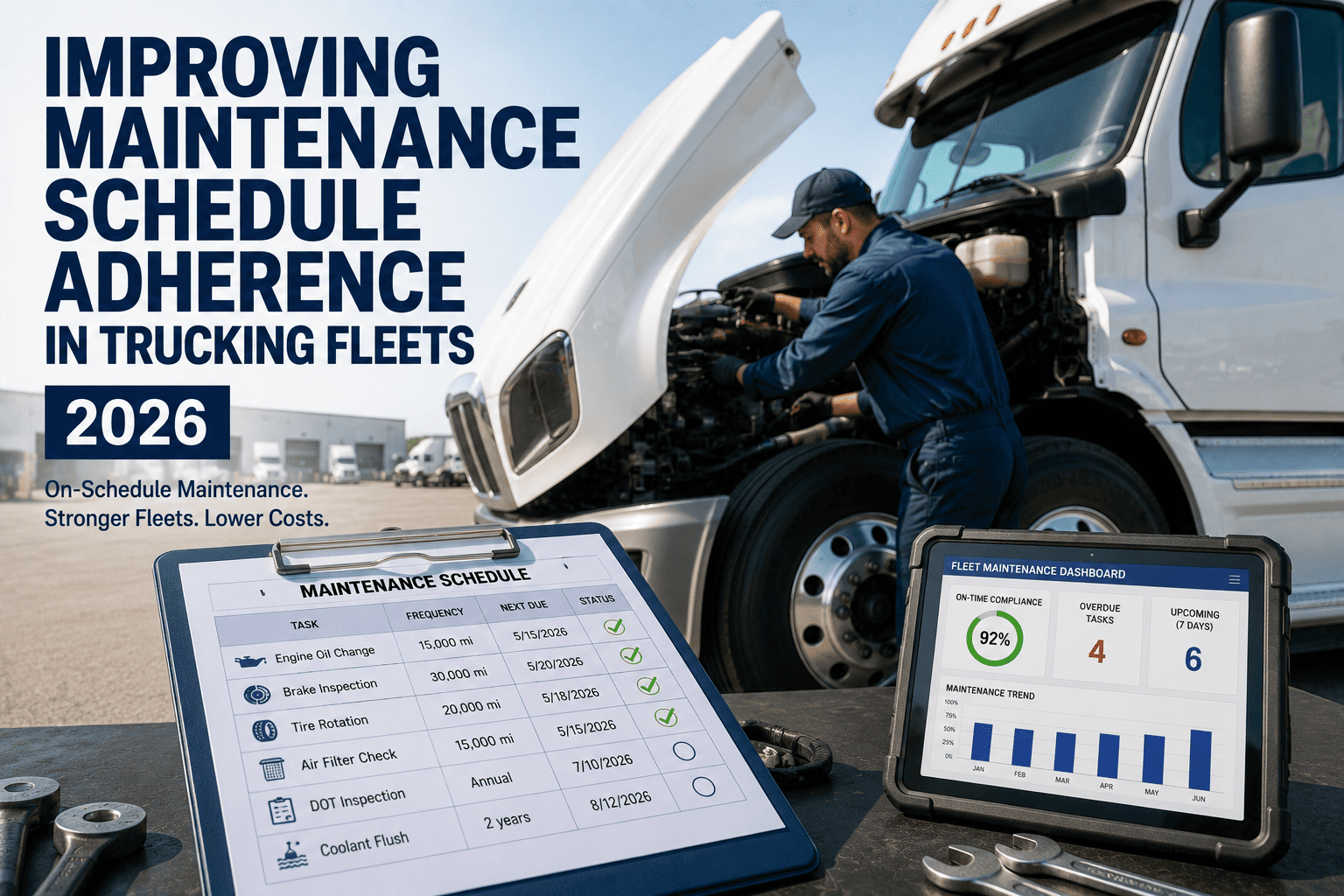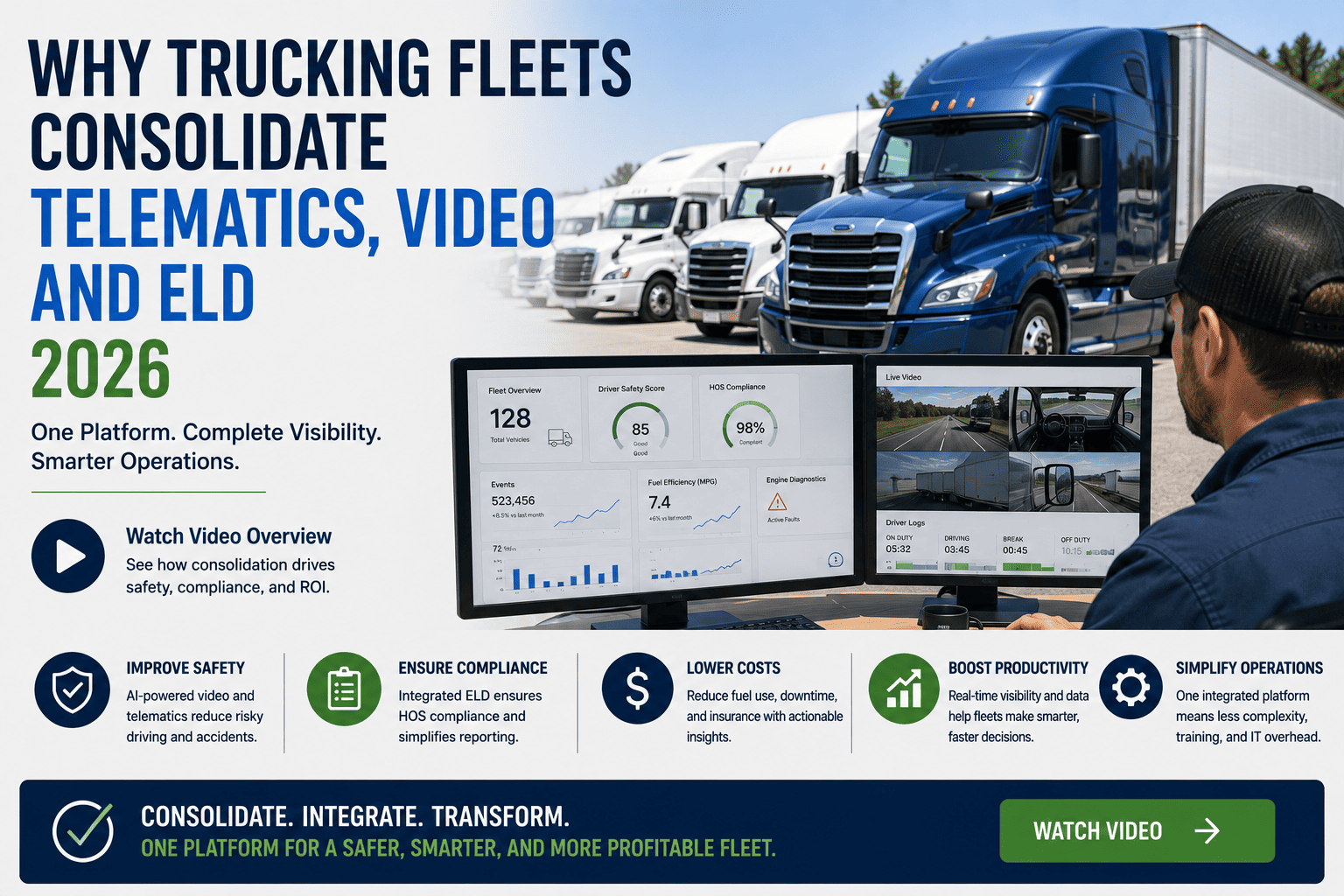
Open a typical fleet manager's laptop in 2026 and you'll find a familiar scene: one browser tab for the camera platform, another for the telematics dashboard, a third for the ELD portal, a fourth for maintenance tracking, and a fifth just for fuel. Nothing in that lineup talks to anything else. An industry voice put it bluntly this year: fleets are tired of managing fragmented tools that don't talk to each other. That fatigue is exactly why 2026 has become the year fleets stop stitching together a stack and start running a system.
Fleets running telematics, AI dash cams, ELD compliance, and maintenance as separate point tools face data silos that slow decisions and duplicate costs. Consolidated platforms unify GPS tracking, video safety, hours-of-service compliance, and preventive maintenance into one system, eliminating the "too many tabs" problem. Industry forecasts describe 2026 as the year distracted-driving prevention and safety tools become native parts of the telematics ecosystem rather than bolt-on add-ons, with integration and trust separating the platforms that last from the noise.
The Fragmented Stack Problem
For years, growing a fleet's technology capability meant adding another vendor. A camera platform here, a telematics tool there, a separate safety dashboard, a standalone maintenance system, and yet another portal just for fuel. Each tool solved its own narrow problem well, but none of them shared data with the others. Dispatchers cross-referenced multiple logins to answer one question. Safety managers pulled data from one system to build a report in another. When disconnected fleet systems hit a wall, progress across the whole operation stops, not just in the one tool that failed.
Why Point Solutions Stopped Being Enough
A dash cam that flags a hard-braking event is only half useful if that event doesn't automatically link to the driver's hours-of-service record and the vehicle's maintenance profile. An ELD that tracks compliance perfectly is only half useful if it can't feed that same data into a preventive maintenance schedule. Point solutions were never designed to talk to each other, which means every integration between them becomes a manual process someone on your team has to maintain by hand.
The Hidden Cost of Managing Multiple Vendors
Beyond the visible subscription costs, running five or six disconnected tools means five or six vendor relationships, five or six support queues, and five or six separate places where data can go stale or get lost in translation. Fleets rarely calculate this administrative overhead, but it compounds every month a fragmented stack stays in place.
FleetRabbit unifies telematics, AI video safety, ELD compliance, and maintenance in a single system, so your team stops cross-referencing tabs and starts making faster decisions. Sign up for a free trial and see your entire fleet in one dashboard.
Stack vs. System: What Actually Changes
The difference between a fragmented stack and an integrated system isn't just convenience. It changes what your data can actually do for you day to day.
| Capability | Fragmented Stack | Consolidated Platform |
|---|---|---|
| Incident Response | Video, HOS logs, and maintenance history live in separate systems, requiring manual lookup | Incident footage automatically links to driver records and vehicle maintenance profile |
| Driver Coaching | Safety events reviewed in one tool, coaching documented in another | Severe events automatically create coaching tasks and update driver records |
| Compliance Reporting | ELD, DVIR, and IFTA data pulled from separate portals for each audit | Hours-of-service, inspections, and fuel tax data live in one audit-ready system |
| Maintenance Scheduling | Diagnostic alerts sit in the telematics tool, disconnected from work orders | Vehicle diagnostics trigger maintenance scheduling automatically in the same platform |
| Vendor Management | Five or more separate contracts, support queues, and login credentials | One vendor relationship, one support channel, one source of truth |
The Six Systems Fleets Are Consolidating
Not every fleet consolidates every category at once, but these six areas consistently show up as the ones worth unifying first.
Every one of these six systems connects natively inside FleetRabbit, no manual exports and no separate vendor calls. Book a demo and see exactly how the handoffs work in practice.
How to Approach Consolidation Without Disrupting Operations
Moving from a fragmented stack to a unified system doesn't have to mean ripping out every tool at once. A sequenced approach protects daily operations while still capturing the benefits quickly.
Audit Before You Migrate
Start by mapping every tool currently in use, what data each one holds, and which team members depend on it daily. This audit reveals where the most painful data silos actually live, which is usually a better starting point than migrating alphabetically through your vendor list.
Prioritize the Connections That Save the Most Time
Not every integration delivers equal value. Linking video safety data to driver and maintenance records tends to save the most administrative time first, since incident response today often requires manually cross-referencing three separate systems just to answer one question.
Choose a Hardware-Agnostic Platform Where Possible
Some platforms require proprietary hardware, while others work with devices you already have installed. Fleets partway through a technology investment should weigh this carefully, since a hardware-agnostic system reduces the disruption and cost of consolidating an existing stack.
Frequently Asked Questions
The fleets pulling ahead in 2026 aren't the ones running the most tools, they're the ones running the fewest that actually talk to each other. FleetRabbit brings telematics, AI video safety, ELD compliance, and maintenance into one platform, so your team spends less time reconciling data and more time acting on it. Start your free trial with no credit card required, or talk to our team about your specific migration.