Winter weather is the single greatest operational stress test a trucking fleet faces each year. When temperatures drop, road conditions deteriorate, and daylight shrinks, fleet managers and operations executives are forced to manage cascading risks simultaneously — driver safety, vehicle reliability, regulatory compliance, fuel efficiency, and on-time delivery performance. For fleets without a structured winter operations program, the result is predictable: increased accident rates, unplanned breakdowns, inflated fuel costs, and reactive decision-making that erodes margins and client trust. FleetRabbit transforms how transportation and logistics fleets navigate winter — not through reactive alerts, but through a connected operations platform that gives fleet managers complete visibility, automated compliance tools, and AI-driven maintenance intelligence before conditions become crises.
What You Will Learn
This guide covers the complete framework for winter fleet operations: pre-season vehicle inspection protocols, cold weather driver safety standards, fuel and route optimization for winter conditions, compliance requirements for winter equipment, and how FleetRabbit's real-time fleet management platform gives operations executives the visibility and control needed to manage a winter fleet without spreadsheets, manual check-ins, or reactive decision loops.
36%
of commercial vehicle accidents occur in adverse weather — winter conditions account for the majority
23%
average fuel efficiency loss in fleets operating without winter-optimized routing and idle management
$18K
average cost of a single commercial vehicle breakdown in winter conditions including tow, repair, and cargo delay
4.1x
higher unplanned maintenance events in fleets with no pre-winter inspection program versus those with structured protocols
The Winter Operations Challenge for Trucking Fleets
Winter operations failure in commercial trucking is rarely caused by a single catastrophic event. It is caused by accumulation — small gaps in preparation, delayed maintenance, inconsistent driver briefings, and missing real-time data that allow routine cold weather conditions to escalate into costly incidents. Fleet managers operating without centralized visibility face the same challenge every season: they learn about problems after they have already happened.
The most common failure patterns seen in under-prepared trucking fleets during winter months fall into four distinct categories, each of which FleetRabbit's platform is specifically designed to address through automated workflows, real-time monitoring, and structured compliance documentation.
01
Reactive Maintenance Cycles
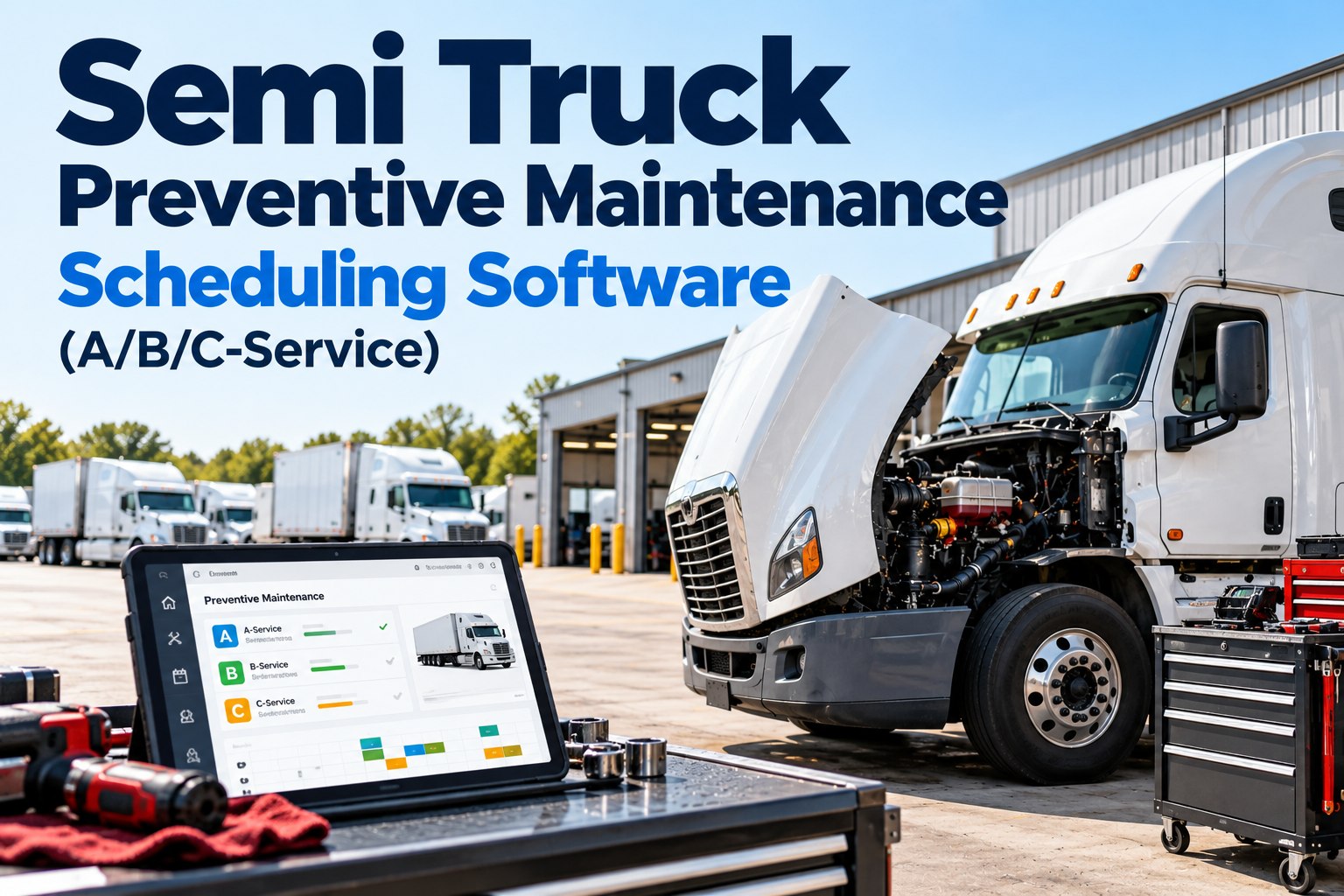
Fleets without pre-season inspection programs discover cold weather mechanical failures on the road — battery failures, air brake moisture issues, hydraulic fluid viscosity problems, and coolant system degradation. Each roadside breakdown in winter conditions carries compounded costs: towing, emergency repair premiums, cargo delay penalties, and driver downtime. FleetRabbit's preventive maintenance scheduler with automated winter checklists eliminates this pattern before the first frost.
02
Driver Safety Compliance Gaps
Winter driving compliance — pre-trip inspection completions, hours-of-service adherence in extended delays, chain law compliance, and speed monitoring on snow-affected routes — is impossible to manage manually across a distributed fleet. Operations executives making decisions without real-time driver behavior data cannot identify risk concentrations until accident reports arrive. FleetRabbit's driver safety module provides live compliance scoring and automated alerts for deviations on high-risk winter corridors.
03
Fuel Cost Escalation
Winter fuel consumption increases are expected — but unmanaged idle time, inefficient cold-weather routing, and delayed APU utilization turn a predictable cost increase into a margin erosion event. Fleets operating without live fuel monitoring and idle management controls routinely overspend on winter fuel by 15 to 25 percent versus what optimized operations would require. FleetRabbit's fuel intelligence module provides idle time tracking, consumption benchmarking, and route-level fuel efficiency analysis.
04
Visibility and Communication Breakdowns
When a winter storm hits, dispatch teams without real-time GPS and two-way communication lose visibility into driver locations, ETAs, and road condition reports simultaneously. Customer service cannot provide accurate delivery updates. Operations managers cannot redirect loads. Drivers cannot receive updated routing instructions. FleetRabbit's communication and tracking layer keeps every stakeholder connected — dispatch, drivers, operations, and customers — during the exact conditions when connectivity matters most.
Pre-Season Vehicle Inspection: The Foundation of Winter Readiness
The single highest-return investment a fleet can make before winter is a structured pre-season inspection program. Fleets that complete systematic pre-winter vehicle assessments on every unit in the fleet before October reduce mid-season unplanned breakdowns by a documented margin. The challenge is not knowing what to inspect — it is creating an auditable, consistent process across every vehicle and every driver without relying on paper checklists or manual supervisor review.
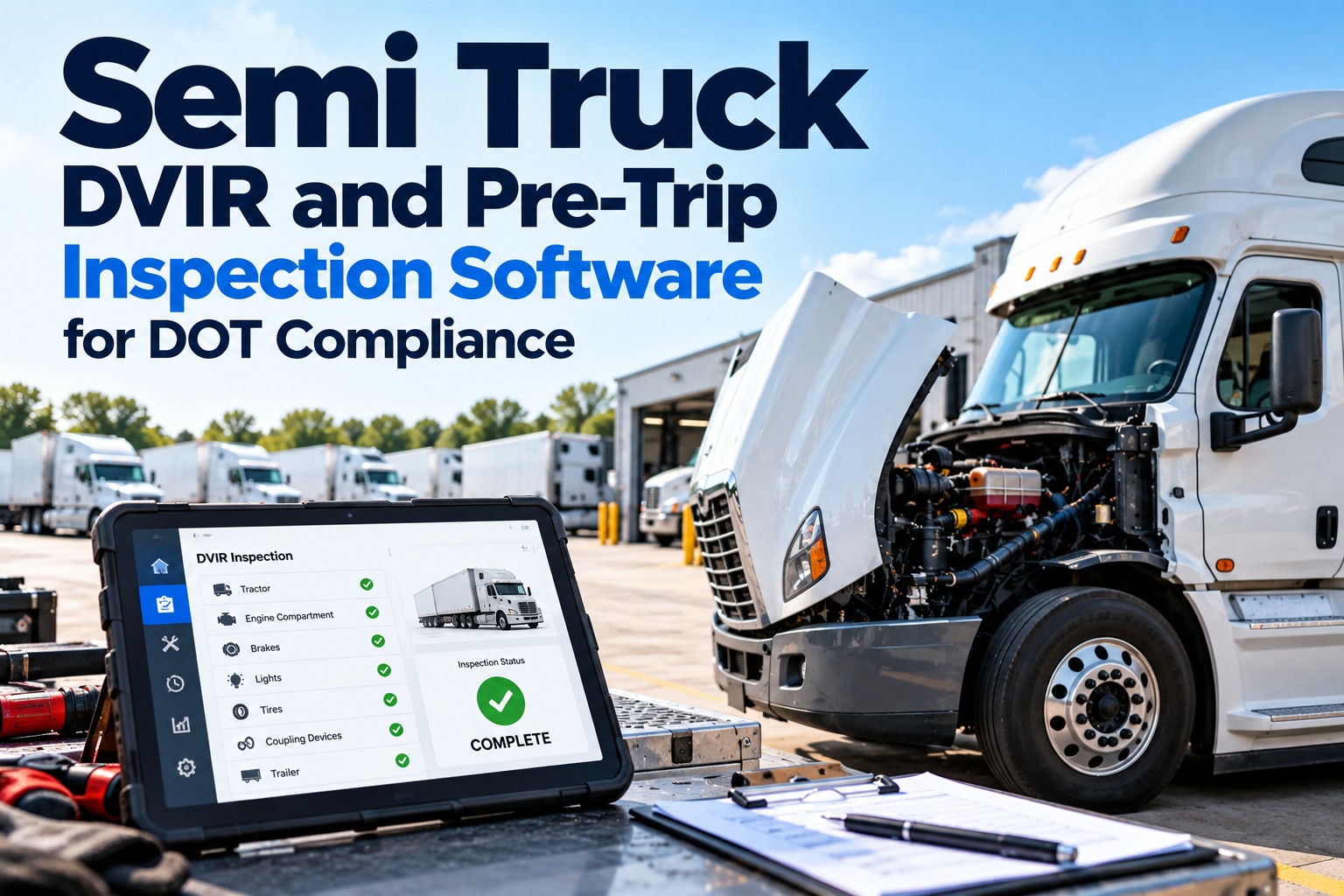
FleetRabbit's maintenance management platform digitizes the pre-winter inspection workflow end to end. Fleet managers configure inspection templates tailored to their vehicle types and operating regions. Drivers complete inspections on mobile devices with mandatory field completion, photo attachment capability, and digital signature attribution. Every completed inspection is stored against the vehicle's asset record, creating a timestamped, auditable pre-winter readiness baseline that is available for DOT compliance review, insurance documentation, and internal operational analysis.
Powertrain and Starting Systems
- Battery load testing — cold cranking amps verified against OEM winter specification
- Alternator output and charging system voltage under cold load
- Coolant concentration — freeze protection to minus 40 degrees verified
- Engine block heater function check for extreme cold start conditions
- Belt and hose inspection for cold-weather cracking and brittleness
Braking and Air Systems
- Air dryer cartridge replacement — moisture accumulation in air lines causes winter brake failures
- Slack adjuster inspection and brake stroke measurement per FMCSA standard
- Brake lining thickness verification across all axles
- Air tank drain valves inspected and thermal drain valves confirmed functional
- ABS system fault code review and sensor integrity check
Tires and Traction Systems
- Tire tread depth — drive axle tires at minimum 4/32 inch for winter operation
- Tire pressure verified cold — adjust to manufacturer winter inflation specifications
- Tire chain or traction device inventory confirmed per operating region requirements
- Steer tire condition — cracks, sidewall damage, and uneven wear documented
- Mud flap and splash guard integrity for ice and slush conditions
Visibility and Lighting
- All exterior lighting tested — headlights, marker lights, turn signals, brake lights
- Wiper blade replacement — winter-grade blades installed on all positions
- Washer fluid reservoir filled with winter-rated fluid rated to minus 20 degrees minimum
- Defroster function tested — front, rear, and mirror heating elements
- Cab roof clearance lights cleaned and functioning — critical for reduced visibility conditions
FleetRabbit Platform Capability
Automated Pre-Winter Inspection Workflows
FleetRabbit generates pre-winter inspection assignments across your entire fleet automatically, tracks completion status in real time, flags overdue inspections for supervisor follow-up, and stores every completed inspection record against the vehicle's maintenance history. Fleet managers see the pre-season readiness status of every unit in the dashboard without manual compilation or follow-up calls to drivers.
Cold Weather Driver Safety Standards and Training
Vehicle readiness is necessary but not sufficient for winter fleet safety. Driver behavior — speed management, following distance, pre-trip inspection discipline, response to deteriorating conditions, and hours-of-service compliance in weather-extended transit times — is the primary variable in winter accident prevention. Fleet managers who cannot monitor driver behavior in real time across a distributed fleet are managing winter safety through hope rather than data.
FleetRabbit's driver safety and telematics module gives operations executives continuous behavioral visibility across every driver in the fleet. Hard braking events, speed threshold violations on storm-affected corridors, excessive idle time in lieu of proper cold-start warm-up protocols, and pre-trip inspection non-completion are all captured, scored, and surfaced to fleet managers before they become incidents.
Speed Management on Winter Routes
Winter-specific speed thresholds differ from posted limits. Fleets must establish internal speed standards for snow-affected, icy, and reduced-visibility conditions and enforce them through driver policy and monitoring. FleetRabbit allows fleet managers to set route-specific speed alert thresholds that trigger real-time notifications when drivers exceed safe winter operating parameters — regardless of posted speed limits.
Hours of Service in Weather Delays
Winter weather delays extend transit times and compress available driving hours, creating HOS compliance pressure that leads drivers to make fatigue-driven decisions. FleetRabbit's ELD-integrated HOS dashboard gives dispatch teams real-time visibility into driver hours status across the fleet, enabling proactive load reassignment before drivers reach limits in adverse conditions — not after.
Pre-Trip Inspection Compliance
Pre-trip inspection completion rates in winter drop in many fleets when drivers face time pressure and cold conditions. FleetRabbit's mobile inspection workflow makes pre-trip completion faster than paper while creating a digital audit trail. Fleet managers see real-time completion rates by driver and by terminal — incomplete pre-trips generate automatic supervisor alerts before the vehicle departs.
Weather Condition Communication
Drivers operating in deteriorating conditions need a direct line to dispatch with documented communication. FleetRabbit's in-cab messaging and dispatch communication module creates a timestamped record of all driver-dispatch communications, including weather reports, route condition updates, and load modification instructions — a critical compliance and liability protection capability for winter operations.
Chain Law and Traction Device Compliance
Chain law enforcement varies by state, highway segment, and real-time road condition. Drivers operating without current chain requirement awareness create regulatory and safety exposure. FleetRabbit's dispatch and route management module enables fleet managers to push chain law notifications to drivers operating in affected corridors, with driver acknowledgment captured and stored in the compliance record.
Driver Coaching and Incident Documentation
When a winter safety event occurs — hard braking, near-miss, or route deviation — FleetRabbit's driver scoring system captures the event automatically with GPS context, timestamp, and behavioral data. Fleet managers can initiate structured driver coaching conversations directly from the event record, with coaching notes stored against the driver's safety file for performance review and insurer reporting.
Fuel Management in Winter Conditions
Diesel fuel efficiency declines measurably in cold weather — engine warm-up requirements, increased aerodynamic resistance in snow and headwind conditions, terrain impacts from storm routing, and unmanaged idle time all compound to drive winter fuel costs above summer baselines. For fleets without granular fuel data, this cost increase is invisible until it appears on the monthly fuel summary — too late to act on.
FleetRabbit's fuel intelligence module gives fleet managers unit-level fuel consumption visibility in real time, enabling proactive management of the specific behaviors that drive winter fuel overspend. The platform tracks idle time by vehicle and driver, compares consumption against route-adjusted benchmarks, and flags anomalies that indicate fuel card misuse, excessive idling, or mechanical issues affecting consumption before they reach summary reporting.
| Winter Fuel Cost Driver |
Typical Impact |
FleetRabbit Management Tool |
| Excessive idle time for cab heating |
0.8 to 1.2 gallons per hour per idling unit |
Real-time idle monitoring with driver and dispatcher alerts above threshold |
| Cold weather fuel density reduction |
4 to 7% MPG reduction below 20 degrees F |
Season-adjusted consumption benchmarks prevent false efficiency flags |
| Storm rerouting and extended mileage |
Variable — 12 to 30% route mileage increase in storm events |
Route efficiency analysis per trip — deviation documentation for shipper cost recovery |
| Fuel card misuse and unauthorized purchases |
Industry average 3 to 5% of fuel spend lost to misuse |
Fuel transaction-to-GPS location matching with automatic anomaly alerts |
| APU underutilization in sleeper berth stops |
Main engine idle replacement — 5 to 8 hours per overnight stop |
Idle event categorization distinguishes APU-eligible idle from operational idle |
| Engine warm-up protocol violations |
3 to 10 minutes excess idle per cold start |
Cold start idle duration tracking with OEM-compliant warm-up time benchmarks |
Route Optimization and Real-Time Dispatch in Winter Conditions
Winter route management is a dynamic problem, not a static scheduling exercise. Road conditions change hour to hour during winter storm events. Highway closures, chain law enforcement zones, reduced-speed advisories, and weigh station closures all affect optimal routing decisions in ways that a pre-planned dispatch schedule cannot accommodate. Fleets that manage winter routing reactively — waiting for driver calls to learn about road closures — consistently underperform fleets with real-time operational visibility.
FleetRabbit's dispatch and route management platform gives operations teams the real-time vehicle location, driver communication, and load management capabilities needed to respond to winter conditions as they develop rather than after they have disrupted the load plan. Dispatchers can reroute active loads, push updated ETAs to customers automatically, and document weather-related delays in the load record for shipper communication and contract compliance purposes.
Live GPS Fleet Tracking
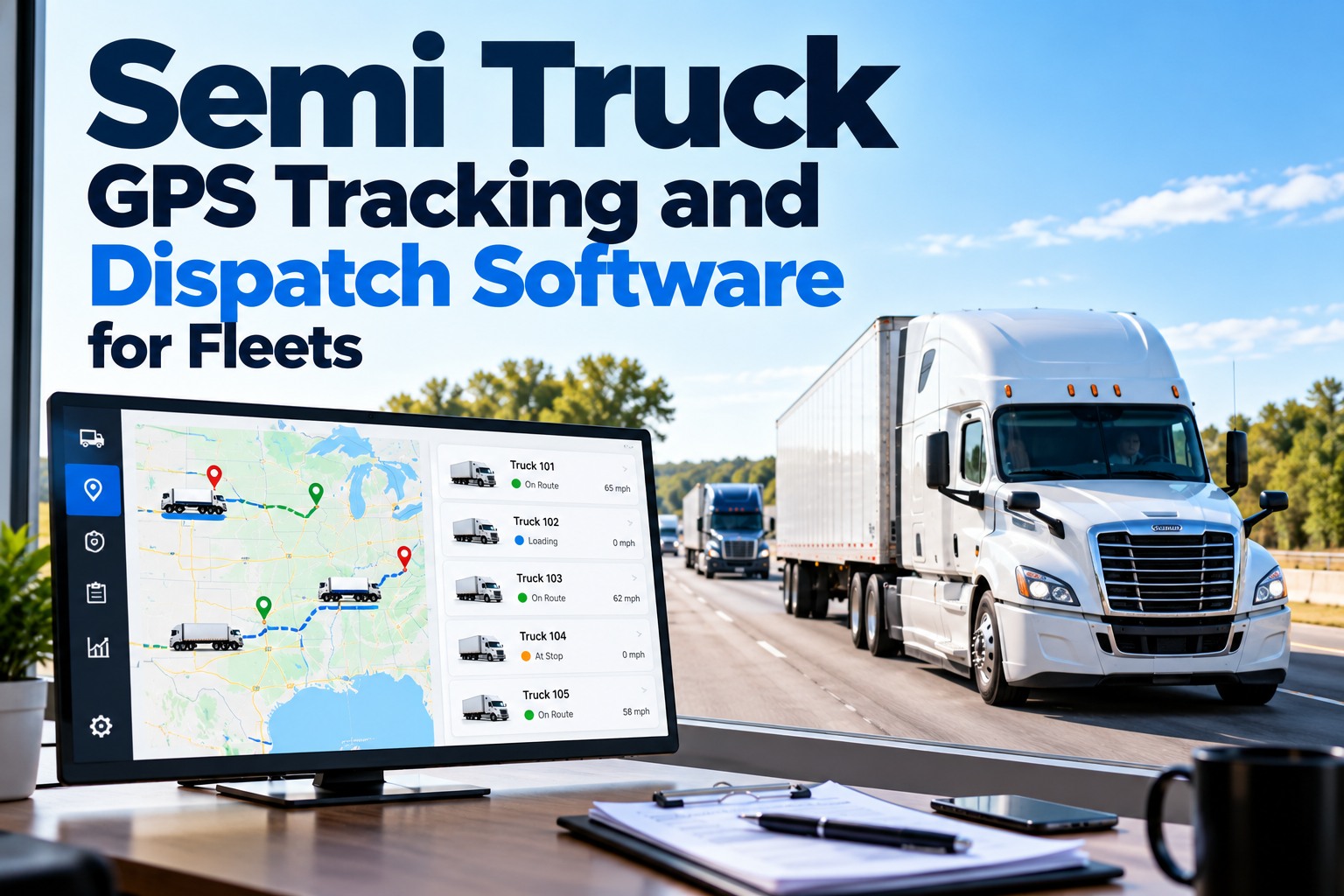
Real-time vehicle position across the entire fleet gives dispatch and operations management complete situational awareness during storm events. Route deviation alerts notify dispatchers when vehicles leave planned paths — enabling proactive communication rather than reactive incident management when a driver encounters a closed highway or storm-blocked route.
Automated ETA and Customer Notification
Winter weather delays that affect delivery windows generate significant customer service demand. FleetRabbit's automated ETA recalculation and customer notification capability reduces the manual customer call volume dispatchers handle during weather events while ensuring shippers and receivers receive accurate, timely delivery status updates without dispatcher intervention on every affected load.
Driver-Dispatch Two-Way Messaging
Hands-free, voice-enabled driver-dispatch communication with full message logging creates a documented record of all weather-related routing decisions, load modifications, and safety instructions. This audit trail is essential for cargo claim defense, shipper dispute resolution, and driver discipline matters involving winter safety events — FleetRabbit captures it automatically as part of normal operations.
Load and Driver Reassignment Workflows
When a driver reaches HOS limits in a weather delay or a vehicle becomes unavailable due to a winter breakdown, FleetRabbit's load management module enables rapid driver-to-load reassignment with automated compliance checks — ensuring that replacement drivers have available hours and that customers receive updated delivery commitments before the impact reaches them.
Regulatory Compliance for Winter Trucking Operations
Winter trucking compliance requirements extend across multiple regulatory domains simultaneously: FMCSA vehicle condition standards enforced year-round but most commonly violated in winter, state-specific chain law and winter equipment mandates, FMCSA hours-of-service rules under weather-extended transit conditions, and DOT drug and alcohol program requirements that continue regardless of weather. Compliance failures in winter carry the same consequences as in any season — but winter conditions make the administrative burden of maintaining compliance documentation significantly higher for fleets without automated systems.
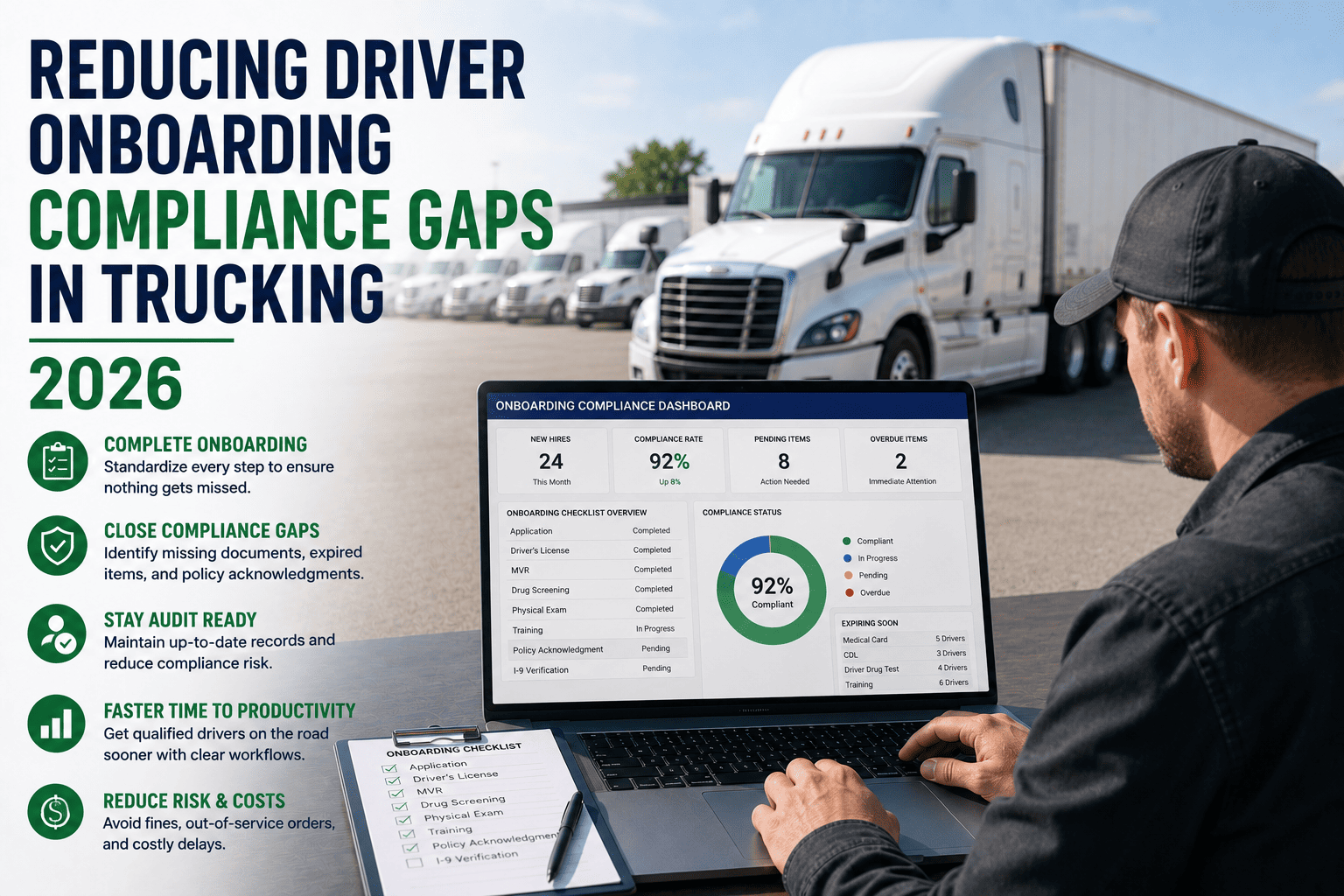
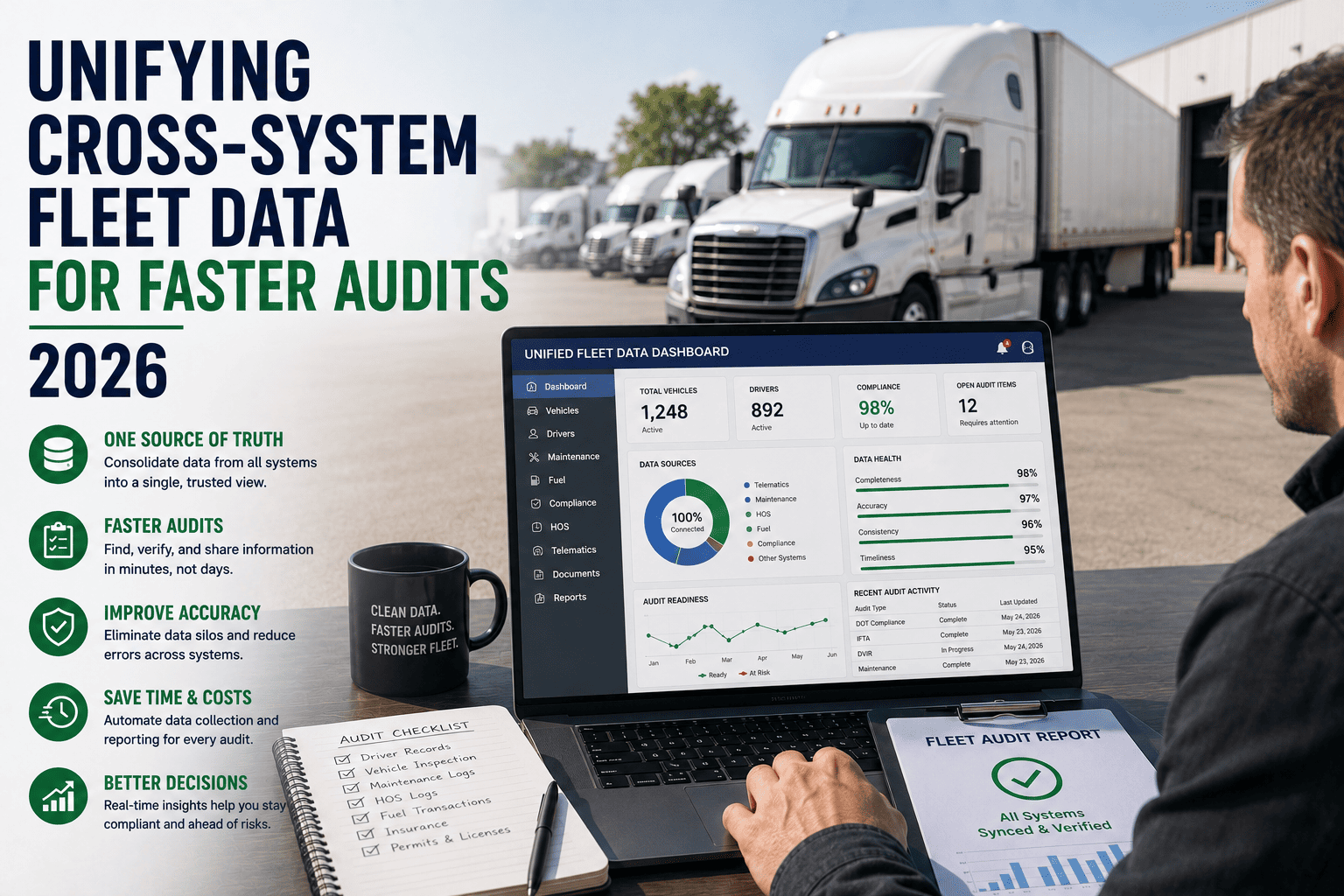
FleetRabbit consolidates compliance documentation across all relevant operational dimensions into a single platform. Electronic logging devices capture HOS data automatically. Pre-trip and post-trip inspection records are stored digitally with timestamps and driver attribution. Maintenance work orders document corrective actions linked to inspection findings. Driver qualification files are maintained in the platform with automated expiration alerts. For fleet managers and DOT compliance officers, the result is a complete, auditable compliance record accessible from a single dashboard — not assembled manually from paper files, separate CMMS exports, and driver qualification binders at audit time.
FMCSA Vehicle Standards
Pre-trip inspection completion, brake system airworthiness, tire tread depth, lighting compliance
FleetRabbit digital inspection records — timestamped, driver-attributed, stored per vehicle per day
Hours of Service — 49 CFR Part 395
11-hour driving limit, 14-hour on-duty window, 30-minute rest break, 70-hour/8-day cycle
FleetRabbit ELD integration — automatic HOS calculation, driver dashboard, CSA violation prevention alerts
State Chain Law Requirements
Variable by state, highway segment, and current road condition — enforcement active during storm events
Dispatch communication module — chain law alerts pushed to drivers in affected corridors with acknowledgment capture
Driver Qualification Files
CDL validity, medical examiner certificate currency, MVR review, annual review documentation
FleetRabbit driver file management — expiration alerts, document storage, and audit-ready qualification summary per driver
Manage Winter Operations from One Platform
FleetRabbit gives transportation and logistics fleet managers real-time vehicle tracking, automated maintenance workflows, ELD-integrated HOS management, and driver safety monitoring — purpose-built for the operational demands that winter conditions place on commercial trucking fleets. No spreadsheets. No reactive decision loops. No compliance gaps.
Building a Winter Operations Program: The FleetRabbit Framework
Winter operational excellence in trucking is not achieved by a single preparation activity. It requires a structured, repeatable program that spans the pre-season, in-season, and post-season phases — each with specific actions, responsible parties, and documentation requirements. Fleets that treat winter as a continuous operations discipline rather than an annual scramble consistently outperform their peers on safety, efficiency, and compliance metrics.
Pre-Season — August to October
Complete pre-winter vehicle inspections on all units using FleetRabbit's configured inspection templates — results stored against vehicle maintenance records
Review and update winter-specific driver training — cold weather driving techniques, chain law requirements, and HOS implications of weather delays
Confirm traction device inventory, quantities, and vehicle assignments per operating region chain law requirements
Audit driver qualification files — medical certificates, CDL endorsements, and MVRs current before winter season begins
Configure FleetRabbit winter alert thresholds — speed monitoring, idle time limits, and pre-trip inspection completion requirements for winter operating season
In-Season — November to March
Monitor FleetRabbit's daily pre-trip inspection completion dashboard — intervene on non-completions before dispatch, not after incidents
Review weekly driver safety scores — hard braking frequency, speed threshold violations, and idle time trends for winter coaching conversations
Execute PM work orders triggered by FleetRabbit's maintenance scheduler — winter-specific PM intervals for air dryers, brakes, and battery systems
Monitor HOS status during storm events — proactive load reassignment when drivers approach limits in weather delays before violations occur
Review weekly fuel consumption reports — flag idle time outliers and route efficiency deviations for driver coaching and dispatch process review
Post-Season — April to May
Generate FleetRabbit's winter season performance report — PM compliance, safety event frequency, fuel consumption variance, and HOS compliance metrics versus prior year
Complete post-winter vehicle inspections — salt and corrosion assessment, undercarriage inspection, and brake system review following winter road exposure
Review winter safety incidents — root cause analysis using FleetRabbit's event documentation to identify systemic patterns for next season program improvement
Update winter operations procedures based on in-season experience — driver feedback, dispatch process gaps, and maintenance schedule adjustments documented in FleetRabbit
How FleetRabbit Supports Transportation and Logistics Fleet Executives
Operations executives at transportation and logistics companies face accountability for outcomes that are directly affected by winter operations performance — safety incident rates, insurance loss ratios, on-time delivery percentages, fuel cost per mile, and driver retention. Each of these metrics is influenced by how well the fleet navigates winter. FleetRabbit's executive dashboard provides the consolidated, real-time operational intelligence that allows C-suite and VP-level fleet leaders to manage winter performance as a data-driven discipline rather than a season-by-season improvisation.
Chief Operating Officer
Fleet-wide safety incident rate, on-time delivery performance, unplanned downtime events
FleetRabbit's executive dashboard surfaces rolling KPIs across all metrics with fleet-level and unit-level drill-down — updated in real time from operational data, not assembled from weekly reports
VP of Fleet Operations
PM compliance rates, vehicle availability, maintenance cost per mile, driver behavior scores
Maintenance intelligence module with automated PM scheduling, overdue work order tracking, and cost-per-unit analysis across the fleet
Director of Safety and Compliance
CSA BASICs scores, HOS violation rates, pre-trip completion rates, driver qualification currency
Compliance documentation hub — ELD records, inspection history, driver files, and corrective action documentation accessible for DOT audit without manual assembly
Fleet Manager
Daily vehicle availability, PM overdue status, driver location, active safety alerts
Operational command view — real-time status of every vehicle and driver in the fleet with alert-driven workflow for inspections, maintenance, and safety events
Frequently Asked Questions
How does FleetRabbit help fleet managers manage pre-winter inspection programs across a large fleet?
FleetRabbit allows fleet managers to configure customized pre-winter inspection templates for each vehicle class and assign them to drivers or maintenance personnel with automated deadline tracking. Completion status is visible in real time on the fleet dashboard, overdue inspections trigger automatic supervisor notifications, and all completed inspection records are stored digitally against the vehicle's maintenance history — eliminating the paper collection and manual follow-up that delays pre-season readiness confirmation in larger fleets.
Can FleetRabbit monitor driver behavior specifically for winter-relevant safety events?
Yes. FleetRabbit's telematics and driver safety module captures hard braking events, speed threshold violations, excessive idle time, and pre-trip inspection non-completions — all of which are directly relevant to winter safety performance. Fleet managers can configure winter-specific alert thresholds that differ from summer operating parameters, receive real-time notifications when drivers exceed safe winter speeds, and review driver safety scores that weight winter-relevant events appropriately for seasonal coaching programs.
How does FleetRabbit handle HOS compliance during weather-extended transit times?
FleetRabbit's ELD-integrated HOS management module provides dispatch teams with real-time visibility into every driver's available hours status. During weather delays, dispatchers can identify drivers approaching HOS limits before violations occur and proactively reassign loads to drivers with available hours — preventing the compliance pressure that leads fatigued drivers to make unsafe decisions. All HOS records are automatically maintained for DOT audit purposes without manual log reconstruction.
What fuel management capabilities does FleetRabbit provide for controlling winter fuel costs?
FleetRabbit's fuel intelligence module provides unit-level fuel consumption tracking, idle time monitoring with driver and dispatcher alerts, fuel card transaction reconciliation against GPS location data, and route-adjusted consumption benchmarking. Fleet managers can identify excessive idling patterns, fuel card anomalies, and consumption outliers in real time rather than at monthly fuel statement review — enabling in-season cost correction rather than post-season analysis.
How quickly can a transportation fleet deploy FleetRabbit before the winter season?
FleetRabbit is designed for rapid deployment without extended IT implementation cycles. Fleet onboarding includes asset registration, driver account creation, and ELD integration setup — the core operational platform can be live within days for most fleet sizes. Pre-winter inspection templates and PM schedules are configured during onboarding. Fleets deploying before October can have a complete pre-winter inspection program running and documented before the first significant weather events of the season.
Ready to Manage Winter Fleet Operations Like the Top-Performing Fleets Do?
FleetRabbit gives transportation and logistics fleet managers the real-time visibility, automated compliance tools, and maintenance intelligence needed to run a safe, efficient, and compliant trucking operation through every winter season. From pre-trip inspections to HOS management to fuel monitoring to executive KPI dashboards — all from one platform your entire operations team uses every day.
Pre-Winter Inspection Workflows
Driver Safety Monitoring
ELD and HOS Compliance
Fuel Intelligence
Real-Time Fleet Tracking
Executive KPI Dashboard
April 22, 2026
By Jason Smith
All Posts