.png)
A regional transportation company operating 120 trucks across four states was drowning in DOT compliance violations. Year 1 brought 14 violations and $58,000 in fines. Year 2 was worse: 18 violations and $96,000 in penalties. The company's CSA score was plummeting, insurance rates were climbing, and worst of all, a pattern was emerging: the violations were not from unsafe operations. They were from missing documentation, incomplete DVIRs, expired medical certificates, and maintenance records that should have existed but could not be located during audits. The compliance director realized the problem was not drivers or mechanics. It was the system: paper DVIRs, spreadsheet tracking, disconnected maintenance records, and no automated alerts for expiring certifications. Replacing this fragmented manual system with FleetRabbit's integrated compliance platform transformed everything. Year 3 resulted in zero DOT violations across 120 vehicles. Year 4: zero violations. Year 5: zero violations. The company has now achieved three consecutive years of perfect compliance while reducing compliance labor costs and audit preparation time from days to minutes.
This case study documents how a 120-truck regional transportation company eliminated 18 violations per year through automated DVIR completion, driver qualification file management, and real-time compliance monitoring. Zero violations achieved in Year 3 and sustained for three consecutive years. Total compliance cost savings: $284,000 in reduced fines plus $420,000 in eliminated compliance labor. Learn the specific strategies that transformed this company from repeated audit failures to perfect compliance status.
The Compliance Crisis: How One Company Hit Rock Bottom
TransRoute Regional Transport operated 120 Class 8 trucks across four terminals in Texas, Oklahoma, Arkansas, and Louisiana. The company moved freight regionally, with consistent routes and stable driver population. By all operational measures, the fleet was safe and well-maintained. Yet from 2021-2023, the company was hit with compliance violations that seemed impossible to explain. Year 1: 14 violations, $58,000 in fines. Year 2: 18 violations, $96,000 in penalties. The violations were accumulating faster than the company could address them.
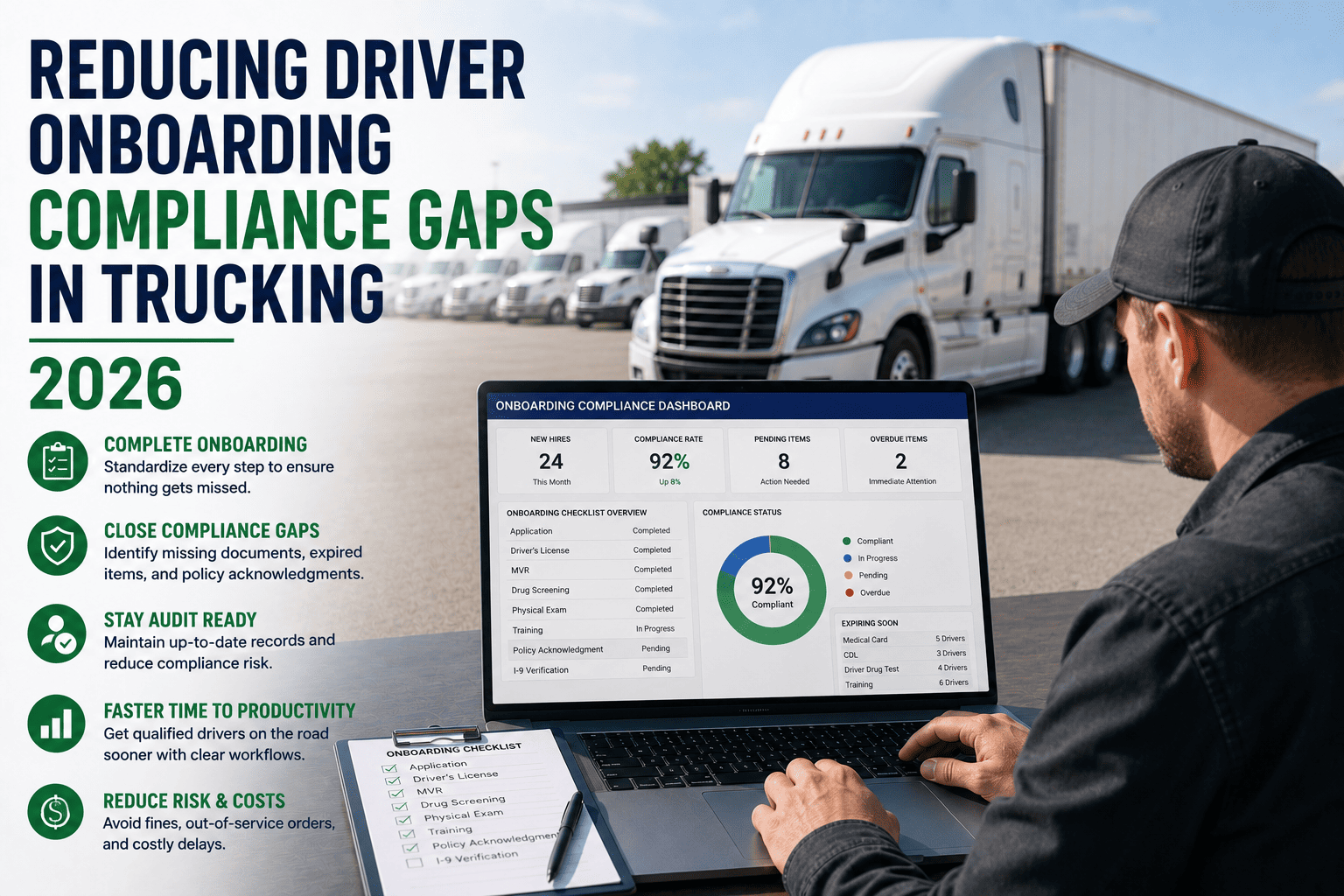
When the compliance director reviewed the audit findings, he discovered something critical: 11 of the 18 violations in Year 2 were documentation-related, not operational failures. Drivers had been inspecting vehicles properly. Mechanics were performing maintenance. But the records were incomplete, poorly organized, or simply lost. Missing DVIR signatures, maintenance records that could not be produced during audits, expired medical certificates that went unnoticed, and DQF documents filed in terminals across four states without centralized tracking. The company's problem was not unsafe operations. It was a system designed for 20 trucks run on paper and spreadsheets that completely failed at scale with 120 vehicles across multiple locations.
The Root Cause: Manual Systems Cannot Scale
TransRoute's compliance infrastructure in 2022 consisted of paper DVIRs stored in truck cabs, compliance spreadsheets maintained separately at each terminal, driver qualification files in filing cabinets, maintenance records scattered across multiple shop management systems, and no automated alerts for expiring medical certificates or CDL renewals. When a DOT auditor arrived, the company spent two to three days scrambling to assemble documentation: calling terminals to fax DVIRs from archives, searching for maintenance records in multiple systems, manually compiling driver qualification files from filing cabinets, and hoping nothing critical was missing.
The violations came from gaps that were inevitable given the manual system. Drivers sometimes forgot to have a mechanic sign the post-trip DVIR when defects were identified. Medical certificates expired without anyone noticing because the alert system was a handwritten calendar. Maintenance records existed but could not be located because they were filed in three different systems across four locations. Annual vehicle inspections were completed but not documented in any centralized system. These are not driver failures or maintenance failures. These are system failures that make perfect compliance nearly impossible at scale.
FleetRabbit transformed TransRoute from 18 violations per year to zero violations for three consecutive years. Discover the specific features that made perfect compliance possible.
The Turning Point: FleetRabbit Implementation
In Q1 2023, TransRoute decided to replace its fragmented compliance system with FleetRabbit's integrated platform. The decision to act was driven by CSA score deterioration, rising insurance costs, and the realization that one more significant violation could affect operating authority. The company selected FleetRabbit specifically because it provided end-to-end compliance management: digital DVIRs, automated driver qualification file tracking, maintenance record integration, and HOS monitoring in a single platform.
Implementation began in March 2023. Phase 1 focused on digital DVIR deployment: every driver received a mobile device running the FleetRabbit app, was trained on completing digital inspections, and began using the system for pre-trip and post-trip DVIRs. Defects identified in inspections automatically triggered work orders routed to the appropriate maintenance team. Phase 2 (April-May 2023) integrated driver qualification file management: every driver's medical certificate, CDL copy, and annual MVR review was entered into the system with automated alerts 60 days before expiration. Phase 3 (May-June 2023) integrated maintenance records: all completed work orders, service history, and PM scheduling were tracked in FleetRabbit alongside DVIR defects to create a complete maintenance audit trail. Phase 4 (June-July 2023) established compliance monitoring and reporting: weekly compliance dashboards showed the status of every driver's certifications, vehicle inspection status, and maintenance compliance across all four terminals.
Measurable Results: The Path to Zero Violations
The transformation was visible within weeks. DVIR completion rates jumped from 62 percent (where drivers frequently forgot to complete paperwork) to 98 percent within 30 days. The mobile app made inspections faster (drivers completing inspections in 4-5 minutes versus 15-20 minutes with paper), and the built-in compliance reminders ensured nothing was skipped. Medical certificate expirations dropped to zero: the system flagged expirations 60 days in advance, and the company never again had an expired certification during an audit.
The company's first DOT audit after FleetRabbit implementation occurred in Q3 2023. When the auditor arrived, the compliance director opened FleetRabbit and generated a complete compliance report in four minutes. The auditor had instant access to: 120 active driver qualification files with complete documentation, 90 days of digital DVIRs with driver signatures and timestamps, complete maintenance histories for all 120 vehicles, HOS records integrated with ELD data, and vehicle annual inspection documentation. The auditor spent 48 hours reviewing operations and found zero violations. For the first time in three years, a DOT audit resulted in zero findings.
Drivers complete inspections on mobile in 4-5 minutes. System automatically captures driver signature, timestamp, GPS location, and defect photos. Mechanic and next-driver signatures captured automatically. Zero missing signatures. Complete audit trail from inspection through maintenance completion.
Medical certificate expirations tracked automatically. System alerts 60 days before expiration. CDL renewals tracked. Annual MVR reviews tracked. No expired certifications during audits. Medical certificate violations dropped to zero in Year 3.
Every repair, service, and inspection logged automatically. Complete maintenance history accessible by vehicle, component, or time period. Instant production of maintenance documentation during audits. No more searching filing cabinets or calling terminals for records.
DVIR defects automatically trigger work orders. Mechanics receive notifications immediately. Work order status tracked through completion. Defects documented as resolved in compliance records. No defects slip through unaddressed.
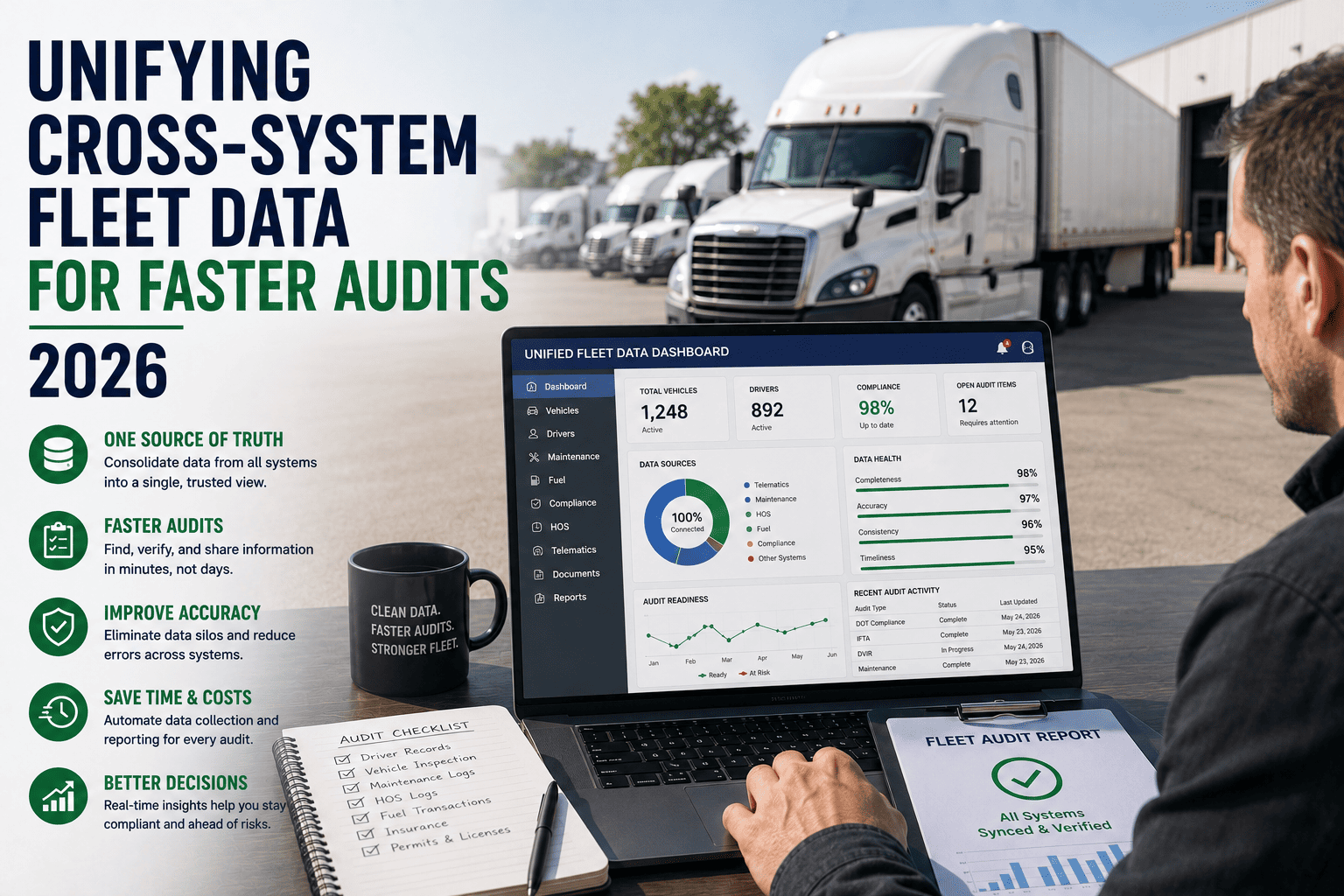
All four terminals report into single compliance dashboard. No more decentralized compliance tracking across locations. Corporate office has instant visibility into compliance status of every vehicle and driver regardless of location.
Compliance reports generated in minutes instead of days. All required FMCSA documentation automatically organized. Audit packet prepared one-click with complete driver files, vehicle records, and maintenance history. Audit preparation compressed from 28 hours to 4 minutes.
Year-by-Year Compliance Transformation
Financial Impact: Quantifying the Compliance Transformation
TransRoute's compliance transformation took six months from decision to zero violations. Your fleet can follow the same path. Start with FleetRabbit's free tier and experience digital DVIR, compliance tracking, and automated reporting yourself.
Key Lessons: What Made Perfect Compliance Possible
Tag Section: DOT Compliance Case Study Topics
Frequently Asked Questions
Tag Section: Compliance Outcomes and Results
Perfect compliance is achievable. TransRoute went from 18 violations per year to zero violations for three consecutive years using FleetRabbit. Your fleet can follow the same path.
Tag Section: Fleet Compliance Metrics and Performance
TransRoute Regional Transport went from $154,000 in fines over two years to zero violations for three consecutive years by implementing FleetRabbit's automated compliance platform. Digital DVIR eliminated documentation gaps. Automated alerts prevented expiration violations. Centralized records made audits stress-free. Defect-to-maintenance workflows prevented overlooked issues. The result: perfect compliance, $864,400 in net financial benefit, and stress-free audits. Your fleet can achieve the same transformation. Start with FleetRabbit's digital DVIR and compliance tracking. See how automated compliance works in your fleet environment. Start free for up to 3 vehicles, then scale at just $30 per vehicle monthly.