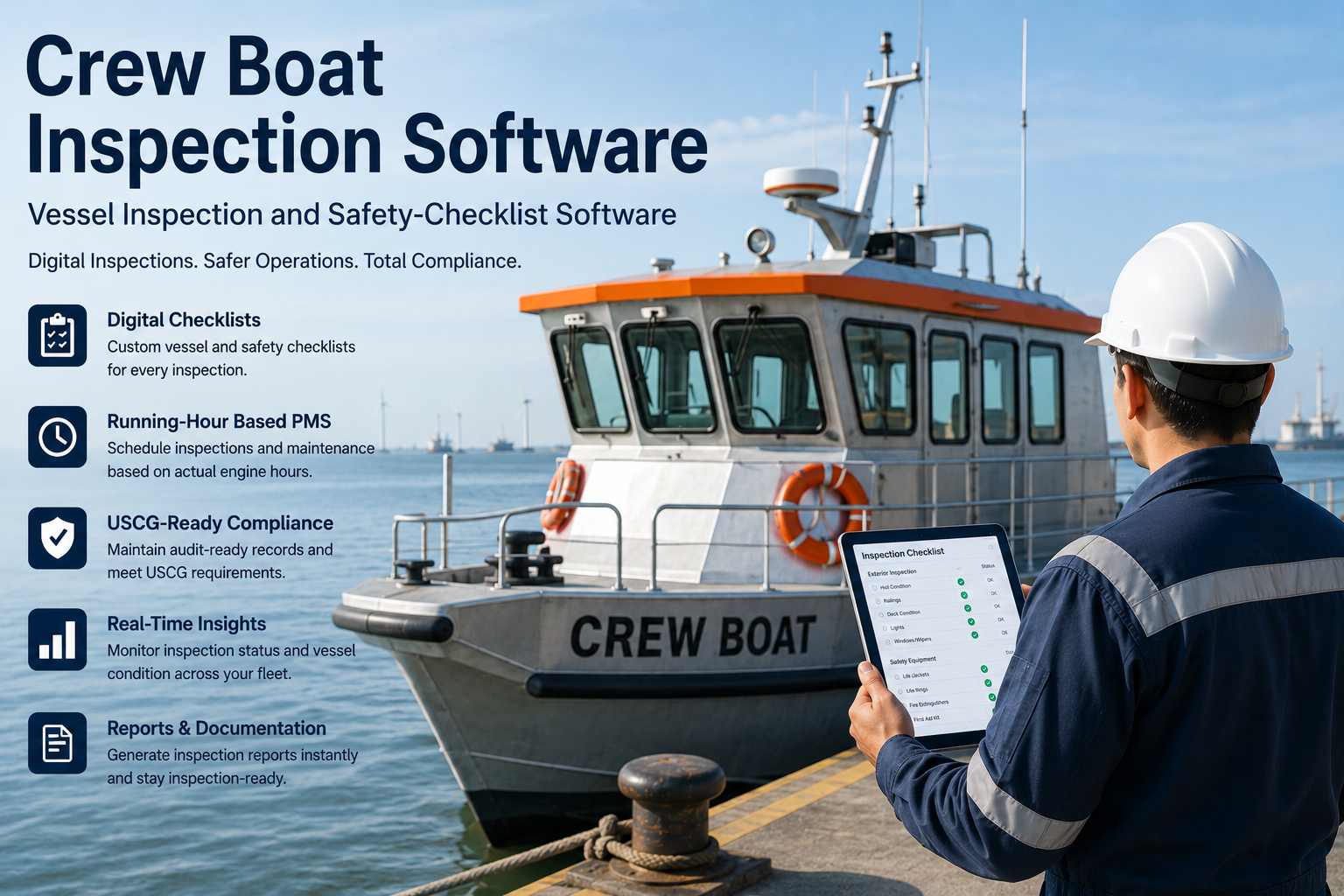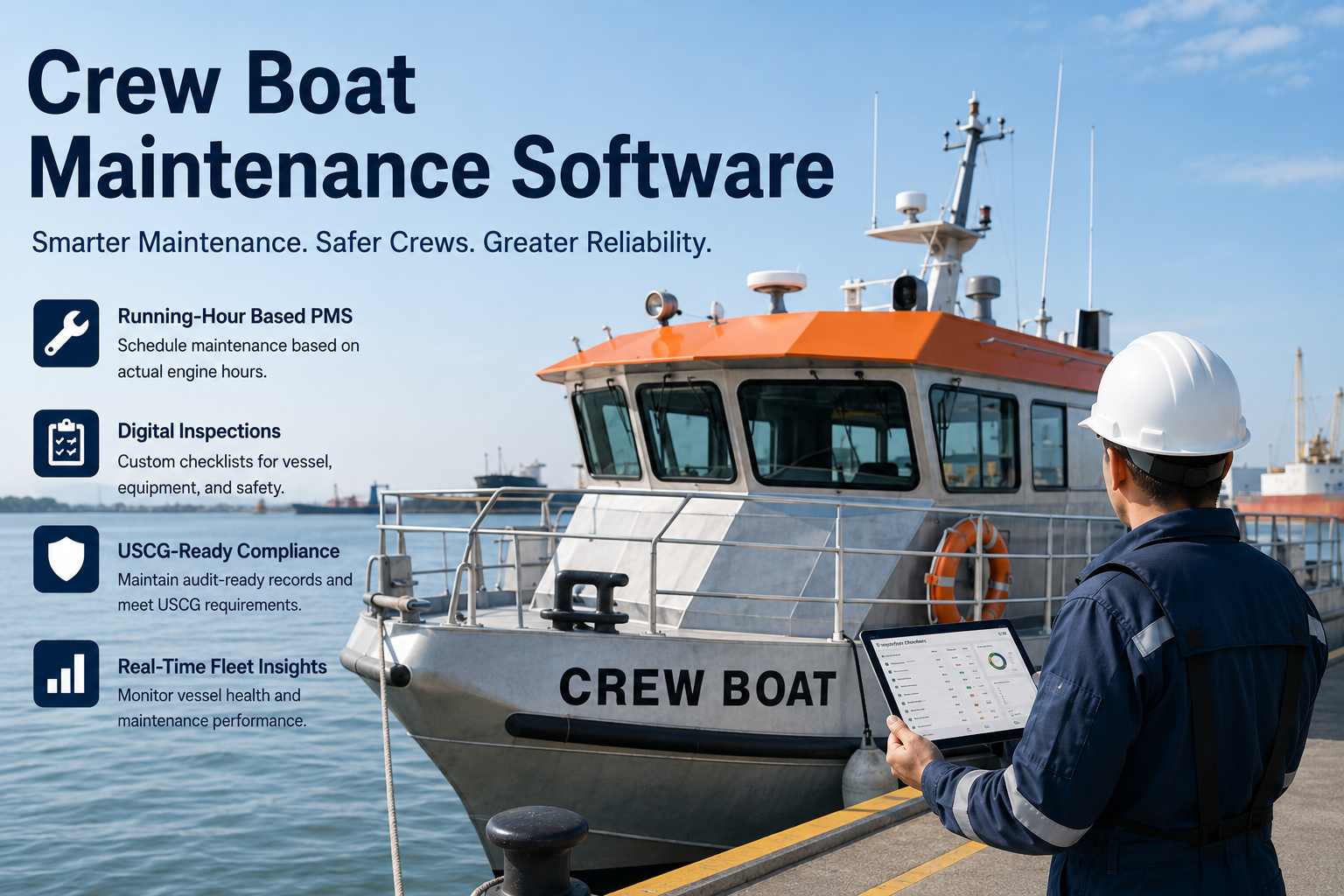
Offshore crew boat operators, Fast Support Vessel (FSV) managers, and marine technical superintendents navigate demanding charter windows: running high-speed multi-engine diesel propulsion, quadruple waterjets, bow thruster hydraulics, and dynamic positioning (DP) systems through non-stop offshore rig transfers in punishing open-ocean chop. When high-RPM engine running hours, waterjet reversing bucket actuator clearances, USCG Subchapter T/L life-saving audits, and structural aluminum hull weld logs remain stranded on grease-marked engine room clipboards or standalone wheelhouse PCs, fleet managers face sudden propulsion losses during rig approach, oil major charter contract cancellations, and costly USCG Form 835 deficiency hold orders. Fleet Rabbit delivers specialized crew boat maintenance software engineered for high-tempo offshore support operations, unifying tachometer running-hour planned maintenance systems (PMS), automated USCG Certificate of Inspection (COI) countdown vaults, Class Continuous Machinery Survey (CMS) alignment, and low-bandwidth ship-to-shore micro-sync. Eliminate offshore transit breakdowns, streamline annual haul-out surveys, and guarantee verified seaworthiness across remote deepwater blocks with complete offline execution. Book a Demo to see Fleet Rabbit crew boat maintenance software in action.
VESSEL BRIDGE TELEMETRY HEROCrew Boat Maintenance Software for Marine Fleets
Automate running-hour multi-engine and waterjet overhauls, schedule USCG Subchapter T/L compliance audits, track aluminum hull structural welds, and manage offline ship-to-shore work orders across offshore crew boat fleets.
Why Generic Maintenance Systems Fail Offshore Crew Boats
Crew boats and fast supply vessels endure continuous full-throttle transits followed by precision station-keeping against offshore rig fenders; static calendar schedules fail to measure high thermal cycles, saltwater spray erosion, and strict charter safety audits.
Quad-Engine High-RPM Thermal Stress & Turbo Failures
Running quad diesels at 85% to 95% MCR across 60-mile open-sea runs produces heavy thermal loading; calendar-based oil changes miss fuel dilution and soot shearing, causing catastrophic turbocharger and exhaust manifold failures during rig approaches.
Waterjet Steering Actuator Weepage & Cavitation
Holding station under dynamic platform legs subjects waterjets to rapid, heavy reversing cycles; unmonitored hydraulic cylinder seal weepage and impeller cavitation clearances risk loss of maneuvering control in close-quarters rig transfers.
Lapsed Subchapter T/L Safety Gear & OVID Audits
Hydrostatic life raft releases, fast rescue craft (FRC) davits, and fixed engine room CO2 systems logged on paper logbooks get overlooked, triggering immediate USCG Form 835 deficiency hold orders and failed oil company OIMS/OVID vetting audits.
Outer Continental Shelf Satellite Blindspots
Operating 50 to 100 miles offshore frequently exposes vessels to dropped cellular and intermittent satellite links. Cloud-only tools freeze, preventing engineers from signing off maintenance routines or updating machinery critical spare inventories.
How Fleet Rabbit Powers Crew Boat Maintenance & Seaworthiness
Fleet Rabbit synchronizes multi-engine running hours, waterjet hydraulic inspections, offshore safety gear vaults, and shoreside maintenance triage into one unified marine operations platform. Request a 1-on-1 walkthrough.
Multi-Engine Running-Hour Maintenance
Tracks primary propulsion engines, auxiliary generators, and bow thrusters independently to trigger oil sampling, injector swaps, and heat exchanger cleanouts based on true runtime.
Waterjet & Maneuvering System Audits
Standardized digital inspection checklists for reversing bucket hydraulic actuators, steering nozzle pins, zinc anode erosion, and shaft seal temperature monitoring.
USCG Subchapter T & L Safety Vault
Centralize and automate annual COI renewals, drydock survey milestones, life raft hydrostatic releases, EPIRB battery tests, and firefighting equipment flow checks.
Deepwater Offline Mode & Micro-Sync
Engineers record tachometer hours, inspect bilges, and log work orders offline in deepwater fields; lightweight data packets auto-sync once coastal cellular or satellite data connects.
Aluminum Hull & Deck Inspection Logs
Track deck cargo tie-down points, bow transfer bumper rubber wear, aluminum weld non-destructive testing (NDT), and fuel cargo transfer hose hydrostatic pressure certifications.
Shoreside Technical Work Orders
Deficiencies identified during offshore runs immediately generate prioritized technical requisitions routed directly to port engineers and dockside mechanics for rapid turnaround.
Statutory, Flag State & Class Society Alignment
Fleet Rabbit’s crew boat maintenance and inspection workflows are engineered to satisfy statutory international and domestic maritime regulations across offshore operational zones.
Full alignment with USCG Title 46 CFR Subchapter T (Small Passenger Vessels under 100 GT), Subchapter L (Offshore Supply Vessels), and Sector Prevention marine inspection audit criteria.
Meets Oil Companies International Marine Forum (OCIMF) Offshore Vessel Inspection Database (OVID) standards, IMCA marine safety guidelines, and oil major vessel charter vetting requirements.
Supports IACS Continuous Machinery Survey (CMS) credits, high-speed craft aluminum hull bottom gauging records, dynamic positioning capability audits, and propeller shaft condition logs.
Aligns with IMO International Code of Safety for High-Speed Craft (HSC Code 2000), SOLAS Chapter II-1 machinery and electrical installations, and ISM Code Element 10 maintenance management mandates.
Crew Boat Maintenance Software Comparison
A capability comparison focused on high-speed crew boat fleets, USCG Subchapter T/L compliance, and low-bandwidth marine offline synchronization. Competitor data sourced from public records as of 2026. Request a technical comparison.
| Capability | Fleet Rabbit | Amos / DNV ShipManager | Samsara | Generic Spreadsheets |
|---|---|---|---|---|
| Pricing (per vessel) | $5/month | $500–$2,000/mo ($$$$) | $27–60/month | Manual overhead |
| Multi-Engine & Waterjet Running-Hour PMS | Native & automated | Native (high complexity) | Requires custom setup | Manual entry only |
| USCG Subchapter T/L & OVID Safety Checklists | Pre-built & specialized | Custom configuration required | Generic vehicle only | Not available |
| USCG COI & Class Survey Expiration Alerts | Native & automated (90/60/30) | Module upgrade required | Not available | Manual file folders |
| Open-Water Offshore Offline Mode & Micro-Sync | Full offline mode (VSAT/Cell) | Legacy database sync | Limited | Paper only |
| Free Trial | 14 days, up to 3 assets | Demo only | Demo only | None |
| Contract Terms | Monthly or annual | Multi-year enterprise lock-in | 3-year minimum | None |
5-Step Implementation Roadmap
Fleet Rabbit provides an accelerated deployment program engineered for offshore marine operators, transitioning your crew boats from paper logbooks to automated digital compliance in two weeks.
Vessel Particulars & Multi-Engine Hierarchy Import
Import vessel official numbers, propulsion configurations (quad/triple diesels), waterjet serials, generator hours, and active USCG COI documents.
Running-Hour PMS & Waterjet Threshold Setup
Configure automated maintenance intervals for engine oil flushes, raw-water pump impeller replacements, waterjet nozzle checks, and steering gear servicing.
Subchapter T/L & OVID Checklist Activation
Activate pre-built digital inspection forms covering passenger PFDs, life raft hydrostatic releases, fire dampers, bilge float alarms, and emergency fuel shutoffs.
Captains, Engineers & Shoreside Superintendent Rollout
Equip vessel captains, chief engineers, and shoreside technical superintendents with the intuitive offline-first mobile inspection and maintenance application.
Live Fleet Operations Dashboard Go-Live
Activate real-time fleet seaworthiness boards, USCG survey countdown ledgers, and 1-click compliance export reporting for oil company vetting audits.
2-Week Deployment Plan & Results
Modernize offshore crew boat maintenance and statutory compliance tracking with zero disruption to active oilfield charter commitments. Request an onboarding plan.
Week 1: Setup & Data Migration
- Migrate paper maintenance logs, multi-engine running hours, and active Class/Flag statutory certificates
- Set automated 90/60/30-day renewal warnings for annual drydock hull exams, life raft certifications, and tailshaft inspections
- Assign user permission roles for Captain, Chief Engineer, Port Engineer, and Marine Operations Director
Week 2: Shipboard Pilot & Go-Live
- Conduct quick 20-minute crew training on completing offline mobile pre-departure checks and engine logs
- Validate micro-sync data transmission across dockside Wi-Fi and offshore cellular/satellite connections
- Activate central shoreside dashboard with live USCG audit readiness indicators and work order queues
Protect Offshore Crew Boats from Costly Downtime and Charter Off-Hire
Automate running-hour PMS schedules, streamline USCG Subchapter T/L audits, and maintain audit-ready seaworthiness across every transfer run. Start today at $5/asset/month with a 14-day free trial.
Real-World Operational Results
Proven operational outcomes reported by offshore support vessel operators and fast crew boat fleet managers. Request the full maritime case study.
Engine Breakdown Elimination — 14-Fast Crew Boat Fleet
An offshore crew boat contractor running high-speed quad-diesel vessels to deepwater platforms experienced repeated turbocharger failures and waterjet hydraulic leaks due to calendar-based servicing that missed heavy operating hours. Fleet Rabbit deployed running-hour PMS triggers and offline mobile walkarounds, reducing unscheduled propulsion downtime by 46% and saving $120,000 in prevented off-hire penalties.
USCG & OVID Audit Readiness — 18-Vessel Fleet
A fast support vessel provider struggled with communication lag between offshore captains noting transfer bumper damage on paper slips and shoreside port engineers ordering replacements. Fleet Rabbit converted failed pre-trip checks into instant photo-verified work orders, eliminating 100% of USCG Form 835 citations and achieving flawless scores on oil major OVID vetting audits.
Our fast crew boats run 160 nautical miles round-trip every single day in heavy Gulf chop. If an engine or waterjet goes down during station-keeping under a platform, lives and multi-million-dollar charter contracts are on the line. Fleet Rabbit gave our Chief Engineers an easy offline mobile app to log running-hour PMS right in the machinery spaces, giving our shoreside port engineers full visibility into every maintenance task and certificate across the fleet.
Frequently Asked Questions
Upgrade Your Crew Boat Fleet Maintenance in Less Than 2 Weeks
Automate running-hour propulsion PMS, streamline USCG Subchapter T/L audits, and ensure continuous charter readiness at $5/asset/month with a 14-day free trial.