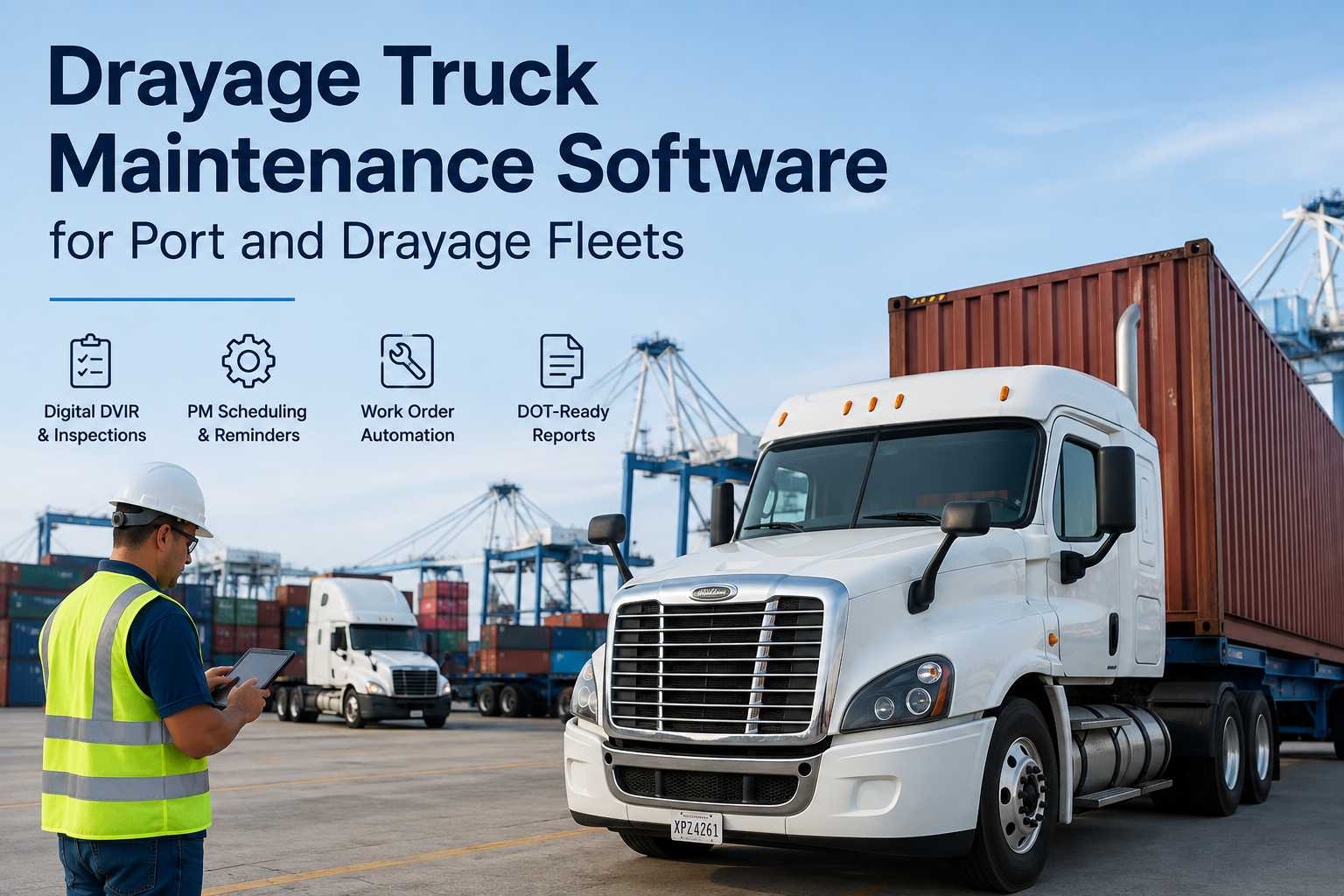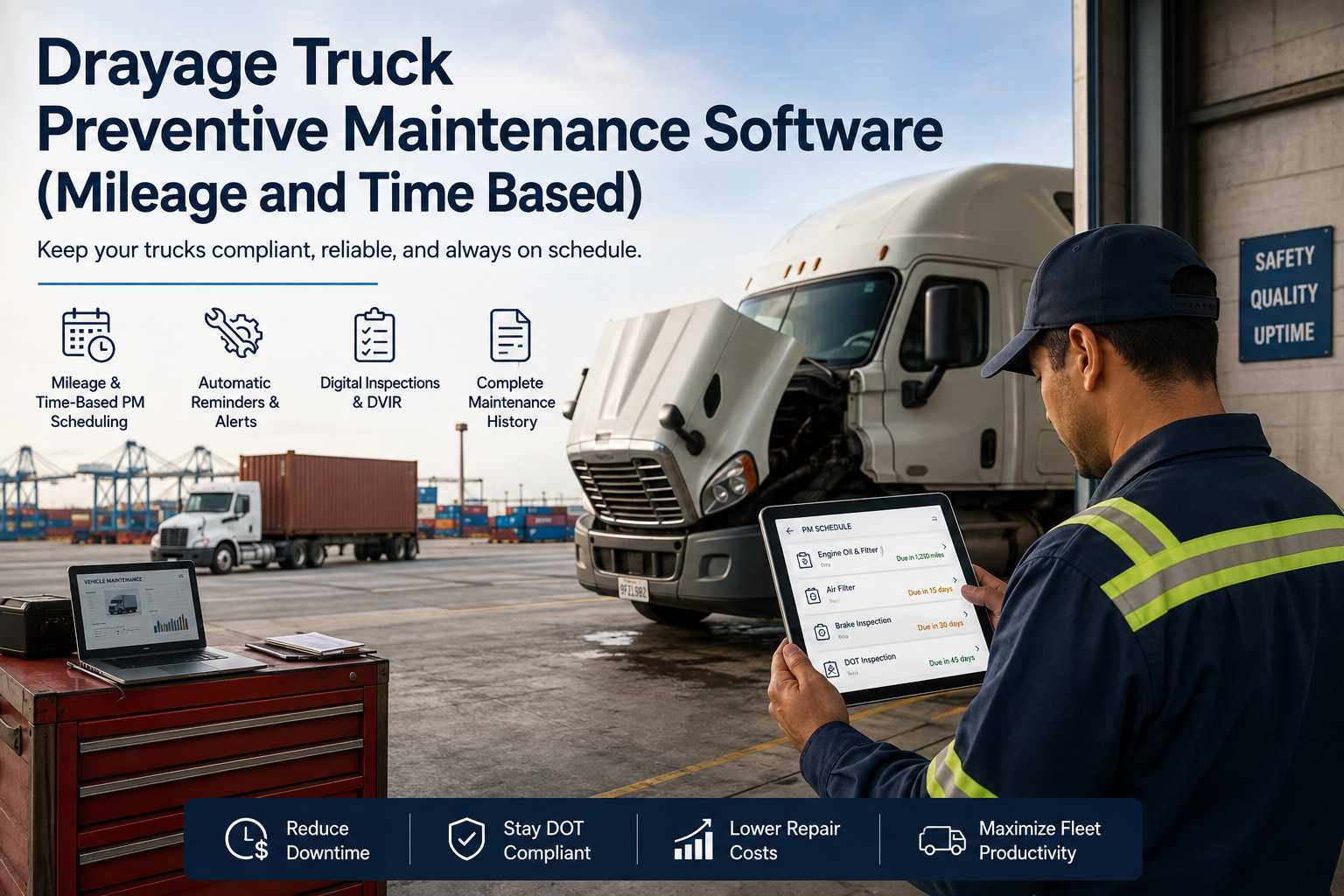
Intermodal drayage carriers, harbor motor fleets, and port logistics maintenance superintendents run severe-duty container hauls under punishing stop-and-go terminal conditions: servicing diesel particulate filter (DPF) soot loads from continuous gate idling, tracking fifth-wheel top plate wear under heavy container shockloads, scheduling S-cam drum brake rebuilds, and maintaining Clean Air Action Plan (CAAP) engine compliance before clearing terminal gates. When service intervals, oil sampling logs, hub seal weeping notes, and brake stroke measurements remain tracked on grease-stained shop dry-erase boards or disconnected spreadsheets, drayage operators face catastrophic roadability breakdowns on port access corridors, missed rail ramp cut-offs, and costly FMCSA out-of-service orders. Fleet Rabbit delivers specialized drayage truck preventive maintenance software engineered for intermodal container fleets, combining dual engine-hour and mileage-based PM scheduling, photo-verified digital DVIRs, automatic defect-to-work-order triage, and low-bandwidth pier-to-depot synchronization. Prevent costly port gate rejections, eliminate engine aftertreatment derates from queue idling, and maintain complete audit-proof vehicle maintenance ledgers completely offline across container terminal shadow zones with zero cellular dead-zone data loss. Book a Demo to see Fleet Rabbit drayage truck preventive maintenance software in action.
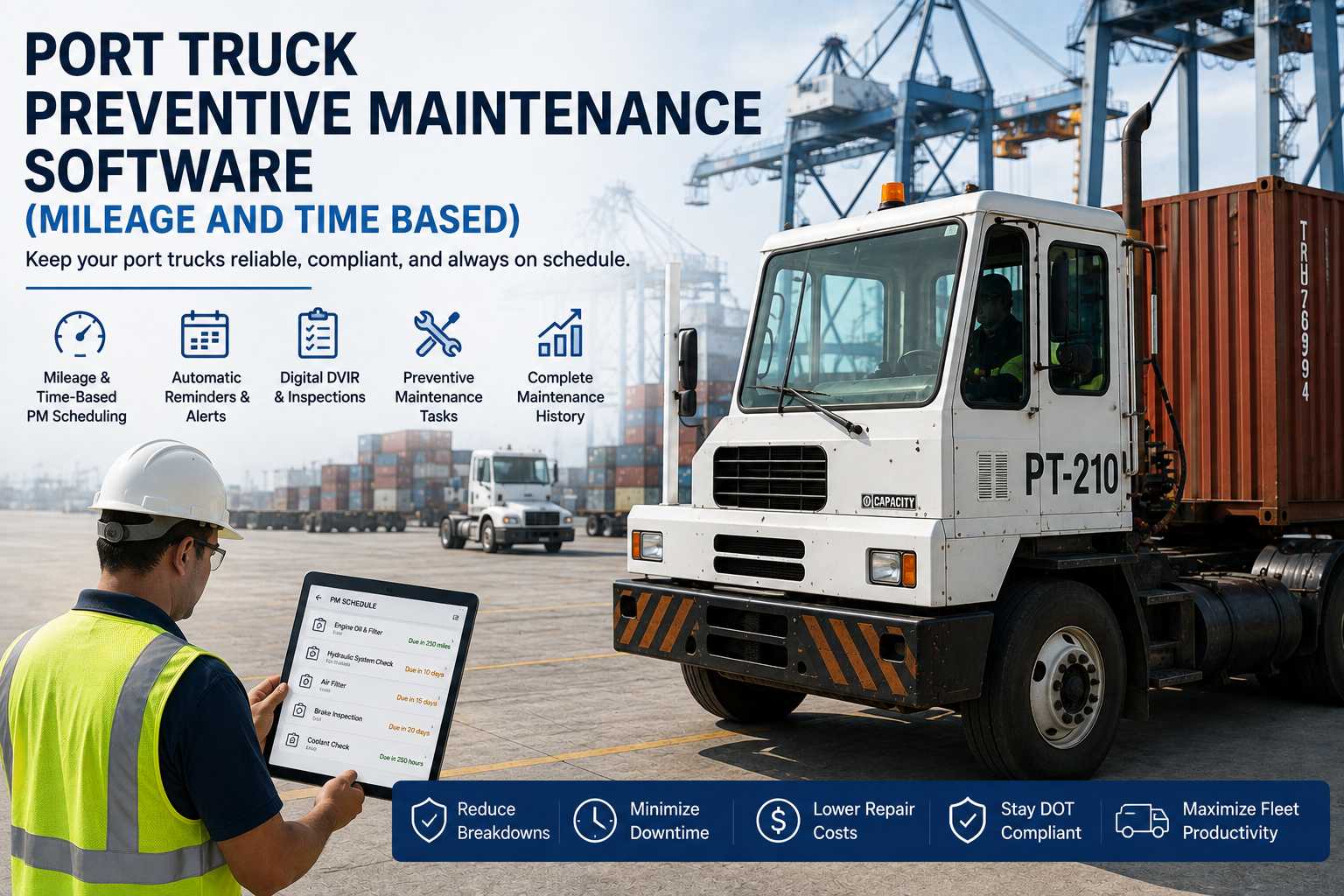
DRAYAGE INTERMODAL HERO CONSOLEDrayage Truck Preventive Maintenance & PM Scheduling Software
Automate dual-trigger mileage and engine-hour PMs, eliminate terminal queue DPF clogging, convert roadability DVIR defects into shop work orders, and maintain audit-proof port records.
Why Mileage-Only PM Schedules Fail Severe-Duty Drayage Fleets
Drayage trucks spend hours idling in marine terminal queue lines while logging very few road miles; managing maintenance solely by odometer readings causes catastrophic mechanical oversights.
DPF Soot Loading & Severe Engine Derates
Extended low-RPM idling in port terminal queues prevents passive DPF regeneration, choking aftertreatment systems with unburned soot. Tracking service by road miles delays filter cleaning until tractors enter forced 5-MPH derate modes on active container corridors.
Severe Brake Drum Heat & S-Cam Bushing Slack
Repeated start-stop maneuvering under 80,000-lb ocean container gross loads rapidly wears brake shoe friction material and S-cam bushings. Mileage-based schedules miss excessive pushrod stroke growth, triggering instant FMCSA Level I roadside out-of-service orders.
Fifth-Wheel Locking Jaw Play & Kingpin Shear Risks
Daily coupling and uncoupling of heavy third-party ocean chassis causes rapid wear on fifth-wheel locking jaws and pivot pins. Without scheduled slack gauge audits, worn jaws risk dropped containers or damaged chassis kingpins during highway transit.
Marine Pier & Intermodal Yard Cellular Dropouts
Dense steel shipping container stacks create deep cellular dead zones across marine terminals and rail transfer yards. Cloud-only tools freeze up, preventing drivers from submitting defect notes or viewing open mechanic sign-offs.
Engineered for High-Frequency Harbor Drayage Uptime
Fleet Rabbit bridges the gap between terminal drivers, dispatch desks, and shop maintenance bays with one intermodal management console. Request a 1-on-1 walkthrough.
Dual Engine-Hour & Mileage PMs
Schedule oil flushes, valve adjustments, and coolant servicing by whichever threshold hits first: engine runtime hours or chassis odometer miles, accounting for extreme terminal idle time.
DPF & Emissions Regeneration Schedules
Track DPF differential pressure hours, DEF doser valve maintenance, and exhaust system backpressure routines to eliminate forced engine derates on port access ramps.
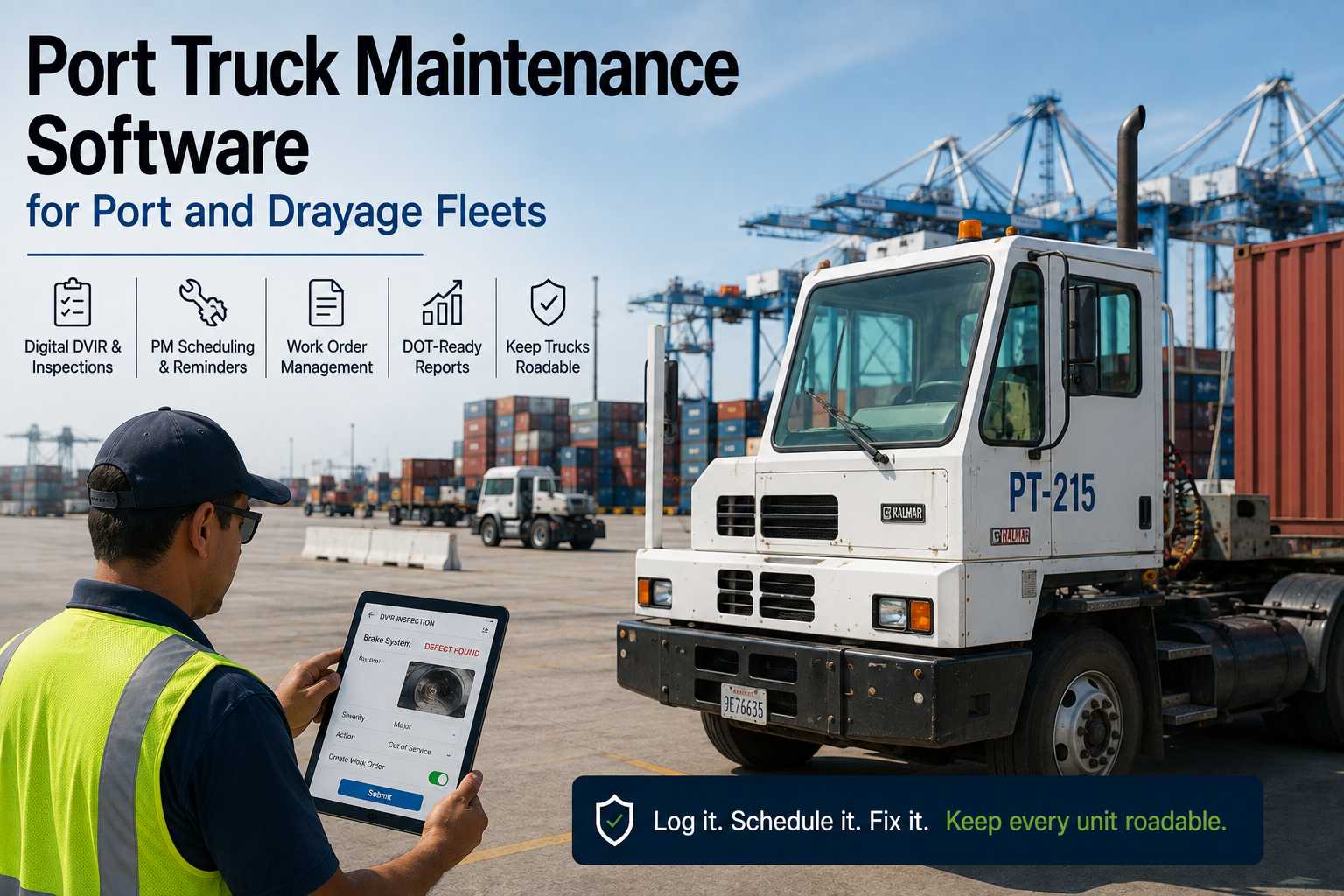
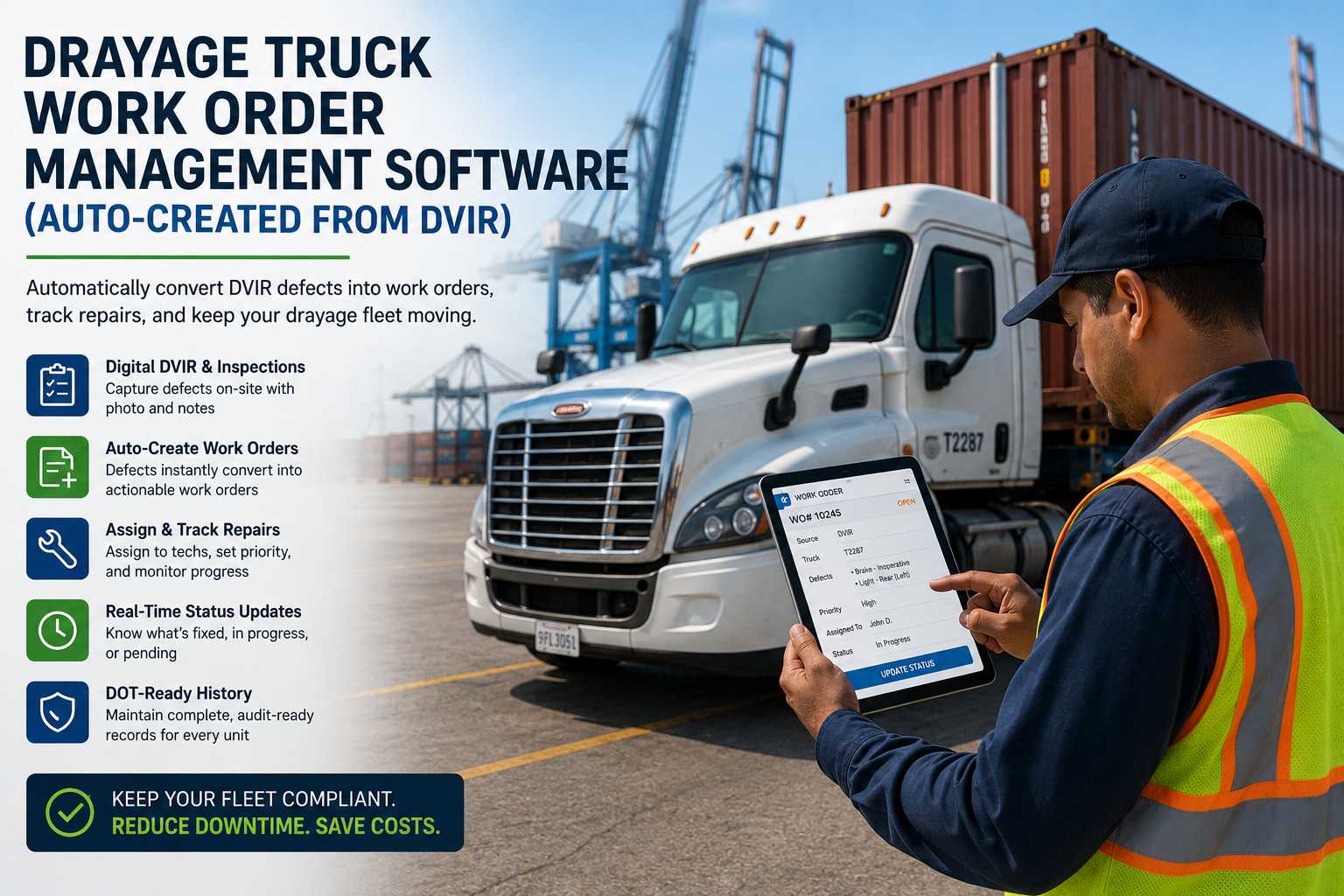
DVIR-to-Work-Order Automation
Defects recorded during terminal walkarounds—such as leaking hub seals or worn gladhand seals—instantly convert into prioritized shop work orders with driver photos and part lists.
Intermodal Shop Inventory Staging
Manage shop supplies for high-wear drayage parts—including brake shoes, slack adjusters, air line coils, gladhands, and fuel filters—with automated low-stock reorder thresholds.
Offline Pier-to-Depot Synchronization
Mechanics close work orders and drivers complete pre-trips inside shielded steel container yards with zero cell coverage; all records auto-sync upon reconnecting to network coverage.
DOT Periodic & Port Registry Vault
Centralize annual FMCSA 49 CFR Part 396 inspection documents, Clean Truck Program stickers, and terminal concession permits with automated 90/60/30-day renewal countdown alerts.
Federal DOT, Clean Air & Intermodal Roadability Alignment
Fleet Rabbit’s drayage preventive maintenance schedules are engineered to meet federal motor carrier safety regulations, clean port initiatives, and intermodal equipment rules.
Direct compliance with FMCSA periodic inspection standards, systematic preventive maintenance ledgers, driver vehicle inspection reporting (DVIR), and certified technician sign-offs.
Supports Intermodal Equipment Provider (IEP) roadability regulations, ensuring proper pre-trip walkarounds and defect traceability for combined tractor-chassis container moves.
Maintains certified emissions maintenance ledgers and DPF cleaning histories required to maintain clean truck registry badges at major coastal port authorities.
Provides exportable vehicle maintenance ledgers demonstrating continuous roadability and fleet roadworthiness to satisfy commercial harbor carrier concession terms.
Drayage Truck Preventive Maintenance Software Comparison
A specialized evaluation focused on port container logistics, idle-aware PM scheduling, and offline terminal yard synchronization as of 2026. Request a technical comparison.
| Capability | Fleet Rabbit | Samsara | Fleetio | Shop Whiteboards |
|---|---|---|---|---|
| Pricing (per truck/month) | $5/month | $27–$60/month | $4–$8/mo (base tier) | Costly roadside tow-ins |
| Dual Engine-Hour & Mileage PM Triggers | Native automated logic | Mileage-biased system | Manual text entry | Guessed intervals |
| Dedicated Drayage & Chassis DVIR Forms | Pre-built IEP templates | Generic commercial only | Custom build required | Manual paper sheets |
| Port Clean Truck Registry Document Vault | Automated 90/60/30 alerts | Basic file upload | Basic file upload | Lost physical folders |
| Container Stack Offline Micro-Sync | Full offline sync engine | Limited data caching | Partial offline mode | Paper only |
| Free Trial | 14 days, up to 3 assets | Demo only | 14 days | None |
| Contract Commitment | Monthly or annual | 3-year contract lock-in | Annual contract | None |
5-Step Implementation Roadmap
Fleet Rabbit deploys quickly without disrupting active harbor container moves, taking your drayage fleet from reactive whiteboard repairs to automated PM scheduling in two weeks.
Fleet Profiles & Baseline Hour Ingestion
Import tractor VINs, port RFID license plates, current engine hours, odometer miles, emissions classes, and historical service intervals into your centralized database.
Dual-Trigger PM Interval Configuration
Activate pre-configured maintenance routines for 250-hour oil services, 500-hour DPF soot checks, 1,000-hour fifth-wheel slack adjustments, and annual DOT periodic audits.
Critical Defect Red-Tag & Lockout Rules
Establish automated vehicle grounding rules for severe mechanical faults—such as loose fifth-wheel jaws, blown brake chambers, or active hub seal oil leaks.
Shop Mechanics & Terminal Driver Rollout
Equip drayage drivers and shop technicians with the intuitive offline mobile app for completing daily pre-trips, executing digital PMs, and logging parts usage.
Maintenance Command Dashboard Go-Live
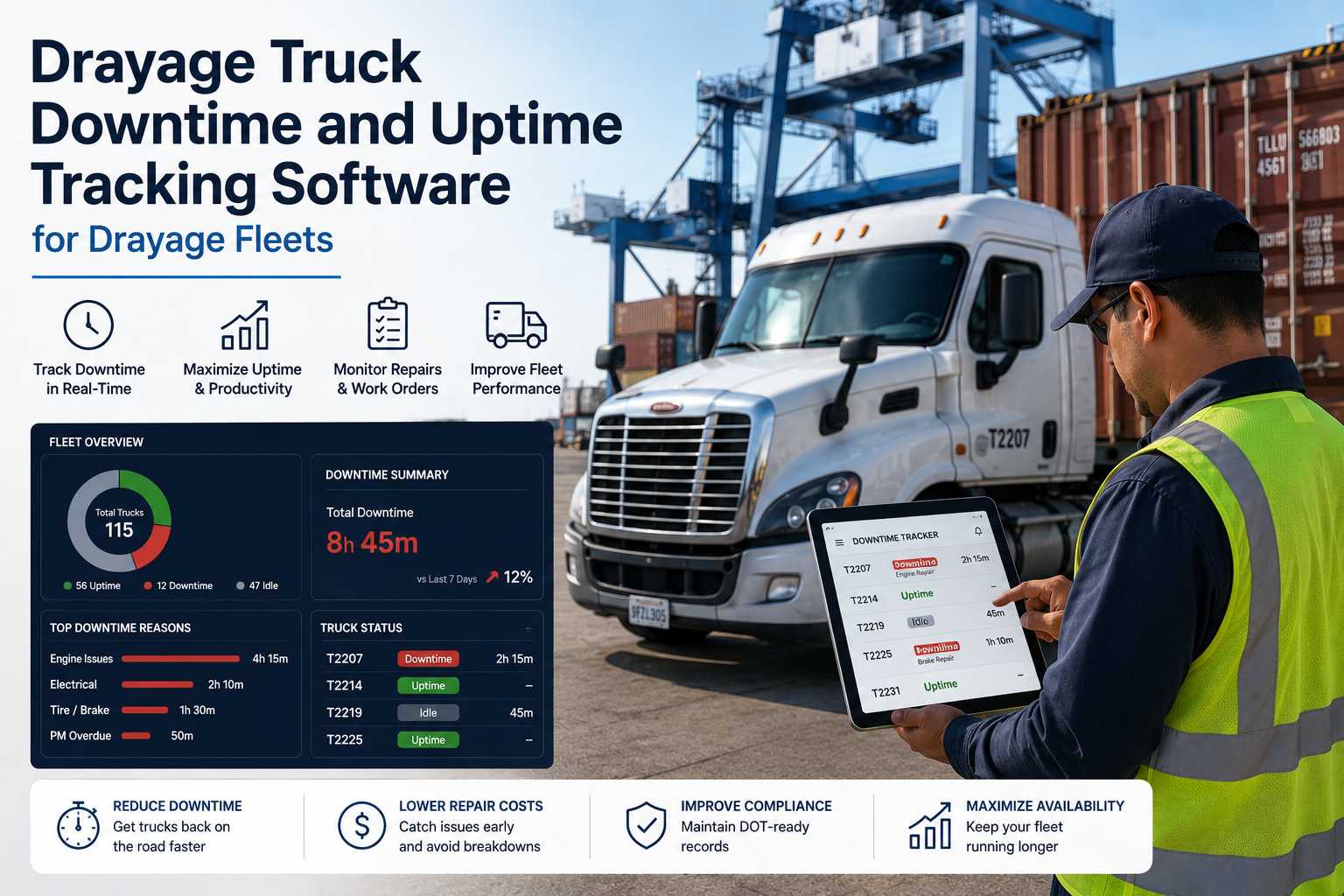
Activate the live fleet dashboard, view real-time PM countdowns across all tractors, track open work orders, and export 1-click compliance reports for port authorities.
2-Week Deployment Plan & Milestones
Modernize your drayage truck maintenance operations and terminal roadability verification with zero disruption to active harbor moves. Request an onboarding plan.
Week 1: Setup & Data Ingestion
- Import tractor specifications, port RFID numbers, current engine hours, and odometer readings
- Configure dual-trigger PM schedules for engine oil, brake systems, fifth wheels, and DPF filters
- Set up 90/60/30-day renewal warnings for Clean Truck Program registrations and annual DOT inspections
- Assign user access roles for Drayage Driver, Shop Mechanic, Dispatcher, and Safety Director
Week 2: Shop Pilot & Operations Launch
- Conduct 15-minute driver training on completing mobile roadability pre-trips and defect photo tagging
- Validate offline store-and-forward syncing in shielded container yards and terminal shadow zones
- Verify instant defect-to-work-order triage for flagged air leaks and fifth-wheel wear notes
- Launch the live fleet maintenance dashboard across dispatch desks and shop technician tablets
Protect Your Drayage Fleet from Costly Breakdowns and Port Gate Rejections
Automate dual engine-hour and mileage PM scheduling, convert DVIR defects into instant repair orders, and maintain audit-proof records. Start today at $5/truck/month with a 14-day free trial.
Real-World Drayage Fleet Results
Operational outcomes reported by intermodal motor carriers and harbor container drayage fleets. Request the drayage fleet case study.
DPF Derates Eliminated Across 38 Drayage Tractors
A harbor motor carrier experienced frequent 5-MPH engine derates on port access corridors due to severe terminal queue idling that mileage-only PMs failed to anticipate. Fleet Rabbit deployed engine-hour PM triggers and automatic DPF soot alerts, cutting unexpected roadside derates to zero and saving over $32,000 in emergency towing and dealer forced-regen charges.
Defect Repair Triage Slashed — 28-Truck Fleet
An intermodal drayage operator struggled with communication delays between drivers reporting cracked brake shoes on paper gate slips and mechanics staging replacement hardware. Fleet Rabbit converted failed pre-trip items into instant photo-verified shop work orders, reducing defect turnaround times from 36 hours to under 45 minutes.
Drayage is brutal on trucks. Your tractor might only log 60 miles a day, but the engine runs for ten hours straight while waiting in terminal queues and creeping through container gates. If you schedule maintenance by the odometer, your DPF gets choked with soot and your fifth wheel gets beaten to pieces before you even realize it's due for service. Fleet Rabbit solved that for our fleet. It tracks actual engine runtime alongside mileage, alerting our shop to service aftertreatment systems and brake chambers on real wear. It keeps our trucks out of derate mode and completely eliminates terminal gate turnaways.