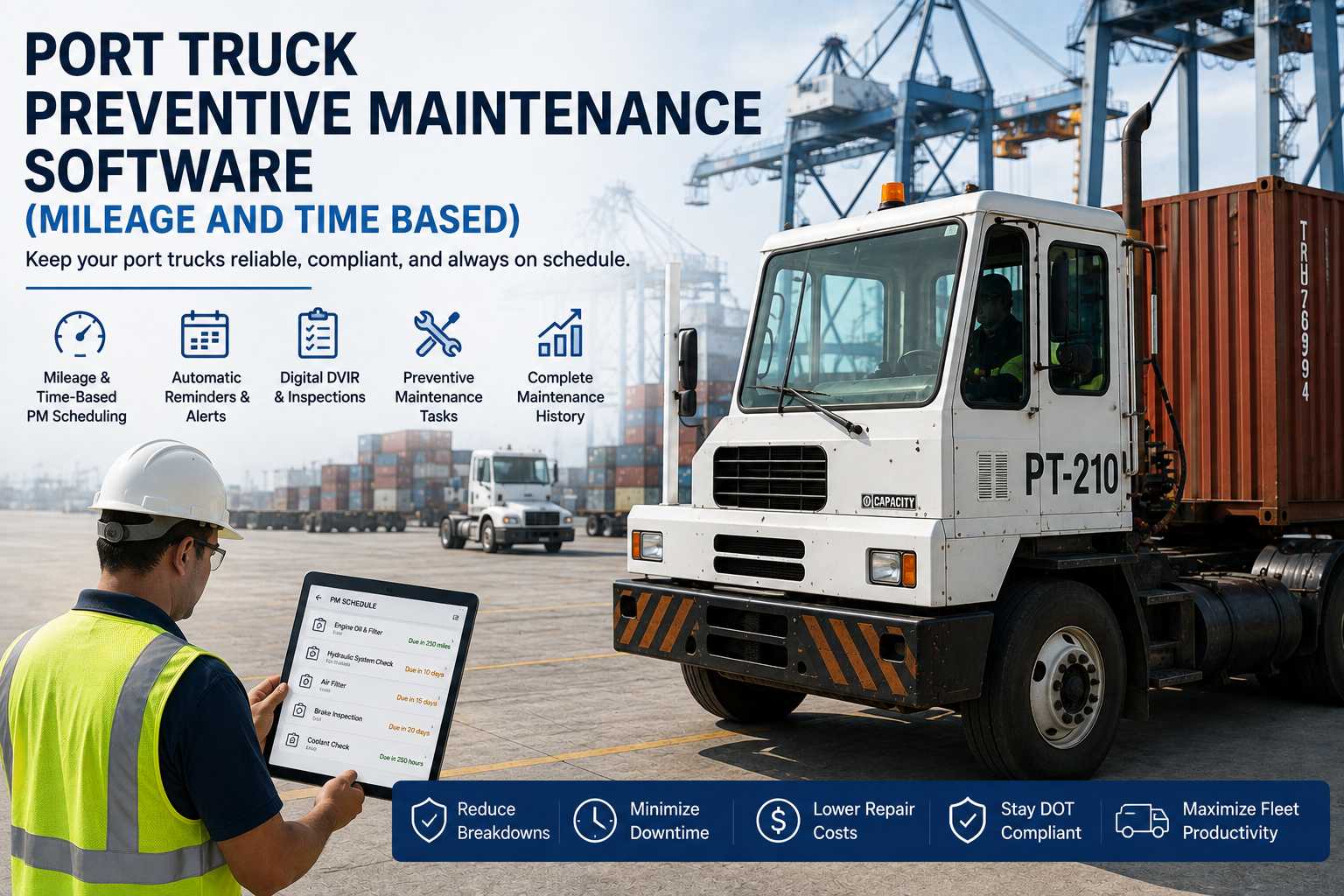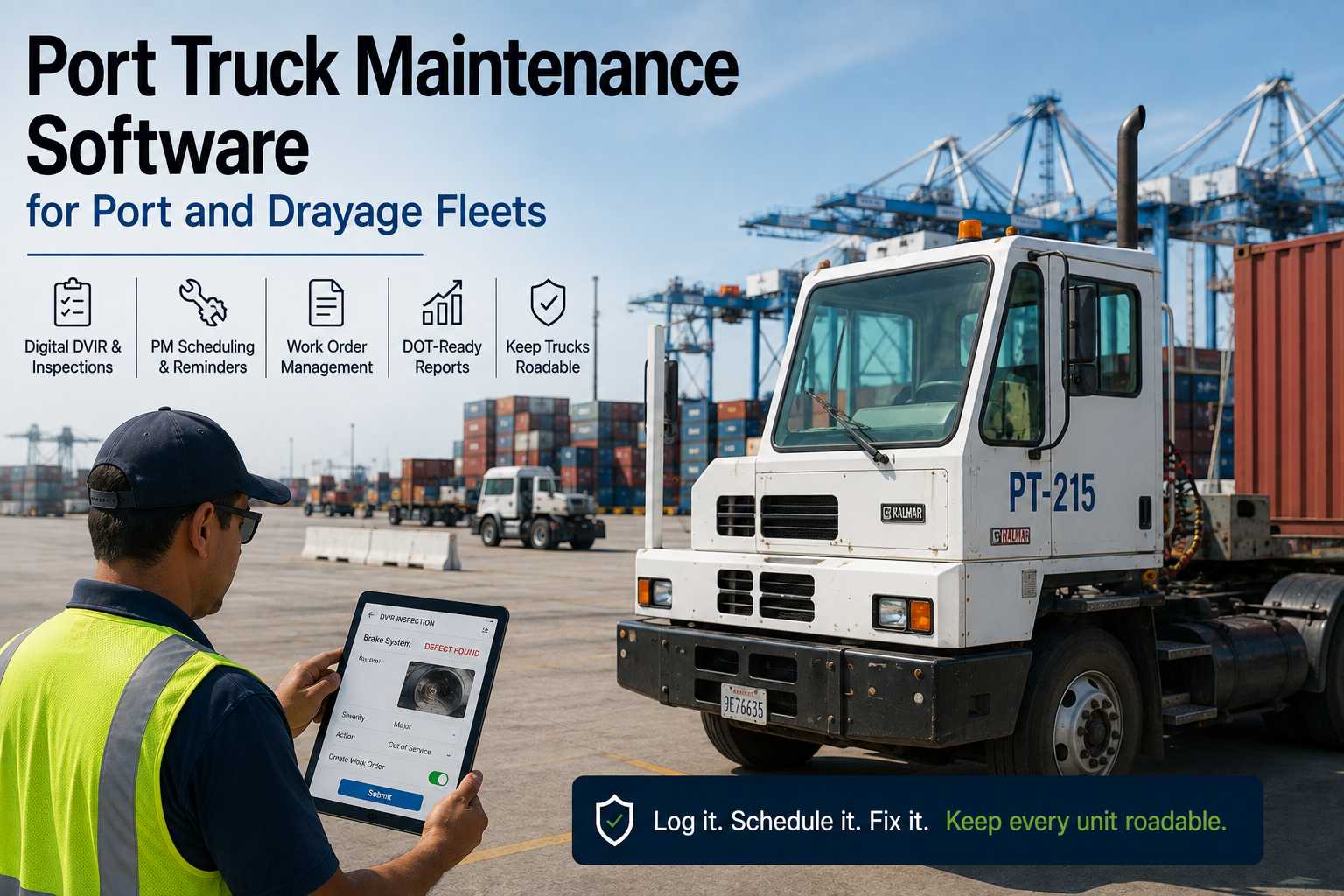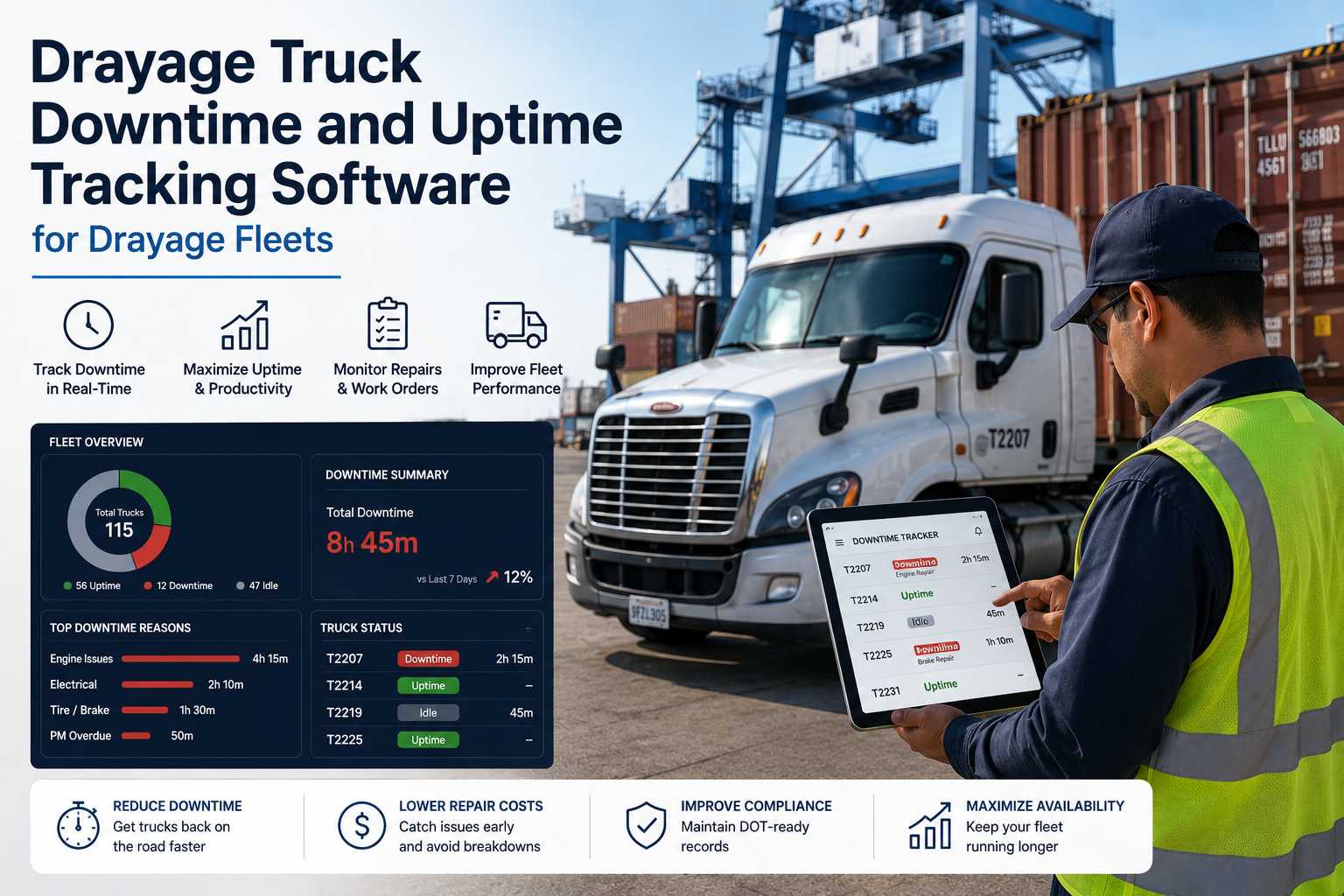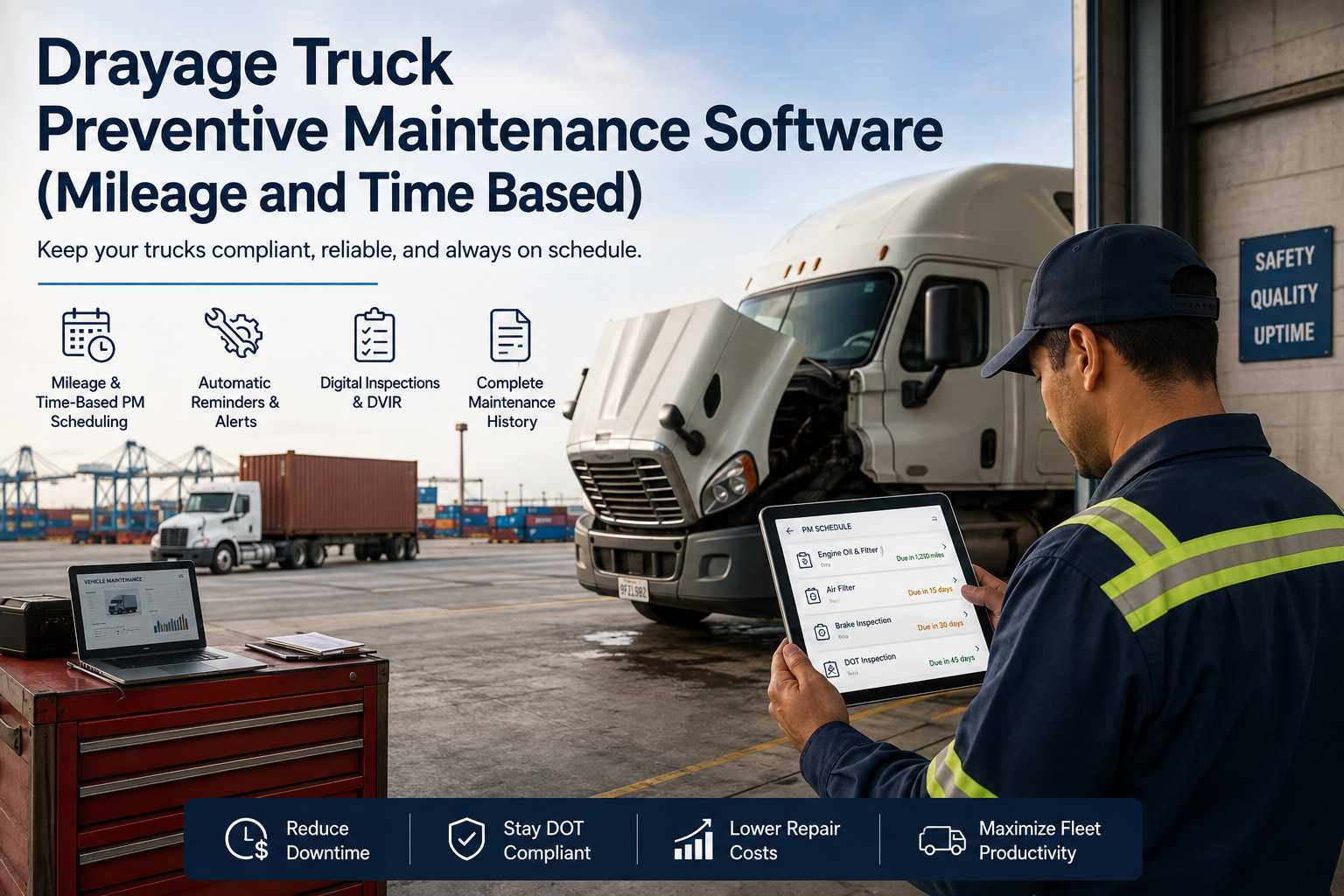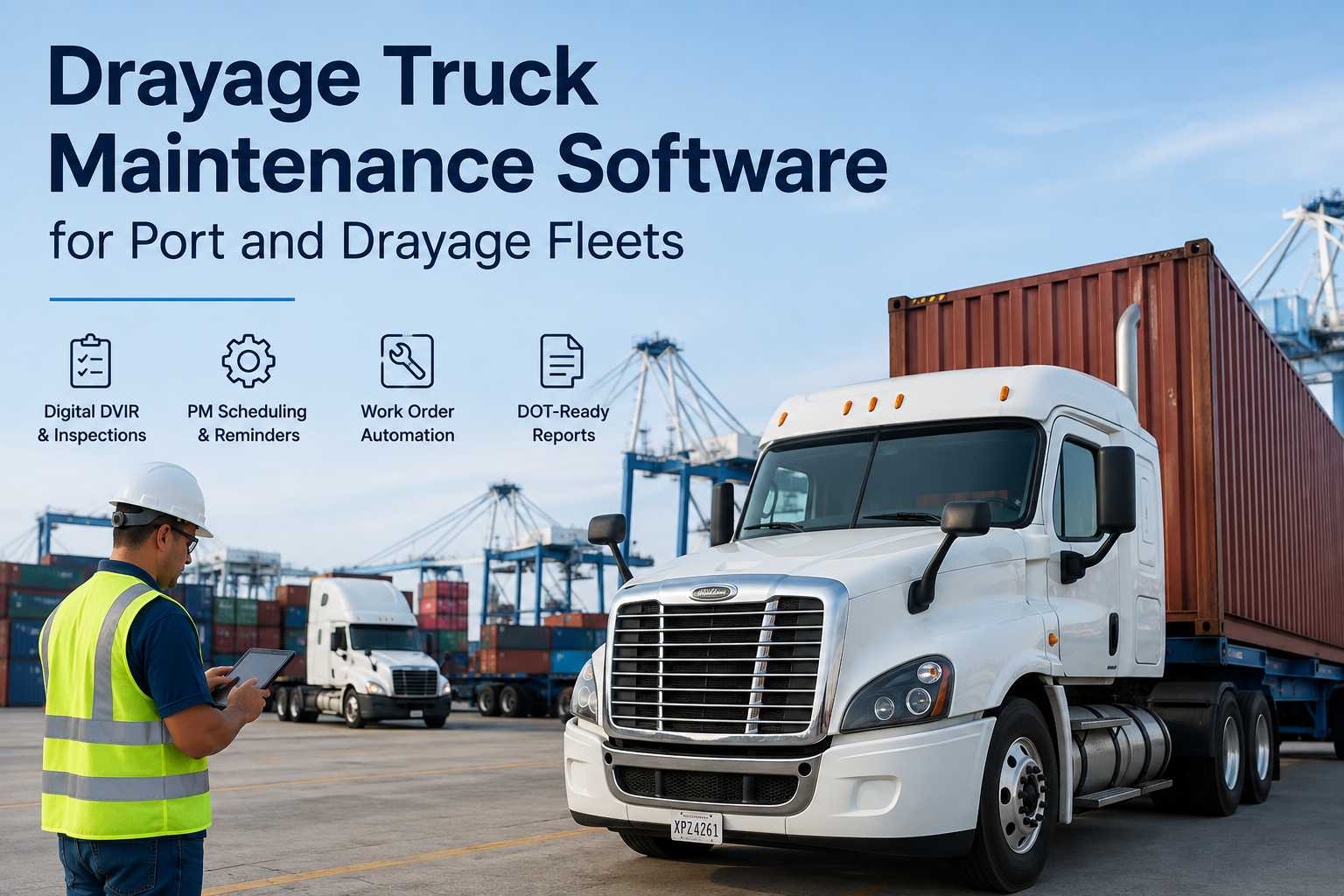
Intermodal drayage operators, harbor motor carriers, and cross-dock fleet maintenance shops manage container hauls under relentless gate deadlines: verifying fifth-wheel jaw engagement, auditing air brake pushrod travel, inspecting gladhand rubber seals, and logging container chassis twistlock security before clearing marine terminal checkpoints. When cracked brake shoes, hub oil weeping, damaged light cords, and worn intermodal slider pins remain noted on paper clipboards or verbal phone calls, drayage fleets face catastrophic roadability out-of-service (OOS) citations, denied terminal gate entry, and crippling container demurrage penalties. Fleet Rabbit delivers dedicated drayage truck work order management software built for harbor logistics, converting photo-verified digital DVIR defects automatically into prioritized shop work orders with inventory staging and technician repair sign-offs. Eliminate gate roadability turnaways, resolve chassis pool damage disputes with photo proof, and maintain complete FMCSA Part 396 audit ledgers completely offline across dense container terminal dead zones with zero cellular signal. Book a Demo to see Fleet Rabbit drayage work order software in action.
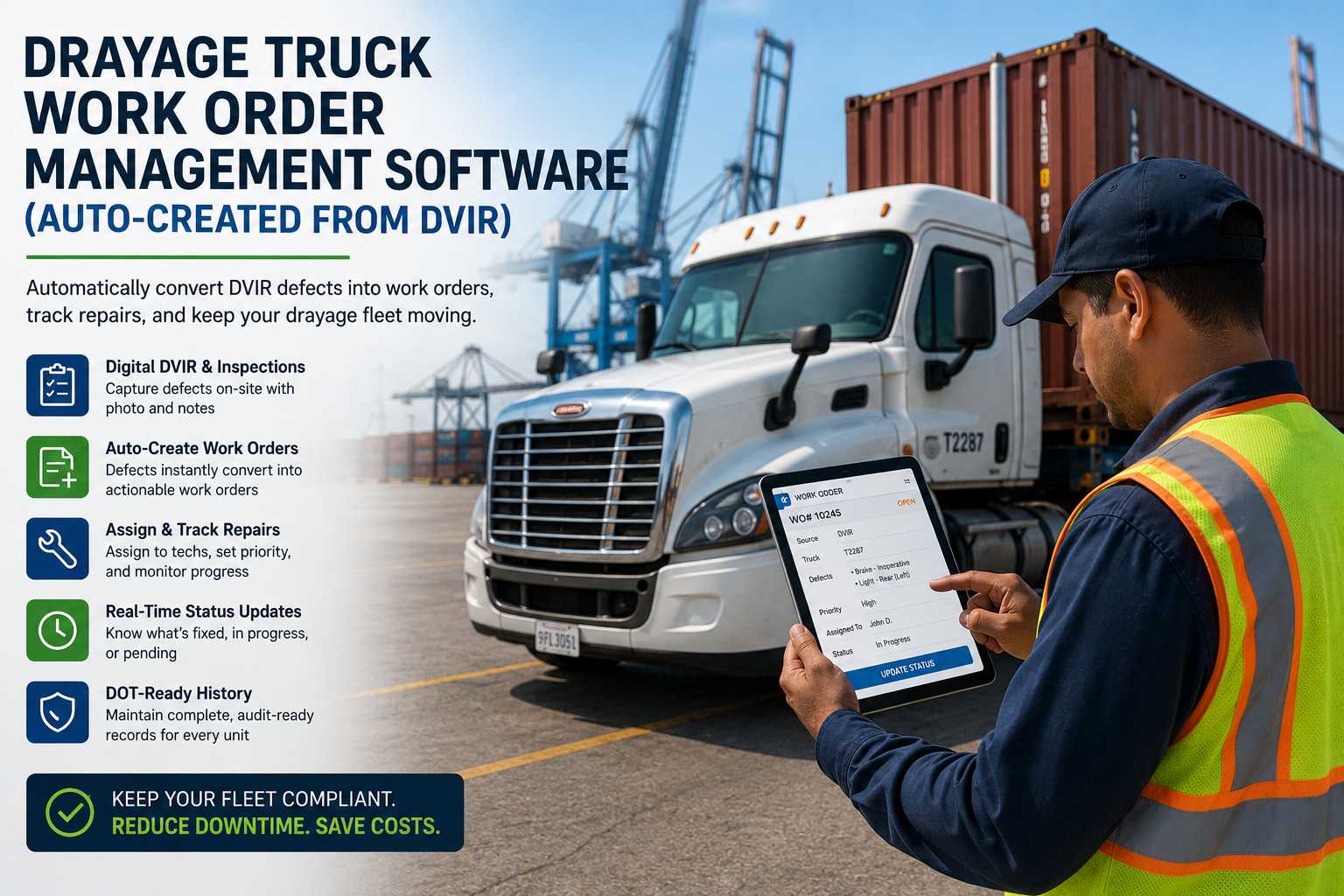
DRAYAGE INTERMODAL HERO CONSOLEDrayage Truck Work Order & Digital DVIR Software
Convert failed terminal DVIR checks automatically into prioritized shop work orders, track intermodal chassis defect repairs with photo proof, and maintain audit-ready port records.
Why Paper DVIRs and Manual Work Orders Fail Drayage Fleets
Port drayage operations leave zero margin for communication lag between drivers and shop bays; manual clipboards and verbal repair requests cause severe roadability rejections.
Unresolved Defects Becoming Roadside OOS Orders
A driver flags minor air line chafing or thin brake shoes on a paper slip, but the note gets buried on a clipboard. The tractor hooks an 80,000-lb box and rolls into an FMCSA roadside checkpoint, resulting in an immediate Out-of-Service citation.
Marine Terminal Inbound Gate Roadability Turnaways
Marine clerks and ILA interchange inspectors reject equipment at the bobtail or container gate for cut light cords, cracked drums, or leaking hub seals. Without an automated work order pipeline, drivers lose rail cut-offs and rack up expensive demurrage.
Missing Closed-Loop Mechanic Sign-Off Audits
DOT 49 CFR Part 396.11 mandates that any safety defect noted on a DVIR must be certified as repaired or unnecessary by a qualified mechanic before the vehicle is dispatched again. Paper records leave compliance gaps that trigger severe audit penalties.
Container Terminal Canyon Cellular Dead Zones
Operating inside 4-high stacked steel container yards drops cellular network signals. Legacy maintenance tools crash, preventing drivers from uploading photo evidence of defects or checking if maintenance completed assigned repairs.
From Driver DVIR to Closed Shop Repair in Minutes
Fleet Rabbit bridges the gap between terminal drivers, dispatch desks, and shop maintenance bays with an automated intermodal repair pipeline. Request a 1-on-1 walkthrough.
Auto-Generated Work Orders
Failed items on pre-trip or post-trip DVIRs instantly convert into prioritized shop repair tickets, passing driver defect photos, tractor IDs, and severity rankings directly to mechanics.
Closed-Loop Mechanic Certification
Technicians sign off on completed repairs directly on shop tablets, automatically updating vehicle roadability status and satisfying FMCSA Part 396.11 pre-dispatch requirements.
Chassis Pool Damage Dispute Vault
Capture timestamped, high-resolution photos of bent chassis bolsters, frozen twistlocks, or cut wires upon initial pool interchange, shielding your fleet from unjust equipment provider billing.
Intermodal Shop Parts Staging
Deduct high-wear drayage parts—such as gladhand seals, slack adjusters, brake shoes, light cords, and wheel hub caps—automatically from inventory as work orders close.
Offline Container Yard Store-and-Forward
Drivers complete inspections and mechanics close work orders inside shielded container stacks with zero cell signal; all data caches locally and syncs once back in range.
Digital Unit Maintenance History
Maintain complete unit service histories linking original driver DVIR defect photos directly to final technician work orders, parts receipts, and labor hours for effortless DOT audits.
FMCSA, Intermodal Roadability & Port Concession Alignment
Fleet Rabbit’s work order workflows align with federal commercial motor vehicle rules, intermodal equipment provider regulations, and port terminal standards.
Enforces closed-loop compliance: drivers certify review of prior repairs, mechanics electronically sign corrective actions, and vehicles are locked out until cleared.
Complies with roadability inspection requirements for intermodal equipment providers (IEPs), maintaining clear documentation for combined tractor and ocean chassis units.
Tracks work orders related to exhaust aftertreatment, DPF differential pressure flushes, and emissions hardware to ensure tractors maintain port concession access.
Proactively prevents out-of-service violations by prioritizing critical safety items like brake stroke measurements, tire sidewall damage, and fifth-wheel lock tolerances.
Drayage Work Order Software Comparison
A specialized evaluation focused on drayage fleets, automated DVIR-to-work-order pipelines, and offline terminal yard synchronization as of 2026. Request a technical comparison.
| Capability | Fleet Rabbit | Samsara | Fleetio | Paper Clipboards |
|---|---|---|---|---|
| Pricing (per truck/month) | $5/month | $27–$60/month | $4–$8/mo (base tier) | Costly roadside OOS stops |
| Auto-Create Work Order from DVIR Defect | Instant & photo-verified | Requires manual trigger | Manual build required | Manual slip handoff |
| Closed-Loop Part 396 Mechanic Sign-Off | Built-in & required | Basic checklist | Basic checklist | Missing or lost slips |
| Chassis Pool Damage Dispute Photo Vault | Dedicated IEP mapping | Generic image upload | Generic upload | None |
| Container Stack Offline Micro-Sync | Full offline sync engine | Limited data caching | Partial offline mode | Paper only |
| Free Trial | 14 days, up to 3 assets | Demo only | 14 days | None |
| Contract Commitment | Monthly or annual | 3-year contract lock-in | Annual contract | None |
5-Step Implementation Roadmap
Fleet Rabbit deploys quickly without disrupting active harbor container moves, taking your drayage fleet from paper slips to an automated work order pipeline in two weeks.
Fleet Profiles & Part Catalog Ingestion
Import tractor VINs, port RFID license plates, engine hours, and common shop wear parts (gladhand seals, brake shoes, light cords) into your centralized database.
DVIR-to-Work-Order Automation Rules
Configure automated triage triggers that route flagged pre-trip defects—such as air leaks or cracked drums—directly to shop work order queues with priority tags.
Safety Lockout & Red-Tag Criteria
Establish automated vehicle grounding rules for severe mechanical faults—such as fifth-wheel jaw slack, blown brake chambers, or active hub seal oil weeping.
Drivers & Shop Mechanic App Rollout
Equip drayage drivers and shop technicians with the offline mobile app for completing daily walkarounds, executing repairs, and signing off on work orders.
Work Order Command Dashboard Go-Live
Activate the live fleet dashboard, view real-time repair progress across all tractors, track open work orders, and export 1-click compliance reports for port authorities.
2-Week Deployment Plan & Milestones
Modernize your drayage truck maintenance operations and terminal roadability verification with zero disruption to active harbor moves. Request an onboarding plan.
Week 1: Setup & Data Ingestion
- Import tractor specifications, port RFID numbers, current engine hours, and odometer readings
- Configure defect severity triggers and auto-work-order routing rules for the shop
- Set up shop parts inventory for brake hardware, air lines, electrical connectors, and fluids
- Assign user access roles for Drayage Driver, Shop Mechanic, Dispatcher, and Safety Director
Week 2: Shop Pilot & Operations Launch
- Conduct 15-minute driver orientation on completing mobile roadability pre-trips and photo tagging
- Validate offline store-and-forward syncing in shielded container yards and terminal shadow zones
- Verify instant defect-to-work-order triage for flagged air leaks and fifth-wheel wear notes
- Launch the live fleet maintenance dashboard across dispatch desks and shop technician tablets
Protect Your Drayage Fleet from Costly Breakdowns and Port Gate Rejections
Convert DVIR defects into instant repair orders, automate closed-loop mechanic sign-offs, and maintain audit-proof records. Start today at $5/truck/month with a 14-day free trial.
Real-World Drayage Fleet Results
Operational outcomes reported by intermodal motor carriers and harbor container drayage fleets. Request the drayage fleet case study.
Triage Slashed to Under 20 Minutes — 52-Tractor Fleet
A harbor motor carrier struggled with communication lag between terminal drivers reporting leaking hub seals on paper slips and shop mechanics ordering parts. Fleet Rabbit converted failed pre-trip items into instant photo-verified work orders, cutting defect-to-shop triage time from 24 hours to under 20 minutes and eliminating roadside DOT violations.
Chassis Pool Dispute Protection — 34-Truck Fleet
An intermodal carrier faced recurring dispute charges from chassis equipment pools for pre-existing damage like cut light cords and bent bolster locks. Fleet Rabbit's photo-verified DVIR vault provided indisputable interchange evidence, saving over $28,000 in wrongful damage rebills within the first 90 days.
In drayage, if a defect gets caught by an inspector at the terminal gate instead of your own shop, you lose your appointment slot and eat hundreds of dollars in detention. We used to have drivers drop paper DVIR slips into a bucket at the end of the shift, meaning repairs sat until morning. With Fleet Rabbit, the second a driver flags a chafed air hose or worn brake shoe on their phone, our shop lead sees the photo and stages the parts immediately. It closed the communication loop completely and keeps our trucks rolling through terminal gates without delay.