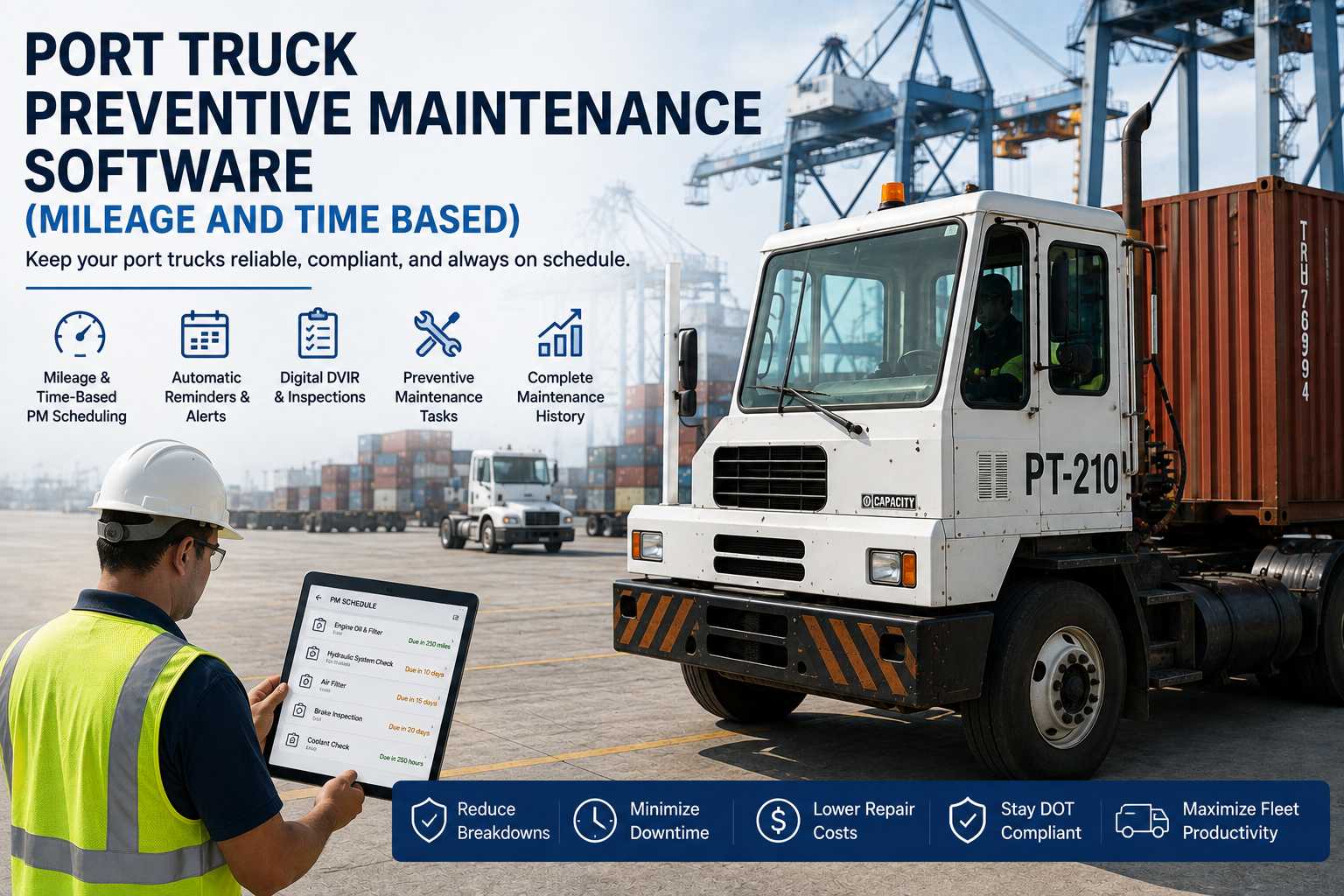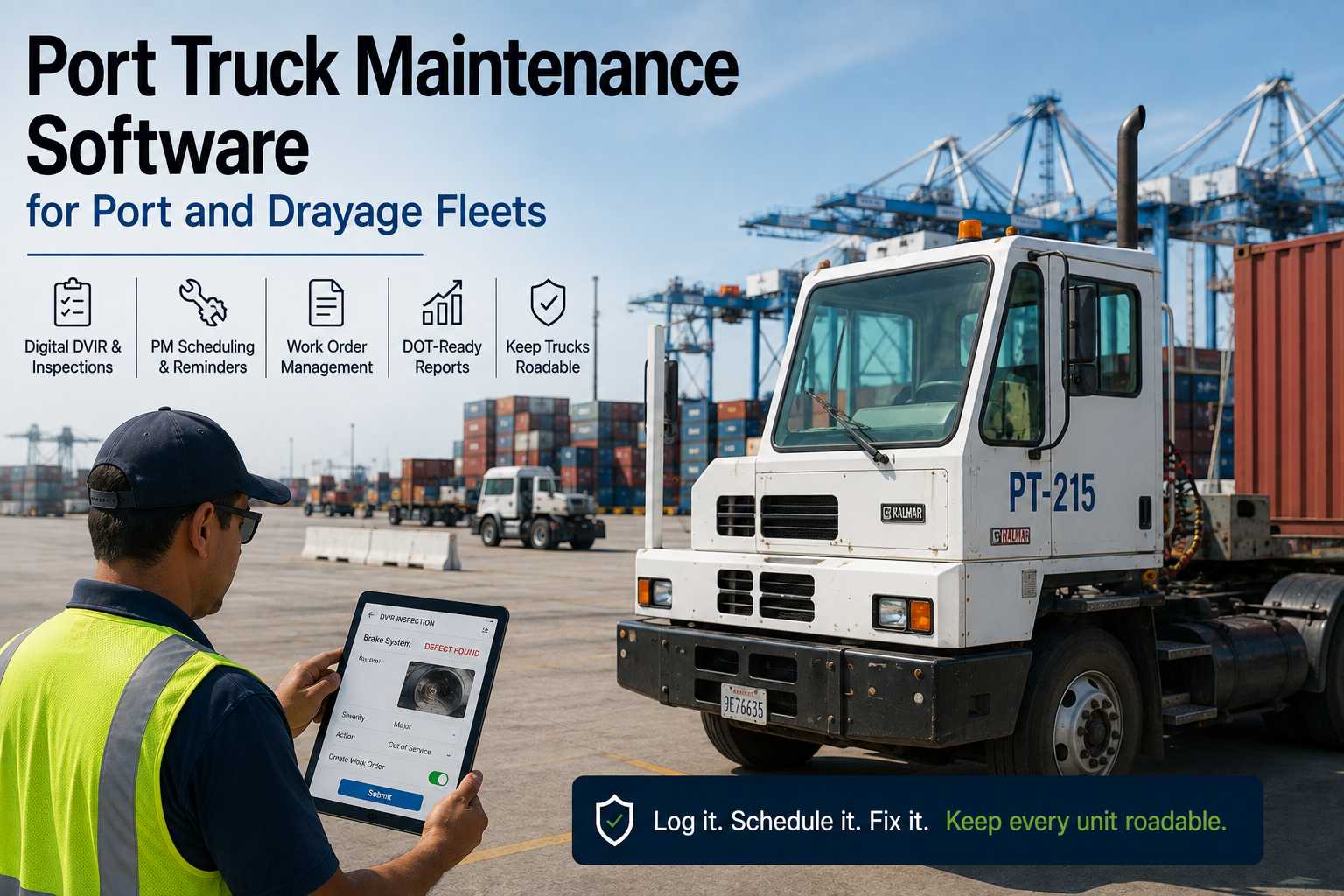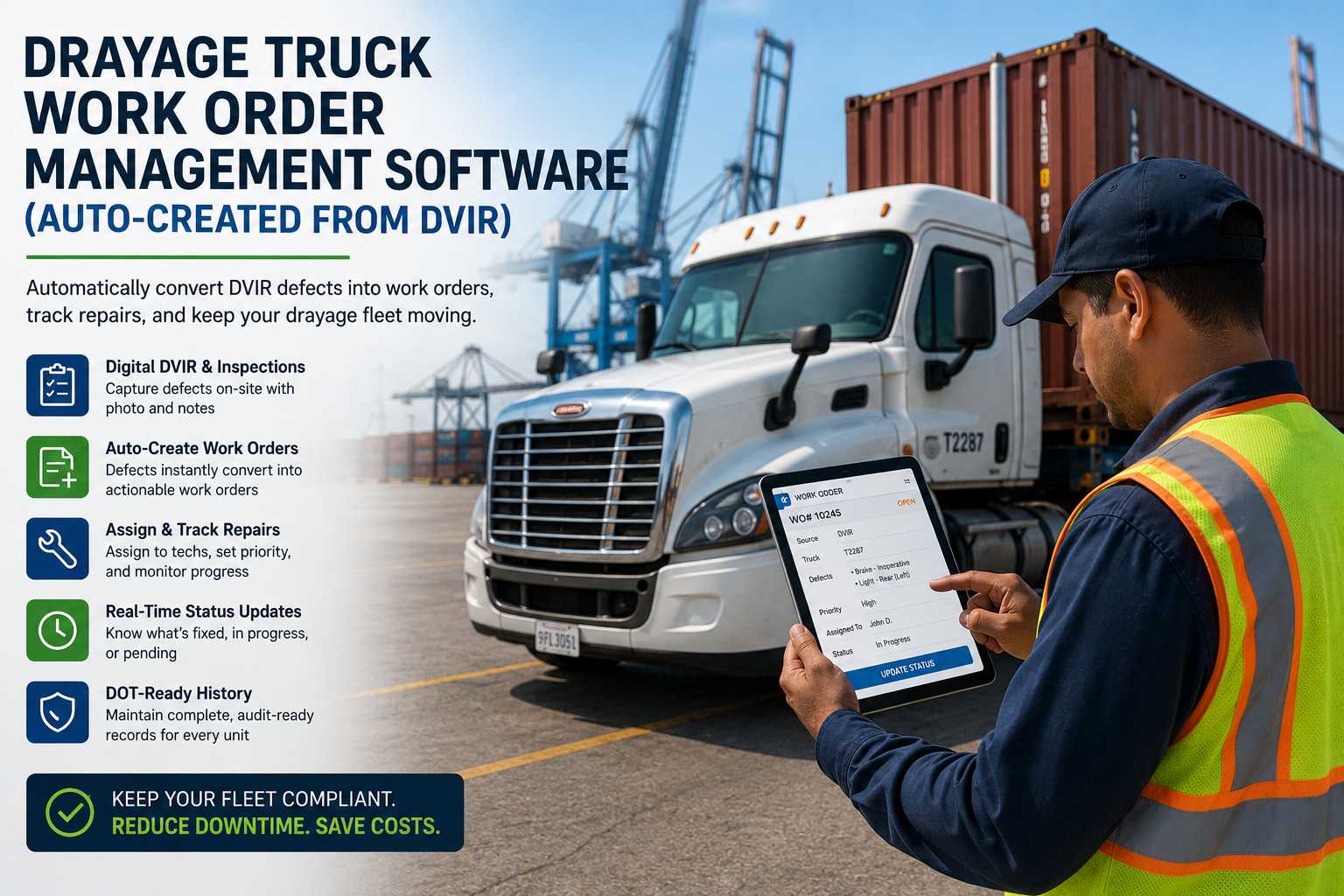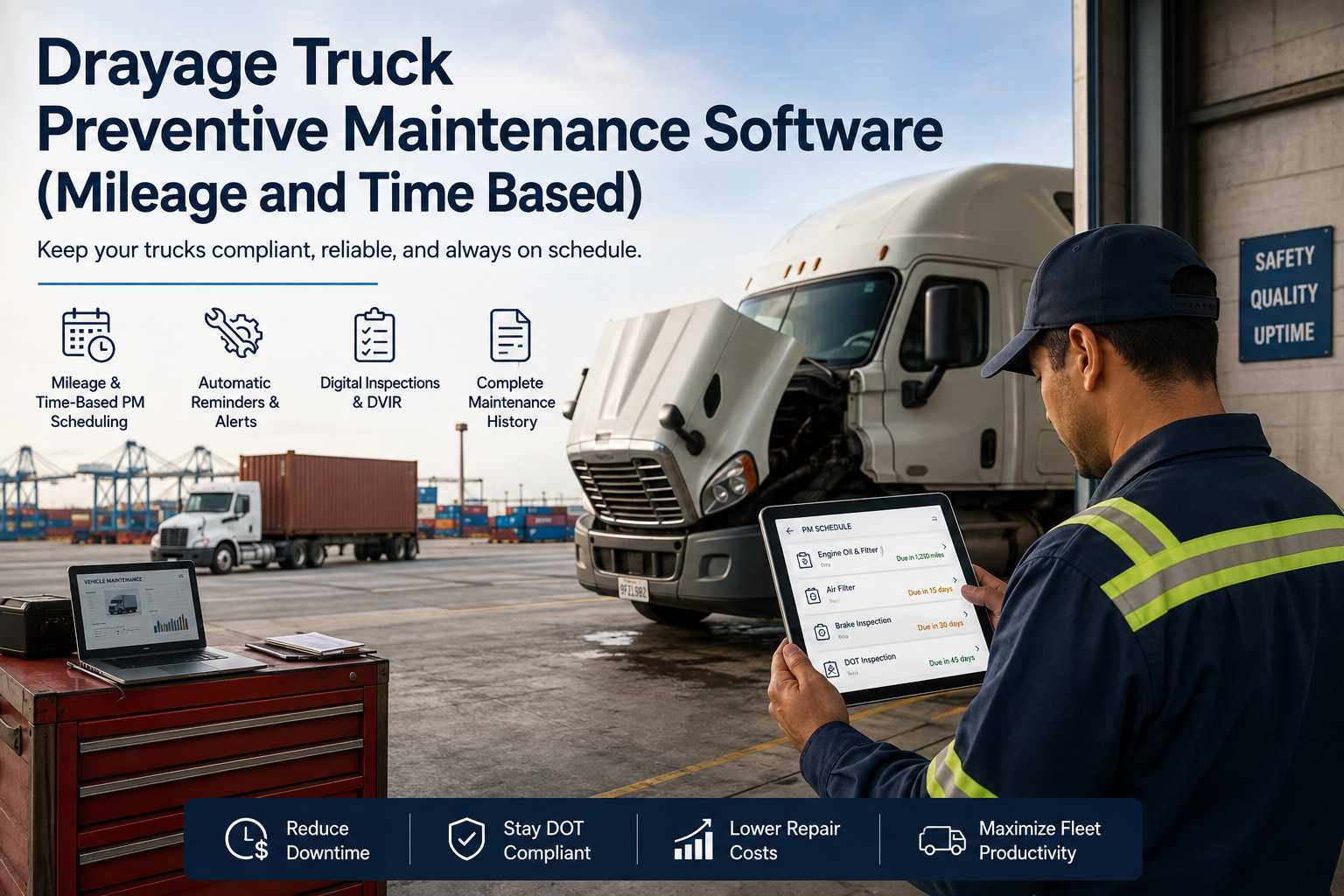
Intermodal drayage carriers, port motor fleets, and harbor logistics managers operate on razor-thin terminal appointment headways: clearing inbound roadability lanes, pulling heavy container chassis across rail ramps, avoiding rail demurrage, and maintaining strict Clean Truck Program compliance. When unexpected out-of-service defects, terminal gate turnaways, parts delays, and road callouts remain tracked on whiteboard tallies or disconnected spreadsheets, drayage operators suffer crippling machine downtime, blown driver appointment slots, and thousands of dollars in port detention fees. Fleet Rabbit delivers specialized drayage truck downtime and uptime tracking software engineered for harbor container logistics, combining real-time equipment availability boards, root-cause downtime categorization, automated DVIR-to-work-order triage, and low-bandwidth pier-to-depot synchronization. Pinpoint repeat breakdown bottlenecks, recover lost driver hours, and maintain complete asset reliability ledgers completely offline across dense container terminal dead zones with zero cellular signal. Book a Demo to see Fleet Rabbit drayage truck downtime tracking software in action.
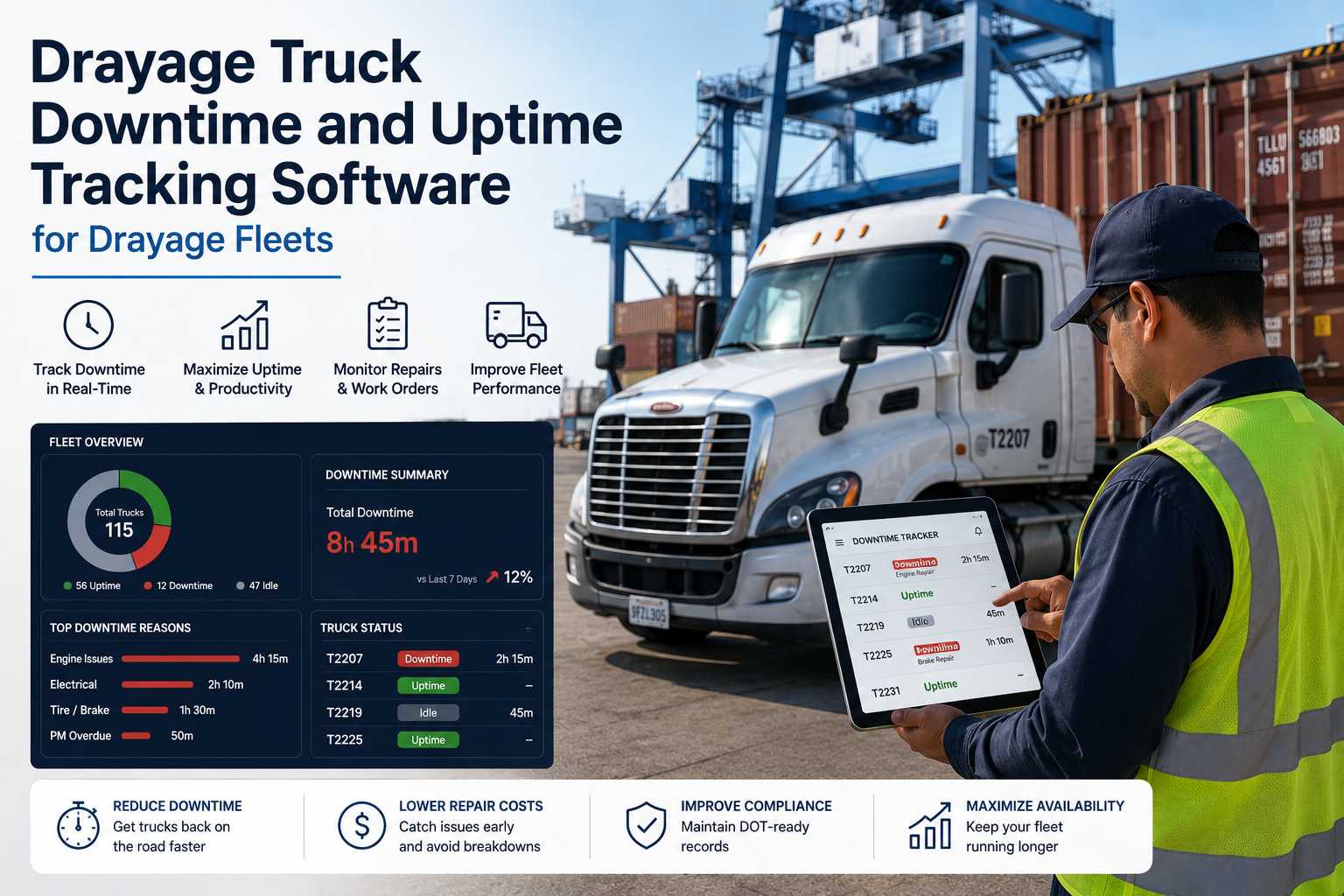
DRAYAGE INTERMODAL HERO CONSOLEDrayage Truck Downtime & Uptime Tracking Software
Track real-time container fleet availability, eliminate terminal gate turnaway bottlenecks, automate roadability defect work orders, and boost billable container moves per shift.
Why Drayage Fleets Bleed Revenue from Unmonitored Downtime
Harbor container fleets lose thousands of dollars weekly to avoidable gate turnaways, prolonged shop waits, and untracked idle derates that generic spreadsheets cannot capture.
Terminal Inbound Gate Turnaways & Demurrage
A failed roadability inspection at the terminal pedestal—from a chafed air hose or unverified gladhand seal—turns a driver around immediately. The carrier forfeits the appointment window, incurs detention pay, and racks up costly container demurrage fees.
Queue Idle-Induced DPF Derates & Towing
Hours spent creeping in port terminal lines choke aftertreatment filters with unburned soot. Without engine-hour tracking, tractors enter forced 5-MPH derate modes on active port corridors, requiring expensive emergency roadside tow-ins and dealer manual regens.
Shop Communication Lags & Ghost Work Orders
When drivers report weeping hub seals or loose fifth-wheel jaws on paper slips, tickets sit on clipboards for hours before mechanics see them. Tractors sit idle in the yard while freight planners guess which units are truly road-ready.
Container Canyon Cellular Shadow Zones
Stacked 40-foot ocean containers create severe signal blockades across piers and railheads. Cloud-only maintenance platforms freeze up, leaving dispatchers blind to breakdowns and preventing drivers from logging completed repairs.
Built to Keep Intermodal Container Fleets Rolling
Fleet Rabbit bridges the gap between terminal drivers, dispatch desks, and shop maintenance bays with a live downtime triage and uptime tracking system. Request a 1-on-1 walkthrough.
Real-Time Fleet Availability Matrix
Instant color-coded status tracking showing road-ready tractors, units on terminal runs, trucks held for maintenance, and red-tagged assets across all harbor depots.
Root-Cause Downtime Analytics
Categorize lost hours by gate turnaway, roadside tire failure, aftertreatment derate, scheduled PM, or parts wait to identify repeat mechanical bottlenecks.
DVIR-to-Work-Order Automation
Failed items on mobile roadability pre-trips instantly convert into prioritized shop repair tickets with driver photos and part lists, slashing repair triage from hours to minutes.
Queue-Aware Dual PM Schedules
Trigger service intervals by engine running hours and odometer mileage simultaneously, ensuring high-idle terminal trucks receive oil and DPF service before derates strike.
Offline Container Yard Micro-Sync
Drivers complete pre-trips and mechanics close work orders inside steel container stacks with zero cell signal; all data caches locally and syncs automatically once back in range.
DOT & IEP Compliance Vault
Maintain digital, exportable proof-of-inspection and repair ledgers that prove closed-loop compliance under FMCSA Part 396 and resolve chassis pool damage billing disputes.
Federal DOT, Intermodal Roadability & Harbor Safety Alignment
Fleet Rabbit’s uptime workflows ensure continuous compliance with federal motor carrier regulations, intermodal equipment provider rules, and port authority access agreements.
Enforces closed-loop compliance: drivers review prior repair records, technicians sign off on corrective work orders electronically, and red-tagged units remain locked out until cleared.
Supports Intermodal Equipment Provider (IEP) roadability regulations, maintaining digital pre-trip records and photo evidence for combined tractor and container chassis moves.
Tracks DPF soot flushes, emissions hardware work orders, and clean truck registry tags to guarantee continuous gate access across major coastal port authorities.
Reduces roadside out-of-service rates by prioritizing critical roadability components including brake stroke pushrod travel, gladhand couplings, and fifth-wheel lock tolerances.
Drayage Uptime Tracking Software Comparison
A specialized evaluation focused on harbor drayage fleets, downtime root-cause analytics, and low-bandwidth terminal yard synchronization as of 2026. Request a technical comparison.
| Capability | Fleet Rabbit | Samsara | Fleetio | Shop Whiteboards |
|---|---|---|---|---|
| Pricing (per truck/month) | $5/month | $27–$60/month | $4–$8/mo (base tier) | Costly gate turnaways |
| Live Drayage Fleet Availability Board | Real-time status matrix | Generic vehicle map | Basic asset table | Faded marker tallies |
| Downtime Root-Cause Categorization | Port-specific downtime codes | Generic fault codes | Manual text entry | Unrecorded |
| DVIR Defect-to-Work-Order Automation | Instant & photo-verified | Manual conversion | Manual work order creation | Lost paper slips |
| Container Yard Offline Micro-Sync | Full offline sync engine | Limited data caching | Partial offline mode | Paper only |
| Free Trial | 14 days, up to 3 assets | Demo only | 14 days | None |
| Contract Commitment | Monthly or annual | 3-year contract lock-in | Annual contract | None |
5-Step Implementation Roadmap
Fleet Rabbit deploys quickly without interrupting active harbor container moves, taking your drayage fleet from reactive repair delays to automated uptime command in two weeks.
Fleet Roster & Baseline Hours Ingestion
Import tractor VINs, port RFID numbers, current engine hours, odometer miles, emissions classes, and assigned chassis pool IDs into your central database.
Downtime Reason Codes & PM Setup
Configure harbor downtime categories (terminal gate hold, DPF derate, brake failure, parts wait) and set dual engine-hour/mileage PM schedules.
Roadability DVIR & Auto-Triage Rules
Activate pre-configured mobile inspection checklists that automatically convert flagged defects into prioritized shop work orders with driver photos.
Drivers & Shop Mechanics App Rollout
Equip drayage drivers and shop technicians with the offline mobile app for completing daily pre-trips, signing off on repairs, and logging downtime events.
Uptime Command Dashboard Go-Live
Activate the live fleet availability board, view real-time downtime analytics across all units, track open work orders, and export 1-click compliance reports.
2-Week Deployment Plan & Milestones
Modernize your drayage truck maintenance operations and eliminate terminal gate bottlenecks with zero disruption to active container moves. Request an onboarding plan.
Week 1: Setup & Fleet Data Ingestion
- Import tractor specifications, port RFID numbers, current engine hours, and odometer readings
- Configure port-specific downtime reason codes and dual engine-hour PM thresholds
- Set up 90/60/30-day alerts for Clean Truck Program registrations and annual DOT periodic inspections
- Assign user access roles for Drayage Driver, Shop Mechanic, Dispatcher, and Operations Director
Week 2: Shop Pilot & Operations Launch
- Conduct 15-minute driver orientation on completing mobile roadability pre-trips and defect photo tagging
- Validate offline store-and-forward syncing in shielded container yards and terminal shadow zones
- Verify instant defect-to-work-order triage for flagged air leaks and fifth-wheel wear notes
- Launch the live fleet availability and downtime tracking dashboard across dispatch and shop screens
Protect Your Drayage Fleet from Costly Breakdowns and Port Gate Rejections
Track real-time fleet availability, eliminate terminal gate turnaways, and maintain audit-proof maintenance records. Start today at $5/truck/month with a 14-day free trial.
Real-World Drayage Fleet Results
Operational outcomes reported by intermodal motor carriers and harbor container drayage fleets. Request the drayage fleet case study.
Downtime Cut by 42% — 48-Tractor Drayage Fleet
A harbor motor carrier struggled with untracked queue derates and delayed shop triage that left 15% of its fleet idle daily. Fleet Rabbit deployed root-cause downtime tracking, dual engine-hour PMs, and mobile DVIR triage, cutting total mechanical downtime by 42% and increasing completed container turns by 1.8 per driver each week.
Zero Gate Rejections — 36-Truck Fleet
An intermodal carrier faced recurring inbound gate turnaways due to light cable cuts and air line leaks discovered too late at the marine terminal. Fleet Rabbit's automated DVIR-to-work-order pipeline caught defects and completed shop repairs before gate arrival, eliminating 100% of roadability rejections and saving over $24,000 in detention fees.
In harbor drayage, if a truck is down for two hours, you miss your rail cut-off, your driver loses pay, and your customer gets hit with demurrage. We used to track breakdowns on a whiteboard in the shop, but we had no idea how many hours we were actually losing to terminal gate turnaways versus DPF issues. Fleet Rabbit gave our dispatch and shop total visibility. We see the exact uptime status of every tractor, convert pre-trip defects into shop work orders instantly, and fix issues before trucks head to the terminal. It boosted our fleet availability to over 99% and completely eliminated gate turnaways.